

Sample Category Title
US Consumer Confidence Edges Higher as Labor Outlook Improves Despite Inflation Concerns
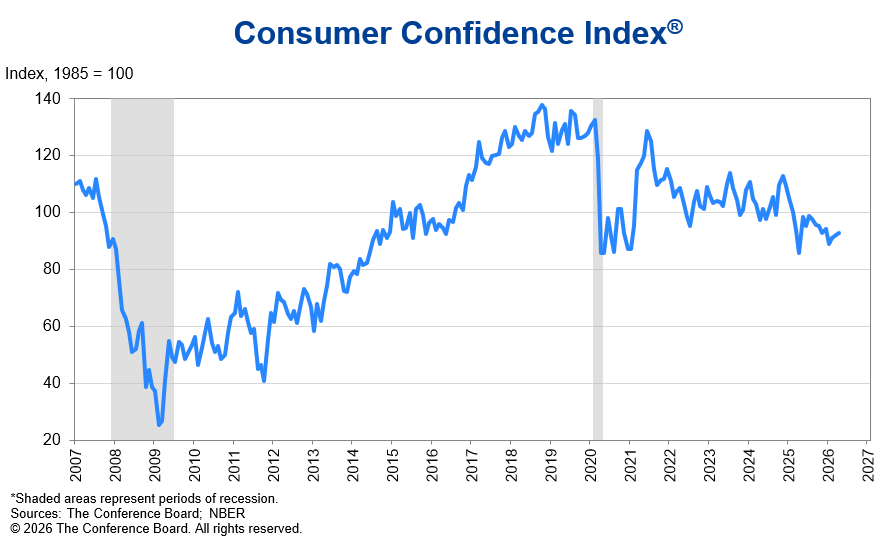
US consumer confidence rose slightly in April, with the Conference Board index ticking up from 92.2 to 92.8, beating expectations of 89.4. The modest gain suggests resilience in household sentiment, even as inflation concerns—particularly from rising gasoline prices linked to Middle East tensions—remain elevated.
Under the surface, the picture is mixed. The Present Situation Index slipped from 124.1 to 123.8, indicating a slight deterioration in views on current business and labor conditions. However, the Expectations Index improved from 71.0 to 72.2, driven by more optimistic views on income and labor market prospects. As noted by Chief Economist Dana Peterson, gains in labor market and income expectations helped offset softer assessments of broader economic conditions.
Temporary relief from a two-week ceasefire and a rebound in equity markets during the survey period likely supported sentiment after March’s volatility. Still, caution persists. Inflation expectations remain elevated despite a slight decline, and nearly half of respondents expect interest rates to rise over the next 12 months. This suggests that while confidence is stabilizing, underlying concerns about inflation and policy tightening continue to weigh on the outlook.
Brent is on its Way to Record Highs
The oil market is hoping for the best but bracing for the worst. Iran has been backed into a corner and the US blockade of the Strait of Hormuz has led to a shortage of storage facilities for ‘black gold’. According to Kpler estimates, at current production levels, supplies will last for 12 to 22 days. Production has already fallen to 2.5 million barrels per day and could drop to 1.5 million by mid-May. Tehran is forced to make proposals to the US for a peaceful resolution of the conflict, or it must hope that the global economy will collapse faster than the Islamic Republic’s.
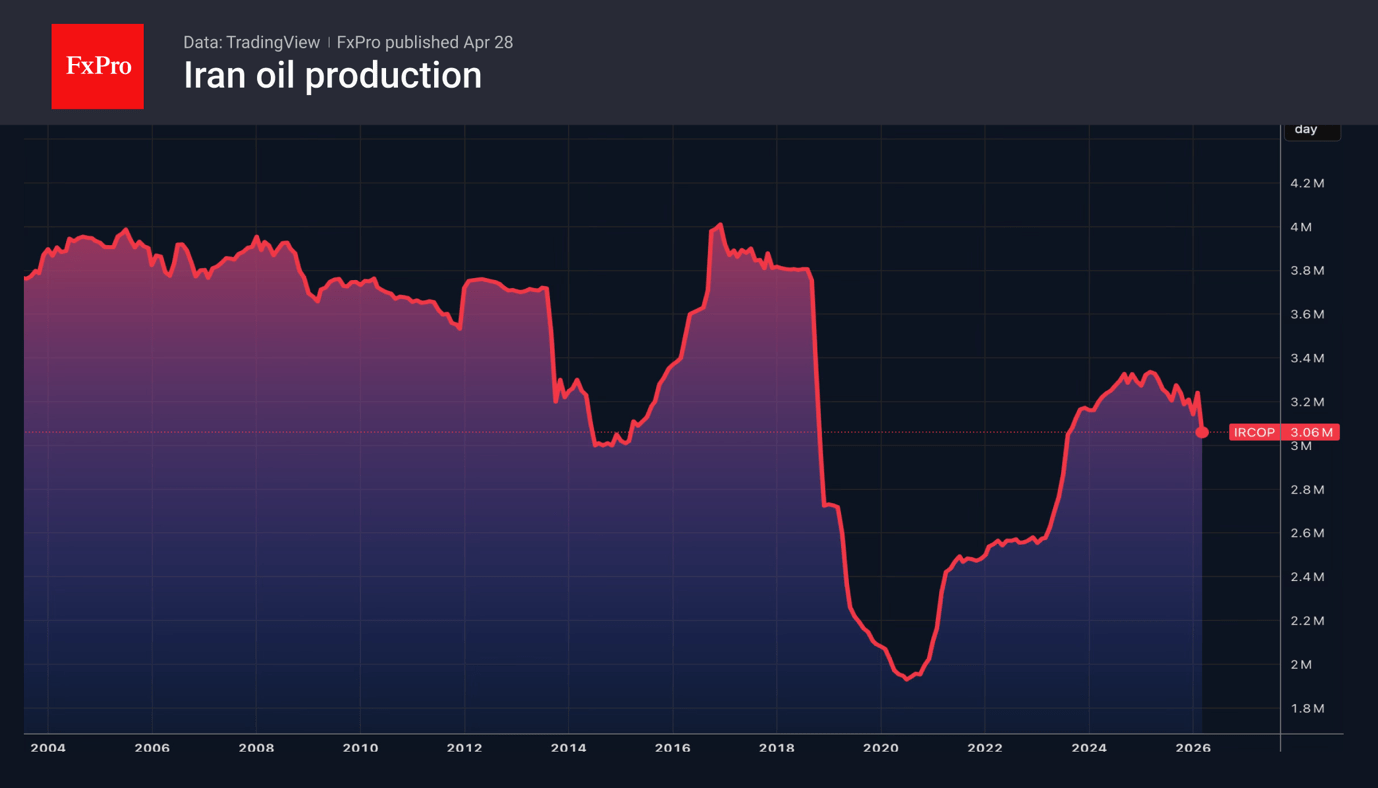
Trafigura Group estimates that oil supply losses have amounted to 1 billion barrels since the start of the conflict in the Middle East. This figure could rise to 1.5 billion barrels if the standoff continues. Goldman Sachs forecasts a reduction in production in the Gulf states of 14.5 million barrels and a deficit of 9.6 million barrels per day, compared with last year’s surplus.
Bringing the market back into balance requires a significant demand reduction, driven by rising prices or government measures to curb oil and petroleum product consumption. Unsurprisingly, major banks are raising their Brent forecasts. Citigroup expects the North Sea crude to average $110 per barrel in the second quarter if the Strait of Hormuz reopens by the end of May. If this does not happen by the end of June, the average price will rise to $130 per barrel.
Goldman Sachs believes it will take longer than expected to repair the damaged infrastructure in the Gulf states and is raising its Brent forecast for October–December from $80 to $90 per barrel. Morgan Stanley forecasts Brent at $110 in the second quarter, $100 in the third quarter, and $90 in the fourth quarter.
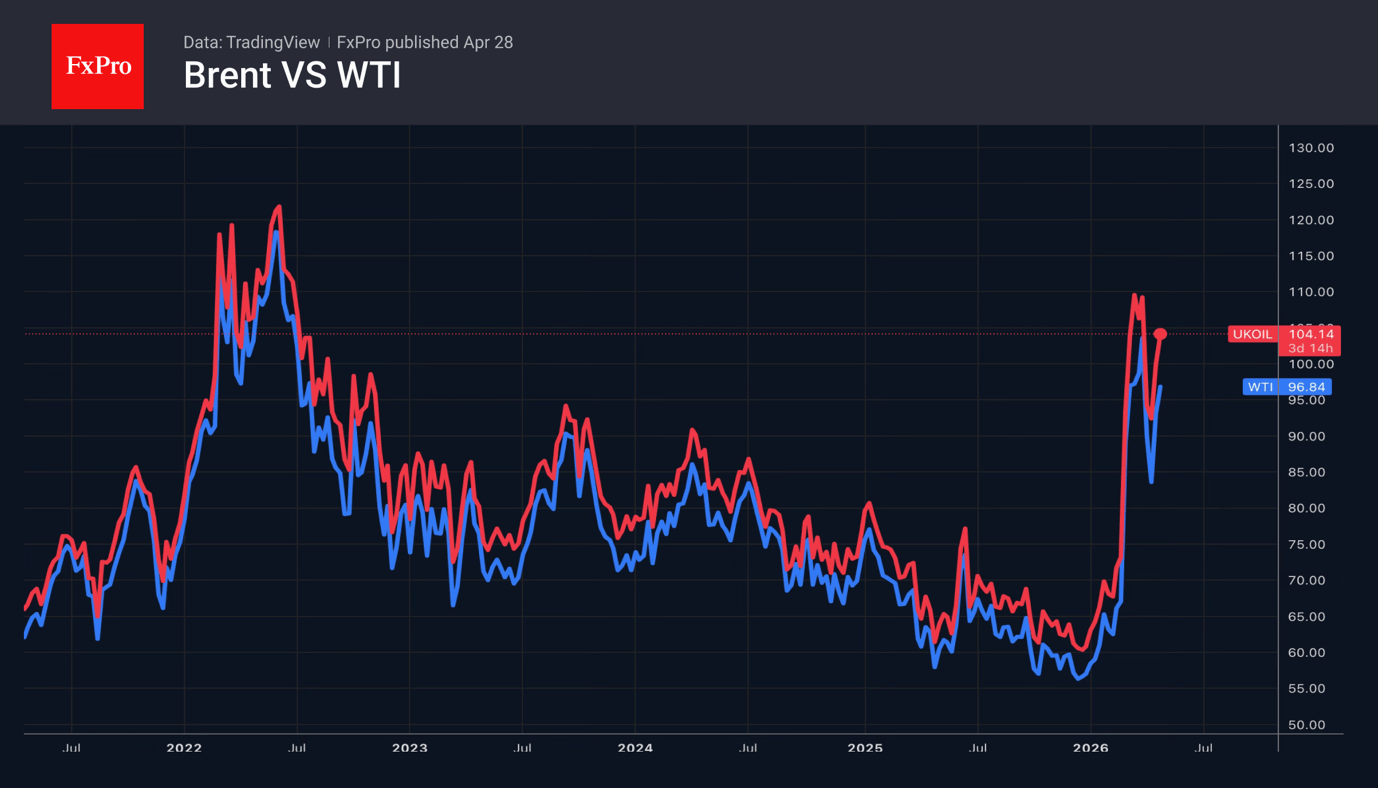
According to Gunvor Group, if the conflict in the Middle East continues for another month, the oil market will reach a point at which onshore reserves run out. As a result, prices risk rising steadily, potentially reaching record highs.
Brent is already beginning its climb towards historic highs, reacting to the White House’s dissatisfaction with Iran’s proposal. According to the Americans, it implies Tehran retaining control over the Strait of Hormuz, which is unacceptable.
EUR/USD Mid-Day Outlook
Daily Pivots: (S1) 1.1691; (P) 1.1724; (R1) 1.1755; More….
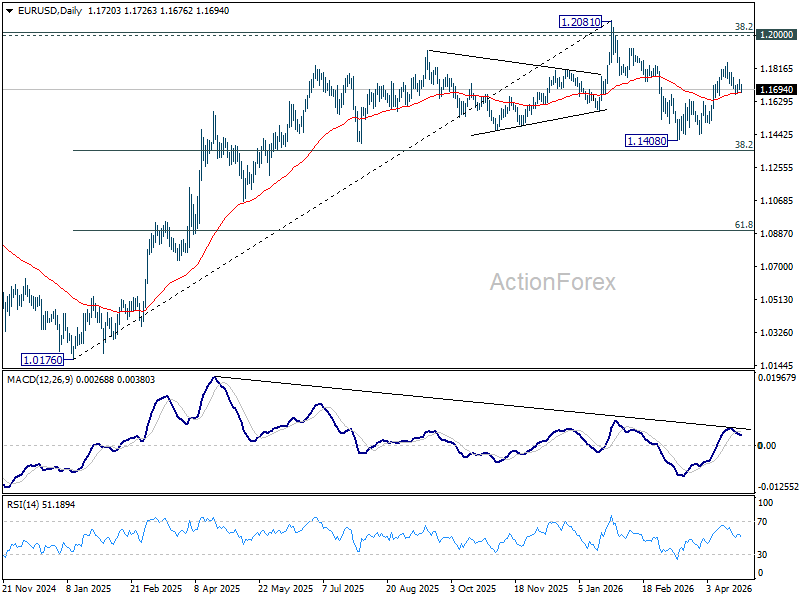
Range trading continues in EUR/USD and intraday bias stays neutral. Further rally is expected with 1.1662 support intact. On the upside, sustained trading above 61.8% retracement of 1.2081 to 1.1408 at 1.1824 will pave the way to retest 1.2081 high. However, firm break of 1.1662 support will indicate the the rebound from 1.1408 has completed, and bring deeper decline back towards this low instead.
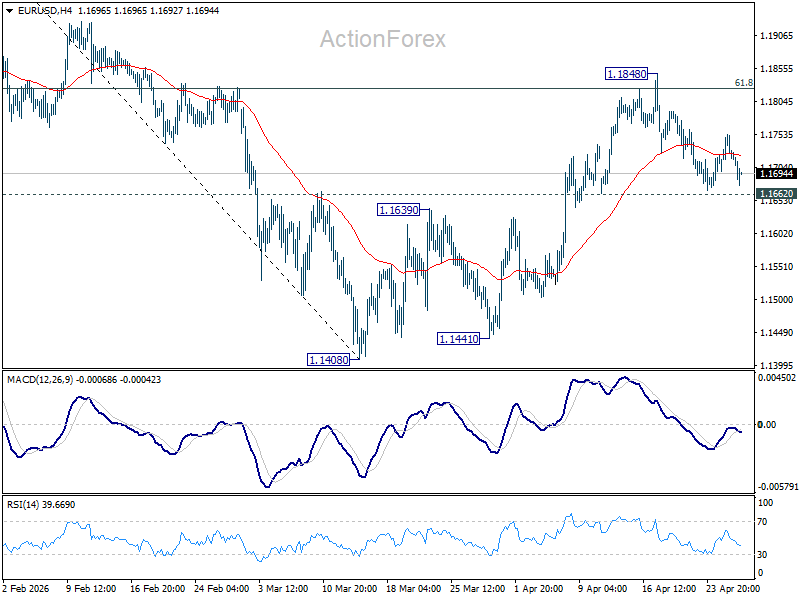
In the bigger picture, the strong support from 38.2% retracement of 1.0176 to 1.2081 at 1.1353 suggests that the pullback from 1.2081 is more likely a corrective move. Strong support was also found in 55 W EMA (now at 1.1530). Focus is back on 1.2 key cluster resistance level. Decisive break there will carry long term bullish implications. Nevertheless, break of 1.1408 support will revive the case of medium term bearish trend reversal.
USD/CHF Mid-Day Outlook
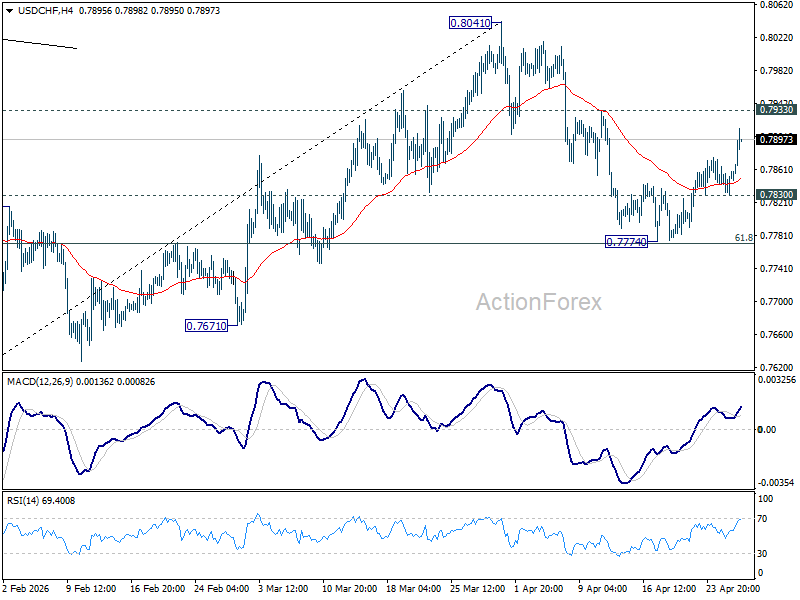
Daily Pivots: (S1) 0.7833; (P) 0.7853; (R1) 0.7876; More….
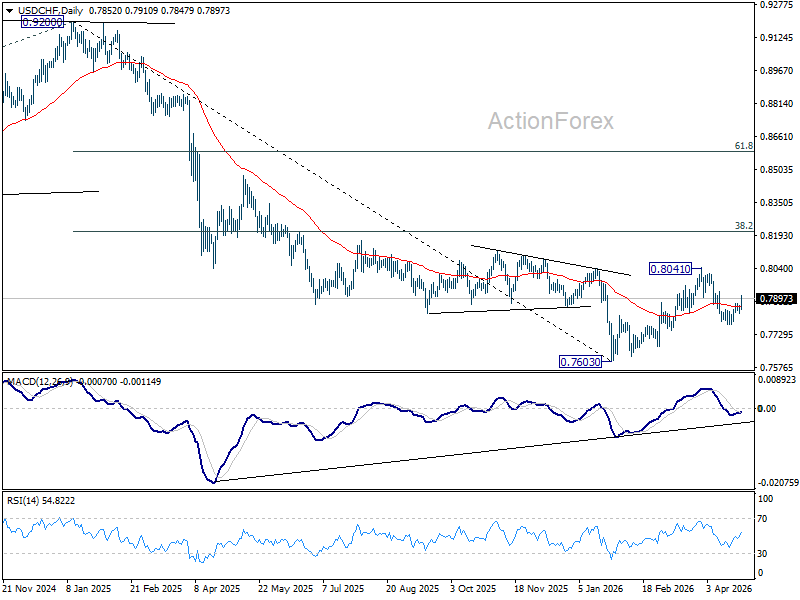
Intraday bias in USD/CHF remains neutral first. On the downside, below 0.7830 will turn bias to the downside for 0.7774 support. Sustained break of 61.8% retracement of 0.7603 to 0.8041 at 0.7770 will pave the way to retest 0.7603 low. However, decisive break of 0.7933 will argue that fall from 0.8041 has completed as a corrective move. Further rise should then be seen through 0.8041 to resume the whole rebound from 0.7603.
In the bigger picture, rebound from 0.7603 medium term bottom is seen as correcting the fall from 0.9200 only. Rejection by 55 W EMA (now at 0.8053) will affirm this bearish case, and setup down trend resumption to 100% projection of 1.0146 (2022 high) to 0.8332 from 0.9200 at 0.7382 at a later stage. Though, sustained break of 55 W EMA will suggest that it's probably correcting the larger scale down trend from 1.0146 (2022 high).
USD/JPY Mid-Day Outlook
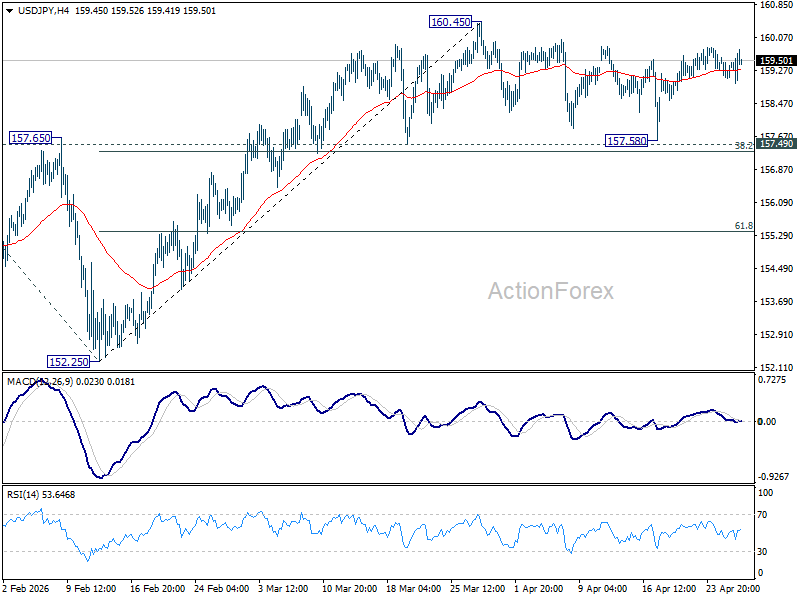
Daily Pivots: (S1) 159.12; (P) 159.39; (R1) 159.68; More...
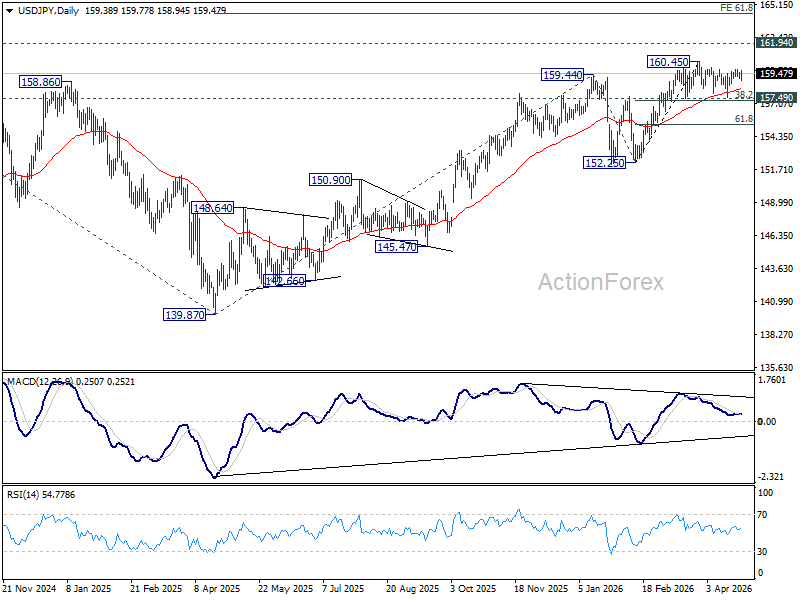
Range trading continues in USD/JPY and intraday bias stays neutral. Further rise is expected with 157.49 cluster support (38.2% retracement of 152.25 to 160.45 at 157.31) intact. On the upside break of 160.45 will target a retest on 161.94 high. However, firm break of 157.31/49 will bring deeper fall back to 61.8% retracement at 155.38 next.
In the bigger picture, outlook is unchanged that corrective pattern from 161.94 (2024 high) should have completed with three waves at 139.87. Larger up trend from 102.58 (2021 low) could be ready to resume through 161.94. This will remain the favored case as long as 55 W EMA (now at 153.81) holds. Firm break of 161.94 will pave the way to 61.8% projection of 102.58 to 161.94 from 139.87 at 176.75.
GBP/USD Mid-Day Outlook
Daily Pivots: (S1) 1.3500; (P) 1.3539; (R1) 1.3572; More...
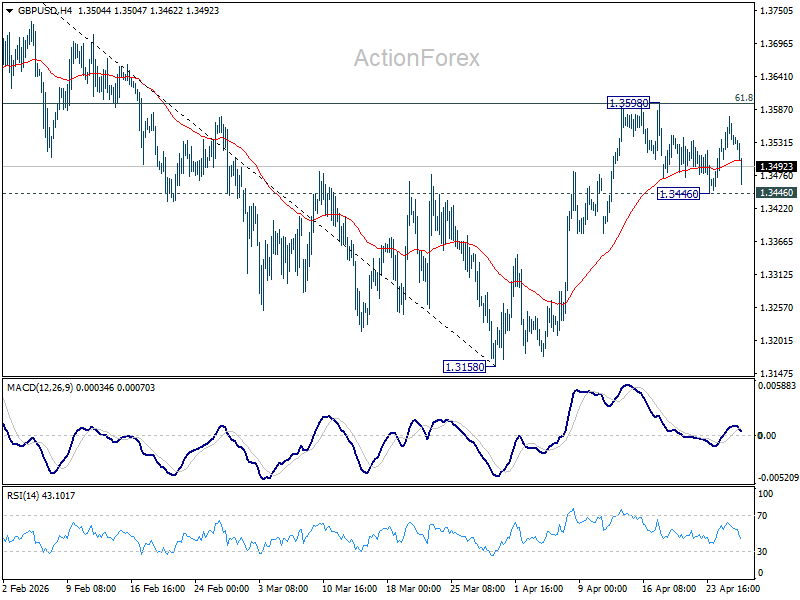
GBP/USD falls notably today, but stays inside range of 1.3446/3598. Intraday bias remains neutral and further rise is still in favor. On the upside, firm break of 61.8% retracement of 1.3867 to 1.3158 at 1.3596 will pave the way to retest 1.3867 high. However, break of 1.3446 will turn bias back to the downside for deeper pullback.
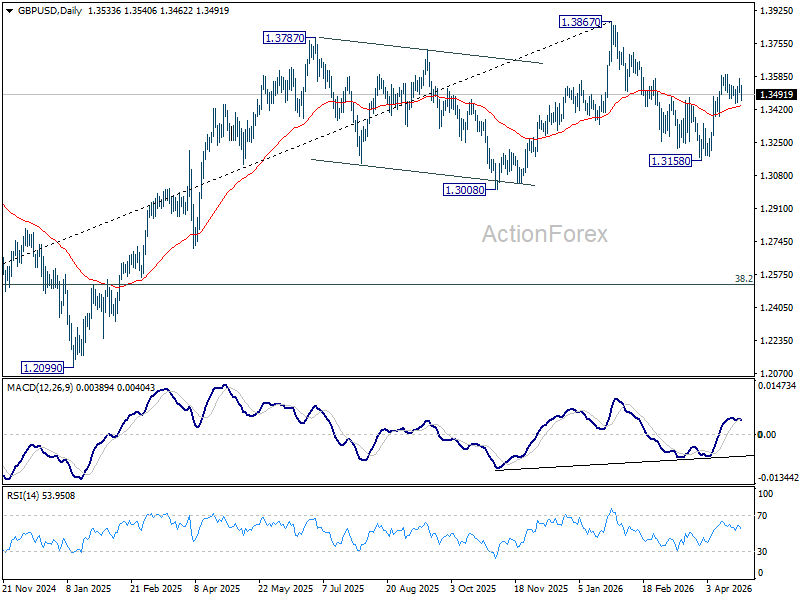
In the bigger picture, current development suggests that price actions from 1.3867 are merely a corrective pattern within the broader up trend from 1.0351 (2022 low). With 1.3008 support intact, medium term bullishness is maintained and break of 1.3867 is back in favor for a later stage, towards 1.4248 key resistance (2021 high).
Oil Breaks Above $110 as Hope Trade Fades, Dollar Rallies
Oil prices extended their rally in today’s session, with Brent breaking through the $111 mark and confirming a decisive move above the key $110 psychological barrier. What was once a market anchored by expectations of diplomatic progress is now being driven by the reality of a deepening US–Iran stalemate.
The “hope trade” that followed the earlier ceasefire has effectively unraveled. Investors are no longer positioning for a swift deal. Instead, the market is transitioning back toward a prolonged stalemate scenario, where persistent tension—and the risk of renewed escalation.
The key a fundamental disagreement over negotiation strategy. The US is insisting that nuclear issues be addressed upfront, while Iran is pushing to defer those discussions until after the conflict is formally resolved and shipping disputes are settled.
This sequencing dispute is not just a procedural hurdle—it reflects a deeper strategic divide. Washington is unwilling to give up its naval blockade leverage without addressing nuclear concerns, while Tehran is resisting any framework that front-loads those concessions.
As a result, negotiations are effectively stuck. The lack of progress is reinforcing the market’s view that the conflict is entering a prolonged phase, where resolution is delayed and risks remain elevated.
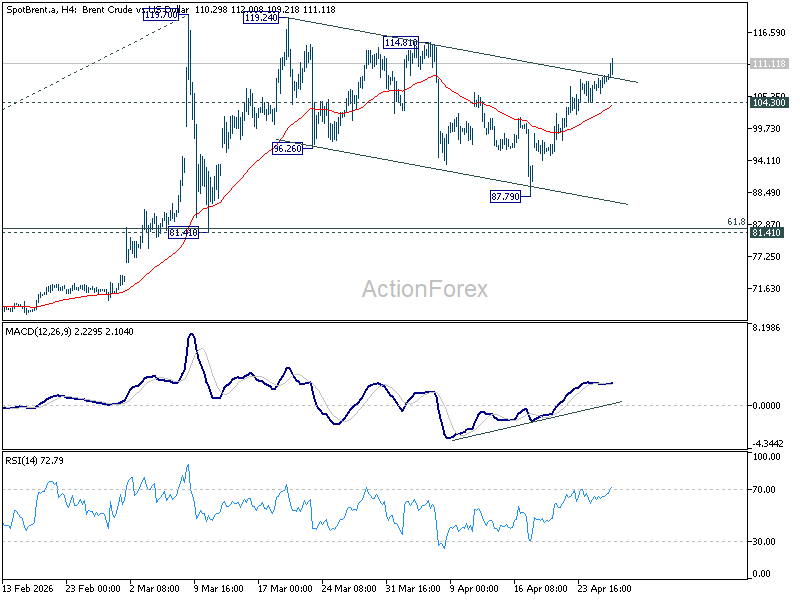
Technically, the breakout today confirms a bullish shift. Brent has cleared its near-term falling channel, suggesting that the correction from 119.24 hsas ended at 87.79. As long as 104.30 holds, the path now points toward a retest of the 119.24/70 zone.
Looking ahead, a key risk factor lies in the status of backchannel diplomacy. Any official confirmation that Pakistani mediation has collapsed would remove a critical communication channel and potentially return the situation to pre-ceasefire conditions.
In currency markets, the shift in sentiment is already evident. Dollar is surging broadly on safe haven demand, reflecting a move toward more defensive positioning. Yen is the second strongest performer, supported by earlier hawkish signal from the Bank of Japan. Canadian Dollar is also benefiting from the oil rally. Kiwi, Swiss Franc, and Sterling are lagging. Euro and Aussie are trading in the middle.
In Europe, at the time of writing, FTSE is down -0.24%. DAX is down -0.74%. CAC is down -0.60%. UK 10-year yield is up 0.056 at 5.056. Germany 10-year yield is up 0.036 at 3.077. Earlier in Asia, Nikkei fell -1.02%. Hong Kong HSI fell -0.95%. China Shanghai SSE fell -0.19%. Singapore Strait Times fell -0.10%. Japan 10-year JGB yield fell -0.014 to 2.465.
ECB Survey Signals Rising Inflation Fears and Weakening Growth Expectations
Eurozone consumers are bracing for higher inflation, with expectations surging to 4.0% over the next year. At the same time, growth outlook is deteriorating and unemployment fears are rising, pointing to a worsening stagflationary mix. Read More.
BoJ Hawkish Hold: 6–3 Split and Inflation Upgrade Point to Rate Hike Ahead
BoJ may be closer to a hike than it appears. The 6–3 split and higher inflation forecasts are pushing markets to price a move as early as June or July. Read More.
Gold and Silver Face Asymmetric Downside Risk as Dollar Weakness Fails Ahead of Fed, ECB
Gold and silver are showing limited upside despite a weaker Dollar. With central banks unlikely to turn dovish, the risks are increasingly asymmetric—leaving precious metals exposed to downside. Read More.
GBP/USD Mid-Day Outlook
Daily Pivots: (S1) 1.3500; (P) 1.3539; (R1) 1.3572; More...
GBP/USD falls notably today, but stays inside range of 1.3446/3598. Intraday bias remains neutral and further rise is still in favor. On the upside, firm break of 61.8% retracement of 1.3867 to 1.3158 at 1.3596 will pave the way to retest 1.3867 high. However, break of 1.3446 will turn bias back to the downside for deeper pullback.
In the bigger picture, current development suggests that price actions from 1.3867 are merely a corrective pattern within the broader up trend from 1.0351 (2022 low). With 1.3008 support intact, medium term bullishness is maintained and break of 1.3867 is back in favor for a later stage, towards 1.4248 key resistance (2021 high).
ECB Survey Signals Rising Inflation Fears and Weakening Growth Expectations
The ECB’s Consumer Expectations Survey for March shows a sharp deterioration in the inflation-growth balance, with households bracing for higher prices while becoming more pessimistic about the economic outlook.
Median inflation expectations for the next 12 months surged from 2.5% to 4.0%, while three-year expectations rose from 2.5% to 3.0%. Even five-year expectations edged higher from 2.3% to 2.4%, pointing to growing concerns about longer-term price stability.
The increase in inflation expectations was accompanied by a notable rise in uncertainty, suggesting that households are struggling to assess the near-term path of prices amid ongoing volatility. At the same time, nominal income growth expectations remained unchanged at 1.2%, indicating that consumers do not expect wages to keep pace with rising inflation.
Despite this squeeze, expected spending growth increased from 3.5% to 4.1%, the highest level since May 2023. This divergence suggests that consumption may be driven more by necessity and price effects rather than underlying demand strength, as households anticipate higher costs in the months ahead.
Meanwhile, the broader economic outlook weakened significantly. Growth expectations fell from -0.9% to -2.1%, while expectations for the unemployment rate rose from 10.8% to 11.3%.
| Indicator | Previous | Latest |
|---|---|---|
| 1-Year Inflation Expectations | 2.5% | 4.0% |
| 3-Year Inflation Expectations | 2.5% | 3.0% |
| 5-Year Inflation Expectations | 2.3% | 2.4% |
| Income Growth Expectations (12m) | 1.2% | 1.2% |
| Spending Growth Expectations (12m) | 3.5% | 4.1% |
| Economic Growth Expectations (12m) | -0.9% | -2.1% |
| Unemployment Expectations (12m) | 10.8% | 11.3% |
Forex Ignores Central Bank Hawks, Favouring Oil Exporters
- Currencies of oil-exporting nations are becoming market favourites.
- USDJPY retreats as Bank of Japan hawks re-emerge.
The US dollar strengthened amid rising oil prices and doubts that the ‘hawkish’ rhetoric from the Fed’s rivals would lead to widespread monetary policy tightening. The ECB and other regulators are expected to keep rates on hold at the end of April, while signalling potential hikes soon. However, in the context of slowing economies, it will not be easy to implement monetary restrictions.
Brent and WTI continued their rally as the US rejected Iran’s proposal to reopen the Strait of Hormuz. According to the White House, Tehran will continue to control the planet’s key oil artery, which is unacceptable. Citi forecasts Brent crude will average $130 per barrel in the second quarter if supply disruptions persist through the end of June.
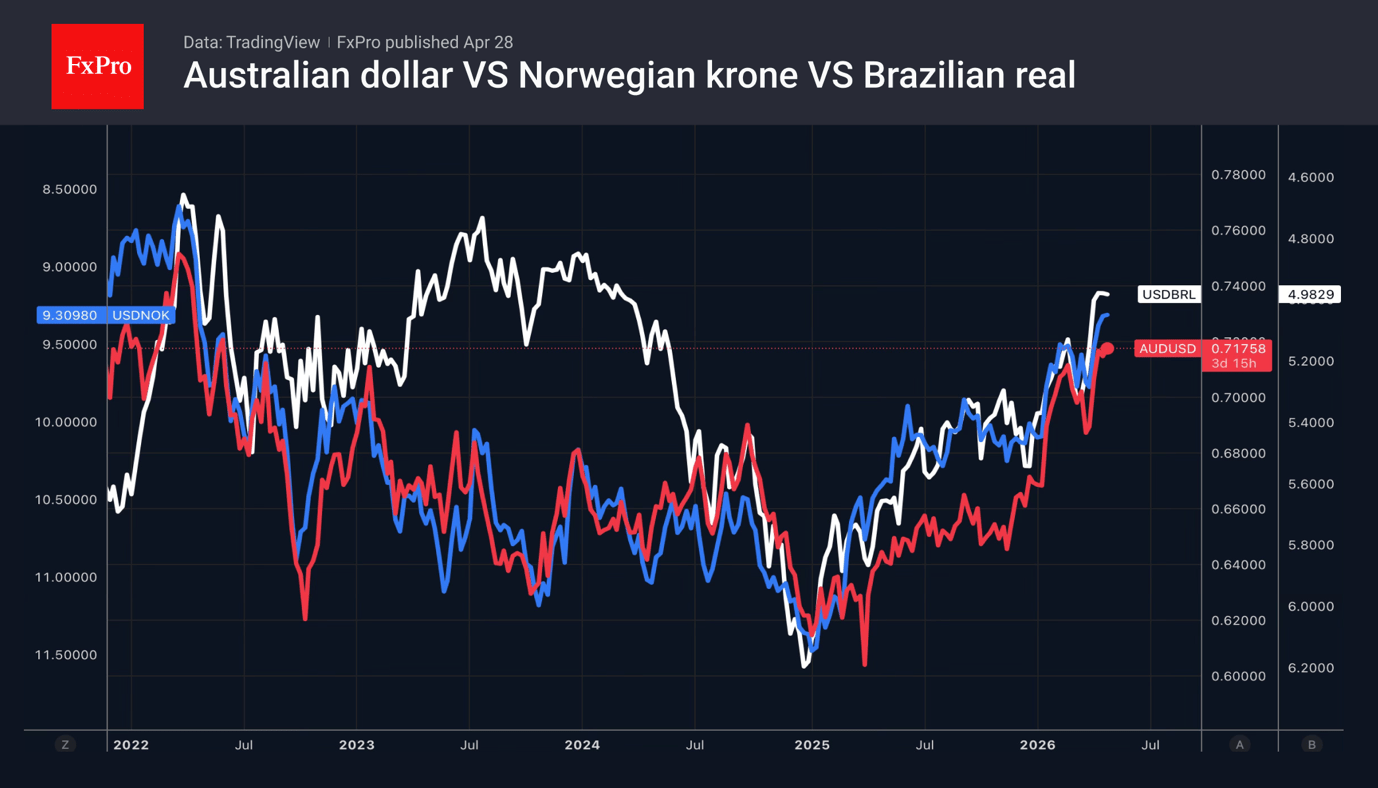
In such circumstances, it makes sense to turn attention to the currencies of oil-exporting nations. JP Morgan and Deutsche Bank recommend buying the Norwegian krone and the Australian dollar, primarily against the Japanese yen and the Swiss franc. Pioneer advises purchasing the currencies of Kazakhstan, Brazil and Nigeria against a basket comprising the US dollar and the euro. Amundi describes the Canadian dollar, Australian dollar, and Norwegian krone as significantly undervalued.
The ECB should not rush into raising rates, but it will certainly prefer to demonstrate its resolve in combating high inflation. Credit Agricole describes its rhetoric as a ‘hawkish’ bluff. It is by no means certain that the deposit rate will rise in 2026, given that the eurozone economy is losing momentum.
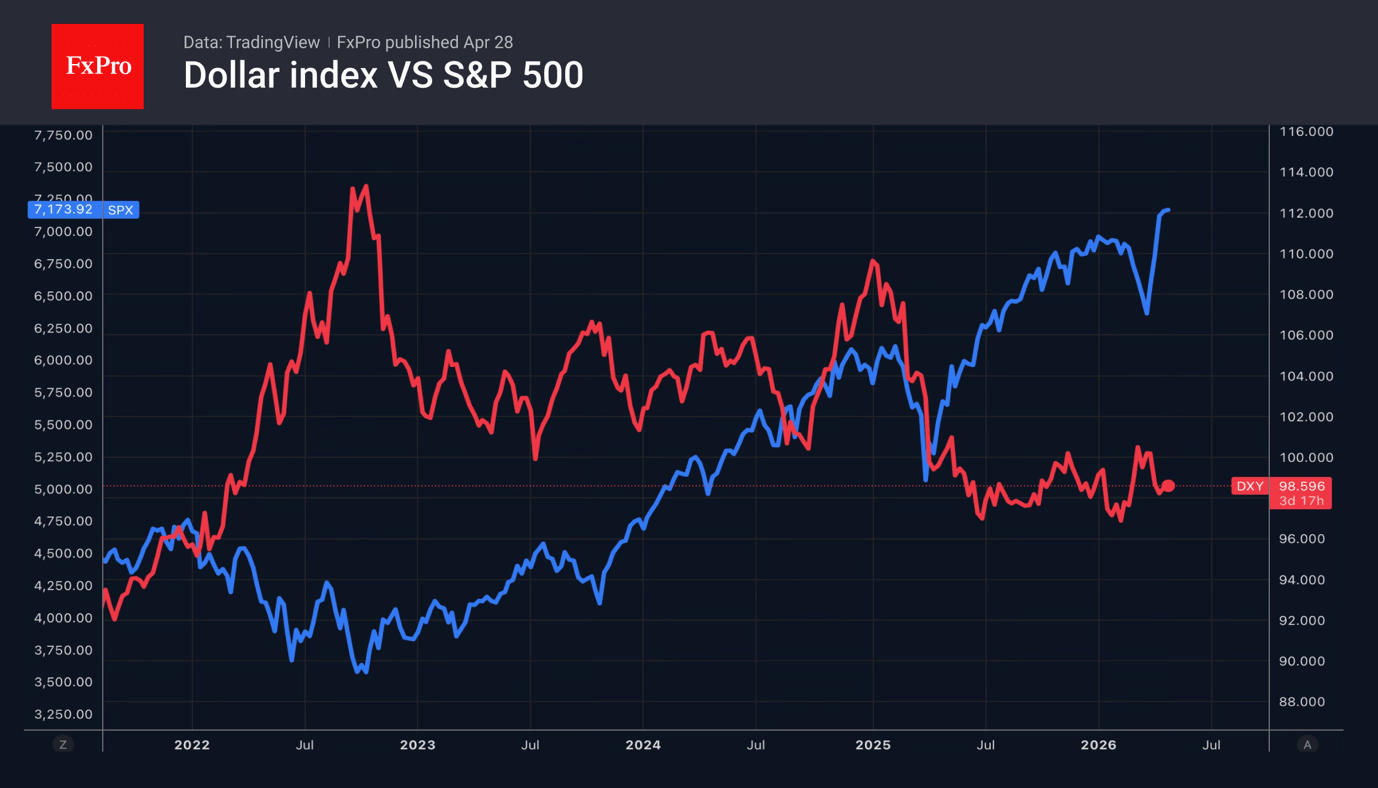
Overall, the combination of central banks’ passivity at the end of April and the oil rally could work in favour of the US dollar. Pressure on it as a safe-haven asset is being exerted by stock indices that keep hitting record highs.
The Bank of Japan’s upward revision of its inflation forecast to 2.6% and a split within the Policy Board have allowed USDJPY bears to continue their counterattack. Three of the nine members voted to raise the overnight rate from 0.75% to 1%, compared with just one in March. The number of hawks is growing, providing medium-term support for the yen alongside the short-term support provided by the government’s ongoing verbal interventions.
Bitcoin and Solana Bears Attempting to Reverse Trend
Market Overview
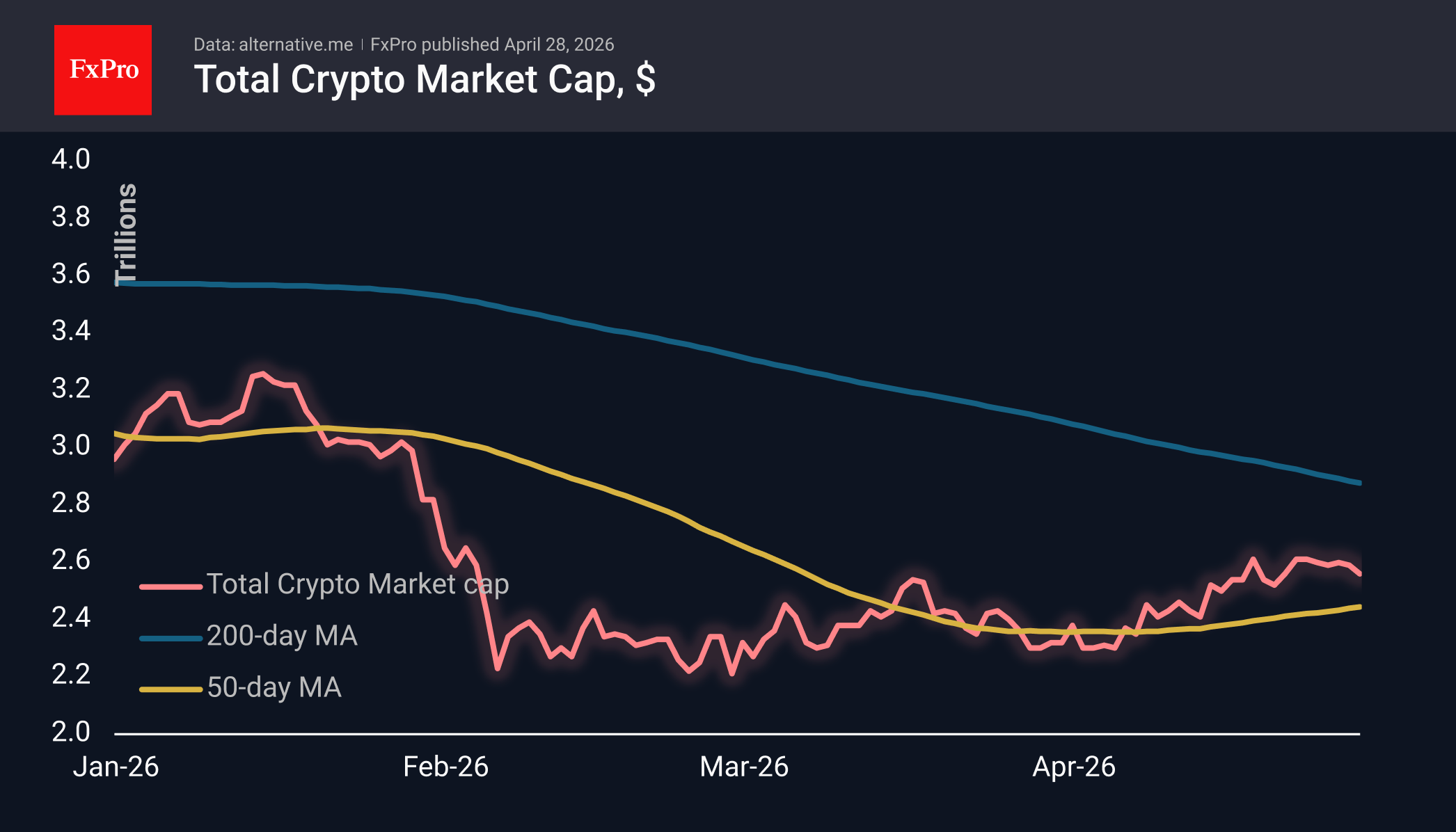
The crypto market capitalisation has fallen by 1.2% to $2.56 trillion over the past 24 hours, marking a second consecutive day of decline. This time, the pressure is linked to the broader strengthening of the US dollar, which is raising the benchmark higher. Among the top gainers are Tezos (+7.9%), Cosmos (+1.7%) and Doge (+1.6%). Zcash (-5.2%), Stellar (-2.3%) and Solana (-2%) are falling at an accelerating pace. The sentiment index has dropped from 47 to 33 due to deteriorating sentiment.
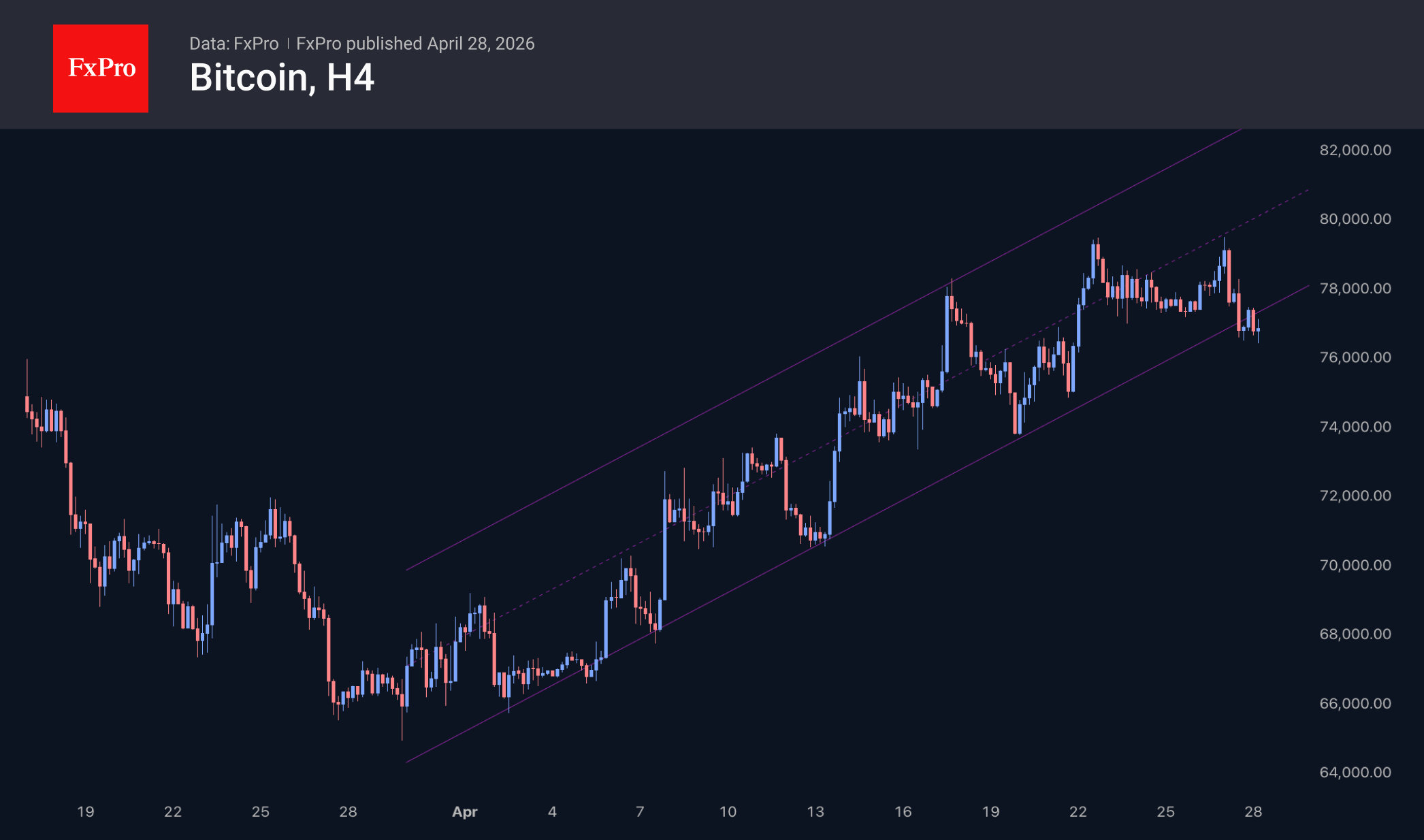
Bitcoin has fallen to $76.6K, where it last traded a week ago. Since late March, BTC’s price has been in a clear upward range, but we are now seeing an attempt to break through its lower boundary, potentially reversing or correcting the trend. A break of the trend will occur if prices fall below $75K, while a reversal to the upside from higher levels would merely be a correction within the uptrend. In this case, we should expect a swift retest of $80K and a likely acceleration of the rally should this resistance be broken.
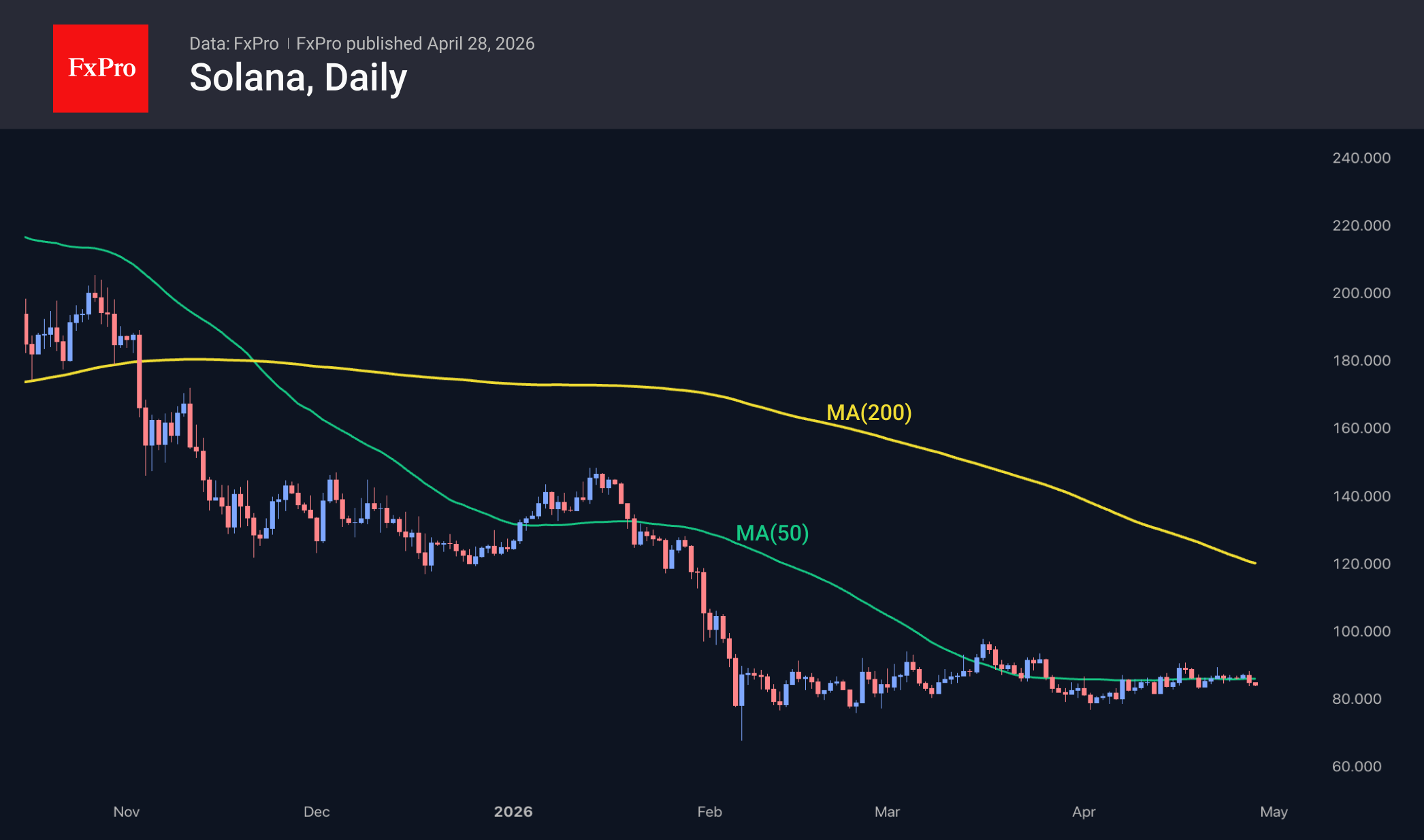
Solana has been virtually stuck at its 50-day moving average for over two weeks, a line that is trending almost horizontally. However, on Tuesday, we are seeing an attempt by the bears to seize the initiative, as the coin is falling following the previous day’s close below this line. Without a swift reversal to the upside, Solana risks taking a significant step lower, breaking the support line near $80, which has held since the start of the year. The next major support level now appears to be the $20 region, which implies a fourfold decline.
News Background
According to CoinShares, global investments in crypto funds rose by $1.2 billion last week. Investments in Bitcoin increased by $933 million, in Ethereum by $192 million, in Solana by $32 million, in XRP by $25 million, and in Chainlink by $7 million.
The fourth consecutive week of positive inflows into crypto ETFs reflects improved institutional demand amid Bitcoin’s highs since early February.
The leading cryptocurrency is in a ‘cautious rally’ phase, so the likelihood of breaking through the $80K level remains uncertain, CryptoQuant notes. The current phase resembles a transitional stage between negative sentiment and buyer dominance.
The number of active addresses on the Ethereum blockchain, smoothed by a 100-day moving average, has hit a new all-time high, which is a “hidden bullish signal”, notes an analyst at CryptoOnchain.
Strategy has reduced its Bitcoin purchases tenfold following its largest weekly acquisition of the asset in nearly a year and a half. The company purchased an additional 3,273 BTC last week for $255 million — at an average price of $77,906 per coin. Strategy now holds 818,334 BTC, purchased for $61.8 billion at an average price of $75,537 per Bitcoin.