Sample Category Title
Is the Japanese Yen Setting Up for a Trend Reversal?
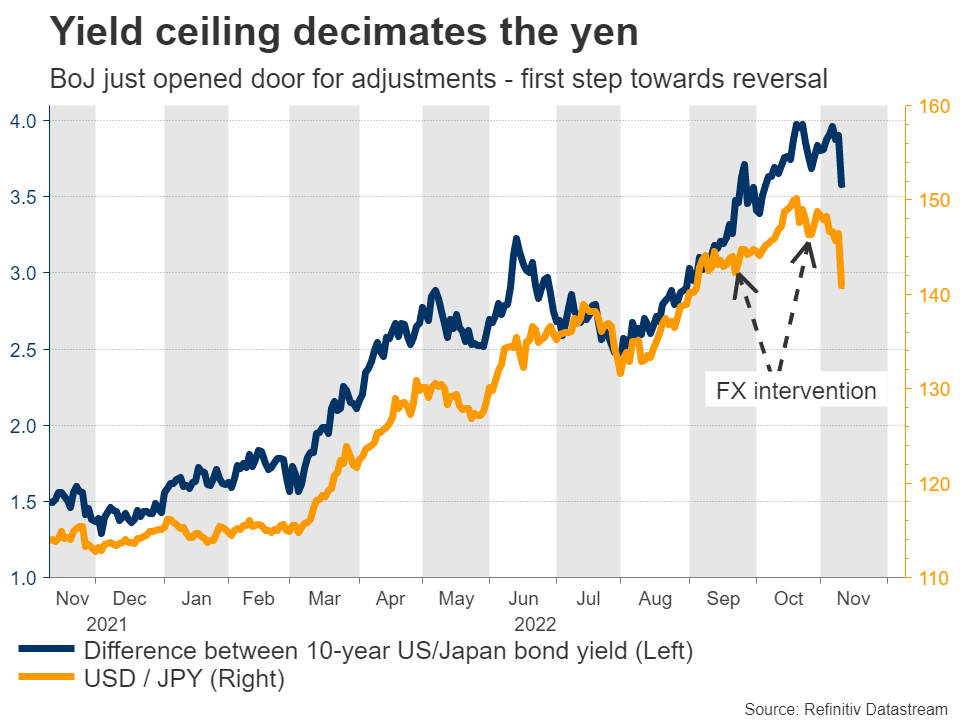
Interest rate differentials have crushed the Japanese yen. The currency is down 18% against the US dollar this year, sinking to its lowest levels in three decades. However, there is light at the end of the tunnel. With the Bank of Japan opening the door for tighter policy and the government rolling out new spending just as the Fed prepares to shift into lower gear with its rate increases, this brutal downtrend seems to be approaching its conclusion.
The story so far
It’s been a stormy year for the yen, and central bank policies lie at the heart of its troubles. Every major central bank has raised interest rates to fight inflation, except for the Bank of Japan. This divergence has caused rate differentials to widen, making the yen less appealing relative to other currencies. In essence, capital is leaving Japan, searching for higher returns abroad.
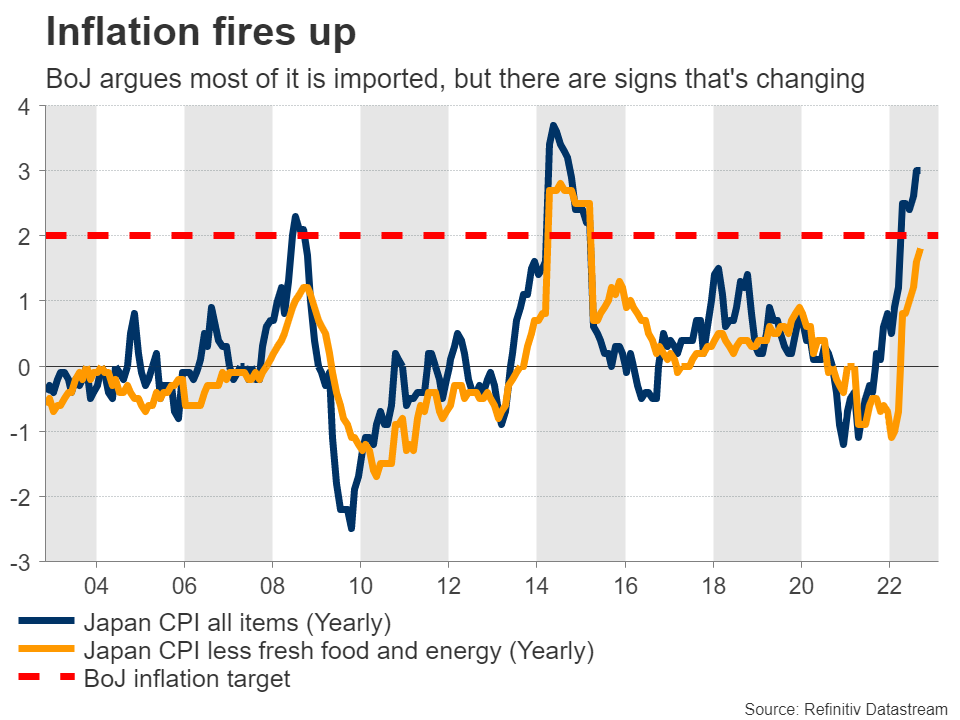
Even though inflation is running at 3%, the BoJ believes this phenomenon is mostly the product of broken supply chains and a severe energy shock, so it will fade away soon. Since wage growth and inflation expectations in Japan remain low, they argue there is little domestically-generated inflation. Therefore, it is unnecessary to raise interest rates in response.
Instead, the government has chosen to defend the currency with direct FX interventions to scare away speculators. The problem with this strategy is that it doesn’t address the source of the problem, it merely slows the bleeding. It is also quite costly as the nation has to burn through its FX reserves, and there are several ways it can backfire.
BoJ capitulates
Yet, the wind of change is blowing. Last week, BoJ Governor Kuroda stated that his central bank could make its yield curve control policy “more flexible” in the future. This yield strategy has decimated the yen, so adjusting it would be the first step towards a trend reversal.
Yield curve control effectively places a ceiling on Japanese bond yields. Every time the 10-year yield attempts to cross above 0.25%, the central bank steps into the market to stop the rally. Since Japanese yields cannot rise beyond this threshold, interest rate differentials mechanically widen against the yen as foreign central banks raise rates.
The possibility of adjusting this strategy was also mentioned in the summary of opinions from the Bank of Japan’s latest meeting. Some policymakers expressed support for an eventual withdrawal of these radical policies, mainly because of signs that inflationary pressures are becoming more entrenched.
Encouraging developments
Behind this change in the BoJ’s thinking lies a shift in economic data. There are clear signs that inflationary pressures are finally broadening out into categories beyond energy, giving policymakers confidence that inflation will be more persistent. Arguing the same point, wage growth has fired up lately, although not dramatically.
Another encouraging development was the $200bn economic stimulus package that the government is about to roll out, to help ease the impact of the cost-of-living crisis on consumers and companies. Importantly, this package also includes measures to encourage companies to raise wages, which will be music to the ears of the Bank of Japan.
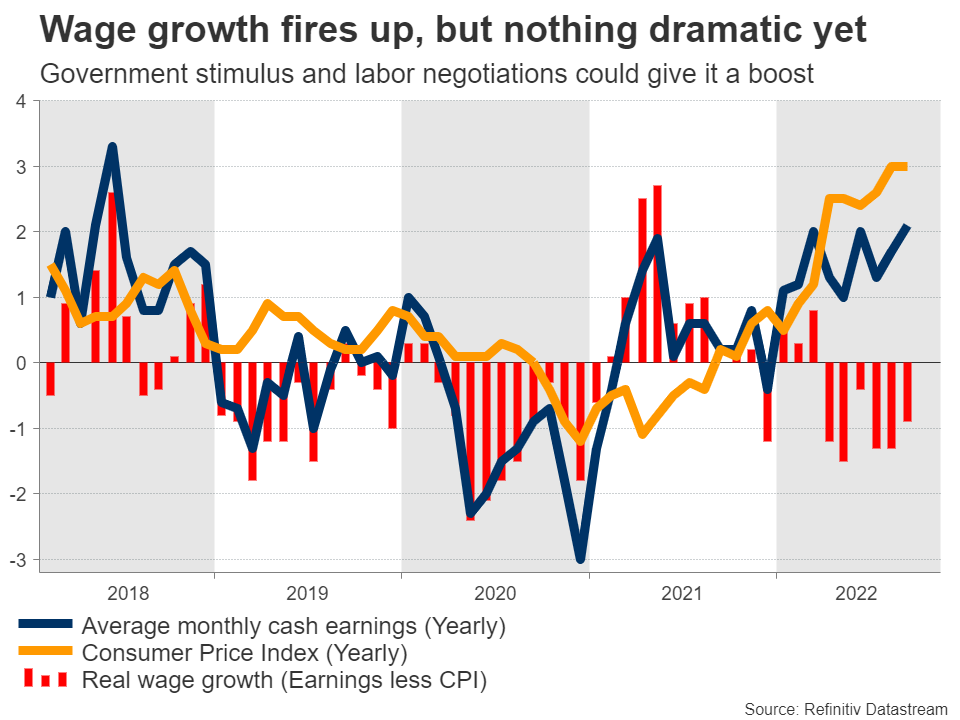
In fact, Japan’s largest labor organization agreed to seek a 5% pay increase in the upcoming spring wage negotiations, which would be the highest in nearly 25 years. Coupled with the upcoming stimulus package, wage growth could finally be on the verge of a serious acceleration. This would be crucial in convincing the BoJ to recalibrate policy.
Big picture
Overall, the outlook for the yen remains dark, but there is light at the end of this tunnel. Slowly but surely, the interest rate divergence that has crippled the currency seems to be coming to an end, with the Fed slowing down as the Bank of Japan moves towards tighter policy.
Hedge funds are betting heavily on the possibility that Japan’s yield curve control will be loosened and yields will be allowed to edge higher, something evident by the widening spread between Japan’s 10-year bond yield and overnight index swaps. However, the timing of any shift is highly uncertain and will ultimately depend on wage dynamics.
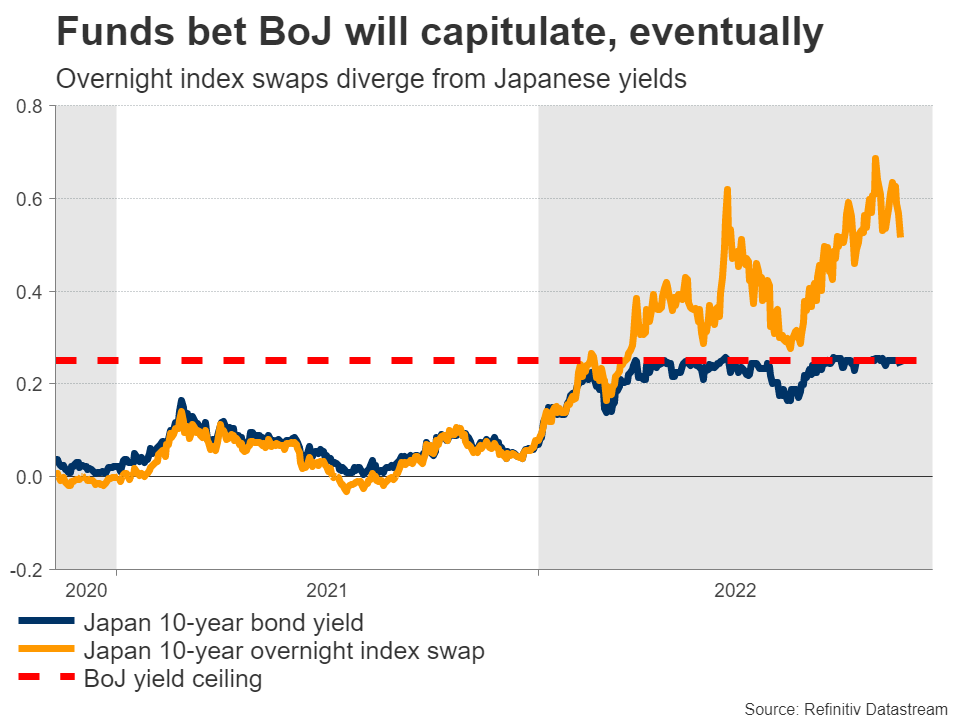
In the rest of the world, several central banks have started to slow down the pace of rate increases as they approach the end of their tightening cycles. Most important among them is the Fed, which signaled it might go down to a half-point rate increase at its next meeting in December. Incoming economic data have corroborated this prospect, taking the steam out of the dollar.
All told, picking bottoms in financial markets is notoriously difficult. While the yen could still hit new lows, the scope for further losses seems limited from here, especially with the government prepared to intervene in the FX market. Any real comeback might be a story for next year, but the yen’s fortunes have started to improve.
Week Ahead – Spotlight Turns to Pound and Non-US Data after Dollar Bruising
After another US inflation surprise, CPI data will be dominating the agenda in most other markets in the coming week, shifting the focus away somewhat from the greenback. The pound will likely attract the most attention in what will be a busy week for the United Kingdom, as apart from the economic releases, the budget statement will be watched amid lingering worries about high borrowing. Growth indicators will be important in China and Japan, while in the United States, the main highlight will be the retail sales numbers.
A slew of data and another budget for the pound
It’s been a tumultuous period for sterling these last couple of months and the coming week could again be a bumpy one. Aside from the fact that the week is jam-packed with key economic gauges, the government will unveil its much-anticipated Autumn statement. According to reports, the new chancellor, Jeremy Hunt, is planning to announce a combination of spending cuts and tax increases to fill a fiscal hole that was exacerbated by the mess created by the prior administration.
Hunt and Prime Minister Rishi Sunak will have quite a battle on their hands on Thursday to regain some economic credibility. But as long as the government’s own numbers add up and match the independent forecasts provided by the Office for Budget Responsibility, the event could be positive for the pound.
There is a danger that Hunt and Sunak go too far with their fiscal tightening, which would imply the Bank of England might not have to raise interest rates as aggressively, although this may not necessarily be bad for sterling and could even boost it.
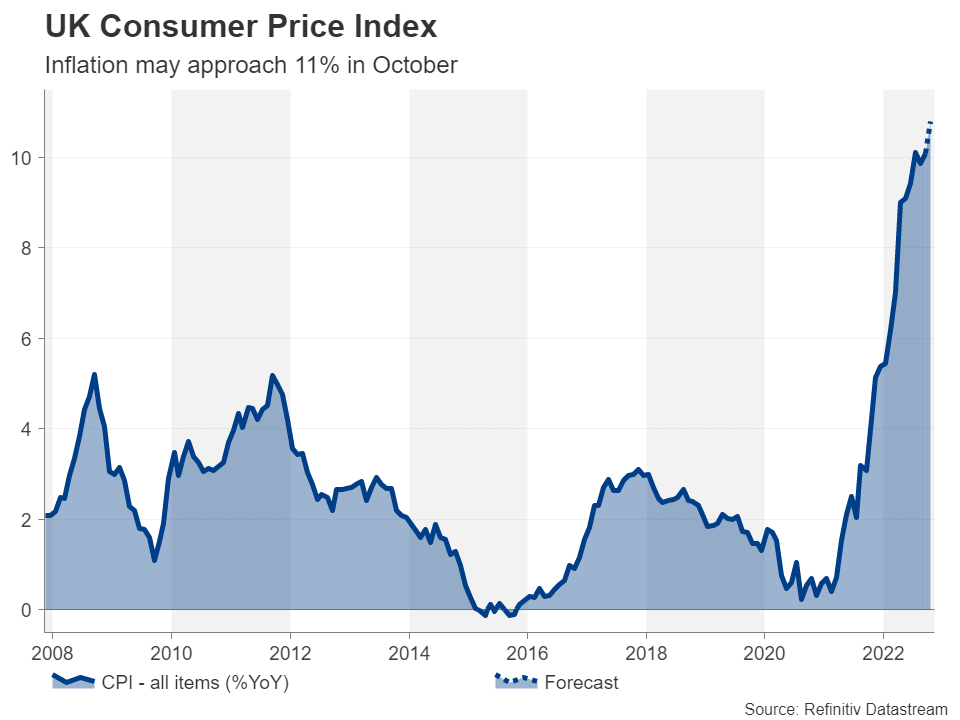
Regardless, it will be hard for the currency to ditch its clouded outlook entirely as the incoming data is expected to confirm a deteriorating economic backdrop with too high inflation. The employment report for September is up first on Tuesday, to be followed by the consumer price index for October on Wednesday. Retail sales figures will round up the week on Friday.
Few drivers for the euro
Across the channel, the euro’s recovery above parity against the US dollar might lose momentum amid mostly second-tier releases on the European calendar. Industrial production for September on Monday, quarterly employment estimates on Tuesday, alongside the second reading of Q3 GDP will all help investors get a better idea of how the Eurozone economy is riding out the energy and inflation storm. However, Thursday’s final estimate of October inflation is the only one that’s likely to spur some reaction in the euro, but only if there is an upward revision.
Otherwise, the euro will take its cues from the dollar and possibly from ECB speakers, who are growing ever more hawkish. Changes in sentiment towards the pound might also spill over to the euro given that lately, investors increasingly see the outlook for the UK and Eurozone economies being intertwined, with their fate tied to how the energy crisis will unfold.
US retail sales eyed after CPI drop
Dollar bulls suffered their biggest setback in more than six years this week after CPI inflation unexpectedly eased to below 8.0% y/y in October. A 50-basis-point rate hike by the Fed in December now seems more likely than a 75-bps one, but there could be some support for the US currency next week from the latest retail sales numbers on Wednesday.
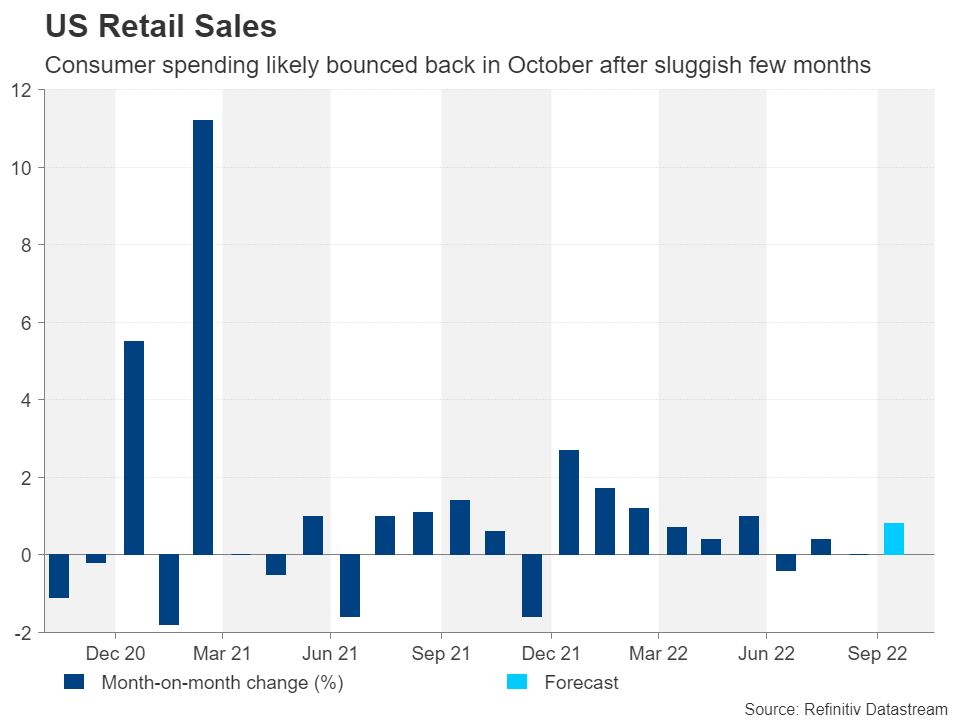
Retail sales are forecast to have bounced back by 0.8% month-on-month in October after being flat in September.
However, upbeat consumer data alone might not be enough to bolster the dollar. It’s unlikely that the other releases, which include producer prices on Tuesday, industrial production on Wednesday, and housing numbers on Thursday and Friday, will significantly brighten the picture.
But as the dollar possibly enters a prolonged phase of being stuck on the backfoot, equity markets stand a good chance of extending their gains over the coming week.
Yen on inflation alert
The battered Japanese yen has gotten off to a positive start in November and its fortunes could further improve next week.
GDP estimates out on Tuesday are expected to show the Japanese economy grew by 0.3% q/q in the third quarter – a comparatively solid clip. There will also be data on machinery orders (Wednesday) and trade (Thursday), but investors will care more about the CPI stats out on Friday.
Whilst still well below other countries, inflation in Japan has been steadily edging higher and the core measure that the Bank of Japan targets is forecast to have maintained the upward trend, climbing further above 3% in October.
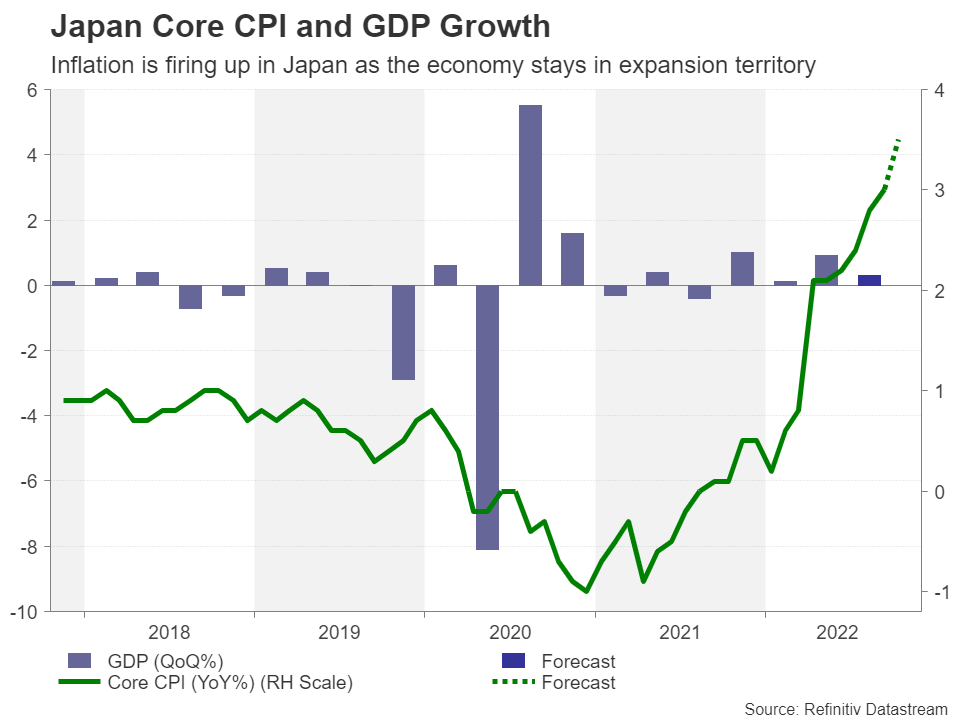
With the BoJ tepidly hinting that the time to start thinking about exiting its ultra-accommodative stance may be nearing, any upside surprises in the inflation readings going forward may fuel speculation about the timing of a policy shift by the Bank, lifting the yen.
Aussie and loonie look to domestic data as China stutters
Whilst the Japanese economy reaps the benefits of still plentiful stimulus by the BoJ, there is concern that China’s economy hasn’t been receiving enough policy support from authorities as it struggles under the weight of lockdowns and a slowly unravelling property crisis.
Industrial output and retail sales figures due Tuesday are not expected to ease slowdown concerns as a softer print is anticipated for both in October.
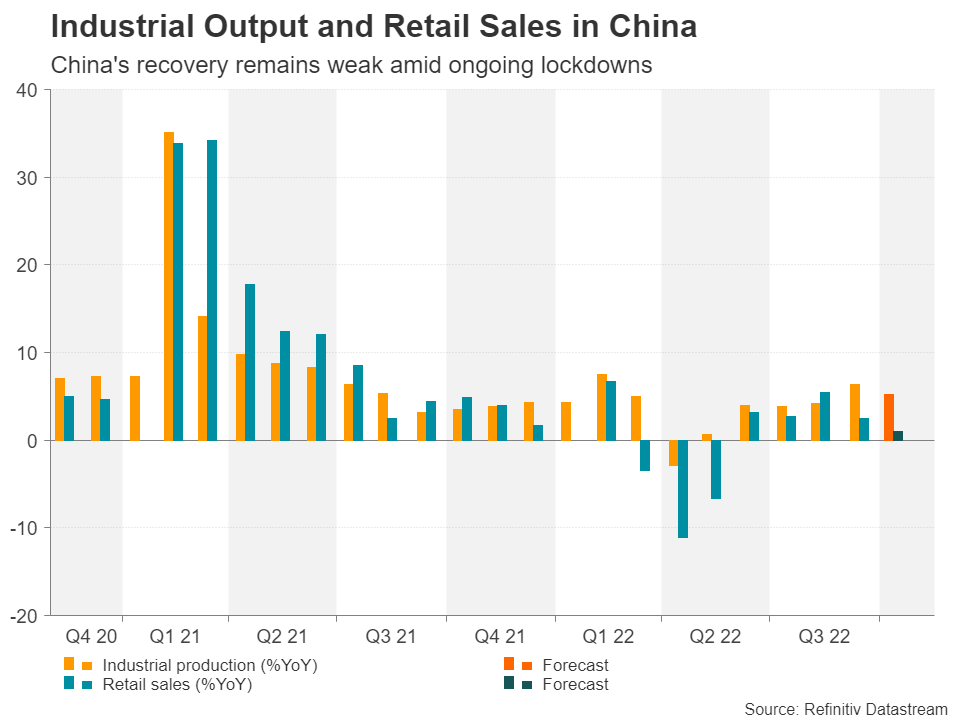
Nevertheless, hopes are high that the Chinese government will soon do away with draconian Covid restrictions so investors might not react too negatively to disappointing data.
Hence, for the China-sensitive Australian dollar, domestic indicators will probably be more crucial as investors have upped their bets lately that the Reserve Bank of Australia will keep rates on hold at its next meeting in December.
The RBA publishes the minutes of its prior meeting on Tuesday, and on Wednesday and Thursday, quarterly wage and employment numbers will be watched, respectively.
A stronger-than-expected rise in employment in October would lessen the odds of no change in rates in December, potentially boosting the aussie as it rebounds from the October lows against the greenback.
Another central bank that has recently shifted into lower gear is the Bank of Canada, although the local dollar remains one of the top performers this year.
Wednesday’s CPI report could determine if the BoC opts for a 25- or 50-bps hike at its December gathering.
Weekly Focus – Geopolitics Takes Centre Stage
The central bank 'pivot' narrative got a boost from US CPI inflation surprising on the downside, falling back to 7.7% in October amid easing core inflation pressures. Terminal rate expectations declined and markets are now pricing only a 50bp Fed hike in December, challenging our call of a 75bp increase. Equity markets rallied on the prospect of less Fed tightening and the roller-coaster moves in yields continued, with spread tightening also seen in European rates. Geopolitical headlines of Russia withdrawing from the city of Kherson added to the volatility, as did comments from a range of ECB members suggesting that the recession view is gaining ground, although in contrast to the Fed, with no slackening of the hiking pace yet in sight. The rally in Chinese equities got a boost from an easing of quarantine rules for travellers, but new infections have climbed higher especially in the manufacturing hub of Guangzhou. Commodity prices, including oil, rose more than 1% on the back of broad USD weakening. We remain sceptical that a turnaround in the strict zero-Covid stance is coming anytime soon, and continue to think EUR/USD will decline back below parity despite the most recent uptick.
As votes in the US midterm elections continue to be counted, the Republicans look likely to narrowly win the House of Representatives, but the anticipated 'Red Wave' did not materialise. Control of the Senate might not be known for weeks, as the race in Georgia goes to a December run-off. Overall, the market reaction was muted as little changes to fiscal policies are expected to result from the political gridlock, although we keep an eye on potential changes to US support for Ukraine and the upcoming debt ceiling discussions.
The EU Commission published a first proposal for overhauling the EU's fiscal rules, which would allow countries to agree more realistic debt-reduction paths with Brussels, while creating extra space for public investment. Enforcement would be tightened, with a stricter regime for countries that face 'substantial' public debt challenges, but an agreement before mid-2023 seems unlikely.
A busy week awaits on the geopolitical front, creating the backdrop for volatile markets. On Tuesday Indonesia will host the first G20 leaders' meeting after Russia's invasion of Ukraine. It has been confirmed that Russian President Putin will not attend in person, though he is planning a virtual participation in one of the meetings, in an encouraging sign that some level of dialogue between Western and Russian leaders continues. President Xi and Biden are also set to meet for their first face-to face meeting. Securing 'guardrails' on the Taiwan issue could be the most important topic, while we also look out for comments from Xi about his opposition to using nuclear weapons. In China we have a policy rate decision and a cut cannot be ruled out, as a range of 'hard data' will probably confirm that Covid uncertainty continues to dampen demand. In the UK, we look forward to the Chancellor's Autumn Statement on Thursday, where PM Sunak's government will spell out its fiscal plans. It is widely expected to include tax increases across the board to fill up the hole of approximately GBP 50bn in the UK's public finances, while October inflation numbers could take another big jump up. In the US, retail sales for October will reveal how well consumer spending is holding up amid high inflation.
Weekly Economic & Financial Commentary: October Prices Give Fed Ability to Slow Pace of Rate Hikes
Summary
United States: October Prices Give Fed Ability to Slow Pace of Rate Hikes
- Relief in October inflation gives the FOMC the ability to slow the pace of rate hikes ahead. But make no mistake, the Fed's job of taming inflation remains far from over. We still expect it to raise the federal funds rate 50 bps at its next policy meeting in December, and now look for the policy rate to reach a peak of 5.25% by March, 25 bps more than we previously forecast, due to near-term resilience in spending and labor market strength.
- Next week: Retail Sales (Wed), Industrial Prod. (Wed), Housing Starts/Existing Home Sales (Thu/Fri)
International: Mixed Inflation Trends from Latin America
- This week saw some mixed inflation trends from Latin America. Mexico's October CPI slowed to 8.41% year-over-year and energy prices slowed along with fruit and vegetables prices. However, the core CPI quickened further, and as a result, we fully expect the Bank of Mexico to raise its policy rate by 75 bps points this week. In Brazil, October inflation slowed further to 6.36% year-over-year, with lower taxes and gasoline prices as key drivers of the deceleration in recent months.
- Next week: Japan GDP (Tue), China Retail Sales & Industrial Output (Tue), U.K. CPI (Wed)
Credit Market Insights: Consumer Credit Growth Steadies as Banks Tighten Lending Standards
- Total consumer credit growth moderated in September, increasing by $25 billion in a step down from August’s $30 billion gain. The Fed's quarterly Senior Loan Officer Opinion Survey, which generally covers the third quarter, found that banks have tightened their lending standards over the quarter and demand for most business and consumer loan types weakened.
Topic of the Week: Election Day 2022
- Election Day has come and gone in the United States, and although not every race has been determined, the broad contours of the election outcome have emerged. The most probable outcome appears to be a divided government, with Republicans controlling at least one chamber of Congress and the White House still safely in Democrats' hands.
The Weekly Bottom Line: Markets Cheer Inflation Easing a Touch
U.S. Highlights
- Republicans look to have won control of the House in this week’s midterm elections. The Senate race remains too close to call. With Washington more divided, major spending and tax changes are less likely, while some risks increase (i.e., the potential for a government shutdown).
- CPI inflation eased in October, with headline CPI decelerating to 7.7% y/y (from 8.2%) and core CPI cooling to 6.3% y/y (from 6.6%). Shelter costs remained a key contributor to inflation.
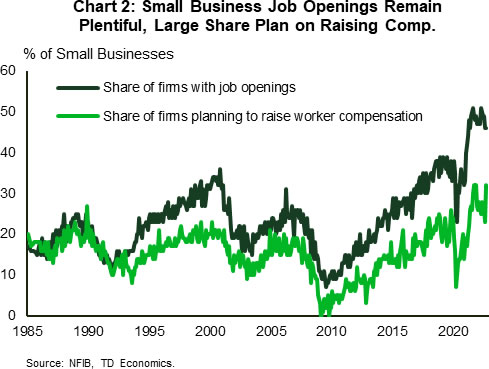
- Small business confidence pulled back a bit in October, but job openings remained unchanged near record highs.
Canadian Highlights
- It was a quiet week in Canada data-wise ahead of next week’s flurry of data. The CPI report is expected to show modestly easing inflation, while existing home sales will likely show that the housing market is nearing its bottom.
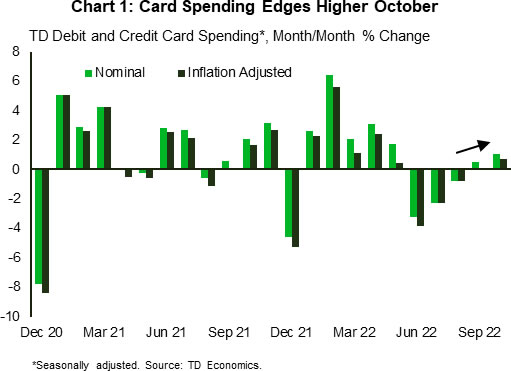
- Despite significant financial headwinds hitting consumers’ budgets, aggregate spending on debit and credit cards edged slightly higher in September and October after trending lower over the summer months.
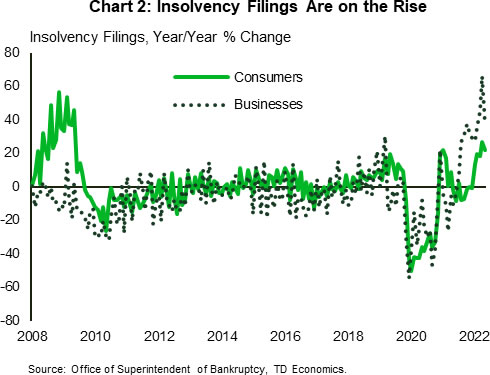
- However, rising financial hurdles are leading to higher insolvency filings. Consumer insolvencies are up 22% from a year ago, while filings were up 37% y/y for businesses.
U.S. - Markets Cheer Inflation Easing a Touch
The midterm elections took center stage for much of the week, although markets were most encouraged by good news on the inflation front on Thursday. Republicans look to have won control of the House, capturing an estimated 208 seats thus far (vs. 185 for Democrats), while the Senate remains too close to call. We may need to wait until Georgia’s runoff election on December 6th, to know the final result, depending on races in Arizona and Nevada.
Either way, Washington is looking more divided than it was a week ago, and the chance that new major policy measures get the three required checkmarks – House, Senate and White House – have diminished. Indeed, large scale fiscal spending measures and major tax changes seem unlikely over the next two years. In this vein, the midterms should not have a major impact on economic growth. There are, however, risks that come with a divided Congress. One concerning aspect is the potential for a lack of agreement to fund government programs in the near-to-medium term, which could lead to a government shutdown, or debt-ceiling standoff, which raises the (unlikely) risk of a default on debt or leave other bills unpaid. These issues, which have the potential to significantly disrupt financial markets, as they’ve done in the past, are added risks for a slowing economy in the year ahead.
Inflation was likely top of mind for many voters as they headed to the polls, as it has been taking a sizable bite out of consumers’ wallets this year. The Consumer Price Index (CPI) showed that inflation eased in October, for both headline and core CPI, with the latter decelerating to 6.3% year-on-year (y/y) from 6.6% in the month prior (Chart 1). In month-over-month (m/m) terms, core CPI decelerated meaningfully to 0.3% in October from 0.6% previously. Core goods prices declined 0.4% (m/m) amidst a pullback in several categories such as appliances, apparel and used car prices. Price growth across core services (0.5%) also moderated from last month’s gain of 0.8%, driven by a notable pullback in health care services (-0.6%). However, shelter costs (0.8%) remained a meaningful contributor.
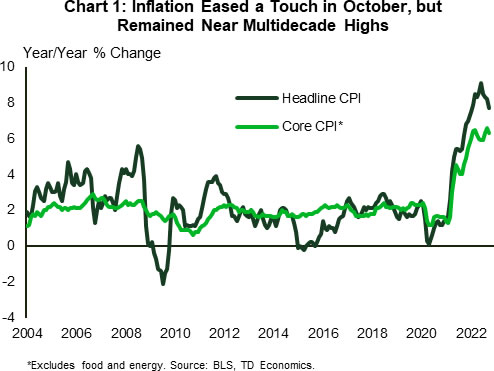
All in all, inflation has eased a bit, in part because of the pullback in core goods prices. However, it remains well above the Fed’s comfort zone, and (without wanting to sound like a broken record) we’re likely to see continued gains in the shelter component over the near term (see here). So, we’re not out of the woods just yet.
As Fed Chair Powell noted recently, the Fed has reached a point where it will dial back the pace of rate hikes, but there’s quite a bit more to be done in raising rates. Underpinning this hawkish tilt is the broad resilience in the labor market. Job openings for instance, have eased a bit, but remain plentiful – a message echoed by the NFIB small business survey (Chart 2). Still, cracks continue to form in some corners of the economy, case in point the tech sector. Layoffs at Meta and Redfin (online real estate broker) amounting to 13% of their workforces added to the string of cuts announced in the tech space this year. Meanwhile, the higher interest environment is expected to continue weighing on the housing market, with weak prints likely to follow in next week’s housing starts and existing home sales reports. Bringing inflation down comes at a cost.
Canada – Economy Still in Excess Demand, but Cooling
It was a quiet week in Canada data-wise, nonetheless the past few days were marked with volatility in financial markets. Midterm elections in the U.S. and turmoil in cryptocurrency markets made waves. Following a selloff on Wednesday, markets surged higher today following the release of U.S. inflation numbers, which showed a larger than-expected slowdown in price growth in October. It's been some time since U.S. inflation surprised to the downside and this news lifted investors' spirits, with hopes that inflationary pressures south of the border are finally starting to ease.
Here in Canada next week's CPI report is expected to show modest improvement on inflation front in October as well. Following a 6.9% year-over-year (y/y) increase in September, headline inflation is expected to have eased to 6.7% last month. However, all eyes will be on core inflation, which has so far remained stubborn. Not helping the cause, both the labour market and spending data have showed renewed resilience in the fall months. Last week's blockbuster employment report showed that after a summer lull, the economy added 100k new jobs in October. Consumer demand too has also shown more life in the past two months. Despite significant financial headwinds hitting consumers' budgets, aggregate spending on debit and credit cards edged slightly higher in September and October after trending lower over the summer months (Chart 1).
No doubt the resilient labour market has been helping to partially mitigate the financial pain that consumers are facing due to high inflation, rising interest rates and thinning wealth cushions. With unemployment near a record low, a tight labour market continues to add upward pressure on wages. The BoC governor Tiff Macklem also discussed labour market imbalances and its implications for inflation in his speech today, stating that "vacancies are elevated, businesses are reporting widespread shortages", and "wage growth has increased and broadened across the economy". However, he also stated that the Bank is seeing early signs of that the labour market is starting to loosen, particularly in interest-rate sensitive sectors, such as manufacturing and construction.
All in all, despite the aggressive monetary tightening, the Canadian economic engine appears to still has some steam left in it. But likely not for long. Monetary policy works with lags, as such we are only starting to see the impact on real economic activity. The full cumulative effect of higher interest rates on consumers will materialize only toward the end of 2023, after significant share of borrowers have been exposed to higher rates either due to mortgage renewals or higher rates on new credit. However, rising financial hurdles are already leading to higher insolvency filings. Consumer insolvencies (which include both bankruptcies and debt-restructuring proposals) are up 22% from a year ago, while filings were up 37% y/y for businesses (Chart 2). Both are rising from low levels, but will likely continue to increase as the labour market cools and higher debt servicing costs extend their reach to a larger number of households.
Canadian Inflation to Lead a Flurry of Data Releases Next Week
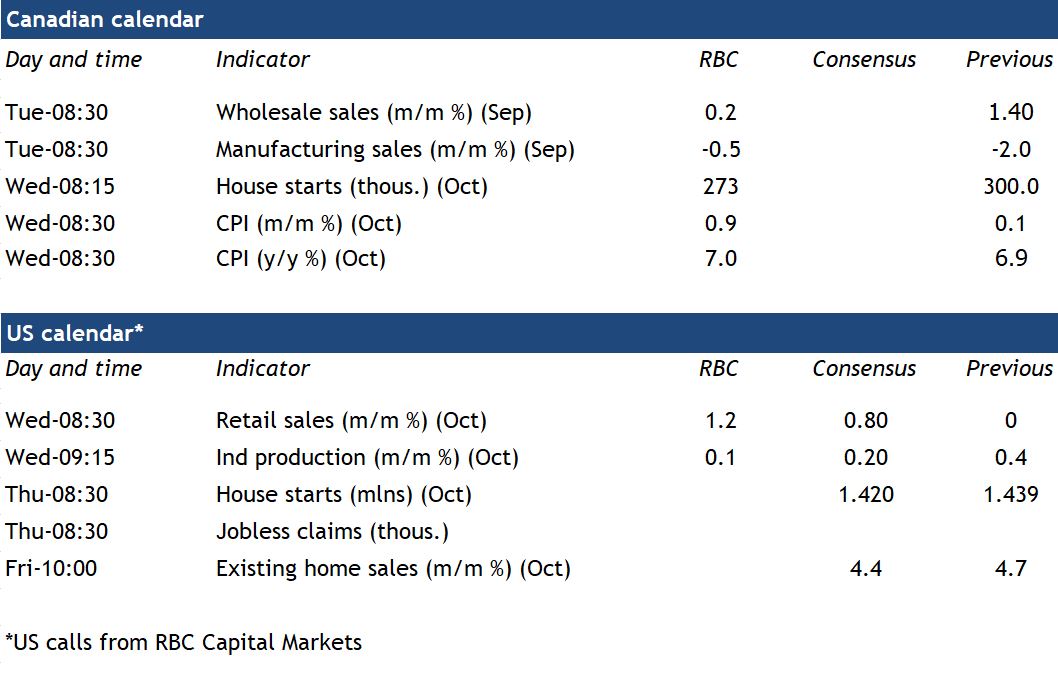
Consumer price growth in Canada likely ticked higher in October. We expect the annual rate to have risen to 7%, up from 6.9% in September but still down from the 8.1% recent peak in June. Driving the increase was a resurgence in gas and fuel oil prices. These prices, declining for months, had been the main factor pulling overall CPI growth readings lower. At 10.3% in September, food inflation was already the highest it’s been since 1980s—and that momentum likely extended into October. Inflation growth excluding more volatile food and energy products was likely little changed from a 5.4% annual increase in September as weakness tied to home-owning related expenses is offset by strength seen elsewhere.
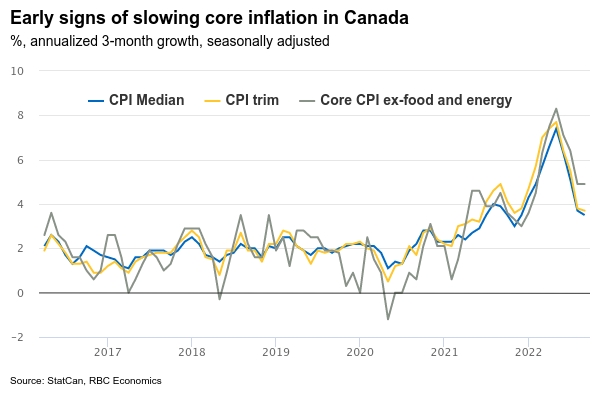
Still, broader ‘core’ inflation measures—designed to provide a better gauge of underlying inflation trends—have shown some very early signs that the breadth of inflation pressures may be easing. The Bank of Canada’s preferred ‘trim’ and ‘median’ core CPI measures are still very high versus a year ago, but the pace of monthly growth moderated in August and September. By our count, 63% of the CPI basket was still growing at an annual rate above the BoC’s 1% to 3% target range over the three months to September. That’s down from 77% in July. Those green shoots were cited as a key reason for the BoC’s decision to go with a 50 basis point hike in October (below market expectations).
Outside of inflation readings, global supply chain constraints have continued to ease. A variety of shipping indicators have improved. Commodity prices, while still high, are lower than earlier this year. But labour markets are still very tight and consumer demand remains strong. While there are signs that inflation is past its peak in Canada, it will likely take a sustained period of higher interest rates and a weaker economy for price growth to ease fully back to central bank target rates. Our forecast assumes one additional 25 basis point increase in the BoC’s overnight rate in December before it pauses to assess the impact of its rate hikes so far. And risks to that interest rate outlook remain tilted to the upside.
Week ahead data watch:
We expect manufacturing sales declined half a percent in September—in line with early estimates from Statistics Canada. A large drop in petroleum sales was likely price-related, although we expect overall sale volumes to also decline by 0.3% with Statistics Canada noting lower transportation sales.
Housing starts likely slowed but to a still relatively strong 273,000 in October from the 300,000 annualized pace in September. Residential building permit issuance slowed to 258,000 in September from the outsized 307,000 in August.
A jump in U.S. unit auto sales in October is flagging a solid 1% increase in U.S. retail sales. We expect U.S. industrial production edged up 0.1% in October, with higher manufacturing output (+0.4%) offsetting a pullback in utilities output (-1%).
UK NIESR: GDP growth to be flat in Q4, but contraction risk elevated
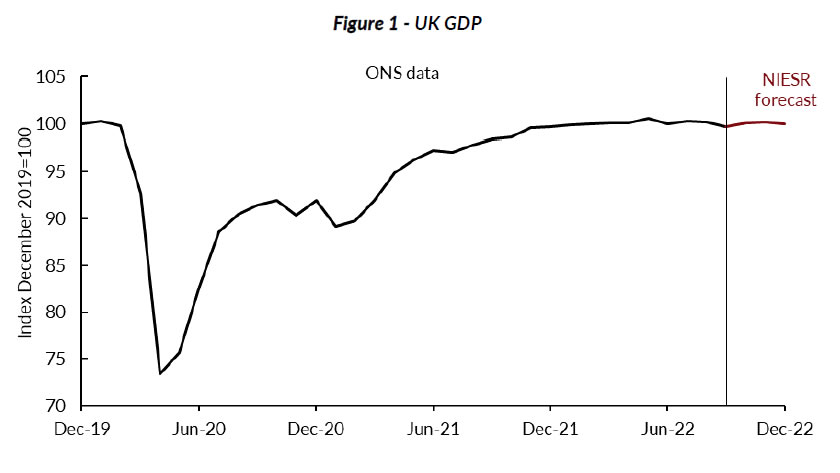
UK NIESR said, today's data confirmed a "production-driven contraction in GDP in Q3. It's expectation GDP growth to be flat in Q4.
However, "given that October PMIs recorded figures below the neutral 50 for both the services and manufacturing sectors, consumer and business confidence is plummeting, and higher-than-expected inflation and interest rates continue to squeeze budgets, the risk of a contraction in GDP in the fourth quarter of this year remains elevated, NIESR said.
"Whether the Chancellor's upcoming Autumn Statement will alleviate or aggravate current recessionary risks will become clearer next week."
The Great Deceleration
Equity markets are on course to end the week on a positive after Thursday's US inflation report gave hope that the great deceleration is well underway.
That inflation report has been some time coming and investors breathed an enormous sigh of relief in response. The reaction to the number looks a little extreme, overdone even, but in fairness, investors have waited a long time for the chance to do that and so much negativity has been priced in during that time.
The fact that equity markets are in the green again today highlights that fact. We could see sentiment cool again in the coming weeks once the dust settles and the narrative changes from inflation has peaked and the Fed will slow its tightening efforts to we need more supportive data to back this up. But this is a fantastic start.
So often in recent months, the market has become bullish in the lead-up to these key releases only to be beaten down again as the reality doesn't live up to the dream. Well, this report delivered on that dream and then some. If it can be backed up by another solid report next month and some decent numbers in between, the Fed will have every excuse to slow down next month and even signal a lower terminal rate early next year.
UK already in recession?
It will come as a surprise to no one that economic data released this morning showed the UK may already be in recession. I mean, at this stage I'm not sure that's even newsworthy enough to make the front pages in the UK.
The Bank of England has been expecting this for some time and when confirmed in a few months, we should have a much better idea of how bad it will be. As we saw from its last forecasts which in a week will be based on old data, the range of viable recessions is quite broad and that's before the new fiscal plans are accounted for.
By the time it's confirmed, at least we'll know what the peak of inflation will be, how bad the winter energy crisis was and how high-interest rates are likely to go. All of which we've had to live without the knowledge of for the last 12 months.
Can oil break $100 again?
It's been quite the volatile week for oil, with Chinese rumours not going away, restrictions and mass testing being undertaken once more and the global economic outlook seemingly changing on a daily basis. There's no such thing as a boring week these days.
Today it's the improvement in economic sentiment on the back of that inflation data alongside a modest relaxation of Chinese quarantine measures that are lifting prices. A press briefing is expected tomorrow which may shed further light but if this is as good as it gets, investors have got way too carried away.
Brent remains in the middle of its $90-$100 range for now but more bullish developments like this, or a further relaxation of Chinese restrictions on Saturday may test the upper end of that.
Gold shines once more
Gold bulls have been waiting for this week for a long time. A week (or so) in which the Fed signalled a potential slowing of rate hikes and the CPI data displayed a significant and broad-based decline. The yellow metal is shining once more and is back at levels not seen in almost three months. It's seeing some resistance around $1,760 now and may see more around $1,780 but at this point, gold bulls may have their sights set on $1,800.
Cryptos weighed down by FTX uncertainty
Even Bitcoin managed a strong recovery rally yesterday alongside the surge in other risk assets. Of course, other risk assets didn't drop 25% in the days preceding the inflation data, nor are they down 3% today. The collapse of FTX and the uncertainty it has brought to the industry has been another damaging blow. How damaging it will be will depend on what further details appear in the coming days but right now, prices remain under pressure and vulnerable to further sharp declines.
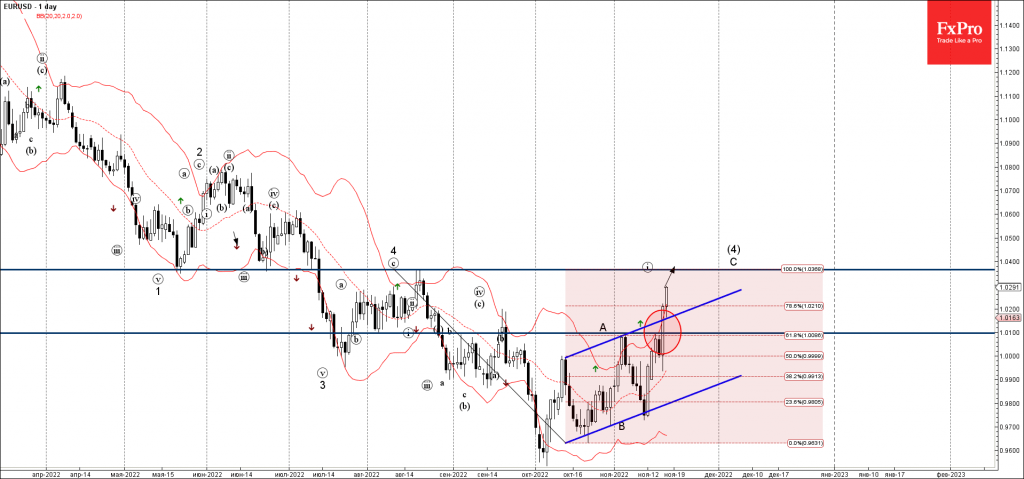
EURUSD Wave Analysis
- EURUSD broke resistance level 1.0095
- Likely to rise to resistance level 1.0365
EURUSD recently broke the resistance level 1.0095 (which has been reversing the price from the start of September) intersecting with the 61.8% Fibonacci correction of the downward impulse from August.
The breakout of the resistance level 1.0095 led to the subsequent breakout of the resistance trendline of the daily down channel from October.
EURUSD can be expected to rise further toward the next resistance level 1.0365 (multi-month high from August and the forecast price for the completion of the active wave C).
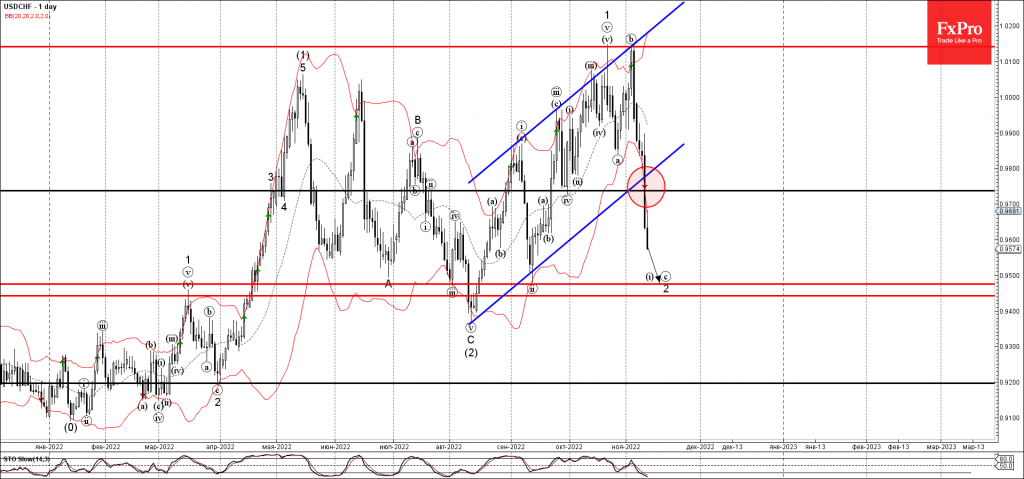
USDCHF Wave Analysis
- USDCHF broke support level 0.9735
- Likely to fall to support level 0.9475
USDCHF recently broke the key support level 0.9735 (low of the earlier short-term wave (iv) from the end of September) intersecting with the support trendline of the daily up channel from August.
The breakout of the support level 0.9735 accelerated wave c-wave of the active minor ABC correction 2 from the middle of October.
Given the continuation of the strongly bearish USD sentiment, USDCHF can be expected to fall further toward the next support level 0.9475 (monthly low from September and the target for the completion of the active wave 2).