

Sample Category Title
Cryptocurrencies are Attracting Investors, But it Will Pass
Bitcoin rallied from $20.5K to $21.6K during the day on Tuesday but later reversed to decline and went back on Wednesday morning. Ether corrected deeply, losing 4.4% over the last 24 hours. The top ten altcoins showed mixed dynamics, ranging from a 6.5% decline (Solana) to a 3.6% gain (Dogecoin).
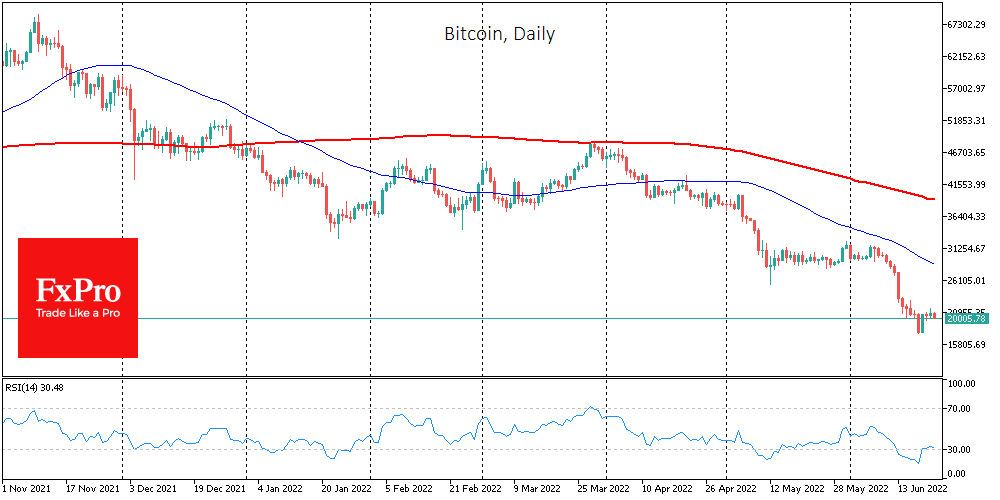
Total crypto market capitalisation, according to CoinMarketCap, declined 1.9% to $900bn. Bitcoin’s dominance index dropped 0.2 points to 43.5%. The Cryptocurrency Fear and Greed Index is up 2 points to 11 by Wednesday and remains in a state of “extreme fear”.
After a strong move down last week and a retreat from the extremes on Sunday, BTCUSD failed to gain ground with buyers and remained pegged at the round level of $20K.
Bitcoin’s recent drop below $20K triggered a new wave of deleveraging and liquidations that affected miners and long-term investors, Glassnode claims.
Ethereum co-founder Vitalik Buterin criticised the popular Stock-to-Flow model for predicting bitcoin exchange rates, saying it is wrong and only gives people unwarranted confidence in the predetermination of exchange rate movements.
Investors are buying bitcoin despite the market’s decline. According to CoinShares, crypto funds saw capital outflows of $39m last week, while there were inflows of $28m into BTC.
Investors have, in our view, false confidence in their strengths. It is commonly believed in the media that retail investors were the first to buy out the 2020 bottom and who managed to beat the funds in 2021 using the r/wallstreetbets forum.
But then the Fed and many other central banks, along with governments, were on the buyers’ side, conducting unprecedented policy easing and handing out monetary stimulus. Now they are doing the opposite: rolling back support programmes and raising rates at the highest rate in decades.
Retail shoppers risk being caught swimming against the financial current, which is hardly a successful strategy. History suggests that enthusiasts risk running out of steam soon, being left with depreciating assets, and losing confidence for years that equity or cryptocurrency markets are a worthwhile place for their money.
Daily Technical Analysis
EUR/USD
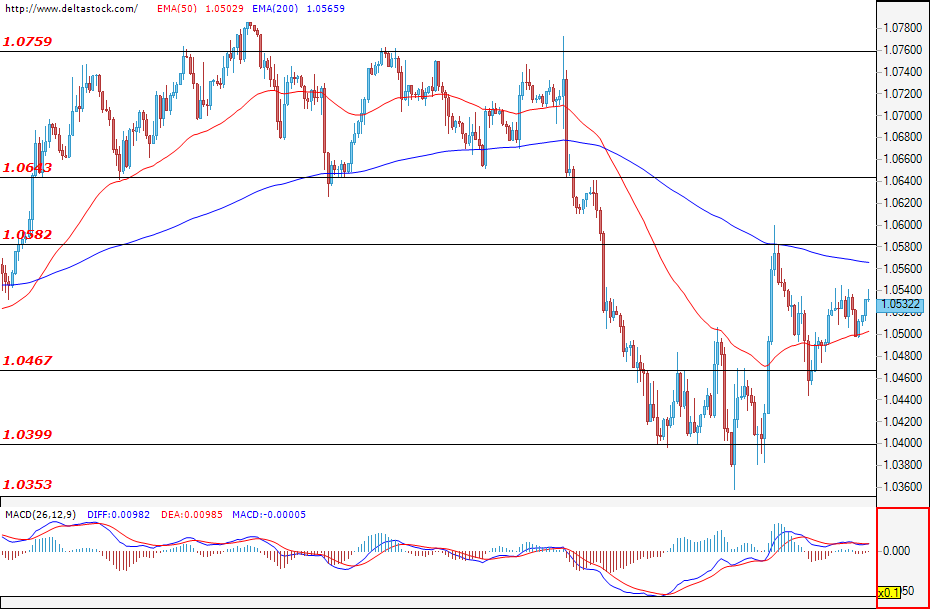
In the early hours of today, the euro was gaining strength against the dollar, and after testing the key levels at around 1.0500 and subsequently bouncing off it, the single European currency continued to grow in value against the greenback after the European session started. A few hours later, it even managed to reach its weekly peak of 1.0582 – a level that was also touched on last week. However, this level played the role of resistance and the bulls gave up on their next attack, as the euro fell to levels at around 1.0535 shortly before the end of the day. Today, there is no data in the macroeconomic calendar that would affect the rate of the euro against the U.S. dollar. Traders will focus their attention on Thursday’s data on German managers’ production and services assessment, scheduled at 7:30 GMT. If we see a high score, this may prompt the bulls to launch a new attack and possibly breach 1.0582, but for now, there is still a high probability that the dollar will continue its upward trend.
USD/JPY
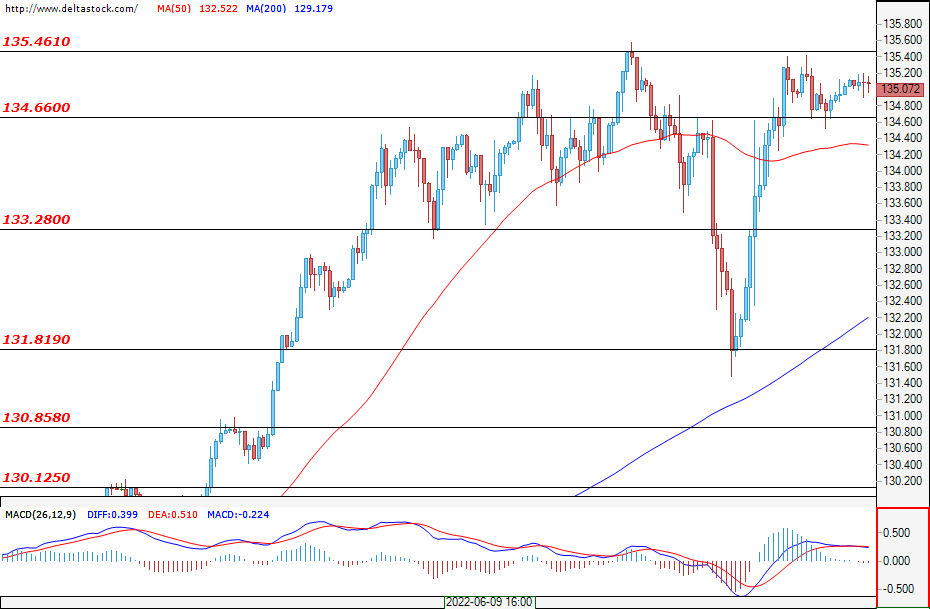
At the moment, it seems like nothing could stop the USD/JPY’s uptrend. The currency pair started its rise in the early hours of today, and sometime around the opening of the European session, it convincingly breached its previous resistance of 135.46 and reached a new monthly peak of 136.68 just before the end of the day. There are currently no expected macroeconomic events that could help the yen to gain some ground and the current trend will most likely be preserved. Of course, market corrections that provide the bulls with convenient entry points are not to be excluded, similar to those of last week which downed the Ninja to 131.80.
GBP/USD
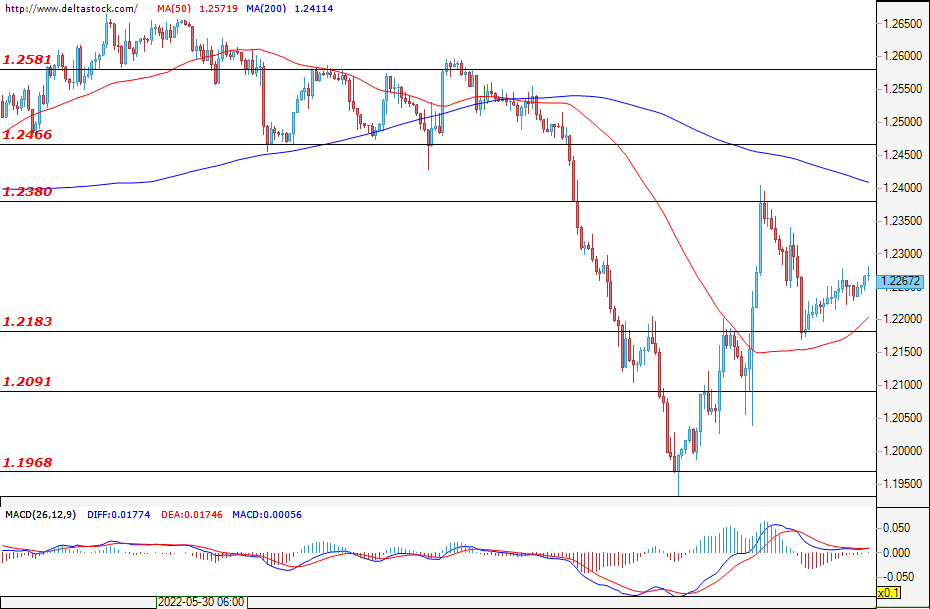
The sterling also managed to take advantage of the weakening dollar and continued its upward trend. After the opening of the London Stock Exchange, we saw a successful bull attack and the currency once again reached its key level of 1.2320 – a level that played the role of resistance throughout the previous week. Today, it played the same role as it stopped the bull attack and the session ended at around 1.2269 as the day drew to a close. Traders will be focusing on the UK’s May inflation data on an annual basis. The macroeconomic calendar will show the information at 6:00 GMTand the movements are expected to come after that. The ongoing trend in the pound will largely depend on the bulls’ and bears’ reaction to а possible further inflation rise.
EUGERMANY40
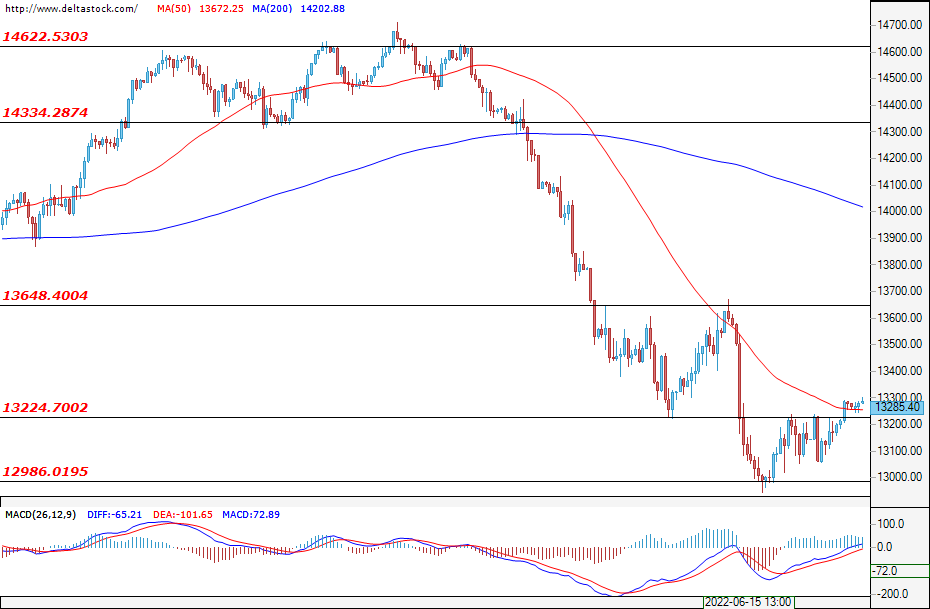
The EUGERMANY40 managed to rise by 240 points, and in the early hours of today and following a short test of the breached level of 13224, the index managed to bounce off it. Before the opening of the U.S. stock market, it also reached a weekly peak of 13439 – a level that, however, played the role of resistance in today's session. At Wall Street’s opening bell, the correlation with the American indices was severed and the German index went into a decline, closing the day at 13258, or around the key level mentioned above. Whether this level will be able to support the price and breach 13439 will largely depend on the market’s reaction to the managers’ German production and services assessment that is due on Thursday at 7:30 GMT.
US30
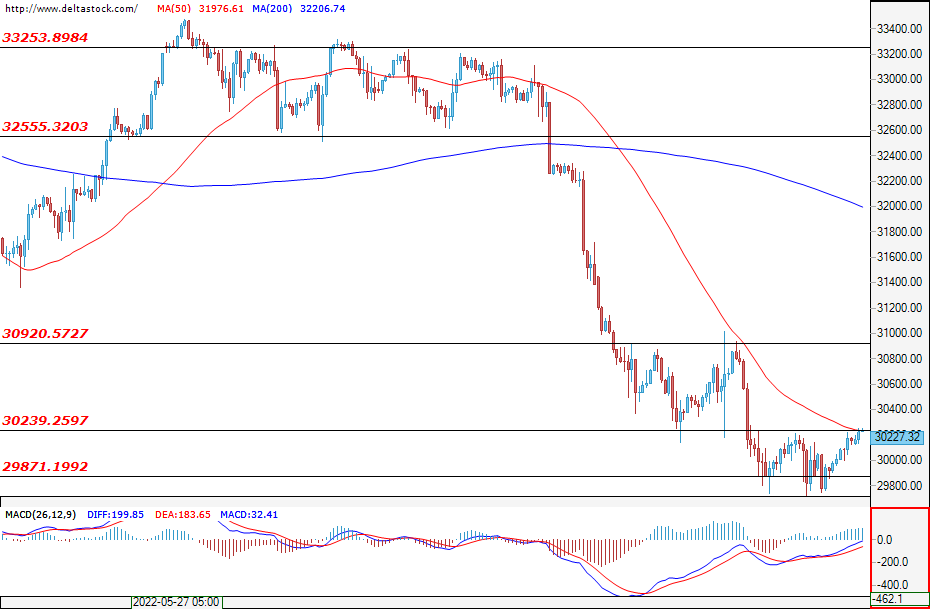
The fall in the dollar managed to positively affect the U.S. stocks as well, allowing the U.S. indices to continue their rally that started on Monday. In the early hours of today, the key resistance at 30239 was breached and the index managed to reach a weekly peak of 30653 shortly before the closing bell on Tuesday. However, since this level played the role of resistance, the closure happened at 30546. Today's statements by Fed chair Jerome Powell at 13:30 GMT may be just what the market needs to fuel a rally, but whether this will end up being just another correction or a new sell-off wave will depend on the reaction of the traders to his comments.
NZDUSD Eyes June’s Lows as Bears Regain Control
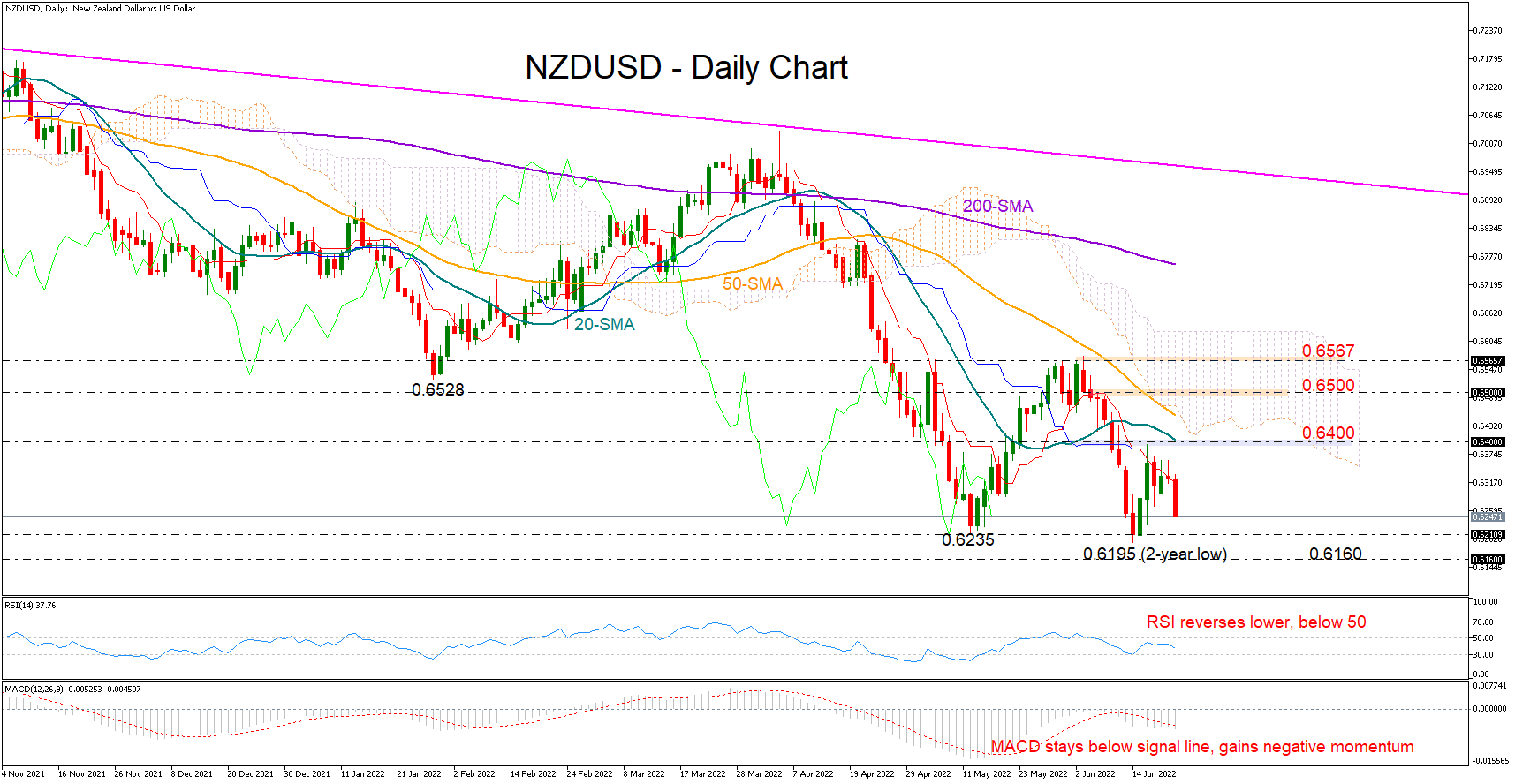
NZDUSD resumed its slide on Wednesday, bringing the key 0.6335 – 0.6195 bottom area back under the spotlight after a four-day-long unsuccessful battle with the red Tenkan-sen line.
The RSI and the MACD remain negatively charged within the bearish zone, while the negative intersection between the red Tenkan-sen and blue Kijun-sen lines is another indication that the bears may hold onto control in the coming sessions.
Should the price close below 0.6235, the former resistance zone around 0.6160 may immediately attract some attention before selling pressures intensify towards the 0.6000 round-level. Below that, there is another important barrier around 0.5916.
Conversely, a decisive move above the red Tenkan-sen line currently at 0.6316 may continue towards the 20-day simple moving average (SMA) at 0.6400. If the 50-day SMA proves an easy obstacle too at 0.6452, the pair may visit the 0.6500 psychological mark, though only a durable rally above June’s topline of 0.6567 would make any rebound credible.
Summarizing, the odds are in favor of the bears in the NZDUSD market, and the next downside target is the May-June floor of 0.6235 – 0.6197.
USDJPY Slips Slightly Below the New 24-Year Peak
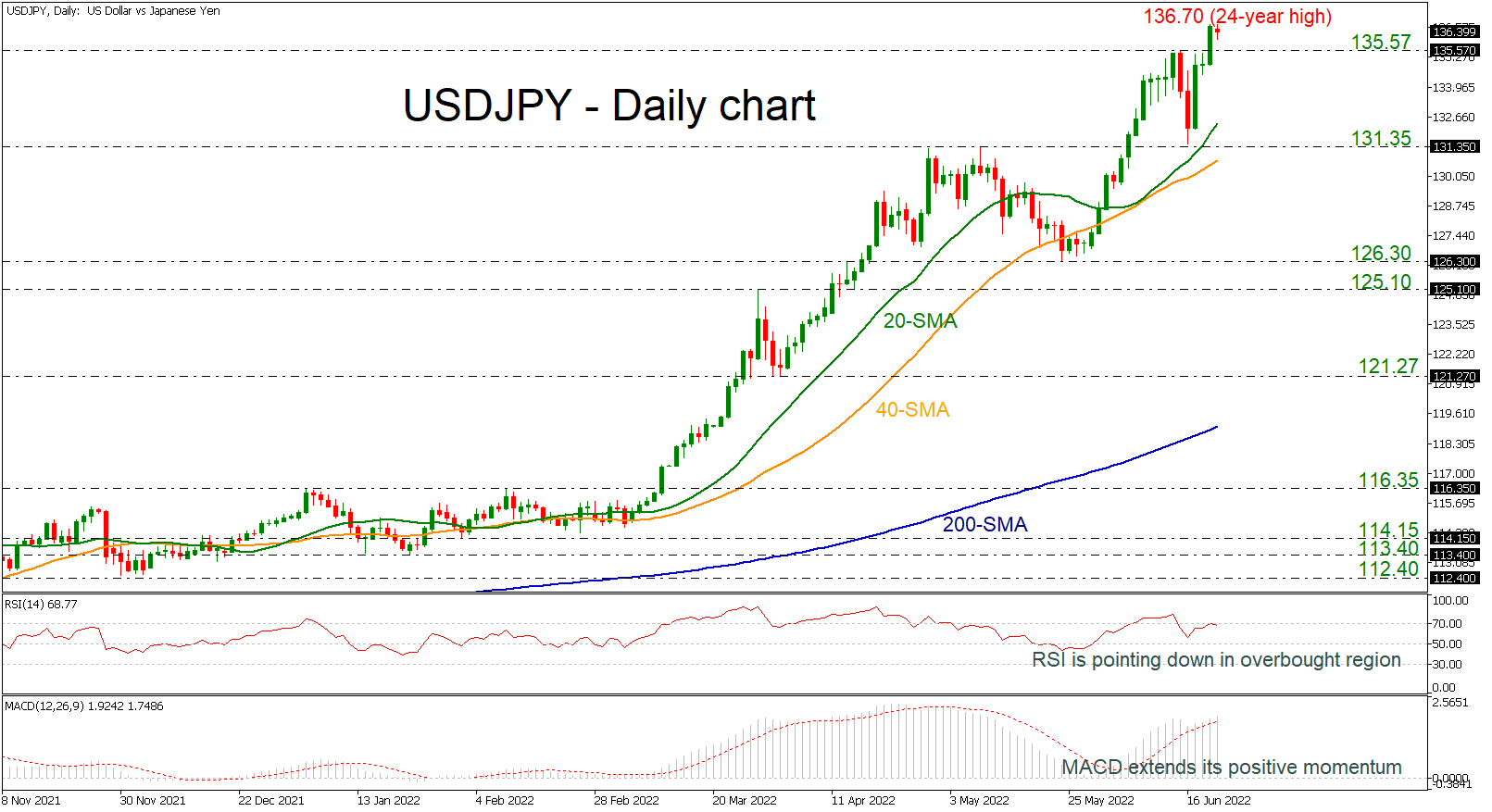
USDJPY is holding around the fresh 24-year high at 136.70, surpassing successfully the previous highs of 135.57 and endorsing the bullish view.
The MACD is moving further above its red signal line, and the RSI is pointing down after it reached the 70 level. However, the latter could also be an indication that the advance has been exaggerated, and as a result, bearish corrections in the upcoming sessions should not come as a surprise to investors.
In the event that the price moves in the opposite direction, the immediate support could come from the 135.57 barrier ahead of the 20-day simple moving average (SMA) around 132.35, which the bears were unable to break over the previous week. As the price moves lower, attention will shift to the support level at 131.35, though, a violation of the 40-day SMA located at 130.70 would boost speculation that the current bullish phase may transition into a neutral phase in the near future.
Traders will be avidly watching for a break above today's peak of 136.70 in the alternative scenario, which would result a rally towards the next psychological levels. If that turns out to be the case, the upswing can continue until the price reaches 140.00.
The recent bullish activity has made the wider picture more optimistic as well, and traders may expect additional improvement in the market as the shorter-term SMAs continue to increase their distance above the longer-term SMAs.
CAD/CHF Grinds Demand Zone
The Canadian dollar recoups losses as April’s retail sales beat market expectations. The price action is hovering above the origin of a mid-April rally around 0.7400. A bullish RSI divergence indicates a slowdown in the liquidation momentum, and in conjunction with a demand zone, sellers could be taking some chips off the table. A rebound will need to clear 0.7580 before it could gain traction. Otherwise, a fall below 0.7400 may trigger a new round of sell-off towards 0.7300.
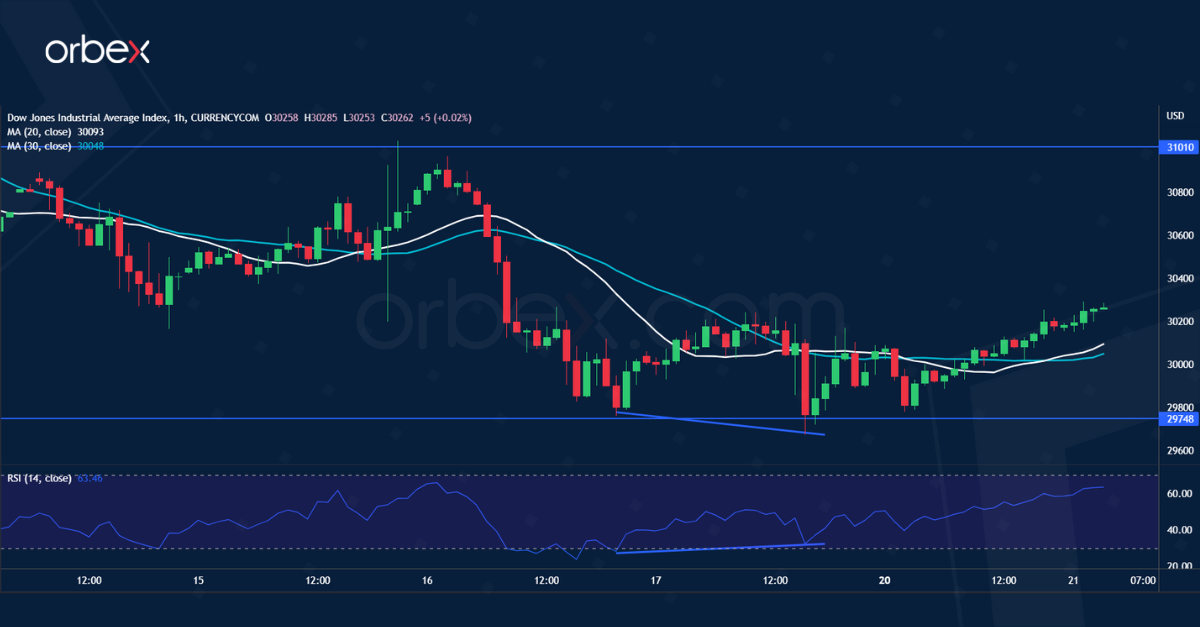
GBP/JPY to Test Peak
The Japanese yen weakens as the BoJ’s meeting minutes confirm its ultra-loose stand. The sell-off came to a halt at the psychological level of 160.00 where the pair first broke out in late May. The latest rally above 166.00 further trimmed the downward pressure. A break above 168.60 would put the rally back on track. The uptrend remains intact in the medium-term and the bulls may see pullbacks as an opportunity to jump in. 165.50 is the first support as buyers may wait for the RSI to drop back into the neutral area.
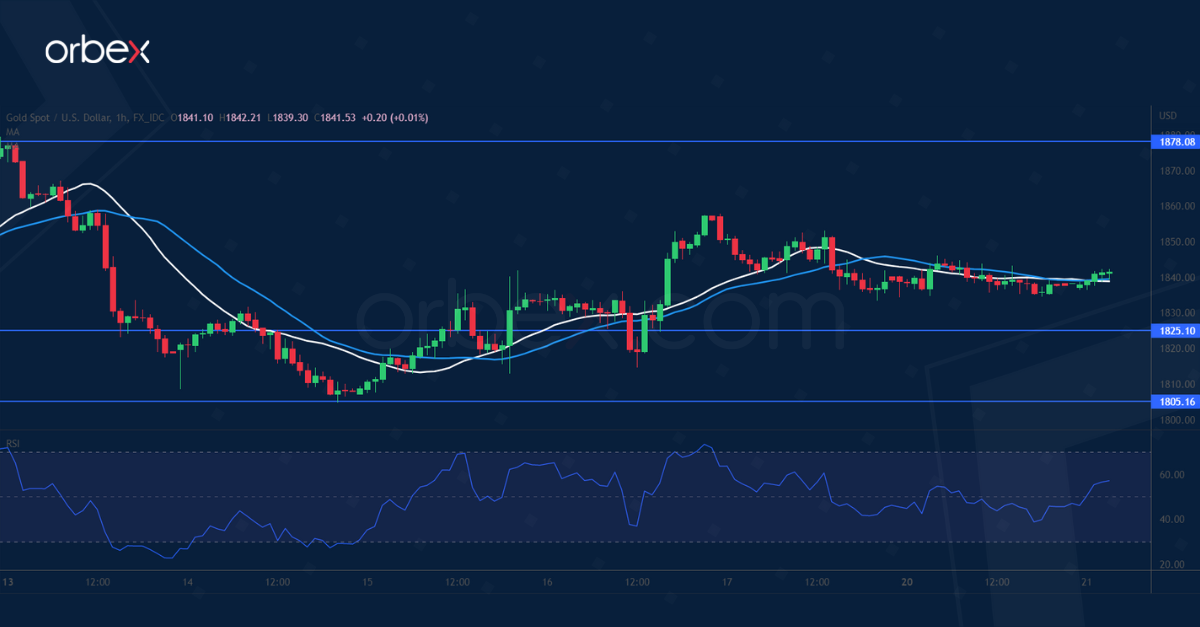
EUR/USD Attempts to Rebound
The US dollar finds support from higher Treasury yields. The pair saw strong support near May’s lows (1.0380). A surge above 1.0500 prompted short-term sellers to cover and paved the way for a rebound. This is a sign of robust interest in keeping last month’s rally intact. 1.0660 is former support that has turned into a resistance. Its breach would bring the single currency to the recent peak near 1.0770, which is the last hurdle before a meaningful recovery. On the downside, 1.0460 is fresh support in case of a pullback.
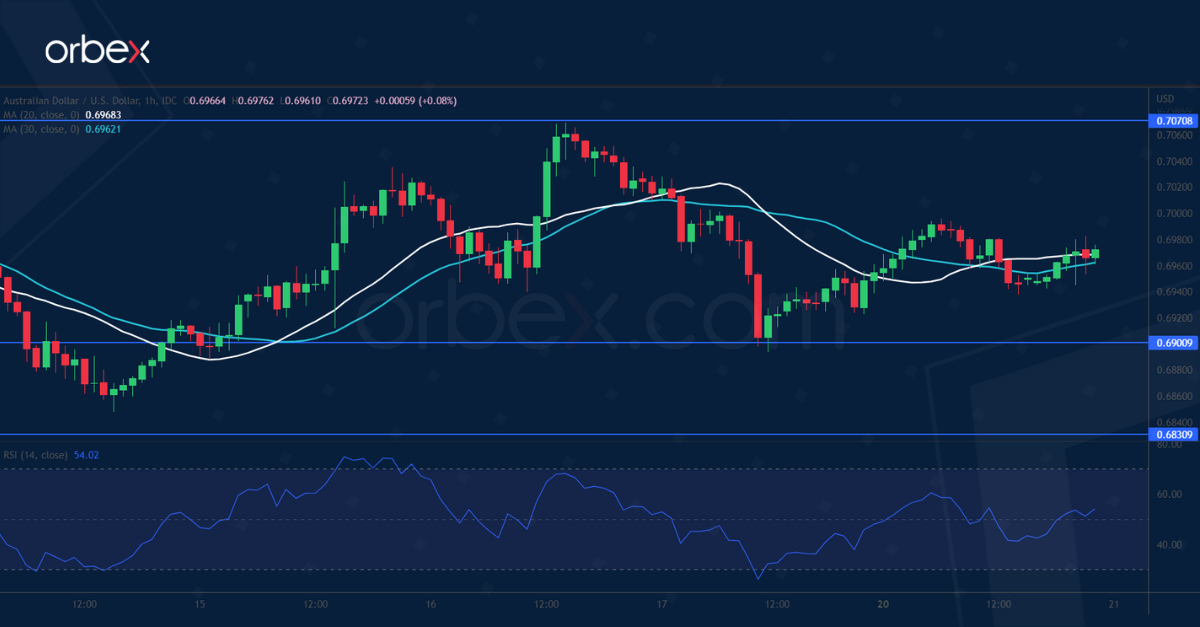
GBP/USD Technical Analysis 22th June 2022
The British Pound started a fresh decline from the 1.2325 resistance against the US Dollar. The GBP/USD pair traded below the 1.2300 support zone to enter a bearish zone.
There was a break below a key bullish trend line with support near 1.2270 on the hourly chart. The pair even declined below 1.2250 and the 50 hourly simple moving average. It is now showing bearish signs below the 1.2250 level on FXOpen.
The next major resistance sits near the 1.2265 zone. If there is a clear upside break above the 1.2265 resistance, the pair could rise steadily towards the 1.2300 level in the near term. The next major resistance sits near the 1.2325 level.
On the downside, an initial support is near the 1.2230 level. The main support is forming near the 1.2200 level. A break below the 1.2200 support could even push the pair below the 1.2170 support.
Main Focus Will Go to Fed Chair Powell’s Testimony Before the Senate
Markets
US investors returned from a long weekend and immediately left a stamp on trading. Especially equity markets were in good shape. Main indices jumped between 2.15-2.51%. European equities had to settle for <1%. The improved sentiment filtered through in core bond markets. US Treasuries underperformed German Bunds in a catch-up move. The US curve steepened by adding 1.6 bps at the front-end (2y) to 5.7 bps further out (20y). German yields rose 2.2-3.4 bps in the 10y-30y bucket. Both closed at a new cycle high. Peripheral spreads vs. Germany’s 10y continued to narrow for the likes of Italy (-3 bps) and Greece (-10 bps) amid excitement for the ECB’s yet-unknown new anti-fragmentation policy tool. The Japanese yen felt pressure from global sentiment and the BoJ sticking to its easing guns. USD/JPY surpassed the 135 resistance zone (2002 top) to close at 136.57, the highest in 24 (!) years. EUR/USD enjoyed a decent bid but lost momentum as (US) trading developed. The pair closed a little higher at 1.053. Bank of England chief economist Pill said he’s willing to sacrifice growth to cut inflation. It’s posing sterling for a difficult trade-off between tempting interest rates (Gilts underperformed yesterday) but an increasingly gloomier economic picture. EUR/GBP simply decided to stay put (close at 0.858, unchanged).The Asian stock bounce yesterday already goes into reverse today. We’ve seen no specific trigger or concrete news, confirming our view of a sell-on-upticks market. South Korea is lagging with losses amounting to 3.5%. Core bonds, the dollar and the Japanese yen attract safe haven bids. The trade-weighted greenback (DXY) advances to 104.70. USD/JPY gives up a slight part of yesterday’s gains. EUR/JPY (142.95) changes course after hitting the 144 resistance area/cycle high yesterday.EMU consumer confidence (June) is due today but the main focus will go to Fed chair Powell’s testimony before the Senate. The text released on Friday highlighted the Fed’s “unconditional” commitment to restore price stability. We don’t expect the tone before Congress to differ much from that or from the policy meeting last week. The actual grilling by Congress members could be interesting though. Will political attention already shift a bit from growth or is it too soon with surging prices dominating the political discourse going into the November mid-terms? Whatever the outcome, risk sentiment will probably prove the market theme for today anyway. UK inflation in May couldn’t be more close to expectations, coming in at 0.7% m/m to be up 9.1% y/y, slightly higher than last month (9%). Core inflation edged down a bit more than anticipated, to 5.9%. The numbers justify last week’s message by the BoE to raise rates faster if needed.
News Headlines
Italian Foreign Minister Luigi Di Maio on Tuesday announced that he’s leaving the 5-Star Movement. He will form a new parliamentary group. The split in the 5SM comes as the party is internally highly divided on the support of Italy for Ukraine. 5SM leader Conte recently became ever more critic on Italy sending weapons to the country. At the same time, Di Maio doesn’t want to break ranks with PM Draghi’s supportive policy towards Ukraine. There is growing speculation recently that Conte wants the 5SM to leave the government coalition as the party is losing support in the opinion polls, but the party yesterday dismissed this. It is unsure how many how many 5SM members will join Di Maio. For now the split doesn’t cause an immediate danger to the majority of PM Draghi’s government. Even so, it is not good news for the stability of the coalition ahead of next year’s elections.
US existing home sales data yesterday provided a mixed picture. Sales dropped for the fourth consecutive month (3.4% M/M) to the lowest level since June 2020 as mortgage interest rates continue to rise. At the same time, the median average selling price for the first time rose a record north of $400 000 (+14.8% y/y). Higher prices and higher mortgage rates are making houses less affordable for new buyers. At the same time, prices still are supported by a very low inventory levels of houses for sale. Earlier this month housing starts and building permits data already showed a loss of momentum.
All Eyes on Powell
US equity markets kicked off the short trading week with a bang. Major US indices jumped more than 2% yesterday with Nasdaq leading gains with a 2.50% advance in the session. Tesla gained 9.35% to close the session above the $710 level and FAANG stocks gained 1.80%.
But the gains may not last as Jerome Powell’s semiannual testimony could turn the market mood sour again as the Fed Chief is expected to reiterate his strong commitment to fighting inflation even if it means slower economy and a softer jobs market.
Joe Biden said earlier this week that he doesn’t think the recession is inevitable, but Goldman upped its recession expectation from 15 to 30%, and Morgan Stanley said that the S&P500 must drop another 15-20% to fully reflect the scale of contraction.
Therefore, yesterday’s rally in stocks could be another dead cat bounce, and we may see the market painted in red in the following sessions. The US futures are already in the red this morning.
Calm before the testimony
The calm reins in the FX markets, with the dollar index pushing higher this morning, as the markets prepare for some hawkish comments from the Federal Reserve (Fed) Chair Jerome Powell today.
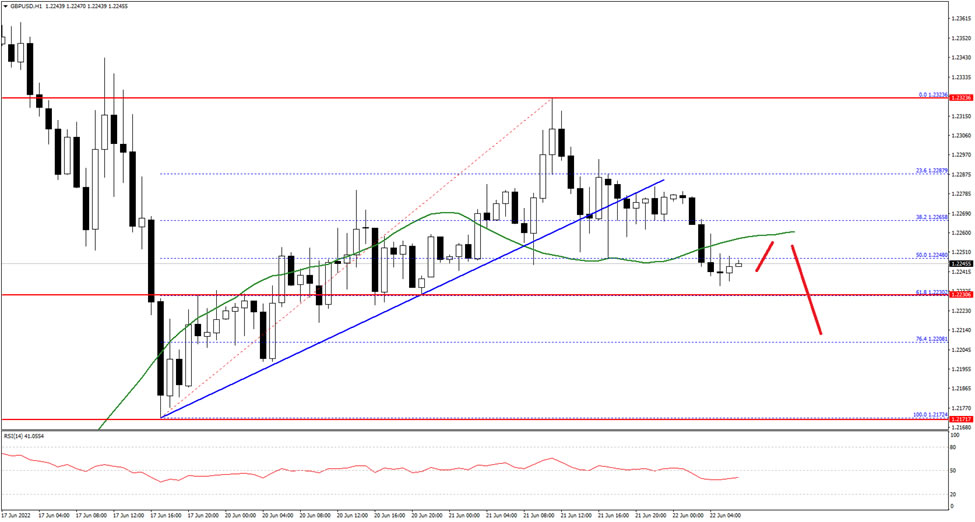
The EURUSD is back below the 1.05 mark, the dollar-yen extends gains above the 137 mark, with the bulls targeting the 140 level on the back of a clear divergence between the Fed and a still-dovish Bank of Japan (BoJ), and the USDCAD is back above the 1.30 level, after a short tentative to break below. The hawkish Fed pricing and cheaper oil play in favour of a higher USDCAD in the short run.
Gold is stuck between a rock and a hard place
Gold is down for the fourth day. The yellow metal is stuck between a rock and a hard place. When the risk sentiment is poor, it is held back by rising US yields, which reduce the safe haven flows to the precious metal. And when the sentiment gets better, it is held back by improved risk appetite, which drives capital to riskier and better yielding assets. And because the US yields rise parallel to inflation expectations, gold sees hardly the benefits of rising inflation expectations.
Plus, there is news that Switzerland, which is the world’s biggest refining and transit center, imported some $200 million worth of gold from Russia for the first time in May, hinting at a softer industry protest for the war in Ukraine, and a potentially higher supply which could further weigh on the yellow metal’s price.
Oil and commodities feel the pinch of global recession fears, as well
iShares Diversified Commodity index broke the 50-DMA significantly for the first time this year. And the energy and commodities’ effectiveness in hedging the rising inflation may be easing, as a global recession would hit demand, and let the energy sector retrace a part of last year’s rally.
The latter is true for oil prices. The barrel of American crude tanked to $106 per barrel this morning on the back of recession fears. We shall see a strong support near the 100-DMA level, around $106pb, but the real test will be the $100 psychological level, if the fall continues.
A persistent fall in oil prices will hint that the global recession fears are taking the upper hand, and weigh heavier than the positive factors such as a tight supply, prospects of Chinese reopening and booming travel.
Joe Biden’s efforts have little impact. The release of strategic reserves and improved relations with Saudi Arabia could hardly ease the price at the pump. The federal gas tax holiday will probably remain ineffective as it won’t help an average SUV driver to save significantly, it won’t last beyond mid-term elections and it may not even have a bipartisan approval as the gas contributes to the Highway Trust Fund, and suspending it would cut the flow to a critical infrastructure.
So, the best option is a recession-led demand shock to stop the rally to pull the price of a barrel below the $100 level, and ideally toward the $92, the 200-DMA.