

Sample Category Title
Markets Pause After Relief Rally, Bessent Tempers De-escalation Optimism
Markets are treading water in the Asian session today, with most asset classes trading mixed and within familiar ranges. While US equities closed higher overnight, much of the early gains were pared back, signaling the fragility of the current risk-on mood. The price action reflects what is often seen during a relief rally—short-lived optimism that fades quickly if underlying uncertainty persists. Hopes of a breakthrough in US-China tariff talks briefly lifted sentiment, but optimism quickly met a dose of reality from Washington.
US Treasury Secretary Scott Bessent pushed back against speculation that President Donald Trump had offered any unilateral gesture to ease tariffs on China. “No unilateral offer—none at all,” Bessent clarified. He acknowledged that current tariff levels are likely unsustainable but stressed that any reduction would have to be mutual. His remarks serve as a reminder that structural obstacles in the trade negotiations remain and that headline-driven rallies may lack staying power.
In the currency markets, price actions are subdued, with all major pairs and crosses trading within yesterday’s ranges. Kiwi is leading gains for the week so far, followed by Dollar and Loonie. On the other side, the safe-haven trio in on the back foot, with Swiss Franc, Yen, and Euro the weakest performers, in line with stabilizing risk sentiment and a broader unwinding of prior defensive flows. Sterling and Aussie are middling.
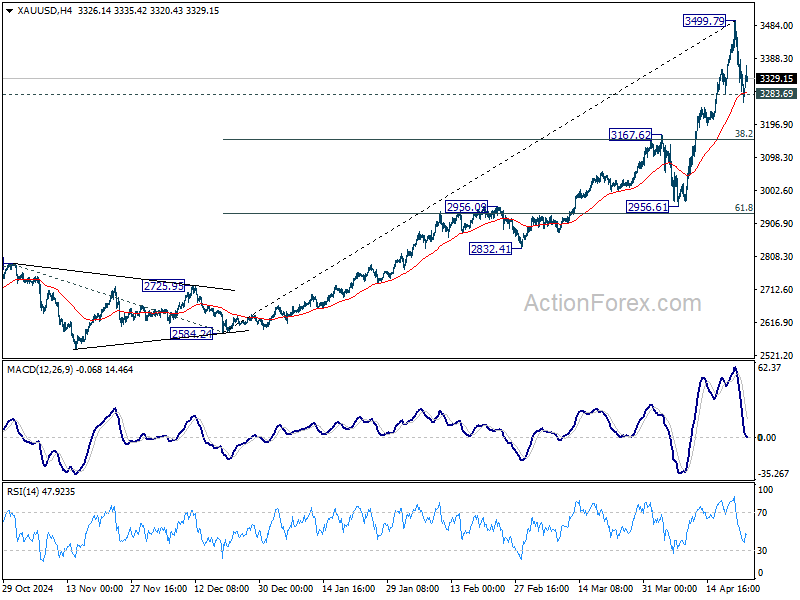
Technically, Gold's breach of 3283.69 minor support indicates short term topping at 3499.79, just ahead of 3500 psychological level. Some consolidations should be seen in the near term, with risk of deeper pullback. But downside should be contained by 3167.62 cluster support (38.2% retracement of 2584.24 to 3499.79 at 3150.04 to bring rebound. Gold's long term up trend is expected to continue after the consolidation completes.
In Asia, at the time of writing, Nikkei is up 0.40%. Hong Kong HSI is down -1.08%. China Shanghai SSE is up 0.06%. Singapore Strait Times is up 0.26%. Japan 10-year JGB yield is up 0.001 at 1.325. Overnight, DOW rose 1.07%. S&P 500 rose 1.67%. NASDAQ rose 2.50%. 10-year yield fell -0.02 to 4.387.
Looking ahead, German Ifo business climate is the main feature in European session. Later in the day, US will release jobless claims, durable goods orders, and existing home sales.
IMF: BoJ may delay rate hike on tariff risk, cacks Yen’s haven role
Nada Choueiri, deputy director of IMF's Asia Pacific Department, told Reuters that BoJ is likely to delay further interest rate hikes as heightened uncertainty from US tariff policy weighs on business sentiment and economic outlook.
She noted that many Japanese firms are now hesitant to move forward with investment plans, opting instead to wait for greater clarity on global trade developments. "This is postponing investment decisions as well," Choueiri said, adding that the downside risks to both growth and inflation have increased.
“We do see that if our reference scenario materializes, the BOJ interest rate increases will be pushed backwards in time,” she said.
Choueiri also commented on the recent appreciation of Yen, reaffirming its role as a "safe-haven currency", supported by the country's economic stability and predictability.
Fed's Beige Book: Stagnant growth, tariff-driven inflation
The latest Fed Beige Book painted a picture of a stagnating US economy, with activity described as “little changed” across most of the country. Of the 12 Districts, only five reported slight growth, while three saw flat conditions and the remaining four noted modest declines.
However, the most striking theme running through the report was the "pervasive" uncertainty around international trade policy, which was highlighted in nearly all Districts as a key concern weighing on sentiment and business planning.
Inflation pressures remain persistent, with half of the Districts describing price growth as moderate and the other half calling it modest. However, many businesses signaled "elevated input cost growth" tied to tariffs, with some already receiving notices from suppliers warning of upcoming price hikes.
In response, firms have started add "tariff surcharge" or shortening their pricing terms. Still, the ability to fully pass on higher costs is proving difficult in some sectors, particularly for consumer-facing sectors where demand remains sluggish.
ECB’s Lane sees Dollar outflows as rebalancing, not the end of dominance
Speaking at an IIF conference overnight, ECB Chief Economist Philip Lane downplayed concerns over recent portfolio shifts away from US Dollar assets, suggesting the move may reflect a normalization rather than a structural retreat.
Lane noted that allocations are likely moving from an overweight position in Dollar-denominated assets toward a more balanced distribution among global currencies.
He pointed out that US assets had been “priced to perfection” following US President Donald Trump’s election last year, making some degree of reallocation expected as valuations adjust.
Lane also addressed recent outflows from U.S. Treasuries, framing them as part of this rebalancing process. “It can either settle down or invite a deeper rethink,” he said, leaving the door open to further shifts depending on global investor sentiment.
However, he admitted that despite the near-term adjustments, Dollar is still expected to far outweigh Euro in most global portfolios.
ECB’s Knot and Muller downplay tariff impacts on inflation and growth
Dutch ECB Governing Council member Klaas Knot noted that the combination of US tariffs, a stronger Euro, and falling energy prices could push eurozone inflation lower than expected in the short term.
“The strong euro, together with falling energy prices, suggests that the near-term impact might not be so inflationary after all,” Knot said. However, he cautioned that medium-term risks remain, especially if global supply chain disruptions intensify. He supported keeping the ECB’s key policy rate within a neutral range of 1.75% to 2.25%, where it currently stands.
Echoing a cautious but measured tone, Estonia’s ECB Governing Council member Madis Muller acknowledged that the US’s evolving trade policy creates “quite a bit more challenging” outlook for the Eurozone. Nevertheless, he maintained that moderate growth remains achievable, albeit at a slower pace than previously anticipated.
Muller added that he is not forecasting a recession, noting that the impact of trade tensions, while significant, is unlikely to derail the region’s economic recovery entirely. Though, he emphasized the need for optionality, suggesting that more accommodation could be warranted if conditions deteriorate
BoE’s Bailey: We must take tariff-related growth risks very seriously
BoE Governor Andrew Bailey emphasized the growing downside risks to UK growth stemming from US President Donald Trump’s tariff policies. Speaking at an IIF conference, Bailey said, “We do have to take very seriously the risk to growth,” highlighting the UK's vulnerability as a highly open economy.
He noted that the impact of U.S. trade measures extends far beyond bilateral ties, influencing the UK through broader disruptions in global trade dynamics.
When asked how much the BoE is factoring in the effects of US trade policy, Bailey confirmed that the issue is front and center. “We're currently working through that because we've got an interest rate decision coming in two weeks' time,” he said.
USD/CAD Daily Outlook
Daily Pivots: (S1) 1.3818; (P) 1.3861; (R1) 1.3925; More...
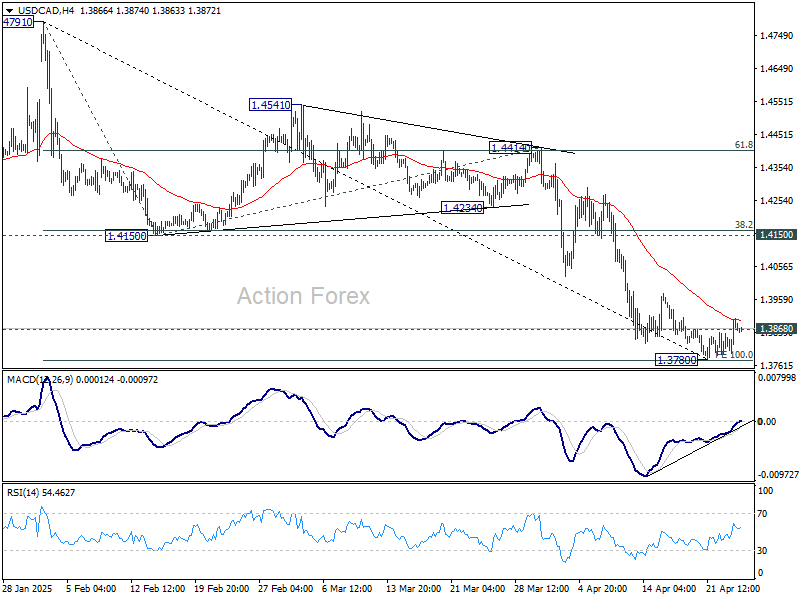
A short term bottom should be in place at 1.3780, just ahead of 100% projection of 1.4791 to 1.4150 from 1.4414 at 1.3773, and on bullish convergence condition in 4H MACD. Intraday bias in USD/CAD is mildly on the upside for recovery. But upside should be limited by 1.4150 support turned resistance (38.2% retracement of 1.4791 to 1.3780 at 1.4166. On the downside, firm break of 1.3780 will resume the whole fall from 1.4791.
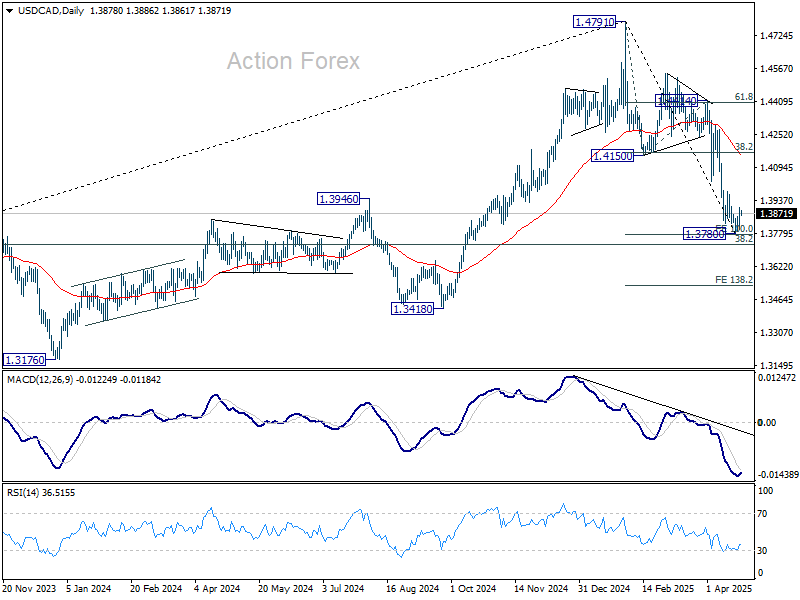
In the bigger picture, the break of 1.3976 resistance turned support (2022 high) and 55 W EMA (now at 1.3982) indicates that a medium term top is already in place at 1.4791. Fall from there would either be a correction to rise from 1.2005, or trend reversal. In either case, firm break of 38.2% retracement of 1.2005 (2021 low) to 1.4791 at 1.3727 will pave the way back to 61.8% retracement at 1.3069.
Lock it in: RBA to Cut 25bps in May
Lock it in, no need to wait for the CPI: RBA Monetary Policy Board expected to cut by 25bps at its 20 May meeting.
For the past several quarters, the near-term outlook for RBA policy has been data-driven. This makes it tricky to predict what the Monetary Policy Board will decide beyond the upcoming meeting. You cannot be sure until you have seen the latest data. For example, had the Q4 2024 trimmed mean inflation not surprised on the downside, the Board would probably have remained on hold at the February 2025 meeting. The turmoil abroad has, however, changed the game and flipped the risks. You can lock in a 25bp cut in May, even if the Q1 inflation data are a shade disappointing.
A few months ago, the RBA’s main concern was that a still-tight labour market would keep domestic inflation pressures sticky. The risk was that the last 0.2% of inflation – the difference between their February forecasts for trimmed mean inflation and their goal of 2.5% – would not be eliminated.
Our analysis of the situation has for some time been that the RBA would nonetheless continue to cut rates at a moderate pace, as the data flow continued to surprise it on the dovish side, as has been the case recently. Wages growth has already undershot the RBA’s February forecasts and the labour market looked a bit less strong in February and March. We take particular note of the business survey indicators of labour market tightness, which have taken another leg down in the first quarter of 2025, after stalling in the second half of last year.
In addition, the RBA’s forecasts for consumption growth over 2025 still look very strong relative to the view of other observers, including our own forecasts. As that bullish view is challenged by the data flow, including next week’s retail sales release, we expected the RBA to revise its view of the outlook, and so the appropriate policy response.
Without the developments abroad though, the risks around this base case view were skewed to the upside. Given the RBA’s analysis of the economy, it was more likely that they would cut less or more slowly than our base case, than that they would go faster.
Now, however, uncertainty has escalated to a whole new level and the risks have completely flipped. Even though we do not expect the US administration to implement tariffs at the rates originally announced, some damage has already been done. Global growth – and especially US growth – will be slower; the response of China will be disinflationary for the world outside the US; and uncertainty is likely to delay decisions on some investment projects.
For this reason, we lock in our view that the Board will cut the cash rate by 25bps to 3.85% on 20 May. Holding rates steady in the face of the global turmoil and softer momentum in the labour market – for the sake of 0.2ppts on inflation – would be very hard to explain.
For the time being, we continue to expect a total of three further cuts (75bps in total), including the cut in May, with August and November pencilled in for the other two cuts. However, the risks on timing and extent are now skewed to the RBA moving faster than this and / or going further.
We do not regard an inter-meeting cut or a 50bp cut as plausible, contrary to some of the more breathless commentary. As we have been highlighting for some time, Australia is relatively less affected by US tariffs than some economies, and the hit to domestic growth is expected to be moderate. While the risks have clearly shifted to the dovish side, we do not expect the RBA’s thinking to pivot directly from cutting reluctantly if at all, to going hard in May and signalling more. To do so would look panicky and is contrary to the limited RBA communication since the ‘Liberation Day’ tariff announcements, which was much more circumspect.
If the Board were to do something other than cut by 25bps in May, it might consider a 35bp move to 3.75%, and round quarter-point levels of the cash rate. To be clear, we regard this as a very outside chance. The RBA has long emphasised that quarter-point neatness is not a consideration for policy. (It was, after all, me in my old job who would theatrically exclaim ‘we don’t care!’ whenever I was asked about getting the cash rate back to round quarter points. Nowadays I just change the pronoun and exclaim ‘they don’t care!’.) But there is one slight niggle to that understanding: the RBA is implementing a revised ‘ample reserves’ model for monetary policy implementation, and from May will no longer announce the exchange settlement funds rate as part of its policy announcements. So, if they were ever going to move back to a cash rate level at round quarter-points, the upcoming meeting is a good time to do it.
Again, though, this is a very outside chance. Lock in the 25bp move in May, and be ready to pivot thereafter should the overseas news worsen.
US-China De-escalation Optimism Fades with Bearish Technical Elements in US Stock Indices
It was another day of trade tariffs “drama” within the US White House administration. Yesterday, 23 April, the Wall Street Journal reported that the White House is considering cutting the steep tariffs on Chinese imports by more than 50%.
However, US Treasury Secretary Bessent later clarified that President Trump has not made any unilateral offer to remove tariffs on Chinese imports.
Optimism over US-China trade de-escalation has faded. Although major US indices—S&P 500, Nasdaq 100, Dow Jones, and Russell 2000, posted gains of 1.5% to 2.3% on 23 April, they all closed near session lows.
Both the S&P 500 and Dow formed bearish “Shooting Star” candlestick patterns after retesting their 20-day moving averages, signalling possible exhaustion of bullish momentum seen in the last two days.
Meanwhile, US Treasury Secretary Bessent stated there are “no currency targets” in trade talks with Japan, with the focus remaining on trade imbalances. USD/JPY slipped 0.5% in the Asian session to 142.70, following a 1.3% gain the previous day.
After two days of losses, Gold (XAU/USD) is trading higher in today’s Asian opening session with an intraday gain of 2.1% on the backdrop of conflicting US White House’s trade tariffs policy implementation.
West Texas crude oil fell 2% yesterday after a Reuters report stated that several OPEC+ members may suggest that the cartel accelerate oil output increases for a second month in June.
Economic data releases
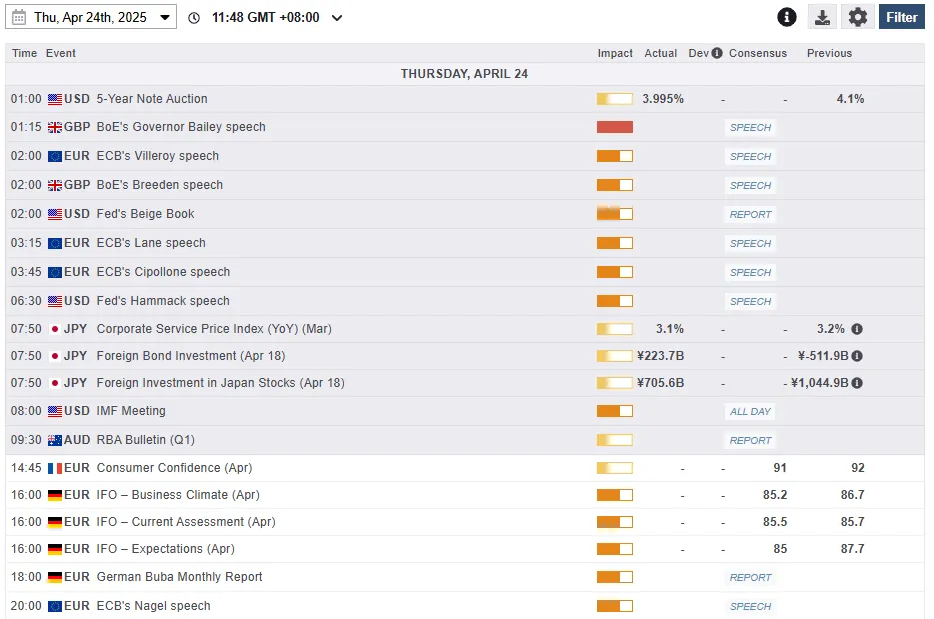
Fig 1: Key data for today’s Asian mid-session (Source: MarketPulse)
Chart of the day – US Wall Street 30 (DJIA) bearish reaction at 20-day MA
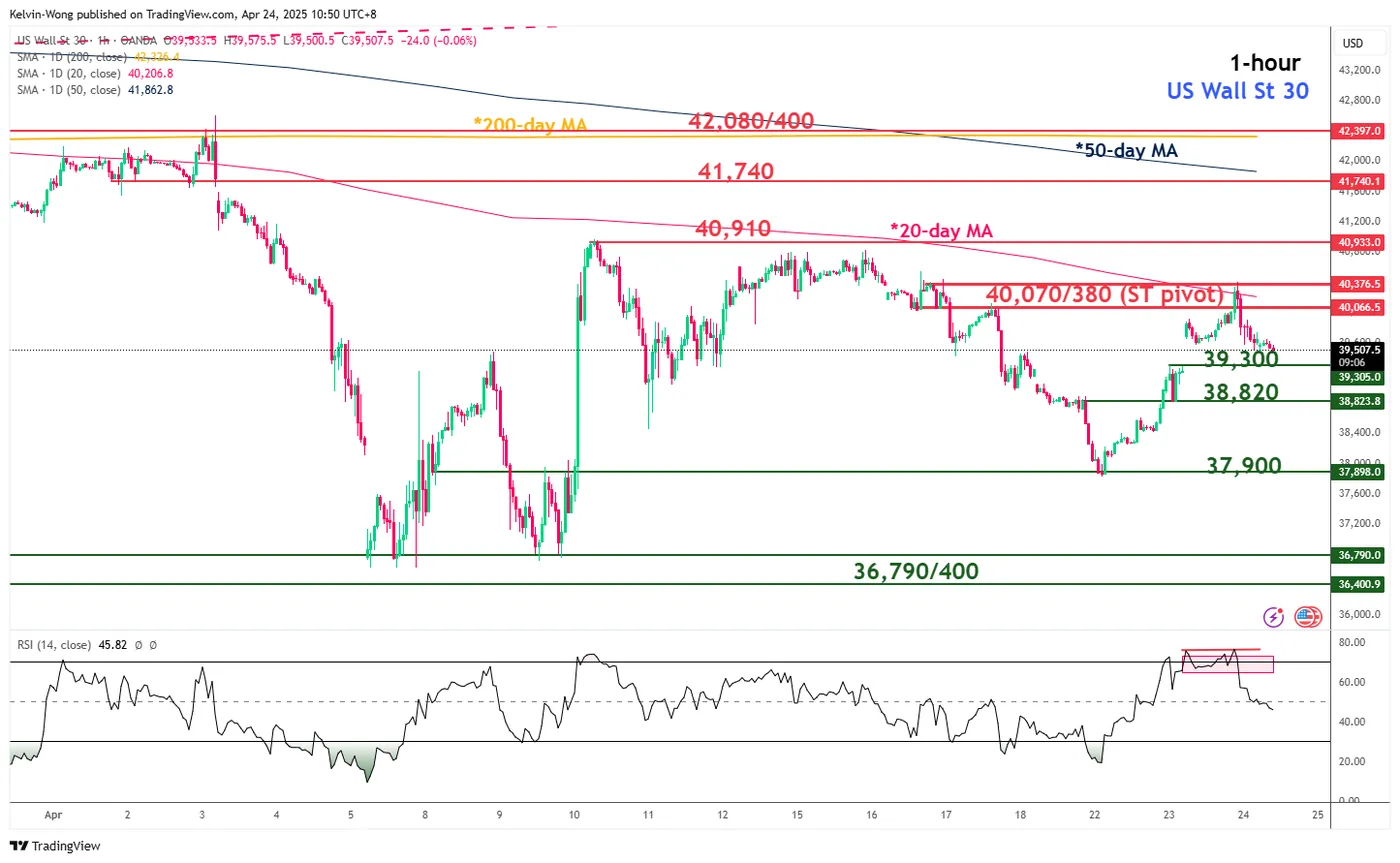
Fig 2: US Wall Street 30 CFD Index minor trend as of 24 Apr 2025 (Source: TradingView)
The price actions of the US Wall Street 30 CFD have staged a bearish reaction yesterday, 23 April, right at its 20-day moving average, which has coincided with the 40,070/40,380 key short-term pivotal resistance zone.
In addition, the hourly RSI momentum indicator has also exited its overbought region with a bearish divergence condition that suggests the prior upside momentum seen on last two days has waned.
A break below the 39,300 near-term support (the gap-up formed on Wednesday, 23 April) exposes the next intermediate supports at 38,820 and 37,900 in the first step.
On the other hand, a clearance above 40,380 invalidates the bearish tone for a potential continuation of the minor mean reversion rebound sequence to see the next intermediate resistances coming in at 40,910 and 41,740 (also the 50-day moving average).
IMF: BoJ may delay rate hike on tariff risk, backs Yen’s haven role
Nada Choueiri, deputy director of IMF's Asia Pacific Department, told Reuters that BoJ is likely to delay further interest rate hikes as heightened uncertainty from US tariff policy weighs on business sentiment and economic outlook.
She noted that many Japanese firms are now hesitant to move forward with investment plans, opting instead to wait for greater clarity on global trade developments. "This is postponing investment decisions as well," Choueiri said, adding that the downside risks to both growth and inflation have increased.
“We do see that if our reference scenario materializes, the BoJ interest rate increases will be pushed backwards in time,” she said.
Choueiri also commented on the recent appreciation of Yen, reaffirming its role as a "safe-haven currency", supported by the country's economic stability and predictability.
Fed’s Beige Book: Stagnant growth, tariff-driven inflation
The latest Fed Beige Book painted a picture of a stagnating US economy, with activity described as “little changed” across most of the country. Of the 12 Districts, only five reported slight growth, while three saw flat conditions and the remaining four noted modest declines.
However, the most striking theme running through the report was the "pervasive" uncertainty around international trade policy, which was highlighted in nearly all Districts as a key concern weighing on sentiment and business planning.
Inflation pressures remain persistent, with half of the Districts describing price growth as moderate and the other half calling it modest. However, many businesses signaled "elevated input cost growth" tied to tariffs, with some already receiving notices from suppliers warning of upcoming price hikes.
In response, firms have started add "tariff surcharge" or shortening their pricing terms. Still, the ability to fully pass on higher costs is proving difficult in some sectors, particularly for consumer-facing sectors where demand remains sluggish.
BoE’s Bailey: We must take tariff-related growth risks very seriously
BoE Governor Andrew Bailey emphasized the growing downside risks to UK growth stemming from US President Donald Trump’s tariff policies. Speaking at an IIF conference, Bailey said, “We do have to take very seriously the risk to growth,” highlighting the UK's vulnerability as a highly open economy.
He noted that the impact of U.S. trade measures extends far beyond bilateral ties, influencing the UK through broader disruptions in global trade dynamics.
When asked how much the BoE is factoring in the effects of US trade policy, Bailey confirmed that the issue is front and center. “We're currently working through that because we've got an interest rate decision coming in two weeks' time,” he said.
ECB’s Lane sees Dollar outflows as rebalancing, not the end of dominance
Speaking at an IIF conference overnight, ECB Chief Economist Philip Lane downplayed concerns over recent portfolio shifts away from US Dollar assets, suggesting the move may reflect a normalization rather than a structural retreat.
Lane noted that allocations are likely moving from an overweight position in Dollar-denominated assets toward a more balanced distribution among global currencies.
He pointed out that US assets had been “priced to perfection” following US President Donald Trump’s election last year, making some degree of reallocation expected as valuations adjust.
Lane also addressed recent outflows from U.S. Treasuries, framing them as part of this rebalancing process. “It can either settle down or invite a deeper rethink,” he said, leaving the door open to further shifts depending on global investor sentiment.
However, he admitted that despite the near-term adjustments, Dollar is still expected to far outweigh Euro in most global portfolios.
ECB’s Knot and Muller downplay tariff impacts on inflation and growth
Dutch ECB Governing Council member Klaas Knot noted that the combination of US tariffs, a stronger Euro, and falling energy prices could push eurozone inflation lower than expected in the short term.
“The strong euro, together with falling energy prices, suggests that the near-term impact might not be so inflationary after all,” Knot said. However, he cautioned that medium-term risks remain, especially if global supply chain disruptions intensify. He supported keeping the ECB’s key policy rate within a neutral range of 1.75% to 2.25%, where it currently stands.
Echoing a cautious but measured tone, Estonia’s ECB Governing Council member Madis Muller acknowledged that the US’s evolving trade policy creates “quite a bit more challenging” outlook for the Eurozone. Nevertheless, he maintained that moderate growth remains achievable, albeit at a slower pace than previously anticipated.
Muller added that he is not forecasting a recession, noting that the impact of trade tensions, while significant, is unlikely to derail the region’s economic recovery entirely. Though, he emphasized the need for optionality, suggesting that more accommodation could be warranted if conditions deteriorate
Ethereum Flips Key Resistance – Can Bulls Ride the Wave to $2,000?
Key Highlights
- Ethereum rallied over 15% and cleared the $1,750 resistance.
- ETH surpassed a key bearish trend line with resistance at $1,640 on the daily chart.
- Bitcoin price also rallied and surpassed the $93,500 resistance.
- XRP is showing positive signs, and the bulls could aim for a move toward $2.50.
Ethereum Technical Analysis
Ethereum remained stable above $1,500 and started a fresh increase. ETH cleared a few key hurdles near $1,620 to start a fresh surge.
Looking at the daily chart, the price surpassed a key bearish trend line with resistance at $1,640. The price even surpassed the 50% Fib retracement level of the downward wave from the $2,100 swing high to the $1,380 low.
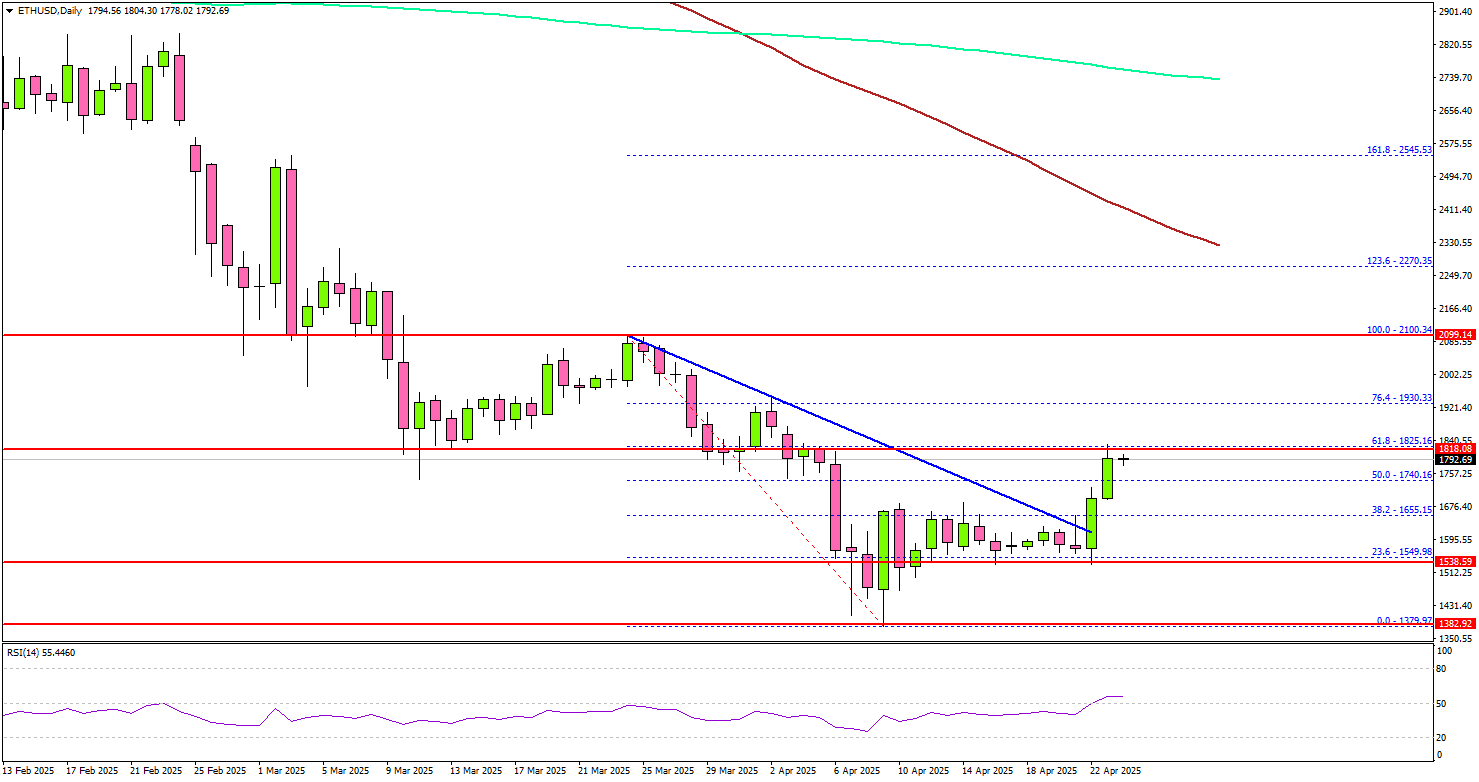
ETH settled above the 100-day simple moving average (red) and the 200-day simple moving average (green). Immediate resistance is near the $1,825 level.
The next major resistance is near the $1,930 level and the 76.4% Fib retracement level of the downward wave from the $2,100 swing high to the $1,380 low. A daily close above the $1,930 resistance zone could start another steady increase. In the stated case, the price may perhaps rise toward the $2,000 level. The next stop for the bulls may perhaps be $2,120.
On the downside, Ethereum might find support near the $1,700 level. The next major support is $1,650, below which the price could slide toward $1,600. Any more losses might call for a move toward the $1,550 level.
Looking at Bitcoin, there was a steady increase above the $92,000 level, and the price might continue to rise toward the $98,000 level.
Economic Releases
- US Initial Jobless Claims - Forecast 221K, versus 215K previous.
- US Durable Goods Orders for March 2025 – Forecast +2% versus +1% previous.
EURCHF Wave Analysis
EURCHF: ⬆️ Buy
- EURCHF broke the resistance area
- Likely to rise to resistance level 0.9500
EURCHF currency pair recently broke the resistance area between the resistance level 0.9365 (former strong support from the start of 2025) and the 38.2% Fibonacci correction of the downward impulse from March.
The breakout of this resistance area should accelerate the active upward correction which started earlier from the major support level 0.9250.
Given the strength of the support level 0.9250 and the strong outflows from the Swiss franc, EURCHF currency pair can be expected to rise toward the next resistance level 0.9500.
