Sample Category Title
Research Euro Area: How Vulnerable Is Europe To The Turkish Havoc?
- In light of the Turkish turmoil, we take a closer look at EU-Turkey ties in this document, focusing especially on the financial, economic and political links.
- EU banks' exposure to Turkish assets is limited and we would be surprised to see the ECB reacting to the Turkey crisis with any policy measures.
- Trade and FDI links are of a relatively modest scale, limiting the possible risks to the euro area growth outlook from this channel.
- If the crisis escalates further, the EU might find itself pressured to consider support measures for Turkey, as the country has become an important puzzle in the European migration strategy.
Financial links: limited spillover
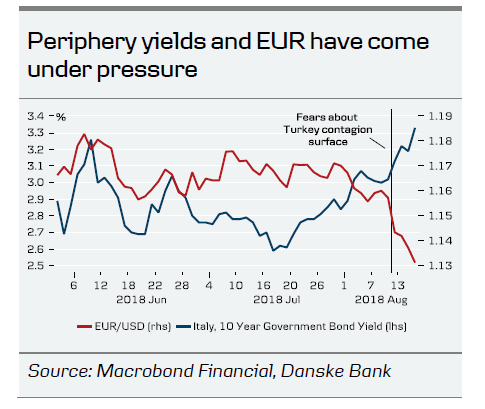
Both the euro and periphery bond yields have recently come under increased pressure among growing fears about contagion from the Turkish turmoil to the European financial system more broadly. Reports that regulators at the Single Supervisory Mechanism of the ECB have growing concerns about some EU banks' exposure to Turkey further fuelled the risk-off mood.
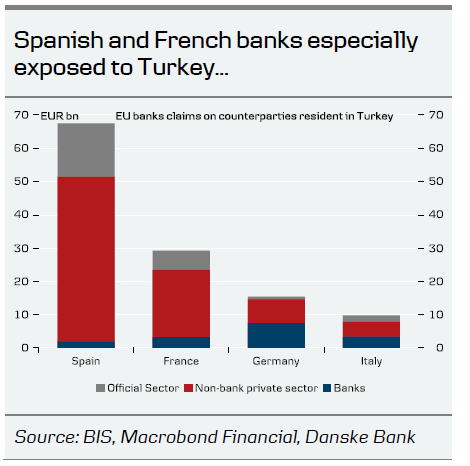
From an EU perspective, Spanish and French banks stand out as particularly exposed to Turkish assets, especially in the non-bank private sector. However, putting the absolute numbers into perspective, as a share of total banking sector assets the exposures are small (around 2.0% of total banking sector assets for Spain and less than 0.5% for France, Italy and Germany).
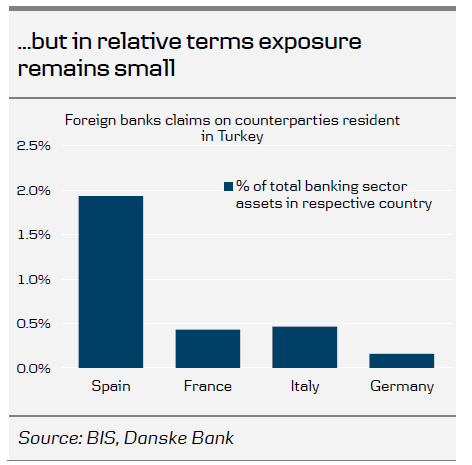 In light of the figures above we view fears of contagion to the Italian/Spanish banking system as overblown. Indeed, for European banks, developments regarding the new Italian government’s budget and deficit plans in September will be of much greater importance in our view. Despite encouraging comments from lawmakers regarding commitment to EU budget rules, we think it is too early to declare the Italian crisis over just yet
Economic links: German interests at stake
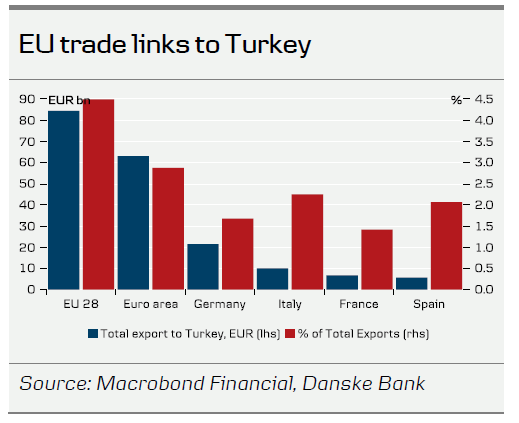
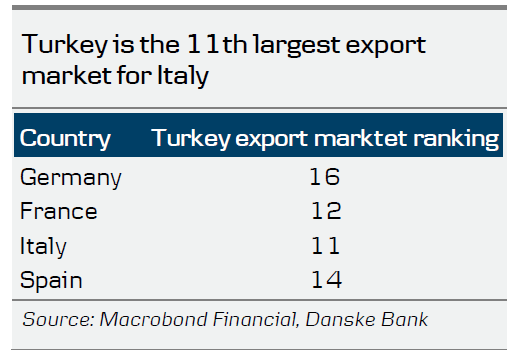
In terms of trade links, Germany exhibits the closest links in absolute terms with annual exports of EUR21.5bn in 2017. Turkey is the 16th largest export market for Germany, hence ranking higher than Japan. This said, exports to Turkey still accounted for only 1.7% of total German exports in 2017 and overall this limited exposure in relative terms also holds true for the other big euro area economies (Italy 2.2% of total exports, Spain 2.1% of total exports and France 1.4% of total exports went to Turkey).
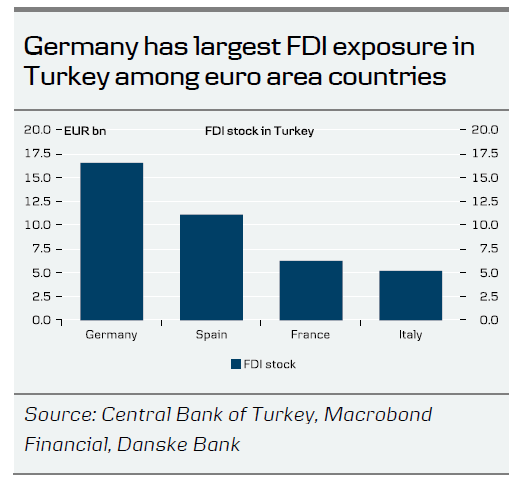
From a foreign direct investment (FDI) perspective, Germany again dominates the picture, with an FDI stock if EUR16.5bn in 2017, followed by Italy with EUR11.1bn. About 6,500 partly or wholly owned German companies operate in Turkey, which means the German business community is likely to be watching the current situation with concern.
Political links: Turkey as important ally in the migration crisis
German politicians, including Chancellor Angela Merkel, have made it clear that Germany has an interest in an economically prosperous Turkey but, at the same time, have stressed the importance of central bank independence. German and Turkish finance ministers will meet in coming weeks ahead of a state visit of ğ on 28 September.
Despite the economic ties and Germany’s interest in avoiding Turkey’s financial meltdown, we would be surprised to see Germany, either directly or through the EU, providing significant financial support for Turkey, similar to Qatar, in light of the current German public mood towards bailouts and recent diplomatic clashes about human rights abuses and imprisonment of German citizens in Turkey. Instead, Germany’s Finance Minister Olaf Scholz is likely to stress to his counterpart that any kind of support measures would necessitate a return to a credible and independent monetary policy regime.
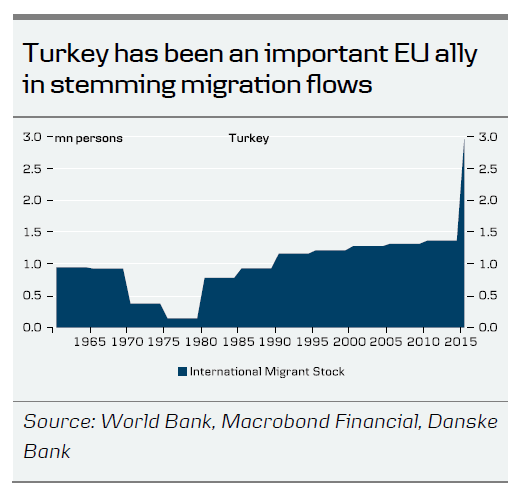
Although we view the hurdle to any kind of EU financial support measures as high, the EU might feel pressure to act not only out of economic and financial considerations but, more importantly, because Turkey has become a key piece of the puzzle in European migration strategy. A destabilisation of Turkey could put the future of the 2016 EU-Turkey deal on the relocation of Syrian asylum seekers at stake – in 2015 (the latest information available) about 3 million refugees were stuck in Turkey. A potential influx of a large number of immigrants from Turkey would provide further ammunition for populists across the block, with European Parliament elections approaching in May 2019.
Limited risks to EU growth but political picture remains muddy
Overall, we see the risk of a contagious crisis for the European financial system as fairly small at the current stage. We would be surprised to see the ECB reacting to the Turkey crisis with any policy measures and instead expect it to refer to the macro-prudential toolkit of the Single Supervisory Mechanism (SSM). From an economic perspective, Germany has the strongest interest in a resolution of Turkey’s troubles but total euro area trade and FDI links are of relatively modest scale, limiting possible risks to the euro area growth outlook from this channel. The diplomatic situation between the EU and Turkey remains fraught and we think it is questionable whether the EU would risk a further deterioration of its relationship with the US by openly siding with Turkey in the current conflict. However, a potential collapse of the refugee deal with Turkey is the main bargaining chip for Turkey in seeking EU support
EUR/USD Daily Outlook
Daily Pivots: (S1) 1.1339; (P) 1.1374 (R1) 1.1413; More.....
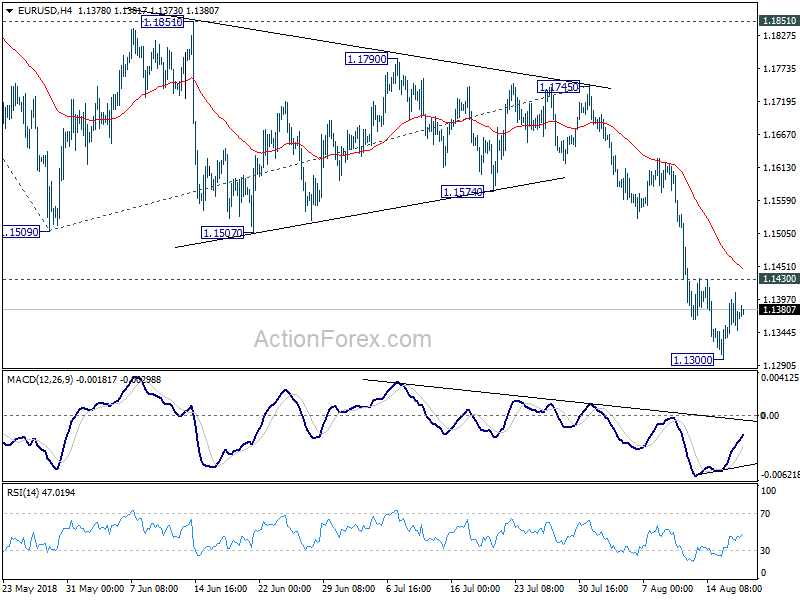
Intraday bias in EUR/USD remains neutral for consolidation above 1.1300 temporary low. With 1.1430 minor resistance intact, further decline remains in favor. Break of 1.1300 will target 61.8% projection of 1.2413 to 1.1509 from 1.1745 at 1.1186. Note that it's a cluster level with 61.8% retracement of 1.0339 to 1.2555 at 1.1186. Hence, we'll tentatively look for short term bottoming around 1.1186. Meanwhile, considering mild bullish convergence condition in 4 hour MACD, break of 1.1430 will indicate short term bottoming. In that case, lengthier consolidation would be seen first before down trend resumption.
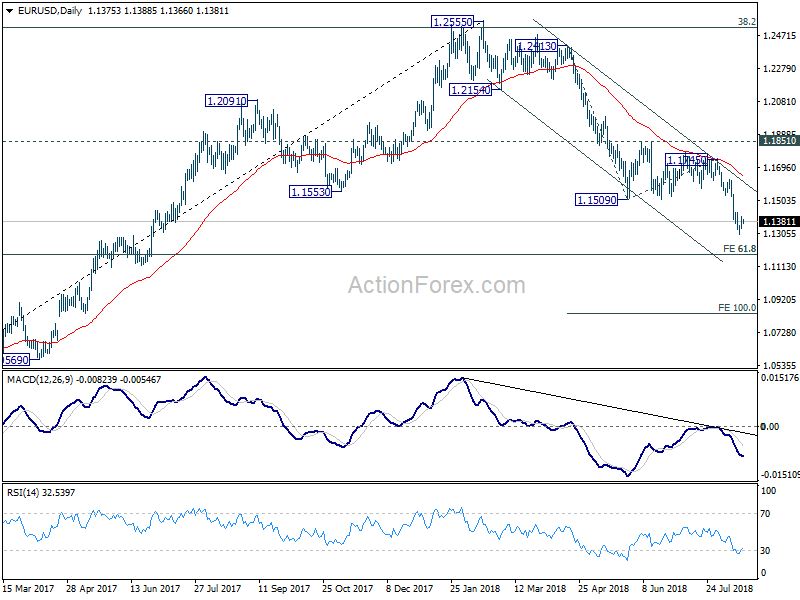
In the bigger picture, the down trend from 1.2555 medium term is in progress for 61.8% retracement of 1.0339 to 1.2555 at 1.1186. Note again that EUR/USD was rejected by 38.2% retracement of 1.6039 (2008 high) to 1.0339 (2017 low) at 1.2516. That carries some long term bearish implications. Sustained break of 1.1186 could pave the way back to retest 1.0339 low. For now, outlook will remain bearish as long as 1.1851 resistance holds, even in case of strong rebound.
GBP/USD Daily Outlook
Daily Pivots: (S1) 1.2679; (P) 1.2717; (R1) 1.2749; More...
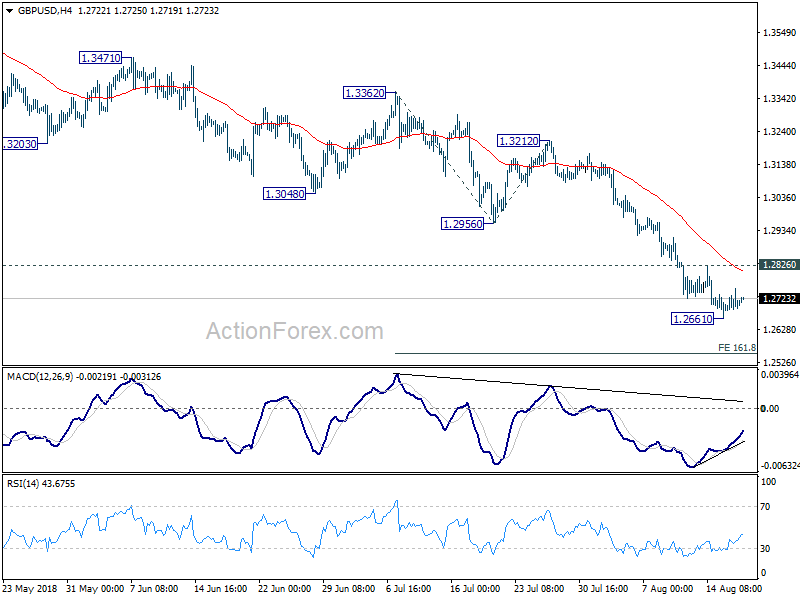
Intraday bias in GBP/USD is neutral for consolidation above 1.2661 temporary low. But as long as 1.2826 minor resistance holds, deeper decline is expected. Break of 1.2661 will resume the whole fall from 1.4376 and target 161.8% projection of 1.3362 to 1.2956 from 1.3212 at 1.2555. Though, break of 1.2826 will indicate short term bottoming on bullish convergence condition in 4 hour MACD. And that would bring lengthier consolidation first.
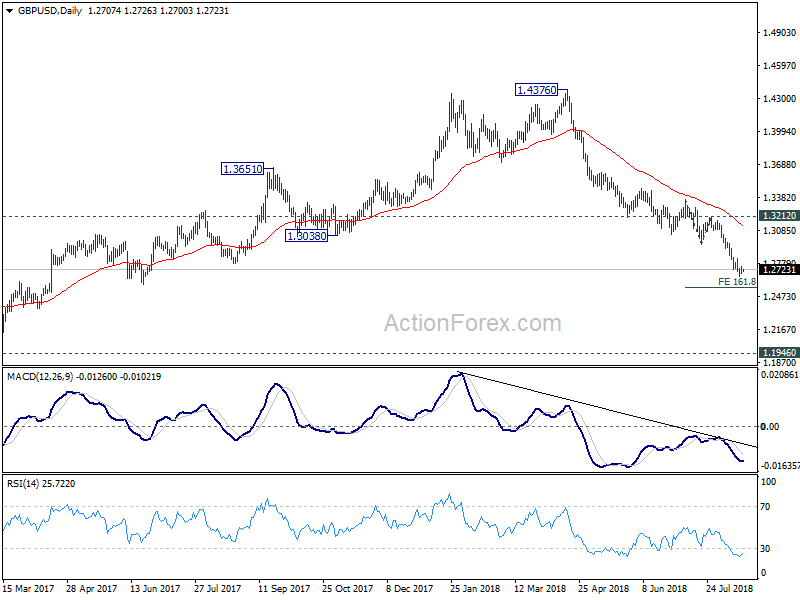
In the bigger picture, whole medium term rebound from 1.1946 (2016 low) should have completed at 1.4376 already, after rejection from 55 month EMA (now at 1.4141). Current downside acceleration argues that it's possibly resuming long term down trend. In any case, outlook will stay bearish as long as 1.3212 resistance holds. Retest of 1.1946 should be seen next.
USD/CHF Daily Outlook
Daily Pivots: (S1) 0.9930; (P) 0.9953; (R1) 0.9990; More....
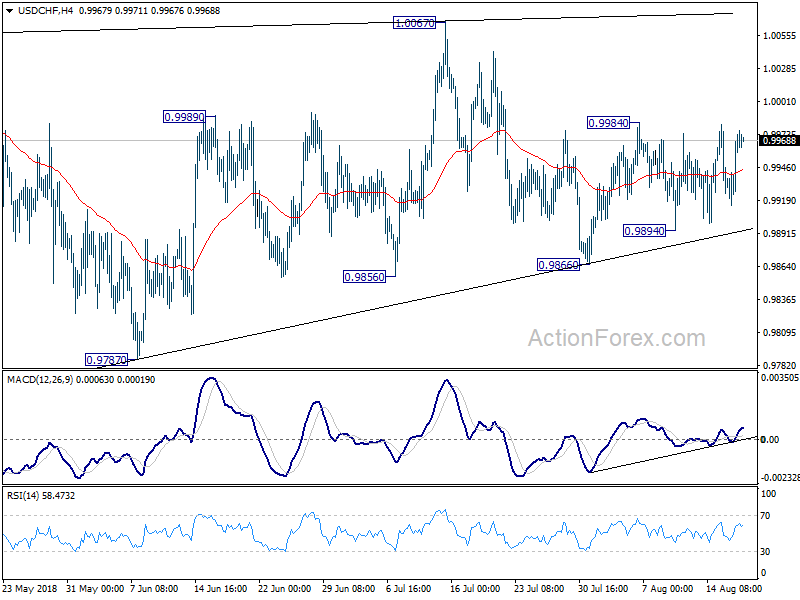
USD/CHF is staying in range of 0.9894/9984 and intraday bias remains neutral. On the upside, above 0.9984 will resume the rebound from 0.9866 to retest 1.0067 high. Decisive break there will resume whole rally from 0.9186. On the downside, below 0.9894 might extend the consolidation pattern from 1.0056 with another falling leg. But downside should be contained by 38.2% retracement of 0.9186 to 1.0056 at 0.9724 to bring rebound.
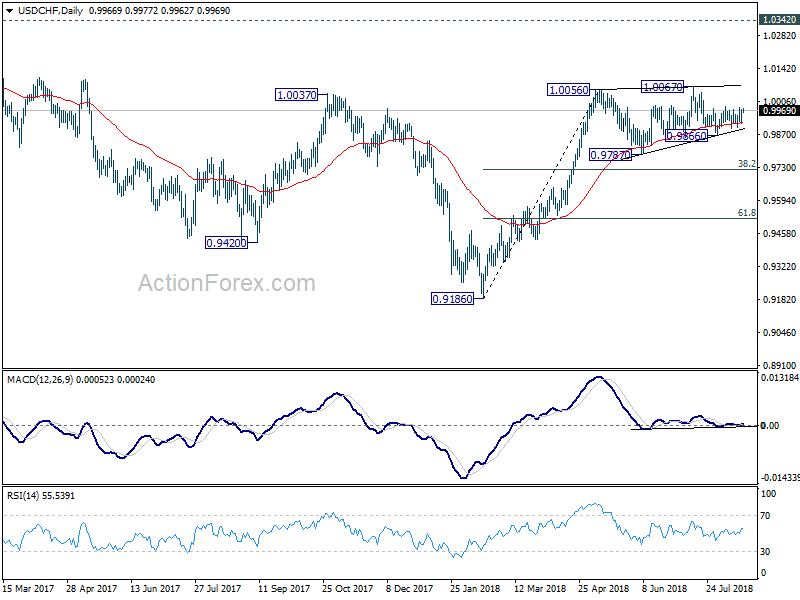
In the bigger picture, current development suggests that the consolidation pattern from 1.0056 is extending with another leg. As long as 38.2% retracement of 0.9186 to 1.0056 at 0.9724 holds, we'd expect rise from 0.9186 to resume at a later stage to retest 1.0342 key resistance (2016 high). However, sustained break of 0.9724 fibonacci level will bring deeper fall, as another declining leg in the long term range pattern.
USD/JPY Daily Outlook
Daily Pivots: (S1) 110.54; (P) 110.82; (R1) 111.19; More...
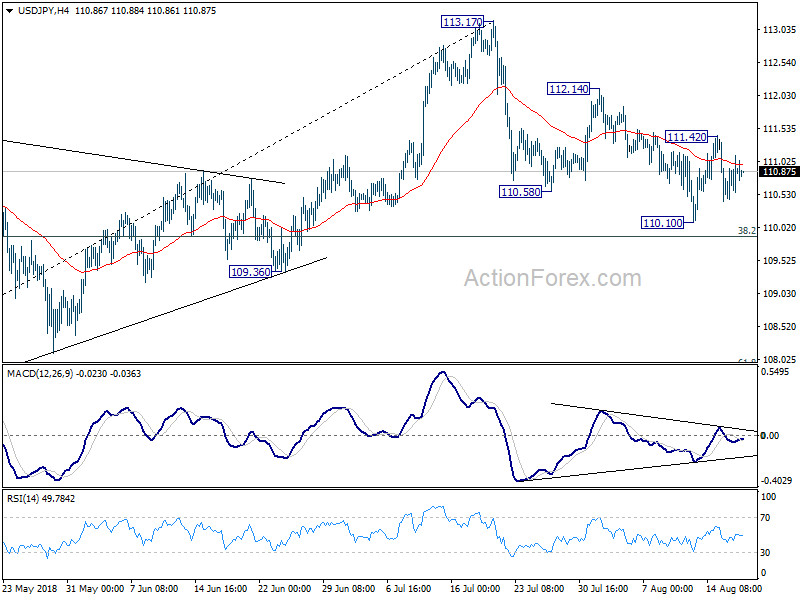
Intraday bias in USD/JPY remains neutral and outlook is unchanged. The corrective decline from 113.17 might extend lower. But downside should be contained by 38.2% retracement of 104.62 to 113.17 at 109.90 to bring rebound. On the upside, above 111.42 will target 112.14 minor resistance first. Break will argue that larger rally is possibly resuming for above 113.17.
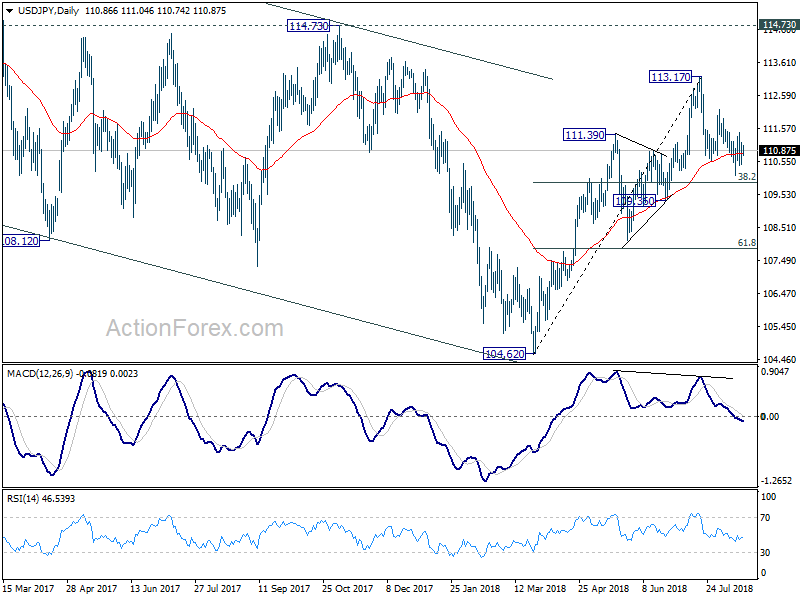
In the bigger picture, corrective fall from 118.65 (2016 high) should have completed with three waves down to 104.62. Decisive break of 114.73 resistance will likely resume whole rally from 98.97 (2016 low) to 100% projection of 98.97 to 118.65 from 104.62 at 124.30, which is reasonably close to 125.85 (2015 high). This will stay as the preferred case as long as 109.36 support holds.
AUD/USD Daily Outlook
Daily Pivots: (S1) 0.7228; (P) 0.7258; (R1) 0.7291; More...
Intraday bias in AUD/USD remains neutral for consolidation above 0.7201 temporary low. Upside of recovery should be limited by 0.7346 support turned resistance to bring fall resumption. On the downside, break of 0.7201 will extend the larger decline from 0.8135, to 100% projection of 0.7676 to 0.7309 from 0.7452 at 0.7085.
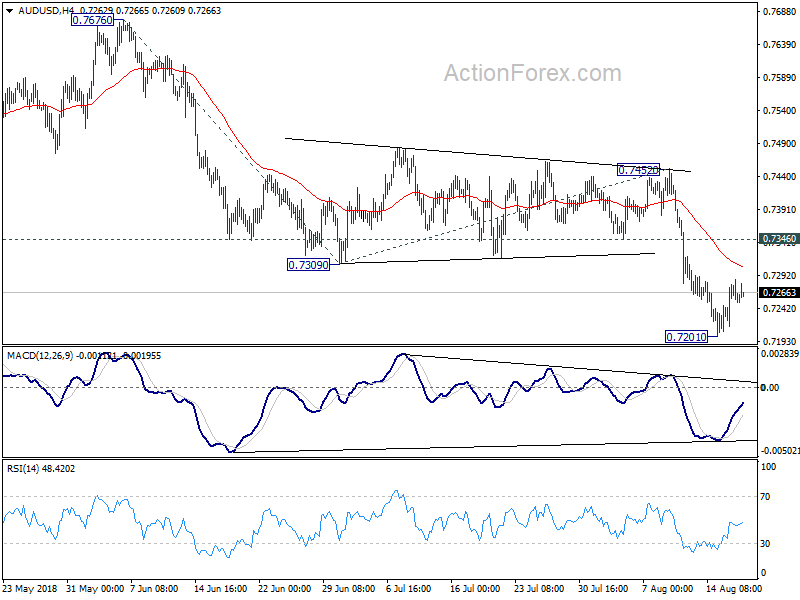
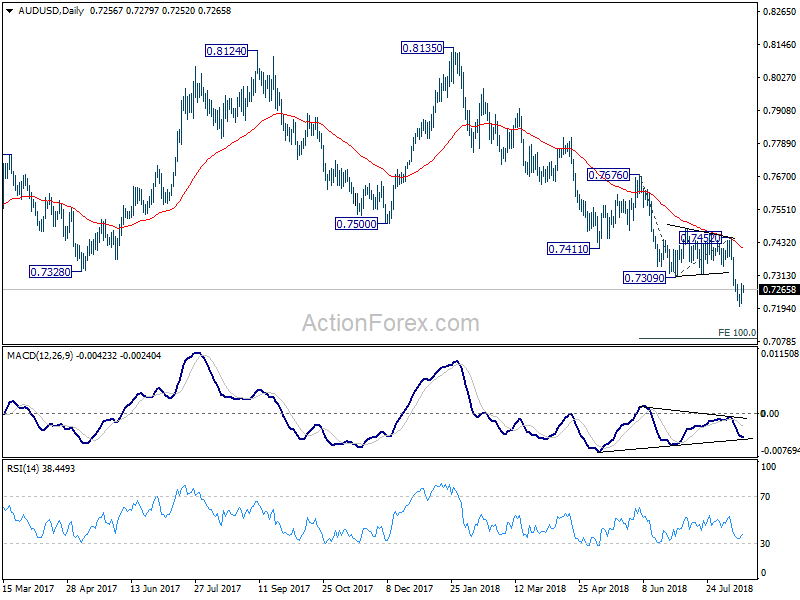
In the bigger picture, medium term rebound from 0.6826 (2016 low) is seen as a corrective move that should be completed at 0.8135. Fall from there should now have a test on 0.6826. There is prospect of resuming long term down trend from 1.1079 (2011 high). But we'll look at downside momentum to assess at a later stage. On the upside, break of 0.7452 resistance is needed to indicate medium term bottoming. Otherwise, outlook will remain bearish even in case of strong rebound.
Hong Kong Government is to Blame for the Economic Deadlock, as HKMA Intervened Again
Sharp moderation of Hong Kong GDP growth in 2Q18 and the recent intervention by the Hong Kong Monetary Authority (HKMA) to prevent HKD from weakening below 7.85 against USD have once again revealed the challenge facing Hong Kong – a economy highly dependent on China and a monetary policy closely following the US.
While many have advocated a re-peg of HKD to renminbi (Chinese yuan), a capital market and currency that is highly controlled by the Chinese communist Party (CCP) is impractical for the re-peg. Meanwhile, Hong Kong’s economic dependence on China is not an inevitable situation. It is planned by the Chinese government, and facilitated by the Hong Kong government, to sacrifice Hong Kong for China’s own economic and financial liberalization.
HKMA Intervention
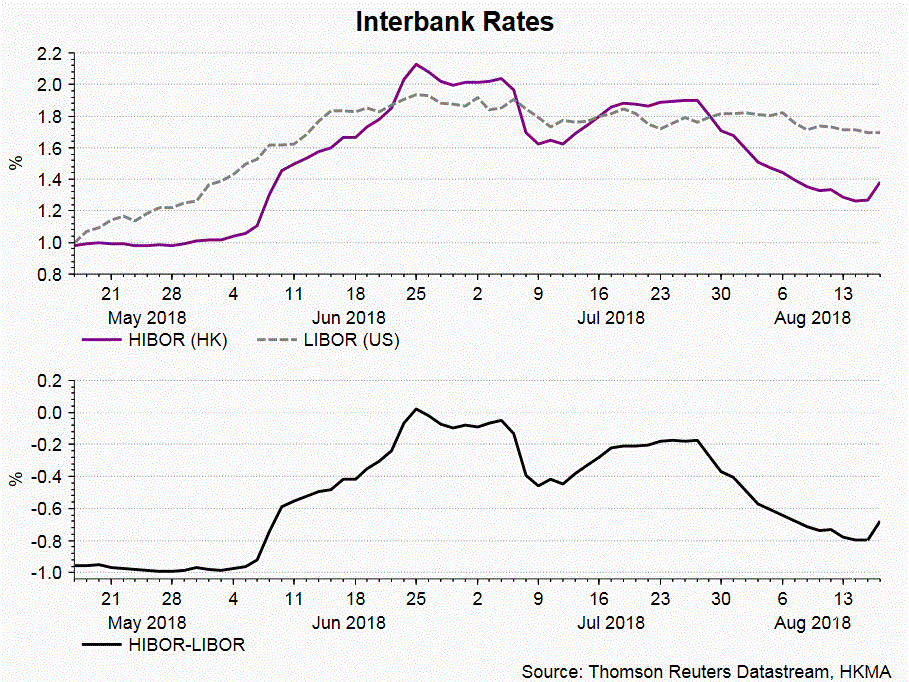
HKMA intervened to defend its currency Thursday as the weak-side Convertibility Undertaking (CU) of HK$7.85 to US$1 was hit. The de-facto central bank of Hong Kong sold USD for HKD of HK$ 2.16B, lowering the aggregate balance to HK$ 107.2B in August 16. The move, first since May, lifted the one-month HIBOR higher, by 12 bps, to a one-week high of 1.38%, and narrowed the LIBOR-HIBOR spread to -0.68%.
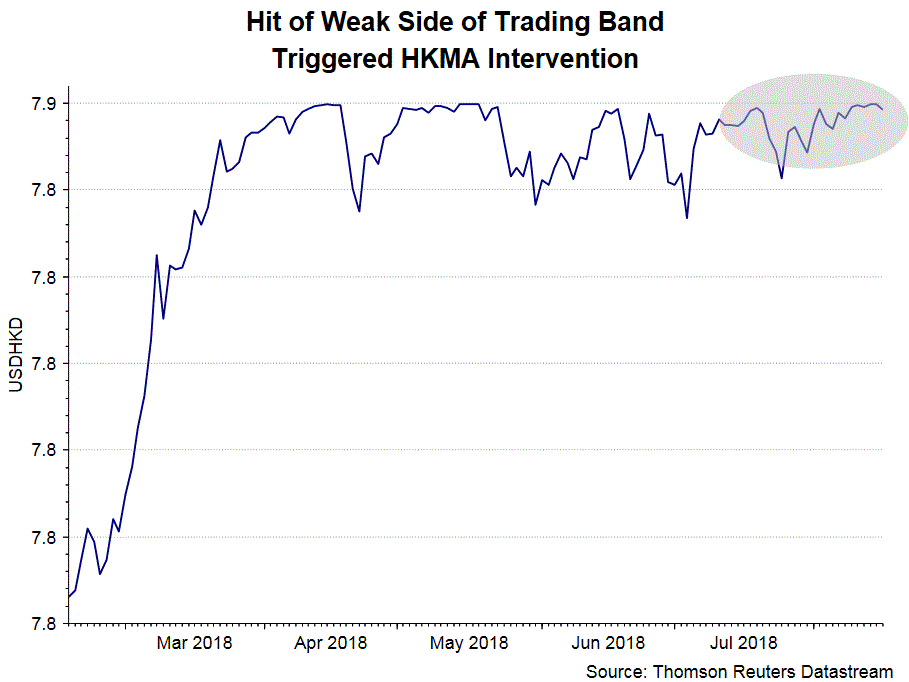
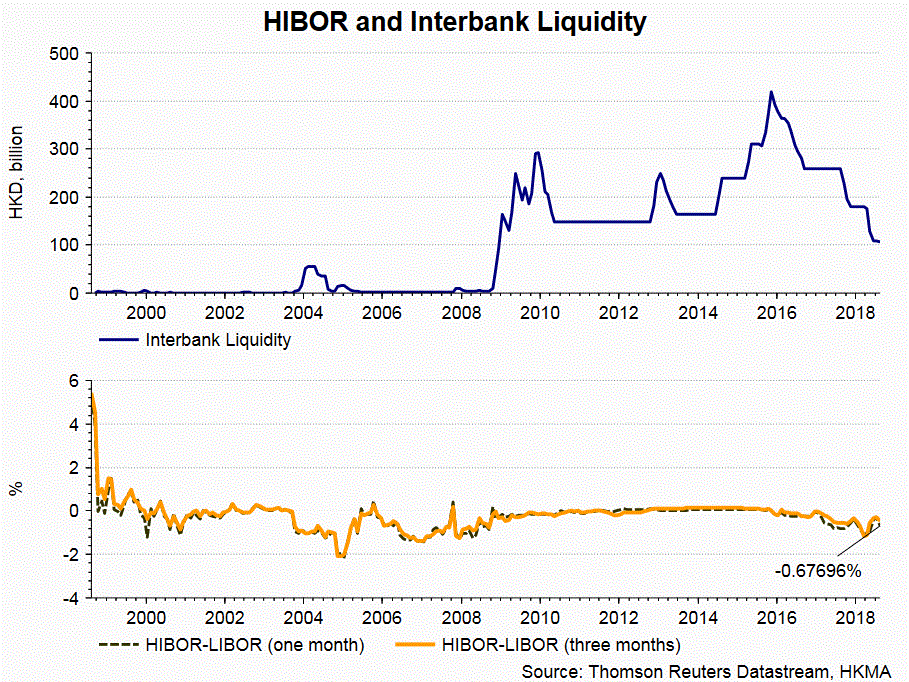
As we mentioned in previous reports, since adoption of the linked-exchange rate system of HK$ 7.8 = US$1 in the 80s, Hong Kong has given up autonomy of monetary policy and has been closely following that of the US. The Fed has raised it policy rate 7 times since December 2015. Although HKMA has hiked its base rate accordingly, the huge interbank liquidity accumulated, mainly from Mainland China, after the global financial crisis, has kept its interbank rate (HIBOR) as exceptionally low level.
Widening of HK and US interbank rates (HIBOR vs LIBOR) has resulted in capital outflow from Hong Kong which has become quite remarkable that that the weak-side CU was triggered in April and May, whereby the HKMA bought HK$ 70.35B from the market. HIBOR increased gradually as interbank liquidity dropped, limiting capital outflow and maintaining HKD within the pegged range. As the spread between HIBOR and LIBOR widened again recently, capital outflow has again triggered the weak-side CU earlier this week, causing the HKMA’s intervention.
GDP Growth Slowed in 2Q18
The intervention to support HKD comes with slowdown in Hong Kong economic growth. GDP expanded +3.5% y/y in 2Q18, compared with consensus of +4.2% and +4.7% in the prior quarter. On quarterly basis, GDP contracted –0.2%, following a +2.2% growth in the first quarter. While remaining the growth driver, expansion in private consumption decelerated to +6.1% y/y in 2Q18, from +8.8% prior.
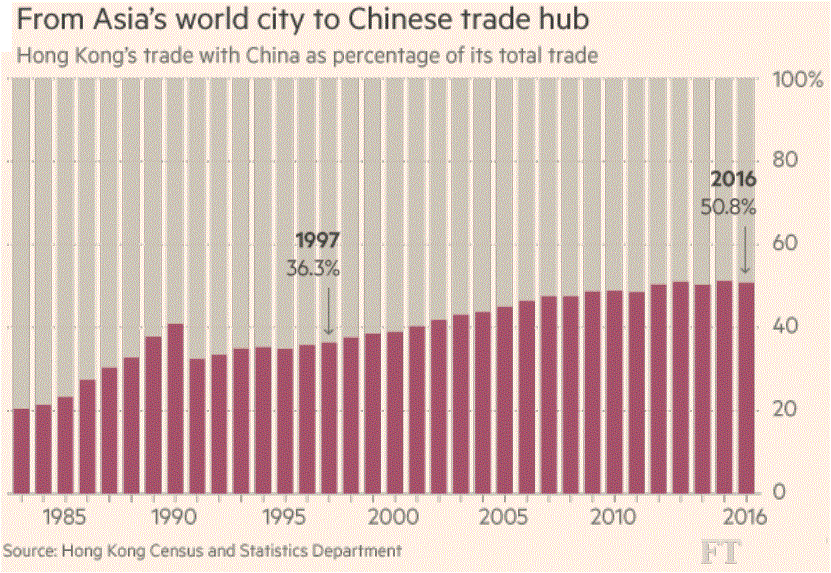
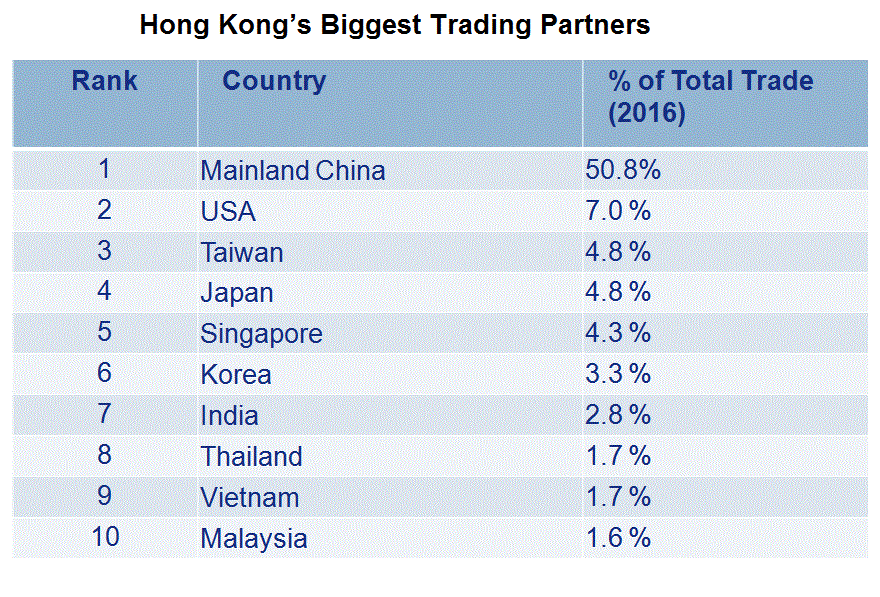
The growth outlook, clouded by US-China trade conflict, would likely deteriorate further as China takes up over 50% of Hong Kong’s total trade. Besides, the financial and property market of Hong Kong is also highly leveraged in China. Recent evidence of Chinese slowdown added to worries of Hong Kong economic outlook.
Hong Kong Economy Heavily Dependent on China
Taking a closer look in Hong Kong’s economic structure, the “trading and logistic” sector (imports and exports, wholesale, freight forwarding and storage, etc) contribute over 20% to GDP. Note that the about 90% of the sector involves in imports and exports, of which the major activity is re-exports to and fro China. Meanwhile about 15% of Hong Kong people are employed in the sector.
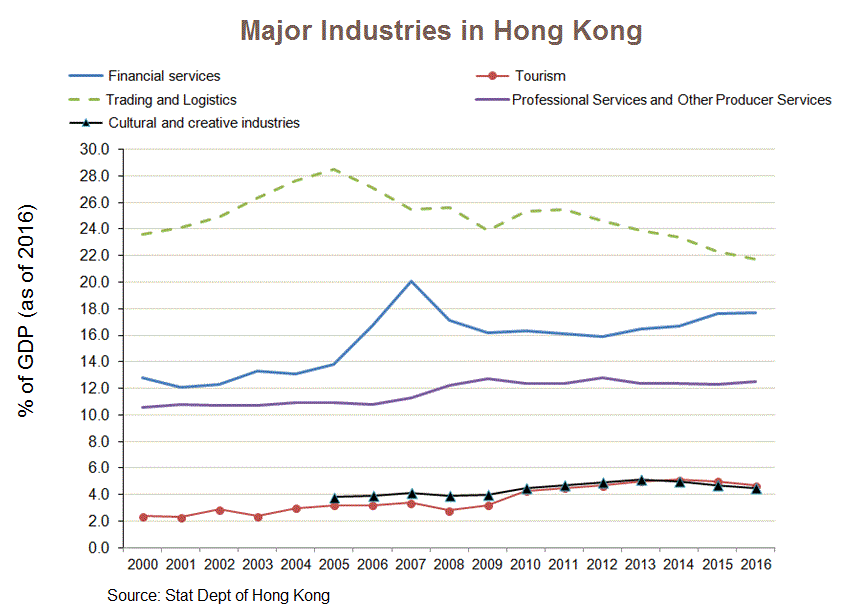
The second pillar of Hong Kong economy is the financial industry. The number of China’s companies, including H-share companies, red chip companies and non-H share private enterprises, listed in Hong Kong makes up about half of the total. Hong Kong represents 61% and 58%, respectively, of China’s inward and outward direct investment in 2016.
Moreover, Chinese players are assuming very important roles in Hong Kong’s property and tourism sectors. Therefore, we are concerned that intensified US-China trade conflict, which would likely accelerate and deepen China’s slowdown, would also hurt Hong Kong’s economy.
A Change in the Linked Exchange Rate System?
The fact that Hong Kong is unable to use monetary tools to achieve economic goal can further exacerbate the situation. There has been suggestion that HKD should be pegged to renminbi instead due to its close economic relations with China. However, this idea is unjustifiable as China’s capital market is still not liberalized, and its currency is not fully convertible and the exchange rate is controlled by the government.
HKMA has laid down four essential conditions for Hong Kong to consider a renminibi-linked HKD: a) a fully convertible RMB; b) open capital account with no capital controls; c) a financial market with sufficient depth and width that allows Hong Kong’s Exchange Fund to hold assets to support the city’s monetary base; and d) synchronized economic cycles between Hong Kong and China.
Besides the impracticality of a renminbi-linked HKD, a peg with USD has provided stability for HKD and the robust economic and financial developments of Hong Kong for decades. Rather than the currency system, the government’s kowtowing to China is to blame.
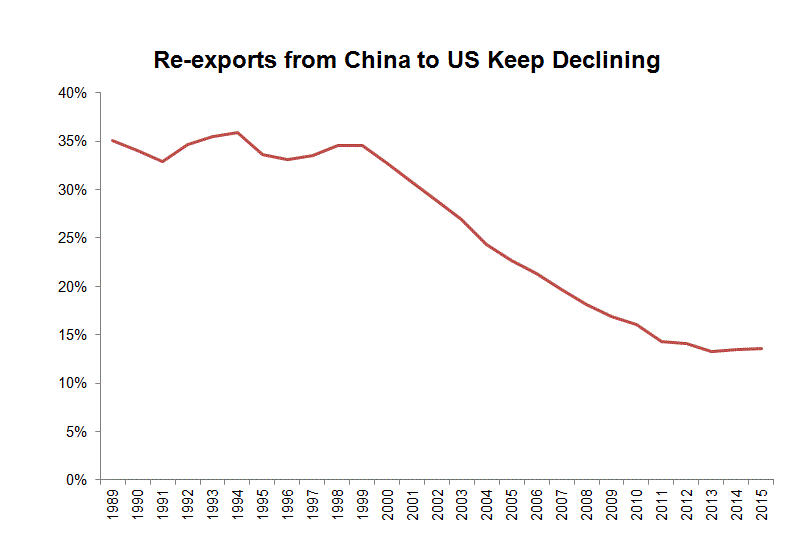
Contribution of the “trading and logistic” sector to Hong Kong GDP has been falling annually since 2005. This can be explained by reduction in re-exports – as China further opened up its ports, improving infrastructure and adopting more friendly tax system for foreign trades, it is increasingly able to conduct trade with foreign counterparties, rather than going through Hong Kong.
Obviously, China is manipulating Hong Kong’s international status, established during the British colonial era and underpinned by the rule of law and a clean government, to develop its own economy.
Meanwhile, tourism and related business (majority coming from Chinese tourists) contribute to 4-5% of Hong Kong GDP. This is then hailed as the one of the four pillars, and sometimes said to be the lifeblood, of Hong Kong economy.
Ironically, while the “cultural and creative” sector contributed similarly to the economy, it is often ignored by the government. Lacking motivation to innovate, the Hong Kong government is content with assimilating with the “rule of man” and corruptive culture in CCP-ruled China.
This is the ultimate reason for the downfall of Hong Kong.
Euro-Zone’s Trade Surplus Narrowed For The Third Consecutive Month In June
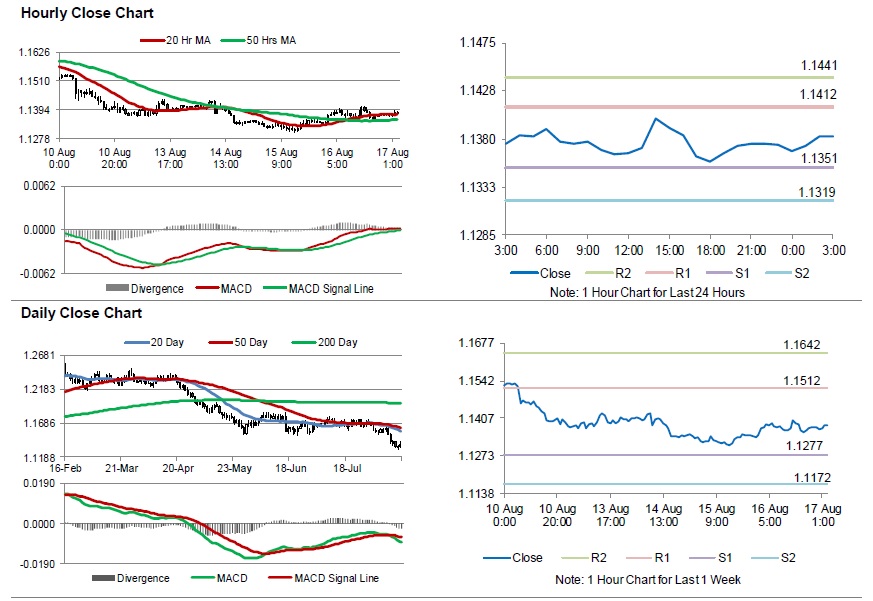
For the 24 hours to 23:00 GMT, the EUR rose 0.26% against the USD and closed at 1.1374
In the economic news, Euro-zone's seasonally adjusted trade surplus narrowed to €16.7 billion in June, contracting for the third consecutive month and after registering a surplus of €16.9 billion in the prior month. Market participants had expected the surplus record an unchanged reading.
In the US, data indicated that building permits advanced 1.5% on monthly basis to an annual rate of 1311.0K in July, more than market consensus to rise to a level of 1310.0K. In the prior month, building permits had registered a revised reading of 1292.0K. Moreover, the nation's housing starts rebounded 0.9% on monthly basis to an annual rate of 1168.0K in July, undershooting market expectations for a rise to a level of 1260.0K. In the preceding month, housing starts had recorded a revised level of 1158.0K. Additionally, the seasonally adjusted initial jobless claims unexpectedly fell for the second straight week to a level of 212.0K in the week ended 11 August 2018, defying market expectations for an advance to a level of 215.0K. Initial jobless claims had registered a revised reading of 214.0K in the previous week.
On the contrary, the US Philadelphia Fed manufacturing index eased to a level of 11.9 in August, compared to a reading of 25.7 in the prior month. Market participants had anticipated the index to drop to a level of 22.0.
In the Asian session, at GMT0300, the pair is trading at 1.1383, with the EUR trading 0.08% higher against the USD from yesterday's close.
The pair is expected to find support at 1.1351, and a fall through could take it to the next support level of 1.1319. The pair is expected to find its first resistance at 1.1412, and a rise through could take it to the next resistance level of 1.1441.
Moving ahead, traders will closely monitor the Euro-zone's consumer price index for July, set to release in a few hours. Later in the day, the US leading index for July and the Michigan consumer sentiment index for August, will garner significant amount of investor attention.
The currency pair is showing convergence with its 20 Hr moving average and trading above its 50 Hr moving average.
Britain’s Retail Sales Rebounded In July
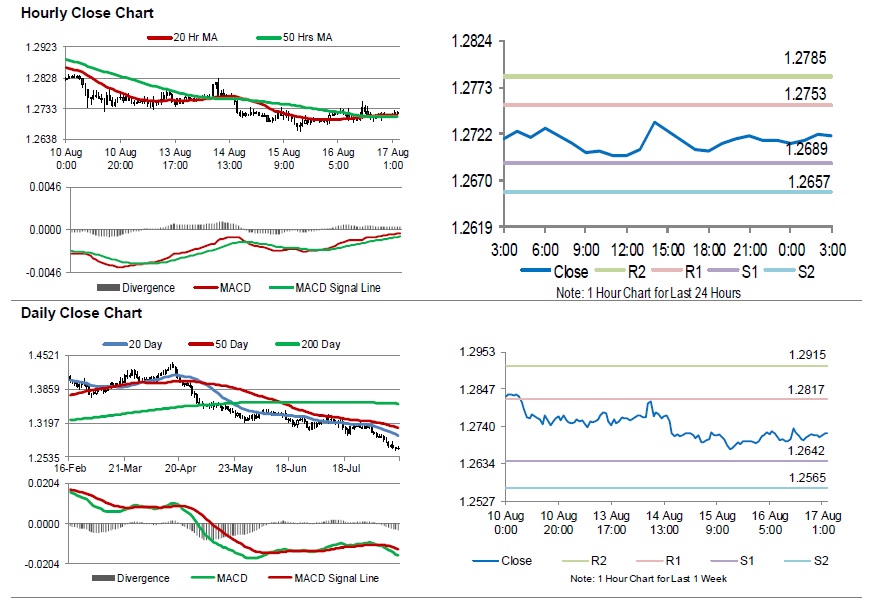
For the 24 hours to 23:00 GMT, the GBP rose 0.15% against the USD and closed at 1.2714, on the back of better than expected retail sales data.
Data showed that UK's retail sales rebounded 0.7% on a monthly basis in July, helped by store promotions and robust online sales and beating market expectations for a rise of 0.2%. In the prior month, retail sales had dropped 0.5%.
In the Asian session, at GMT0300, the pair is trading at 1.2720, with the GBP trading 0.05% higher against the USD from yesterday's close.
The pair is expected to find support at 1.2689, and a fall through could take it to the next support level of 1.2657. The pair is expected to find its first resistance at 1.2753, and a rise through could take it to the next resistance level of 1.2785.
Moving forward, investors will keep an eye on the UK's CBI total trends, Rightmove house prices and public sector net borrowings, all slated to release next week.
The currency pair is showing convergence with its 20 Hr and 50 Hr moving averages.
Japanese Yen Trading Higher In The Asian Session
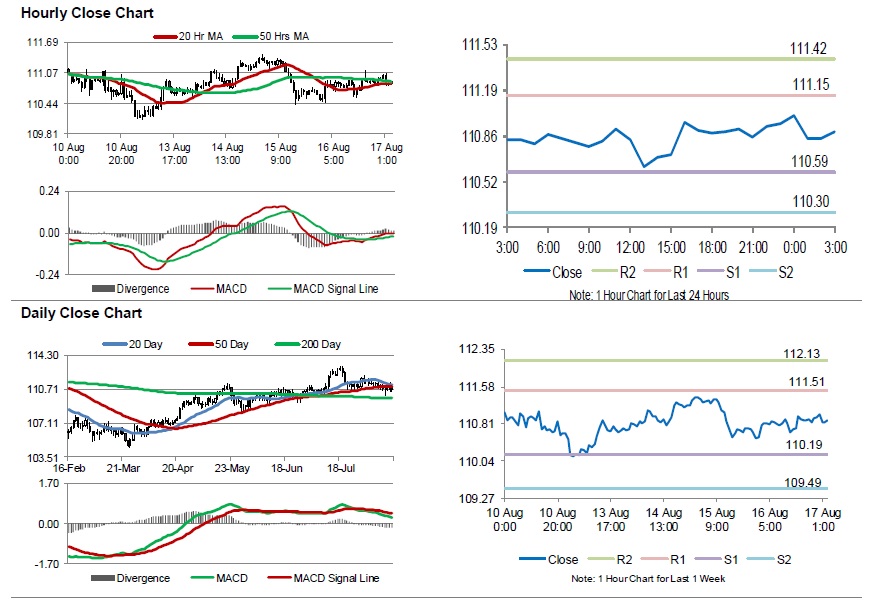
For the 24 hours to 23:00 GMT, the USD rose 0.29% against the JPY and closed at 110.95.
In the Asian session, at GMT0300, the pair is trading at 110.89, with the USD trading 0.05% lower against the JPY from yesterday’s close.
The pair is expected to find support at 110.59, and a fall through could take it to the next support level of 110.30. The pair is expected to find its first resistance at 111.15, and a rise through could take it to the next resistance level of 111.42.
The currency pair is showing convergence with its 20 Hr and 50 Hr moving averages.