Sample Category Title
US: Payrolls Cool in June, But Unemployment Rate Falls to 4.2%
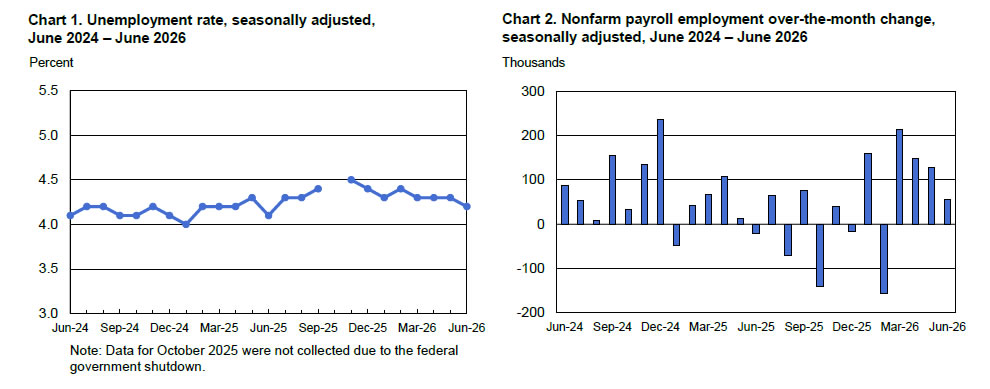
Nonfarm payrolls rose by 57k in June, lower than the Bloomberg consensus forecast of 113k. Revisions to the two prior months were 74k lower.
- Smoothing through volatility, payrolls averaged 111k over the last three months, stronger than the 42k averaged over the last twelve months.
Private payrolls rose 49k, slower than the 97k recorded in May. Job gains were concentrated in professional & business services (+36k) and health care & social assistance (+46.6k). Leisure & hospitality shed 61k last month, following a large jump the month prior. Meanwhile, government added 8k new positions.
In the household survey, the labor force plummeted by 720k, larger than the still hefty decline in civilian employment (-507k). As a result, the unemployment rate fell 11 basis points to a twelve-month low of 4.2%.
Average hourly earnings rose 0.3% month-on-month (m/m), pushing the year-ago measure to 3.5% (from 3.4% the month prior).
Key Implications
Payrolls moderated in June, following a string of exceptionally strong gains in each of the prior three months. The pullback hardly came as a surprise, especially given the large gains in leisure & hospitality and local government the month prior. That said, job growth is still considerably stronger than a year ago, and is also running slightly above the estimated breakeven rate, which helped to push the unemployment rate to a twelve-month low of 4.2%.
While the labor market has clearly turned a corner, this morning's weaker headline print combined with the downward revisions suggests it's stopping short of a full-blown reacceleration. Market odds for a July hike were completely pushed back following the release (a hike was 30% priced ahead of payrolls), with all eyes now turning to the June CPI (scheduled for July 14th). While a hotter reading could swing odds back in favor of a summer hike, we still think the bar for policy tightening is high. Today's policy rate remains somewhat in restrictive territory and provided inflation cools as expected in H2-2026, it will lead to a natural tightening in the real fed funds rate.
EUR/USD Daily Outlook
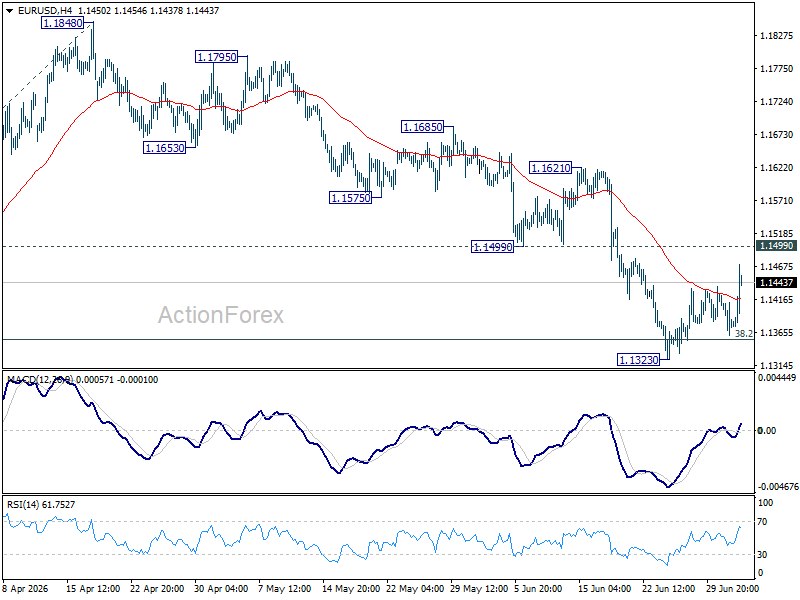
EUR/USD's rebound from 1.1323 extended higher today, but it's still capped below 1.1499 support turned resistance. Intraday bias remains neutral and further decline is in favor. On the downside, break of 1.1323 will resume the fall from 1.2081 to 100% projection of 1.2081 to 1.1408 from 1.1848 at 1.1175. However, decisive break of 1.1499 will turn bias back to the upside for 55 D EMA (now at 1.1559) and above.
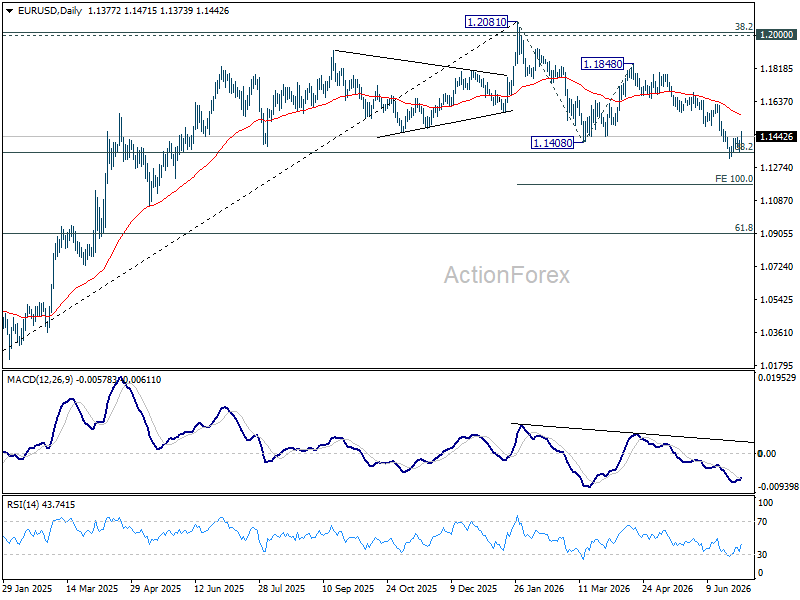
In the bigger picture, focus is back on 38.2% retracement of 1.0176 to 1.2081 at 1.1353. Decisive break there will revive the case of medium term bearish trend reversal after rejection by 1.2 key cluster resistance level. Further fall should be seen to 61.8% retracement at 1.0904. Nevertheless, strong rebound from 1.1353, followed by break of 1.1621 resistance, will retain medium term bullishness.
GBP/USD Daily Outlook
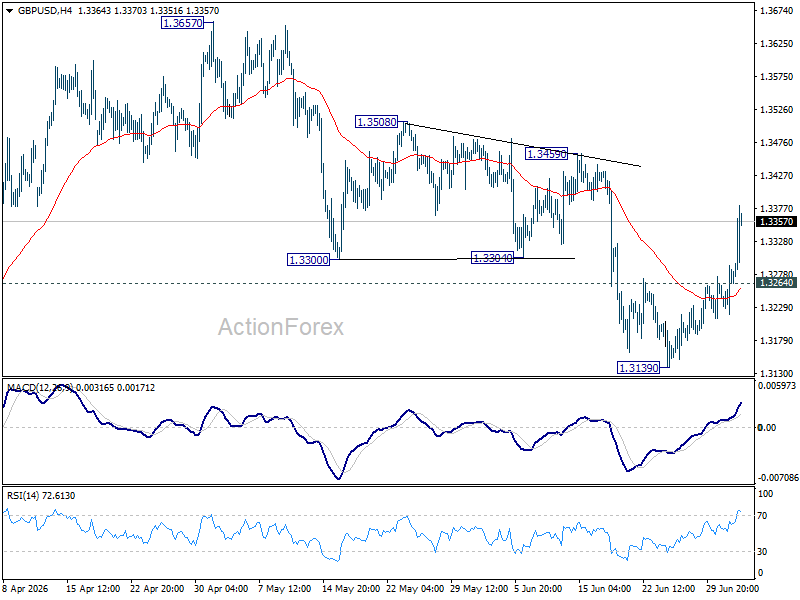
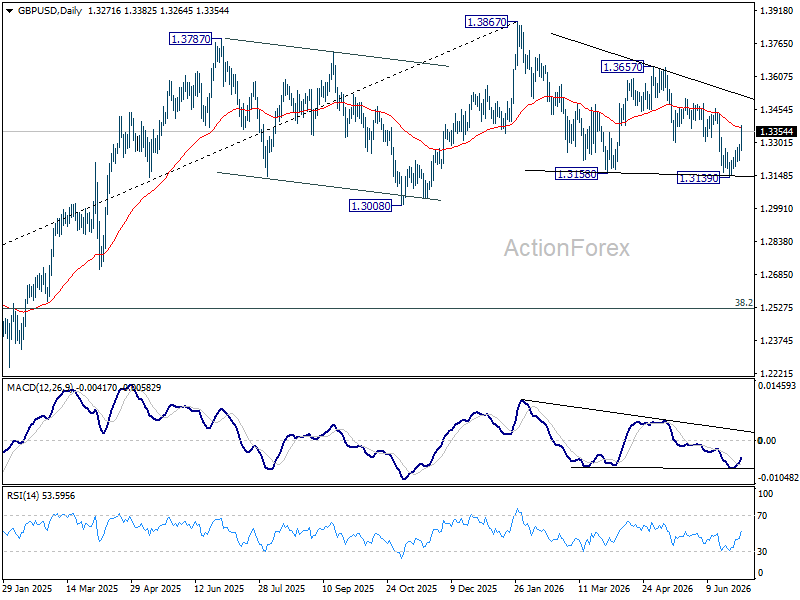
GBP/USD's strong break of 1.3300 support turned resistance suggests that fall from 1.3650 has completed at 1.3139 already. Intraday bias is back on the upside for 1.3459 resistance. Firm break there will argue that correction from 1.3867 has completed too, and target 1.3657 for confirmation. On the downside, below 1.3264 minor support will turn intraday bias neutral again first.
In the bigger picture, price actions from 1.3867 are a corrective pattern within the broader up trend from 1.0351 (2022 low). With 1.3008 support intact, medium term bullishness is maintained and break of 1.3867 is in favor for a later stage, towards 1.4248 key resistance (2021 high). However, firm break of 1.3008 will at least bring deeper fall to 38.2% retracement of 1.0351 to 1.3867 at 1.2524, with increased risk of bearish reversal.
USD/CHF Daily Outlook
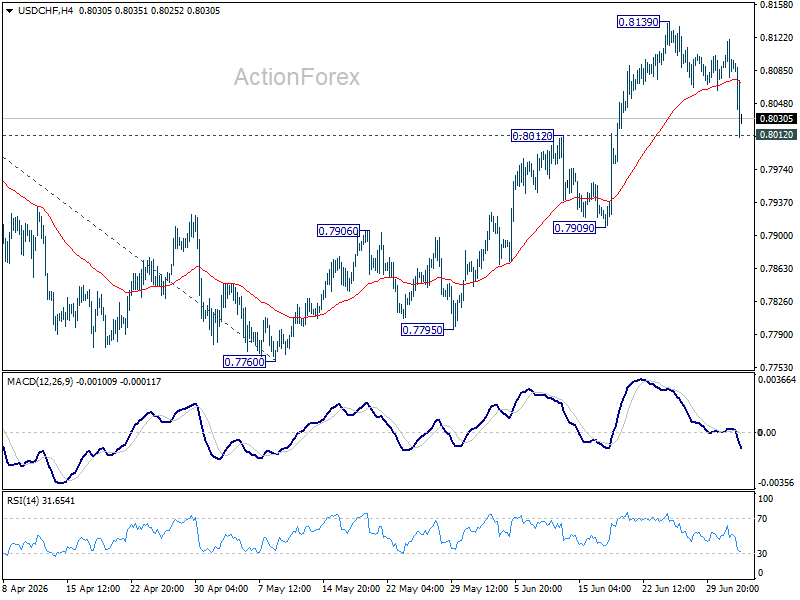
USD/CHF's fall from 0.8139 extends lower today but it's still holding on to 0.8012 resistance turned support. Intraday bias stays neutral first. On the upside, above 0.8139 will extend the larger rise from 0.7603 to 100% projection 0.7603 to 0.8041 from 0.7600 at 0.8198 next. However, sustained break of 0.8012 will bring deeper fall to 55 D EMA (now at 0.7949) and below.
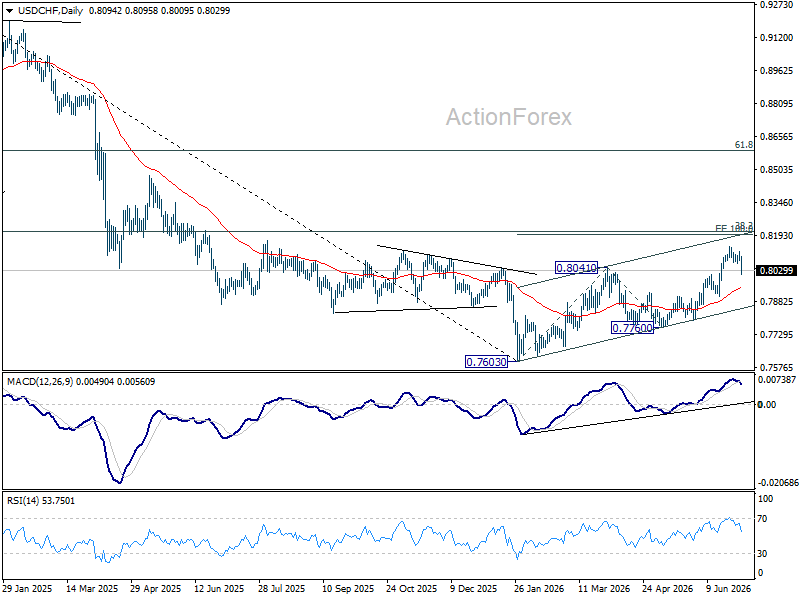
In the bigger picture, while a medium term bottom was formed at 0.7603, it's still early to call for bullish trend reversal. As long as 38.2% retracement of 0.9200 (2025 high) to 0.7603 at 0.8213 holds, the larger down trend could still continue through 0.7603 at a later stage. However, firm break of 0.7603 will argue that the trend has reversed and turn focus to 0.8332 support turned resistance (2023 low) for confirmation.
AUD/USD Daily Report
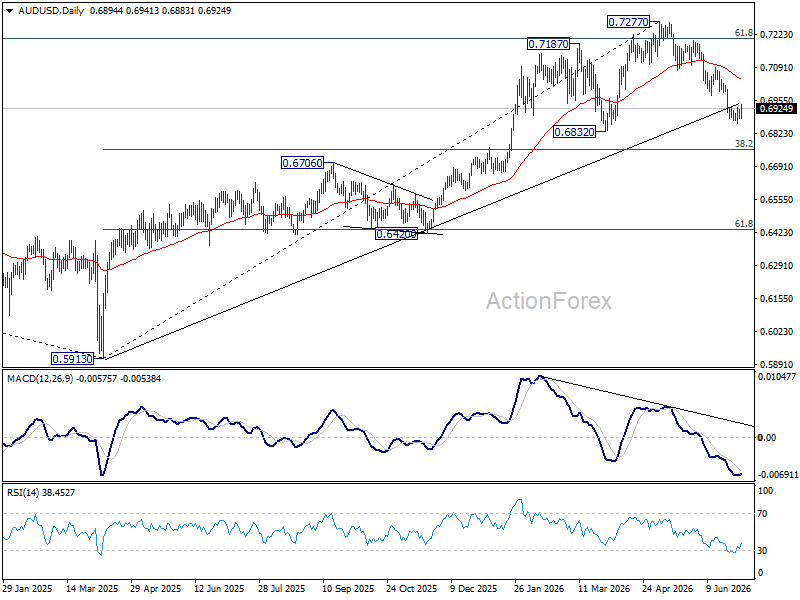
AUD/USD recovers further as consolidations from 0.6864 continues. But upside is limited below 0.6977 support turned resistance. Intraday bias remains neutral, and further decline is in favor. Below 0.6864 will extend the fall from 0.7277 to 0.6832 support. Firm break there will target 0.6756 fibonacci level.
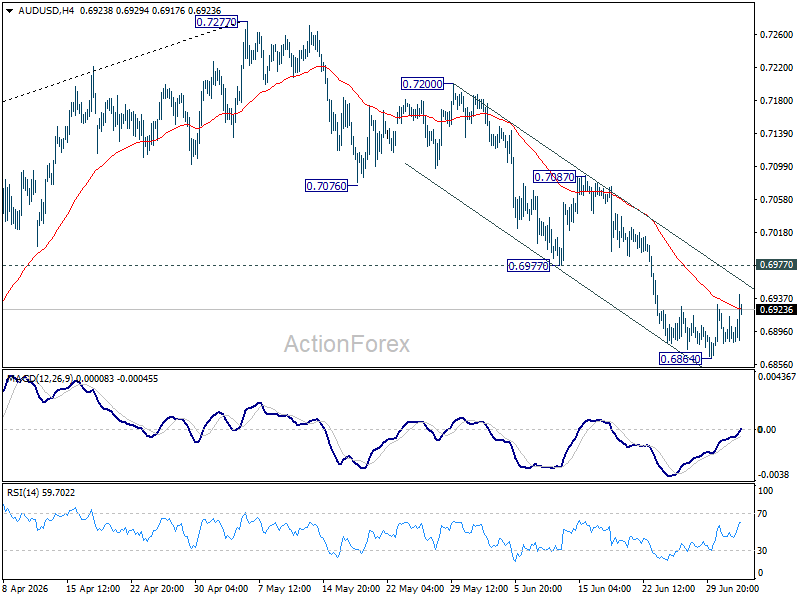
In the bigger picture, considering bearish divergence condition in D MACD, a medium term top could be formed at 0.7277 after failing to sustain above 61.8% retracement of 0.8006 (2021 high) to 0.5913 (2024 low) at 0.7206. Deeper fall could be seen to 38.2% retracement of 0.5913 to 0.7277 at 0.6756 as a correction. But strong support should be seen there to bring rebound. Consolidations would continue below 0.7277 for a while.
USD/CAD Daily Outlook
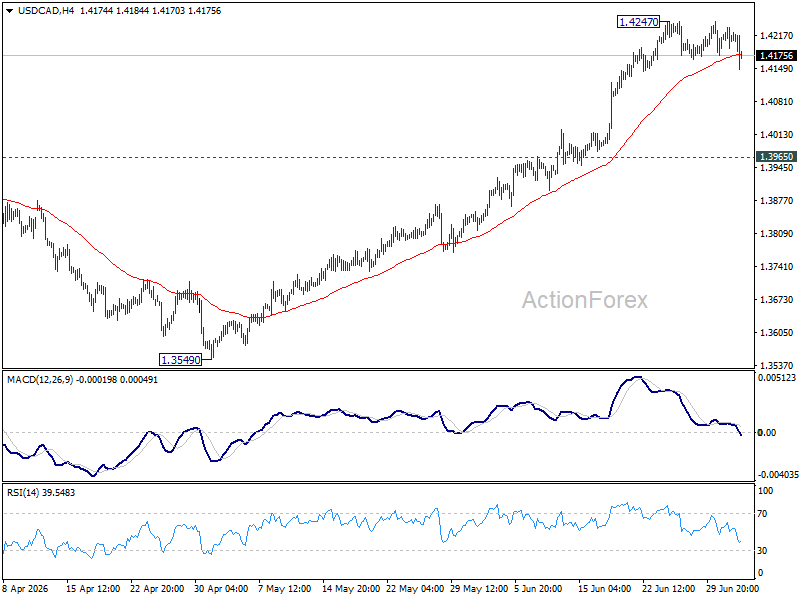
USD/CAD dips again as consolidation from 1.4247 extends. Intraday bias remains neutral. Deeper pullback, but downside should be contained above 1.3965 resistance turned support. Above 1.4247 will resume the rally from 1.3480 to 61.8% retracement of 1.4791 to 1.3480 at 1.4290. Firm break there will pave the way back to 1.4791 high.
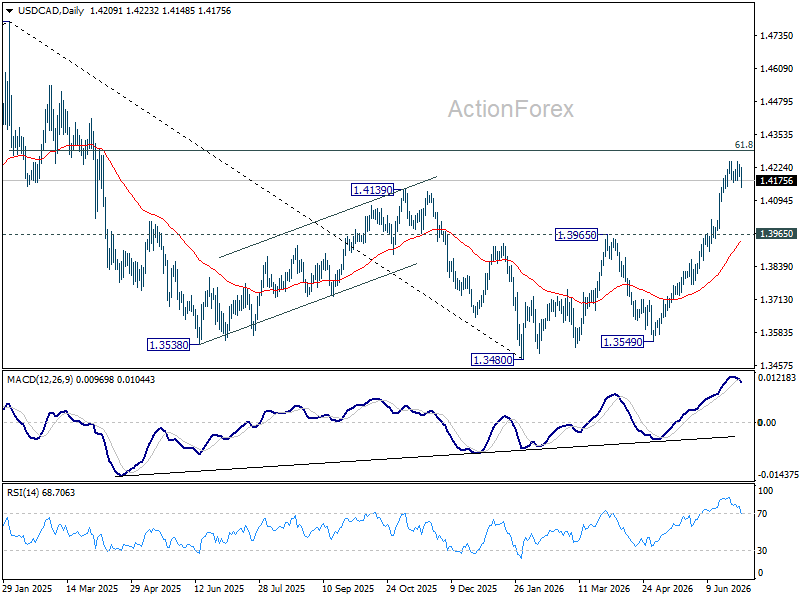
In the bigger picture, current development suggests that fall from 1.4791 has completed as a three wave correction to 1.3480. It's still early to judge if rise from there a corrective bounce, or resumption of the larger up trend from 1.2005 (2021 low). But in either case, retest of 1.4791 high should be seen next.
Fed Hike Bets Retreat After Payrolls Miss, Yen Supported by Tokyo’s New Playbook
The June non farm payrolls report did not prove the US economy is breaking. It did something more important for markets: it showed the labor market is not hot enough to force the Fed’s hand. Non-Farm Payrolls rose just 57k, far below expectations of 114k, while May was revised down from 172k to 129k. That was enough to push Dollar sharply lower and reduce the market-implied chance of a September hike from about 65% to 52%.
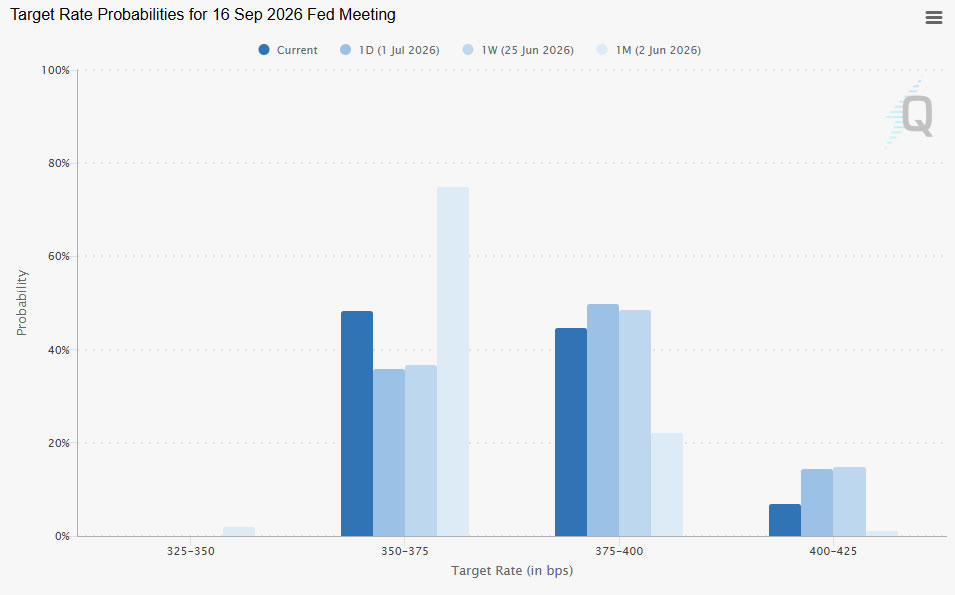
The details were mixed, but the policy message was clear. Unemployment slipped from 4.3% to 4.2%, while wage growth stayed robust at 0.3% mom and rose from 3.4% to 3.5% yoy. Those figures prevent the report from being a clean dovish signal. Still, weak headline hiring gives the Fed more room to wait, especially with oil prices now far below their Q2 highs. If lower energy prices pull inflation down naturally, Chair Kevin Warsh’s Fed may decide that the current 3.50-3.75% policy rate is already restrictive enough.
Yen’s rally added a second major theme to the session. There is no official confirmation of Japanese intervention, but the reported shift toward surprise “ambush” tactics appears to have done what verbal warnings could not: it made traders afraid of holding crowded short-yen positions. The timing was especially effective, coming just before NFP and creating a buffer for Yen before the data. With payrolls then disappointing, Japan may have needed no actual intervention at all.
Currency performance now reflects two different repricings. Dollar has become the week’s weakest major currency as Fed tightening pressure fades, followed by Loonie and Aussie. Sterling leads, followed by Kiwi and Swiss Franc, helped by resilient risk sentiment and relatively firmer domestic policy expectations. Euro and Yen sit in the middle, but for different reasons: Euro is still weighed by softer ECB expectations, while Yen has been support
US NFP Miss Sharply With 57k Growth, Participation Falls and Wage Growth Holds Firm
US employment growth disappointed in June after payrolls rose only 57k, while falling labor force participation helped push the unemployment rate lower. Read More.
USD/JPY's 150 Pips Fall: A Tactical "Intervention" Masterclass by Japan Ahead of NFP
Japan may not have intervened, but it may have achieved the same effect. We explain how strategic uncertainty triggered a 150-pip USD/JPY slide and changed the risk calculus for yen bears ahead of NFP. Read More.
EUR/GBP Accelerates Through Key Support as ECB/BoE Yield Convergence Trade Reverses
EUR/GBP isn't just reacting to softer Eurozone inflation. It's unwinding one of this year's biggest FX trades. We explain why the reversal of ECB/BoE yield convergence could keep the cross under pressure. Read More.
Swiss CPI Slows to 0.6% as Imported Price Pressures Fade Further
Swiss inflation remained subdued in June as CPI held at 0.5% year-over-year and imported price pressures eased sharply, reinforcing Switzerland's low-inflation environment. Read More.
Australia Posts Biggest Trade Deficit Since 2015 as Gold, Iron Ore Exports Slump
Australia posted its largest trade deficit since 2015 in May as exports of gold and iron ore plunged, overwhelming modest import growth and surprising markets. Read More.
USD/JPY Daily Outlook
USD/JPY's steep decline and strong break of 161.51 support confirms short term topping at 162.83, on bearish divergence condition in 4H MACD. Intraday bias is back on the downside for 38.2% retracement of 155.01 to 162.83 at 159.84. Since this level is close to 55 D EMA (now at 159.95), strong support should be seen from there to bring rebound. But overall, consolidations should continue below 162.83 for a while.
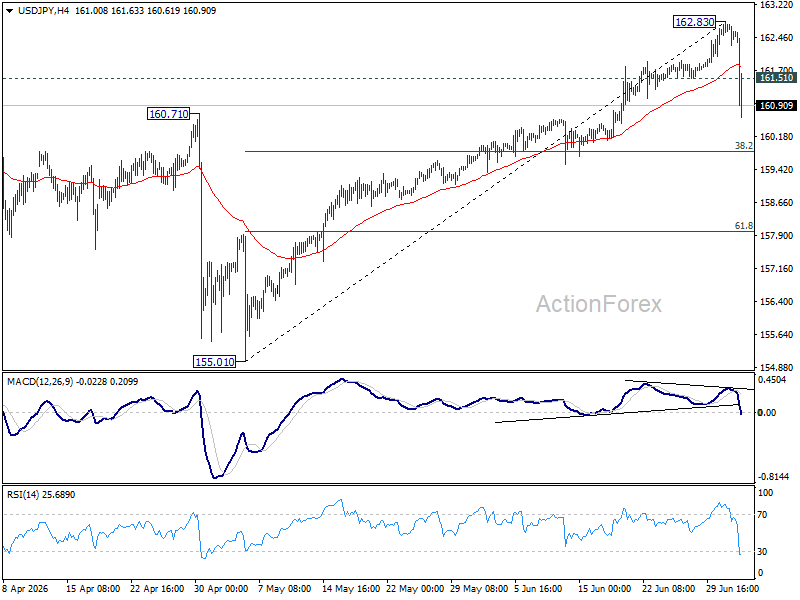
In the bigger picture, rise from 139.87 (2025 low) is seen as another rising leg of the long term up trend. Next target is 61.8% projection of 139.87 to 159.44 from 152.25 at 164.34. For now, outlook will remain bullish as long as 155.01 support holds, even in case of deep pullback.
USD/JPY Daily Outlook
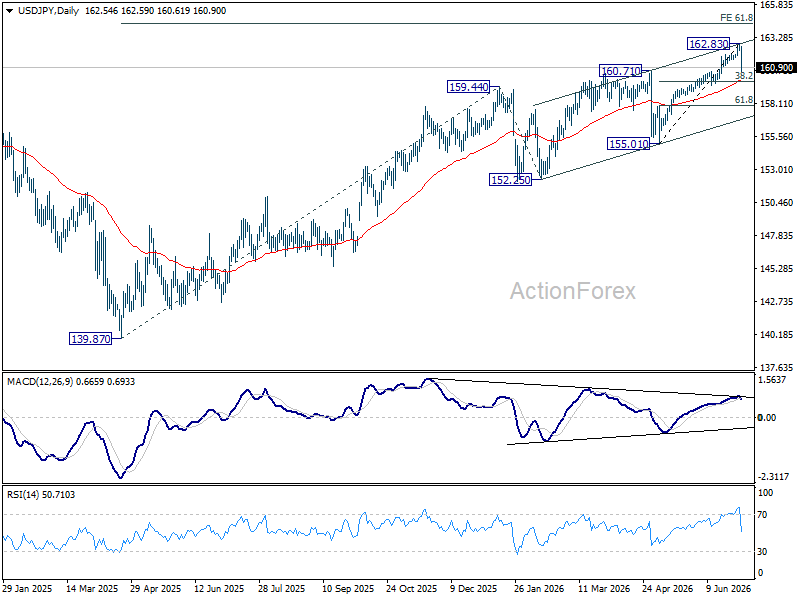
USD/JPY's steep decline and strong break of 161.51 support confirms short term topping at 162.83, on bearish divergence condition in 4H MACD. Intraday bias is back on the downside for 38.2% retracement of 155.01 to 162.83 at 159.84. Since this level is close to 55 D EMA (now at 159.95), strong support should be seen from there to bring rebound. But overall, consolidations should continue below 162.83 for a while.
In the bigger picture, rise from 139.87 (2025 low) is seen as another rising leg of the long term up trend. Next target is 61.8% projection of 139.87 to 159.44 from 152.25 at 164.34. For now, outlook will remain bullish as long as 155.01 support holds, even in case of deep pullback.
US NFP Miss Sharply With 57k Growth, Participation Falls and Wage Growth Holds Firm
US job growth slowed much more than expected in June, with Non-Farm Payrolls rising just 57k, well below the consensus forecast of 114k. The previous month's gain was also revised sharply lower to 129k from the initially reported 172k, reinforcing signs that labor market momentum has cooled heading into the second half of the year.
Despite the weak headline, the unemployment rate unexpectedly edged down to 4.2% from 4.3%. However, the improvement was largely explained by a decline in labor force participation, which fell 0.3 percentage points to 61.5%, suggesting fewer people were actively seeking work rather than stronger hiring. Meanwhile, average hourly earnings rose 0.3% mom for a second consecutive month, lifting annual wage growth to 3.5% yoy from 3.4% yoy and indicating that wage pressures remain resilient despite softer employment gains.
The report presents a mixed picture for the Federal Reserve. Hiring has clearly lost momentum, but persistent wage growth and a lower unemployment rate do not point to a labor market that is deteriorating rapidly. Markets are therefore likely to view the data as reducing the urgency for another rate hike without completely eliminating the possibility. Attention will now turn to whether subsequent labor market and inflation data confirm that the recent slowdown reflects a broader moderation in economic activity rather than a temporary soft patch.
| Indicator | Previous | Latest | Consensus |
|---|---|---|---|
| Non-Farm Payrolls | 129k | 57k | 114k |
| Average Monthly Job Growth (Past 12 Months) |
— | 36k | — |
| Unemployment Rate | 4.3% | 4.2% | 4.3% |
| Labor Force Participation Rate | 61.8% | 61.5% | — |
| Average Hourly Earnings (MoM) | 0.3% | 0.3% | 0.3% |
| Average Hourly Earnings (YoY) | 3.4% | 3.5% | 3.5% |
GBP/JPY Daily Outlook
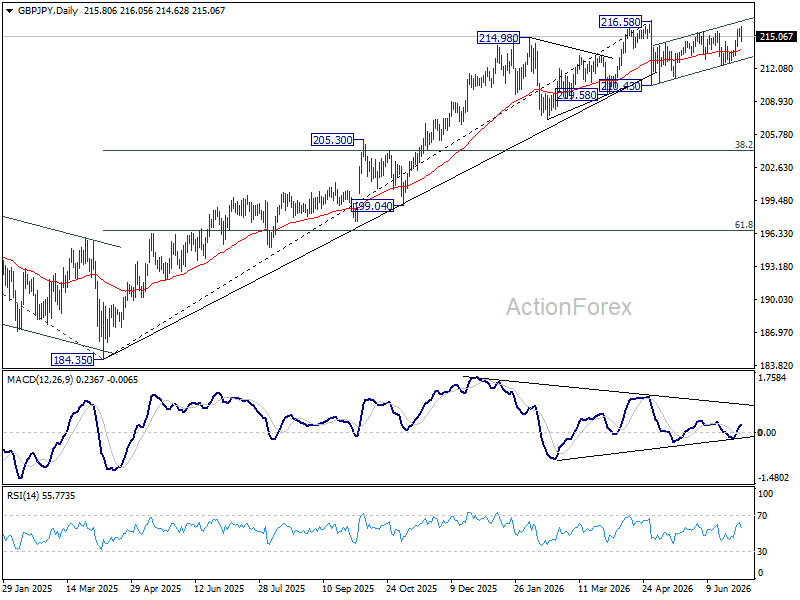
Intraday bias in GBP/JPY is turned neutral with current retreat. On the upside, above 216.05 will extend the rebound from 210.43 to retest 216.58 high. For now, risk will stay on the upside as long as 212.36 support holds, in case of retreat.
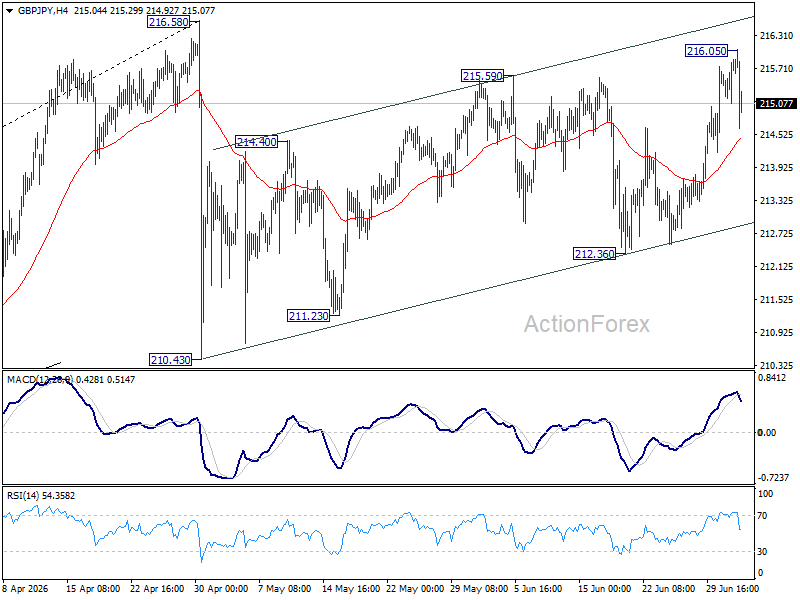
In the bigger picture, there is no clear sign of trend reversal yet. The long term up trend could still extend to 61.8% projection of 148.93 (2022 low) to 208.09 (2024 high) from 184.35 at 220.90 on resumption. However, sustained break of 55 W EMA (now at 207.52) will argue that it's already in medium term down trend for 184.35 support.