

Sample Category Title
EUR/CHF Daily Outlook
Daily Pivots: (S1) 1.1655; (P) 1.1678; (R1) 1.1697; More...
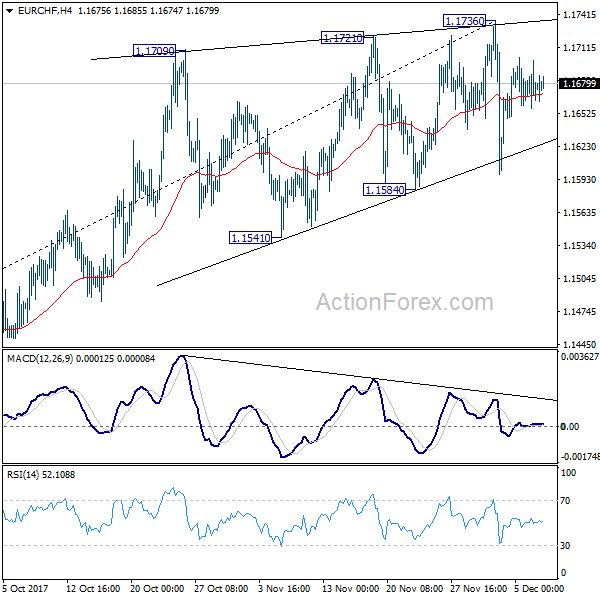
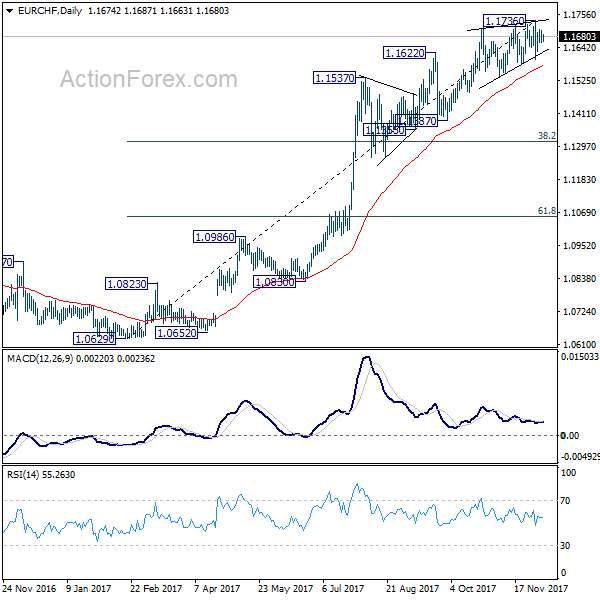
Intraday bias in EUR/CHF remains neutral at this point. Near term outlook is unchanged. As noted before, persistent bearish divergence condition in 4 hour MACD and rising wedge like structure suggests that the cross is near to forming a top, if not formed. Hence, even in case of another rise, we'd expect limited upside potential. On the downside, sustained break of 1.1584 support will be a strong sign of trend reversal and should turn outlook bearish for 38.2% retracement of 1.0629 to 1.1736 at 1.1313.
In the bigger picture, while a medium term top could be around the corner, there is no change in the larger outlook. That is, long term rise from SNB spike low back in 2015 is still in progress and would extend. As long as 1.1195 resistance turned support holds, we'll hold on to this bullish view and expect another to prior SNB imposed floor at 1.2000. Though, we'll reassess the outlook if 1.1195 is firmly taken out.
EURO Strongly Bearish Below 1.1808 Level
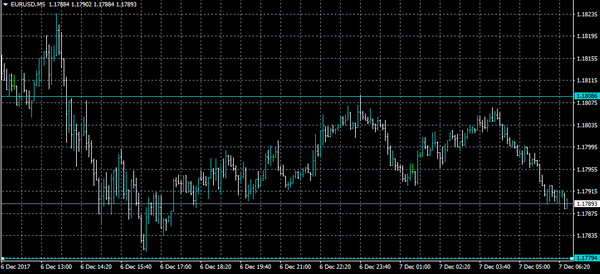
The euro continues to move lower against the U.S dollar, with price-action now closing below the pairs key 100-day moving average. The EURUSD pairs decline accelerated, after a marginally better ADP jobs report from the United States, showing that 190,000 private sector jobs had been created during November. Downside pressure remains, with the pair creating further bearish lower swing price-highs on the charts. Traders now look to third quarter Gross Domestic Product figures from the Eurozone.
The EURUSD pair is strongly bearish while trading below the 1.1808 level, further downside towards the 1.1879 and 1.1765 levels seems likely.
Should EURUSD price-action move above the 1.1808 level, buyers may target towards the 1.1828 and 1.1845 resistance levels.
USDJPY Intraday Bullish ABove 112.20 Level
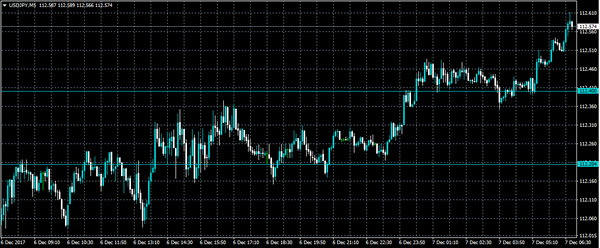
The U.S dollar is starting to regain upside momentum against the Japanese yen, as sellers failed to hold price-action below the 11.20 technical level. The USDJPY pair currently trades around the 112.60 level, although the rally started late on Wednesday, following better than expected ADP job figures yesterday. The USDJPY is also being pulled higher by gains in the Japanese stock market, with the Nikkei225 erasing weekly trading losses, and moving higher by 1.5 percent. Traders now look to third fiscal quarter GDP figures coming from the Japanese economy later today.
Should price action continue to trade above the 112.20 technical level, further upside towards the 112.80 and 113.10 levels appears likely.
If the USDJPY pair move back below the 112.20 level, further losses toward the 111.90 and 111.58 levels seems possible.
Global Data Flows In The Spotlight On Thursday
Economic data will very much remain the focus on Thursday, as investors await the all-important US nonfarm payrolls report in the final session of the week. Still, the Thursday session features several noteworthy releases from both sides of the Atlantic.
Action begins at 06:45 GMT with a Swiss government report on unemployment. The nation’s jobless rate is forecast to hold steady at 3.1% for the month of November.
Shifting gears to Germany, the government is scheduled to report on industrial production at 07:00 GMT. Output in Europe’s largest economy is expected to rise 1.1% in October, which translates into year-over-year growth of 4.3%.
Later in the morning, France will issue its latest trade figures for the month of October. Paris’ deficit is expected to narrow slightly to €4.6 billion from €4.669 billion the month before.
At 10:00 GMT, the European Commission’s statistics agency will report revised GDP numbers for the third quarter. Gross domestic product (GDP) is forecast to expand 0.6% quarter-on-quarter, unchanged from the previous estimate. That should translate into an annualized growth rate of 0.6%.
Over in North America, the US Department of Labor will report on initial jobless claims at 13:30 GMT. The number of Americans filing for first-time unemployment benefits is expected to edge up slightly to 240,000 from 238,000.
Later in the day, the Federal Reserve will release the latest consumer credit change report for October.
North of the border, the Canadian government will report on building permits at 13:30 GMT.
On the monetary policy front, European Central Bank (ECB) President Mario Draghi will deliver a speech at 16:00 GMT. Draghi’s remarks will pique the interest of investors now that the ECB is embarking on a path of policy normalization.
EUR/USD
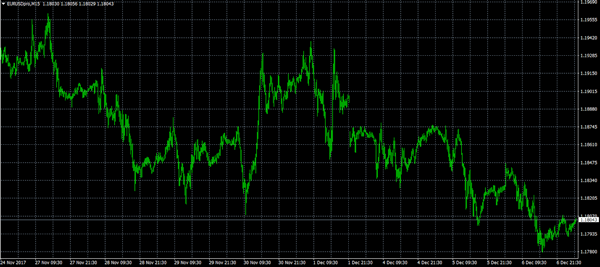
The euro was in freefall Thursday morning, as the US dollar gained ground on a basket of world currencies. The EUR/USD exchange rate briefly fell below 1.1800 Thursday before recovering those levels later in the session. The pair was last down 0.8% at 1.1805. The EUR/USD is barely hanging on to support near 1.1800, and further downside could expose the 55-day SMA near 1.1712.
USD/CAD
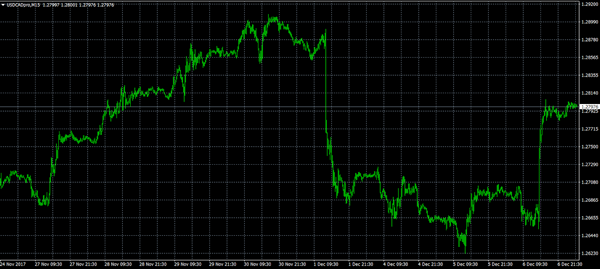
The North American cross was trading steadily at 1.2800 on Thursday following a sharp up-move during the previous session. The Canadian dollar lost momentum on Wednesday after the Bank of Canada (BOC) appeared hesitant over future rate hikes. Economic data will drive the pair in the final two sessions of the week.
USD/JPY
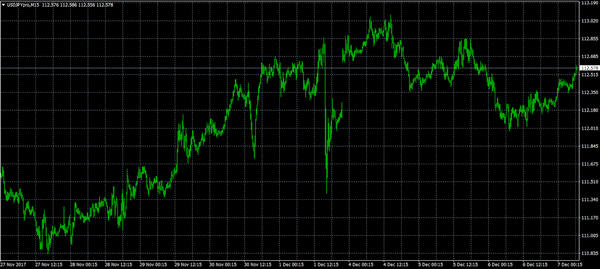
The US dollar edged slightly higher against the yen on Thursday, although trading activity remained relatively calm ahead of key economic data. USD/JPY was last seen trading at 112.40 for a gain of 0.1%. The pair faces immediate support at 112.00. On the other side of the ledger, resistance is likely seen at 112.60.
Currencies: USD Extends Cautious Rebound
Sunrise Market Commentary
- Rates: Testing times for German 10-yr yield
The German 10-yr yield closed just above key support in the 0.3% area yesterday. A break lower would suggest a return to the downside of this year's sideways trading channel (0.2%). Rumours about increased focus on long tenors (30y and even 50y) in next year's German funding plan could avert a break. - Currencies: USD extends cautious rebound
The dollar held up well yesterday even as risk sentiment was negative for most of the day. The trade weighted dollar even extends an, albeit very gradual, comeback. The jury is still out, but at least the USD downside looks better protected. Tomorrow's US payrolls hold the key on a next directional move. Or will US politics spoil the game.
The Sunrise Headlines
- US stock markets murmured around opening levels to close mixed between -0.2% (Dow) and 0.2% (Nasdaq). Asian equity indices trade mixed overnight with a significant outperformance of Japan.
- The BoC kept policy rates on hold yesterday at its last interest rate decision of 2017 and reiterated it will be “cautious” with future moves, indicating it's in no rush to cool an economy that is very close to capacity.
- A European Parliament resolution drafted on Monday shows British PM May has secured agreement from Brussels that British citizens in the EU will be able to live freely in any member state after Brexit, according to Reuters.
- BoJ Governor Kuroda stressed the need to look at the impact monetary policy has on the banking system and said changes in the economy could trigger a hike in the bank's yield targets, offering the strongest signal to date it may edge away from its crisis-mode stimulus programme.
- China should prioritise financial stability above development goals, as pursuit of regional growth targets and helping firms avoid heavy job losses had led to a surge in debt, particularly at local government level, the IMF said.
- Policymakers at the Brazilian central bank cut the benchmark Selic rate by 50 bps to a historic low of 7% as inflation continues to drop while the economy inches forward from a brutal recession.
- Today's eco calendar contains the final Q3 EMU GDP number and US weekly jobless claims. ECB Draghi speaks in his capacity as chair of the GHOS. Spain and France supply the EMU bond market
Currencies: USD Extends Cautious Rebound
Dollar maintains cautious gains
Asian markets were captured by a global risk-off correction yesterday. However, the spill-overs to the interest rate and FX markets were modest. The dollar held up well despite the decline in core/US yields. Risk sentiment improved slightly in US trading and lifted USD/JPY a bit further off the intraday lows. The pair closed at 112.29 (from 112.60). EUR/US finished at 1.1796 (from 1.1826).
Asian equities still show a diffuse picture overnight. Japan outperforms with gains of 1% +. China and Korea underperform. The profit taking move of the previous sessions slows, but there is no big story to start a clear directional move/rebound. USD/JPY trades in the mid 112 area. The pair lost only limited ground in yesterday's risk-off correction. BoJ governor Kuroda in a speech said that the shape of the yield curve could change depending on the economy, inflation or factors in the financial system. There was no market reaction. EUR/USD stabilizes in the 1.18 area. At 93.60, the trade-weighted dollar (DXY) holds near the highest level in 2 weeks. The Aussie dollar lost further ground as the trade surplus narrowed much more than expected in October. AUD/USD reversed its recent rebound and trades again in the mid 0.75 area.
There are only second tier eco data in the EMU and the US today. The details of the final EMU Q3 GDP are interesting but outdated and no market movers. This also applies for production data from EMU countries. US jobless claims are expected to stabilize at 240k. Markets will count down to tomorrow's payrolls. Investors will also keep an eye on the US tax bill debate and look out whether the US can avoid a partial government shut-down. Markets are not really worried on this issue.
Earlier this week, there were tentative signs that the dollar was receiving support from the protracted rise in ST US yields (2-y US yield rising above 1.8%). Markets are gradually moving in the direction of the Fed guidance (dotplot). For now, it didn't help the dollar that much, but maybe it helped to provide a floor for the US currency as USD shorts are becoming expensive. This process might be aborted if global markets fall prey to an outright risk-off correction or if tomorrow's payrolls would disappoint. Even so, we have the impression that the topside in EUR/USD is becoming tougher. EUR/USD might stay below the 1.1961/1.20 area ahead of next week's Fed meeting, unless there comes high profile negative news from the US.
The day-to-day USD momentum is not too bad. Of late USD/JPY was quite sensitive to interest rates/differentials rather than to the gyrations in equity markets. Even so, the pair remains more vulnerable in case of risk-off.
From a technical point of view: EUR/USD set a post-ECB low mid-November, but the dollar momentum wasn't strong enough. EUR/USD settled in a directionless sideways consolidation pattern in the 1.18/19 area. A return below 1.1713 would signal that the rebound in EUR/USD is aborted. For now, there is no clear technical signal. USD/JPY's momentum deteriorated early November, dropping below the 111.65 neckline. No aggressive follow-through selling occurred though. Last week the pair succeeded a nice rebound, calling off the downside alert. The pair hovers again in the 110.84/114.73 consolidation range. We amended our ST bias from negative to neutral.
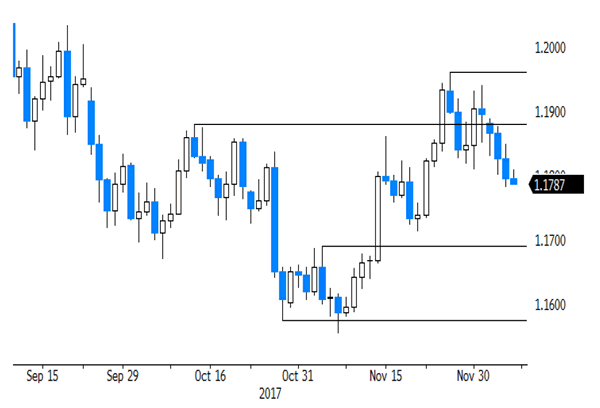
EUR/USD: drifting sideways as USD momentum improves
EUR/GBP
Binary Brexit risk paralyses sterling trading
There were again plenty of headlines on Brexit and on UK politics yesterday. They brought little evidence that a deal could be reached anytime soon. However, the impact on sterling trading was modest. EUR/GBP settled north of 0.88, but no important technical level was broken. The pair closed the session at 0.8808 (from 0.8797). Cable declined back below the 1.34 barrier, but part of this move was due to cable mirroring the intraday decline of EUR/USD. The pair closed at 1.3393. So, sterling held up quite well, suggesting that markets still see a decent change of a last minute solution ahead of next week's EU summit
The UK eco calendar only contains the Halifax house prices today, but this is no market mover. Brexit headlines/rumours will continue to drive GBP trading. UK PM May is said to prepare a new proposal on the issue of the Irish boarder. However, it is far from sure than a solution acceptable for all parties will be found today. So, more directionless trading in the major sterling cross rates might be on the cards. Investors will probably abstain from setting up new directional bets as long as the binary Brexit risk isn't out of the way.
MT view/technical picture: A BoE driven sterling rebound ran into resistance early last month. Sterling declined again as markets anticipated that the rate cycle would be very gradual and limited. EUR/GBP trades in a 0.8733/0.9033 consolidation range. Brexit headlines cause day-to-day gyrations. We changed our ST bias on EUR/GBP from positive to neutral mid-November. The 0.9015/33 area might be tough to break short-term. In case of more positive news on Brexit, return action to the 0.8733 (or below) level is possible ST.
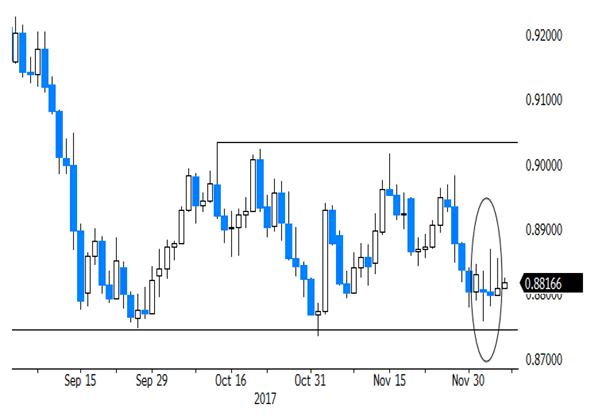
EUR/GBP going nowhere as markets await a clear sign from the Brexit debate
XAUUSD Intraday Analysis
XAUUSD (1263.08): Gold prices were muted yesterday with price briefly rising on an intraday high before giving up the gains. Price remains steady near the support level of 1262 region. The Stochastics oscillator shows a bullish divergence that is forming. This suggests a near term correction towards the 1274 level of resistance. However, gold prices are expected to remain trading flat in the medium term within the support and resistance levels mentioned.
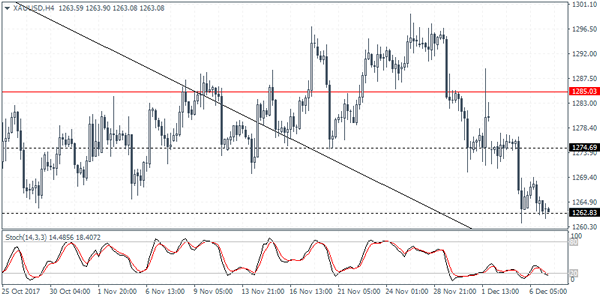
USDJPY Intraday Analysis
USDJPY (112.41): The USDJPY closed bearish yesterday with price action on the daily session suggesting a bearish engulfing bar. On the intraday charts the U.S. dollar was seen posting a strong bounce off the support level at 112.04. We expect to see the near term gains limited to the resistance level at 112.65. USDJPY is expected to maintain the sideways range into tomorrow's payrolls report. A breakout from this range will suggest further direction in the currency pair. For the moment, the declines coincide with the retest of the support level and filling last Friday's gap.
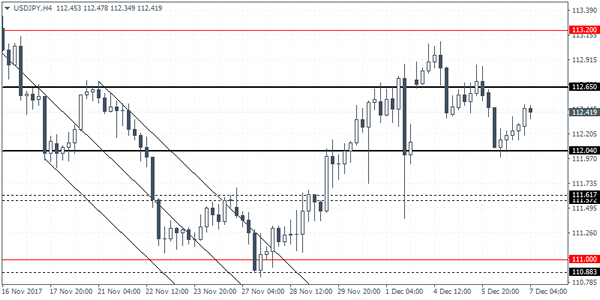
EURUSD Intraday Analysis
EURUSD (1.1803): The euro currency closed on a bearish note yesterday extending declines for two consecutive days. With the currency closing below the 1.1843 - 1.1822 level of support/resistance, we expect to see further declines. Any gains are likely to be limited to the resistance level mentioned. To the downside, the declines could be seen pushing the euro towards the 1.1710 level of support. In the event that EURUSD manages to close back above the resistance level, we could expect to see the bullish bias taking over. The euro could be seen attempting to post gains towards the 1.1920 level of resistance
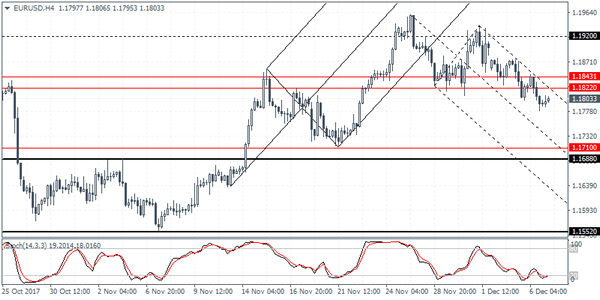
BoC Holds Rates Steady, ADP Payrolls Rise More Than Expected
It was a busy day for the markets as the economic calendar was packed with key economic releases. Data from ADP showed that private payrolls in the U.S. rose 190k for the month of November. This was higher than the forecasts of 189k. No revisions were made to previous month's print which was at 235k.
The Bank of Canada held the overnight rate steady at 1.0%. However, the BoC's dovish tone dampened expectations of future rate hikes. This sent the Canadian dollar weaker on the day.
Oil prices were also weaker despite the weekly inventory report showing a larger than expected draw in U.S. stockpiles. Crude oil futures fell 2.9% on the day to close at $55.96 a barrel. This came data showed that U.S. crude oil production increased by 25,000 barrels per day to 9.71 million barrels per day.
Looking ahead, the economic calendar is relatively light today. The Eurozone's revised GDP data is due to show an unchanged quarterly growth rate of 0.6% while Canada's Ivey PMI numbers are due to come out later. The ECB President Mario Draghi is scheduled to speak later during the day.
Trump’s Dangerous Decision Ignored For Now, Bitcoin Above $14,000
Trump's decision to recognize Jerusalem as the capital of Israel and move the U.S. embassy to the new capital, was the major news headline yesterday. Despite many warnings from Arab and European leaders that the move would have dangerous consequences, financial markets seem to have ignored the risks for now. However, the upcoming days may see increased tensions between the Muslim world and Trump's administration, which could lead to risk aversion. The move will undoubtedly undermine Israeli-Palestinian peace efforts, and likely strain the U.S. relationships in the Middle East. Some investors might start worrying about war breaking out, leading to a surge in oil prices, but so far, the markets' reaction does not seem to be reflecting this risk.
The dollar slipped slightly against the Yen after Trump's announcement, but the selloff was limited, as the U.S. Senate voted to pursue tax bill negotiations with the House. Despite the many differences between lawmakers, it is highly expected that a final bill may see light before year-end, which may keep the dollar well-supported. On the data front, U.S. private payrolls increased by 190,000 in November, which was slightly above expectations, and may indicate that tomorrow's non-farm payrollsreport will be in line with the expected 195,000. However, the headline figure is likely to be ignored by traders, as wages will determine how U.S. Treasury bonds react before the Fed meets next week.
Brexit negotiations kept Sterling under pressure this week, with GBPUSD 1.3% lower from Monday's highs. Despite some optimism that Prime Minister Theresa May will succeed in striking a deal with DUP on the Northern Ireland border, investors still don't seem convinced. That's why I believe the risks are more to the upside than the downside. If negotiations move to the second phase, when the U.K. and the E.U. leaders meet next week, I expect to see a 3-5% surge in Sterling; failing to do so however, will have limited downside reaction.
Bitcoin lovers are the big winners this week, with the cryptocurrency surging 27% in four trading days, to break above $14,000 early Thursday. Comments from economists, central bankersand investment banks that Bitcoin is a bubble that will burst soon, as prices are not justified, are falling on deaf ears. The race to include Bitcoin futures contracts in exchanges like CBOE, CME, and Nasdaq means the cryptocurrency is becoming a mainstream financial asset that can no longer be ignored. However, the world's largest banks are raising concerns that the financial system is not ready for the launch of the Bitcoin future contracts. Yesterday, an official request was sent from the Futures Industry Association to CFCT raising their concerns, but this doesn't seem to have stopped the current hype.