

Sample Category Title
WTI Crude Oil Gains Some Ground Within Trading Range
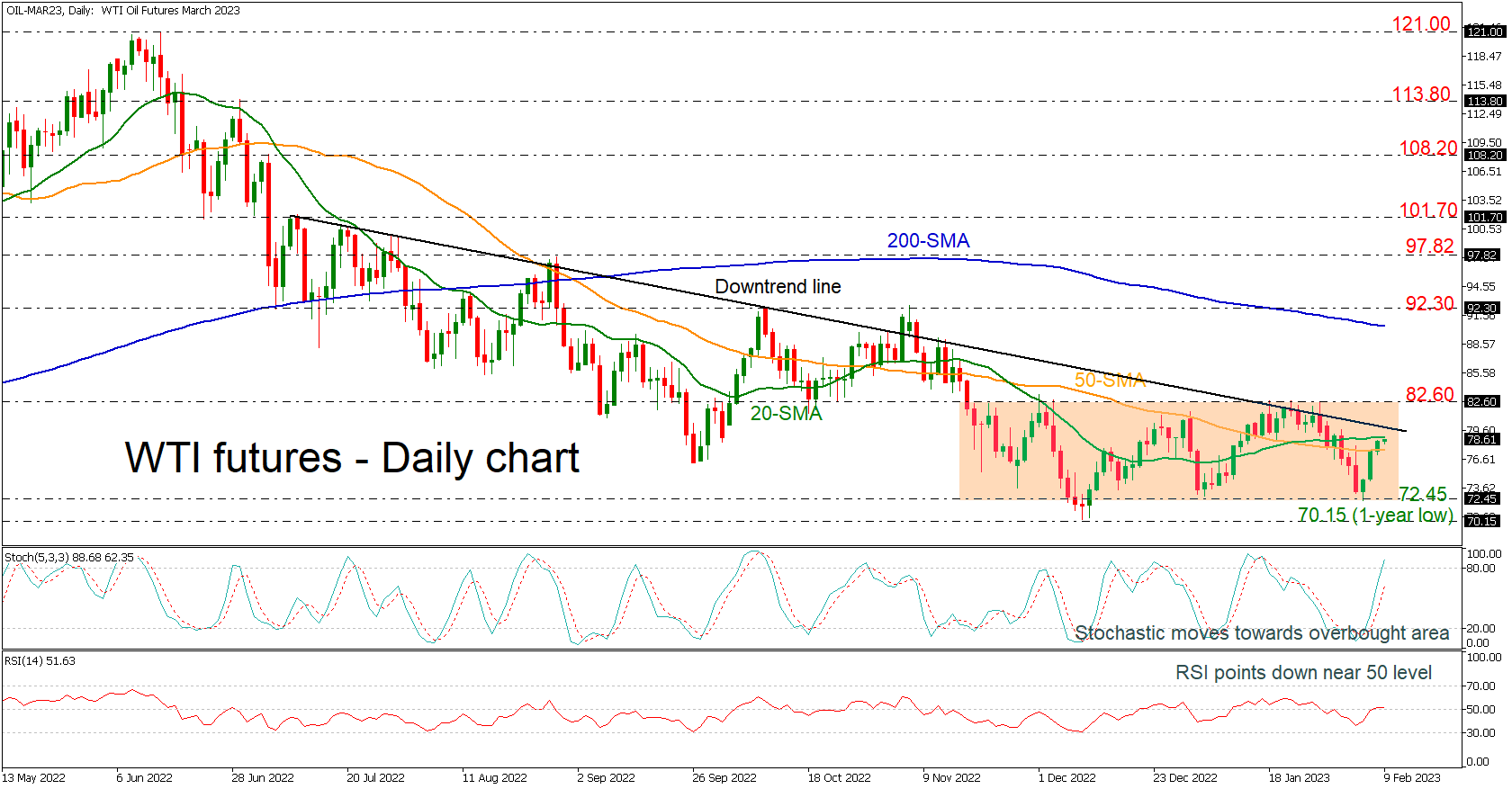
WTI crude oil futures' price is gaining some ground after the strong bounce off the lower boundary of the trading range of 72.45-82.60. The price is battling with the 20- and the 50-day simple moving averages (SMAs) and given that it is still below the long-term falling trend line, the outlook remains gloomy.
The stochastic oscillator is moving towards the overbought area, while the RSI is flattening near the neutral threshold of 50, so both are suggesting that the price may show some short-term? weakness.
If the market breaks down through the 50-day SMA, the 72.45 level could act as a temporary support level, just above the yearly low of 70.15. The December 2021 low of 65.87 might be reached in case of more declines.
On the other hand, if prices are able to break above the SMAs and the downtrend line, they may hit the upper boundary of the channel at 82.60. Moving higher, the 200-day SMA at 90.43 may halt the bullish actions, while traders could flirt with 92.30, shifting the outlook to positive.
In a nutshell, WTI futures are in a neutral mode in the medium-term timeframe and bearish in the long-term view. This outlook may change only if there is a jump beyond the 200-day SMA.
EUR/USD: Initial Reversal Signal is Developing on Daily Chart
The Euro is holding a bit firmer footing in early European trading on Thursday after dollar failed to benefit more from recent hawkish comments from Fed officials.
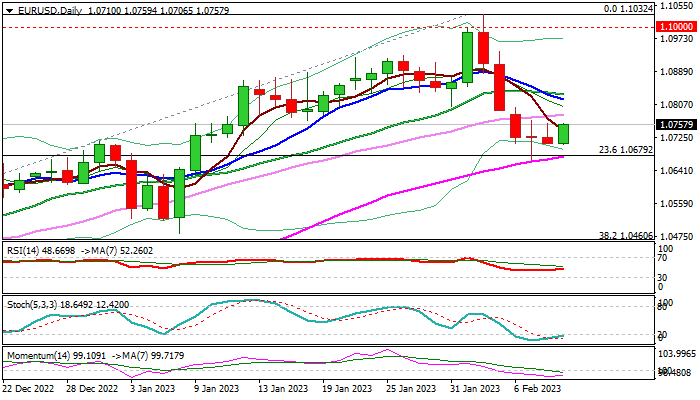
Fresh strength might be generating an initial reversal signal after yesterday’s action ended in inverted hammer candle and oversold stochastic turned north.
However, this is still insufficient and more action at the upside will be needed to verify bullish signal, as momentum indicator on daily chart is still in the negative territory.
Fresh recovery pressures initial Fibo barrier at 1.0754 (23.6% of 1.1032/1.0669 bear-leg), but acceleration through 1.0800/20 zone (Fibo 38.2% / 10DMA) is needed to ease downside pressure and open way for stronger recovery.
Otherwise, limited upticks would likely mark a correction ahead of continuation of a bear-leg from 1.1032 (Feb 2 peak).
Lower than expected figures of German harmonized CPI in January contributed to Euro’s fresh strength, but markets look for more signals.
European Commission meets today and will release its economic growth forecast, while weekly jobless claims are the key release in US.
Traders await stronger signals from the US inflation report, due next Tuesday.
Res: 1.0781; 1.0807; 1.0819; 1.0850
Sup: 1.0679; 1.0590; 1.0573; 1.0483
XAG/USD: The Final of the Intervening Wave is Near, After Which Price May Rush Up
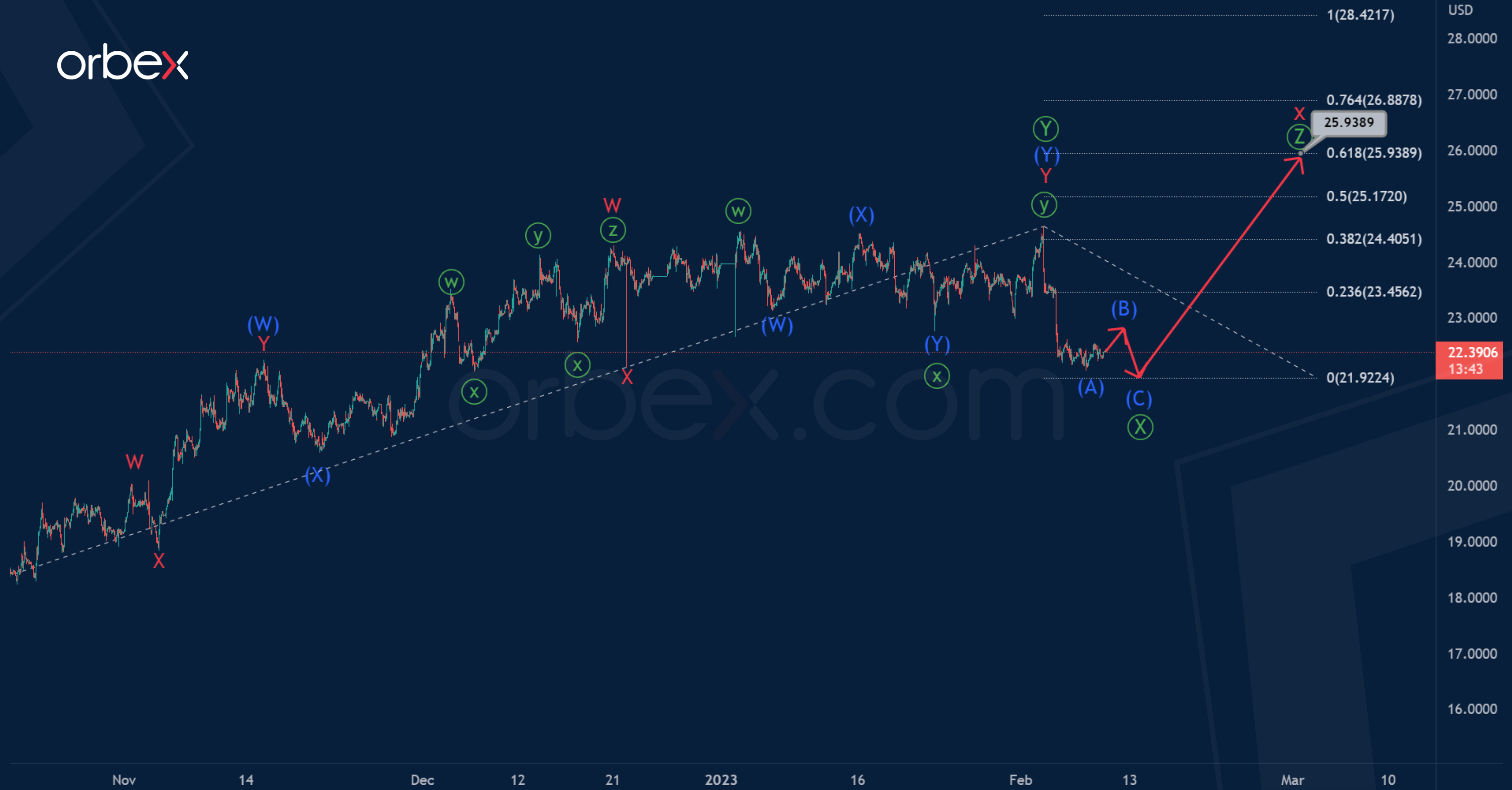
As a few weeks ago, XAGUSD suggests the construction of a global triple zigzag consisting of cycle waves w-x-y-x-z.
The 1H timeframe shows the marking of the second intervening wave x, which may soon be completed, taking the form of a triple zigzag of the primary degree.
The bullish wave consists of intermediate waves (W)-(X)-(Y) and looks formed. The second intervening wave is under development, which may take the form of a zigzag and end soon.
After the wave completes its pattern, market participants will see growth in the primary wave to 25.938. At that level, it will be at 61.8% of wave.
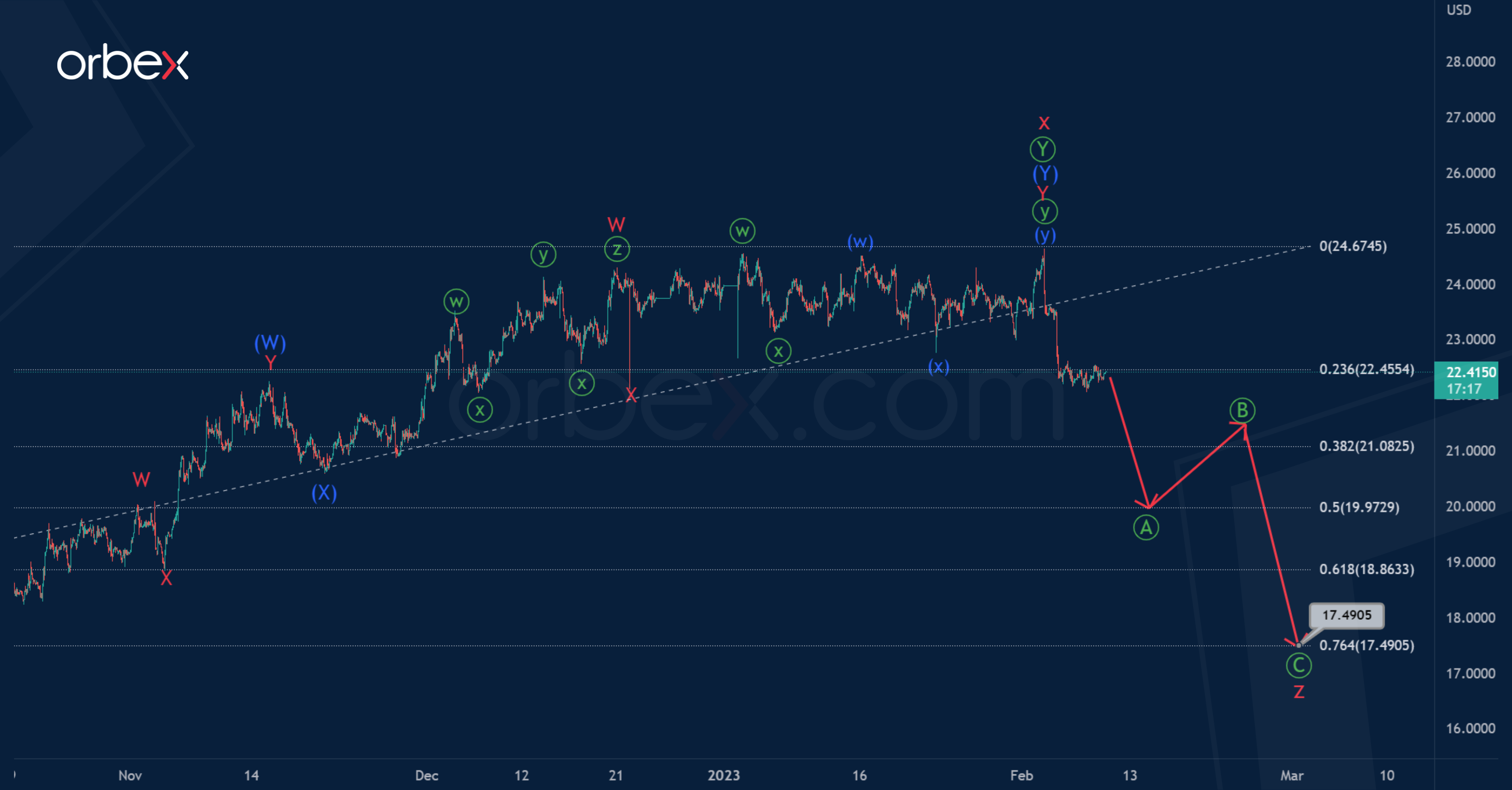
Alternatively, the construction of the cycle intervening wave x can already be fully completed.
Thus, in the last section we see the initial part of a new bearish wave z of the cycle degree.
Perhaps the wave z will be a standard zigzag, as shown on the chart, and will complete its pattern near 17.490. At that level, it will be at 76.4% of actionary wave y.
US Oil Looks to Bottom Out
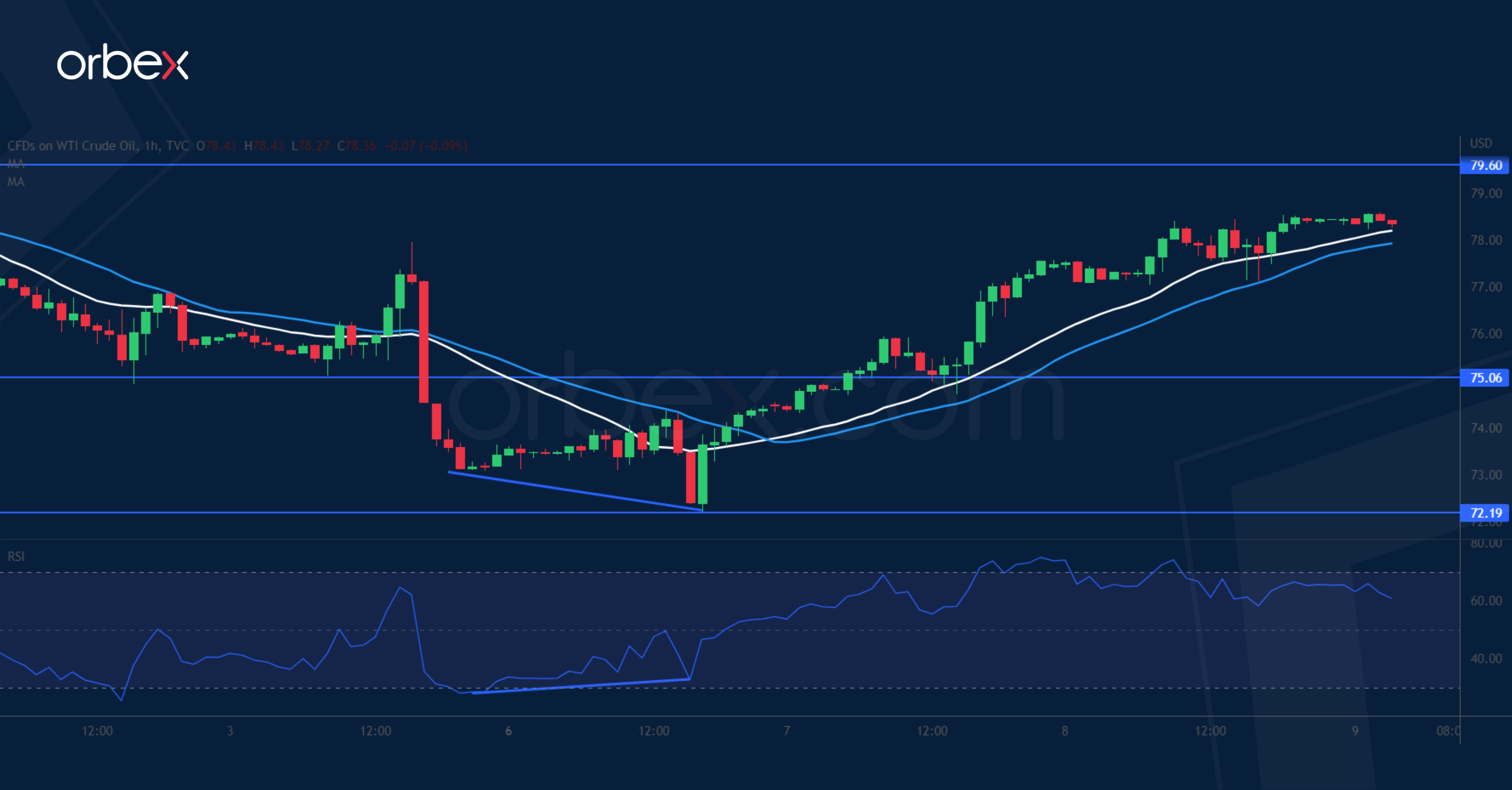
WTI crude edges higher over smaller-than-expected US inventories. A bounce off the daily demand zone around 73.00 indicates that sentiment has stabilised for now. A bullish RSI divergence showed a slowdown in the bearish drive, then clearing the immediate resistance of 77.50 further eased the downward pressure in the short-term and may help the bulls regain a bit of confidence. 79.60 is the next resistance and the daily double top at 82.50 is a major barrier to lift to turn the market mood around. 75.00 is the first support.
USD/CAD Finds Support
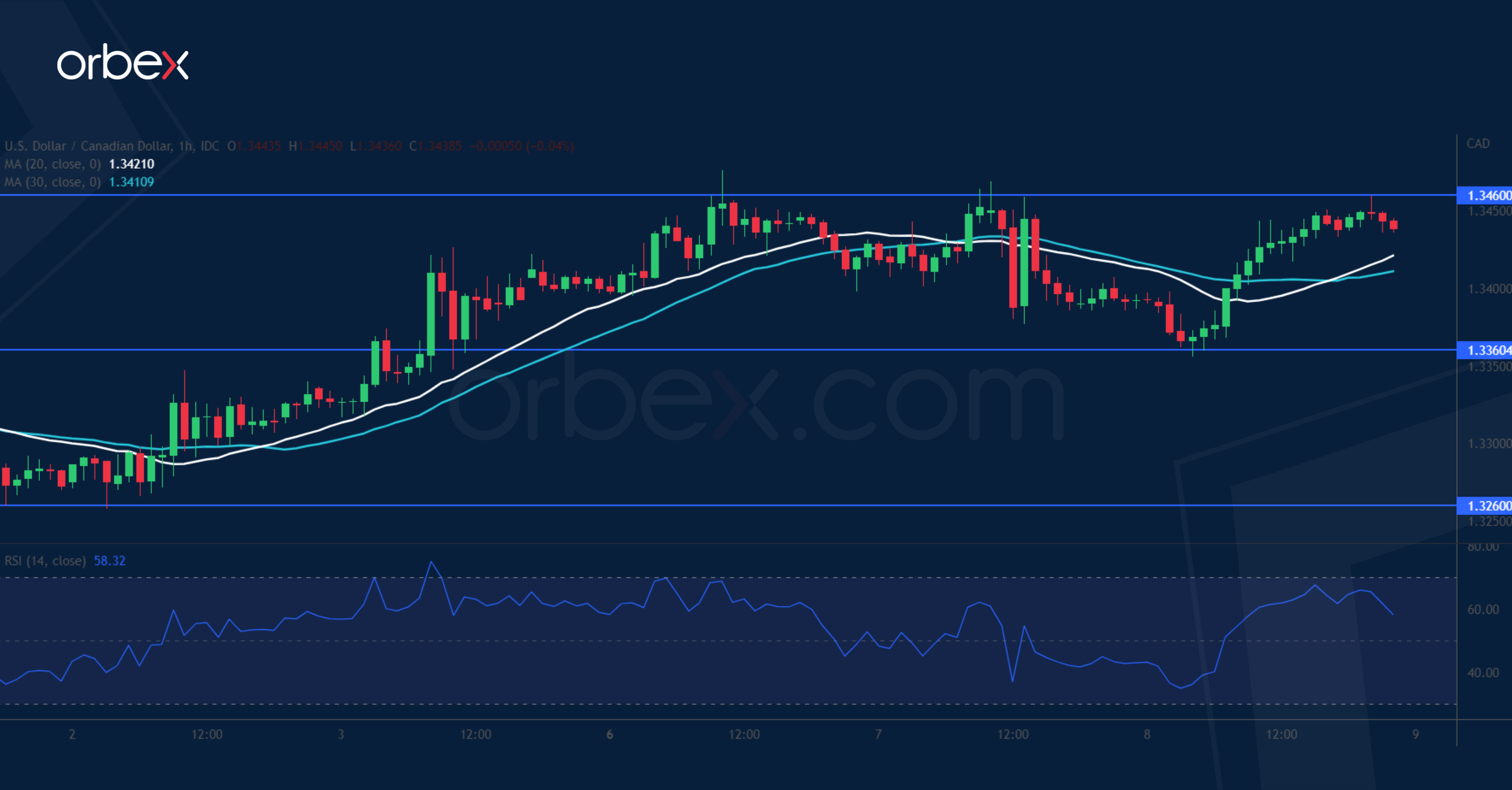
The Canadian dollar softens as risk appetite ticks lower with US Treasury yields near one-month highs. On the daily chart, the US dollar’s bounce near November’s lows at 1.3260 has kept it in the triangle formation. An attempt above the previous high of 1.3470 prompted some sellers to cover their positions. As the pair fell back in search of follow-up bids, 1.3360 showed some buying interest, with 1.3260 being the bulls’ last stronghold. A rally back above 1.3460 would open the path to the first daily resistance at 1.3520.
USD/CHF Attempts to Bounce
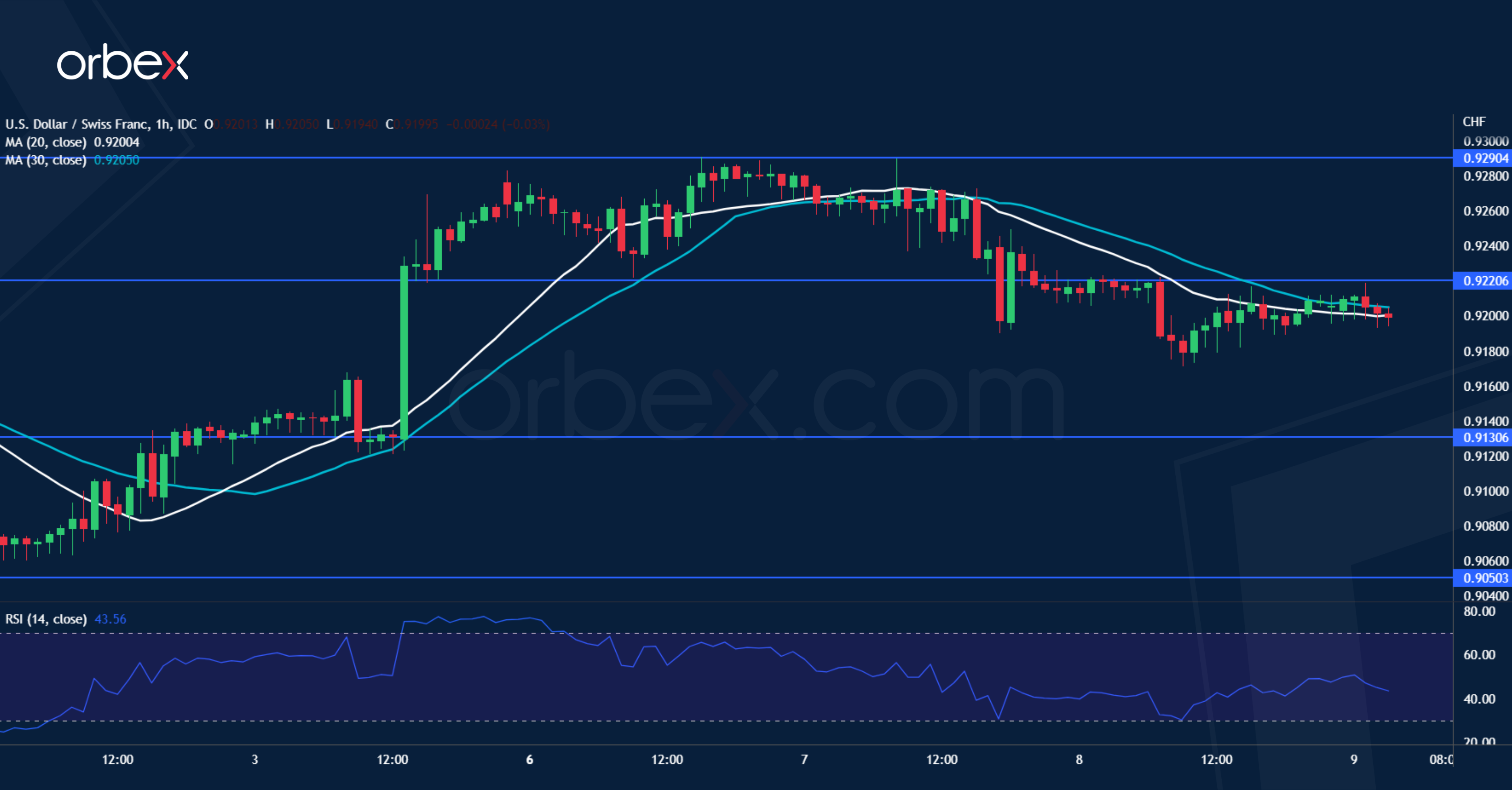
The US dollar remains supported by Powell 's comment that rates will stay higher for a while. The choppy action on the daily chart is a sign of compression as both sides wrestle for the next major move. A tentative break above the previous high of 0.9290 took out some selling pressure. If the pullback is contained above 0.9130, the bulls may see it as a floor and start to push higher. 0.9220 is a fresh resistance and a close above 0.9290 would extend gains to the year’s high at 0.9400. The recent swing low of 0.9050 is a critical support.
Fed President Jerome Powell Keeps Saying that Fight With Inflation is Not Done Yet
US equities fell yesterday on the back of two important factors: hawkish comments from the Federal Reserve (Fed) members, and the unexpected surge in the American used car prices.
Hawkish roundup
Fed President Jerome Powell keeps saying that the Fed’s fight with inflation is not done yet, and that the jobs market remains particularly strong. Yes, the ‘disinflation’ mention post-FOMC decision was a bit confusing for investors, but Powell is scared to go too far with the rates. But he is even more scared not to do enough.
Then, Minneapolis Fed President Neel Kashkari said earlier this week that the rates may rise all the way up to 5.4% to slow inflation.
The New Work Fed’s John Williams yesterday pointed at the December’s dot plot and highlighted that a ‘few more 25bp hikes’ is a good road map for those trying to guess where the Fed tightening will end.
Finally, Lisa Cook, who is a member of the Board of Governors of the Fed, confirmed that the Fed is ‘not done yet’.
So, the message is clear. The Fed is not done yet. This means that the rate hikes will continue, and that will continue pressuring the US yields higher as well.
What could ease pressure on yields?
Two things could ease the pressure on the US yields.
- Recession odds. But there has been a clear positive shift in economic projections since the beginning of the year and that throws a floor under the falling yields since last November and tilts the outlook for the US yields to the upside.
- Further slowdown in inflation. If inflation eased further despite a solid jobs market, well that’s a jackpot for the Fed. Being able to bring inflation lower without pushing the economy into recession would be just the best of the best-case scenarios for Powell. However, there is no guarantee for a smooth easing of inflation.
And the sudden jump in used car prices since the end of last year, which has accelerated in January, is a concern for inflation watchers, because used-car prices has been one of the key boosters of inflation over the past years, and seeing it rebound gives chills for those who are praying for a further easing in inflation figures, due next week.
Oops, Google
Google had a particularly rough day, to say the least. The company posted a Tweet showing Bard in action.
The stock price slumped by more than 9% at some point, tipped a toe below the $100 psychological mark and ended the session more than 7% lower, just at $100 per share, on worries that Google is not keeping up with Microsoft’s ChatGPT on the AI race.
Microsoft on the other hand was upbeat on the news, and its valuation shortly surpassed the $2 trillion mark. But Google’s AI disaster didn’t help Microsoft to fully reverse the selling pressure. The stock still closed the session a couple of points lower, but with the comfort that Google is certainly not closely behind its buzzy ChatGPT!
Elsewhere, Uber jumped more than 5.5% on stronger than expected results. Disney also jumped by more than 5% in the afterhours, after reporting better than expected results, and the promise to slash $5.5 billion in costs, along with 7000 jobs.
The US futures are in the positive at the time I am talking here, but the bears are not far away.
In the FX
The US dollar remains upbeat, but the 50-DMA offers remain a solid resistance to a bullish breakout. Likewise, the EURUSD remains bid at around the 50-DMA, and the dollar-yen remains offered into the 50-DMA. So that 50-DMA mark is the key resistance that must be cleared to set the dollar bulls free for further appreciation, and de-block the situation in the FX space.
In energy, US crude extended gains above its own 50-DMA yesterday. The 2.4-mio-barrel build in US inventories last week strengthened the bulls’ hands. Now let’s see how far the rally could stretch. The next big challenge is the 100-DMA-, which stands a touch above the $81pb level, and which has not been cleared since last summer.
British Pound Strengthened ahead of Bank of England Governor Bailey’s Testimony
Markets
After the much-anticipated Powell interview Tuesday evening, rates momentum, especially in the US, eased. Hammer-like patterns back then emerged on the technical charts, suggesting a short-term correction was imminent. That happened yesterday, be it orderly. US yields fell between 4.2-6.2 bps. The 10y tenor outperformed following a very strong $35bn auction. The economic calendar was empty except for several central bank speeches. NY Fed Williams said rates currently are barely restrictive and may need to go higher if inflation remains elevated or financial conditions loosen. Fed governor Cook vowed to stay the course until inflation is back down to the 2% target. Waller in his speech focused on the need to keep rates higher for longer, adding he isn’t seeing signals of inflation coming down as quickly this year as some (i.e. the market) believe. ECB’s de Guindos struck a similar tone. The vice-president thinks markets are too optimistic about the inflation trend. European bonds underperformed USTs. German yields added a few bps. Despite the yield engine having stalled, equity markets traded in the defensive. Wall Street dropped up to 1.7% (Nasdaq). This risk-off environment supported the dollar with the DXY eking out a small gain to 103.40. EUR/USD’s attempt to recapture 1.0735 failed with the pair closing lower (1.071) in the end. The British pound strengthened ahead of Bank of England governor Bailey’s testimony before parliament scheduled for today. EUR/GBP slipped through 0.8897 support (January interim high) to finish at 0.8875. Oil prices extended a bounce back from the $80/b support to $85.09.
Asian stock markets trade mixed this morning. China outperforms by adding >1% which is seen related to rising speculation about a possible rate cut in the second quarter. It helps explain the currency outperformance of some important trading partners including Australia and New Zealand. The US dollar trades generally softer. Scandinavian currencies advance as we go into the Riksbank’s first policy meeting of the year. Else on the agenda were the postponed German inflation figures for January which came in at 0.5% m/m and 9.2% y/y. It means an unexpected further deceleration from December. The German Bund future shoots higher in a first market reaction. The US auctions $21bn of 30-y bonds. The 10y one yesterday suggests current yield levels attract solid investor demand. Another stellar auction will also dampen US yield’s upside from a daily perspective. For the dollar and EUR/USD, we think equity sentiment is probably the dominant factor. Central bank policymakers including ECB’s Villeroy, Nagel and de Guindos are scheduled to speak. We expect them to hold the official policy line.
News Headlines
The January 2023 RICS (Royal Institution of Chartered Surveyors) UK Residential Survey results continue to highlight a muted market, with new buyer demand, sales, fresh listings, and prices all reported to be on a downward trend. At a national level, the latest net balance for new buyer enquiries slipped to -47%, down from a reading of -40% last month. It’s the ninth consecutive decline and the lowest level since April 2009. Respondents continue to see a pull-back in the volume of fresh listings coming onto the sales market (-14%). Looking at the next twelve months, the sales outlook does not appear to be quite as downcast as before, with the net balance moving to -20% compared to a much weaker reading of -42% in December. Looking across to the lettings market, tenant demand continues to increase (+43%). On the issue of supply across the rental market, around 64% of survey participants are of the opinion that Build to Rent will play a bigger role in the product mix brought to market going forward.
The National Bank of Poland kept its policy rate unchanged yesterday at 6.75%. The press statement much resembled the previous one. The Council assessed that the weakening of the external economic conditions, together with monetary policy tightening by major central banks, will curb global inflation and commodity prices. The deterioration of global economic conditions also hampers Polish GDP growth. Under such circumstances, the hitherto significant monetary policy tightening by NBP will support a decline in inflation in Poland towards the NBP inflation target. In the short term, inflation will remain high though and the return to target gradual. Upside inflation risks remain with the NBP ready to intervene in the FX market to limit fluctuation which are inconsistent with monetary policy (i.e. avoid a too weak zloty). EUR/PLN yesterday fell from 4.75 to 4.7350 in a move more related to the approval of legislation with the aim of unlocking EU funds.
ECB Villeroy can rule out recession in France
ECB Governing Council member Francois Villeroy de Galhau told France 2TV that he can "rule out" a recession the country. The Bank of France yesterday said its economy was on course to eke out slightly positive growth this quarter after growing 0.1% in the previous quarter.
Villeroy also said he sees "peak in french inflation between now and June, maybe even before June." From this summer onwards, food price inflation could ease off".
Riksbank to Hike Rates by 50bp
Market movers today
The delayed German January inflation figures are on the agenda today. The consensus and our expectation is a temporary rebound in headline inflation on the back of higher energy inflation, after the one-off government subsidy from December falls out of the calculation. However, there is significant uncertainty about how the statistical office will take account of the electricity and gas price brake. A figure above 8.6% for German HICP leaves risks of upside revisions for the final euro area January HICP print.
In Sweden, a rate hike of 50bp today is widely expected. We also expect another 25bp in April, see below.
The weekly jobless claims in the US might be worth keeping an eye on, given the intense focus on the labour market from the Fed. So far, jobless claims have not shown any signs of increasing.
The 60 second overview
Fed speak: Yesterday, we heard some more hawkish comments by FOMC members. Kashkari noted that most members expected the rates to rise above 5%. Williams echoed these comments saying that a 5-5.25% level is a reasonable view for a peak rate. Waller said continued upward pressure on inflation comes in part from the tight labour market. He also pointed that rates may stay higher for longer than some are currently expecting.
Riksbank: We expect the Riksbank to lift the policy rate by 50bp to 3.00% and that the new policy rate path will guide for another c.25bp later this spring (we expect a 25bp hike in April). This would also be in line with current market pricing. Markets however expect the policy rate to be cut already from September, which is perhaps the most pressing issue for the Riksbank if they want to tighten financial conditions. The Riksbank had a relaxed stance to the weakening SEK during 2022, but have voiced more concerns as of late given the poor start of 2023 and new highs in EURSEK. We believe the Riksbank may address the weak krona in some form, but also note that they are quite limited in what they can do. The Monetary Policy Report with new projections will be released in conjunction with the decision at 9.30 CET. New Riksbank Governor Erik Thedéen will hold a press conference at 11.00 CET (in Swedish). The policy rate becomes effective Wednesday 15 February. For a full preview, see Reading the Markets Sweden, 3 February.
Turkey-Syria earthquake: The death toll from this week's earthquakes that took place in the border region between Turkey and Syria has risen to 14,000. Apart from the human suffering, the earthquake and its aftermath could have important implications for Turkey's domestic politics. General election, where both the president and parliamentary members are to be elected, will be held in mid-May. Erdogan who has been ruling the country for two decades, is now for the first time during his reign, facing a real test as his support has fallen to all-time lows. Same time, six opposition parties have joined forces and are due to announce their joint candidate in mid-February. Erdogan's rise to power in 2002 elections has been linked to the earthquake in 1999 near Istanbul, where 18,000 people were killed. At the time, government's slow response and inadequate preparations led to public criticism and ultimately paved the way for a new regime. This time, the public will again evaluate the rescue and reconstruction efforts, whether building codes have been complied with, and whether there was sufficient preparation and readiness to respond at the government level.
FI: The Federal Reserve continues to tell the market that they are not done yet given a string of comments from various Fed officials. However, the US Treasury market is not really "listening" as US Treasury yields declined 3-5bp across the curve. There has been modest movement in the European bond yields on the back of the announcement from ECB about giving government deposits €str-20bp rather than just €str or the ECB deposit rate. The Schatz ASW-spread widened modestly, while Bund ASW-spread tightened modestly.
FX: USD, GBP and CHF were top performing G10 currencies, where AUD, NZD and JPY were the biggest losers on a day where rising US rates set the tone in markets. NOK finally found a bid supported by the rise in oil prices. EUR/NOK dropped towards the 11.00 level again.
Credit: Yesterday, credit markets saw a slightly mixed day with both CDS indices closing marginally wider with iTraxx Main (+0.8bp) at 76.2bp, while iTraxx Crossover (+2.3bp) closed at 399.9bp. The primary Eurobond market was still very active with 19 borrowers raising debt where Volvo Treasury AB, General Motors Co., and ING Bank were among the largest announced deals.