Sample Category Title
GBP/USD Weekly Outlook
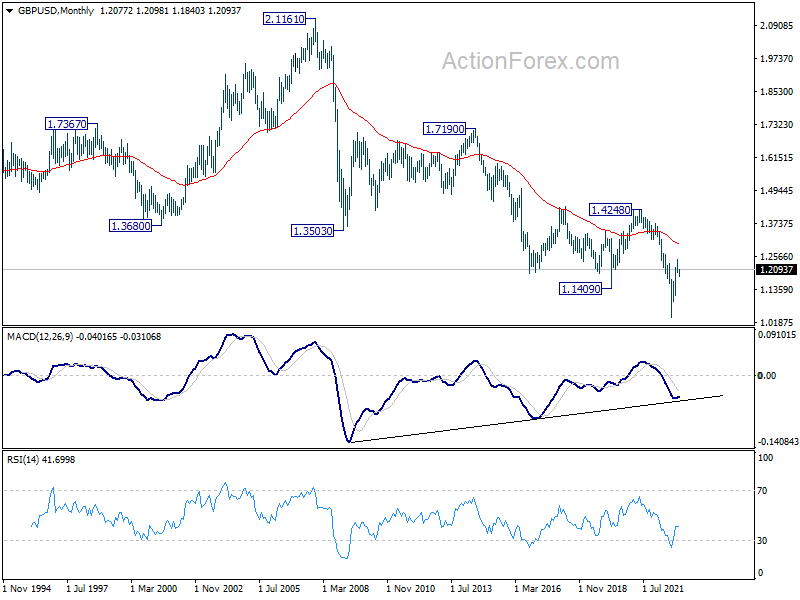
GBP/USD rebounded after edging lower to 1.1840 last week. Break of 1.0286 minor resistance argues that correction from 1.2445 has completed after drawing support from 55 day EMA. Initial bias is now on the upside this week for retesting 1.2445 high. On the downside, however, break of 1.1840 will resume the decline to 38.2% retracement of 1.0351 to 1.2445 at 1.1645.
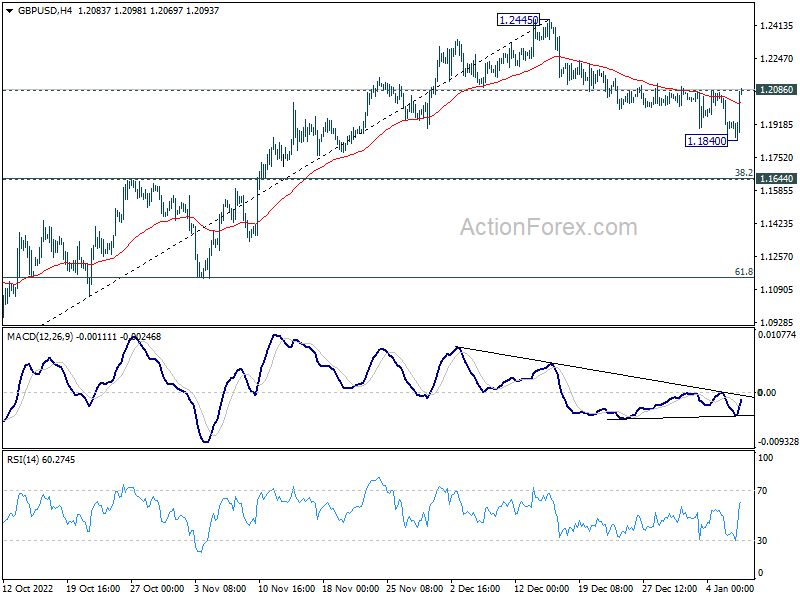
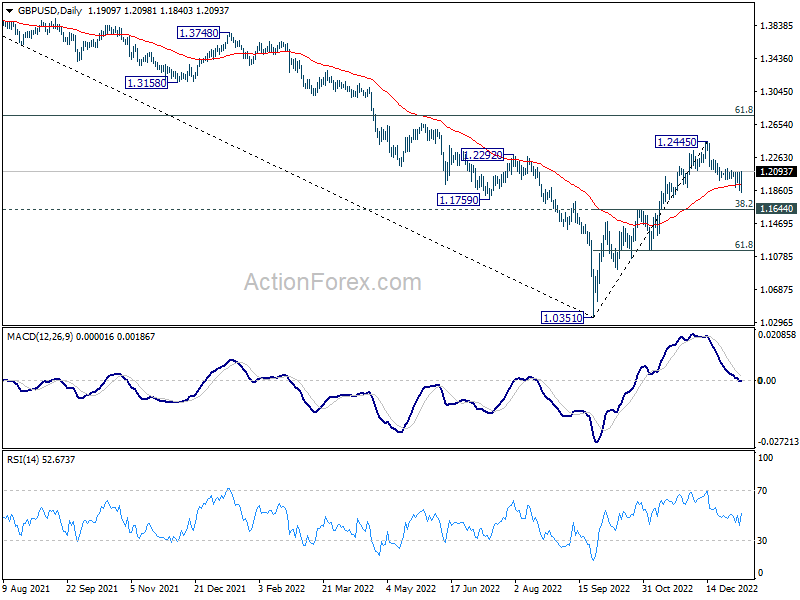
In the bigger picture, rise from 1.0351 medium term bottom is at least correcting whole down trend from 1.4248 (2021 high). Further rise is expected as long as 1.1644 resistance turned support holds. Next target is 61.8% retracement of 1.4248 to 1.0351 at 1.2759. Sustained break there will pave the way back to 1.4248.
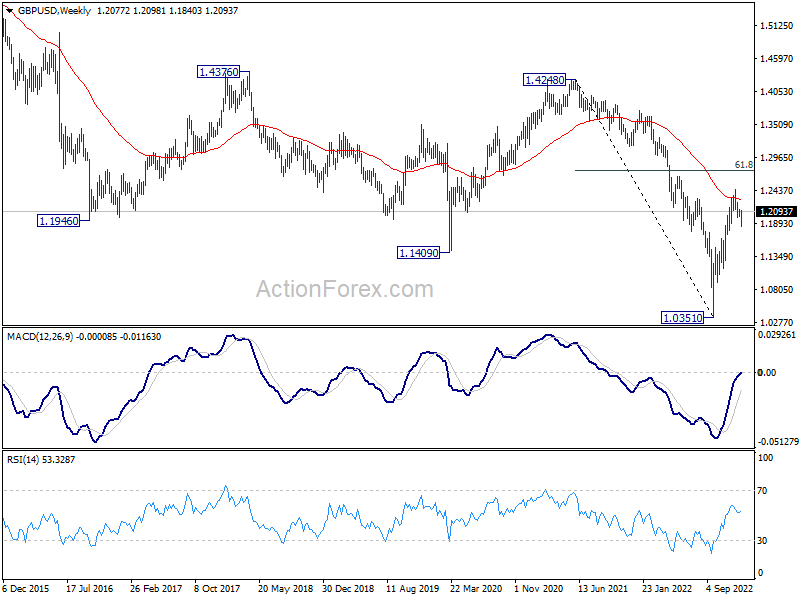
In the longer term picture, as long as 1.4248 resistance holds (2021 high), long term outlook will remain neutral at best. Down trend from 2.1161 (2007) could still resume for another low through 1.0351 at a later stage.
USD/CHF Weekly Outlook
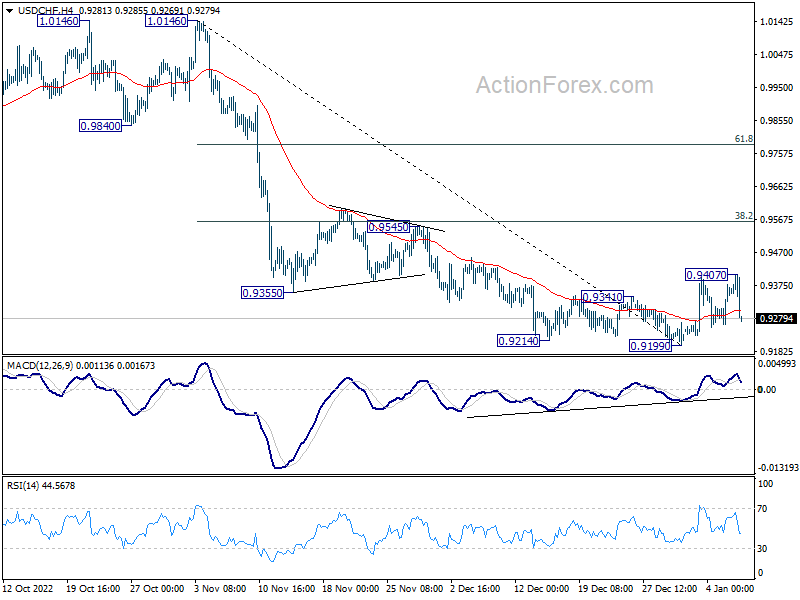
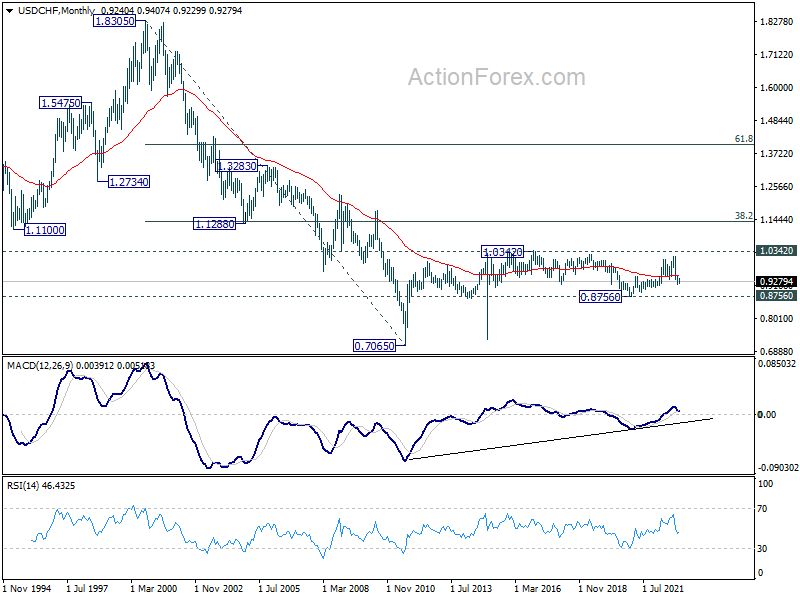
USD/CHF gyrated higher to 0.9407 last week but failed to extend gain. Initial bias is turned neutral this week first. On the upside, break of 0.9407 will resume the rebound to 38.2% retracement of 1.0146 to 0.9199 at 0.9561. However, firm break of 0.9199 will resume the whole decline from 1.0146 instead.
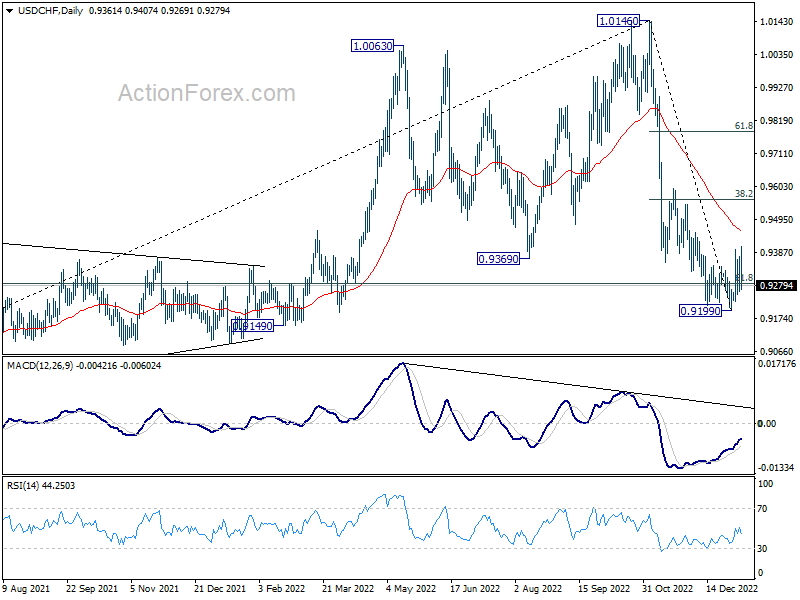
In the bigger picture, rise from 0.8756 (2021 low) has completed at 1.0146, well ahead of 1.0342 long term resistance (2016 high). Based on current downside momentum, fall from 1.0146 might be a medium term down trend itself. Sustained break of 61.8% retracement of 0.8756 to 1.0146 at 0.9287 will pave the way to 0.8756. In any case, risk will stay on the downside as long as 0.9545 resistance holds.
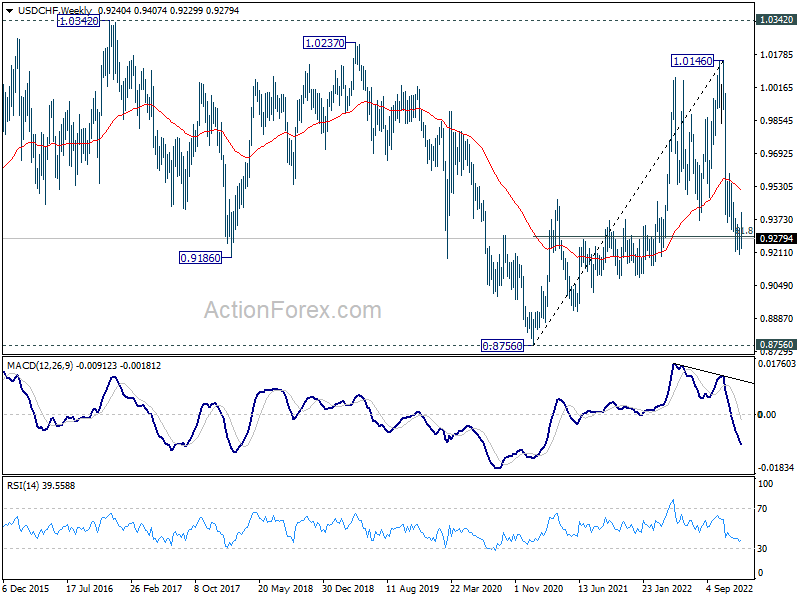
In the long term picture, long term sideway pattern from 1.0342 (2016 high) is extending and it's probably in another medium term down leg. Downside will likely be contained by 0.8756 support in case of deeper fall. Overall, range trading should continue until further development.
AUD/USD Weekly Outlook
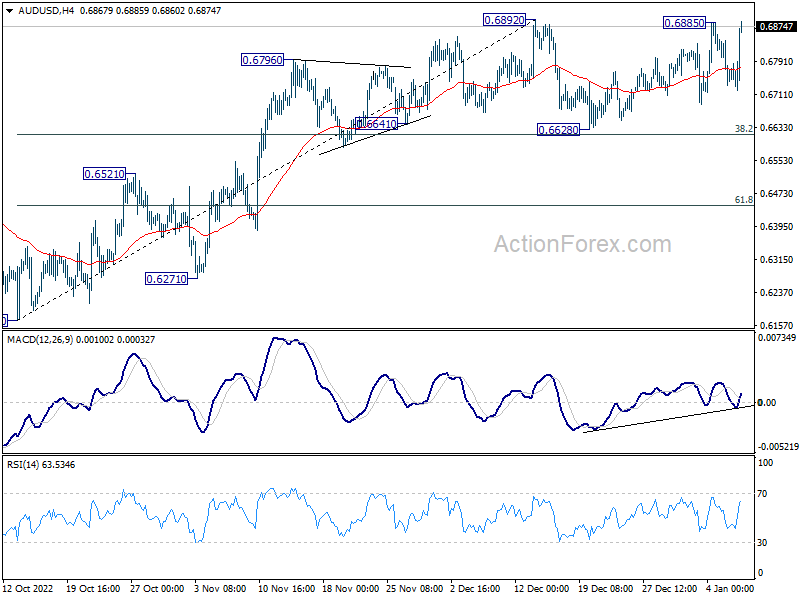
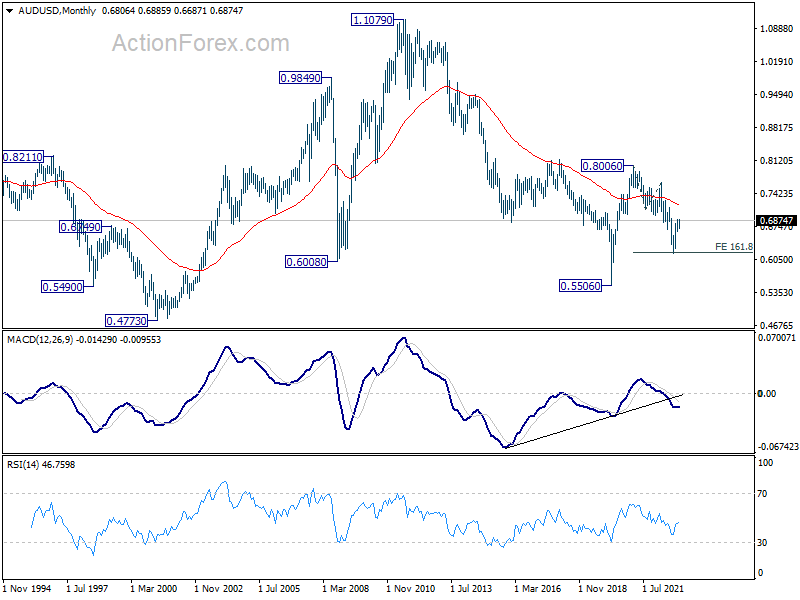
AUD/USD stayed in the consolidation pattern from 0.6892 last week and outlook is unchanged. Initial bias remains neutral first. On the upside, firm break of 0.6892 will resume rise from 0.6169 and target 0.7135 resistance next. However, on the downside, sustained break of 38.2% retracement of 0.6169 to 0.6892 at 0.6616 will indicate rejection by 0.6871 fibonacci level. Deeper fall should then be seen to 61.8% retracement at 0.6445 and possibly below.
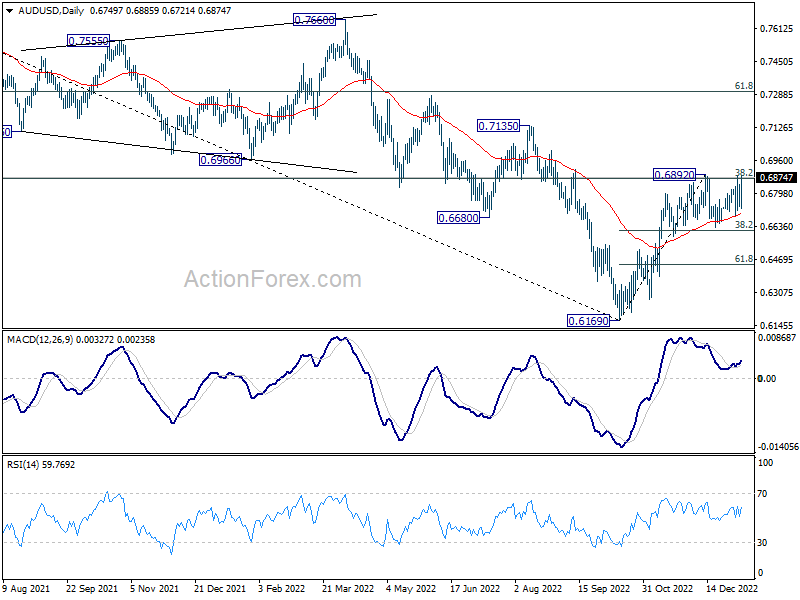
In the bigger picture, it's still unsure if price actions from 0.6169 medium term bottom are developing into a corrective pattern or trend reversal. Rejection by 38.2% retracement of 0.8006 to 0.6169 at 0.6871 will maintain medium term bearishness for another fall through 0.6169 at a later stage. However, firm break of 0.6871, and sustained trading above 55 week EMA (now at 0.6897) will raise the chance of the start of a bullish up trend.
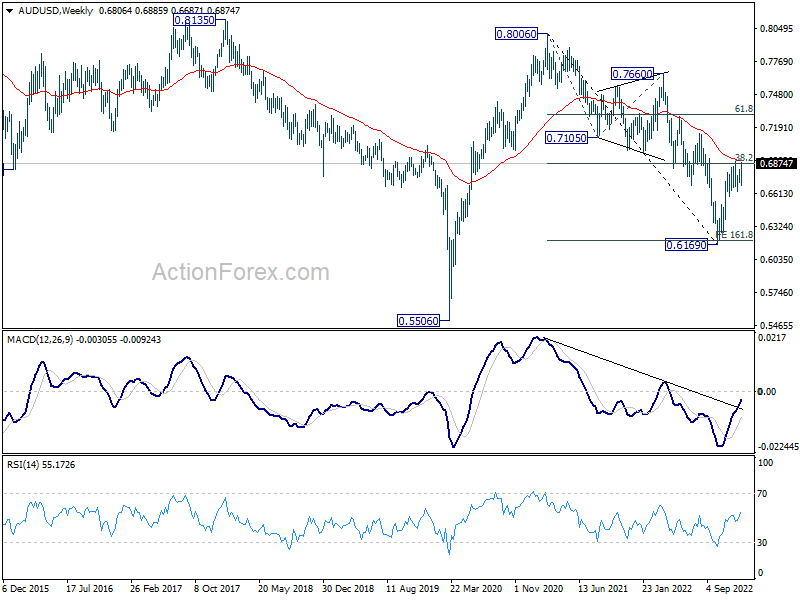
In the long term picture, the down trend from 0.8006 could still be seen as a corrective move, considering that it failed to break through 161.8% projection of 0.8006 to 0.7105 from 0.7660 at 0.6202 decisively. Strong rebound from current level will keep long term outlook neutral first. However, sustained break of 0.6202 will open up deep fall to retest 0.5506.
USD/CAD Weekly Outlook
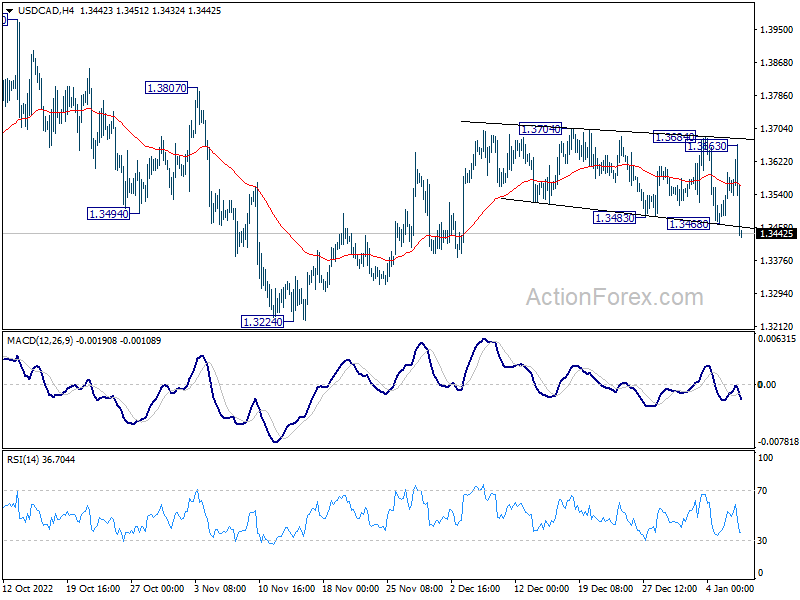
USD/CAD gyrated lower last week as the decline from 1.3704 extended. For now, price actions from there are still more likely corrective than not. Hence, while deeper decline could be seen, downside should be contained well above 1.3224 low. On the upside, break of 1.3704 will confirm resumption of the rise from 1.3224.
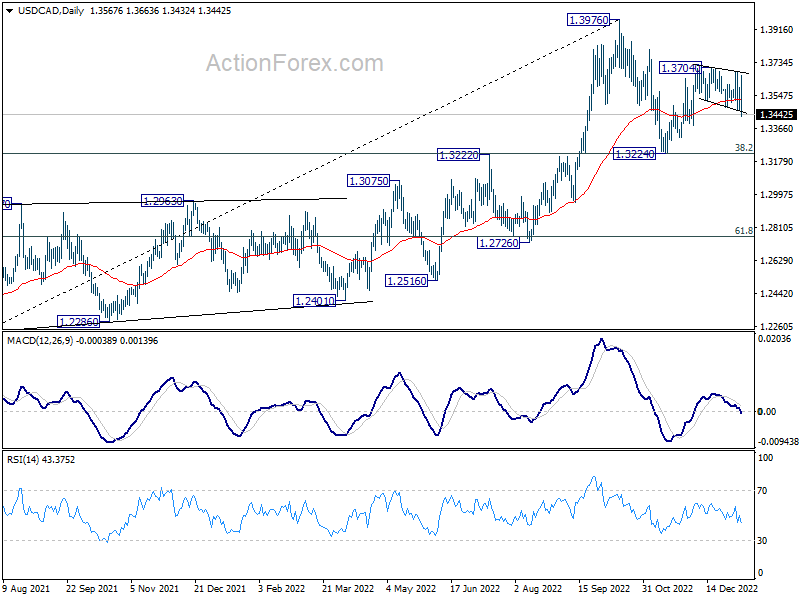
In the bigger picture, as long as 1.3222 cluster support (38.2% retracement of 1.2005 to 1.3976 at 1.3223) holds, larger up trend from 1.2005 (2021 low) is still expected to resume through 1.3976 high at a later stage. However, firm break of 1.3222/3 will indicate that the trend might have reversed. Deeper fall would be seen to next cluster support at 1.2726 (61.8% retracement at 1.2758).
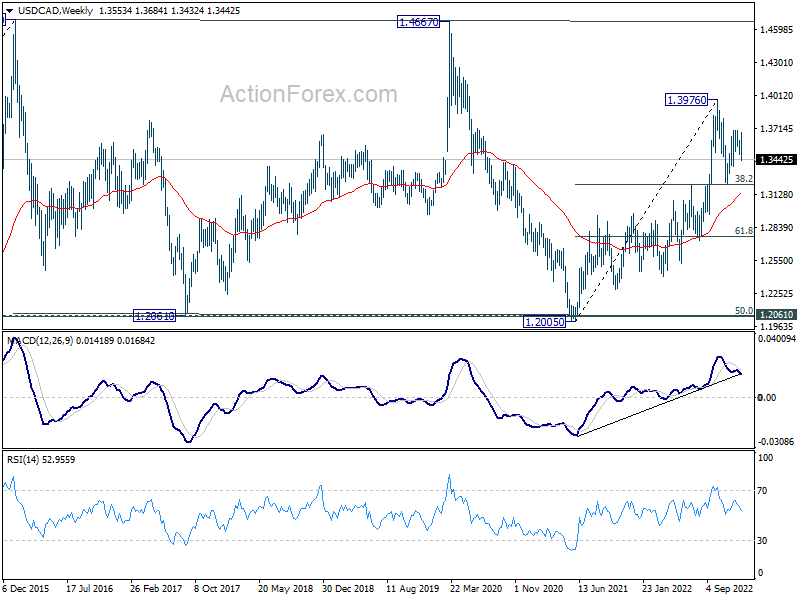
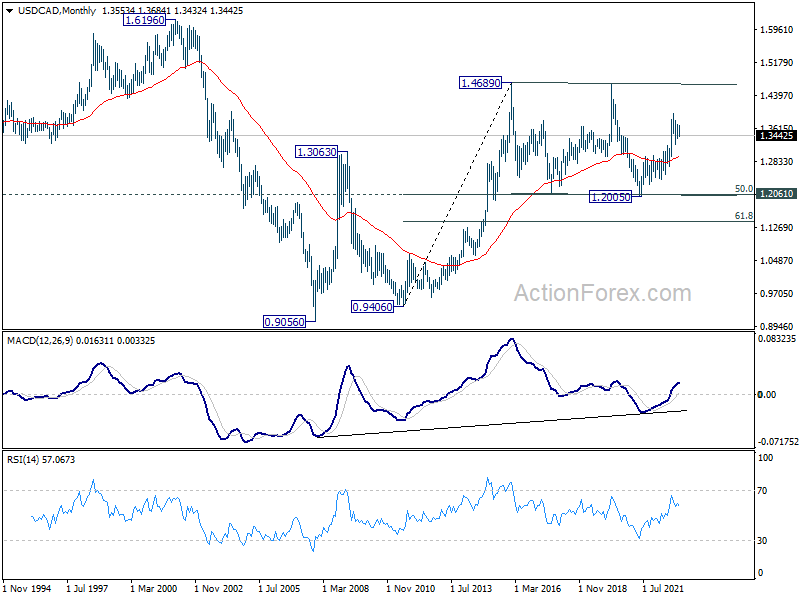
In the longer term picture, price actions from 1.4689 (2016 high) are seen as a consolidation pattern only, which might have completed at 1.2005. That is, up trend from 0.9506 (2007 low) is expected to resume at a later stage. This will remain the favored case as 55 month EMA (now at 1.2953) holds.
GBP/JPY Weekly Outlook
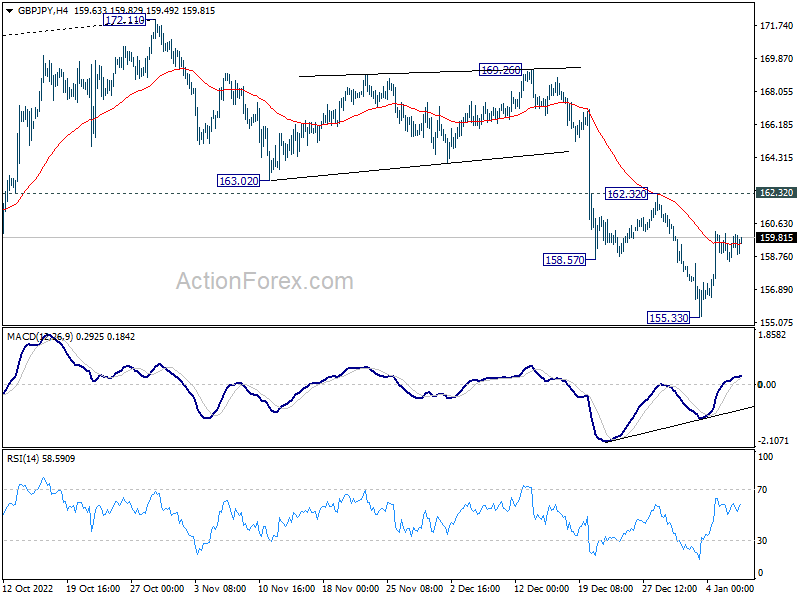
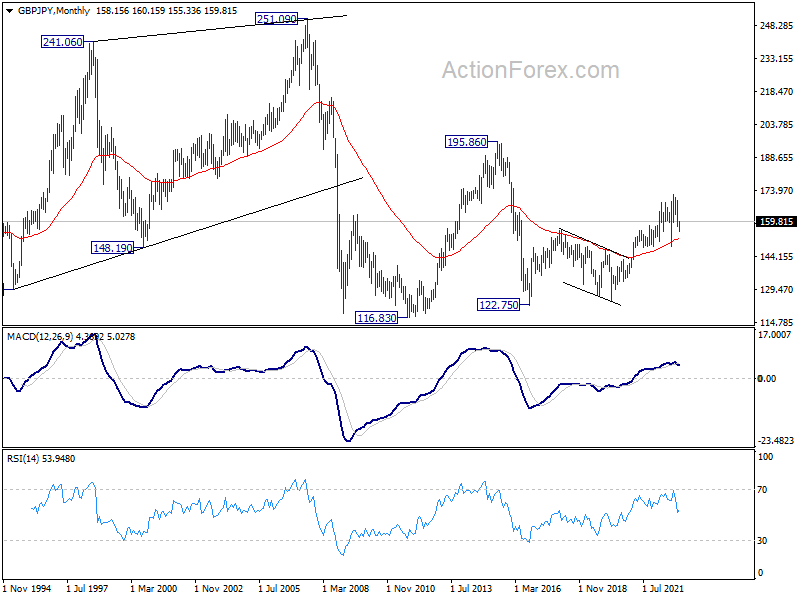
GBP/JPY recovered after initial fall to 155.33 last week, but upside is kept well below 162.32 resistance. Initial bias remains neutral this week first. On the downside, break of 155.33 will resume the fall from 172.11 to 153.70 fibonacci level. Nevertheless, considering bullish convergence condition in 4 hour MACD, firm break of 162.32 will argue that such decline has completed, and turn bias back to the upside for 55 day EMA (now at 163.55) and above.
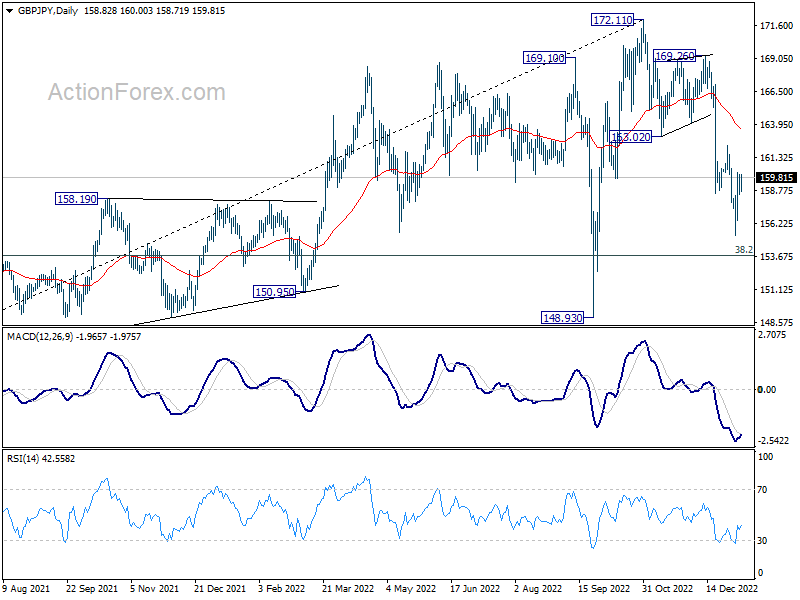
In the bigger picture, as long as 153.02 support turned resistance holds, decline from 172.11 medium term top is expected to continue to 38.2% retracement of 123.94 to 172.11 at 153.70. Sustained break there will raise the change of trend reversal and target 61.8% retracement at 142.34. Nevertheless, break of 153.02 support turned resistance will argue that the decline has completed, and retain medium term bullishness.
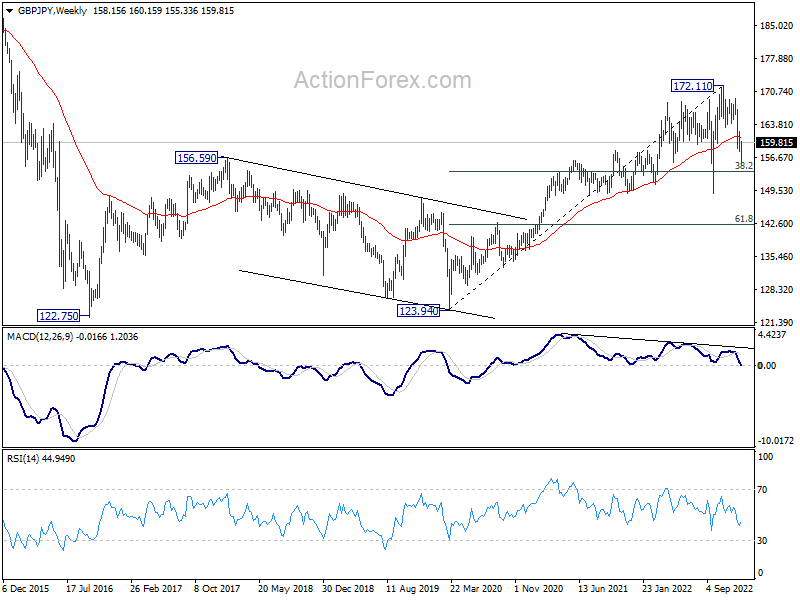
In the longer term picture, as long as 55 month EMA (now at 152.38) holds, rise from 122.75 could still extend higher at a later stage.
EUR/JPY Weekly Outlook
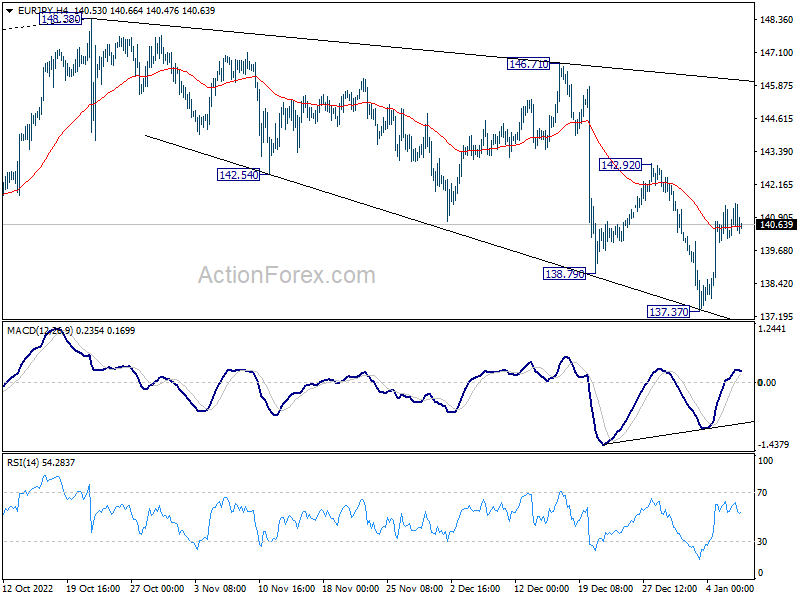
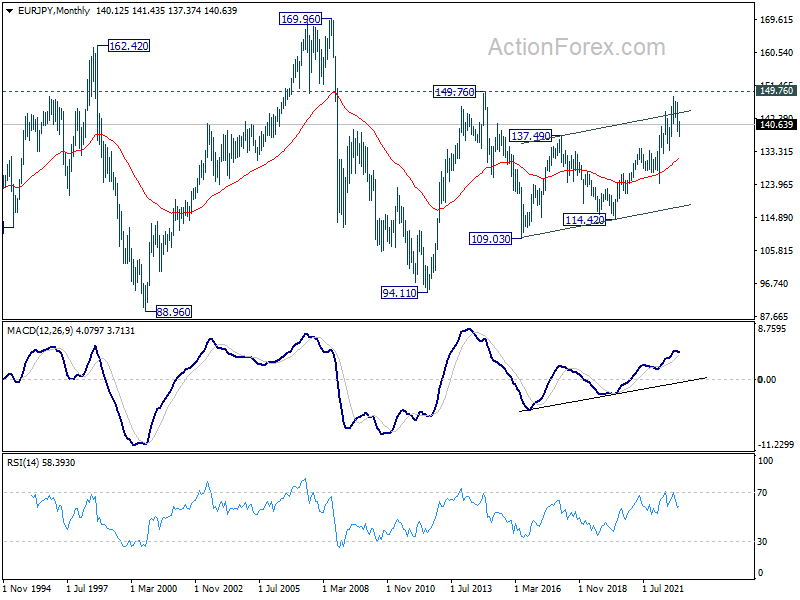
EUR/JPY rebounded strongly last week after initial fall to 137.37. But upside is kept well below 142.92 resistance. Initial bias stays neutral this week first. On the downside, break of 137.37 will resume the decline from 148.38 to 135.40 fibonacci level. However, considering bullish convergence condition in 4 hour MACD, break of 142.92 will argue that the correction from 148.38 might have completed. Intraday bias will be turned back to the upside for 146.71 resistance.
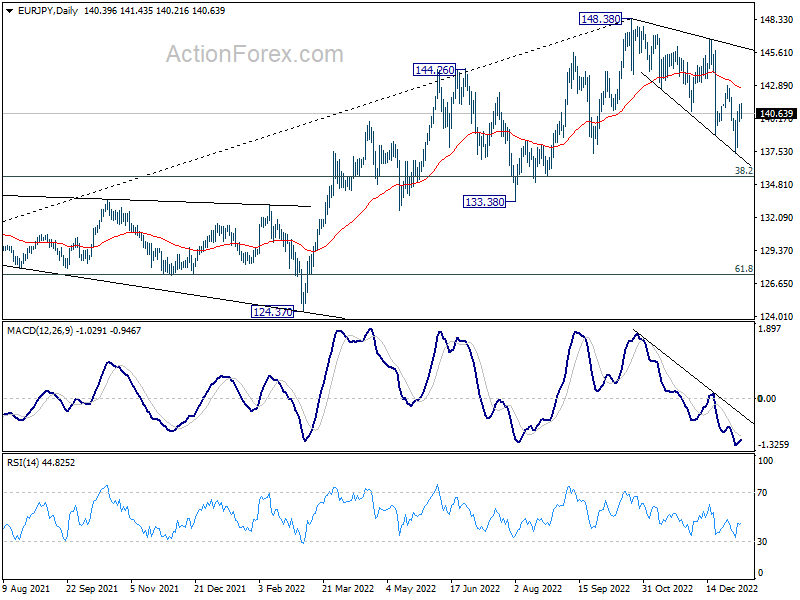
In the bigger picture, as long as 55 week EMA (now at 138.55) holds, larger up trend from 114.42 (2020 low) is still in progress for 149.76 long term resistance. However, firm break of 55 week EMA will bring deeper fall to 38.2% retracement of 114.42 to 148.38 at 135.40. Sustained break there will raise the chance of trend reversal, and target 61.8% retracement at 127.39.
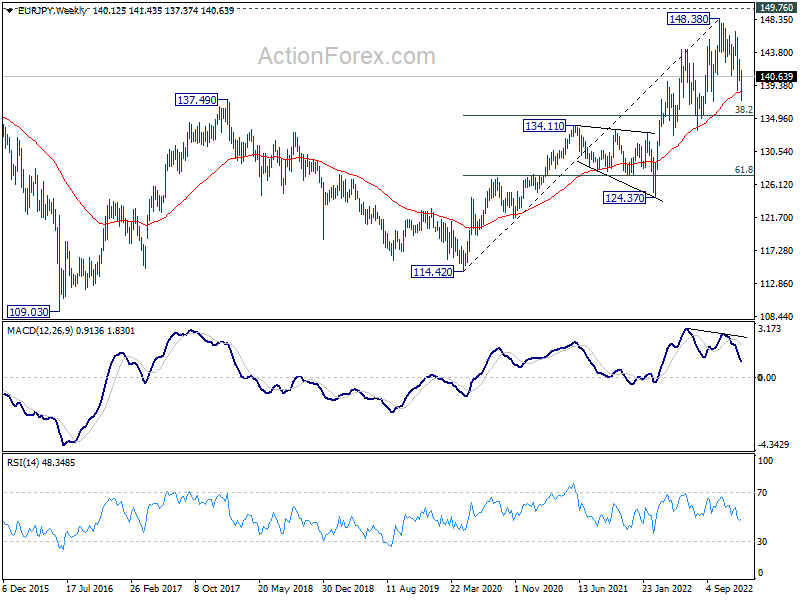
In the long term picture, outlook will stay bullish as long as 134.11 resistance turned support holds (2021 high). Sustained break of 149.76 (2014 high) will open up further rally, as resumption of the rise from 94.11 (2012 low), towards 169.96 (2008 high).
EUR/GBP Weekly Outlook
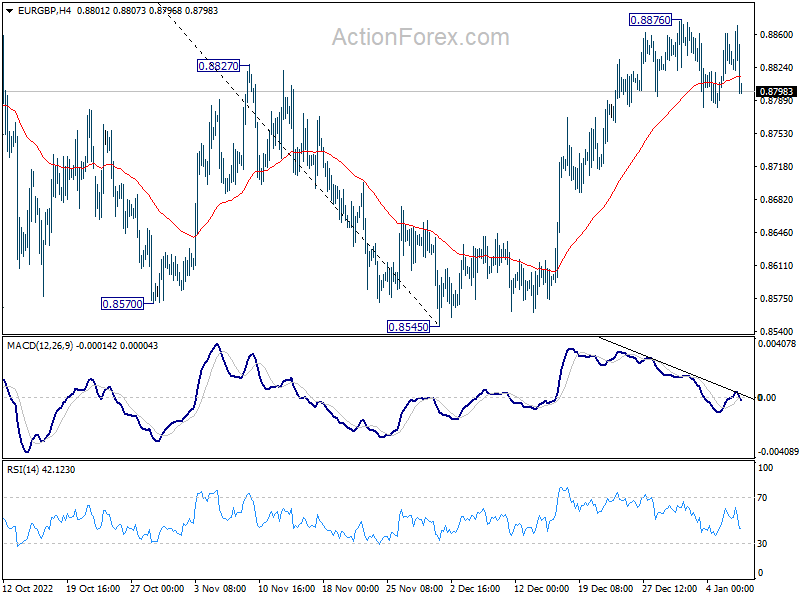
EUR/GBP stayed in consolidation below 0.8876 last week. Initial bias stays neutral this week first. Further rally is expected as long as 55 day EMA (now at 0.8719) holds. Break of 0.8876 will resume the rise from 0.8545 to 61.8% retracement of 0.9276 to 0.8545 at 0.8997 and possibly above. However, sustained trading below 55 day EMA will bring retest of 0.8545 low instead.
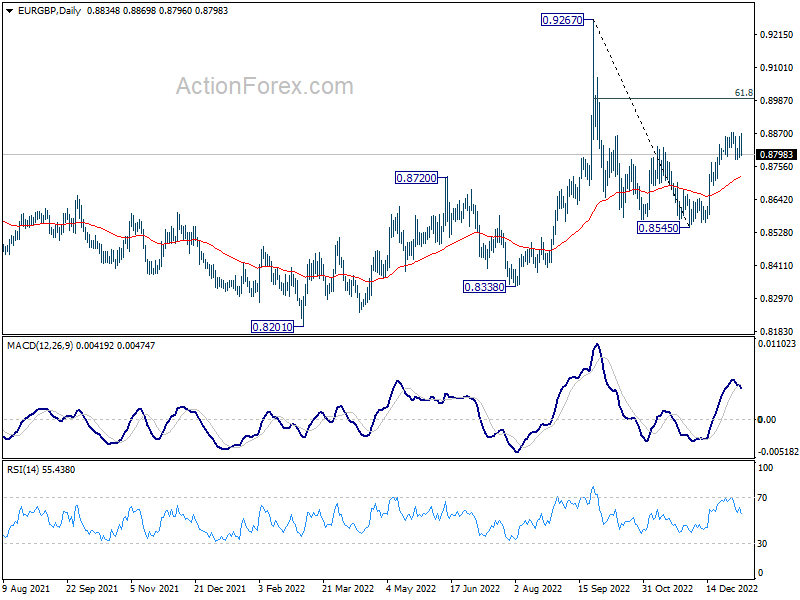
In the bigger picture, outlook is mixed for now as rise from 0.8545 would either be part of the up trend from 0.8201 (2022 low), or just a correction to 0.9267 (2022 high). As long as 55 week EMA (now at 0.8609) holds, the former case is in favor, and break of 0.9267 should be seen next as up trend resumes at a later stage. However, sustained break of 55 week EMA will shift favor to the latter case, for another decline back towards 0.8201.
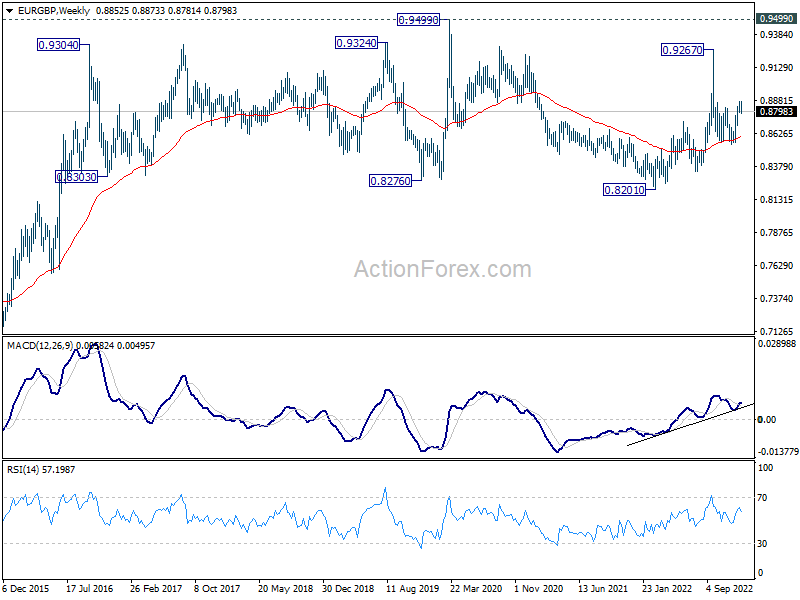
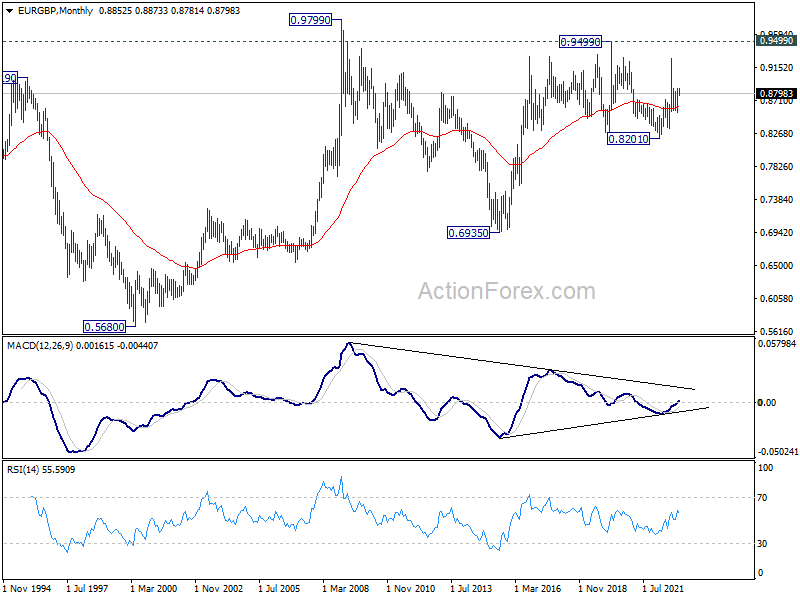
In the long term picture, long term range pattern is extending. But rise from 0.6935 (2015 low) is expected to extend at a later stage, to 0.9799 (2009 high).
EUR/AUD Weekly Outlook
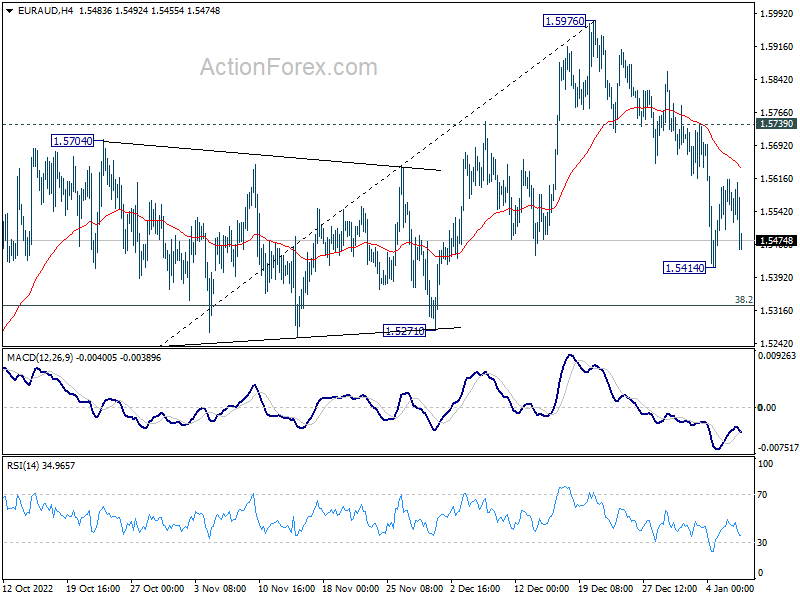
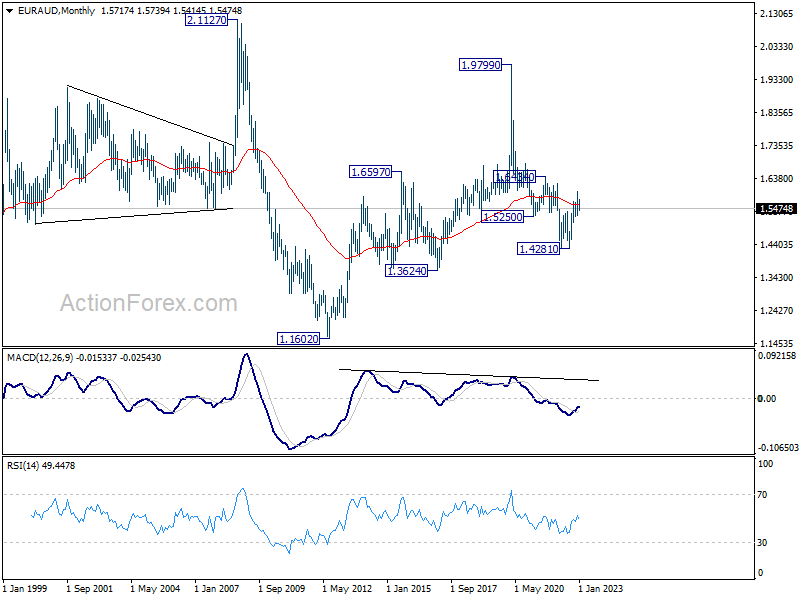
EUR/AUD's decline from 1.5976 last week argues that it's already in correction to whole rally from 1.4281. As a temporary low was formed at 1.5414, initial bias is neutral this week first. On the downside, break of 1.5414 will target 1.5976 to 38.2% retracement of 1.4281 to 1.5976 at 1.5329 next. However, on the upside, above 1.5739 minor resistance will suggest that the pull back has finished, and bring retest of 1.5976 high.
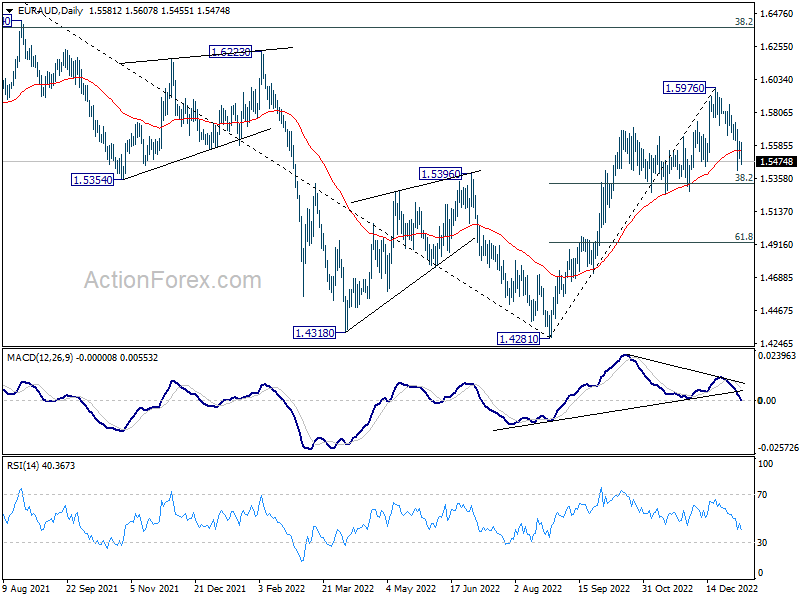
In the bigger picture, it's still early to confirm if rise from 1.4281 represents bullish trend reversal. But as long as 1.5271 support holds, such rally is in favor to continue. Break of 1.5976 will target 1.6434 key resistance next. On the other hand, firm break of 1.5271 will retain medium term bearishness instead.
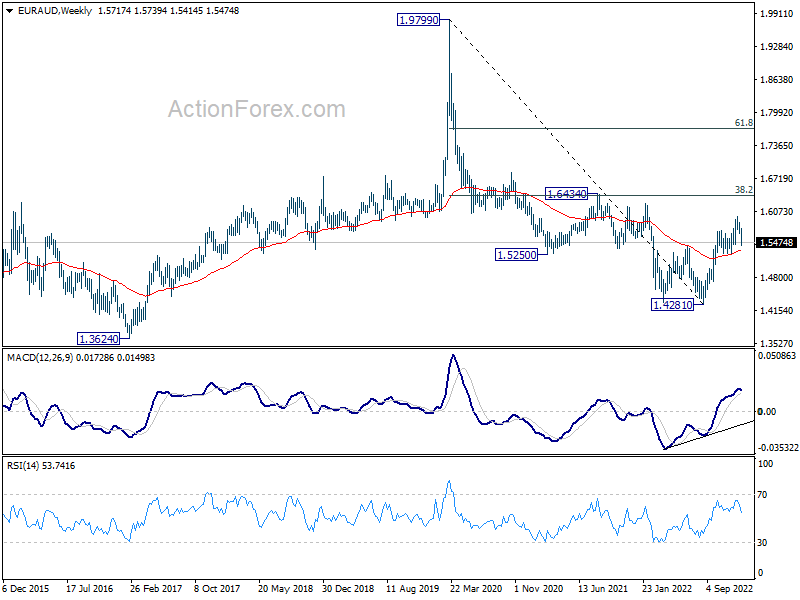
In the longer term picture, focus stays on 55 month EMA (now at 1.5595). Sustained trading above there will raise the chance of bullish trend reversal, and at least bring further rally to 1.6434 cluster resistance, 38.2% retracement of 1.9799 (2020 high) to 1.4281 at 1.6389. However, rejection by 55 month EMA will suggest that down trend form 1.9799 is still in progress for another low below 1.4281.
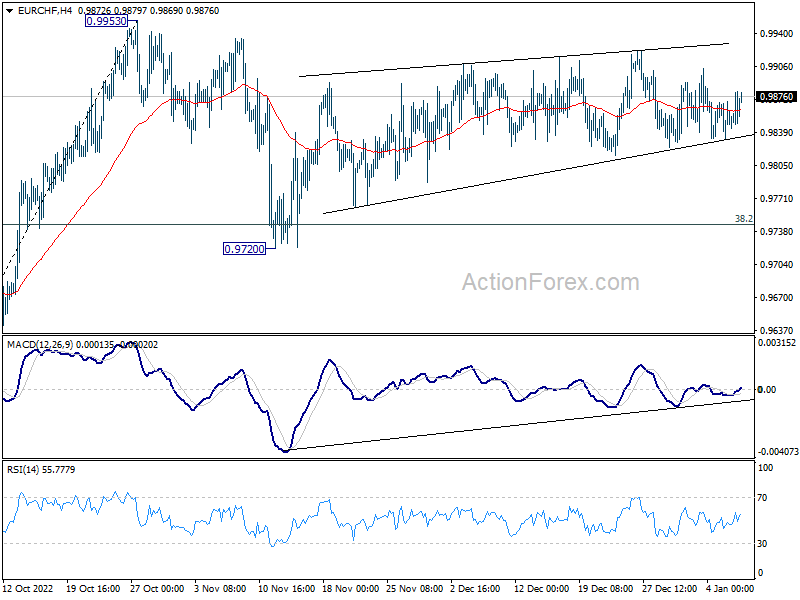
EUR/CHF Weekly Outlook
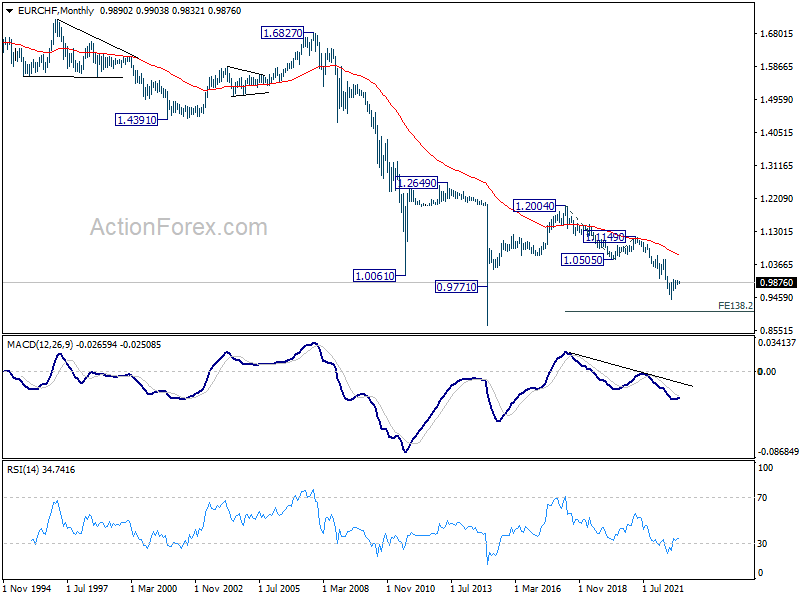
EUR/CHF is still bounded inside consolidation pattern from 0.9953 last week. Overall outlook remains unchanged. Initial bias stays neutral this week first. On the upside, firm break of 0.9953 resistance will resume larger rally from 0.9407 to 1.0072 fibonacci level. However, break of 0.9720 will extend the decline from 0.9953 to 61.8% retracement of 0.8407 to 0.9953 at 0.9616.
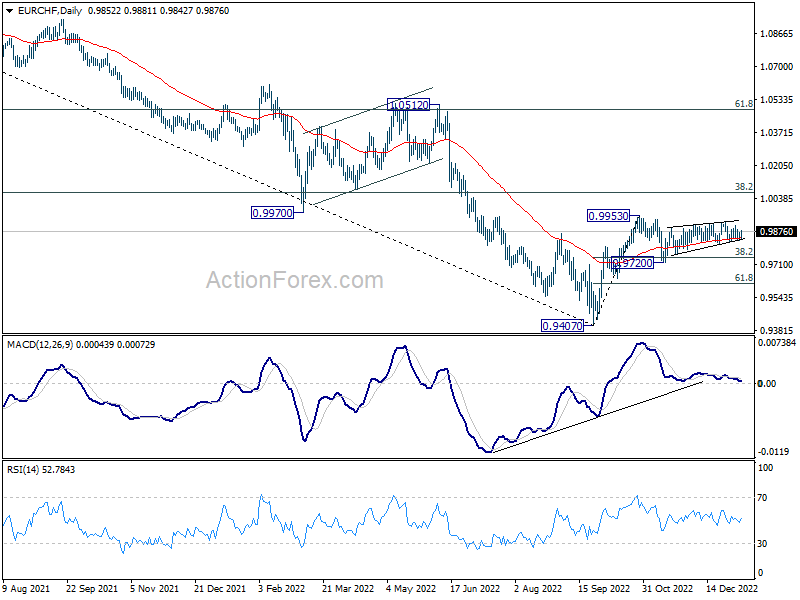
In the bigger picture, as long as 38.2% retracement of 1.1149 to 0.9407 at 1.0072 holds, price actions from 0.9407 medium term bottom will be treated as a corrective pattern. That is, long term down trend would resume through this low at a later stage. Nevertheless, firm break of 1.0072 will also have 55 week EMA (now at 1.0041) taken out. That would be an initial sign of long term bullish reversal.
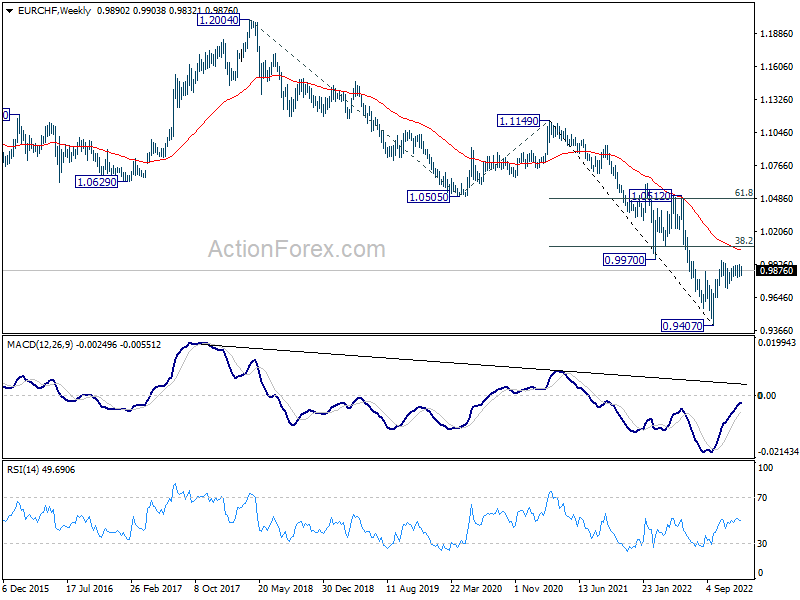
In the long term picture, capped well below 55 month EMA, EUR/CHF is seen as extending the multi-decade down trend. There is no prospect of a bullish reversal until firm break of 1.0505 support turned resistance (2020 low). In case of resumption, next target is 138.2% projection of 1.2004 to 1.0505 to 1.1149 at 0.9033.
The Weekly Bottom Line: Plenty of Jobs, Except in Congress
U.S. Highlights
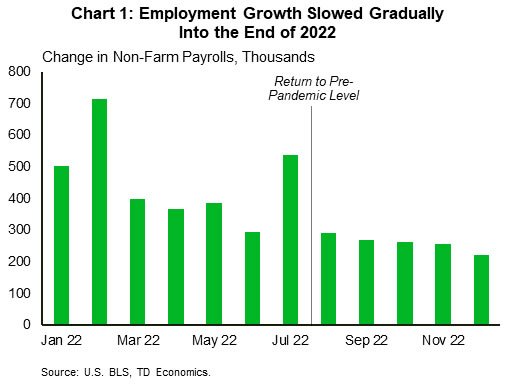
The labor market cooled modestly in December, with 223k new jobs added and the unemployment rate ticking back down to 3.5%.
The House of Representatives failed to elect a Speaker of the House on the first ballot for the first time in 100 years, delaying the start of the new legislative session in the lower chamber of Congress.
FOMC minutes from the December meeting underlined the hawkish stance of the committee and warned of the dangers of a pre-mature easing of financial conditions.
Canadian Highlights
- Oil prices slid heavily this week, greased by demand concerns as the world’s second largest consumer, China, struggles through its worst battle with COVID yet.
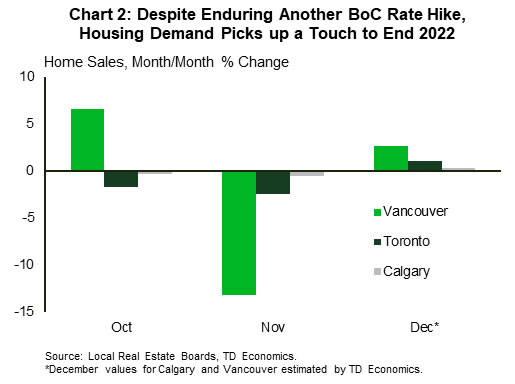
- The impact on housing demand from the newly implemented foreign buying tax should be modest. This week also revealed that, even with BoC rate hikes, housing demand picked up in key markets last December.
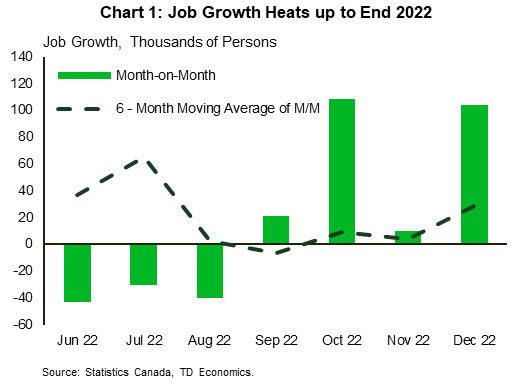
- It was a joyous December for job seekers, as employment surged by 104k in the month. The barn-burner report likely swings the pendulum in favour of further action by the BoC.
U.S. - Plenty of Jobs, Except in Congress
The start of the new year kicked off with several important December data releases, including an update on the labor market and FOMC meeting minutes. In addition, the new Congressional session got off to a rocky start, with the House of Representatives unable to elect a Speaker of the House. Equity markets fluctuated on the week with the S&P 500 down 0.4% while yields declined sharply, with the 10 Year Treasury at 3.58% as of the time of writing.
The exceptional strength seen in the jobs market over the past two years slowed into the end of 2022, with December adding 223k new jobs and bringing the annual total to 4.5 million (Chart 1). The labor market remained tight with the unemployment rate declining back to 3.5% as the labor force rose by 0.3% and the participation rate ticked up by 0.1 percentage-points. Average hourly earnings growth decelerated to 0.3% month-on-month, inciting an initial rally in equity markets as participants looked for evidence which might lead to a reprieve from the current aggressive round of rate hikes. The report also showed a notable uptick in the number of multiple job holders reflecting the weight of inflation and rate hikes on households as they seek additional support through secondary incomes.
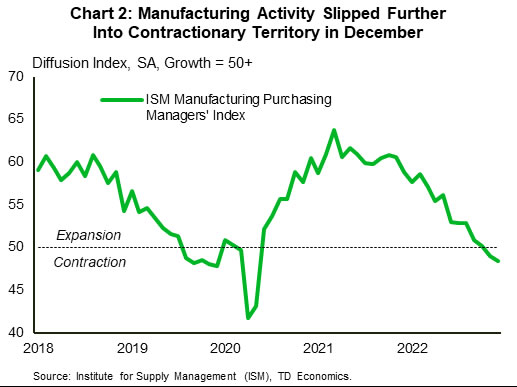
Earlier in the week, manufacturing data showed signs of further slowing, with the ISM manufacturing purchasing managers’ index (PMI) slipping further into contractionary territory in December (Chart 2). After two years of growth the industry has begun to give back some of its gains, in large part due to the direct and indirect effects of higher rates. We also saw this play a part in the ISM Services PMI which declined sharply and showed the sector contracting in December for the first time in 30 months. Within the services index, declines were led by new orders which dropped sharply by over 10.8 percentage-points relative to November. On a more positive note, the manufacturing report showed a continued decline in supply price pressures and improving delivery times, which will be welcome news for the Federal Reserve.
FOMC meeting minutes released on Wednesday unsurprisingly echoed earlier sentiments expressed by Chair Powell at his December 14th press conference. Members pushed back against the loosening of financial conditions seen in recent months on the back of softer inflation reports, noting that “an unwarranted easing in financial conditions…would complicate the committee’s effort to restore price stability”. The minutes reiterated that “it would take substantially more evidence of progress to be confident that inflation was on a sustained downward path”, and this was further emphasized by the fact that no committee members foresee cutting rates this year.
Minneapolis Fed President (and 2023 FOMC member) Neel Kashkari also released an essay on Wednesday in which he noted the need to raise rates by another 100bps this year, which helped to briefly push the odds of a 50bps hike in February close to 50%, though they have since declined back to roughly 25%. Next week we will get December CPI data which will help clarify whether the recent downturn in inflation persisted into the end of the year.
Canada – You're Hired
The first week of the new year turned out to be a tough one for oil markets. Indeed, the WTI benchmark was down about $5/barrel (as of writing), greased by demand concerns as the world's second largest consumer, China, struggles through its worst battle with COVID yet. For their part, bond yields are tracking lower on the week, even with this morning's barn-burner of a jobs report.
Hiring blew away expectations to end 2022, as a meaty 104k positions were added in December (Chart 1). Adding to the strong tone of the report was the fact that gains were concentrated in full-time, private sector positions. In addition, hiring spanned several industries and provinces. The unemployment rate also dipped to 5%, near an all-time low. Less eye-popping was the pedestrian 0.1% month-on-month gain in hours worked. Wage growth also decelerated in year-on-year terms but remained hot at 5.1%.
In its December interest rate announcement, the Bank of Canada communicated that it would be considering whether the policy rate needs to move higher, after hiking rates at a very rapid pace in 2022. The jobs report certainly swings the pendulum towards further action on rates. Our current forecast calls for the Bank of Canada to hike their policy rate by 25 basis points at its upcoming meeting in late January.
Developments in Canadian housing markets also made headlines this week, with several prognosticators stepping forward to deliver their views on housing for 2023. Our take is that another subdued year for activity is in the cards, although housing should find its bottom. Conditions are already soft in most markets across Canada, and some further near-term impact should come from the new two-year ban on foreign homebuying that came into effect on January 1st. However, we think the impact on demand won't be overly significant for a few key reasons. First, existing foreign buying taxes in Ontario and B.C. have already drained much of this demand from these markets. In addition, there are several exemptions to the ban, including for foreign students and temporary workers who have been in Canada for some time.
This week also offered a glimpse on how key housing markets performed in December. As it turns out, the story was more "ho, ho, ho" than "bah, humbug", at least from an economic growth perspective. Indeed, after several months of weakness, home sales increased month-on-month in Toronto, Calgary, and Vancouver (Chart 2). Average prices, meanwhile, were flat in Toronto for the 3rd straight month. Importantly, new supply in all three markets declined. More broadly, there have been no signs so far that the high interest rate backdrop has resulted in forced selling, although that remains a key risk. All told, Canadian housing markets entered this year on a better-than-anticipated footing, although the backdrop is still quite weak.