Sample Category Title
EUR/USD Mid-Day Outlook
Daily Pivots: (S1) 1.0435; (P) 1.0484; (R1) 1.0575; More...
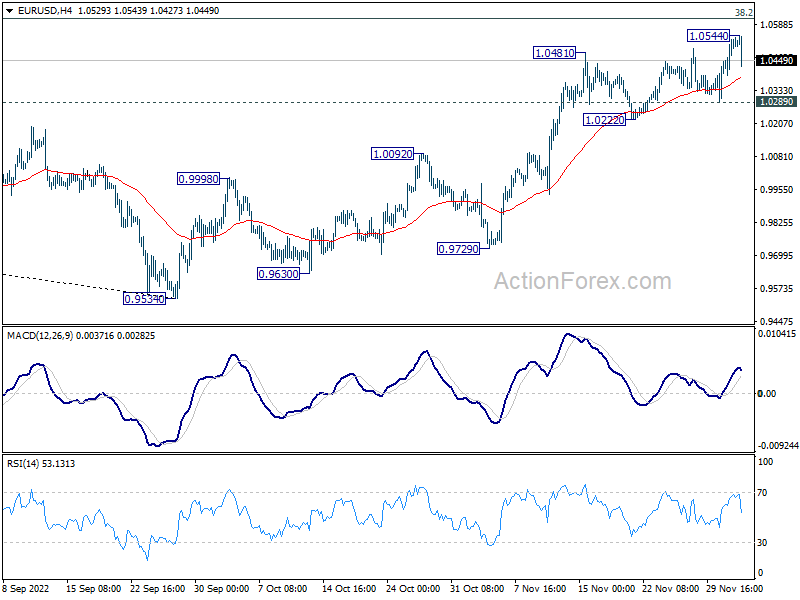
Intraday bias in EUR/USD is turned neutral first with current retreat. But further rally is still in favor. Above 1.0544 will resume the rise from 0.9543 to 1.0609 fibonacci level. However, firm break of 1.0289 support will confirm short term topping and bring deeper decline back to 1.0092 resistance turned support.
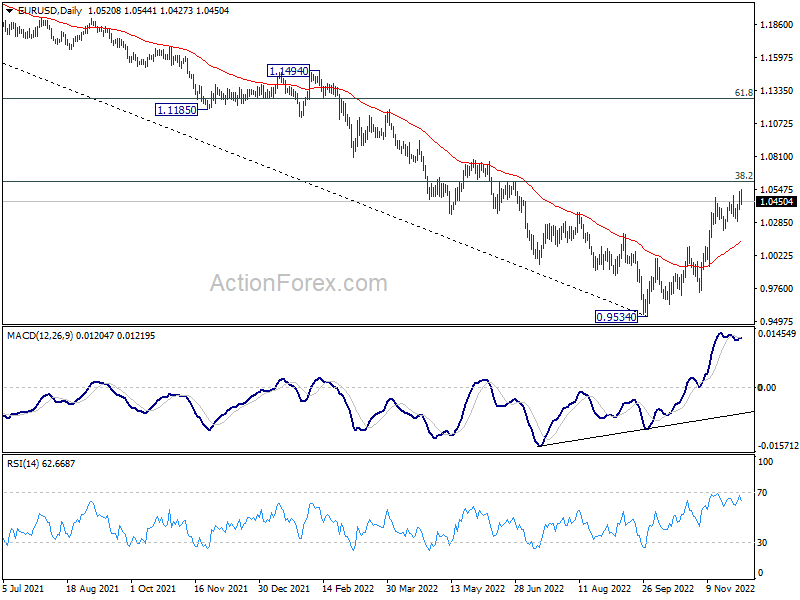
In the bigger picture, a medium term bottom was in place at 0.9534, on bullish convergence condition in daily MACD. Even as a corrective rise, rally from 0.9534 should target 38.2% retracement of 1.2348 (2021 high) to 0.9534 at 1.0609. Sustained trading above 55 week EMA (now at 1.0566) will raise the chance of trend reversal and target 61.8% retracement at 1.1273. This will now remain the favored case as long as 1.0092 resistance turned support holds.
Dollar Strikes Back on Solid Job Data, With Strong Wage Growth
Dollar rebounds notably after a set of solid non-farm payroll data, with strong wage growth. US stock futures take a dive in response to the news, while treasury yields recover. Australian Dollar appears to be responding most negatively for now, as pressured by risk-off sentiment too. But Euro and Sterling are not far away. Yen also retreats but stays relatively steady except versus Dollar.
Technically, for Dollar to confirm short term bottoming, some levels need to be taken out, including 1.0289 support in EUR/USD, 1.1898 support in GBP/USD, 137.66 resistance in USD/JPY and 0.9597 resistance in USD/CHF. Let's see if the greenback could extend today's rebound and give these levels a test.
In Europe, at the time of writing, FTSE is down -0.56%. DAX is down -0.55%. CAC is down -0.71%. Germany 10-year yield is up 0.016 at 1.831. Earlier in Asia, Nikkei dropped -1.59%. Hong Kong HSI dropped -0.33%. China Shanghai SSE dropped -0.29%. Singapore Strait Times dropped -1.02%. Japan 10-year JGB yield rose 0.0003 to 0.252.
US non-farm payroll grew 263k, strong wage growth
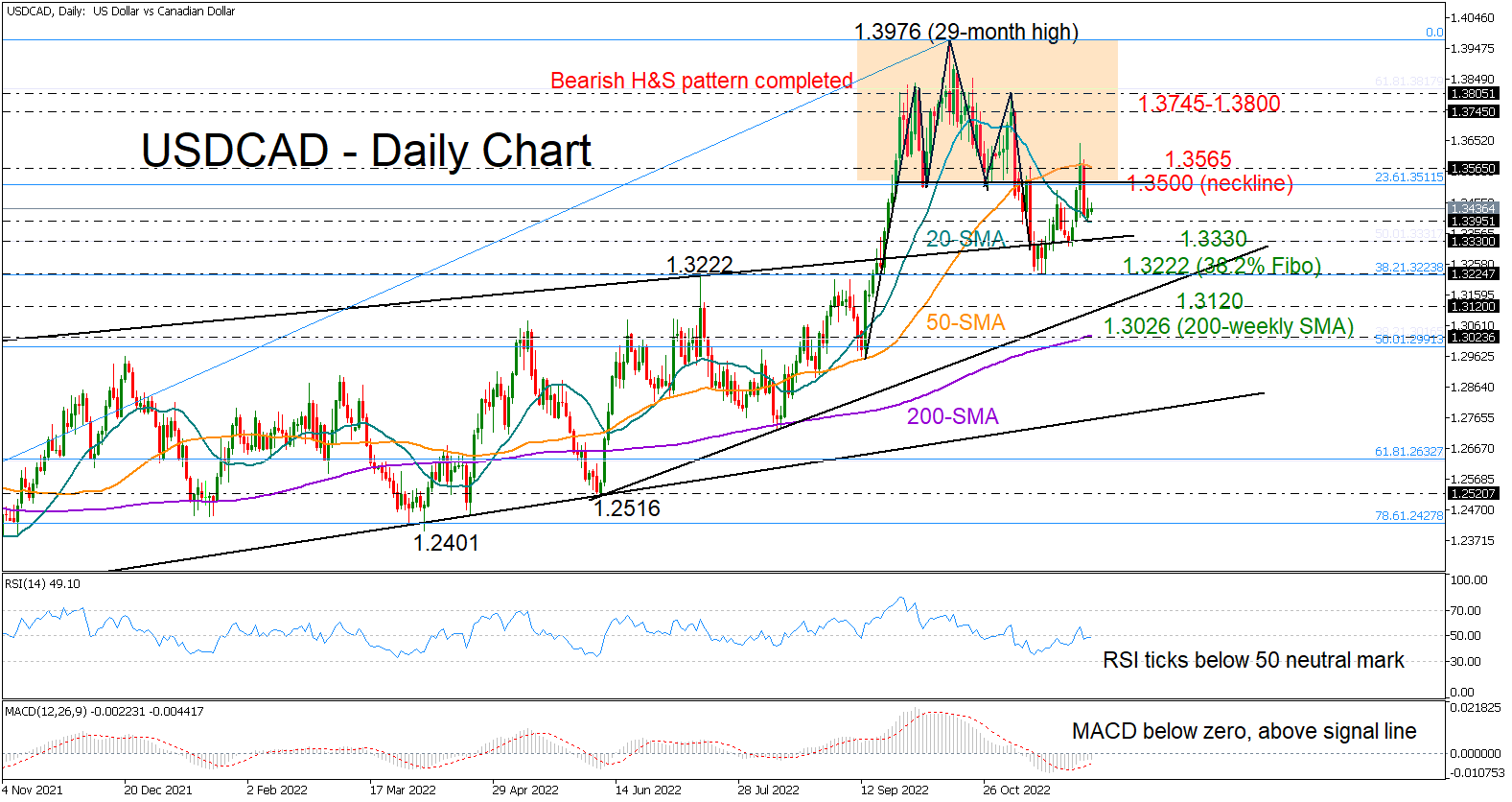
US non-farm payroll employment grew 263k in November, above expectation of 200k. Average job growth was 282k over the prior three months, and 392k thus far in 2022. Unemployment rate was unchanged at 3.7%, matched expectations. Participation rate dropped -0.1% to 62.1%. Wage growth was strong with average hourly earnings up 0.6% mom, versus expectation of 0.3% mom.
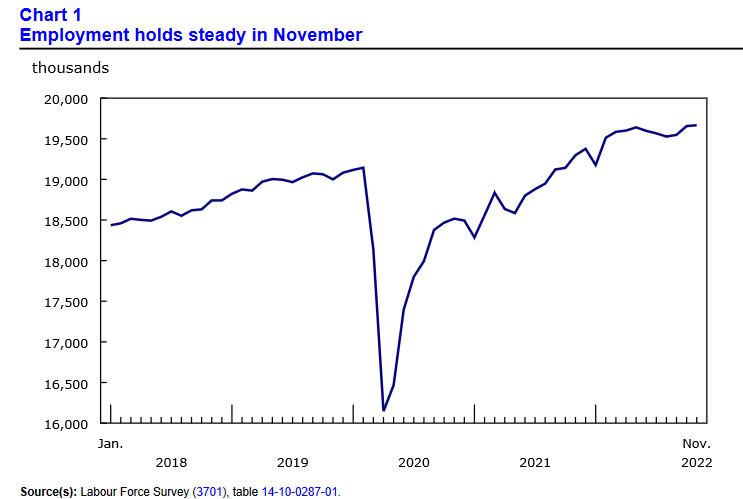
Canada employment grew 10.1k, unemployment rate dropped to 5.1%
Canada employment grew 10.1k in November, slightly below expectation of 10.5k. Unemployment rate dropped from 5.2% to 5.1%, below expectation of 5.3%. Participation rate dropped -0.1% to 64.8%. Average hourly wages was up 5.6% yoy, staying above 5% level for the sixth consecutive month.
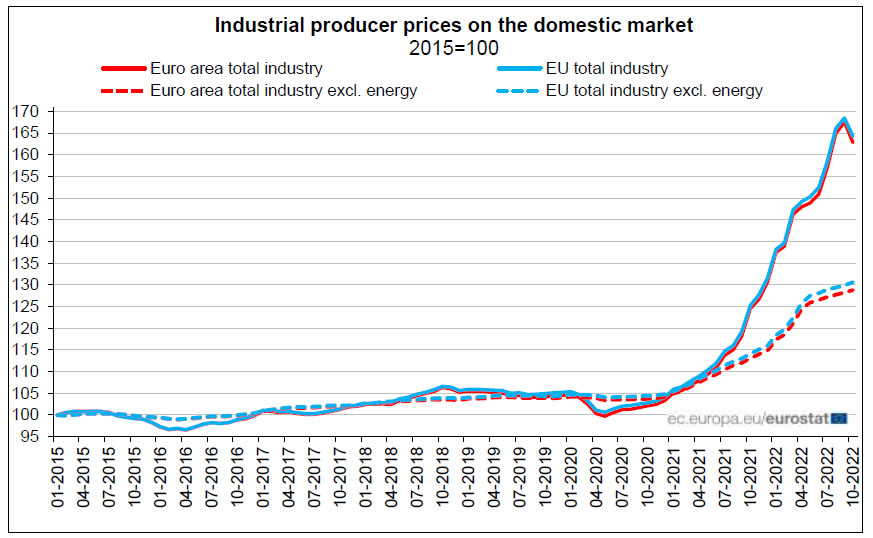
Eurozone PPI at -2.9% mom, 30.8% yoy in Oct
Eurozone PPI came in at -2.9% mom, 30.8% yoy in October, versus expectation of -2.0% mom, 31.5% yoy. Industrial producer prices decreased by -6.9% in the energy sector, while prices increased by 0.2% for intermediate goods, by 0.3% for capital goods, by 0.5% for durable consumer goods and by 1.1% for non-durable consumer goods. Prices in total industry excluding energy increased by 0.5%.
EU PPI came in at -2.5% mom, 31.2% yoy. The largest monthly decreases in industrial producer prices were recorded in Ireland (-32.5%), Bulgaria (-8.8%) and Denmark (-5.5%), while the highest increases were observed in Greece (+9.6%), Hungary (+6.2%) and Belgium (+2.8%).
BoJ Tamura called for review of monetary framework
BoJ board member Naoki Tamura told Asahi daily that a review of monetary framework should be conducted by the central bank. Such review could come "soon or at a somewhat later date". "Whether the BOJ needs to tweak its monetary policy will depend on the outcome of the review," he said.
Tamura also noted there was scope to review the feasibility of the 2% target, and consider it as a more flexible goal. "As long as the economy is achieving a virtuous cycle, I think it's okay even if inflation is at, say 1.8%" instead of 2%," he noted.
EUR/USD Mid-Day Outlook
Daily Pivots: (S1) 1.0435; (P) 1.0484; (R1) 1.0575; More...
Intraday bias in EUR/USD is turned neutral first with current retreat. But further rally is still in favor. Above 1.0544 will resume the rise from 0.9543 to 1.0609 fibonacci level. However, firm break of 1.0289 support will confirm short term topping and bring deeper decline back to 1.0092 resistance turned support.
In the bigger picture, a medium term bottom was in place at 0.9534, on bullish convergence condition in daily MACD. Even as a corrective rise, rally from 0.9534 should target 38.2% retracement of 1.2348 (2021 high) to 0.9534 at 1.0609. Sustained trading above 55 week EMA (now at 1.0566) will raise the chance of trend reversal and target 61.8% retracement at 1.1273. This will now remain the favored case as long as 1.0092 resistance turned support holds.
Economic Indicators Update
| GMT | Ccy | Events | Actual | Forecast | Previous | Revised |
|---|---|---|---|---|---|---|
| 21:45 | NZD | Terms of Trade Index Q3 | -3.40% | 1.50% | -2.40% | -2.30% |
| 23:50 | JPY | Monetary Base Y/Y Nov | -6.40% | -4.50% | -6.90% | |
| 07:00 | EUR | Germany Trade Balance (AUD) Oct | 6.9B | 4.3B | 3.7B | |
| 10:00 | EUR | Eurozone PPI M/M Oct | -2.90% | -2.00% | 1.60% | |
| 10:00 | EUR | Eurozone PPI Y/Y Oct | 30.80% | 31.50% | 41.90% | |
| 13:30 | USD | Nonfarm Payrolls Nov | 263K | 200K | 261K | 284K |
| 13:30 | USD | Unemployment Rate Nov | 3.70% | 3.70% | 3.70% | |
| 13:30 | USD | Average Hourly Earnings M/M Nov | 0.60% | 0.30% | 0.40% | 0.50% |
| 13:30 | CAD | Net Change in Employment Nov | 10.1K | 10.5K | 108.3K | |
| 13:30 | CAD | Unemployment Rate Nov | 5.10% | 5.30% | 5.20% |
Canada employment grew 10.1k, unemployment rate dropped to 5.1%
Canada employment grew 10.1k in November, slightly below expectation of 10.5k. Unemployment rate dropped from 5.2% to 5.1%, below expectation of 5.3%. Participation rate dropped -0.1% to 64.8%. Average hourly wages was up 5.6% yoy, staying above 5% level for the sixth consecutive month.
US non-farm payroll grew 263k, strong wage growth
US non-farm payroll employment grew 263k in November, above expectation of 200k. Average job growth was 282k over the prior three months, and 392k thus far in 2022. Unemployment rate was unchanged at 3.7%, matched expectations. Participation rate dropped -0.1% to 62.1%. Wage growth was strong with average hourly earnings up 0.6% mom, versus expectation of 0.3% mom.
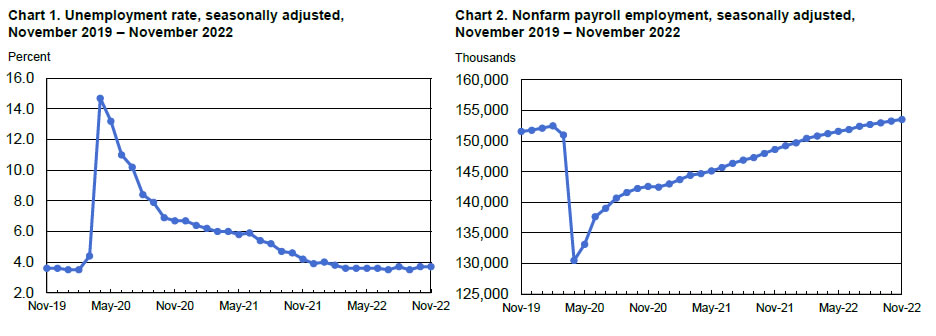
EUR/USD Pair Now Rising With Positive Signs Above 1.0500
The Euro started a steady increase above the 1.0450 and 1.0480 resistance levels against the US Dollar. The EUR/USD pair gained pace above the 1.0500 level to move into a positive zone.
It tested the 1.0540 zone before there was a minor downside correction. The pair is now rising, with positive signs above 1.0500 and the 50 hourly simple moving average. It seems to be facing resistance near the 1.0540 on FXOpen.
The first major resistance is near the 1.0550 level. A break above the 1.0550 resistance level could start a fresh increase. In the stated case, it could rise towards the 1.0620 resistance.
Conversely, the pair might start a downside correction below 1.0500. The next key support is near 1.0455, below the pair could drop towards the 1.0420 level. Any more losses might send the pair towards the 1.0350 level in the near term.
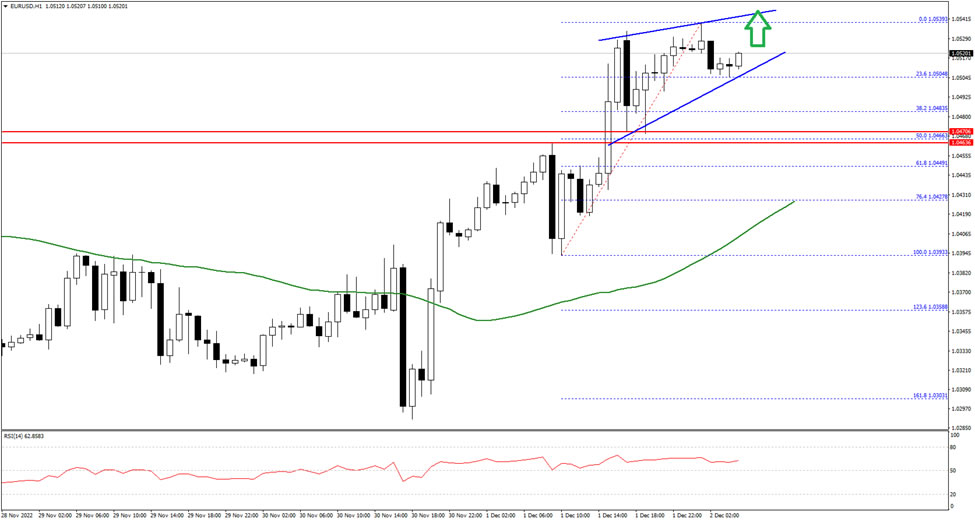
GBPJPY Crosses Below 50-day SMA as Bearish Bias Strengthens
GBPJPY has experienced a steep uptrend since late September, with the price gaining almost 15% and posting a fresh 6½-year high of 172.10. However, the pair has declined moderately from its recent peak and has been trading below its 50-day simple moving average (SMA) in the last couple of sessions.
The momentum indicators currently suggest that bearish forces are intensifying. Specifically, the RSI is declining beneath its 50-neutral mark, while the MACD histogram is retreating below both zero and its red signal line.
In the negative scenario, bearish actions could send the price to test the recent low of 164.50. Sliding beneath that floor, the bears could aim for the recent support of 163.04, which overlaps with the 200-day SMA. Failing to halt there, the attention could shift to 162.30 before the 159.70 hurdle appears on the radar.
On the flipside, should buyers re-emerge and push the price higher, initial resistance could be met at the 50-day SMA, currently at 165.91. Piercing through this region, the price could challenge the October resistance of 167.50. Conquering this barricade, the bulls may then aim for the double-top region of 169.08.
Overall, GBPJPY appears to have begun another round of weakness as negative momentum is intensifying. Therefore, a break below the 200-day SMA could spark a steep downtrend.
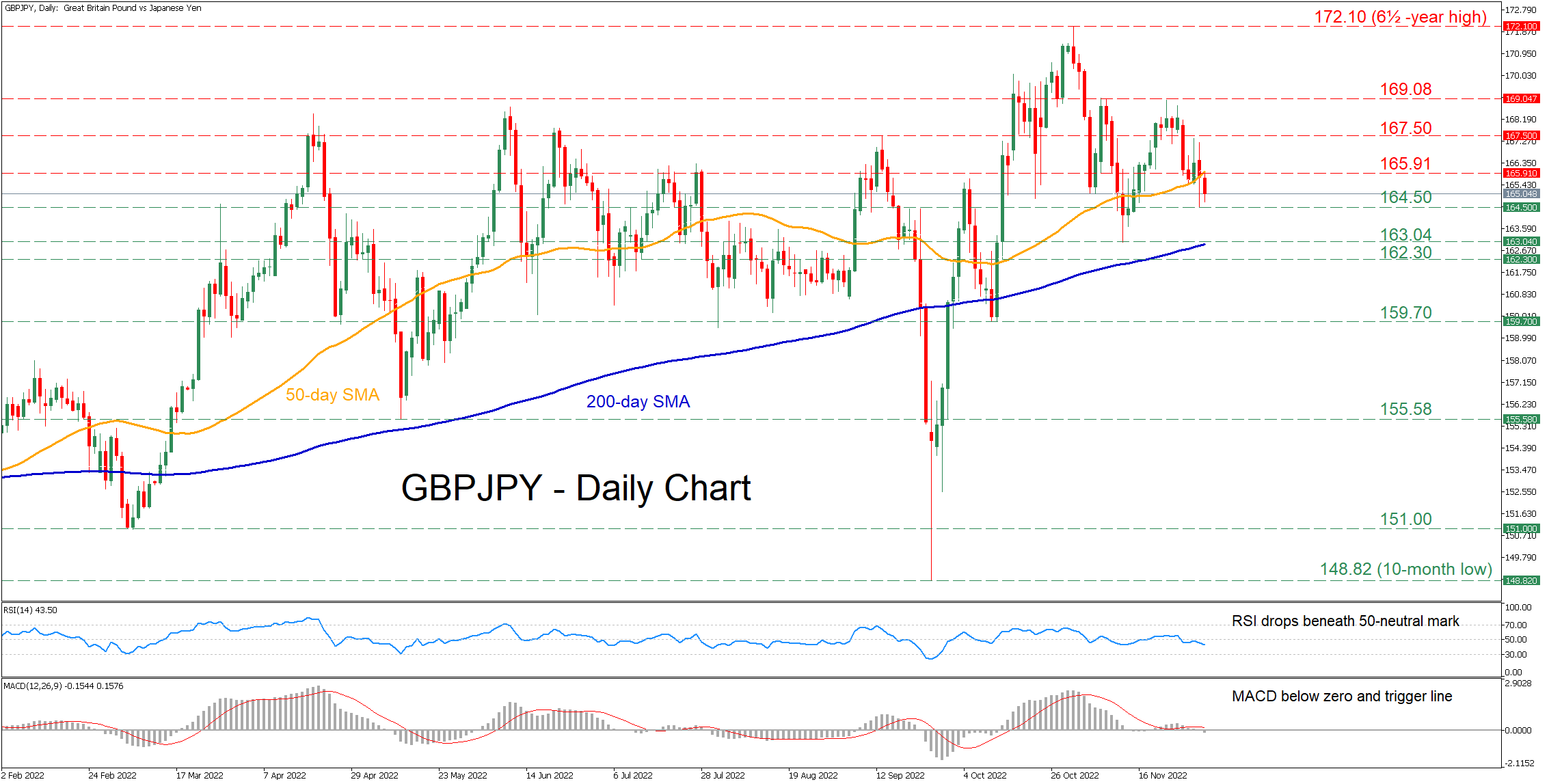
USDCAD Steps on 20-SMA; Bears Still Present
USDCAD had a lukewarm start to December, barely gaining bullish traction despite taking support from the 20-day simple moving average (SMA) at 1.3394.
The pair has completed two consecutive negative months, charting a bearish head and shoulders pattern around the 29-month peak of 1.3976. Even though the bulls attempted to deactivate the bearish structure above the 1.3500 neckline this week, the 50-day simple moving average (SMA) pressed the price aggressively lower, keeping negative trend risks alive.
In momentum indicators, the RSI and the MACD have been trending up since mid-November, but the former has yet to climb successfully above its 50 neutral mark, while the latter hasn’t exited the negative zone.
Nevertheless, there are a couple of support levels that may prevent an outlook deterioration. The upper constraining line from August 2021 might immediately attract attention around 1.3330 if the 20-day SMA at 1.3400 gives way. Then, the 38.2% Fibonacci retracement of the 1.2006-1.3976 at 1.3222 could defend the neutral trajectory in the short-term picture. Should selling forces persist, the tentative ascending trendline could next come to the rescue near 1.3120. Otherwise, the decline may stretch towards the 200-day SMA and the 50% Fibonacci of 1.2990.
On the upside, the 1.3500–1.3565 zone and the 50-day SMA will be closely watched. A sustainable move above the bar could bolster the bullish action up to the 1.3745–1.3800 resistance region. Running higher, the pair will push for new higher highs above the 1.3976 top.
In brief, USDCAD is lacking bullish signals, with traders waiting for a clear break above 1.3500-1.3565 or below 1.3330 to direct the market accordingly.
Eurozone PPI at -2.9% mom, 30.8% yoy in Oct
Eurozone PPI came in at -2.9% mom, 30.8% yoy in October, versus expectation of -2.0% mom, 31.5% yoy. Industrial producer prices decreased by -6.9% in the energy sector, while prices increased by 0.2% for intermediate goods, by 0.3% for capital goods, by 0.5% for durable consumer goods and by 1.1% for non-durable consumer goods. Prices in total industry excluding energy increased by 0.5%.
EU PPI came in at -2.5% mom, 31.2% yoy. The largest monthly decreases in industrial producer prices were recorded in Ireland (-32.5%), Bulgaria (-8.8%) and Denmark (-5.5%), while the highest increases were observed in Greece (+9.6%), Hungary (+6.2%) and Belgium (+2.8%).
The USD Outlook – Elliott Wave
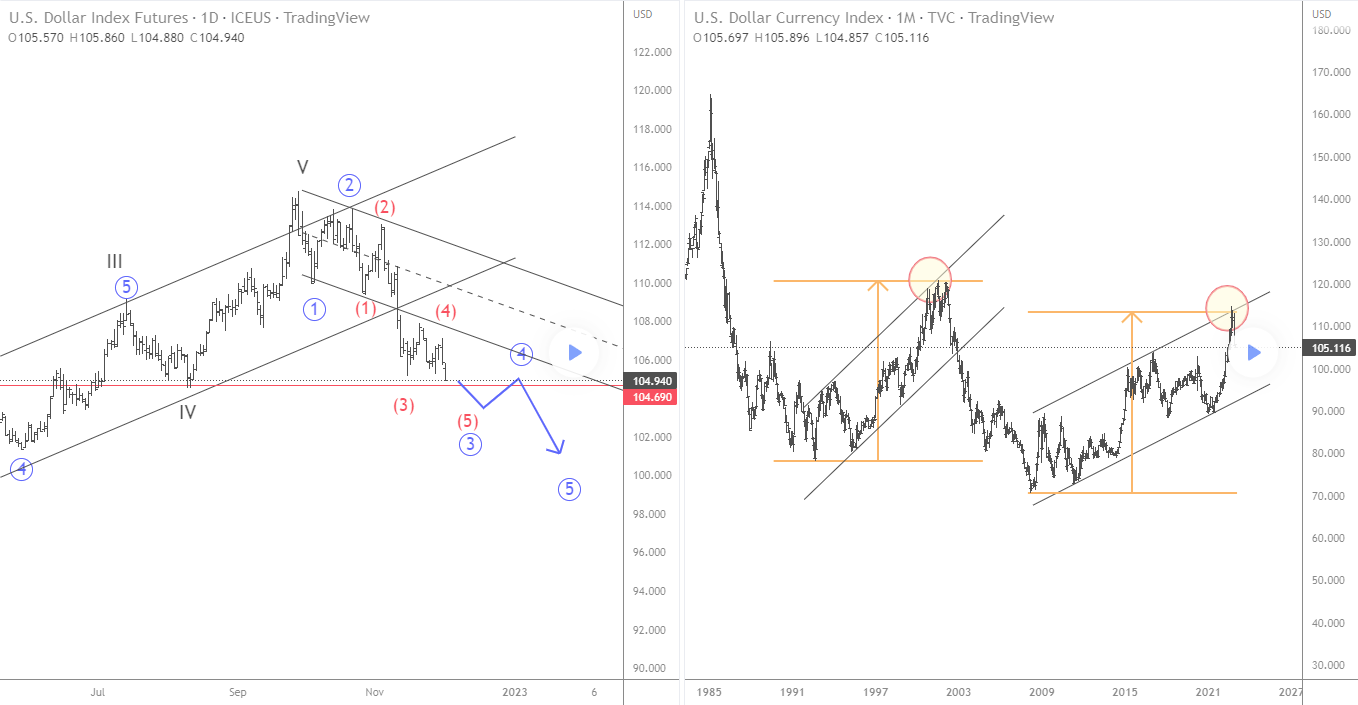
PCE was out yesterday, showed that the Inflation is stable. Also, on Wednesday speculators wanted to see if Powell will stay hawkish or be even more aggressive; he was the complete opposite, despite still good jobs data in last few months (it's below 4%). From this we can assume that even if jobs data will stay fine today, Powell will stick to his plan, because he did not mention that next decision will depend on jobs. He said 100K is the line for creation/destruction of jobs. But if suddenly jobs will get worse, then this will be another confirmation for slowing down the hiking pace, which is not impossible, considering that economy is slowing down. But of course it really depends how big would be the potential NFP miss, below 100k would likely cause a shock on stocks which eventually can lead to DXY rally later, but only for a correction IMO.
There will be pullbacks of course. Here is the Elliott wave count I am looking at; potential impulse from a monthly channel top.
I will turn back bullish if I see strong bounce back to 109.
Australian Dollar Steady ahead of NFP
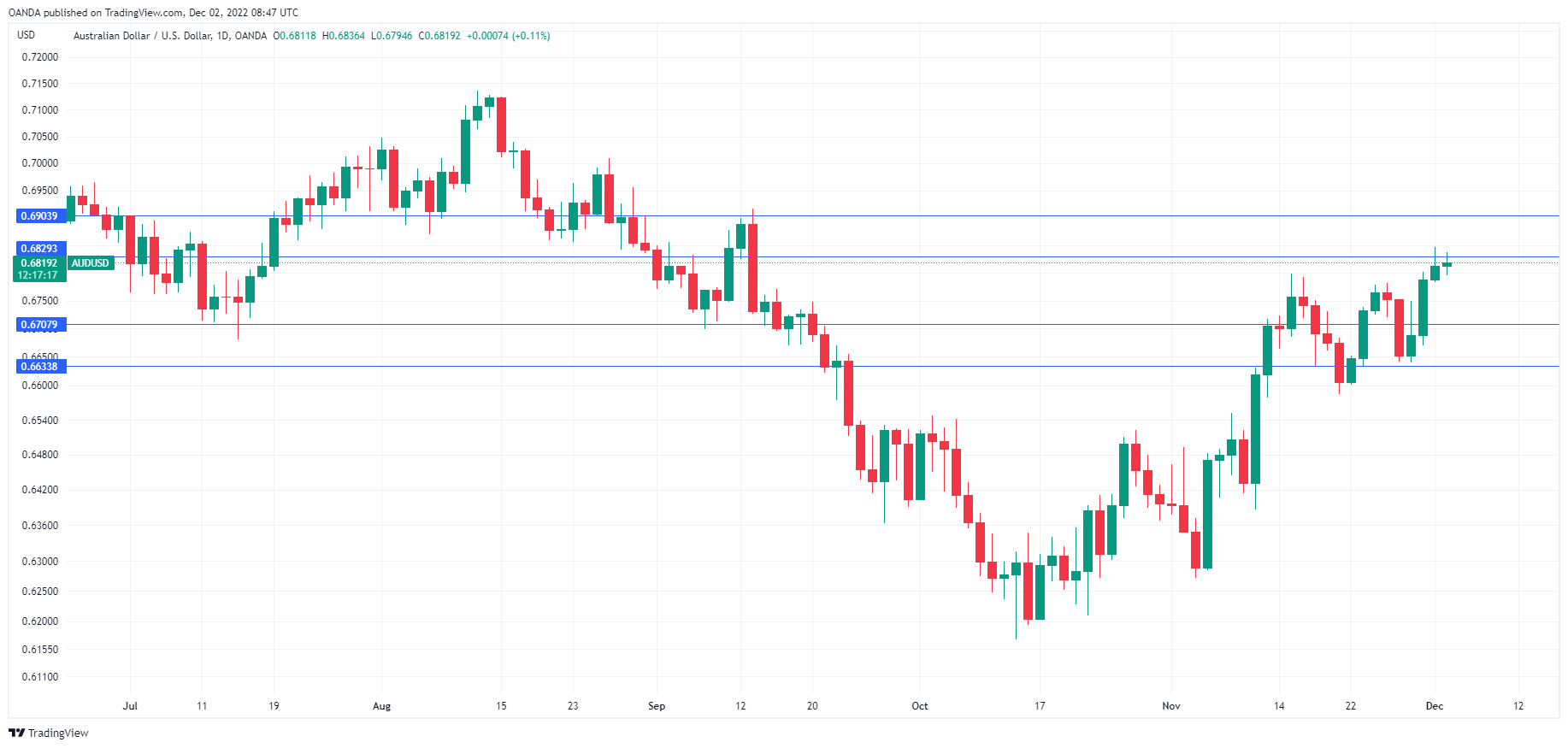
The Australian dollar’s has posted small gains today and is trading at 0.6816. After starting the week with sharp losses, AUD/USD has rebounded and hit a 13-week high on Thursday, at 0.6845.
All eyes on US nonfarm payrolls
Today’s highlight is the US nonfarm employment report, with a consensus of 200,000 for November. This follows a 261,000 gain in October. The US employment market has been surprisingly resilient, considering the sharp rise in interest rates. The employment market has recently started to cool off, but unless today’s NFP release significantly underperforms, it won’t change the Fed’s view that it is still too early to tell if inflation is on its way down.
Jerome Powell’s speech on Wednesday sent the US dollar sharply lower, as Powell’s comments were not as hawkish as feared. Powell said that more evidence was needed to show that inflation was falling, and reiterated that rates would likely rise higher than the Fed has projected in September. Still, investors chose to focus on Powell’s broad hint that the Fed would ease the pace of rates next week with a 50-bp move, after four straight hikes of 75 bp.
Reserve Bank of Australia Governor Lowe issued a shocking apology about rate policy earlier in the week. Lowe said that it was regrettable that people listened to the RBA saying it wouldn’t raise rates before 2024. but then delivered seven oversized rate hikes in 2022. Many Australians took out mortgages based on the RBA assurance but are now getting squeezed by huge mortgage payments. The RBA meets next Tuesday and is widely expected to raise rates by 25-bp, which would bring the cash rate to 3.10%.
AUD/USD Technical
- AUD/USD testing resistance at 0.6829 earlier today. Above, there is resistance at 0.6903
- There is support at 0.6707 and 0.6633