Sample Category Title
GBP/USD Daily Outlook
Daily Pivots: (S1) 1.0881; (P) 1.1000; (R1) 1.1238; More...
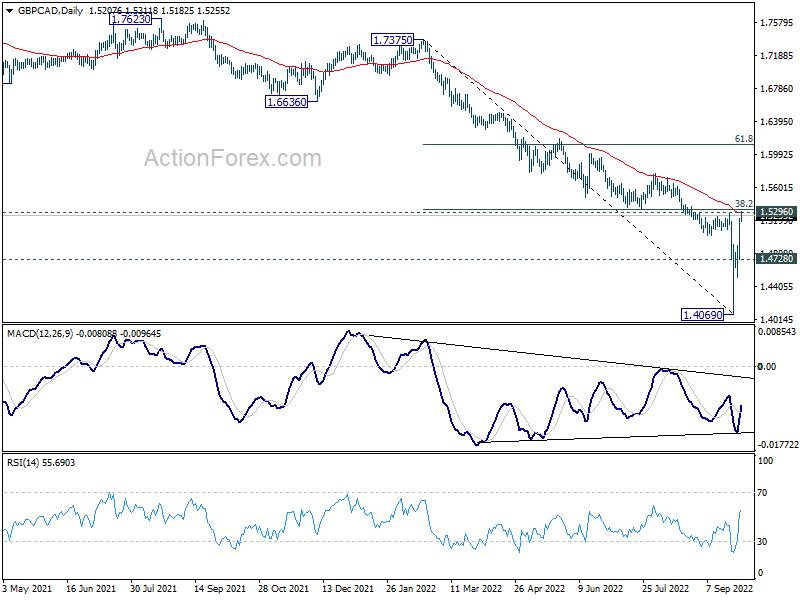
GBP/USD's rebound from 1.0351 extended higher today and the break of 4 hour 55 EMA (now at 1.1037) is a positive sign. For now, intraday bias is mildly on the upside for further rise to 61.8% retracement of 1.2292 to 1.0351 at 1.1551. On the downside, break of 1.0760 minor support will indicate that the rebound is over, and bring retest of 1.0351 low.
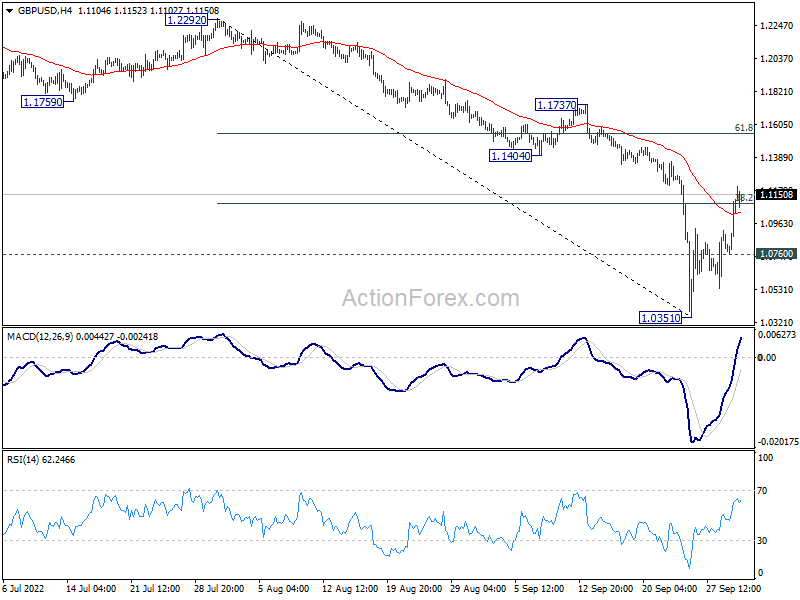
In the bigger picture, fall from 1.4248 (2018 high) is resuming long term down trend from 2.1161 (2007 high). Next target is 100% projection of 2.1161 to 1.3503 from 1.7190 at 0.9532. There is no scope of a medium term rebound as long as 1.1759 support turned resistance holds.
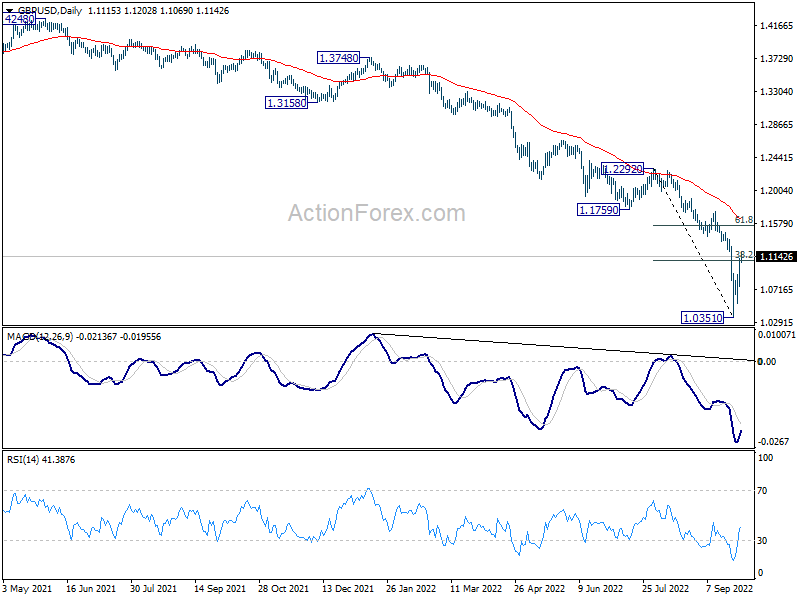
GBP/CAD Pressing Key Cluster Resistance as Pound Extended Rebound
Sterling's rebound extended further overnight as sentiment towards it continued to stabilized. Indeed, the Pound is trading up against Aussie and Canadian for the month. Sterling looks set to have a strong close for the week too. Commodity currencies are generally pressured today, together with steep decline in Japan Nikkei. But there is little risk aversion support to Yen. Dollar is mixed for now, overwhelmed by the comeback of Euro too.
Technically, GBP/CAD is now pressing an important cluster resistance. The levels include 1.5296 resistance, 55 day EMA (now at 1.5292), and 38.2% retracement of 1.7375 to 1.4069 at 1.5332. Rejection by this cluster resistance, followed by break of 1.4728 minor support, will argue that the rebound from 1.4069 has completed. That will also maintain medium term bearishness for down trend resumption through 1.4069 at a later stage. However, sustained break of this cluster should add to the case that the worst is over for the Pound, and open up stronger rise back to 61.8% retracement at 1.6112. We'll probably find out which way next week.
In Asia, at the time of writing, Nikkei is down -2.26%. Hong Kong HSI is down -0.25%. China Shanghai SSE is down -0.32%. Singapore Strait Times is down -0.43%. Japan 10-year JGB yield is down -0.014 at 0.245. Overnight, DOW dropped -1.54%. S&P 500 dropped -2.11%. NASDAQ dropped -2.84%. 10-year yield rose 0.042 to 3.747.
BoE Pill: A significant and necessary monetary policy response in November
BoE Chief Economist Huw Pill said in a speech, "on the basis of the fiscal easing announced last week, the macroeconomic policy environment looks set to rebalance. Taken in conjunction with the macroeconomic impact of ensuing market developments, it is hard to avoid the conclusion that the fiscal easing announced last week will prompt a significant and necessary monetary policy response in November."
The MPC forecasts will be the "vehicle" for making " necessarily comprehensive assessment" on recent developments. The assessments will "embody recent evidence of weakness in economic activity, as well as the impact of the Government's Energy Price Guarantee on headline inflation and wage and price setting behaviour." They will factor in "the evolution of international commodity prices, not least developments in wholesale natural gas markets" and "impact of the Government's Growth Plan and other fiscal announcements in detail."
As for the gilt interventions announced by BoE this week, Pill emphasized it's a "temporary and targeted financial stability operation". It was "not a monetary policy operation".
Fed Daly: Going to take restrictive policy at least through next year
San Francisco Fed President Mary Daly said yesterday she's "quite comfortable" with the economic projections that interest rate will rise to 4-4.5% by the end of this year, and 4.5-5% next.
"It's going to take restrictive policy for a duration of time to get clear and convincing evidence that inflation is getting back to 2% -- so from my mind, that's at least through next year," she added.
"If inflation continues to print very high and we get no easing of inflation and only modest easing of labor markets, then that's basically an economy that's still got a lot of momentum, and inflation is still too high -- we're going to have to keep moving up because we are going to understand that the terminal rate isn't as close as it would be," she said.
Japan industrial production rose 2.7% mom in Aug, to grow further in Sep and Oct
Japan industrial production rose 2.7% mom in August, much better than expectation of -0.2% decline. That's also the third consecutive month of growth. The Ministry of Economy, Trade and Industry expects production to rise further by 2.9% mom in September and then 3.2% mom in October.
Retail sales rose 4.1% yoy in August, well above expectation of 2.8% yoy. Unemployment rate dropped from 2.6% to 2.5%, matched expectations. Housing starts rose 4.6% yoy in August, versus expectation of -4.1% yoy. Consumer confidence index dropped from 32.5 to 30.8, below expectation of 33.6.
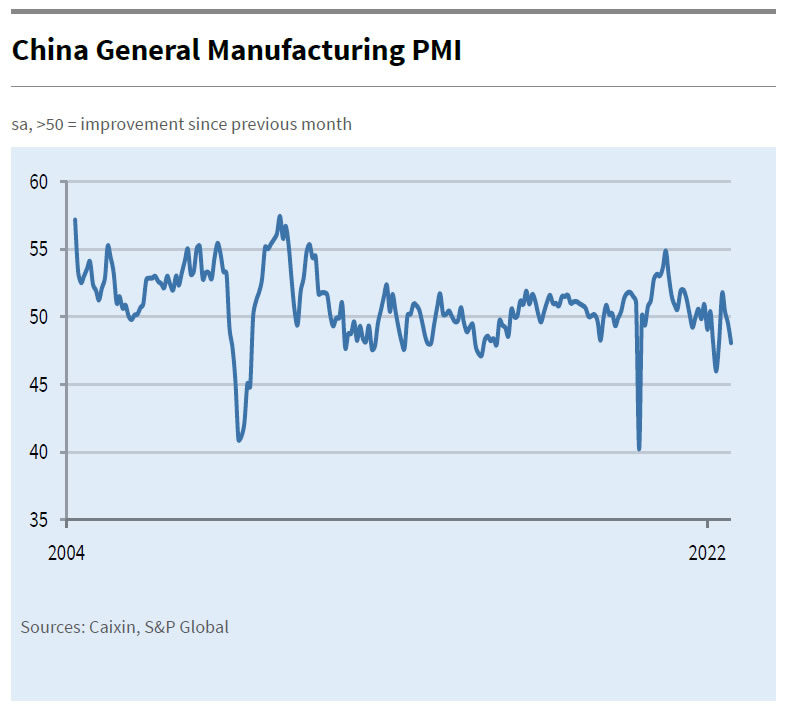
China PMI manufacturing rose to 50.1, but Caixin PMI manufacturing dropped to 48.1
China's official PMI Manufacturing rose from 49.4 to 50.1 in September, above expectation of 49.2. PMI Non-Manufacturing dropped from 52.6 to 50.6, below expectation of 52.0.
Senior NBS statistician Zhao Qinghe said, "In September, with a series of stimulus packages continuing to take effect, coupled with the impact of hot weather receding, the manufacturing boom has rebounded. The PMI returned to the expansionary range... [The non-manufacturing index] remained above the threshold, with the overall expansion of the non-manufacturing sector decelerating."
On the other hand, Caixin PMI Manufacturing dropped from 49.5 to 48.1, below expectation of 49.9. Caixin said production fell for the first time in four months amid quicker dropped in sales. Firms cut back on purchasing activity and inventories. Selling prices fell at quickest rate since December 2015.
Looking ahead
UK Q2 GDP final, current account, and mortgage approvals will be released in European session. Also featured include Swiss retail sales and KOF economic barometer, France consumer spending, Germany unemployment, Eurozone unemployment and CPI flash.
later in the day, US personal income and spending, with PCE price index will be released, as well as Chicago PMI.
GBP/USD Daily Outlook
Daily Pivots: (S1) 1.0881; (P) 1.1000; (R1) 1.1238; More...
GBP/USD's rebound from 1.0351 extended higher today and the break of 4 hour 55 EMA (now at 1.1037) is a positive sign. For now, intraday bias is mildly on the upside for further rise to 61.8% retracement of 1.2292 to 1.0351 at 1.1551. On the downside, break of 1.0760 minor support will indicate that the rebound is over, and bring retest of 1.0351 low.
In the bigger picture, fall from 1.4248 (2018 high) is resuming long term down trend from 2.1161 (2007 high). Next target is 100% projection of 2.1161 to 1.3503 from 1.7190 at 0.9532. There is no scope of a medium term rebound as long as 1.1759 support turned resistance holds.
Economic Indicators Update
| GMT | Ccy | Events | Actual | Forecast | Previous | Revised |
|---|---|---|---|---|---|---|
| 22:45 | NZD | Building Permits M/M Aug | -1.60% | 5.00% | 4.90% | |
| 23:30 | JPY | Unemployment Rate Aug | 2.50% | 2.50% | 2.60% | |
| 23:50 | JPY | Industrial Production M/M Aug P | 2.70% | -0.20% | 0.80% | |
| 23:50 | JPY | Retail Trade Y/Y Aug | 4.10% | 2.80% | 2.40% | |
| 01:30 | AUD | Private Sector Credit M/M Aug | 0.80% | 0.80% | 0.70% | 0.80% |
| 01:30 | CNY | NBS Manufacturing PMI Sep | 50.1 | 49.2 | 49.4 | |
| 01:30 | CNY | Non-Manufacturing PMI Sep | 50.6 | 52 | 52.6 | |
| 01:45 | CNY | Caixin Manufacturing PMI Sep | 48.1 | 49.9 | 49.5 | |
| 05:00 | JPY | Housing Starts Y/Y Aug | 4.60% | -4.10% | -5.40% | |
| 05:00 | JPY | Consumer Confidence Index Sep | 30.8 | 33.6 | 32.5 | |
| 06:00 | GBP | GDP Q/Q Q2 F | -0.10% | -0.10% | ||
| 06:00 | GBP | Current Account (GBP) Q2 | -43.9B | -51.7B | ||
| 06:30 | CHF | Real Retail Sales Y/Y Aug | 2.80% | 2.60% | ||
| 06:45 | EUR | France Consumer Spending M/M Aug | 0.00% | -0.80% | ||
| 07:00 | CHF | KOF Leading Indicator Sep | 86.2 | 86.5 | ||
| 07:55 | EUR | Germany Unemployment Change Sep | 20K | 28K | ||
| 07:55 | EUR | Germany Unemployment Rate Sep | 5.50% | 5.50% | ||
| 08:00 | EUR | Italy Unemployment Aug | 7.90% | 7.90% | ||
| 08:30 | GBP | Mortgage Approvals Aug | 63K | 64K | ||
| 08:30 | GBP | M4 Money Supply M/M Aug | 0.50% | 0.50% | ||
| 09:00 | EUR | Eurozone Unemployment Rate Aug | 6.60% | 6.60% | ||
| 09:00 | EUR | Eurozone CPI Y/Y Sep P | 9.10% | 9.10% | ||
| 09:00 | EUR | Eurozone CPI Core Y/Y Sep P | 4.70% | 4.30% | ||
| 12:30 | USD | Personal Income M/M Aug | 0.30% | 0.20% | ||
| 12:30 | USD | Personal Spending Aug | 0.20% | 0.10% | ||
| 12:30 | USD | PCE Price Index M/M Aug | 0.30% | -0.10% | ||
| 12:30 | USD | PCE Price Index Y/Y Aug | 6.60% | 6.30% | ||
| 12:30 | USD | Core PCE Price Index M/M Aug | 0.10% | |||
| 12:30 | USD | Core PCE Price Index Y/Y Aug | 5.20% | 4.60% | ||
| 13:45 | USD | Chicago PMI Sep | 51.9 | 52.2 | ||
| 14:00 | USD | Michigan Consumer Sentiment Index Sep F | 59.5 | 59.5 |
China PMI manufacturing rose to 50.1, but Caixin PMI manufacturing dropped to 48.1
China's official PMI Manufacturing rose from 49.4 to 50.1 in September, above expectation of 49.2. PMI Non-Manufacturing dropped from 52.6 to 50.6, below expectation of 52.0.
Senior NBS statistician Zhao Qinghe said, "In September, with a series of stimulus packages continuing to take effect, coupled with the impact of hot weather receding, the manufacturing boom has rebounded. The PMI returned to the expansionary range... [The non-manufacturing index] remained above the threshold, with the overall expansion of the non-manufacturing sector decelerating."
On the other hand, Caixin PMI Manufacturing dropped from 49.5 to 48.1, below expectation of 49.9. Caixin said production fell for the first time in four months amid quicker dropped in sales. Firms cut back on purchasing activity and inventories. Selling prices fell at quickest rate since December 2015.
Japan industrial production rose 2.7% mom in Aug, to grow further in Sep and Oct
Japan industrial production rose 2.7% mom in August, much better than expectation of -0.2% decline. That's also the third consecutive month of growth. The Ministry of Economy, Trade and Industry expects production to rise further by 2.9% mom in September and then 3.2% mom in October.
Retail sales rose 4.1% yoy in August, well above expectation of 2.8% yoy. Unemployment rate dropped from 2.6% to 2.5%, matched expectations.
Fed Daly: Going to take restrictive policy at least through next year
San Francisco Fed President Mary Daly said yesterday she's "quite comfortable" with the economic projections that interest rate will rise to 4-4.5% by the end of this year, and 4.5-5% next.
"It's going to take restrictive policy for a duration of time to get clear and convincing evidence that inflation is getting back to 2% -- so from my mind, that's at least through next year," she added.
"If inflation continues to print very high and we get no easing of inflation and only modest easing of labor markets, then that's basically an economy that's still got a lot of momentum, and inflation is still too high -- we're going to have to keep moving up because we are going to understand that the terminal rate isn't as close as it would be," she said.
BoE Pill: A significant and necessary monetary policy response in November
BoE Chief Economist Huw Pill said in a speech, "on the basis of the fiscal easing announced last week, the macroeconomic policy environment looks set to rebalance. Taken in conjunction with the macroeconomic impact of ensuing market developments, it is hard to avoid the conclusion that the fiscal easing announced last week will prompt a significant and necessary monetary policy response in November."
The MPC forecasts will be the "vehicle" for making " necessarily comprehensive assessment" on recent developments. The assessments will "embody recent evidence of weakness in economic activity, as well as the impact of the Government's Energy Price Guarantee on headline inflation and wage and price setting behaviour." They will factor in "the evolution of international commodity prices, not least developments in wholesale natural gas markets" and "impact of the Government's Growth Plan and other fiscal announcements in detail."
As for the gilt interventions announced by BoE this week, Pill emphasized it's a "temporary and targeted financial stability operation". It was "not a monetary policy operation".
Cliff Notes: Another Wild Ride for Financial Markets
Key insights from the week that was.
This week, Australian data was broadly constructive on the outlook. Meanwhile, considerable volatility was present financial markets after the announcement of the UK Government’s expansionary Fiscal Update.
Australian retail sales came in slightly above expectations in August with a solid 0.6% lift gain largely centred on food retailing (+1.1%) and cafés/restaurants (+1.3%). Though it is likely that higher retail prices are concealing a softening in sales volumes, the preliminary detail implies that retail volumes are tracking above-trend pace for Q3, suggesting that the RBA’s aggressive tightening cycle is still yet to significantly impact demand.
The Q3 ACCI-Westpac Business Survey also highlighted the strength of demand within Australia’s manufacturing sector. The ongoing ‘burst’ in activity after virus and weather-related disruptions earlier this year materialised as an acceleration in output and new orders, both reaching series highs in the September quarter. That said, it’s clear that the upside for growth is being constrained by significant and persistent headwinds. Of note, an unprecedented 67.5% of respondents reported that labour was “harder to find” – the tightest conditions in the series’ history – and material shortages are at levels still comparable to the mid-1970s oil shock. Cost pressures remain acute, putting upward pressure on finished goods prices and hence consumer inflation.
On inflation, the ABS released further detail around the Monthly CPI on Thursday. While several components within the basket are only measured in the last month of the quarter, the annual growth rates for the months of July and August imply a lift in the headline CPI of 0.5% and 0.2% respectively, the latter reflecting a clearer softening in dwelling prices. As such, we have revised down our Q3 headline CPI forecast to 0.7%, though our trimmed mean CPI forecast remains at 1.5%.
The Federal Government’s Final Budget Outcome also revealed a dramatic improvement in the fiscal position for the 2021/21 financial year. Lower utilisation of COVID-19 business support measures saw higher-than-expected company tax receipts, resulting in a $24bn upside surprise on revenue. Additionally, lower demand for other COVID-19/health-related support saw a $20bn downside surprise on expenses, leading to a much lower deficit than forecast in March, at -$32bn. This represents a marked $48bn improvement, placing the Government in a more favourable fiscal position as the Australian economy navigates a sharp slowdown in growth over 2023 and 2024, which we forecast to be 1% and 2% respectively.
Turning then to New Zealand. Recent developments around the exchange indicates that the imported component of inflation will not be as quick to recede as previously expected, pointing towards further inflationary pressure over the medium-term. As such, our New Zealand economics team have revised up their forecast for the RBNZ’s Official Cash Rate, with a 50bp rate hike expected at the upcoming October policy meeting, followed by two further 50bp rate hikes in November and February, taking the cash rate to a peak of 4.5% for the cycle.
Moving offshore, financial markets were rattled by the UK Government’s Fiscal Update. The update outlined a suite of fiscal stimulus centred on income and corporate tax cuts, removal of insurance and health/social care levies and an increase in stamp duty thresholds. Given the expected cost of these measures (£25-45bn per annum over five years) in addition to the energy guarantee plan announced last week (£60bn first six months), and the Government’s funding strategy on based on borrowing and expected growth over the forecast horizon, markets were fraught with concern over the Government’s fiscal credibility.
In the days following, the Bank of England began purchasing long-dated Gilts and announced a postponement of their balance sheet reduction as FX and fixed income markets demonstrated considerable volatility. Indeed, mid-week the GBP/USD tested lows of 1.05, now settling back around 1.11, and 30yr Gilt yields spiked to multi-decade highs of 5.15%, before retreating to 3.97 currently. The Bank of England’s actions, alongside the UK Government’s subsequent announcements of further planned updates over October and November, served to cool tensions in financial markets, though volatility will likely remain in the near-term.
The Bank of England’s Chief Economist stated that the fiscal stimulus would likely have to be met with a significant monetary policy response. This also comes after last week’s split decision between a 50bp-75bp rate hike, the difference largely stemming from uncertainty around the impact of the energy guarantee plan on demand, both within energy consumption and more broadly across the economy. In response, markets have begun to price in a much more aggressive rate hike cycle for the Bank of England, reflecting heightened concerns about the inflation outlook and recessionary risks.
On the whole, US data received this week was mixed. The final estimate of GDP for Q2 was unchanged, printing at -0.6% annualised, as a firmer gain in personal consumption was offset by weaker investment and net trade. On the partial data released this week: August’s durable goods orders suggest the drag in equipment investment is extending into Q3; regional manufacturing surveys, albeit volatile, are generally pointing towards subdued production conditions; and the FHFA and S&P/CS home price indexes posted their first monthly decline in July, highlighting a broad-based weakening in housing across the nation. These materially weak developments have seen the Atlanta Fed nowcast for Q3 GDP hold at 0.3% annualised, down from an initial estimate of 2.5%.
All of the above suggests Chair Powell and the FOMC should remain mindful of the risks to activity. Though, as evinced by the suite of Fedspeak throughout the week, the FOMC’s focus remains squarely on inflation, necessitating the continuation of further financial tightening well into restrictive territory.
Finally, to China. The official manufacturing PMI posted a stronger-than-expected lift, from 49.4 to 50.1, meanwhile the services PMI slid by more than expected, from 52.6 to 50.6 in September. Taken together, the official composite has weakened to 50.9, reflecting a delicate near-term outlook. Government stimulus and the restoration of power supply provided key support to manufacturing however, ongoing virus-related risks are still impacting the services, leaving both sectors just within the ‘expansionary zone’. The Caixin manufacturing PMI meanwhile reported weaker conditions for the sector, at 48.1, highlighting the risks facing the sector, especially as global demand begins to cool into year-end.
USD/JPY Eyes New High above 146.00, Dollar Dips
Key Highlights
- USD/JPY is showing bullish signs above the 144.00 support.
- It is facing a major resistance near 145.00 and 145.40 on the 4-hours chart.
- Gold and oil are facing important hurdles near $1,665 and $85 respectively.
- The UK GDP could contract 0.1% in Q2 2022 (QoQ).
USD/JPY Technical Analysis
The US Dollar remained strong above 140.00 against the Japanese Yen. USD/JPY started a fresh increase and broke a major hurdle at 142.50.
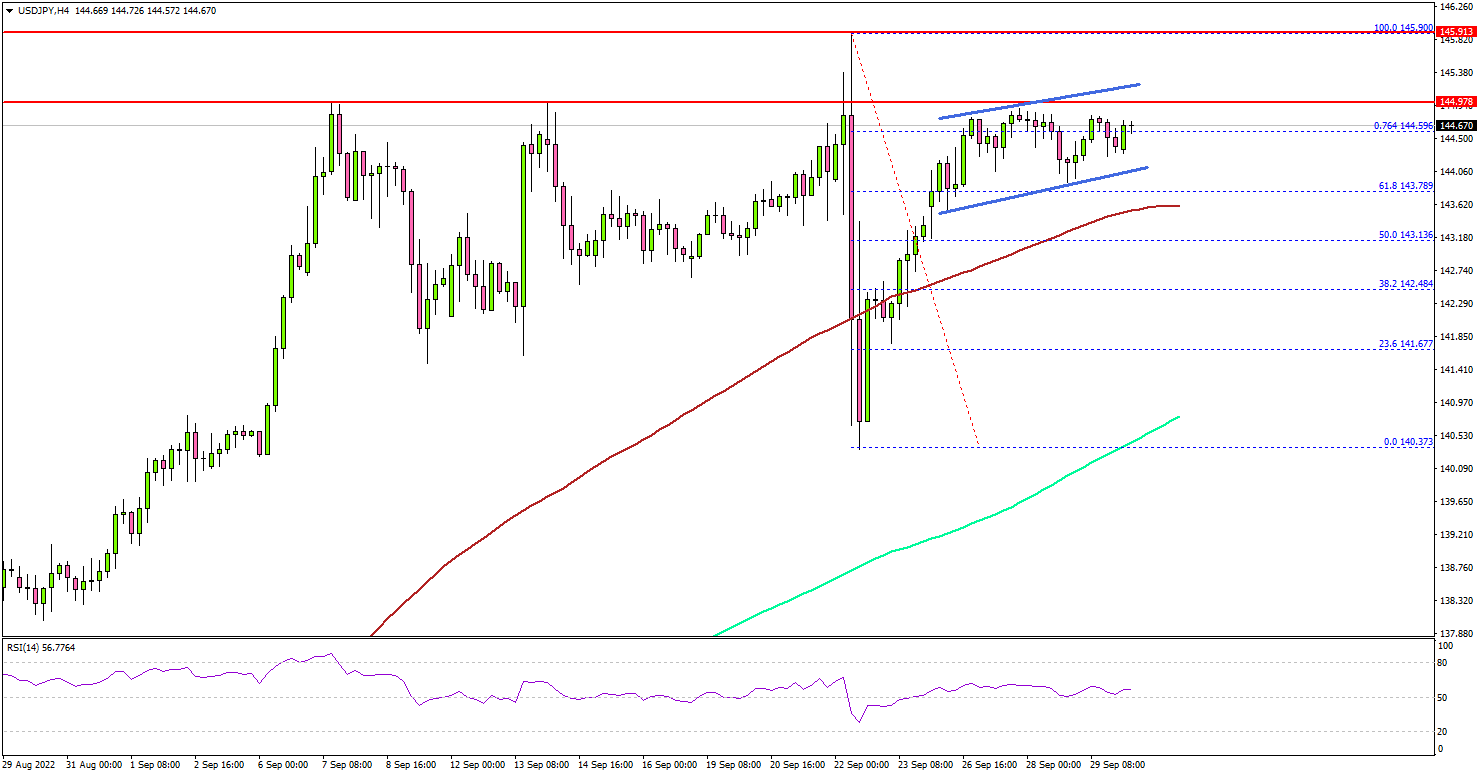
Looking at the 4-hours chart, the pair gained pace for a move above the 143.00 level and the 100 simple moving average (red, 4-hours). The pair climbed above the 50% Fib retracement level of the downward move from the 145.90 swing high to 140.37 low.
The pair settled above the 140.00 level and is trading well above the 200 simple moving average (green, 4-hours). The pair consolidated near the 76.4% Fib retracement level of the downward move from the 145.90 swing high to 140.37 low.
On the upside, an initial resistance sits near the 145.00 zone. The first major resistance is near the 145.40. The main resistance sits near the 145.90 level.
A clear move above the 145.90 level could send the pair towards 146.50. Any more gains might send the pair towards the 148.00 resistance level. On the downside, an initial support is near the 144.00 level.
The main support sits at the 143.60 level and the 100 simple moving average (red, 4-hours). A downside break below the 143.60 zone might send the pair towards the 142.50 level. The next major support is near the 141.20 level, below which the pair could even test the 140.00 support zone.
Looking at oil price, there is a key hurdle forming near $84.40 and $85.00. If there is no upside break, the price could decline towards $75.00.
Economic Releases
- UK GDP for Q2 2022 (QoQ) - Forecast -0.1%, versus -0.1% previous.
- Germany’s Unemployment Rate for Sep 2022 – Forecast 5.5%, versus 5.5% previous.
- Euro Zone Unemployment Rate for August 2022 - Forecast 6.6%, versus 6.6% previous.
- US Personal Income for August 2022 (MoM) - Forecast +0.3%, versus +0.2% previous.
Elliott Wave View: EURUSD Near Term Further Downside Likely
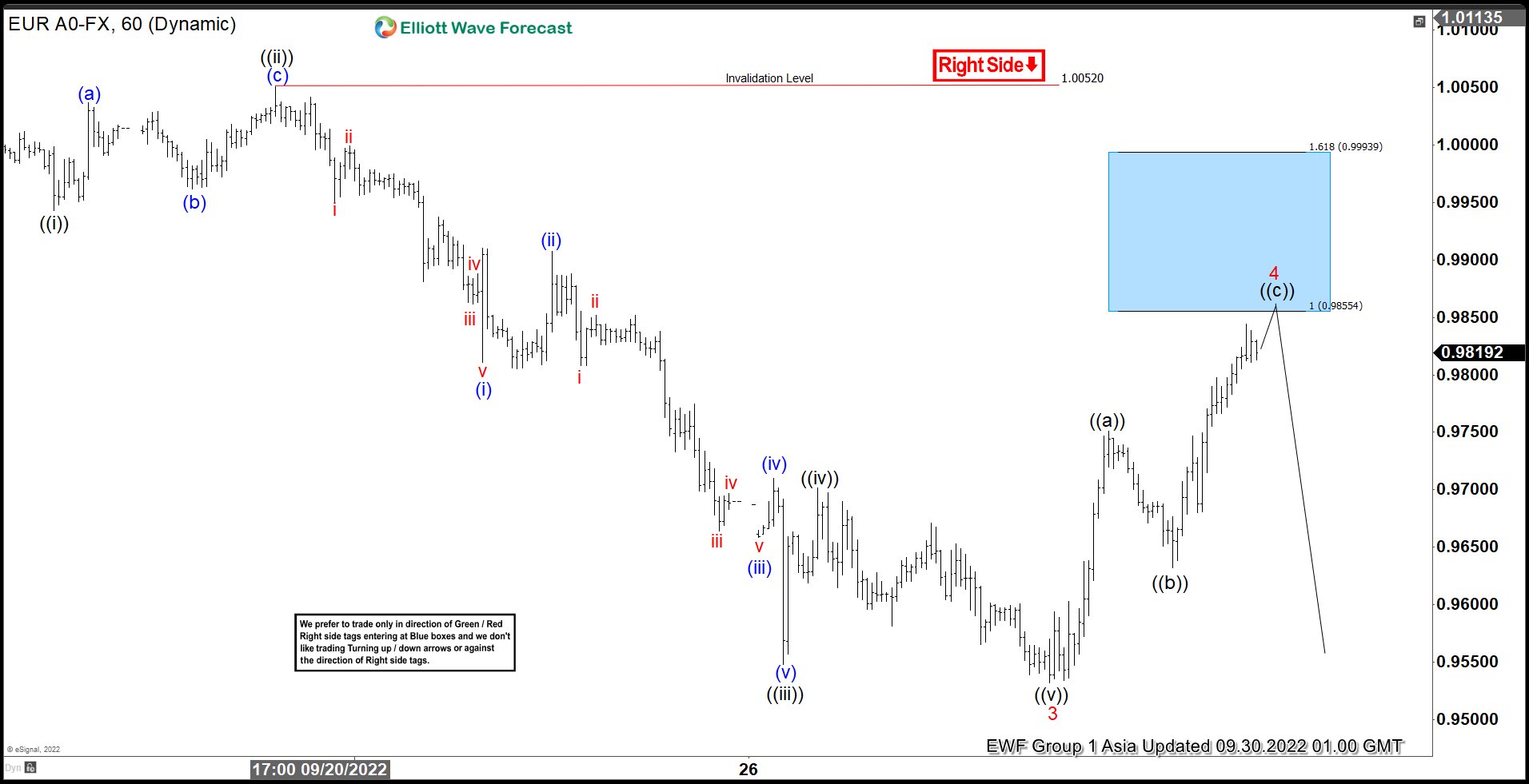
Short term Elliott Wave view on USDCAD suggests cycle from 8.11.2022 high is in progress as a 5 waves impulse structure. Down from 8.11.2022 high, wave 1 ended at 0.9864 and rally in wave 2 ended at 1.0198. Pair has resumed lower in wave 3 towards 0.9536. Down from wave 2, wave ((i)) ended at 0.9943 and rally in wave ((ii)) ended at 1.0052. Pair then resumes higher in wave ((iii)) towards 0.9548 and rally in wave ((iv)) ended at 0.9701. Final leg lower wave ((v)) ended at 0.9532 which completed wave 3.
Wave 4 rally is now in progress to correct cycle from 9.12.2022 high in 3, 7, or 11 swing before it resumes lower. Internal subdivision of wave 4 is unfolding as a zigzag structure where wave ((a)) ended at 0.975 and pullback in wave ((b)) ended at 0.9632. Expect pair to extend higher in wave ((c)) towards 0.9855 – 0.999 area. This is where wave ((c)) will reach 100% – 161.8% Fibonacci extension of wave ((a)) and pair should complete wave 4. From the blue box area, pair should then extend lower or pullback in 3 waves at least.
EURUSD 60 Minutes Elliott Wave Chart
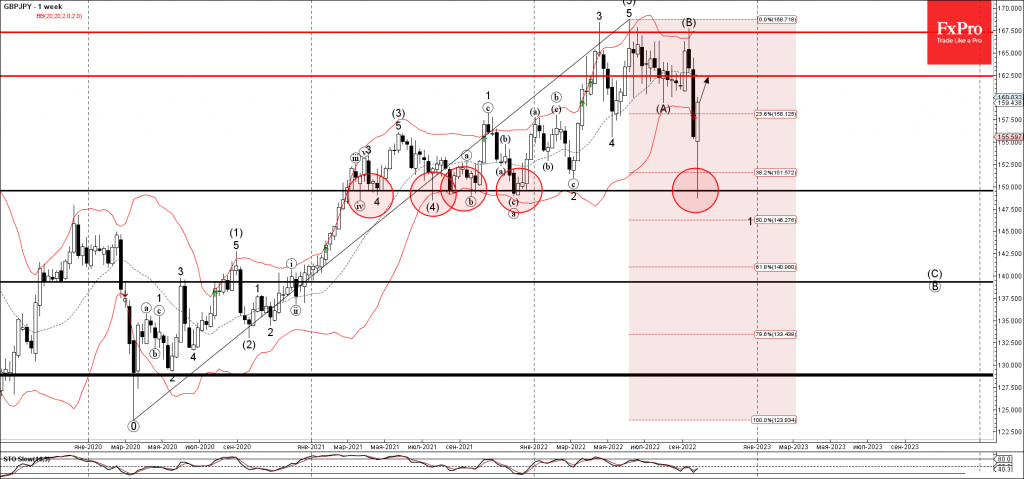
GBPJPY Wave Analysis
- GBPJPY rising in line with the weekly uptrend
- Likely to test resistance level 162.50
GBPJPY continues to rise after the price reversed up from the round support level 150.00 (which reversed the pair multiple times in 2021), standing close to the 38.2% Fibonacci correction of the upward trend from the start of 2020.
The upward reversal from the support level 150.00 continues the clear multi-year uptrend that can be seen on the weekly GBPJPY charts.
Given the latest reversal of the bearish sterling sentiment, GBPJPY currency pair can be expected to rise further toward the next resistance level 162.50.