

Sample Category Title
EUR/JPY Daily Outlook
Daily Pivots: (S1) 127.37; (P) 128.17; (R1) 128.59; More....
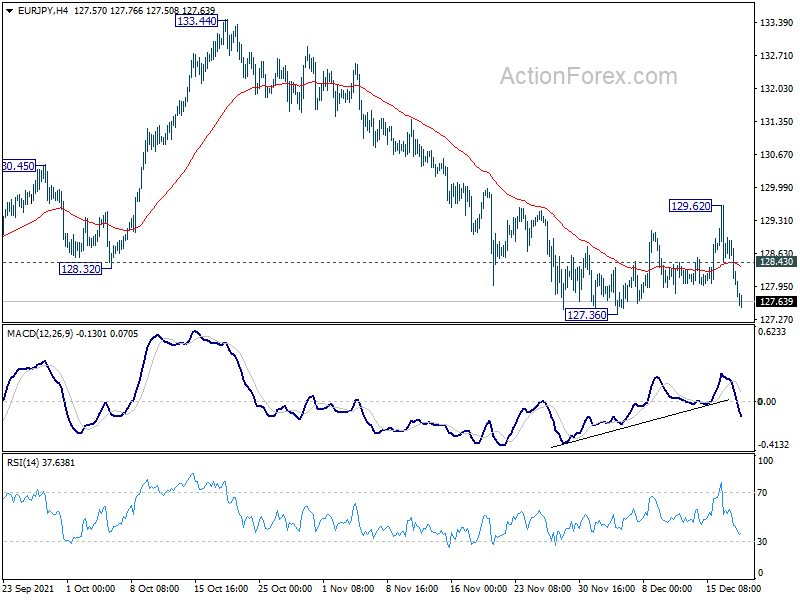
Intraday bias in EUR/JPY remains mildly on the downside for retesting 127.36 support. Firm break there will resume fall from 133.44 and larger pattern from 134.11. Next target is 126.58 medium term fibonacci level. On the upside, above 128.43 minor resistance will delay the bearish case and turn intraday bias neutral first.
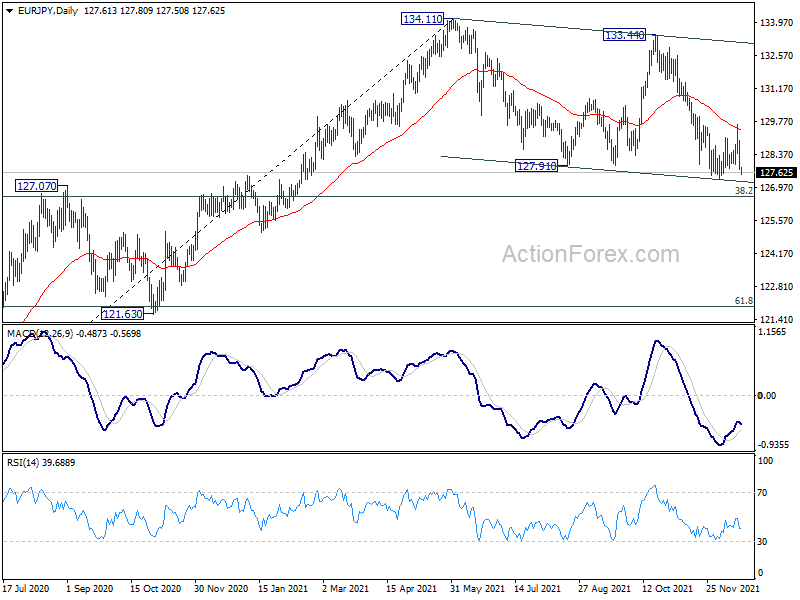
In the bigger picture, as long as 38.2% retracement of 114.42 (2020 low) to 134.11 at 126.58 holds, up trend from 114.42 is still in favor to continue. Break of 134.11 will target long term resistance at 137.49 (2018 high). However, sustained break of 126.58 will raise the chance of medium term bearish reversal. In this case, deeper decline would be seen to 61.8% retracement at 121.94, and possibly below.
Asia Starts With Risk-off Sentiment, Yen Crosses Take a Dive
A holiday shortened week starts will risk-off sentiment. Selloff in notable in Japan with Nikkei back below 28k handle, while HK HSI also hits the lowest level this year. In the currency markets, Yen is currently the strongest one for today, followed by Euro and Swiss Franc. On the other hand, Aussie is the weakest, followed by Kiwi and Sterling. Overall, major currencies movements will depend on how the risk markets perform this week.
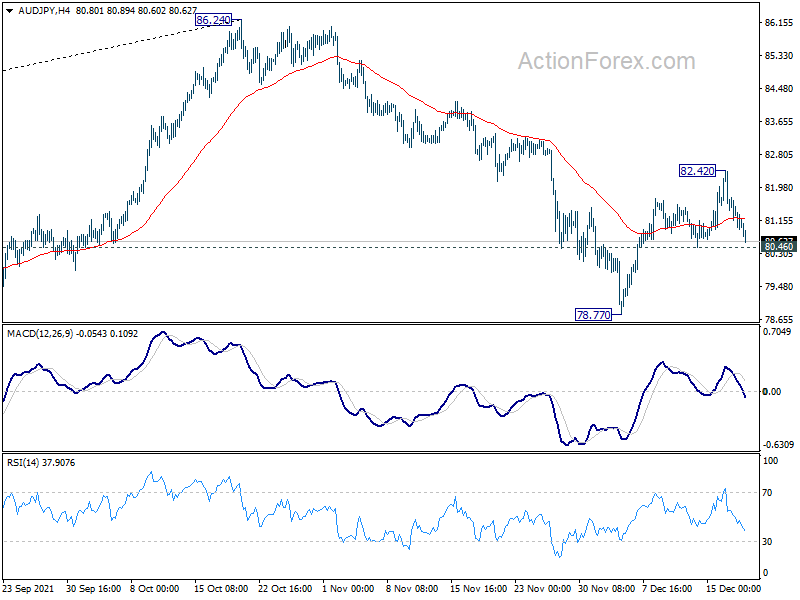
Technically, we'll keep an eye on Yen crosses today. EUR/JPY and GBP/JPY are probably heading back to 127.36 and 148.94 support respectively. Break of these levels will resume larger decline. While AUD/JPY's rebound from 78.77 was relatively strong, it's also now eyeing 80.46 minor support. Break will suggest that such recovery has completed and bring retest of 78.77 low. Firm break there will also resume larger fall from 86.24.
In Asia, at the time of writing, Nikkei is down -2.23%. Hong Kong HSI is down -1.20%. China Shanghai SSE is down -0.68%. Singapore Strait Times is down -1.05%. Japan 10-year JGB yield is down -0.0068.
BoJ Kuroda: Too early to consider normalizing policy
BoJ Governor Haruhiko Kuroda said today, "there's quite a distance from the 2% inflation target. It is still too early now to consider normalizing policy." "Unlike the Western countries, inflation is extremely low and inflation expectations remain very low," he added. "We're in a phase to patiently continue large-scale monetary easing."
BoJ's balance sheet has grown the equivalent of 135% of GDO . But Kuroda said "I don't think expansion of the BoJ's assets will affect our ability to keep monetary policy and financial system stable." Though, he added it's important for the government market confidence on the country's fiscal health in the medium- to long-term.
New Zealand goods exports rose 13% yoy in Nov, imports rose 37% yoy
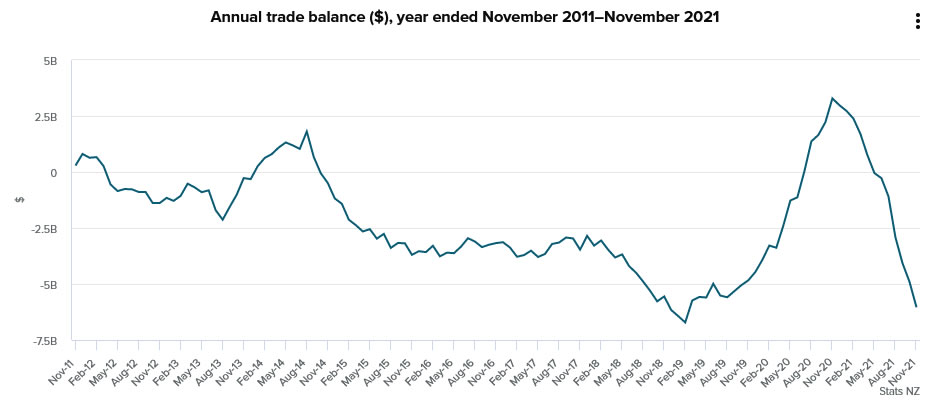
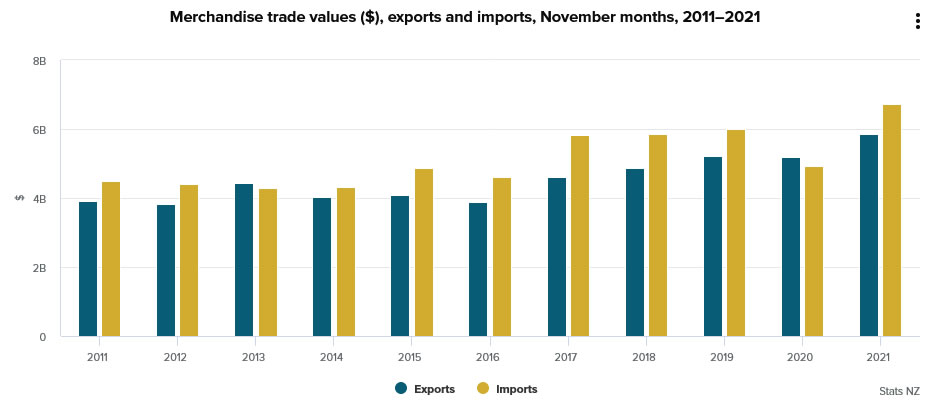
New Zealand goods exports rose 13% yoy to NZD 5.9B in November. Goods imports rose 37% yoy to NZD 6.7B. Monthly trade balance was a deficit of NZD -864m, versus expectation of NZD -1867m.
China led rises in monthly exports across all top destinations, up 13% yoy. Exports to Australia were up 21% yoy, to USA up 5.5% yoy, to EU up 8.6% yoy, to Japan up 38% yoy.
Imports from all tot partners were also up, with China up 45% yoy, EU up 38% yoy, Australia up 28%, USA up 43%, Japan up 7.9% yoy.
US consumer confidence, durable goods orders, PCE inflation to watch in a light week
The economic calendar is light in a holiday shortened week. Nevertheless, RBA and BoJ will release meeting meetings. On the data front, main focuses will be on US consumer confidence, durable goods orders and PCE inflation. Canada GDP and Japan CPI will also catch some attention.
Here are some highlights for the week:
- Monday: New Zealand trade balance; Eurozone current account.
- Tuesday: RBA minutes; Germany Gfk consumer confidence; Swiss trade balance; UK public sector net borrowing; US current account; Canada retail sales.
- Wednesday: BoJ minutes; UK current account, Q3 GDP final; US Q3 GDP final, consumer confidence, existing home sales.
- Thursday: Germany import price; Canada GDP; US durable goods orders, personal income and spending, jobless claims, new home sales.
- Friday: Japan CPI, corporate service price index.
EUR/JPY Daily Outlook
Daily Pivots: (S1) 127.37; (P) 128.17; (R1) 128.59; More....
Intraday bias in EUR/JPY remains mildly on the downside for retesting 127.36 support. Firm break there will resume fall from 133.44 and larger pattern from 134.11. Next target is 126.58 medium term fibonacci level. On the upside, above 128.43 minor resistance will delay the bearish case and turn intraday bias neutral first.
In the bigger picture, as long as 38.2% retracement of 114.42 (2020 low) to 134.11 at 126.58 holds, up trend from 114.42 is still in favor to continue. Break of 134.11 will target long term resistance at 137.49 (2018 high). However, sustained break of 126.58 will raise the chance of medium term bearish reversal. In this case, deeper decline would be seen to 61.8% retracement at 121.94, and possibly below.
Economic Indicators Update
| GMT | Ccy | Events | Actual | Forecast | Previous | Revised |
|---|---|---|---|---|---|---|
| 21:45 | NZD | Trade Balance (NZD) Nov | -864M | -1867M | -1286M | -1302M |
| 9:00 | EUR | Eurozone Current Account (EUR) | 20.3B | 18.7B | ||
| 11:00 | GBP | CBI Industrial Order Expectations | 20 | 26 |
New Zealand goods exports rose 13% yoy in Nov, imports rose 37% yoy
New Zealand goods exports rose 13% yoy to NZD 5.9B in November. Goods imports rose 37% yoy to NZD 6.7B. Monthly trade balance was a deficit of NZD -864m, versus expectation of NZD -1867m.
China led rises in monthly exports across all top destinations, up 13% yoy. Exports to Australia were up 21% yoy, to USA up 5.5% yoy, to EU up 8.6% yoy, to Japan up 38% yoy.
Imports from all tot partners were also up, with China up 45% yoy, EU up 38% yoy, Australia up 28%, USA up 43%, Japan up 7.9% yoy.
BoJ Kuroda: Too early to consider normalizing policy
BoJ Governor Haruhiko Kuroda said today, "there's quite a distance from the 2% inflation target. It is still too early now to consider normalizing policy." "Unlike the Western countries, inflation is extremely low and inflation expectations remain very low," he added. "We're in a phase to patiently continue large-scale monetary easing."
BoJ's balance sheet has grown the equivalent of 135% of GDO . But Kuroda said "I don't think expansion of the BoJ's assets will affect our ability to keep monetary policy and financial system stable." Though, he added it's important for the government market confidence on the country's fiscal health in the medium- to long-term.
Market Morning Briefing: USDCNY Rose To 6.3833 Before Falling Off From There
STOCKS
Dow has room to fall down to 35000 before we see a rise again while Dax can bounce from 15500 towards 15900. Nikkei has come down sharply today and is bearish to see a fall towards 27000. Shanghai can test 3550-3500 in the coming sessions. Nifty can dip further to test 16800 before we see a bounce from there. If sensex manages to bounce from crucial support at 57000 then the view is bullish towards 58000,else a fall to 56000 can be seen.
Dow (35365.44, -532.20, -1.48%) fell very sharply on Friday. The index has room to fall towards 35000 before we see a rise above 36000 again.
DAX (15531.69, -104.71, -0.67%) too came down on Friday but is trading above the crucial support at 15500. While above 15500, a rise towards 15900 can be seen again.
Nikkei (28055.28, -490.40, -1.72%) has fallen sharply today. The view is bearish to see a fall towards 27500 while Shanghai (3605.21, -27.16, -0.75%) has come down below the support at 3625 and looks bearish to see a dip towards 3550-3500 in the coming sessions.
Nifty (16985.20, -263.20, -1.53%) fell sharply on Friday. The index has room to come down further towards 16800 before we see a bounce again. A fall below 16800 if seen can be highly bearish for Nifty (looks less likely).
Sensex (57011.74, -889.40, -1.54%) came down sharply on Friday and has closed just above the crucial support at 57000. If the index manages to bounce back from 57000 then a rise towards 58000 is possible. Else, a dip towards 56000 can be seen.
COMMODITIES
Most commodities have fallen and trades lower. Gold and Silver have dipped and while below resistances near 1820 and 23, the prices can move down a bit before again rising higher. Crude prices have been falling and can dip some more in the next couple of sessions before a rise back to higher levels are seen. Copper may hold within 4.20-4.35 in the near term.
Brent (71.83) is holding below 75 and can dip towards 72-70 before again rising from there. WTI (69.00) on the other hand can be raged within 73-69 region. Any break below 69 can drag it lower towards 67 again in the medium term. Watch price action near 69 in the near term.
Gold (1802.10) tested 1814 but came down sharply from there instead of sustaining to test resistance at 1820 or attempting to break higher. While below 1820, we may expect a fall back towards 1780 possible in the near term. Else the price will have to attempt a rise above 1820 to move higher towards 1850-1880 in the medium term. For now, we may continue to look at the 1820-1760 region to hold.
Silver (22.42) rose to 22.69 but came off from there along with a fall in Gold. While below interim resistance at 23, we may look for a dip to 22-21 before rising higher towards 23 or higher again in the medium term.
Copper (4.2795) is holding below resistance at 4.35 and while below that, it can decline to test 4.25-4.20 again in the near term. We may continue to look at the range of 4.25/20-4.35 for the near term.
FOREX
Most pair mentioned below are in a sideways range that could possibly hold for a few more sessions before we see a break on either side that could trigger a sharp movement. Dollar Index and Euro can trade within 95.50-97.00 and 1.12-1.1350 region while EURJPY can trade within 129.50-127.50. Aussie and Pound may remain within 0.7250-0.7090 and 1.3160-1.34 respectively. USDJPY, USDCNY and USDINR look bearish for the near term.
Dollar Index (96.03) holds within 95.50-97 region. We would wait to see a break on either side of the range in the coming sessions.
Euro (1.1249) is likely to hold within 1.12-1.1350 region. Any break on either side would trigger a sharp movement that could last for the medium term.
EURJPY (127.72) has fallen sharply after testing 129.50 last week. The 129.50-127.50 range may hold for now. Any break on either side would trigger a sharp movement in the near term. Would like to wait and watch for now.
Aussie (0.7119) may range in the 0.7250-0.7090 region for the near term.
Pound (1.3230) tested a high of 1.3374 before falling sharply from there. A fall to 1.3160 looks possible before again rising back towards 1.34 in the medium term.
Dollar-Yen (113.56) has immediate support at 113.10 which if holds can produce a bounce towards 114.50 or higher again. Only a break below 113.10 if seen can reinforce a fall towards 112.50.
USDCNY (6.3781) rose to 6.3833 before falling off from there, A rise to 6.3950 is possible within the current move before a fall is seen again towards 6.36.
{USDINR (76.09) came off from 76.25 on Friday and needs to break below 76 to head towards 75.80/60 on the downside. Such a fall could a be a possibility today as the NDF currently quotes 75.98 indicating a possible break below 76 on the OTC markets. However, we would watch if the rate again attempts to move back to 76.25+ levels in the very near term.
INTEREST RATES
The US Treasury yields have declined further and can move down towards the lower end of their respective ranges in the near-term. We expect the sideways range to hold and the yields to rise back within it going forwards. The German yields continue to move down thereby keeping our broader bearish view intact. The 10Yr and 5Yr have risen sharply on Friday and will have room to move up further in the near-term. The 10Yr has a crucial trend resistance coming up at 6.45% which will need a close watch.
The US 2Yr (0.62%) Treasury yield remains stable while the 5Yr (1.14%), 10Yr (1.37%) and the 30Yr (1.79%) have declined sharply. The 10Yr and 30Yr can dip further to 1.3% and 1.7% while they sustain below 1.4% and 1.8% respectively. As mentioned on Friday, broadly, we expect the yields to trade in the range of 1.3%-1.65% (10Yr) and 1.7%-2% (30Yr).
The German 2Yr (-0.73%), 5Yr (-0.62%), 10Yr (-0.39%) and 30Yr (-0.04%) have dipped across tenors. The bearish view is intact. We expect the yields to test -0.45% / -0.5% (10Yr) and -0.1% / -0.2% (30Yr) on the downside in the coming weeks. Resistances are at -0.25% (10Yr) and 0.05% (30Yr),
The Indian 10Yr (6.4102%) and 5Yr (5.7243%) GoI have risen sharply. The 10Yr has broken above 6.4% and has room to test 6.43%-6.45%. The 5Yr can test 5.75% and even 5.78% in the near-term. The level of 6.45% on the 10Yr is a very crucial resistance which will need a close watch. A pull-back from there can drag it back to 6.35% and even lower.
EUR/USD At Clear Risk Of Further Declines
Key Highlights
- EUR/USD failed to surpass the 1.1350 resistance zone.
- It traded below a key bullish trend line at 1.1265 on the 4-hours chart.
- GBP/USD topped near 1.3350 and started a fresh decline.
- Crude oil price could continue to move down if it breaks $70.00.
EUR/USD Technical Analysis
The Euro tried to gain strength above 1.1350 against the US Dollar. EUR/USD formed a high near 1.1360 and started a fresh decline.
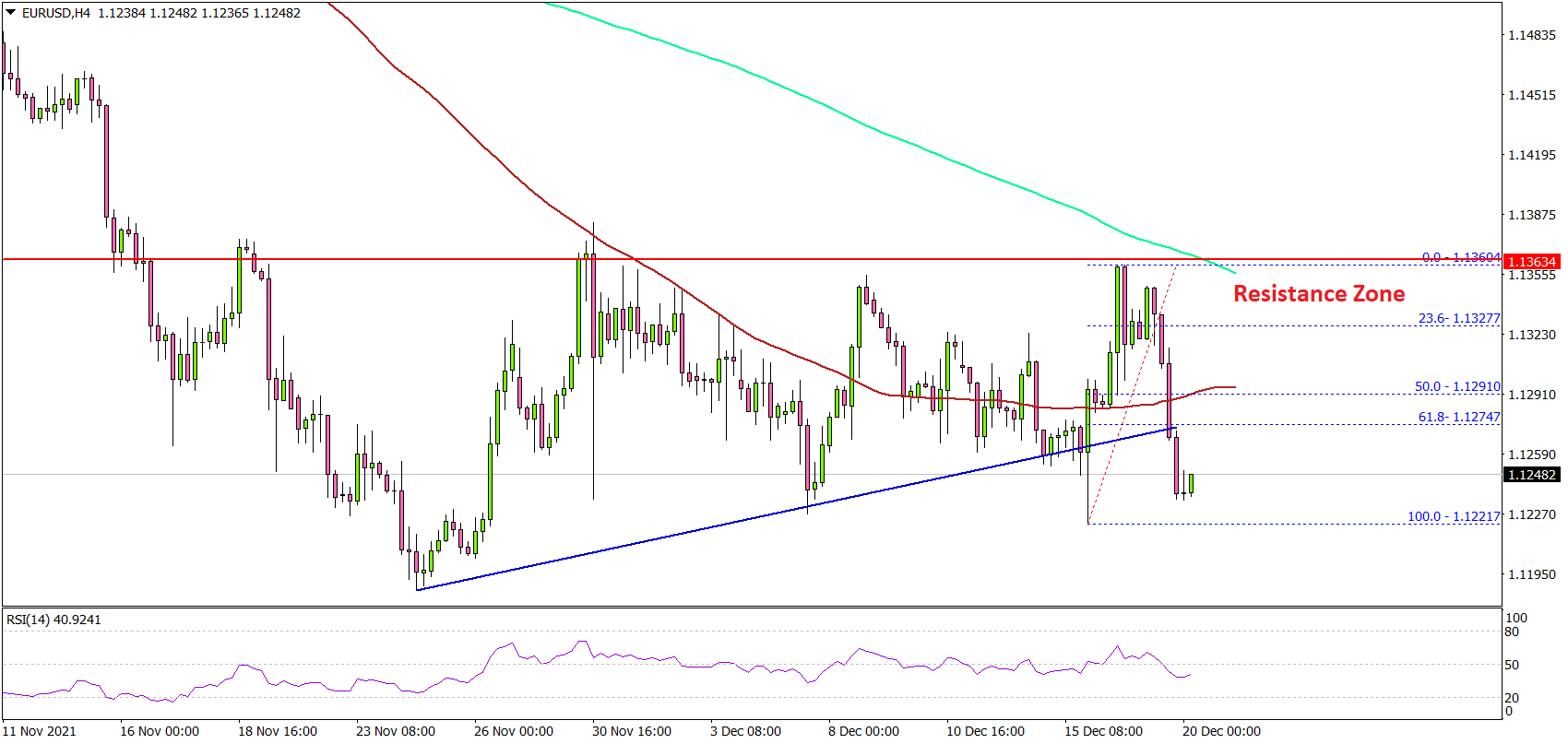
Looking at the 4-hours chart, the pair traded below the 1.1320 and 1.1300 support levels. There was a close below 1.1300, the 100 simple moving average (red, 4-hours), and the 200 simple moving average (green, 4-hours).
Besides, there was a break below a key bullish trend line at 1.1265 on the same chart. An immediate support is near the 1.1200 level.
A close below 1.1200 could open the doors for a sharp decline. The next major support is near the 1.1180 level, below which the pair might drop to 1.1120.
On the upside, the first key resistance is near the 1.1320 level. The next key resistance is near the 1.1350 level. A successful daily close above 1.1350 could open the doors for a steady increase. The next stop for the bulls might be 1.1420.
Looking at GBP/USD, the pair failed to clear the 1.3350 resistance and started a fresh decline below the 1.3300 level.
Economic Releases
- UK Rightmove House Price Index for Dec 2021 (MoM) - Forecast -0.2%, versus -0.6% previous.
Eco Data 12/20/21
[php_everywhere instance="1"]
CFTC Commitments of Traders – EUR and GBP Failed to Gain Strength after Policy Announcements
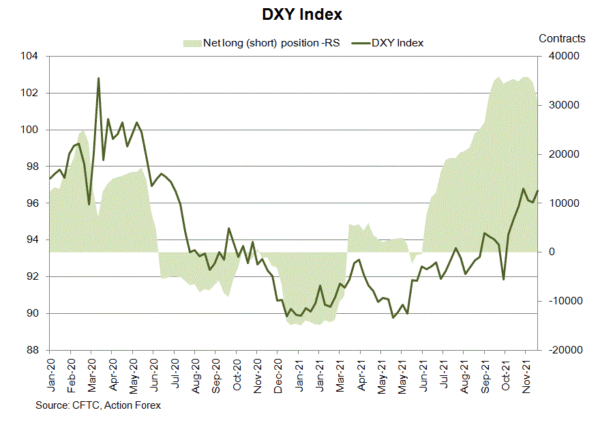
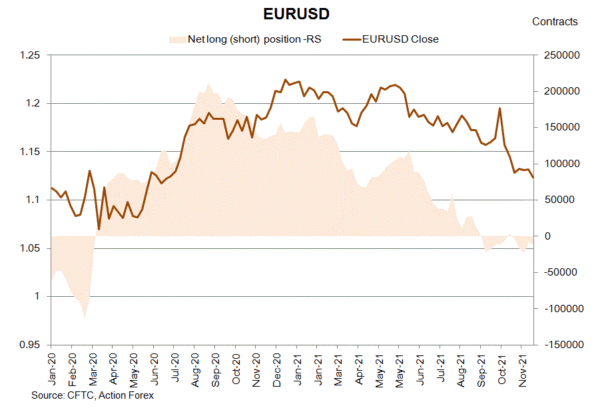
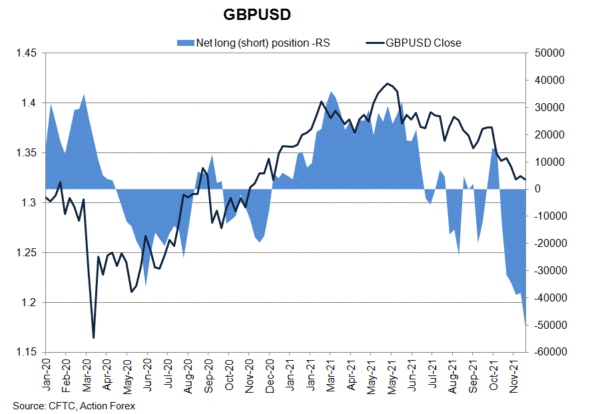
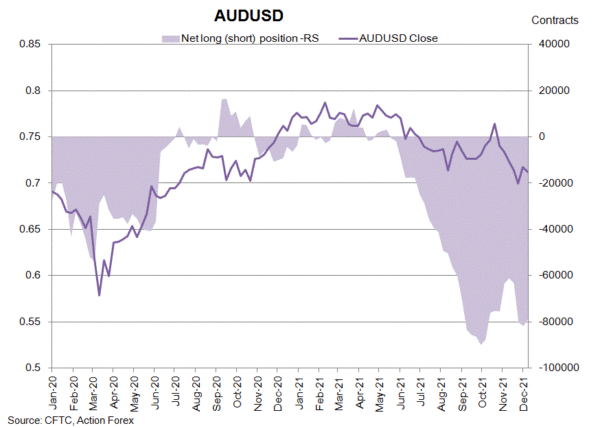
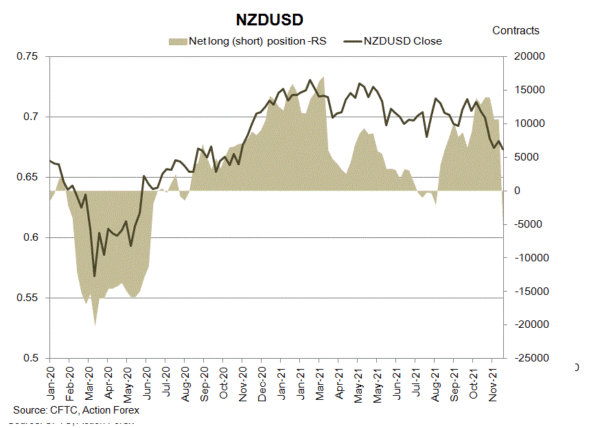
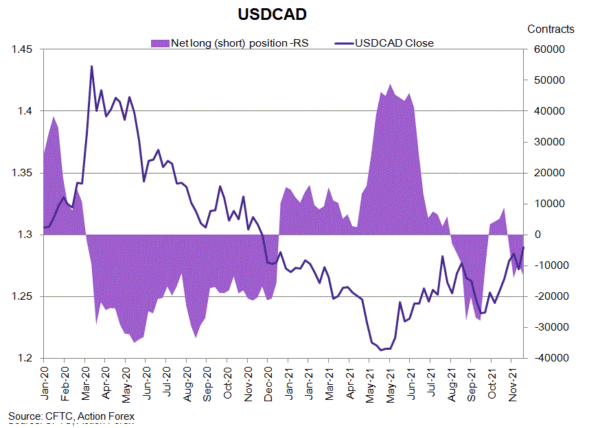
As suggested in the CFTC Commitments of Traders report in the week ended December 14, NET LENGTH of USD index futures fell -3 624 contracts to 31 241. Speculative long positions slipped -795 contracts but shorts gained +2 829 contracts. NET SHORT of EUR futures rose +3 580 contracts to 11 879 while that of GBP futures soared +12 471 contracts to 50 748.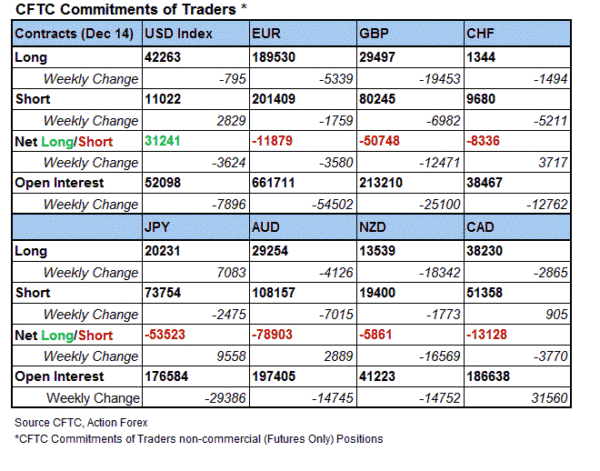
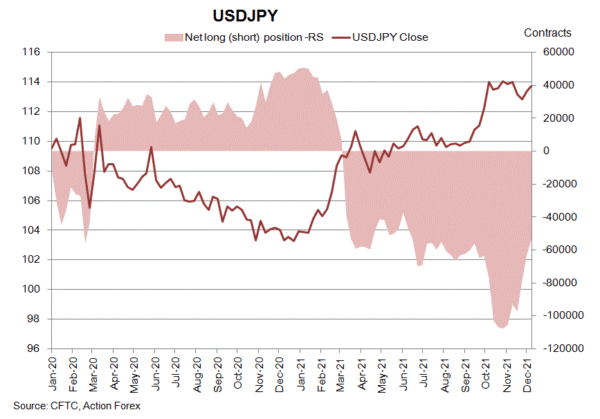
On safe-haven currencies, NET SHORT of CHF futures declined -2 717 contracts to 8 336 while that of JPY futures sank -9 558 contracts to 53 523. Concerning commodity currencies, NET SHORT of AUD futures dropped -2 889 contracts to 78 903. NZD futures drifted to NET SHORT of 5 861 contracts during the week. NET SHORT of CAD futures increased +3 770 contracts to 13 128.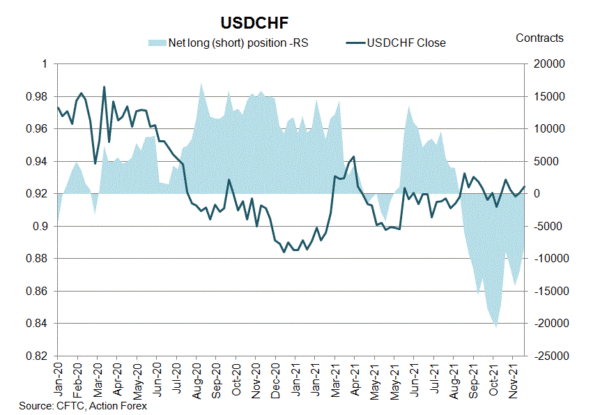
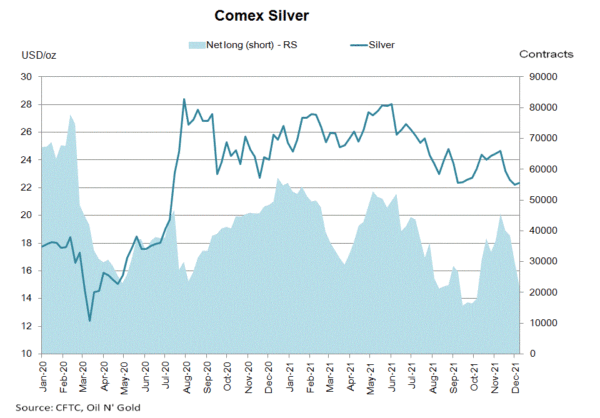
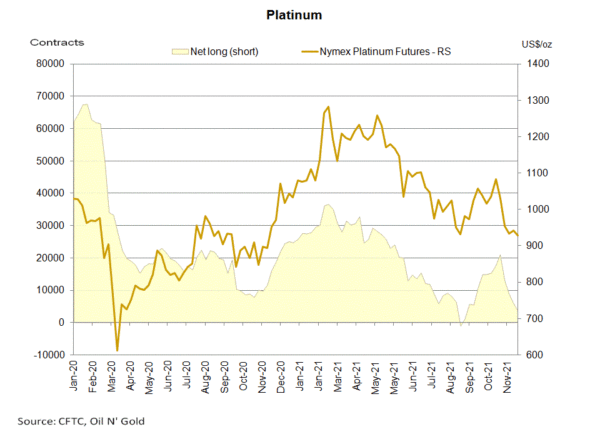
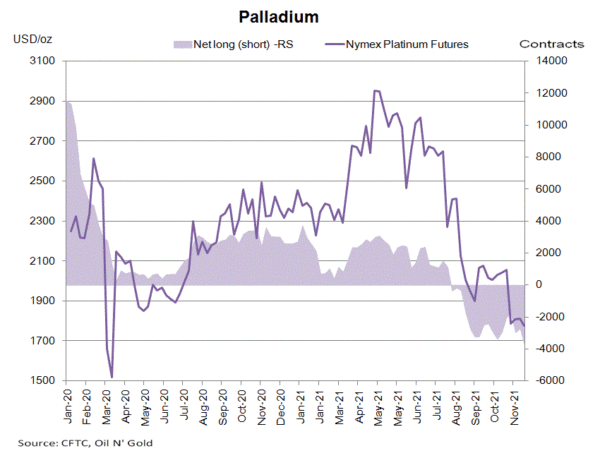
CFTC Commitments of Traders – Rally in Gold Price should Lead to Rebound in Net Long Next Week
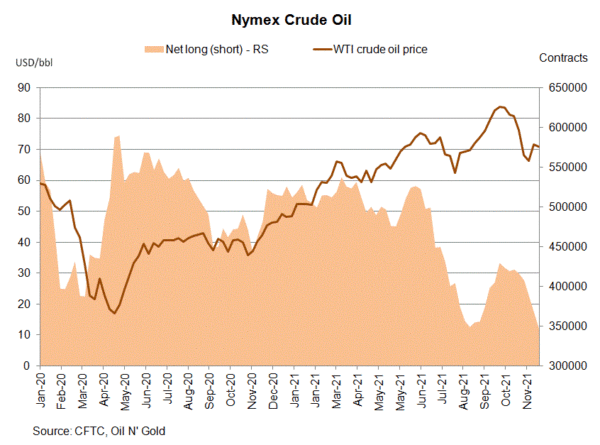
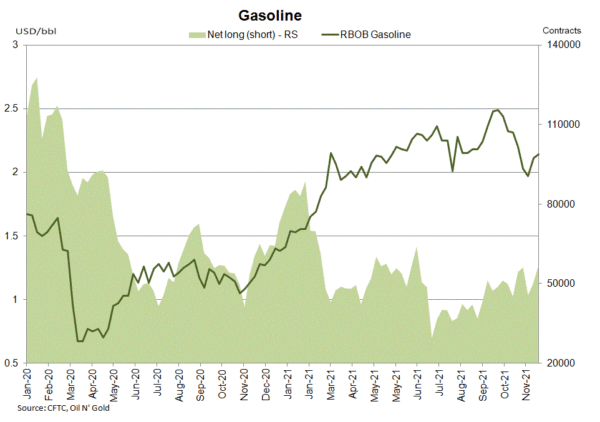
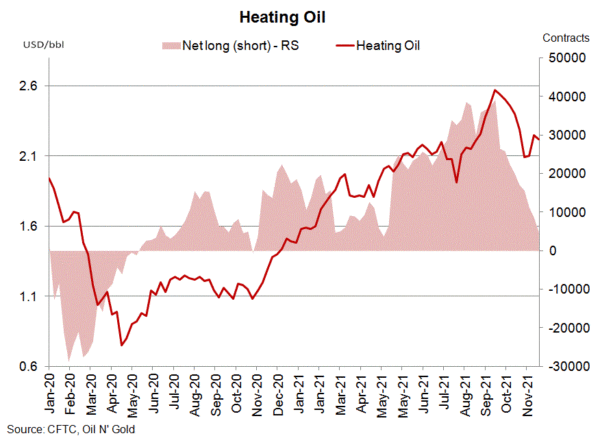
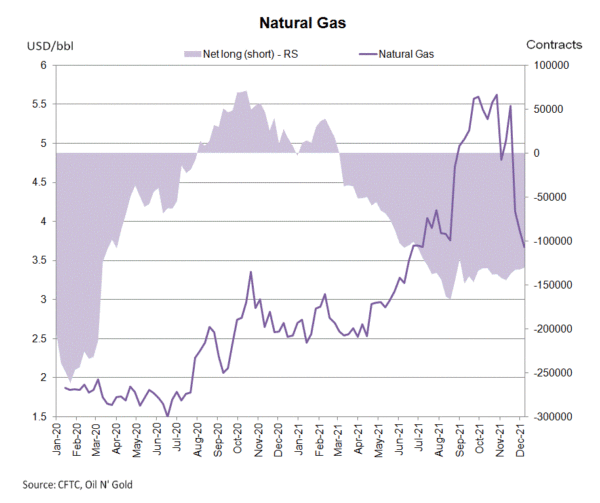
According to the CFTC Commitments of Traders report for the week ended December 14, NET LENGTH of crude oil futures slumped -20 095 contracts to 347 137. Speculative longs declined -9 352 contracts while shorts gained +10 743 contracts. For refined oil products, NET LENGTH for heating oil dropped -3 874 contracts to 4 723, while that for gasoline gained +6 551 contracts to 56 434. NET SHORT of natural gas futures dropped -2 217 contracts to 130 226 during the week.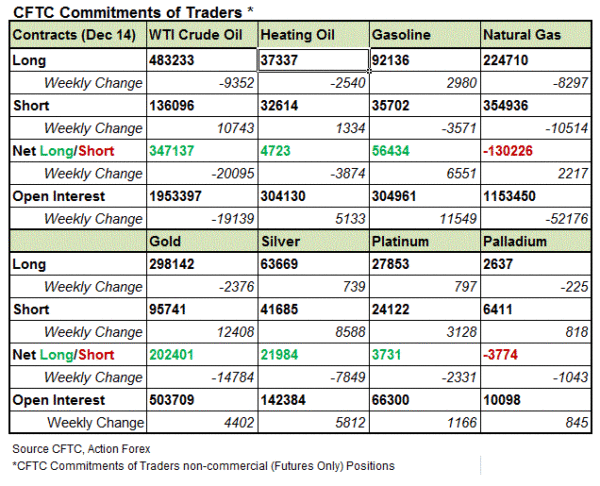
 Gold futures’ NET LENGTH slumped -14 784 contracts to 202 401. Silver futures’ NET LENGTH fell -7 849 contracts to 21 984. For PGMs, NET LENGTH of Nymex platinum futures declined -2 331 contracts to 3 731, while NET SHORT for palladium futures gained +1 043 contracts to 3 774.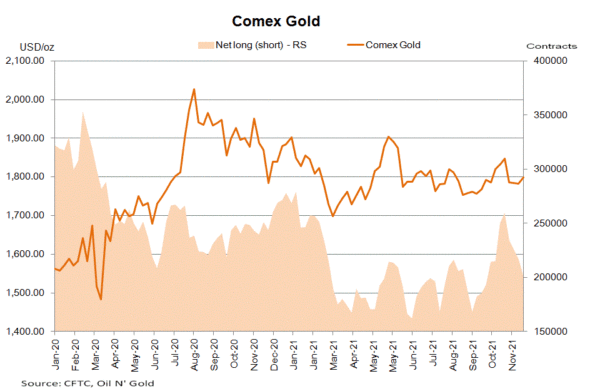
Forex and Cryptocurrency Forecast
EUR/USD: Old News from the Fed And the ECB
The past week was the week of the Central Banks. The US Federal Reserve met on Wednesday, December 15, for the last time this year, the ECB and the Bank of England on December 16, and the Bank of Japan at the end of the working week, on Friday, December 17.
There is a trading model, FIFO: short for "first in, first out". So, we will follow it, and we will begin to consider the results of the meetings in order in which they took place.
The first, as already mentioned, was the meeting of the FOMC (Federal Open Market Committee) of the US Federal Reserve. Some investors expected any radical decisions from it, and the rhetoric of representatives of the Federal Reserve on Wednesday was more hawkish than expected. This pushed the EUR/USD pair towards the lower limit of the three-week side channel. However, having reached the level of 1.1220, it turned around and the dollar began to lose ground.
The market realized that, in fact, almost all parameters of the monetary policy remained unchanged. Only the quantitative easing (QE) program was revised: the rate of reduction in asset purchases increased from $15 billion to $30 billion per month. The program can be completely closed in March-April 2022.
The outlook for the labor market was slightly improved but was accompanied by concerns about the possible emergence of "new virus variants". Core inflation in 2022 may also be slightly higher: not 2.3%, as previously expected, but 2.7%. Inflation for 2023 is projected to grow by only 0.1%, and it will remain unchanged in 2024.
According to the Financial Times, despite aggressive statements, the Fed still considers inflation a temporary phenomenon, and expects to return it to the target range within two years, gradually raising federal funds rates.
The key interest rate was left unchanged at 0.25% at the last meeting. As for the regulator's plans for next year, if it was about two or three rate hikes earlier, the Fed's dot chart showed that there should be three of them now. But this is just a declaration of intentions that can be realized if the macroeconomic situation develops as expected by the regulator.
In general, all statements of the American central bank were devoid of any specifics this time. Markets learned what they already knew before. Therefore, their reaction was appropriate: the EUR/USD pair turned around and went north. Having passed 140 points on Thursday, December 16, it was already at the upper border of the side channel, at the level of 1.1360.
(Of course, this was not without the help of the pound, which, thanks to the decision of the Bank of England, put a lot of pressure on the dollar. We will talk about this in more detail below).
The results of the meeting of the European Central Bank did not surprise investors either. Like the Fed, the European regulator also raised its inflation forecast for next year. And it also considers it a temporary phenomenon. It declares this openly though and does not consider it necessary to fight it now. It was announced Once again that the refinancing rate will remain at the current level until inflation reaches the target level of 2.0%, at which it will remain for a long time. As a result, the "main" result of the meeting was the statement of the head of the bank, Christine Lagarde, that "it is very unlikely that we will raise rates in 2022". And this was already known to everyone.
The dovish position of the ECB did not allow the EUR/USD pair to rise above the borders of the side channel, and anxiety about the Omicron strain pushed it sharply down, and it ended week trading session at the level of 1.1238.
As for the coming week, it is pre-Christmas. And seven days after Christmas, it's New Year's Eve. In the absence of large players, the market these days is quite thin, liquidity is low, which can be fraught with all sorts of surprises. This is increased volatility, gaps with serious gaps in quotations, and what traders call the "Santa Claus Rally". Although, of course, the opposite option is also possible: with "lazy" movement of pairs in a narrow range.
As for the experts, 50% expect further strengthening of the US currency and the fall of the EUR/USD pair, 30% are betting on the growth of the euro. The remaining 20% have taken a neutral position. Among the oscillators on D1, 80% point to the south (although 15% of them are in the oversold zone), 10% point north, and 10% point east. 100% of the trend indicators side with the bears.
Resistance levels are in the zones and at the levels 1.1265, 1.1300, 1.1355, 1.1380, 1.1435-1.1465 and 1525. The nearest support level is 1.1225, then 1.1185 and 1.1075-1.1100
The economic agenda of the year is practically exhausted, and no extra-important news is expected in the coming week. As for the reasons for breaking the trend or increased volatility, we can note the publication of annual data on US GDP on Wednesday December 22, and data on orders on capital goods and durable goods published by the U.S. Census Bureau the next day, December 23.
GBP/USD: The Bank of England's First Step
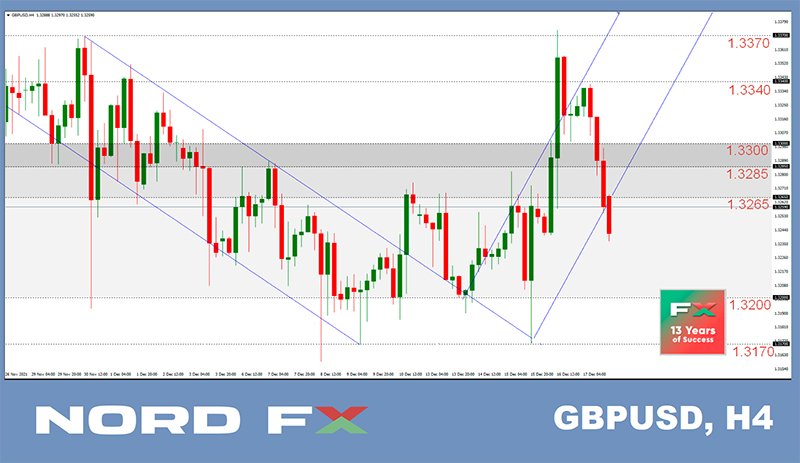
We noted in the previous review that the No.1 task for the GBP/USD bulls is to overcome the key resistance in the 1.3285-1.3300 zone. And we predicted that if the Bank of England did raise the interest rate on December 16, it would not be a problem. This is exactly what happened.
While the Fed and the ECB are only swinging, the Bank of England has moved to attack rising prices. After inflation in the UK rose to 5.1%, reaching a 10-year peak, the regulator raised the rate for the first time in three years from 0.1% to 0.25%. The decision was made despite the worsening epidemiological situation due to the new Omicron coronavirus strain. However, according to the head of the Bank of England Andrew Bailey, it is more important to curb the price pressure on the economy and society.
Of course, the rate hike by 15 basis points cannot be called significant, but, most importantly, the first step has already been taken, and the market expects the second rate hike in February.
It is difficult to say why many financial publications write that the current decision of the Bank of England came as a complete surprise. If you look at our previous forecast, 40% of experts predicted a rate hike and, as a result, the subsequent strengthening of the pound.
But the British currency failed to consolidate the victory. Having risen on Thursday December 16 to the high of 1.3373, the GBP/USD pair turned sharply and went down. Investors began to sell off the pound due to growing concerns about Omicron. Risk aversion contributed to the strengthening of the safer dollar and, accordingly, dealt a blow to the stock indices and quotes of the euro and the British pound, which ended the five-day period at 1.3235.
The experts' forecast for the coming week looks rather pre-holiday, that is, uncertain. 35% of them side with the bulls, the same number side with the bears, and the remaining 30% prefer not to take sides. Among the oscillators on D1, the situation is similar: 30% of them indicate buying, 45% are selling, and the remaining 25% advise to take a break and do nothing for now. The trend indicators have a fundamentally different mood: 100% are colored red.
The supports are located at 1.3210-1.3220, then 1.3170-1.3190, 1.3135, 1.3075. In case of a breakout of the latter, the pair may fall down to the horizon of 1.2960. Zones and resistance levels - 1.3285-1.3300, 1.3340, 1.3370, 1.3410, 1.3475, 1.3515, 1.3570, 1.3610, 1.3735, 1.3835.
There will also be little macro-statistics important for the pound next week. Of particular interest are the UK GDP data for the Q3, which will be released on Wednesday, December 22. But the markets will focus on the situation with the spread of the new COVID-19 wave.
USD/JPY: The Sideways Trend Continues
The one that is not afraid of risk aversion is the yen. On the contrary, it is only happy with this. Giving the previous forecast, the overwhelming majority of experts (80%) expected that with the help of the US Federal Reserve, the USD/JPY pair would go up and, perhaps, break the upper boundary of the 113.40-114.40 channel. This is exactly what happened: the dollar began to advance, and the pair was noted at the height of 114.25 on December 15. Then, due to the panic of investors, it managed to win back losses and found a local bottom, dropping to 113.13, and the final chord sounded in the center of the weekly trading range: at the level of 113.70.
It is difficult to predict what will happen with Omicron and how the situation will affect the panic in the markets. So far, the US currency is leading with a slight margin in the struggle between the yen and the dollar: 55% of analysts have voted for the growth of the USD/JPY pair, 45% for its fall.
The readings of technical indicators just confirm the sideways movement of the pair along the horizon 113.50 for almost 10 last weeks. Among the oscillators, 30% look south on D1, 35% remain neutral, and the remaining 35% look north. Among trend indicators, green has a slight advantage, 60% to 40%.
Support levels are 113.20, 112.70, 112.00, 111.60 and 111.20. Resistance levels are 114.00, 114.25, 115.00 and 115.50.
And now the promised information about the meeting of the Bank of Japan, which, it seems, is not at all interested in strengthening its currency. And although the regulator reduced the volume of emergency financing related to the pandemic on Friday, December 17, it, as expected, left the interest rate unchanged, at the previous negative level, minus 0.1%.
The bank retained its ultra-soft policies and measures to support small businesses, and its head Haruhiko Kuroda said at the press conference that a weak yen would rather support the Japanese economy than harm it. According to the official, if the yen falls, it will support exports and corporate profits. So we can confidently say that the monetary policy of this regulator will remain one of the most dovish in the foreseeable future.
CRYPTOCURRENCIES: Everything Is Complicated: It will be Either Winter, Or Spring Straight Away
Things are ambiguous in the crypto market. The total capitalization has remained almost unchanged over the past 7 days and amounts to $2.270 trillion ($2.215 trillion a week ago). The Crypto Fear & Greed Index made only a small step up from 24 points and shifted from the Extreme Fear zone to the Fear zone, up to 29 points.
In this situation, some experts hope for the recovery of the upward trend of major coins, while others, on the contrary, predict a further fall. And then the end of 2017 comes to mind. Then, having conquered the $19,270 high in December, bitcoin collapsed instead of breaking above the iconic $20,000. It was already at $5,900 at the beginning of February 2018, losing 70% of its value and plunging investors and crypto enthusiasts into a state of deepest depression. And then long months of expectations and hopes followed, dubbed "crypto winter". The first hints of warming appeared only in March 2019, and the real crypto spring came a year later, in March 2020.
It is precisely the possible onset of a new "ice age" that pessimists are talking about. We have already quoted renowned investor and economist Louis Navellier. According to him, a large bubble has been inflated in the stock market, which could lead to a strong correction of risky assets, as a result of which bitcoin could fall to $10,000. Navellier, as well as another specialist, legendary trader and techno-analyst Peter Brandt, warned investors that a dangerous "double top" pattern is observed on the chart of the first cryptocurrency. "A fall below $46,000 (200-day moving average) will be a bearish signal," he writes. "Bitcoin must fall to $28,500 to complete the double top figure, and such a decline may indicate a fall below $10,000."
According to Nikita Soshnikov, director of Alfacash crypto service, the market will face a long period of depressed sentiment if the double top pattern is confirmed. However, "there is no question of bitcoin for $5,000 or even $15,000," the expert reassures. "You can simply forget about such cryptocurrency prices. But it may well fall below $40,000 and stay at this level for several weeks. I even admit a decline in the rate to $35,000 but going below this mark is unlikely".
According to Michael van de Poppe, creator of the Material Indicators analytical resource, bearish sentiment still prevails among whales. "They haven't bought a single drawdown since early October," he says, "and have only been selling lately." And if you look at the chart of the past two weeks, you can clearly see how the bears are trying to push the BTC/USD pair below the $46,000 zone, where the 200-day moving average passes.
At the time of writing, the struggle continues. It seems that the initiative returned to the bears at the end of the working week. The markets were hit by another wave of panic caused by the Omicron coronavirus strain, and the sale of risky assets, including cryptocurrencies, began. The pair dipped to $45,525 late on Friday, December 17 but then rallied back to $46,500. According to IntoTheBlock specialists, BTC has a lot of chances to fall to the $43,000 zone in such a situation. It is only at this level that the coin will be able to find the local bottom. About 344,000 wallets purchased 395,000 coins at prices in the area of this support. It is these investors who must prevent further pullback so as not to go into the red.
A slightly different support zone is emerging based on the analysis of the order book of the Bitfinex exchange. Its data indicate that a significant amount of orders to buy bitcoin was placed in the range of $44,500-$46,000.
Christmas and New Year are still kind and happy holidays. Therefore, on their eve, we would like to complete the forecast on a more or less positive note. The appearance of a "double top" pattern on the chart, according to a number of experts, does not at all mean that it will eventually be fully formed and that the market will go into a deeper correction.
The analytical department of Bestchange believes that despite the high risks of continuing the local fall, the main cryptocurrency is able to go up powerfully in the medium term. "The situation is extremely ambiguous today, but mid-term forecasts until mid-2022 are still positive. Bitcoin needs to lose at least half of its capitalization and securely gain a foothold at levels below $28,000-30,000 in order to abandon most positive scenarios. Until this happens, the hope for $100,000 continues to be relevant," Bestchange believes.
Weiss Crypto rating agency also points to this magic figure. Despite the protracted correction, it still adheres to the optimistic scenario. Agency analysts support the forecast of colleagues from Bloomberg, who previously announced a high probability of a coin breakthrough to $100,000 in 2022.
The chances of reaching this psychological mark exceed the risks of a further fall, according to the Weiss Crypto review. Against the backdrop of the confrontation with China, the United States will accelerate the legalization of the crypto sphere, which will positively affect the value of digital currencies.
The authors of the study emphasize that cryptocurrency will be the main beneficiary of the fall of the stock market in the context of tightening the monetary policy by the Fed. Investors can abandon stocks in favor of digital currency as a hedging tool. In addition, the decline in the yield on US Treasury bonds may also have a positive effect on the quotes of BTC and ETH.