

Sample Category Title
New Zealand manufacturing sales dropped -2.2% qoq in Q3
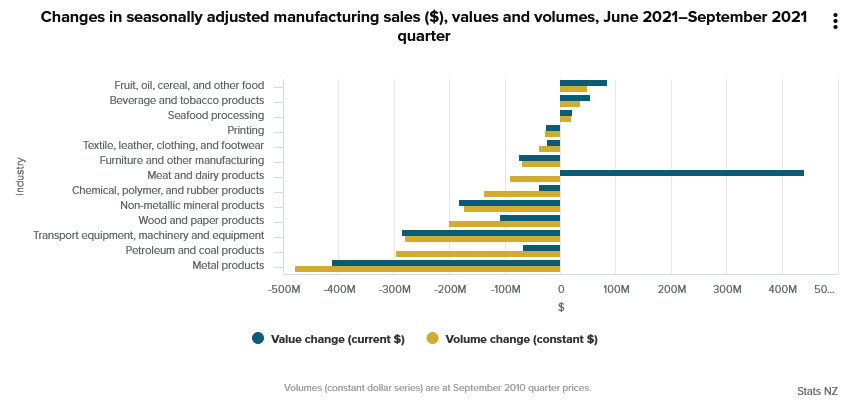
New Zealand Manufacturing sales dropped -2.2% qoq, or NZD 674m in Q3. When adjusted for seasonal effects, 10 of the 13 manufacturing industries had lower volumes of sales in the quarter.
The largest industry movements were: metal products (-17%), petroleum and coal products (-13%), transport equipment, machinery, and equipment (-8.8%).
"Despite sales falls in several construction related manufacturing industries, increased prices for meat and dairy cushioned the blow for total manufacturing values," business statistics manager Evie Rolinson-Purchase said.
Elliott Wave View: Rally In Nifty Expected To Fail
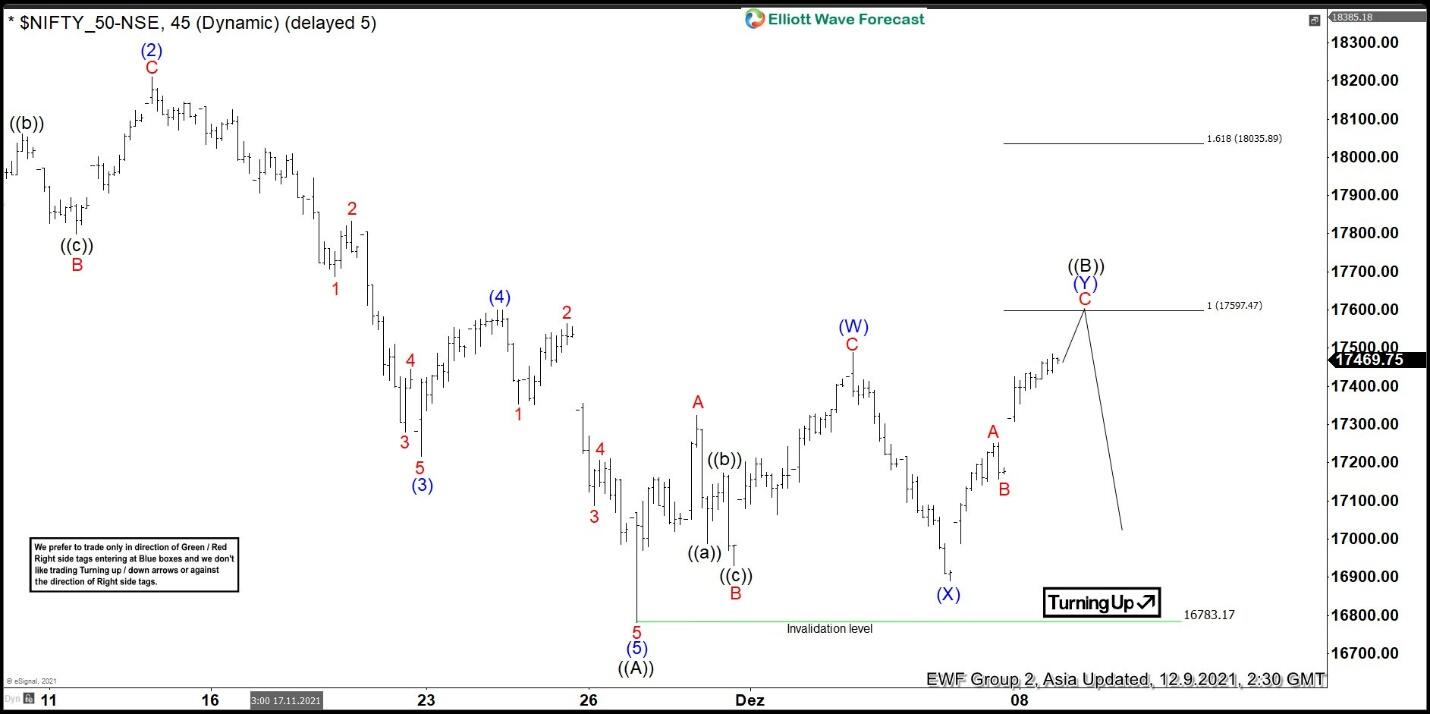
Short term Elliott Wave View in Nifty suggests cycle from October 19 peak ended at 16796.56 with wave ((A)). Internal subdivision of wave ((A)) unfolded as a 5 waves impulse Elliott Wave structure. Down from October 19 peak, wave (1) ended at 17613.1, and rally in wave (2) ended at 18210.15. Index then resumes lower in wave (3) towards 17216.10 and bounce in wave (4) ended at 17599.75. Final leg lower wave (5) ended at 16796.56 which also completed wave ((A)) in higher degree.
The Index is now correcting cycle from October 19 peak in wave ((B)). The internal subdivision of wave ((B)) is unfolding as a double three Elliott Wave structure. Up from wave ((A)), wave A ended at 17324.65, dips in wave B ended at 16931.40, and wave C ended at 17489.8. This completed wave (W) of the double three. Index then pullback in wave (X) which ended at 16891.70. Index then turns higher in wave (Y) with internal as a zigzag. Up from wave (X), wave A ended at 17251.65 and wave B pullback ended at 17158.05. Near term, expect Index to extend higher towards 17597.47 – 18035.89 to finish wave (Y) of ((B)). From here, the Index then can resume lower in wave ((C)) or at least pullback in 3 waves.
Nifty 45 Minutes Elliott Wave Chart
Market Morning Briefing: Pound Has Fallen To 1.32
STOCKS
Indices trade higher. Dow can rise to 36500-37000 if sustains above 35750. Dax is bullish with some interim corrections while above 15100. Nikkei and Shanghai are bullish too towards 29000/29500 and 3700 respectively. Indian equities look strong too but could see some profit taking today.
Dow (35754.75, +35.32, +0.099%) has risen today. The resistance at 35750 has been broken. If the index stays above 35750 then the view would be bullish towards 36500-37000.
DAX (15687.09, -126.85, -0.80%) has come down slightly since yesterday. The index has failed to stay above the support at 15800. While above 15100, the view is bullish to see a test of 15900.
Nikkei (28818.53, -42.09, -0.15%) has come down slightly after rising sharply yesterday. The view is bullish to see a test of 29000/29500. Failure to breach 29500 can take the index to 28000 again.
Shanghai (3678.69, +41.12, +1.13%) has risen sharply and can test 3700 before we see a reversal. The 3625 resistance has been broken and now it can act like a support for the near term.
Nifty (17469.75, +293.05, +1.71%) rose sharply yesterday. The index needs to stay above 17400 for the perspective to be bullish towards 17600/800 in the coming sessions. Else it may get back to the 17400-16800 range.
Sensex (58649.68, +1016.03, +1.76%) also rose significantly. The index needs to break above 59000 for the view to be bullish towards 60000.
COMMODITIES
Crude prices have risen sharply and needs to pause and reverse, else could open up chances of a further rise towards 78/80 on Brent and towards 75/76 on WTI respectively. Gold is bearish while below 1800/1790.Silver can trade within 22-24. Copper has risen well and could test 4.45/50.
Brent (76.59) tested 76.70 in line with pour expectation of testing 77 on the upside as mentioned yesterday. We need to see if Brent faces rejection from 77 else could be open for a rise to 78/80 again on the upside. Watch price action near 77 over this week.
WTI (73.21) has risen above our expected 73 and a sustained rise above 73 can take the price higher towards 75/76 on the upside. Immediate view is bullish while above 73.
Gold (1783.30) trades below the resistance level of 1800-1790. While below 1800-1790, Gold has scope to fall towards 1760. Only a sustained break above 1800 can take it higher towards 1820 again which may take some time.
Silver (22.36) has dipped a bit but continues to remain ranged within 22-24 for now.
Copper (4.3755) has been rising and got some positive momentum after indication of positivity for the Chinese economy as the central bank announced easing of policy yesterday. Copper can rise to test 4.45/50 before pausing there. Immediate view is bullish.
FOREX
Strength seen in Euro and Chinese Yuan that could help Rupee strengthen a bit too today. Watch for a trade below 75.50 on USDINR today. Euro has scope to rise towards 1.14/1.1450 before coming off from there. Chinese Yuan has strengthened after the Central bank announced easing of policy yesterday. The Yuan could strengthen towards 6.30. Dollar Index can trade within 95.50-97 and is headed towards the lower end of the range. Aussie and Pound looks bearish for the near term. EURJPY has risen well and could test 130 before pausing.
Dollar Index (96.01) tested 95.84 before rising higher today. We need to keep a close watch to see if it re-tests 95.50 on the downside and breaks lower. A break below 95.50 would confirm bearishness towards 95-94.50 in the medium term. Till then we expect 97-95.50 to hold.
Euro (1.1333) has broken as expected above 1.13 and could rise to test 1.14-1.1450 on the upside. The mentioned levels are important resistances and a fall from 1.1400/50 can again bring down Euro towards 1.12. We would be cautious to see if any indication is seen for a break above 1.1450 which could be bullish for the medium term. Watch price action near 1.1400/50 while we expect a range of 1.12-1.1450 to hold for now.
EURJPY (128.91) has risen sharply and could test 130 before pausing. Thereafter we need to see if the cross rises further or sees a corrective dip to 128.50/30.
Aussie (0.7165) may hold below 0.72 to see a short corrective dip before again rising towards 0.7250-0.73 on the upside. 0.70 is now a strong support that could hold in the longer run.
Pound (1.3200) has fallen to 1.32 and looks likely to break lower to head towards 1.3150-1.3100 in the near term. Note that in the longer run, 1.32 could act as a decent resistance if the rate breaks lower and could open up chances of a fall to 1.28. Watch price action near 132 which is very crucial.
Dollar-Yen (113.72) has risen within the 112-114 range and is headed to test the upper end of 114. We need to watch closely to see if the pair manages to break above 114 to head higher towards 114.50 or falls from 114 itself towards 113-112 again. Further View is unclear while the 112-114 range holds for now.
USDCNY (6.3442) fell sharply as expected after the Chinese Central bank indicated easing of monetary policy negating the impact of the new Covid variant on the economy and signaling strength. The pair can fall further towards 6.30/25 on the downside while below 6.35. Near term view is bearish.
{USDINR (75.4550) fell from 75.57 yesterday to close lower and that decline may sustain today taking the pair down towards 75.30/20. NDF quotes 75.38 just now and the strength in Chinese Yuan and Euro could help Rupee to strengthen a bit today. That said while the spot trades again below 75.50, it would reduce chances of testing 75.75/80 on the upside in the near term.
INTEREST RATES
The US Treasury yields continue to surge at the far-end. The expected broad range remains intact, and the yields have room to move up further towards the upper end of their range ahead of the US Federal Reserve meeting next week. The German yields have risen back sharply but have resistances ahead that can cap the upside and keep the broader bearish view intact. The 10Yr and 5Yr GoI have declined sharply yesterday and can now move down towards their lower end of the range. The Reserve Bank of India left the interest rates unchanged at 4%.
The US 2Yr (0.70%) Yield remains stable while the 5Yr (1.28%) has inched up slightly. The 10Yr (1.53%) and the 30Yr (1.90%) continue to surge. The 30Yr has risen past 1.85% and while this sustains a revisit of 2% levels is possible. The 10Yr can test 1.65% again while it remains above 1.5%. As mentioned yesterday, the expected broad range of 1.35%-1.65% (10Yr) and 1.7%-2% (30Yr) remains intact for now.
The German 2Yr (-0.69%), 5Yr (-0.56%), 10Yr (-0.32%) and 30Yr (0.02%) have risen back sharply across tenors. 0.05% (30Yr) and -0.25% (10Yr) are key resistances ahead. While they hold, our view of seeing a fall to -0.45% / -0.5% on the 10Yr and -0.1% / -0.2% on the 30Yr will continue to remain intact.
The Indian 10Yr (6.3468%) had failed to sustain the break above 6.38% and has declined sharply yesterday. While below 6.38% now, a further fall to 6.3% is possible in the coming days. 6.3%-6.4% can be a broader range of trade now.
The 5Yr (5.6620%) has fallen-back as expected and indeed sharply well below 5.68%. While below 5.68%, a test of 5.63%-5.62% is possible.
AUD/USD Starts Recovery, Key Resistance Nearby
Key Highlights
- AUD/USD started an upside correction from 0.7000.
- It broke an important declining channel with resistance near 0.7100 on the 4-hours chart.
- EUR/USD is attempting a recovery wave above 1.1280 and 1.1300.
- GBP/USD spiked below 1.3200 and it remains at risk of more downsides.
AUD/USD Technical Analysis
The Aussie Dollar started a major decline from 0.7500 against the US Dollar. AUD/USD tumbled below the 0.7300 and 0.7200 support levels.
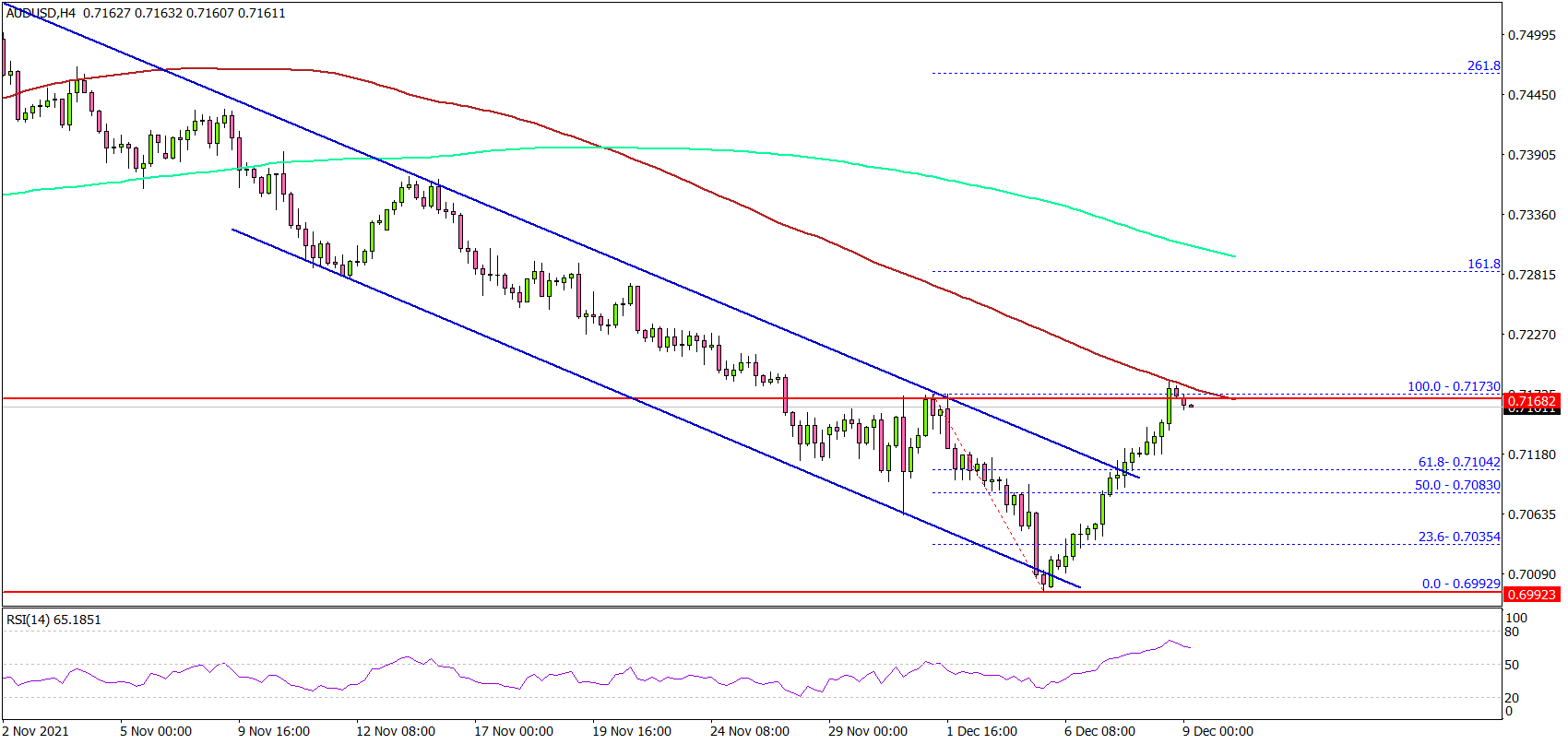
Looking at the 4-hours chart, the pair even settled below 0.7200, the 100 simple moving average (red, 4-hours), and the 200 simple moving average (green, 4-hours).
A low was formed near 0.6992 and the pair is now correcting higher There was a break above the 0.7050 and 0.7080 resistance levels. Besides, there was a clear move above an important declining channel with resistance near 0.7100 on the same chart.
On the upside, the pair is facing resistance near 0.7170 and the 100 simple moving average (red, 4-hours). The next major resistance is near 0.7200.
A clear break above the 0.7170 and 0.7200 resistance levels could open the doors for a steady upward move. If not, there could be a fresh decline below the 0.7100 support. The next major support is near the 0.7020 and 0.7000 levels.
Looking at EUR/USD, the pair is stable above 1.1220, but it is facing a strong resistance near 1.1350. Besides, GBP/USD is struggling to recover above 1.3250.
Economic Releases
- Germany’s Trade Balance for Oct 2021 - Forecast €13.4B, versus €13.2B previous.
- US Initial Jobless Claims - Forecast 230K, versus 222K previous.
US Crude Oil Inventory Dropped, While Petroleum Stockpile Gained Last Week
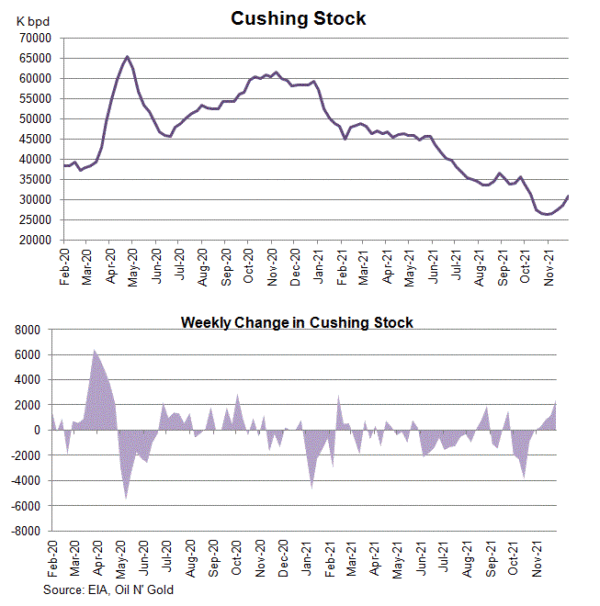
The report from the US Energy Information Administration (EIA) shows that total crude oil and petroleum products (ex. SPR) stocks rose +4.27 mmb to 1222.16 mmb in the week ended December 3. Crude oil inventory slipped -0.24 mmb to 432.87 mmb, compared with consensus of a -1.71 mmb decrease. Inventory increased in 3 out of 5 PADDs. Cushing stock rose +2.37 mmb to 30.92. Utilization rate added +0.1 percentage points to 89.8% while crude production added +0.1 mmb to 11.7M bpd for the week. Crude oil imports increased -0.11M bpd to 6.5M bpd in the week.
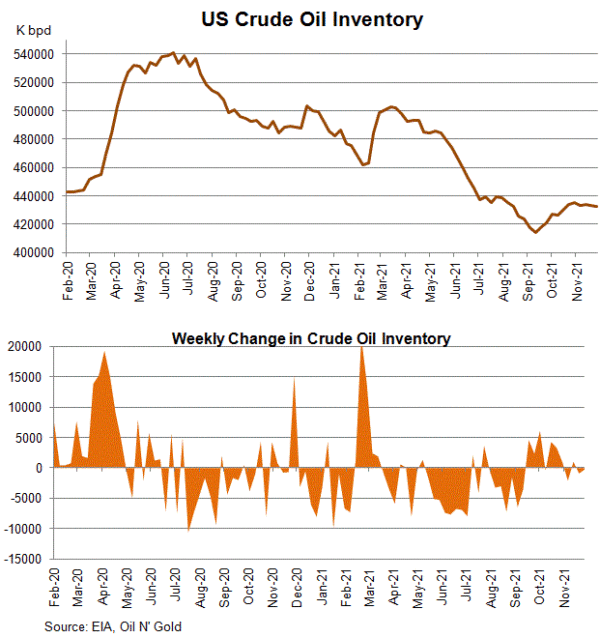
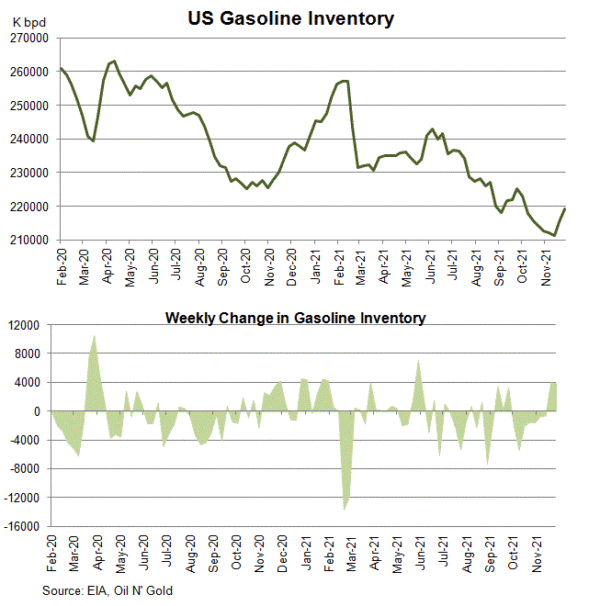
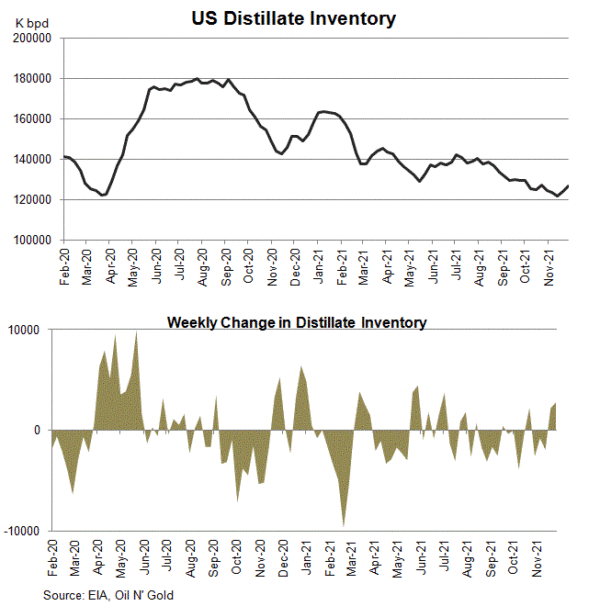
Concerning refined oil product inventories, gasoline inventory gained +3.88 mmb to 219.3 mmb while demand added +1.9% to 8.96M bpd. The market had anticipated a +1.8 mmb growth in stockpile. Production slipped -0.89% to 9.56M bpd while imports soared +16.63% to 0.55M bpd during the week. Distillate stockpile gained +2.73 mmb to 126.61 mmb. The market had anticipated a +1.57 mmb increase. Demand sank -14.99% to 3.58M bpd. Imports rose +14.96% to 0.27 mmb while production added +0.92% to 4.92M bpd during the week.
A day earlier, the industry-sponsored API estimated that crude oil inventory rose +3.09 mmb. Gasoline stockpile gained +3.71 mmb, while that for distillate was up +1.23 mmb.
Eco Data 12/9/21
[php_everywhere instance="1"]
Eurozone Monetary Policy to Remain Relatively Accommodative, For Now
Summary
- The European Central Bank's (ECB) December 16 monetary policy announcement looms as a key event for market participants, as the central bank considers whether to bring its emergency asset purchase program to an end.
- Economic trends are mixed heading into the announcement, with growth slowing and inflation quickening. Still, we expect the recent spike in inflation will be enough for the ECB to end it Pandemic Emergency Purchase Program (PEPP) in March 2022, as scheduled. While we expect the ECB will maintain flexibility over the total size of its PEPP purchases, we believe purchases will ultimately come in slightly below the €1.85 trillion purchase envelope.
- We also expect the ECB to provide short-term guidance for its asset purchases once the PEPP program ends. Specifically, we expect the ECB to announce that for Q2-2022, purchases under the Asset Purchase Program (APP) will increase from €20B per month to €50B per month.
- Over time, we believe the longer-term implications of the ECB's announcement will be a softening EUR/USD exchange rate trend. The Fed likely will both taper its bond purchases and raise interest rates more quickly than the European Central Bank, which in turn is likely to make only a gradual shift towards less accommodative monetary policy.
European Central Bank Approaching Key Milestone Along Monetary Policy Path
The European Central Bank's (ECB) December 16 monetary policy meeting will likely be the most consequential in some time, as policymakers grapple with conflicting trends in growth (slowing) and inflation (quickening), and consider whether to bring bond purchases under the Pandemic Emergency Purchase Program (PEPP) to an end. In recent comments, ECB President Lagarde suggested that some adjustments could be announced at this month's meeting. Speaking to Reuters, Lagarde said the ECB may set policy for a relatively short period at this month's meeting given heightened uncertainty, but should not delay a decision as markets need direction.
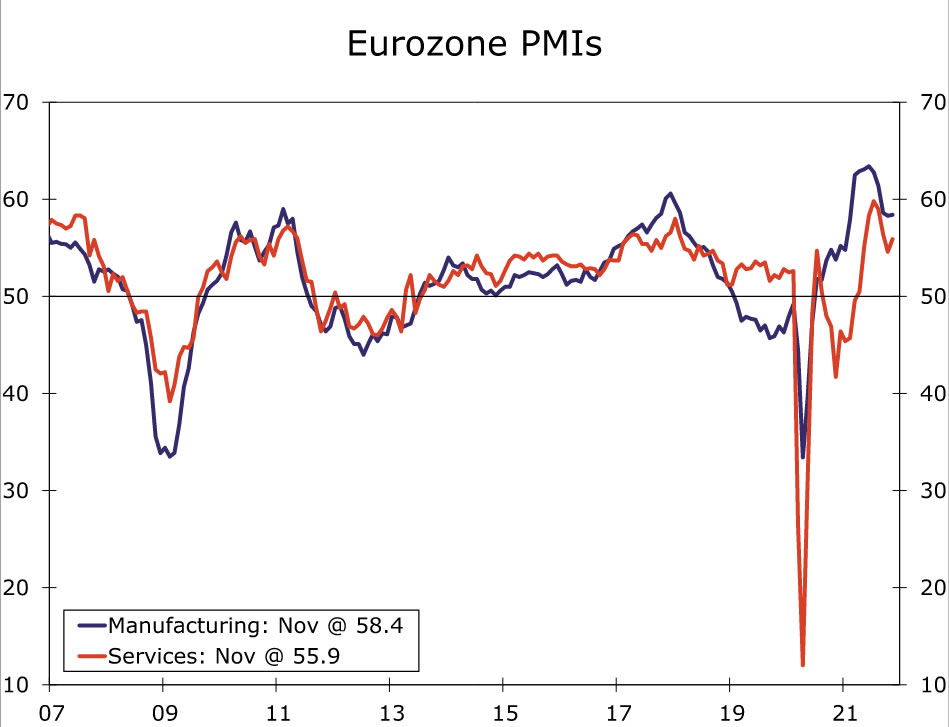
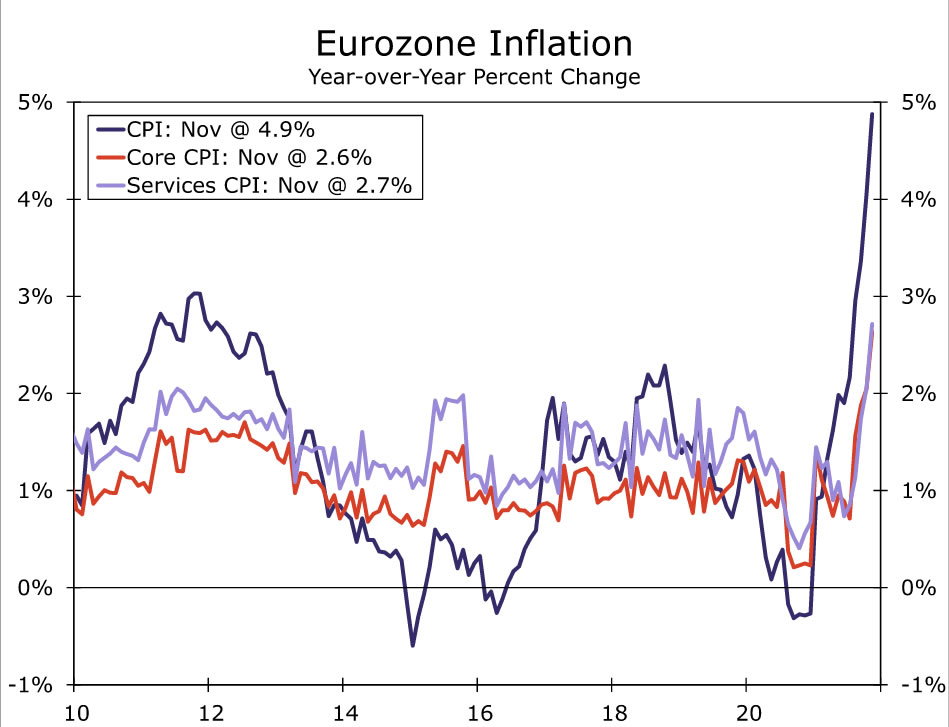
As policymakers and market participants head into the December meeting, there are overall signs of slowing Eurozone growth. The manufacturing and service sector PMIs have been steadier in recent months, printing at 58.4 and 55.9 for November respectively. However, they are still well below the highs seen earlier this year, with the manufactruing PMI peaking at 63.4 in June and the services PMI peaking at 59.8 in July. In addition, COVID cases have recently rebounded across the region and some countries have reimposed partial restrictions—notably Germany and Austria—prompting some near-term uncertainty to the outlook. At the same time, CPI inflation spiked higher to 4.9% year-over-year in November, although the acceleration in the core CPI so far has been somewhat less marked, to 2.6% year-over-year.
These divergent growth and inflation trends pose something of a dilemma for ECB policymakers. That said, ECB President Lagarde in recent comments also said Europe has learned to live with previous COVID variants, suggesting the central bank may view downside risks from the latest virus developments as moderate, and not an impediment to adjusting its monetary policy stance. Moreover, comments from ECB policymakers have generally been very consistent in two particular areas. First, in recent weeks several central bank policymakers have indicated that the Pandemic Emergency Purchase Program should come to an end, as previously signaled, by March 2022. And second, despite the sharp uptick in prices most ECB policymakers still appear to view the current rise in inflation as a temporary phenomenon and that, while it might take a little longer for inflation to slow, it should certainly be receding by late 2022.
It is against this backdrop that at the December meeting, we expect the European Central Bank to announce plans to make some initial tentative steps towards less accommodative monetary policy, beginning in early 2022. Specifically, we expect at its December meeting the ECB:
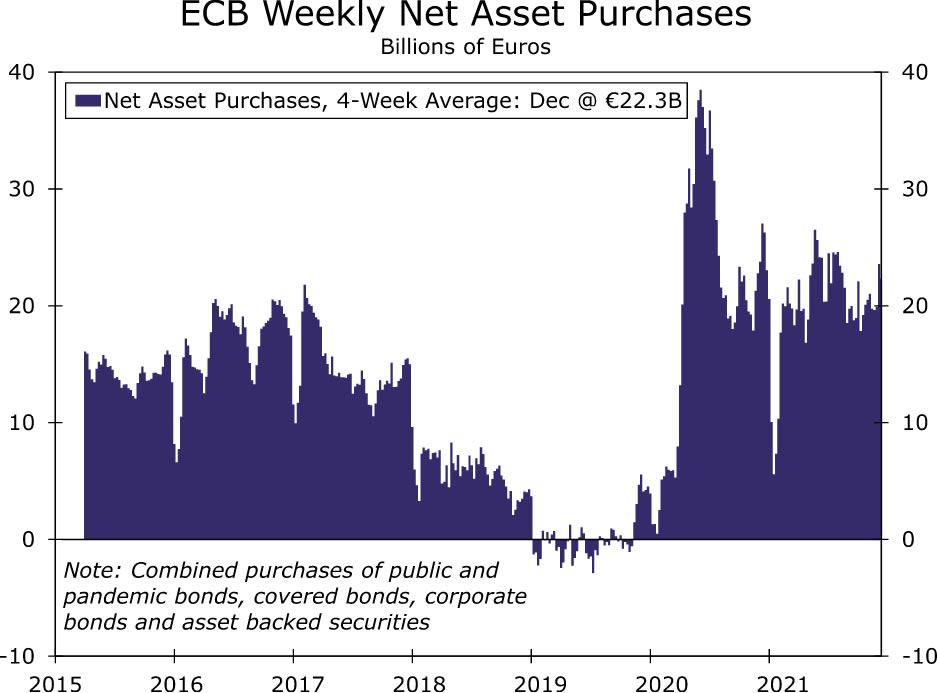
- will announce the €1.85 trillion PEPP purchase program will end as scheduled at the end of March 2022. We believe the ECB will maintain some tactical flexibility by indicating the purchase envelope might not be used in full, or could be recalibrated (i.e. increased) if needed. And as previously signaled, we expect the ECB will continue reinvesting proceeds from the PEPP program until the end of 2023. Note that since the beginning of Q4, the average weekly purchases under PEPP has been €15.9B. If purchases were to continue at that pace through the end of March next year, total purchases under the program would reach €1.82 trillion, only very slightly below the stated purchase envelope size.
- will announce that for Q2-2022, purchases under the Asset Purchase Program (APP) will increase from €20B per month to €50B per month. Given that overall combined purchases under the PEPP and APP programs are currently running at approximately €90B per month, increased asset purchases under the APP would still represent a significant slowing, or tapering, of the pace of the ECB's overall bond purchases.
- will not announce any further targeted long-term refinancing operations. The final operation is due to take place in mid-December.
While we expect the European Central Bank will announce its asset purchase plans only a quarter at a time, in keeping with Lagarde's comment of avoiding long-term commitment, we ultimately believe the ECB will taper its bond purchases only gradually through all of 2022, and will not discontinue its purchases until the end of next year. After APP purchases of €50B per month in Q2-2022, we expect APP purchases of €25B per month in Q3-2022 and Q4-2022, with purchases coming to an end in December next year.
Finally, the ECB's announcement will also include updated staff economic projections. We expect a downward revision to the central bank's GDP growth forecast and, clearly, a significant upward revision to CPI inflation forecast. However, we still expect the ECB will forecast CPI inflation falling back below 2% by the end of its forecast horizon. In terms of market reaction, it is possible the initial reaction to the ECB's announcement could be modestly EUR/USD positive. Significant upward revisions to CPI inflation forecasts, combined with only a short-term commitment to ongoing bond purchases, could disappoint some market participants looking for a more forcefully dovish announcement. Still over time, given the Fed likely will both taper its bond purchases and raise interest rates more quickly than the European Central Bank, we believe the longer-term implications of the European Central Bank's relatively gradual shift towards less accommodative monetary policy will be a softening trend in the EUR/USD exchange rate over the medium-term.
BoC Holds Steady; Mandate Renewal Still to Come
- Overnight rate held at 0.25% and forward guidance unchanged.
- Economy had “considerable momentum” heading into Q4.
- Inflation-target renewal still to come before year end.
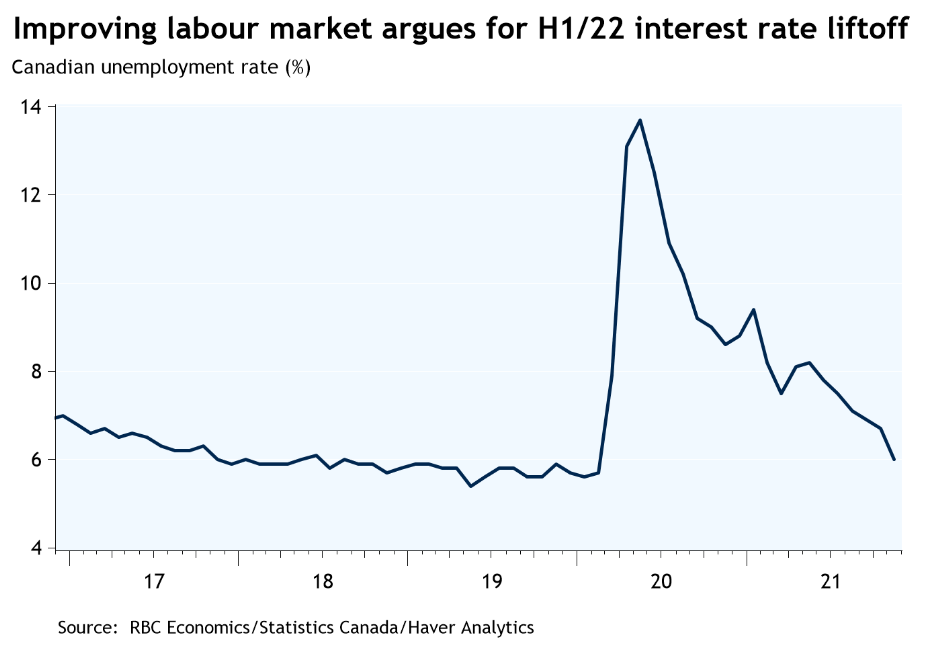
As we expected, the BoC left its key policies unchanged today, holding the overnight rate at 0.25% and continuing its QE reinvestment policy. It maintained the forward guidance commitment not to raise rates until economic slack is absorbed, which as of October was expected to be in the middle quarters of 2022. As per recent practice at non-MPR meetings, that timeframe was simply reiterated today. We think there’s risk that the economy reaches full capacity even sooner given rapid improvement in the labour market in recent months including last week’s impressive November jobs report. Indeed, today’s statement noted the employment rate is “essentially back to its pre-pandemic level” and wage growth is picking up. The bank also said the economy had “considerable momentum” heading into Q4 though flooding in BC and Omicron uncertainties could weigh on activity.
Shorter-term yields fell and the Canadian dollar was a touch weaker following the announcement, suggesting markets were looking for a more hawkish tone today. The BoC was held back by Omicron uncertainty but today's statement suggests that as long as that risk doesn't intensify in the next seven weeks, the BoC will sound more hawkish in January. Markets are now pricing roughly 50/50 odds of a rate hike at that meeting though we think it’s more likely the BoC will signal upcoming rate hikes rather than actually raising rates in January. Moving up its forward guidance (i.e. slack absorbed in H1/22) or dropping that guidance altogether (as it did before raising rates in 2010) would send an “every meeting is live” message. We continue to look for interest rate liftoff in April with three rate hikes over the course of 2022.
These forecasts come with a caveat that we still don’t know what the BoC’s policy mandate will look like over the next five years. Its inflation-target renewal (a joint exercise with the federal government) is due any day now—we wouldn’t be surprised to see an announcement ahead of Governor Macklem’s speech next Wednesday. Our forecast assumes the BoC will continue with flexible inflation targeting, taking labour market developments into account in setting monetary policy but stopping short of a dual unemployment-inflation mandate.
Bank of Canada Leaves Key Policy Rate at 0.25%, Maintains Forward Guidance
The Bank of Canada kept the overnight rate at 0.25% and states it is continuing its reinvestment phase by keeping its holdings of Government of Canada bond roughly constant. As for forward guidance, the Bank said it remained committed to holding the policy rate at the effective lower bound until economic slack is absorbed, and the 2 percent inflation target is sustainably achieved. In the October Monetary Policy Report, this occurred in the middle quarters of 2022. The Bank did not update this view in today's announcement.
In terms of the economic outlook, the Bank noted that the economy had considerable momentum heading into the fourth quarter. Employment growth has been strong recently, and wage growth is picking up. However, the extreme weather in B.C. and the Omicron variant could weaken growth in the near-term.
With regards to inflation, the Bank acknowledged that consumer price inflation remains elevated partly due to global supply constraints. The Bank expects inflation to remain high in the first half of 2022 before easing to 2 percent in the second half of the year. Inflation expectations and labour costs are being closely monitored by the central bank, so as to ensure "forces pushing up prices do not become embedded in ongoing inflation".
Key Implications
The Bank of Canada mostly kept its communication unchanged from the October Monetary Policy Report today. Today's announcement showed that despite recent gains in the labour market, the Bank is sticking to its forward guidance from October, partly perhaps as a result of the uncertainty created by the Omicron variant.
If Omicron proves to be less of a health concern than initially feared, especially for vaccinated individuals, the Bank could change its messaging in the near future. Indeed, with inflation running hot, and the labour market on solid footing, there is room to reduce monetary policy support.
US Inflation Set to Reach 4-Decade High; Will it be the Precursor for Faster Fed Taper?
The latest reading on the US consumer price index (CPI) will be making headlines on Friday when it’s out at 13:30 GMT, as the data could sway the decision for Fed policymakers when they meet on December 14-15. There is no doubt that inflation in the US has been running hot for some time, but price pressures in November likely burgeoned to levels not seen since the early 1980s. As the Fed finally distances itself from the term ‘transitory’, is it ready to act swiftly to keep a lid on soaring prices? In the meantime, expectations of a quicker taper have been supporting the US dollar during its latest pullback.
No easing to the surge in sight
Consumer prices in America rose at an annual rate of 6.2% in October – the most since November 1990. Things are about to get even uglier as the CPI rate is expected to have jumped by 6.8% in November, which would make it a near four-decade high. Core CPI, which excludes volatile items such as food and energy, is forecast to reach 4.9% y/y – also a multi-decade high.
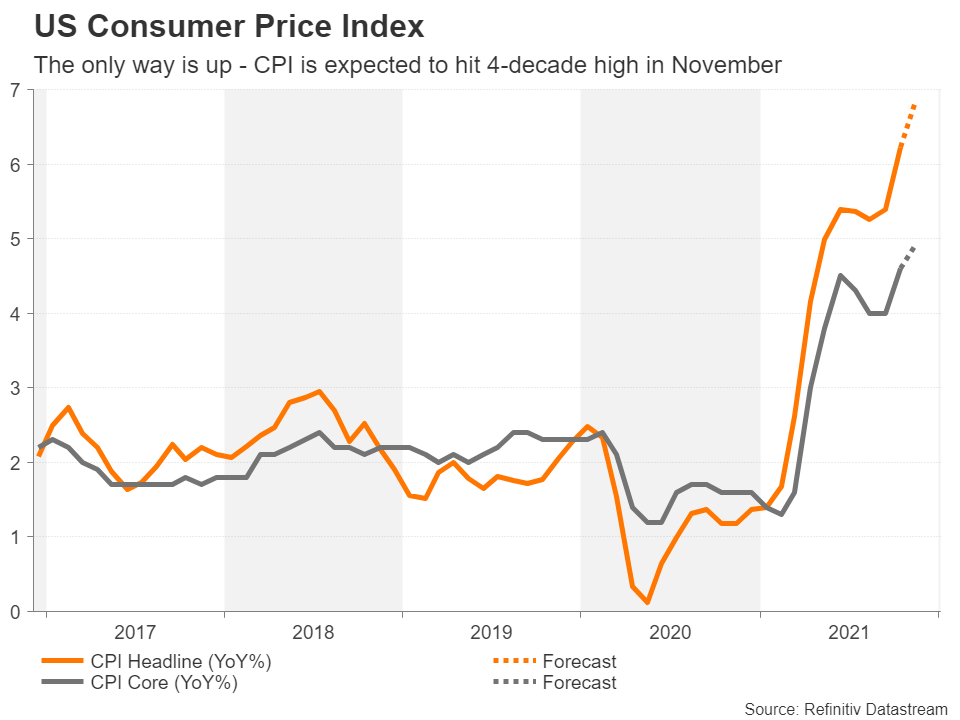
Rather worryingly for the Fed, no let-up is anticipated in the month-on-month surge either, throwing cold water once and for all on the notion that inflation would ease up once the low base effects begin to fade. October’s 0.9% monthly gain in CPI was the highest since June and the forecast for November is for a marginally smaller increase of 0.7%.
Speedier taper talk is propping up the dollar
Softer-than-expected prints in the month-on-month figures for both the headline and core rates could go some way in alleviating anxiety about out-of-control inflation in the short term. However, most Fed officials appear to have already made up their minds about the growing threat of permanently high inflation and the key debate at the December meeting will likely be whether to accelerate the pace of tapering the emergency asset purchases.
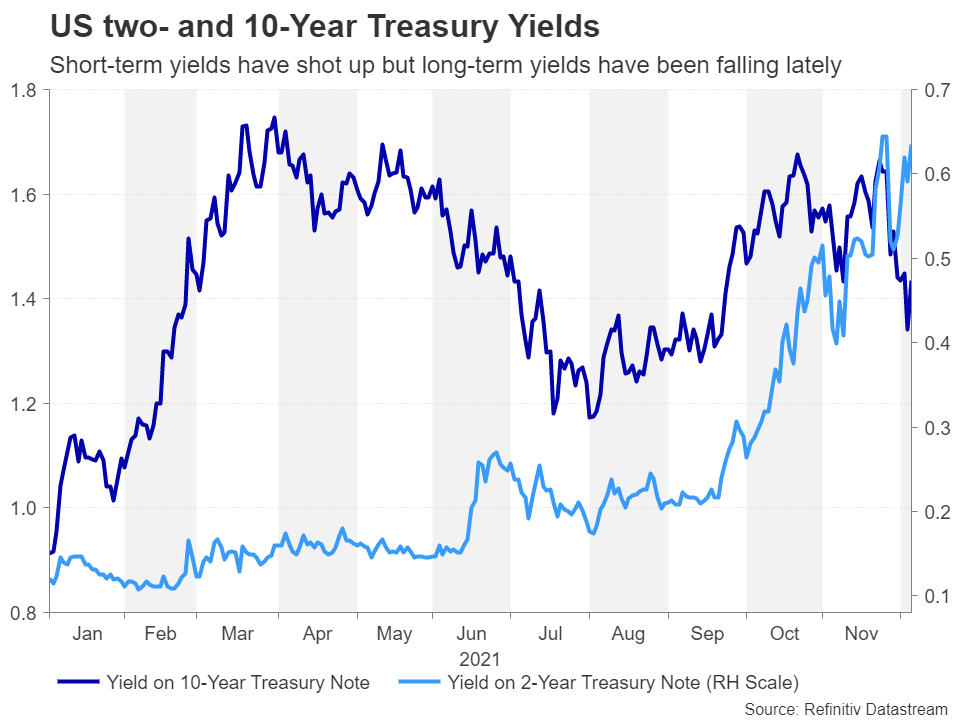
The worry here is not so much about the bond purchase program coming to an end much sooner but rather about what that would mean for the timing of the first post-pandemic rate hike. Market pundits think there’s about a 60% probability that liftoff could happen as early as May. The intensifying speculation of an early rate hike has been driving short-dated Treasury yields sharply higher over the past two months, lifting the US dollar above the 115 level against the yen to near five-year highs.
Omicron derails dollar/yen’s ascent
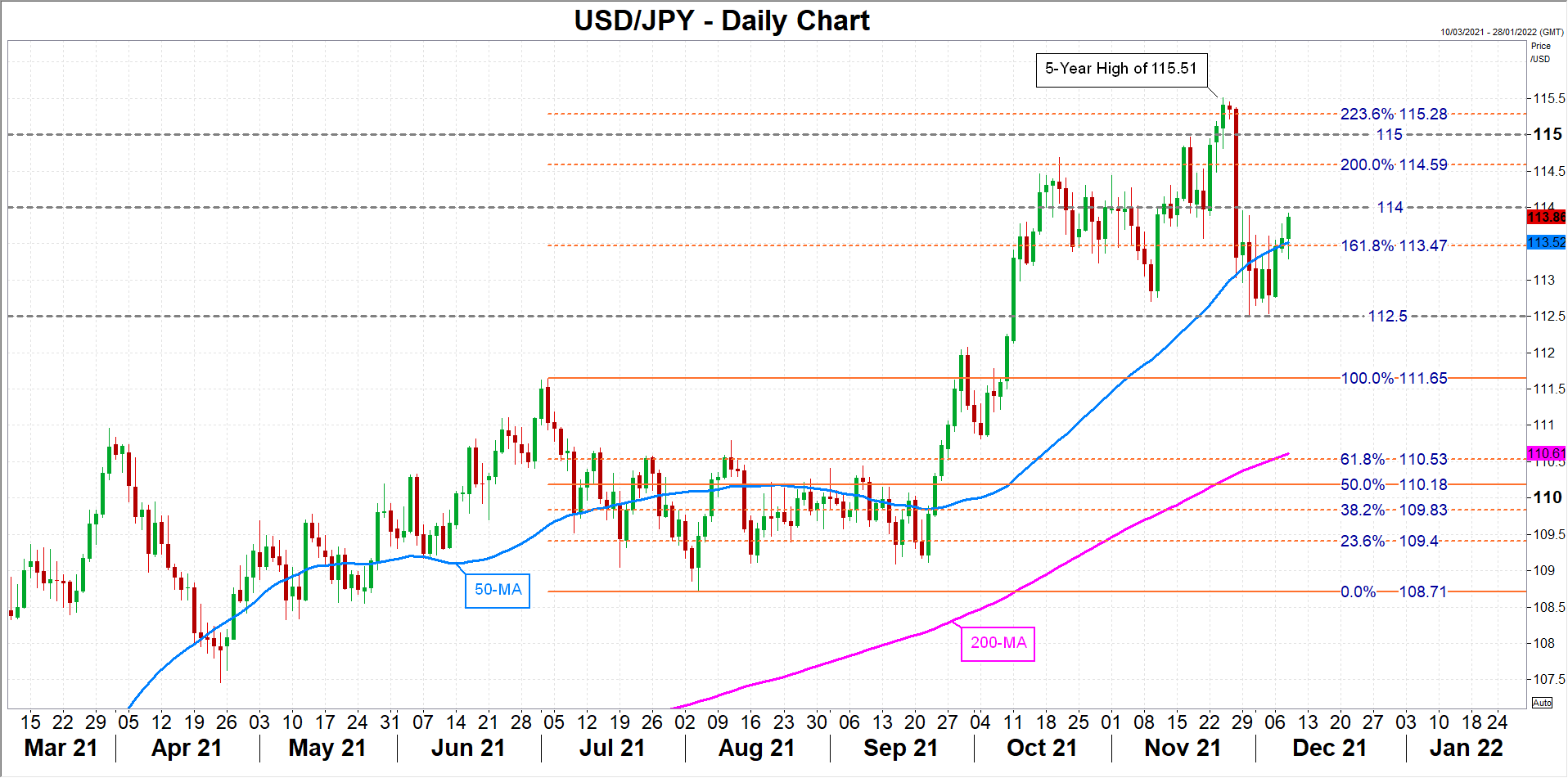
The pair has just broken above strong resistance around its 50-day moving average (MA), which is intersecting the 161.8% Fibonacci extension of the July-August down move at 113.47. A positive surprise in the CPI data could lift the pair above the next obstacle at 114, paving the way for a re-test of the November peak of 115.51.
However, unexpectedly weak inflation readings could see the dollar slip back towards its recent support around 112.50 yen. An even bigger drop would bring the 200-day (MA) into scope near the 61.8% Fibonacci of 110.53.
Will the Fed backtrack on its hawkish shift?
The discovery of the Omicron variant sparked a big slide in both the dollar and Treasury yields. Short-term yields have since recovered but the 10-year yield remains well below its pre-Omicron peak. The heightened virus uncertainty could keep dollar/yen pressured for a while longer, and more importantly, dissuade the Fed from accelerating its taper plan next week.
However, although the Omicron outbreak could well hurt economic growth over the next few months, it could also worsen the supply constraints that are primarily responsible for creating the spike in inflation in the first place. Hence, the Fed may have no option but to withdraw monetary stimulus much more quickly than it had envisioned just a few weeks ago. On the bright side, the US economy is better placed than any of its peers in withstanding policy tightening.