Sample Category Title
Week Ahead – US PCE Inflation and Eurozone CPI Data Enter the Spotlight
- Dollar traders lock gaze on core PCE index
- Eurozone CPIs in focus as June cut looms
- Tokyo CPIs may complicate BoJ’s policy plans
- Aussie awaits Australian CPIs and Chinese PMIs
Will PCE data break the “higher for longer” mantra?
The US dollar stabilized this week, recovering a small portion of the losses it posted after the CPI data revealed that US inflation resumed its downtrend in April.
What may have allowed the dollar to stop bleeding were comments by Fed officials, suggesting that despite the slowdown in CPI inflation, they are sticking to their “higher for longer” mantra.
This prompted investors to trim their rate cut bets again to less than two quarter-point interest rate reductions. Specifically, they are anticipating only 36 basis points worth of cuts by the end of the year, with the probability of a September cut now resting at around 60%.
With all that in mind, next week, dollar traders may turn their attention to the core PCE price index for April, the Fed’s favorite inflation gauge, which is accompanied by the personal income and spending numbers for the month.
After holding steady at 2.8% y/y in March, the core PCE rate may be poised to cool a bit, something supported by the easing of the core CPI rate. What’s more, the slowdown in average hourly earnings and the stagnation in retail sales suggests that income growth and spending may have softened as well.
Thus, a lower PCE rate, as well as income and spending data suggesting that inflation may continue cooling in the months to come may prompt investors to bring back to the table some of their previously removed rate cut bets. This could thereby weigh on the dollar, but for the slide to prove significant, Fed officials may need to soften their language as well.
Next week will be the last one policymakers are allowed to share their views, as on June 1 the blackout period before the next gathering begins, and thus their remarks may prove very important for the markets.
Eurozone inflation data to cement June cut
With UK inflation proving hotter-than-expected and traders raising their implied BoE rate path, the ECB is now the only major central bank expected to press the rate-cut button in June, with investors assigning around a 90% chance to such action.
Even with data pointing to improving activity in the Eurozone in 2024, investors did not budge, as ECB officials themselves have been continuously adding fuel to the idea of a June reduction. Just on Wednesday, ECB President Lagarde indicated that this is probable as inflation has largely come under control.
Therefore, next Friday’s preliminary CPI numbers for May are likely to be of major importance for euro traders. According to the latest set of PMIs, the pace of output price inflation softened in May and was the weakest since November 2023, which means that there are downside risks.
Lower inflation rates are likely to seal the deal for a June cut, and perhaps allow investors to add some more basis points worth of reductions for after June.
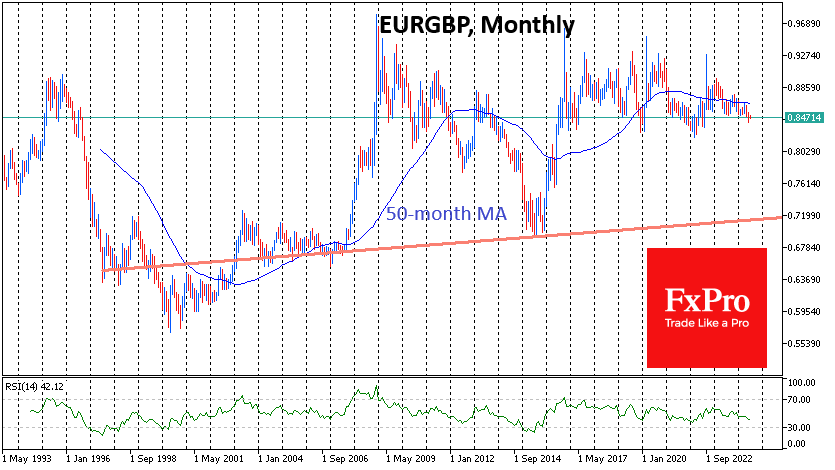
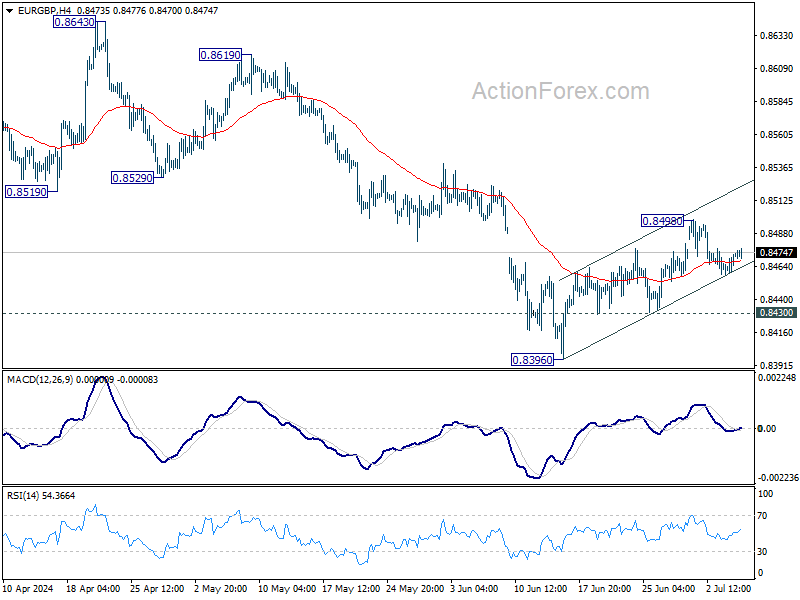
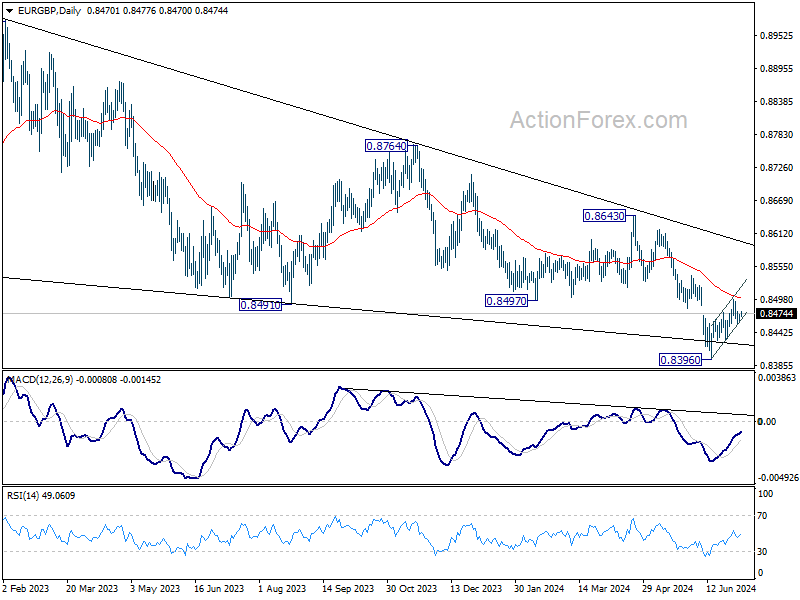
Euro traders may get stronger hints of where Eurozone inflation likely headed in May a couple of days earlier, when the German CPI figures are coming out. Thus, the euro may spend the better part of the week drifting south, especially against the pound, whose traders have notably scaled back their BoE rate cut bets lately.
More inflation numbers from Japan and Australia
Flying to Japan, a contracting economy in Q1 and further slowdown in inflation during April are developments casting a cloud over whether the BoJ should proceed with another rate hike in the summer months. Yet, investors are assigning a more-than-80% chance for another 10bps hike in July.
On Friday, the Tokyo CPI numbers for May are due to be released, as well as the industrial production and retail sales data for April. So, should they suggest that inflation eased further, and that the world’s fourth largest economy continued to struggle at the beginning of the second quarter, the chances for a summer BoJ hike may slip and thus, the yen may drift further south.
Australia releases its monthly CPI rates on Wednesday. At its May meeting, the RBA maintained its neutral stance, disappointing those expecting a hawkish shift due to Australian inflation proving stickier than expected.
Yet, investors are assigning a nearly 10% probability for a hike by this Bank in September, while the number of basis points worth of reductions by the end of the year is only 7. Thus, if the CPI data for April suggests that inflation remained sticky, the aussie could extend its latest recovery as traders scrap all the remaining rate cut bets.
China PMIs and Canada GDP also on tap
The aussie could be impacted by the Chinese PMIs for May as well, due out on Friday. The April PMIs showed that growth in both the manufacturing and services sectors slowed, but exports and imports grew after contracting in March, pointing to improving domestic demand. Last week’s data corroborated the mixed picture, with industrial production for April accelerating more than expected and retail sales unexpectedly slowing.
Therefore, the PMIs for May could prove important as they could tip the scale. If they point to softness in economic activity, investors may start adding to bets that more aid packages are needed by Chinese authorities, despite Beijing announcing some of its strongest moves a few days ago to bring the battered property sector to life. This may result in pullbacks in both the aussie and kiwi.
Finally, in Canada, following the larger than expected slowdown in most underlying inflation metrics for April, investors are assigning a 60% for the BoC to deliver its first 25bps interest rate reduction in June, while they are more than fully pricing in such a move for July. Thus, a set of soft GDP numbers on Friday may convince more participants to join the June-cut camp and thereby increase pressure on the loonie.
Canadian GDP Per Capita Likely Shrunk for Seventh Consecutive Quarter in Q1
The Canadian economy likely grew more quickly in Q1 2024 based on headline figures, but it was not fast enough yet again to keep up with surging population growth. That means gross domestic product on a per-person basis contracted for a seventh consecutive quarter.
We look for an annualized 2.5% increase in Q1 GDP from the previous quarter, up from 1% in Q4 2023. But, with the population still growing rapidly, output per-capita will be down ~1% (annualized q-o-q rate). Consumer spending is tracking an annualized 1.1% increase in Q1 from the previous quarter and business investment looks to have edged higher with a rise in machinery purchases offsetting slower non-residential construction activity. But higher spending came in part from higher imports rather than domestic Canadian production with net trade on track to subtract slightly from Q1 GDP growth.
Most of the increase in Q1 GDP on a monthly basis was concentrated in a 0.5% jump in January when the end of public sector strikes in Quebec boosted activity in the education sector. GDP growth slowed to 0.2% in February and we are tracking an unchanged reading in March that would be in line with Statistics Canada’s preliminary estimate a month ago. An increase in oil extraction in Alberta and rising oil drilling activity in March will boost output in the mining sector. But manufacturing sale volumes fell by 2% and retail sale volumes edged 0.4% lower. Our card spending data suggested little change in accommodation and food services sales in March.
The initial estimate for April output should look a little better given a 0.8% rise in hours worked in the earlier reported labour market data. Still, the economic backdrop in Canada has continued to soften on a per-capita basis with unemployment drifting higher and wage pressures and inflation showing further signs of easing. We continue to expect the first rate cut from the Bank of Canada in June.
Week ahead data watch
U.S. personal spending growth likely slowed a nominal 0.2% increase in April from 0.8% in the prior month, consistent with flat retail sales. We expect the U.S. personal income to grow at a slower pace (0.2%), down from 0.5% in March in line with moderating wage growth in April.
March Canadian SEPH (payroll employment) data will be monitored for further signs that wage pressures are easing. The number of job openings in the SEPH data edged higher in February but was still down more than 20% from a year ago and 34% from peak levels in 2022 when labour shortages were most acute.
ECB Preview – A Political Rate Cut in June, and No Cut in September
On Thursday 6 June, the ECB is widely expected to deliver a 25bp rate cut, largely because the governing council members have stated as much. The updated June staff projection is expected to suggest that the prevailing economic and monetary policy narrative stays broadly unchanged and we expect the rate cut to be formulated as a roll-back of the 'insurance hike' from September last year. We expect the ECB to repeat the meeting-by-meeting and data-dependent approach to the policy rate path beyond June.
We have revised our ECB rate path for the first time in more than 12 months and now expect the ECB to deliver two rate cuts this year (June and December), and three cuts next year. This will bring the deposit rate at 2.75% by the end of 2025.
Markets have already repriced the ECB expectations for this year and points to 61bp cut this year.
Weekly Focus – Euro Economy on Track for Mild Recovery
Economic news was to the solid side this week with not least euro area PMIs painting a stronger picture. The main surprise came from manufacturing PMI which increased from 45.7 to 47.4 (consensus 46.1) while the service sector stayed at a decent level of 53.3. The service report highlighted the strength of the labour market with the employment index moving up to 53.7, the highest in a year and clearly above the long-term average. It points to continued employment gains in an already tight labour market. The latter was also highlighted by data on negotiated wages for Q1, which moved back up to 4.7% y/y from 4.5% in Q4. A strong labour market and high wage gains it adds to the concerns over too high service inflation evident in the latest CPI numbers. Following the stronger data we have revised our ECB forecast for this year to only two cuts from previously three, see ECB preview - A political rate cut in June, and no cut in September, 24 May. US PMI for May also delivered an upward surprise driven by the service sector, where the index jumped from 51.3 to 54.8 (consensus 51.2).
The stronger economic data pushed bond yields up again as expectations for central bank easing was scaled back once again. An upward surprise in UK inflation during the week already started the upward move in yields. The 10-year US yield increased close to 10bp during the week. Stock markets were mixed seeing gains after the AI chip maker Nvidia showed impressive growth in revenues once again while the rise in yields sent markets back down on Thursday.
UK Prime Minister Rishi Sunak surprised everyone by calling a snap election to be held on 4 July. After 14 years of Conservative rule, polls and prediction markets indicate a Labour majority government led by Keir Starmer as the most likely outcome. We expect the market impact to be limited, see also UK General Election - The need-to-knows ahead of 4 July, 25 May.
Trade tensions continue to brew between China and EU as China this week sent some warning shots suggesting they could increase tariffs on imports from EU to 25% on large engine vehicles, a move that would mostly hurt Germany and could make EU auto makers move production to China instead. We are likely to have a decision on the EU investigation on Chinese EV's in the coming weeks and we continue to look for an increase in tariffs to 20-25% from currently 10%. On Thursday China launched a two-day military drill around Taiwan in a response to the inauguration speech by the new President Lai Ching-te on Monday, which had some twists moving the message more in the direction of Taiwanese sovereignty, which is China's 'red line'.
Focus the coming week turns to Euro inflation data for May, a key input ahead of the June 6 ECB meeting. We expect unchanged headline and core inflation at 2.4% and 2.7%, respectively. Focus will be on momentum in service inflation, which we expect to remain strong. In the Euro zone we also get unemployment, M3 as well as German ifo business confidence. In the US we get consumer confidence from Conference Board and core PCE inflation. In Japan we also get inflation for Tokyo in May.
Sunset Market Commentary
Markets
Today’s eco calendar was light compared to earlier this week but that didn’t prevent a further sell-off on core bond markets. April US durable goods orders were stronger than expected, but March figures face a downward revision. Core shipments, input for GDP (investments), increased by 0.4% M/M following a 0.3% decline in March (earlier reported flat). US yields currently add around 2 bps across the curve. The US 2-yr yield (4.95%) has its eyes again on the psychologic 5% mark. We hold our view that this resistance will hold as long as the Fed categorically rules out the possibility of another rate hike (if necessary). Wednesday’s released FOMC Minutes showed that Fed chair Powell undersold this risk after the May 1 policy meeting. However, for now we expect this 5%/5.05% resistance level to hold. US money markets are now back positioned for only one 25 bps rate cut in December, compared with two rate cuts (September/December) at the start of the week. Apart from hawkish FOMC Minutes, yesterday strong PMI’s played a role as well as did the global context with strong underlying core inflation in the UK and stubborn wage pressure in Europe. The debate on the neutral rate is gaining more and more traction as well. The median estimate in March projections already showed a slight increase from 2.5% to 2.56% with potentially more to come in June. Heavyweight Fed governor Waller touched on the issue in a speech today. He said that the US is on an unsustainable fiscal path. If the growth in the suppl of US Treasuries begins to outstrip demand, this will mean lower prices and higher yield which will put upward pressure on the neutral rate. Waller mentioned demographics, globalization and regulation amongst factors that pushed the neutral rate to too low levels the past years. German yields add up to 2.5 bps today as well with the front end of the curve underperforming. The German 2-yr yield rises to the highest level since October 2023 with EMU money markets reducing ECB policy rate expectations to only two rate cuts this year.
European stock markets lose up to 0.5% today following yesterday’s WS correction. Technical bearish engulfing signs in the US at the open don’t lead to follow-up losses yet but technical charts still suggest room for a short term correction. EUR/USD rises from 1.0810 to 1.0840 on the back of the repositioning in short term EUR rates.
News & Views
Czech economic sentiment declined in April from 97 to 96.4 while consensus expected a limited further improvement to 97.3. The decline was mainly due to an unexpected setback in consumer confidence (101.6 from 103.8). Business confidence was nearly unchanged (95.4 from 95.6). Confidence in the economy among entrepreneurs increased in the trade (+3.7 points) and the selected services sector (+ 1.1 points), but deteriorated in the construction sector (- 1.2 points) and in the industry (- 2.0 points). Respondents of the consumer survey expecting a deterioration in the overall economic situation in the next twelve months significantly increased. The assessment of both consumers’ current financial situation and their financial situation in the next twelve months is unchanged. The share of consumers who believe that the current time is not suitable for making major purchases also didn’t change. The decline in consumer sentiment is a bit surprising as the decline in inflation resulting in a higher real wages/disposable income should support consumers’ spending capacity going forward. After a rebound over the previous two months, delayed Fed/global rate cut expectations currently slow CZK gains with EUR/CZK holding near 24.71.
Swiss National Bank governor Jordan said that even a moderate rise inflation can have a serious impact on people’s standard of living, especially for low wage owners. In this respect it is very important for the SNB to fulfill its mandate. With respect to the interruption of profit payments from the previous financial year to the cantons, Jordan indicated that the SNB always had reservations with respect to the use of its reserves. Payouts, if any, are a side-product. The main contribution of the SNB for the country is to provide stability. Jordan also indicated that he is not in favour of the SNB publishing minutes of the internal deliberations at monetary policy meetings. The SNB in March reduced its policy rate by 25 bps before the Fed and the ECB as inflation declined firmly within the 0%-2% range. Swiss inflation in April reaccelerated slightly to 0.3% M/M and 1.4% Y/Y (from 1.0%). In the wake of this release, markets scaled back expectations for a follow-up rate cut in June to about 50%. Still the Swiss franc remains in the defensive. At EUR/CHF 0.9925, CHF currently trades at the weakest level against the euro in more than a year.
Graphs
EU 2y swap rate: market doesn’t buy European inflation isolation narrative…

EUR/CHF: …Switzerland on the contrary…
USD/JPY: yen approaches danger zone as unilateral intervention prove useless in a higher-for-longer world
Nasdaq: technical bearish engulfing pattern suggests room for a short term correction
EUR/USD Mid-Day Outlook
Daily Pivots: (S1) 1.0794; (P) 1.0827; (R1) 1.0850; More...
Intraday bias in EUR/USD stays neutral and outlook is unchanged. On the upside, break of 1.0894 will resume the rise from 1.0601 to 1.0980 resistance. Decisive break there will confirm that whole fall from 1.1138 has completed at 1.0601 already. However, firm break of 1.0810 will dampen this bullish case, and turn bias back to the downside for 1.0723 support.
In the bigger picture, price actions from 1.1274 are viewed as a corrective pattern. Fall from 1.1138 is seen as the third leg and could have completed. Firm break of 1.1138 will argue that larger up trend from 0.9534 (2022 low) is ready to resume through 1.1274 high. On the downside, break of 1.0601 will extend the corrective pattern instead.
USD/CHF Mid-Day Outlook
Daily Pivots: (S1) 0.9128; (P) 0.9143; (R1) 0.9160; More....
Intraday bias in USD/CHF stays neutral and further rise is in favor with 0.9077 minor support intact. On the upside, above 0.9157 will resume the rebound from 0.8987 to retest 0.9223 high. On the downside, break of 0.9077 support will bring retest of 0.8987. Break there will resume the fall from 0.9223 to 38.2% retracement of 0.8332 to 0.9223 at 0.8883.
In the bigger picture, price actions from 0.8332 medium term bottom are tentatively seen as developing into a corrective pattern to the down trend from 1.0146 (2022 high). Rejection by 0.9243 resistance, followed by sustained break of 38.2% retracement of 0.8332 to 0.9223 at 0.8883 will strengthen this case, and maintain medium term bearishness. However, decisive break of 0.9243 will argue that the trend has already reversed and turn medium term outlook bullish for 1.0146.
USD/JPY Mid-Day Outlook
Daily Pivots: (S1) 156.55; (P) 156.92; (R1) 157.30; More...
No change in USD/JPY's outlook and intraday bias remains mildly on the upside. Rise from 161.86, as the second leg of the corrective pattern from 160.20, should now target 100% projection of 151.86 to 156.78 from 153.59 at 158.51. On the downside, below 155.83 minor support will turn intraday bias neutral first. Further break of 153.69 will target 151.86 and below as the third leg.
In the bigger picture, a medium term top might be formed at 160.20. But as long as 150.87 resistance turned support holds, fall from there is seen as correcting rise from 150.25 only. However, decisive break of 150.87 will argue that larger correction is possibly underway, and target 146.47 support next.
GBP/USD Mid-Day Outlook
Daily Pivots: (S1) 1.2674; (P) 1.2710; (R1) 1.2736; More...
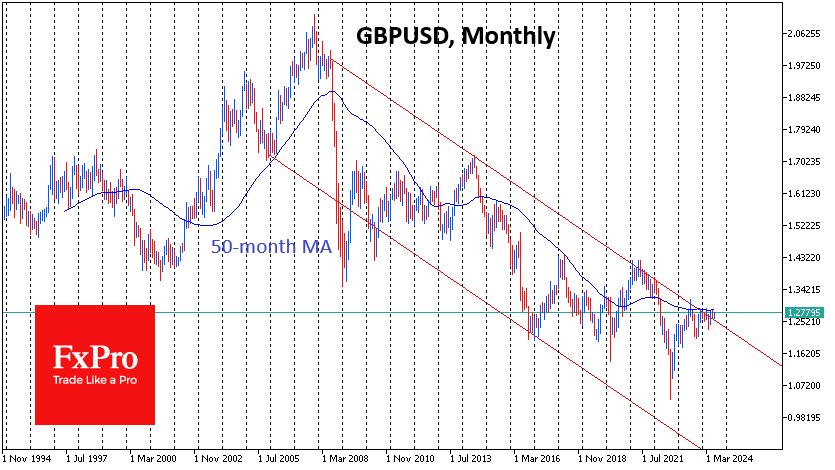
Intraday bias in GBP/USD is turned neutral as it recovered ahead of 55 4H EMA (now at 1.2671). On the upside, break of 1.2760 will resume the rally fro 1.2290 towards 1.2892 resistance. On the downside, break of 1.2670 will resume the pull back from 1.2760 to near term channel support (now at 1.2573).
In the bigger picture, price actions from 1.3141 medium term top are seen as a corrective pattern. Fall from 1.2892 is seen as the third leg which might have completed already. Break of 1.2892 resistance will argue that larger up trend from 1.0351 (2022 low) is ready to resume through 1.3141. Meanwhile, break of 1.2298 support will extend the corrective pattern instead.
Euro Rebounds With Sterling, Dollar Softens Despite Solid Durable Goods
Euro rebounded notably today despite the absence of substantial news from Europe. Sterling followed suit, shrugging off poor UK retail sales data. Conversely, Dollar ignored upbeat durable goods data and weakened alongside Yen and Swiss Franc. Commodity currencies displayed mixed performance. It appears that traders are lightening up their positions ahead of the long weekend in the UK and the US.
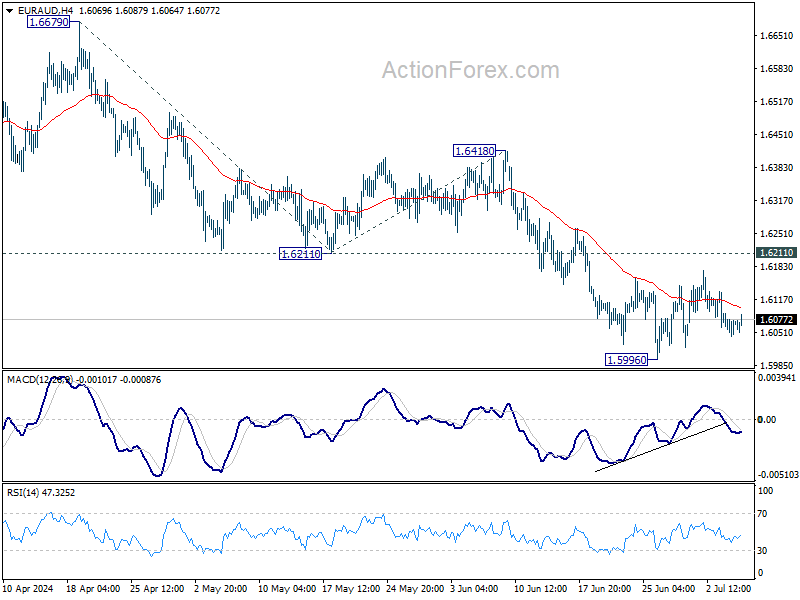
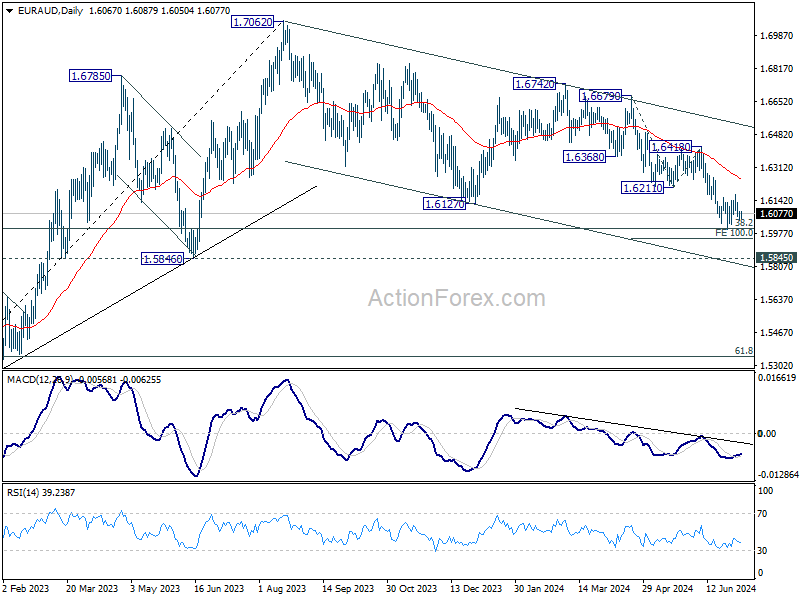
Technically, EUR/AUD is a focus as Euro is trying to strengthen broadly. Sustained break of 55 D EMA (now at 1.6412) will argue that fall from 1.6742, as the third leg of the corrective pattern from 1.7062, has completed. In this case, stronger rally would be seen back towards 1.6742 resistance. This development if realized, might be accompanied by strengthen in EUR/USD and weakness in AUD/USD simultaneously.
In Europe, at the time of writing, FTSE is down -0.38%. DAX is down -0.39%. CAC is down -0.26%. UK 10-year yield is up 0.030 at 4.291. Germany 10-year yield is up 0.019 at 2.619. Earlier in Asia, Nikkei fell -1.17%. Hong Kong HSI fell -1.38%. China Shanghai SSE fell -0.88%. Singapore Strait Times fell -0.18%. Japan 10-year JGB yield rose 0.0071 to 1.010.
US durable goods orders rise 0.7% mom, ex-transport orders up 0.4% mom
US durable goods orders rose 0.7% mom to USD 284.1B in April, above expectation of 0.5% mom. Ex-transport orders rose 0.4% mom to USD 187.9B, above expectation of 0.1% mom. Ex-defense orders was flat at 268.0B. Transportation equipment rose 1.2% mom to USD 96.2B.
Canada's retail sales falls -0.2% mom in Mar, slightly worse than expectations
Canada's retail sales value fell -0.2% mom to CAD 66.4B in March, slightly worse than expectation of -0.1% mom. Sales were down in seven of nine subsectors and were led by decreases at furniture, home furnishings, electronics and appliances retailers.
Core retail sales—which exclude gasoline stations and fuel vendors and motor vehicle and parts dealers—were down -0.6% om.
Advance estimate suggests that that sales increased 0.7% mom in April.
ECB's Schnabel warns against hasty moves following likely June cut
ECB Executive Board member Isabel Schnabel indicated in an interview that if inflation outlook and upcoming data support a sustainable convergence towards 2% target, "a rate cut in June will be likely."
However, Schnabel emphasized the need for caution regarding further rate cuts. She advised giving the situation "sufficient time" and warned against "moving too quickly", noting the risk of cutting interest rates too fast. Schnabel stressed that it is crucial to avoid such premature actions.
Regarding the broader economic context, Schnabel observed a "gradual recovery" in Eurozone economy, alongside a continuing decline in inflation. She expressed optimism, stating that these trends justify the hope of "returning to price stability without a recession."
UK retail sales falls -2.3% mom in Apr, vs exp -0.6% mom
UK retail sales volume fell sharply by -2.3% mom in April, much worse than expectation of -0.6% mom. Sales volumes fell across most sectors, with clothing retailers, sports equipment, games and toys stores, and furniture stores doing badly as poor weather reduced footfall. More broadly, sales volumes rose by 0.7% in the three months to April 2024 when compared with the previous three months
Japan's core CPI eases to 2.2% in Apr, marking second month of slowdown
Japan's CPI core, which excludes food, decelerated from 2.6% yoy to 2.2% yoy in April. This aligns with market expectations and marks the second consecutive month of decline from February's 2.8%. Despite the slowdown, core inflation has remained at or above BoJ's 2% target for the 25th straight month.
CPI core-core, which strips out both food and energy costs, also showed signs of easing, slowing from 2.9% yoy to 2.4% yoy. This is the slowest pace of increase since September 2022. Meanwhile, headline CPI, which includes all items, fell from 2.7% yoy to 2.5% yoy.
A closer look at the major components reveals varied trends. Food prices rose by 3.5% yoy, but this was a moderation from 4.6% yoy increase seen in March. The surge in accommodation fees, up 18.8% yoy, was driven by a revival in inbound tourism. Energy prices edged up slightly by 0.1% yoy, with increases in kerosene and gasoline prices leading the way. Service prices also showed a deceleration, rising by 1.7% yoy compared to 2.1% yoy increase in the previous month.
RBNZ stresses vigilance on inflation, prepared to raise rates if necessary
In an interview today, RBNZ Assistant Governor Karen Silk highlighted the central bank's readiness emphasized that there are "risks still to the upside in the near term" regarding inflation. She stated that RBNZ is "absolutely" prepared to raise interest rates if necessary, adding, "Right now we are saying that the level of restrictiveness is there, but we are awake at the wheel."
Silk pointed out that the central bank's primary concern is domestic inflation, particularly noting the significant miss last quarter when non-tradables inflation hit 5.8%, compared to RBNZ's forecast of 5.3%. "Our concern is in that near term, around what are we really seeing in terms of domestic aligned inflation," she explained.
Separately, Deputy Governor Christian Hawkesby reinforced the cautious stance, stating that "cutting interest rates is not part of near-term discussion." He acknowledged the near-term inflation risks are to the upside but expressed confidence that medium-term inflation is returning to target.
Hawkesby emphasized that no single data point will trigger a rate hike, but the bank is closely watching domestic inflation pressures and expectations. He also noted the significant uncertainty surrounding tradable inflation moving forward.
RBNZ's central projection is for headline inflation to fall back into its 1-3% target band by the fourth quarter of this year. However, the bank now projects that it won't achieve its 2% goal until mid-2026.
New Zealand's exports falls -2.6% yoy in Apr, imports down -0.7% yoy
In April, New Zealand's goods exports fell by -2.6% yoy to NZD 6.4B, while goods imports decreased by -0.7% yoy to NZD 6.3B. Contrary to expectations of a NZD -202m deficit, trade balance recorded a surplus of NZD 92m.
Examining the top monthly export movements by country, exports to China decreased by NZD -206m (-11% yoy), and exports to Australia fell by NZD -17m (2.4% yoy). In contrast, exports to the US increased by NZD 35m (4.9% yoy), exports to EU rose by NZD 62m (13% yoy), and exports to Japan surged by NZD 91m (26% yoy).
On the import side, imports from China increased by NZD 120m (10% yoy), and imports from South Korea soared by NZD 371m (119% yoy). However, imports from the EU decreased by NZD -79m (-8.1% yoy), and imports from the US dropped by NZD -154m (24% yoy). Imports from Australia grew modestly by NZD 9.8m (1.4% yoy).
GBP/USD Mid-Day Outlook
Daily Pivots: (S1) 1.2674; (P) 1.2710; (R1) 1.2736; More...
Intraday bias in GBP/USD is turned neutral as it recovered ahead of 55 4H EMA (now at 1.2671). On the upside, break of 1.2760 will resume the rally fro 1.2290 towards 1.2892 resistance. On the downside, break of 1.2670 will resume the pull back from 1.2760 to near term channel support (now at 1.2573).
In the bigger picture, price actions from 1.3141 medium term top are seen as a corrective pattern. Fall from 1.2892 is seen as the third leg which might have completed already. Break of 1.2892 resistance will argue that larger up trend from 1.0351 (2022 low) is ready to resume through 1.3141. Meanwhile, break of 1.2298 support will extend the corrective pattern instead.
Economic Indicators Update
| GMT | Ccy | Events | Actual | Forecast | Previous | Revised |
|---|---|---|---|---|---|---|
| 22:45 | NZD | Trade Balance (NZD) Apr | 91M | -202M | 588M | 476M |
| 23:01 | GBP | GfK Consumer Confidence May | -17 | -18 | -19 | |
| 23:30 | JPY | National CPI Y/Y Apr | 2.50% | 2.70% | ||
| 23:30 | JPY | National CPI ex Fresh Food Y/Y Apr | 2.20% | 2.20% | 2.60% | |
| 23:30 | JPY | National CPI ex Food & Energy Y/Y Apr | 2.40% | 2.90% | ||
| 06:00 | GBP | Retail Sales M/M Apr | -2.30% | -0.60% | 0.00% | |
| 06:00 | EUR | Germany GDP Q/Q Q1 F | 0.20% | 0.20% | 0.20% | |
| 12:30 | CAD | Retail Sales M/M Mar | -0.20% | -0.10% | -0.10% | |
| 12:30 | CAD | Retail Sales ex Autos M/M Mar | -0.60% | -0.20% | -0.30% | |
| 12:30 | USD | Durable Goods Orders Apr | 0.70% | 0.50% | 2.60% | 0.90% |
| 12:30 | USD | Durable Goods Orders ex Transportation Apr | 0.40% | 0.10% | 0.20% | 0.00% |
| 14:00 | USD | Michigan Consumer Sentiment May | 67.4 | 67.4 |