

Sample Category Title
EUR/JPY Daily Outlook
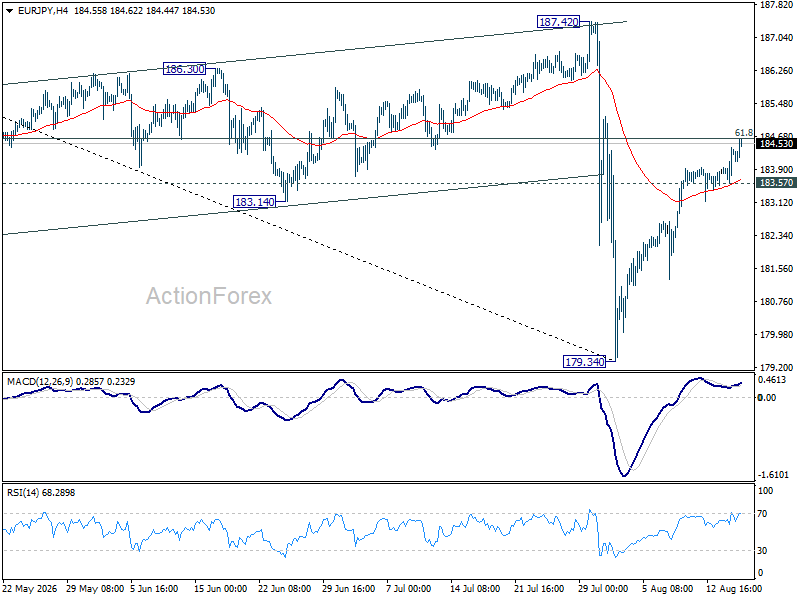
EUR/JPY's rise from 179.34 is still in progress and intraday bias remains on the upside. Fall from 187.93 could have completed as a three wave correction. Decisive break of 61.8% retracement of 187.93 to 179.34 at 184.64 will pave the way to retest 187.93 high. On the downside, below 183.57 minor support will turn bias neutral again.
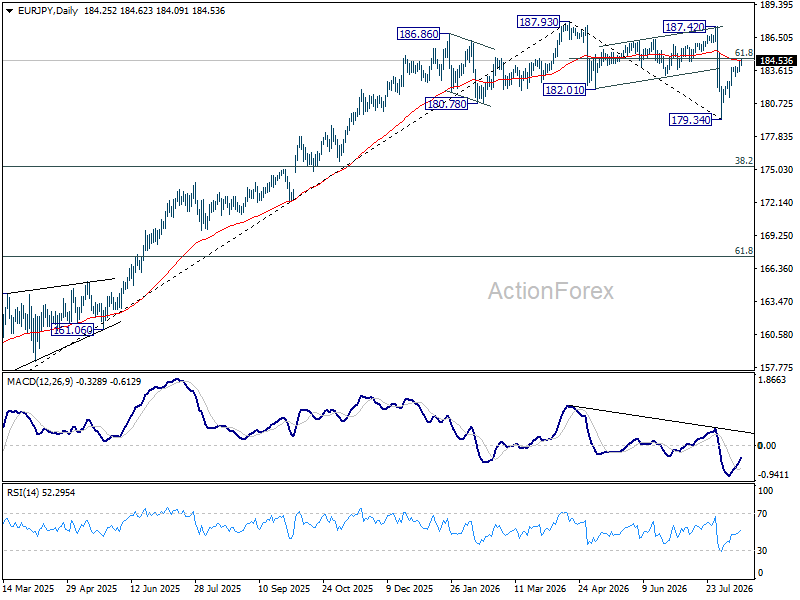
In the bigger picture, strong rebound from rising 55 W EMA (now at 180.45) keeps the up trend from 114.42 (2020 low) intact. Break of 187.93 will target 78.6% projection of 124.37 (2022 low) to 175.41 (2025 high) from 154.77 at 194.88. However, sustained break of 55 W EMA will argue that it's already in a medium term down trend to 175.41 resistance turned support and below.
EUR/GBP Daily Outlook
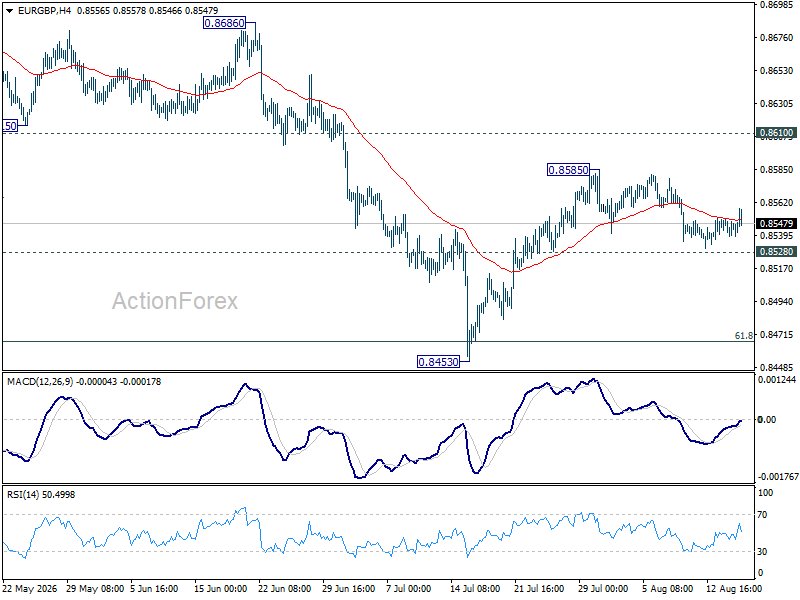
Intraday bias in EUR/GBP remains neutral. While rebound from 0.9453 might extend, strong resistance should be seen from 0.8610 support turned resistance to limit upside. On the downside, break of 0.8528 support will argue that the corrective rebound from 0.8453 has completed, and turn bias back to the downside for retesting this low. However, firm break of 0.8610 will bring stronger rally to falling channel resistance (now at 0.8650).
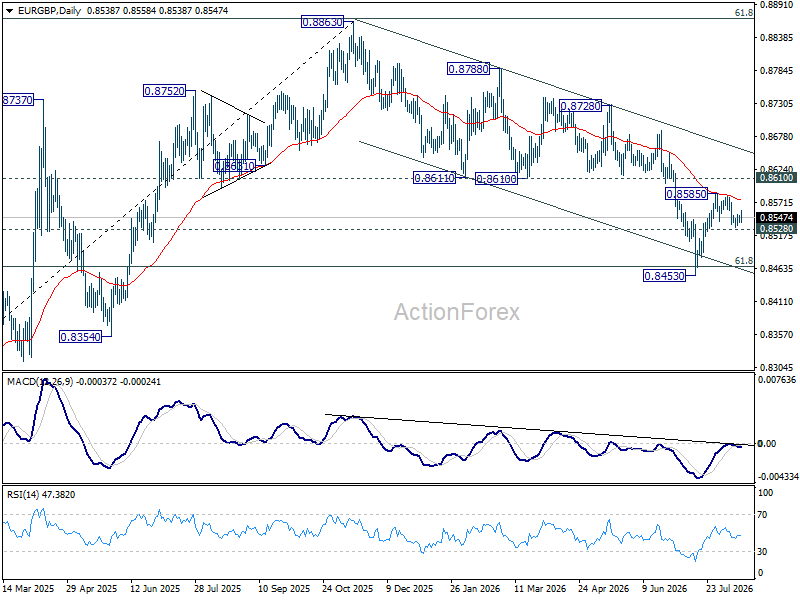
In the bigger picture, rise from 0.8221 (2024 low) should have completed at 0.8863, just ahead of 38.2% retracement of 0.9267 (2025 high) to 0.8221 at 0.8867. Deeper fall would be seen back to 0.8221. For now, outlook will be neutral at best as long as 0.8610 support turned resistance hold.
EUR/AUD Daily Outlook
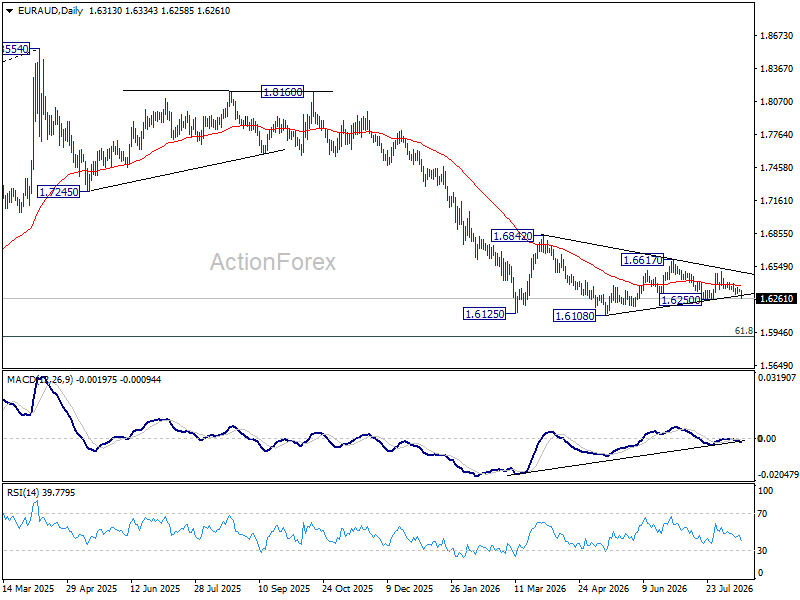
EUR/AUD is holding above 1.6250 and intraday bias remains neutral. Overall, corrective pattern from 1.6108 (or 1.6125) is still extending. On the downside, break of 1.6250 will bring deeper fall back to retest 1.6108 low. On the upside, above 1.6358 will bring stronger rebound to 1.6503 resistance.
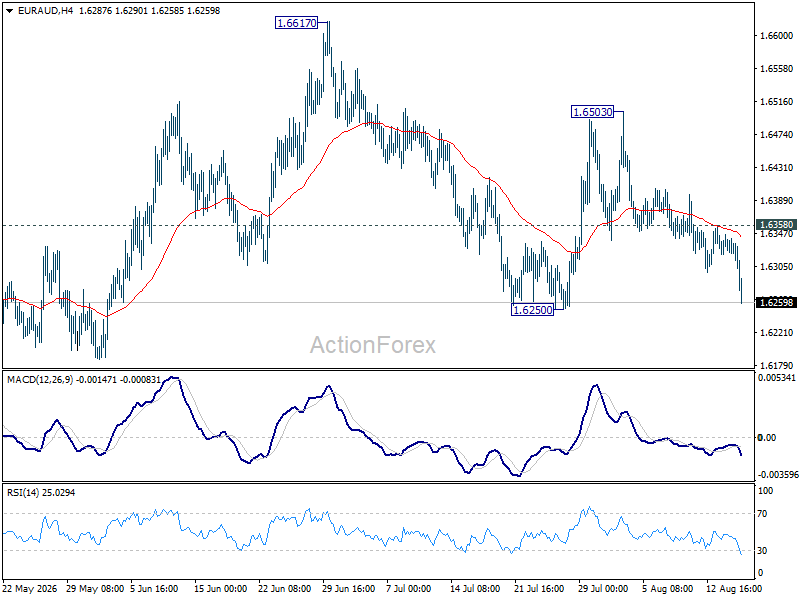
In the bigger picture, outlook will stay bearish as long as 1.6842 resistance holds. Fall from 1.8554 (2025 high) is expected to continue to 61.8% retracement of 1.4281 to 1.8554 at 1.5913. Decisive break there will pave the way back to 1.4281 (2022 low). However, firm break of 1.6842 should confirm medium term bottoming, and bring stronger rally.
EUR/CHF Daily Outlook
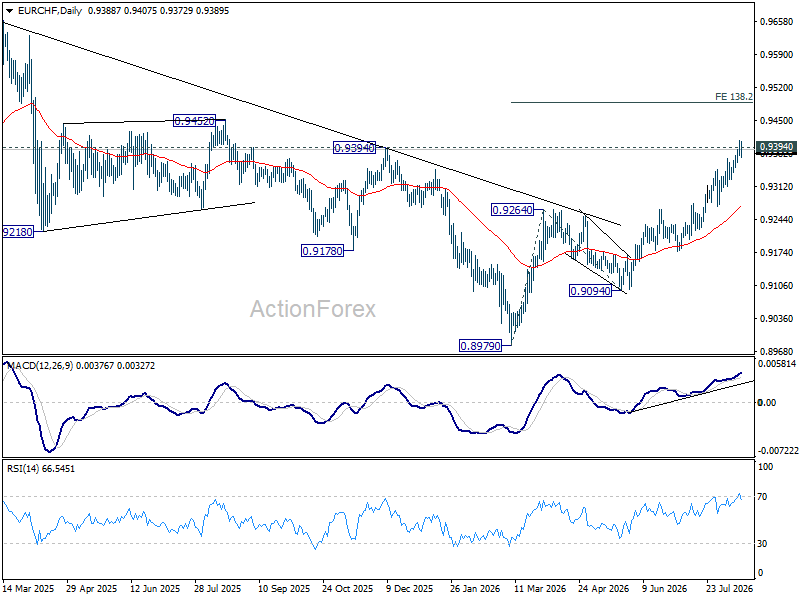
Intraday bias in EUR/CHF is turned neutral first with current retreat. Some consolidations would be seen below 0.9408 temporary top. But further rally is expected as long as 0.9326 support holds. Above 0.9408 will extend larger rise to 138.2% projection of 0.8979 to 0.9264 from 0.9094 at 0.9488.
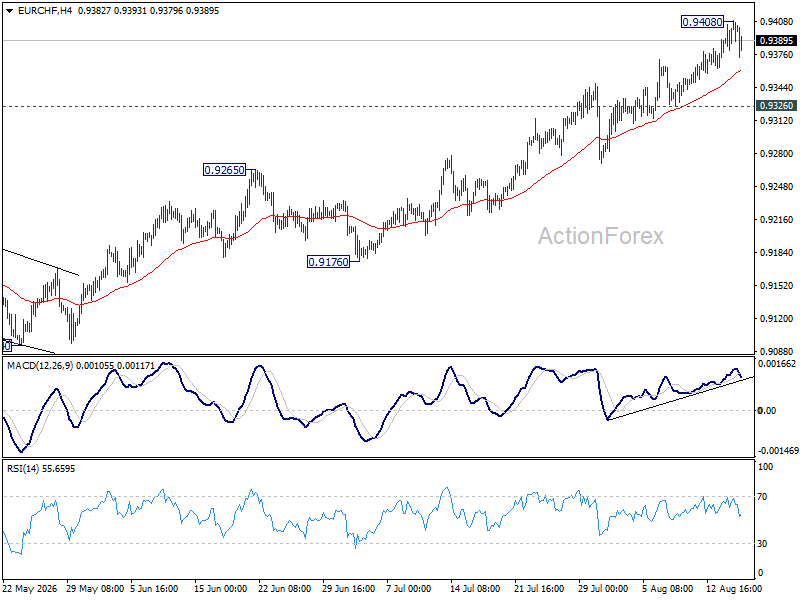
In the bigger picture, the break of 0.9394 resistance solidify the case that rise from 0.8979 medium term is at least reversing the fall from 0.9928 (2024 high), with prospect of developing into a medium term up trend. Further rally should be seen to 0.9660 resistance next. This will remain the favored case as long as 0.9264 resistance turned support holds, in case of pullbacks.
GBP/NZD: Political Noise Meets a Hawkish Kiwi at a Critical Apex
Sterling enters this week on a mixed footing. Last month's Bank of England decision struck a notably hawkish tone, with the vote split 6-3 in favor of holding rates, three members pushed for a hike, a signal the Bank remains genuinely worried about inflation as Middle East-driven energy costs work through the economy. Yet political uncertainty continues to simmer following Keir Starmer's unexpected June resignation, leaving fiscal credibility, and by extension sterling, more sensitive than usual to how Labour manages the transition.
The kiwi, meanwhile, is being propped up almost entirely by rate expectations. Markets currently price an 88% probability of an RBNZ hike in September, even after New Zealand's unemployment rate climbed to a decade-high 5.6%. UBS argues the labor data isn't as bearish as it looks, since the rise was driven mainly by more people entering the workforce rather than layoffs, keeping the central bank's tightening path intact. Softer inflation expectations and a weaker July manufacturing PMI, however, have started to inject some doubt into just how far the RBNZ can realistically go.
The result: a pound navigating political noise against a kiwi riding hawkish rate bets that may be more fragile than markets currently assume.
Technical Analysis of GBP/NZD
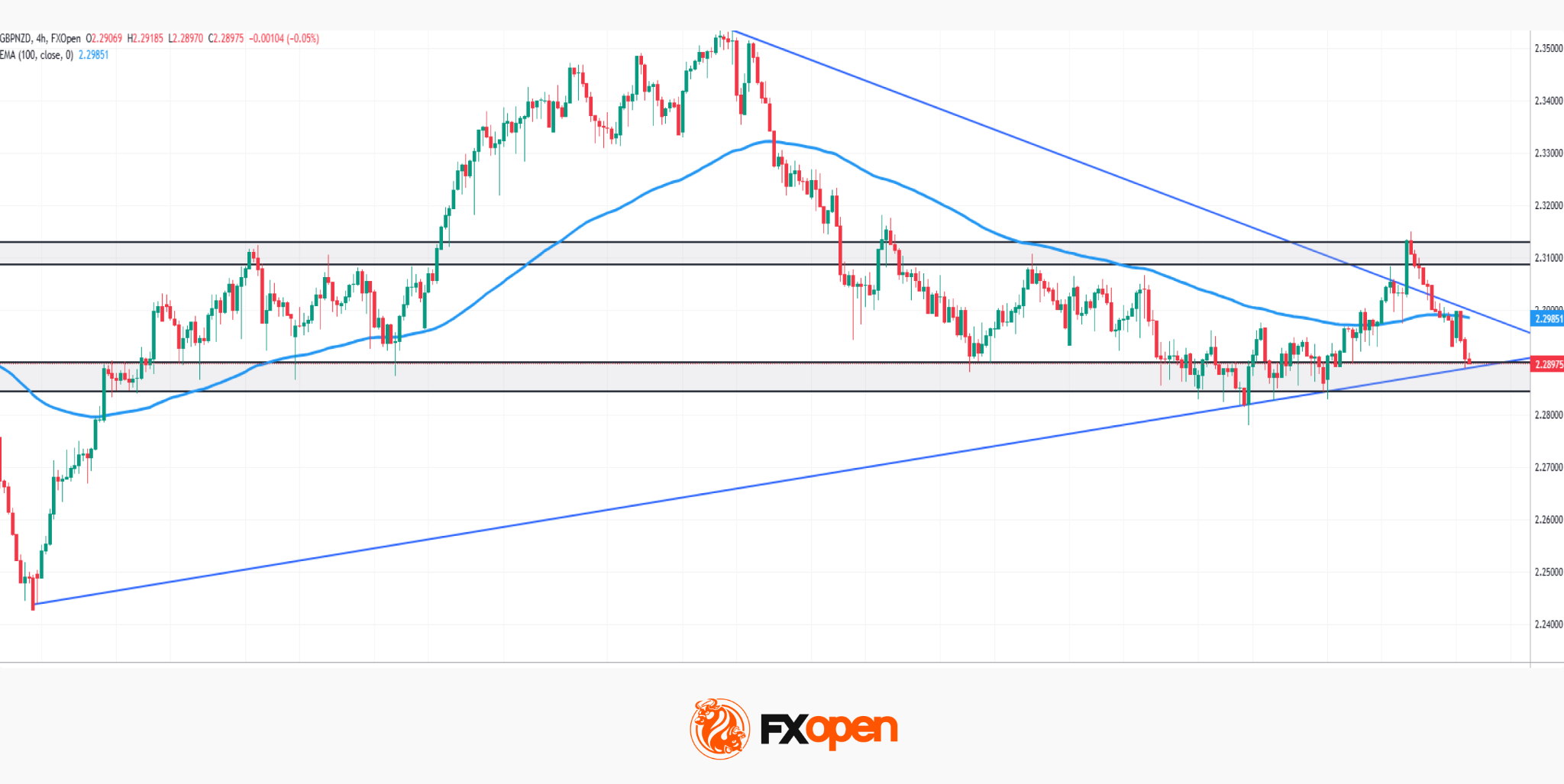
As GBP/NZD chart shows, the pair has been compressing into a broad symmetrical triangle since early June, with a descending trendline from July's highs near 2.3550 converging with an ascending trendline off June's lows, both meeting right around current price near 2.2900-2.2980, where the 100-period EMA also sits. This confluence, together with the well-established 2.2900-2.3100 support and resistance zone, marks a decisive juncture for the pair.
Bullish Scenario
Should buyers defend the ascending trendline and reclaim the 100-period EMA, the path would open toward the 2.3100 resistance, the upper boundary of the recent range. A confirmed break above this zone, and the descending trendline itself, would signal a genuine shift in momentum, opening the door toward a retest of the July highs near 2.3550.
Bearish Scenario
Conversely, a break below the ascending trendline and the 2.2900 support would expose the broader downtrend that has dominated since early July, with price risking a slide back toward the 2.2800 area and beyond, as the months-long descending structure reasserts itself.
With price coiled right at the apex of this triangle, sitting exactly on the 100-period EMA, GBP/NZD looks primed for a decisive move—will sterling's political noise finally give way to the kiwi's rate story, or does this range hold just a little longer?
Trade over 50 forex markets 24 hours a day with FXOpen. Take advantage of low commissions, deep liquidity, and spreads from 0.0 pips (additional fees may apply). Open your FXOpen account now or learn more about trading forex with FXOpen.
This article represents the opinion of the Companies operating under the FXOpen brand only. It is not to be construed as an offer, solicitation, or recommendation with respect to products and services provided by the Companies operating under the FXOpen brand, nor is it to be considered financial advice.
China’s Economy Is Losing Momentum – Weak Domestic Demand and the Property Crisis
- China’s economy lost momentum in July, with weak retail sales, declining investment and a deepening property market downturn weighing on domestic demand.
- Strong exports are increasingly supporting growth, but they are also putting upward pressure on the yuan, prompting authorities to manage the pace of currency appreciation.
- Weaker economic data and rising deflationary risks are increasing expectations of further government stimulus to help China meet its 2026 growth target.
China’s economy lost noticeable momentum at the beginning of the second half of 2026. July data showed weaker industrial activity and consumption, while falling investment and the prolonged property market crisis remain increasingly serious problems. At the same time, China is relying more heavily on exports to support economic growth, increasing the importance of exchange-rate policy and government efforts to prevent an excessive appreciation of the yuan.
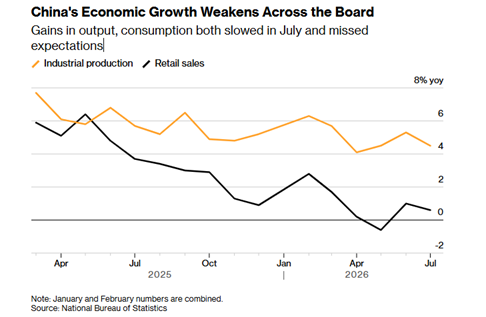
In July, industrial production rose by 4.5% year on year, while retail sales increased by just 0.6%. Both figures came in below market expectations and confirmed that domestic demand remains one of the weakest parts of the Chinese economy. The labour market also deteriorated. The urban unemployment rate increased from 5% to 5.2%, which could further limit households’ willingness to increase spending.
Investment and the property market deepen the problems
Investment data look even more concerning. Fixed-asset investment fell by 6.7% year on year in the January–July period, following a 5.7% decline in the first half of the year. The situation remains particularly difficult in the property market, which has been one of the main sources of weakness in the Chinese economy for several years.
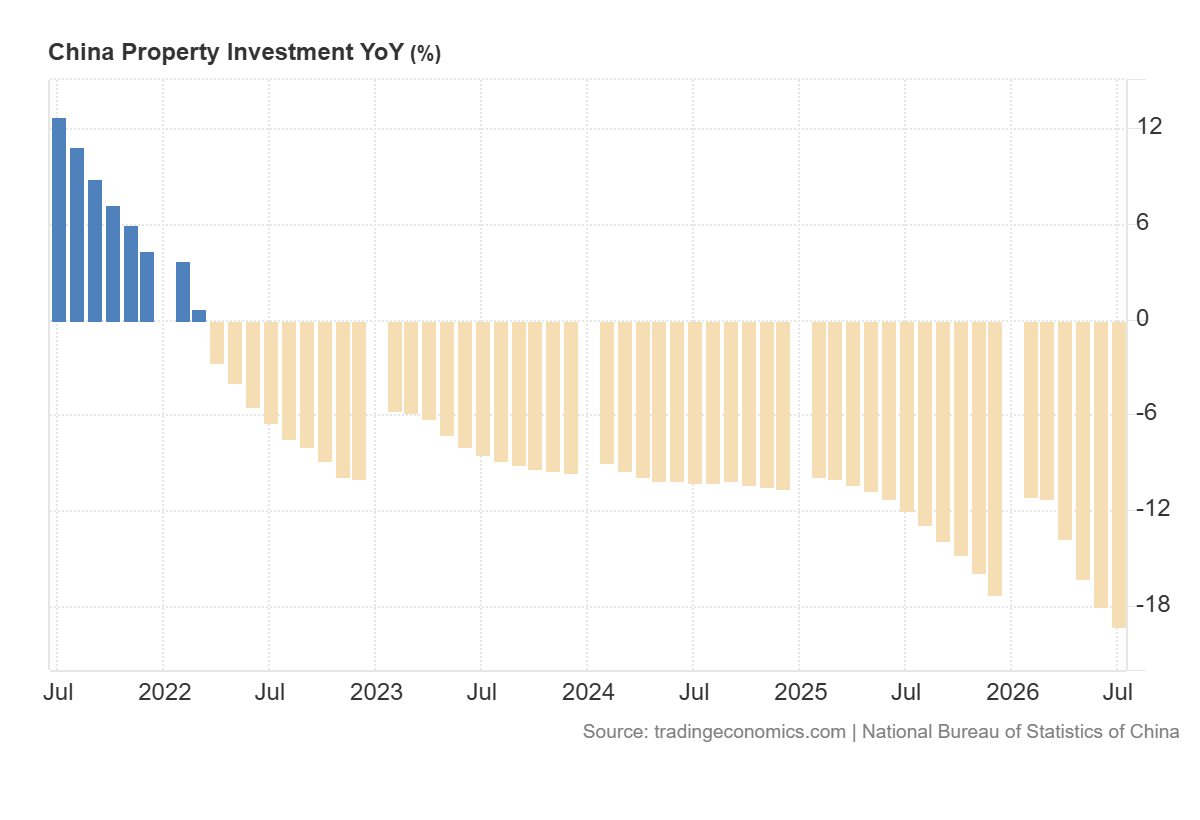
Investment in the sector fell by as much as 19.2%, marking a new record decline. At the same time, the pace of falling new-home prices accelerated again, making it harder to restore confidence among both developers and households. The prolonged weakness of the property market is reducing companies’ willingness to invest and is also weighing on household wealth and consumer sentiment.
Consumption remains a weak point of the economy
Consumption also remains subdued. The passenger car market provides a clear example, with sales falling by 21% in July. This is important for the broader economy because the automotive sector accounts for around 8% of total retail sales of goods.
Car manufacturers are also facing high raw-material costs and intense price competition, which are putting pressure on profitability and limiting their ability to increase investment. Weak car sales are another sign that households remain cautious and are reluctant to increase spending significantly.
Economic activity in July was also negatively affected by unusually severe weather conditions. Heavy rainfall, strong winds and flooding led to temporary closures of factories and ports, power supply disruptions and evacuations. The impact of these factors should be temporary, but much of the weakness in the Chinese economy is more persistent in nature. The property crisis, households’ low propensity to consume and subdued investment activity cannot be explained by adverse weather alone.
Exports are becoming an increasingly important engine of growth
One consequence of weak domestic demand is China’s growing dependence on exports as a source of economic growth. Overseas sales remain one of the main drivers of activity at a time when consumption and investment are not strong enough to generate more balanced growth.
However, such a growth structure also makes China more vulnerable to changes in external demand, trade tensions and exchange-rate fluctuations. The more important exports become, the greater the significance of the authorities’ policy towards the yuan.
Deflationary pressure increases the risk of further slowdown
Prices are another source of concern. In July, both consumer and producer inflation slowed more sharply than the market had expected. This once again increased concerns about mounting deflationary pressure.
Persistently weak price growth can become a problem in itself. If households expect prices to fall further, they may postpone purchases, while companies may delay investment in anticipation of weaker demand and lower prices. As a result, subdued price dynamics could further reinforce the weakness of domestic demand.
Strong exports support the yuan and increase foreign-exchange reserves
The growing importance of exports is also reflected in developments in the foreign-exchange market. China’s foreign-exchange reserves, measured in the balance of payments, increased by USD 74.7 billion in the second quarter of 2026. This was the largest quarterly increase since the first quarter of 2014.
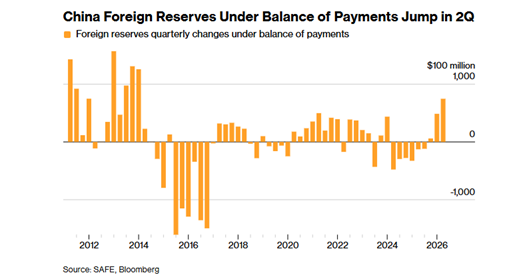
At the same time, the yuan appreciated for a sixth consecutive quarter, while the onshore exchange rate moved close to its strongest level since 2023. Strong exports were one of the main sources of foreign-currency inflows, generating a substantial supply of dollars in the Chinese market.
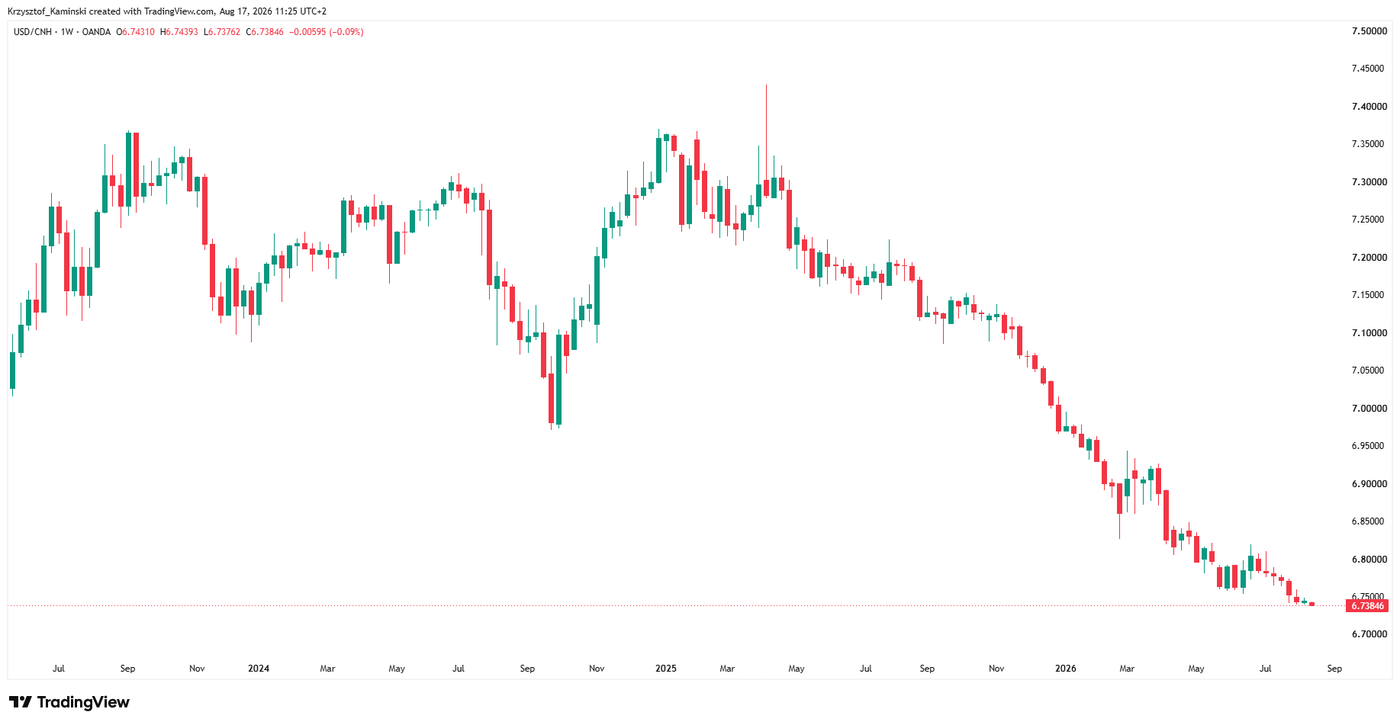
The People’s Bank of China is slowing the pace of yuan appreciation
Chinese authorities absorbed part of the foreign-currency inflows, limiting the pace of the yuan’s appreciation. The People’s Bank of China continued to set the official reference rate at a weaker level than the market had expected, although the fixing itself reached its strongest level in more than three years. This suggests that the authorities are not trying to stop the yuan from strengthening altogether, but rather to control the pace of its appreciation.
This is particularly important for the authorities at a time when exports remain one of the main engines of growth. An excessively rapid appreciation of the yuan could weaken the price competitiveness of Chinese goods in international markets and further weigh on the economy while domestic demand remains subdued.
Weak domestic demand remains China’s biggest challenge
China’s biggest challenge remains the imbalance between a relatively resilient export sector and weak domestic demand. Consumption, investment and the property market are still not strong enough to provide a solid foundation for more balanced growth.
While the deterioration in activity caused by adverse weather may fade relatively quickly, addressing the economy’s structural problems will require more decisive action. Without a clear rebound in consumption and investment, China’s economy will remain dependent on exports and state support, while achieving this year’s growth target will become increasingly difficult.
Gold Stalls at 4,450 — What Will Break the Deadlock?
TL;DR: Gold's rally paused exactly at major trendline resistance near 4,450, but shallow follow-through selling suggests consolidation, not reversal — with this week's Iran truce deadline and early-September US data now the two catalysts that will decide the next move.
Gold's Rally Pauses, But Bulls Haven't Lost Control
Gold's rally paused last week almost exactly at a major technical ceiling, with price rejected around 4,449.73, where the descending trendline from February's 5,598.75 high now sits. Yet follow-through selling has been limited. Gold remains comfortably above 4,317.72 horizontal support and the 55 4H EMA around 4,311.63, leaving the pullback looking more like consolidation than reversal.
That resilience reflects a macro backdrop that has changed substantially over the past month. Gold's main driver has been a sharp reduction in expected Fed tightening. As recently as mid-July, some Wall Street forecasts were entertaining a much more aggressive policy reversal, with one framing the range of outcomes as anything from the Fed standing pat to effectively reversing all of last year's rate cuts. Two softer-than-expected inflation reports have since changed that discussion — September hike odds have fallen from roughly 60% earlier this month to around 25–30%, while broader pricing increasingly points to only one or two modest additional moves rather than an extended tightening cycle.
Fed Fine-Tuning Is Gold's Main Support
A sustained tightening campaign would threaten to push Treasury yields and the Dollar higher for an extended period, creating a much more difficult environment for a non-interest-paying asset. A limited "fine-tuning" exercise is considerably easier for Gold to absorb. As long as markets continue to believe the Fed is dealing with residual inflation risks rather than preparing for another full tightening cycle, the underlying rate backdrop should stay supportive.
But that story hasn't been fully settled. Early-September US employment and inflation data will provide the next major test. Soft jobs and benign inflation would strengthen the argument that the Fed can keep any further tightening limited, potentially giving Gold enough macro support to move beyond current resistance. Strong employment or renewed inflation acceleration would be more problematic, because they would directly challenge the premise behind the rally and could rebuild expectations for a more aggressive rate path.
The Iran Deadline Matters Through Brent $90
Before those US releases arrive, markets face another potential catalyst. The formal 60-day US-Iran truce deadline, stemming from the agreement signed in mid-June, arrives this week. Calling it an intact ceasefire that's simply about to expire would be misleading, however — the arrangement has already been effectively non-functional for weeks, with tanker attacks in the Strait of Hormuz continuing through August.
The question is therefore whether the formal deadline triggers a fresh escalation beyond the current standoff, or simply passes without major change. So far, the US response has leaned more heavily toward economic pressure through financial and trade restrictions rather than the large-scale military strikes President Donald Trump has threatened previously. That's a less escalatory posture for now, and Brent just below $90 provides the clearest market gauge of whether the situation is worsening materially.
Oil is especially important because it links geopolitical risk back to the Fed. If the current standoff persists and Brent continues failing below $90, markets can keep focusing on limited Fed tightening. A decisive oil breakout caused by substantial escalation would reopen inflation concerns and could force investors to reconsider that benign rate path. Gold might initially benefit from geopolitical demand, but a sufficiently large oil shock could eventually become a headwind if it lifts inflation expectations, Treasury yields, and Fed hike pricing.
Two Catalysts, Three Paths for Gold
That leaves Gold with three relatively clear scenarios. If the Iran situation doesn't worsen materially and upcoming US data stay soft, Gold should retain its most straightforward bullish backdrop: contained oil, fading tightening risk, and limited pressure from yields and the Dollar. Fresh Middle East escalation with Fed expectations otherwise benign could also push Gold higher initially, although the strength of the oil response would determine whether that support lasts. Strong US employment or inflation data are the clearest downside risk, because they would attack the current rally at its source by reviving expectations for more aggressive Fed tightening.
ActionForex's Technical View on Gold
Gold's rally stalled precisely at descending trendline resistance drawn from the February high at 5,598.75, currently around the 4,449 area. The pullback since has been shallow: price remains well above both the 55 4H EMA (4,311.63) and a horizontal support pivot just above it (4,317.72) — neither has even been violated yet, consistent with a "healthy pause" rather than a reversal.
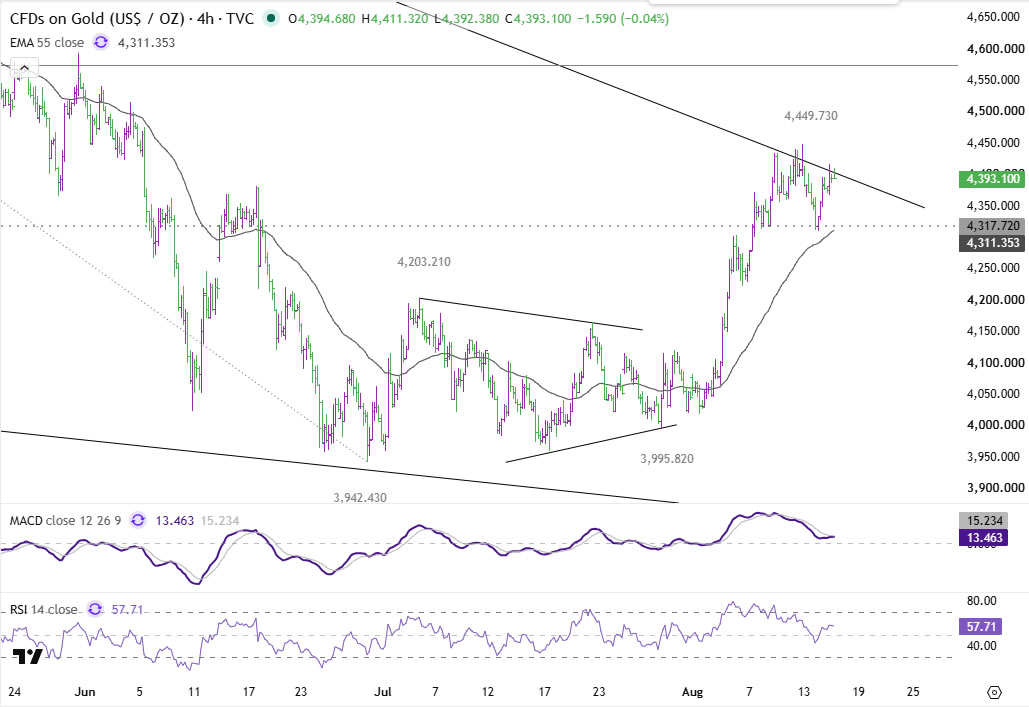
A clean break above 4,449.73 would extend the rally toward 4,575.31, representing the 38.2% retracement of the decline from 5,598.75 to 3,942.43. That would be the next major test of whether the corrective fall from the February high has run its course. On the downside, a sustained break of the 4,317.72–4,311.63 support zone would be the first meaningful evidence that the shallow-pullback thesis is failing.
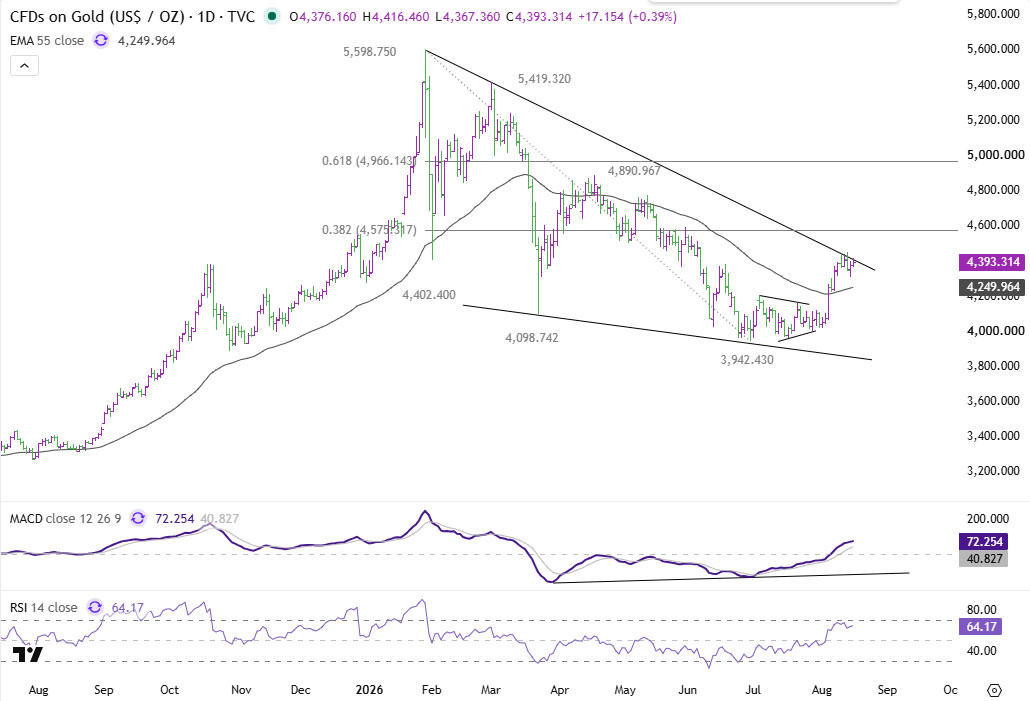
For now, Gold can continue marking time beneath 4,450. Barring major Middle East escalation and a Brent breakout above $90, the bias stays tilted toward another rally toward 4,575. But breaking decisively beyond that level may require early-September US data to do something more important: invalidate the case for renewed Fed tightening rather than merely reduce it.
Key Takeaways
- Gold's rejection at 4,449.73 trendline resistance has produced only a shallow pullback, with both 4,317.72 support and the 55 4H EMA still intact.
- September Fed hike odds have fallen from roughly 60% to 25-30% on two soft inflation reports, the main driver behind Gold's rally toward resistance.
- This week's Iran truce deadline is a secondary catalyst; Brent holding below $90 signals a contained standoff, while a breakout would reopen inflation and Fed tightening risk.
- Early-September US jobs and inflation data are the more consequential test, since only weak data can fully invalidate the case for renewed Fed tightening, not just delay it.
- A break above 4,449.73 opens 4,575.31; a sustained break of 4,317.72-4,311.63 would be the first real evidence the consolidation is turning into a reversal.
EUR/USD at Eight-Week High: What Happens Next
EUR/USD begins the week around 1.1588, reaching its highest level in eight weeks. The euro has been supported by dollar weakness following fresh US economic data, which revived doubts about the stability of the US economy and reduced expectations of imminent Federal Reserve tightening.
The University of Michigan's preliminary consumer sentiment index fell to 51.0 in August, down from 54.2 in July and below the 55.2 forecast. The current conditions index declined to 51.8 from 54.8, while the expectations component dropped to 50.6 from 55.4. At the same time, short-term inflation expectations ticked up to 4.3% from 4.2%, while five-year expectations held steady at 3.3%.
Estimates of US economic growth have also become less confident. The Atlanta Fed's GDPNow model lowered its Q3 GDP growth forecast to 4.3% from 5.8%, while the New York Fed's Nowcast estimates growth at approximately 2.1%. This widens the tension between continued economic activity and deteriorating consumer expectations.
For the dollar, the outlook remains mixed. Weak consumer indicators and lower growth forecasts weigh on the US currency, but elevated short-term inflation expectations prevent markets from completely abandoning the prospect of a hawkish Fed policy stance.
As a result, the baseline for EUR/USD remains moderately positive, but further direction will depend on new signals regarding the US economy and the Federal Reserve's policy stance.
Technical Analysis
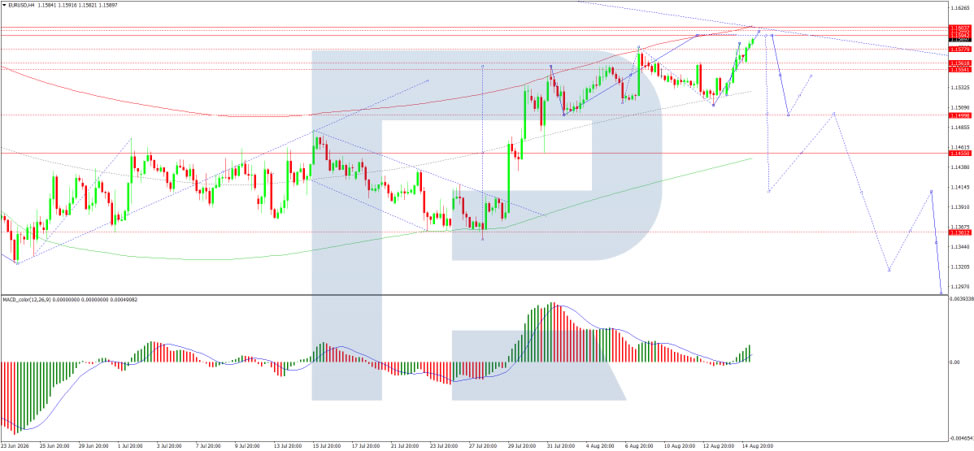
On the H4 chart of EUR/USD, the market continues to develop its consolidation range. The consolidation range around the 1.1561 level has practically formed. An upside breakout would suggest a corrective wave developing to 1.1594, followed by a decline to 1.1500. A direct downside breakout would open potential for a downward wave to 1.1400, with the prospect of the trend continuing to 1.1260. Technically, this scenario is confirmed by the MACD indicator-its signal line is above the zero level but pointing strictly downwards, reflecting continued bearish momentum with the potential for the downward trend to persist.
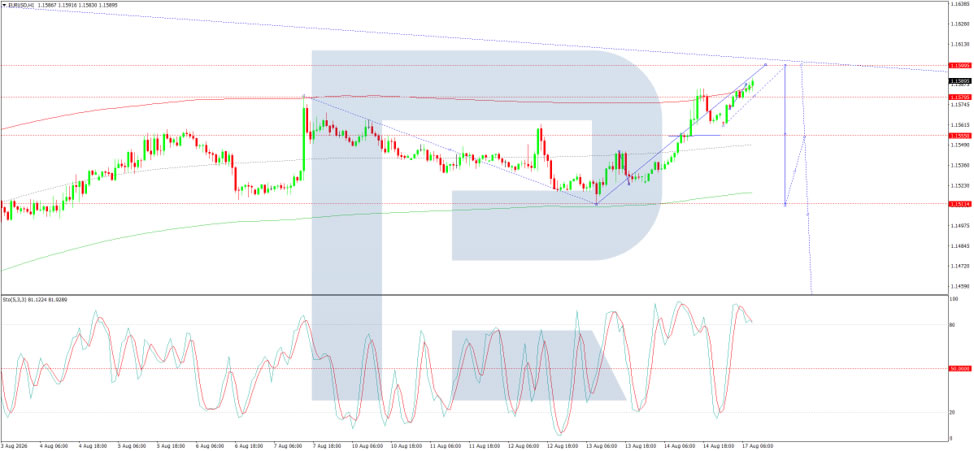
On the H1 chart, the market has completed the next growth wave to the 1.1555 level. A consolidation range is currently forming around this level. A range expansion up to 1.1594 is expected, followed by a decline to 1.1500, with the prospect of continuing the wave to 1.1400. Technically, this scenario is confirmed by the Stochastic oscillator-its signal line is above the 80 level and pointing strictly downwards to 20.
Conclusion
EUR/USD has climbed to an eight-week high, supported by a weaker dollar following disappointing US consumer sentiment data and downward revisions to growth forecasts. The University of Michigan survey showed a sharp decline in confidence, while the Atlanta and New York Fed growth estimates have been trimmed. However, rising short-term inflation expectations keep the prospect of Fed tightening alive, limiting the dollar's downside. Technically, the pair may see a further push towards 1.1594 before a potential pullback to 1.1500, with the broader trend dependent on upcoming US economic data and Fed signals. The bearish structure remains intact, suggesting that any upside may be temporary.
China’s Supply-Demand Divide Widens as Investment Slumps and Retail Sales Stall
China’s July activity data reinforced widening split between resilient production and weak domestic demand, with all three major readings undershooting expectations. Industrial production slowed from 5.3% to 4.5% y/y, below 4.8% consensus. Manufacturing nevertheless continued to provide support, particularly equipment manufacturing and high-tech manufacturing, which grew 9.7% and 13.8% y/y respectively over first seven months.
Consumption disappointed more clearly. Retail sales growth slowed from 1.0% to just 0.6% y/y in July, well below expectations for 1.6%. Sales rose only 0.06% m/m, while consumer-goods retail sales increased just 1.2% over first seven months. Services consumption performed better, with retail sales of services up 5.0%, but overall household spending remains too weak to provide a convincing domestic growth engine.
Investment delivered biggest downside surprise. Fixed-asset investment deteriorated from -5.7% to -6.7% y/y year-to-date, weaker than -6.0% expected. Real-estate development investment plunged -19.2%, but weakness extended well beyond property: infrastructure investment fell -3.6%, manufacturing investment declined -1.7%, and private investment dropped -9.4%. High-tech investment, up 5.0%, remained one of few pockets of strength.
Taken together, simultaneous misses in production, consumption and investment sharpen China’s central macro imbalance rather than simply pointing to a broad slowdown. Supply-side activity is still holding up better than domestic demand, while investment weakness is spreading beyond property. NBS itself acknowledged that imbalance between strong supply and weak demand remains acute, keeping pressure on policymakers to support household spending and private-sector activity more forcefully.
Data Summary
| Indicator | Actual | Expected | Previous |
|---|---|---|---|
| Industrial Production y/y | 4.5% | 4.8% | 5.3% |
| Equipment Manufacturing YTD y/y | 9.7% | — | — |
| High-Tech Manufacturing YTD y/y | 13.8% | — | — |
| Manufacturing PMI | 49.2 | — | — |
| Retail Sales y/y | 0.6% | 1.6% | 1.0% |
| Retail Sales m/m | 0.06% | — | — |
| Consumer Goods Retail Sales YTD y/y | 1.2% | — | — |
| Services Retail Sales YTD y/y | 5.0% | — | — |
| Fixed Asset Investment YTD y/y | -6.7% | -6.0% | -5.7% |
| FAI ex-Real Estate YTD y/y | -3.7% | — | — |
| Real Estate Development Investment YTD y/y | -19.2% | — | — |
| Infrastructure Investment YTD y/y | -3.6% | — | — |
| Manufacturing Investment YTD y/y | -1.7% | — | — |
| Private Investment YTD y/y | -9.4% | — | — |
| High-Tech Industry Investment YTD y/y | 5.0% | — | — |
Key Takeaways
- All three major activity indicators missed expectations, reinforcing evidence that China’s July momentum weakened more than markets anticipated.
- Industrial production slowed from 5.3% to 4.5% y/y, but still held up better than domestic-demand indicators.
- Retail sales growth weakened from 1.0% to just 0.6% y/y, far below 1.6% consensus, highlighting persistent consumer caution.
- Fixed asset investment deteriorated from -5.7% to -6.7% y/y YTD, versus -6.0% expected, with weakness extending beyond property into infrastructure, manufacturing and private investment.
- Real-estate development investment fell -19.2% y/y in first seven months, while private investment declined -9.4%, underscoring continued weakness in traditional domestic growth engines.
- High-tech manufacturing and investment remained relative bright spots, but they were not enough to offset broader demand weakness.
- Overall, July data strengthen “strong supply, weak demand” narrative explicitly acknowledged by NBS, keeping pressure on Beijing to do more to support consumption and private-sector investment.
Gold Analysis: Profit-Taking After the Rally
Gold continues to trade close to multi-month highs following its recent advance, which was supported by the latest US inflation data. July’s CPI broadly matched market expectations, reducing the likelihood of a Federal Reserve rate hike in September. Lower expectations for further monetary tightening remain supportive for gold, as elevated interest rates increase the opportunity cost of holding the non-yielding asset. According to CNBC, some investors have begun taking profits after the rally. Over the coming weeks, expectations surrounding the Fed’s interest-rate path are likely to remain one of the main drivers of the precious metal.
Technical Analysis of Gold
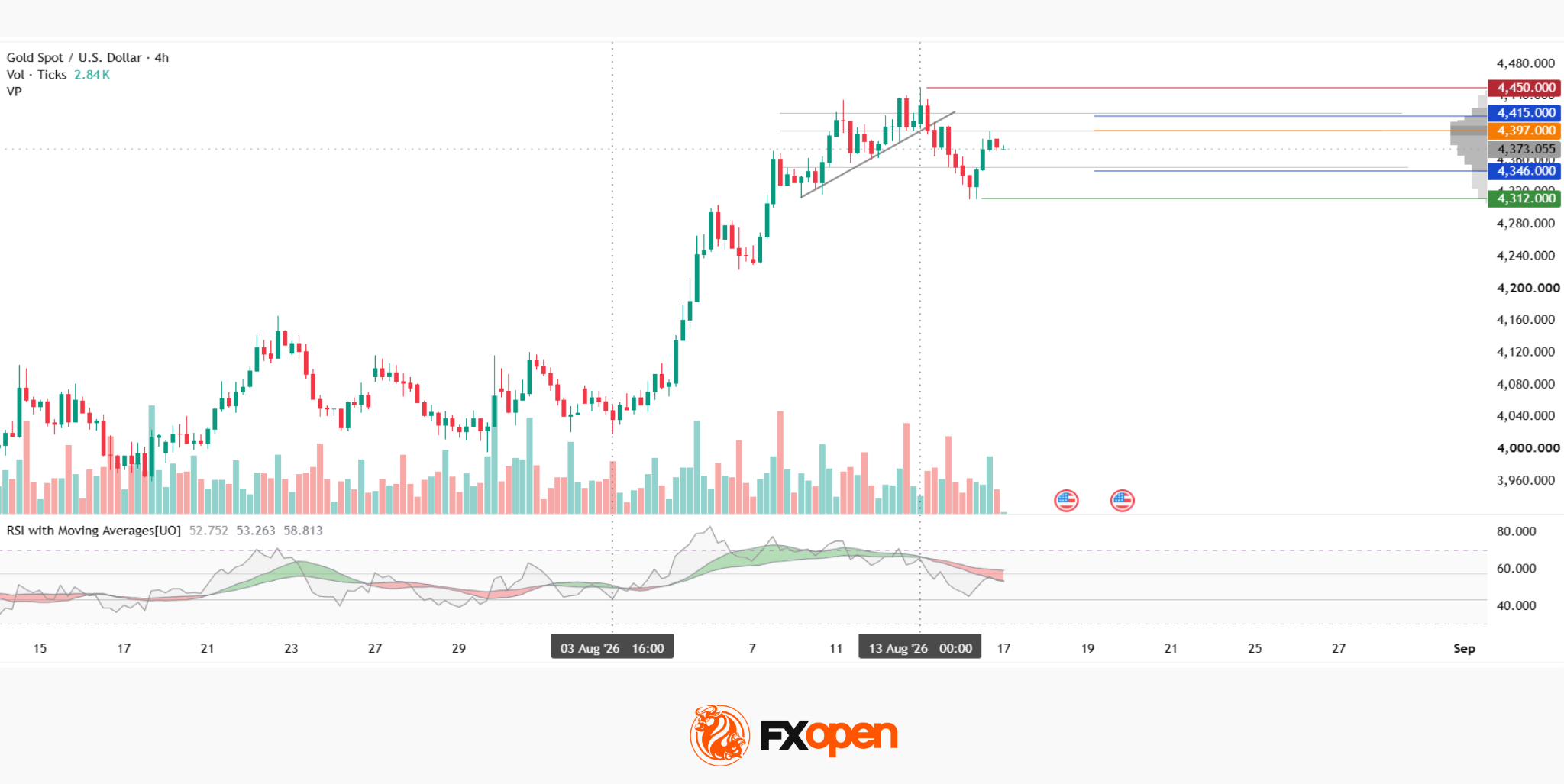
The four-hour XAU/USD chart shows a sustained uptrend that lifted the price towards the red resistance level at $4,450. An ascending trendline developed during the rally, but on 13 August the price broke below it on increased volume. The subsequent decline established a green support area around $4,312.
Following a rebound, gold returned to the dense area of the current market profile and is now trading between the Point of Control (POC) at $4,397 and the lower boundary of the profile at $4,346. If selling pressure builds, the $4,312 support zone could become increasingly significant.
A continuation of the upward move would bring the price into a relatively strong cluster of technical levels. The first obstacles are the POC at $4,397 and the upper boundary of the profile at $4,415. Beyond these levels, attention would shift towards the trend high around $4,450.
The RSI + MAs indicator currently shows readings of 52, 53 and 58. The oscillator and fast moving average have moved back into the neutral zone, while the slower moving average is following the same direction.
Key Takeaways
The main driver for gold remains the market’s expectations for the Federal Reserve’s interest-rate path. A further decline in expectations for rate hikes could continue to support buyers, while more hawkish signals from the central bank could increase selling pressure as the market undergoes a post-rally correction.
In the short term, gold is also likely to remain sensitive to movements in the US dollar and Treasury yields, both of which can significantly influence demand for the precious metal.
Start trading commodity CFDs with tight spreads (additional fees may apply). Open your trading account now or learn more about trading commodity CFDs with FXOpen.
This article represents the opinion of the Companies operating under the FXOpen brand only. It is not to be construed as an offer, solicitation, or recommendation with respect to products and services provided by the Companies operating under the FXOpen brand, nor is it to be considered financial advice.