Sample Category Title
Dollar Index Faces Imminent Breakdown Risk as Fed Hike Path Shrinks
TL;DR: Dollar Index is approaching a critical support level as September Fed hike odds collapse from likely to roughly a two-in-three chance of a hold — not because tightening risk has disappeared, but because weaker jobs and softer consumer demand are limiting how far the Fed can realistically go.
Why Dollar Has Looked Increasingly Fragile
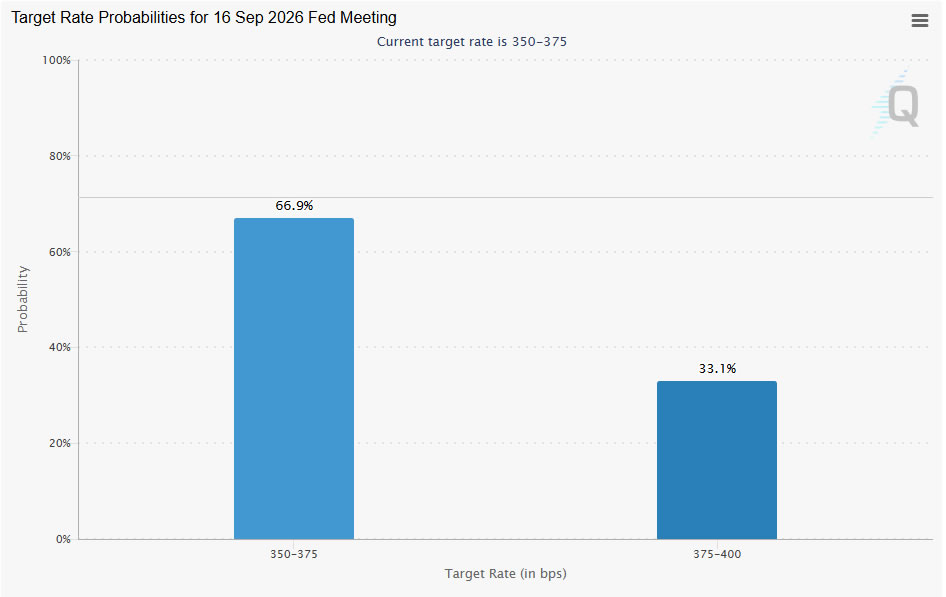
US Dollar has been losing ground as markets rapidly scale back expectations for another Federal Reserve rate hike in September. Two weeks ago, a September increase looked like most likely outcome. Today, Fed funds futures imply roughly a two-in-three chance Fed holds rates at 3.50–3.75% on September 16.
That shift matters for the Dollar because interest rates are one of the biggest draws for the kind of global money that flows in and out of a currency. When the odds of higher US rates fall, some of that draw fades with it — and that's a real part of why the Dollar has looked increasingly fragile these past two weeks.
But there are really two different questions. Why did September Fed hike odds collapse so quickly? And does that mean Fed tightening cycle is over, or merely delayed? Recent data give fairly clean answer to first question and a more nuanced answer to second: markets still see some chance of further tightening, but increasingly view it as a limited, delayed cycle rather than a sustained series of hikes.
Why September Fed Hike Odds Collapsed
The clearest answer is inflation. Consumer prices rose just 0.1% in July, cooling the annual rate to 3.4%. Strip out food and energy, and "core" inflation — the number the Fed watches most closely for the underlying trend — slowed to 2.5%. That's a meaningful marker: it's almost exactly where core inflation stood back in February, before the current Middle East conflict first pushed energy prices higher. In plain terms, the earlier oil-driven inflation shock looks to have been absorbed. That gives the Fed genuine room to wait rather than act preemptively in September.
Producer prices reinforced that message at headline level. US PPI was unchanged in July, undershooting expectations, while annual producer inflation slowed sharply to 4.7%. There was one caveat. PPI excluding food, energy and trade services accelerated to 0.4% m/m, partly reflecting stronger financial-services prices. That matters because some PPI components feed into Fed's preferred PCE inflation measures due later this month. So July producer data were softer overall, but not uniformly benign underneath headline.
Together, the CPI and PPI reports gave the Fed a clean, low-controversy reason to sit still in September. That's the direct, uncomplicated part of this story. Markets are now seeing 66.9% chance of a hold at 3.50-3.75 on September 16.
Why This Doesn't Mean an Extended Hiking Cycle
Second question is more important for Dollar outlook. Even if September hike is increasingly unlikely, markets are not pricing end of tightening risk altogether. But two other developments argue strongly against an extended hiking cycle: weaker labor market and softer consumer demand.
US employers cut 23K jobs in July, surprising markets that had expected modest hiring. Earlier months were also revised substantially lower. For Fed, that changes calculation. Raising rates becomes harder when employment is already deteriorating because additional tightening risks amplifying weakness just as labor side of dual mandate comes under pressure.
That view is not unanimous inside Fed. Three policymakers dissented at July meeting in favor of higher rates, and officials such as Cleveland Fed President Beth Hammack continue to argue inflation risk warrants immediate action.
But markets currently see weakening employment as an important constraint on how far Fed can tighten.
Retail sales added another warning. US spending fell -0.6% m/m in July, while sales excluding autos declined 0.3%. Even stripping out both autos and gasoline, sales still fell -0.2%.
That matters for inflation as well as growth. Softer consumer demand gives businesses less room to pass higher costs onto customers without sacrificing sales. If that weakness persists, another rise in energy prices may have a harder time generating lasting core inflation than it would in a stronger demand environment.
There is an important caveat: July retail-sales data mostly predate sharpest part of latest oil rebound. They show consumers were already becoming more cautious before second energy shock fully arrived, not yet that consumers have prevented this particular oil move from passing through.
For now, it is a forward-looking argument rather than confirmed evidence.
Put together, weaker jobs and softer consumption explain why markets are not pricing a long Fed hiking campaign even if oil-driven inflation risk returns. Inflation risk has not disappeared; economy simply looks less capable of absorbing aggressive tightening in response to it.
Fed Rate Outlook: A Hump, Not a Runway
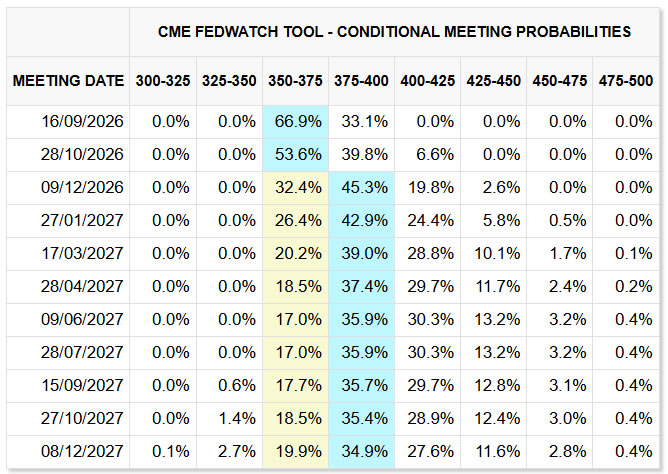
Best way to understand market pricing is to stop asking simply whether Fed will hike and instead look at probability-weighted number of 25bp hikes expected over coming meetings.
| Meeting Date | Expected Hikes (average) |
|---|---|
| September 2026 | 0.33 |
| October 2026 | 0.53 |
| December 2026 | 0.93 |
| January 2027 | 1.11 |
| March 2027 | 1.34 |
| April 2027 | 1.43 |
| June 2027 | 1.51 |
| July 2027 | 1.51 |
| September 2027 | 1.47 |
| October 2027 | 1.43 |
| December 2027 | 1.35 |
The shape tells the real story.
The expected number of hikes rises steadily from under half a hike in September, climbs through the rest of this year and into next, and tops out at roughly one and a half hikes around the middle of 2027 — before gradually easing back down toward the end of that year.
That's a hump, not a runway.
Markets aren't pricing "no more hikes ever." They're also not pricing anything resembling a long, sustained hiking campaign, the kind that would remind anyone of past cycles where the Fed raised rates repeatedly, meeting after meeting, for a year or more. At its absolute peak, the expectation is for roughly one hike, maybe a bit more — "one and a bit," and even that fades rather than building into something bigger.
It's worth being honest, too, about how uncertain this all still is. At no point in this outlook does any single scenario — holding steady, one hike, or more than one — cross even a 50% probability on its own. Markets have a lean, not a conviction. The hump above is a useful summary of where the center of that uncertainty sits, not a confident prediction of exactly what's coming.
What Fed Pricing Means for US Dollar Outlook
That is backdrop behind Dollar's recent wobble.
Since the start of the Iran War in late Q1, Dollar benefited from a credible prospect that Fed would need to push rates materially higher again. That support is now weakening. September hike odds have fallen sharply, and even looking well into 2027, markets expect only a modest amount of additional tightening.
That does not automatically guarantee a sustained Dollar decline. Fed expectations can change again if August jobs rebound, inflation reaccelerates or latest oil shock feeds more aggressively into underlying prices.
But it does change balance of risks.
Dollar is no longer being supported by expectation of an extended Fed hiking cycle. It is increasingly trading on whether incoming data can put that tightening story back together.
That makes technical picture particularly important.
ActionForex's Technical View on the Dollar Index
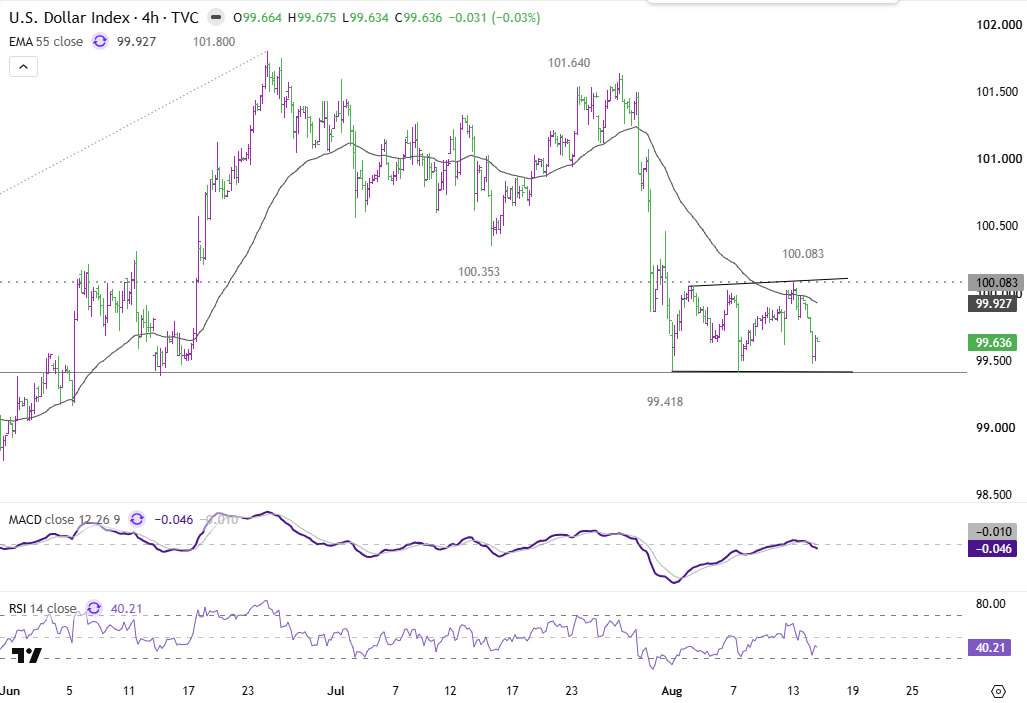
The Dollar Index's attempted recovery last week was rejected at the trend-tracking level 55 4H EMA (now at 99.92), keeping the pullback from the recent 99.41 low looking like a consolidation within a larger decline. The latest leg lower suggests the recent sideways consolidation may already be finished, with a break to the downside now looking imminent.
The bigger picture, on the daily chart, tells a similar story. The index remains capped below 55 D EMA (now at 100.22). More importantly, a clean break below 99.41 would violate the 38.2% retracement of 95.55 to 101.80 at 99.41, and also break the rising trendline that supported the index for months.
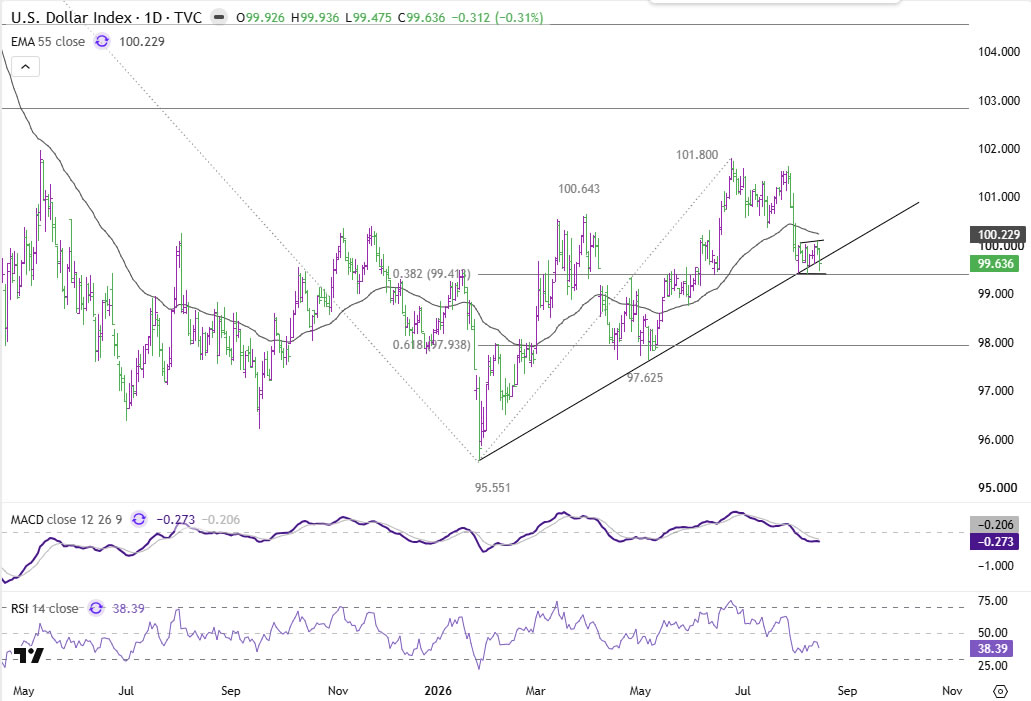
If that happens, it would suggest the entire rally from 95.55 was only a corrective rebound, complete with three waves up to 101.80. In that case, a deeper decline toward 61.8% retracement at 97.93 would become the next target, with a return to the 95.55 low a real possibility further out.
That's not the only path, though. A firm break back above 100.08 would weaken this bearish case considerably, and a reclaim of 55 D EMA would revive the near-term bullish picture and keep the broader climb from 95.55 intact.
For now, though, fundamentals and technicals are beginning to point in same direction: Fed tightening expectations are fading just as Dollar Index approaches a support level that could determine whether recent weakness develops into a much deeper decline.
Key Takeaways
- September Fed hold odds have risen to 66.9% as core CPI cooled to 2.5%, effectively unwinding the earlier oil-driven inflation shock back to pre-conflict levels.
- Weaker labor data (-23K July jobs, heavy downward revisions) and soft retail sales (-0.6% m/m) argue against an extended hiking cycle even if inflation risk resurfaces.
- Probability-weighted hike expectations form a "hump," peaking around 1.5 hikes by mid-2027 rather than a sustained multi-hike campaign, with no single scenario exceeding 50% probability.
- The Dollar's support has shifted from a credible extended-hiking narrative to a more fragile, data-dependent one, changing the balance of risk to the downside.
- The Dollar Index is capped below its 55-day EMA at 100.22; a break below 99.41 support would expose 97.93 and risk a return to the 95.55 low.
EUR/USD Weekly Outlook
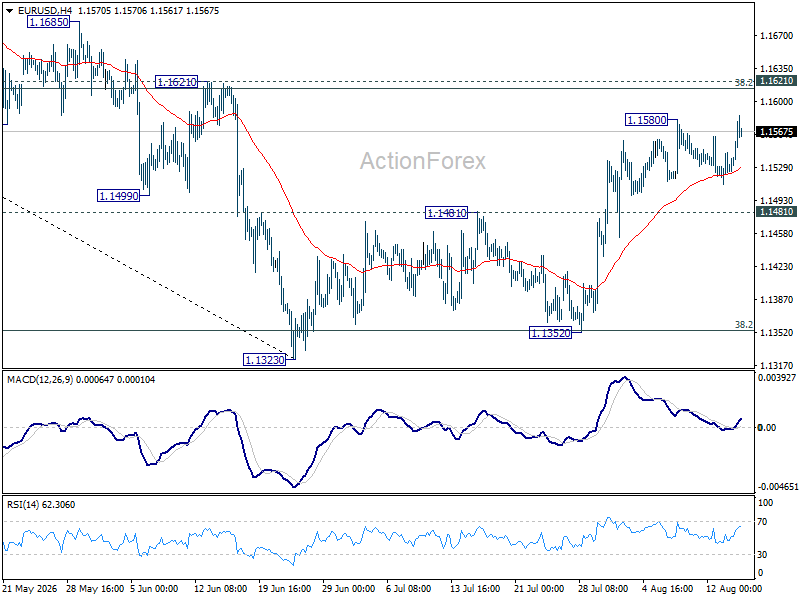
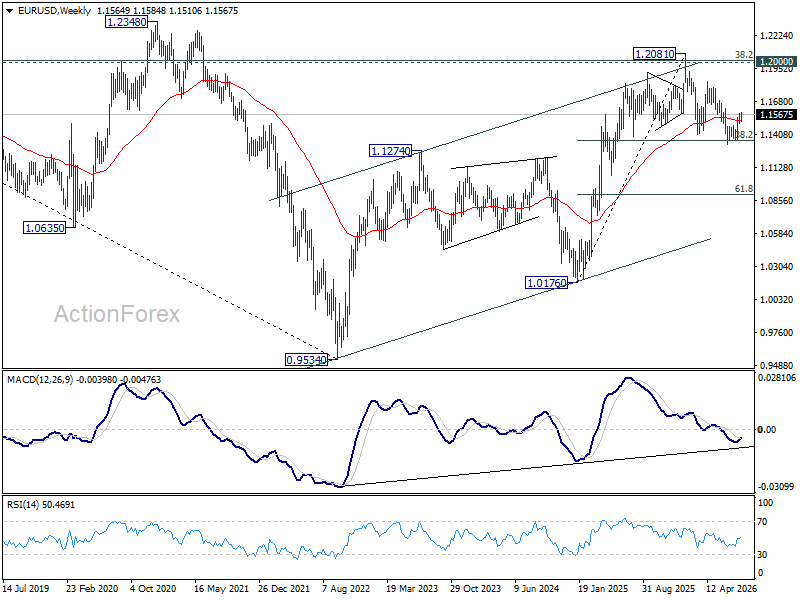
EUR/USD's rebound from 1.1323 continued last week despite loss of momentum. Initial bias is mildly on the upside this week for 1.1621 cluster resistance (38.2% retracement of 1.2081 to 1.1323 at 1.1613). Decisive break there will solidify the case that fall from 1.2081 has completed as a three wave correction at 1.1323. Further rally would then be seen to 61.8% retracement at 1.1791. For now, further rally will remain in favor as long as 1.1481 resistance turned support holds, in case of retreat.
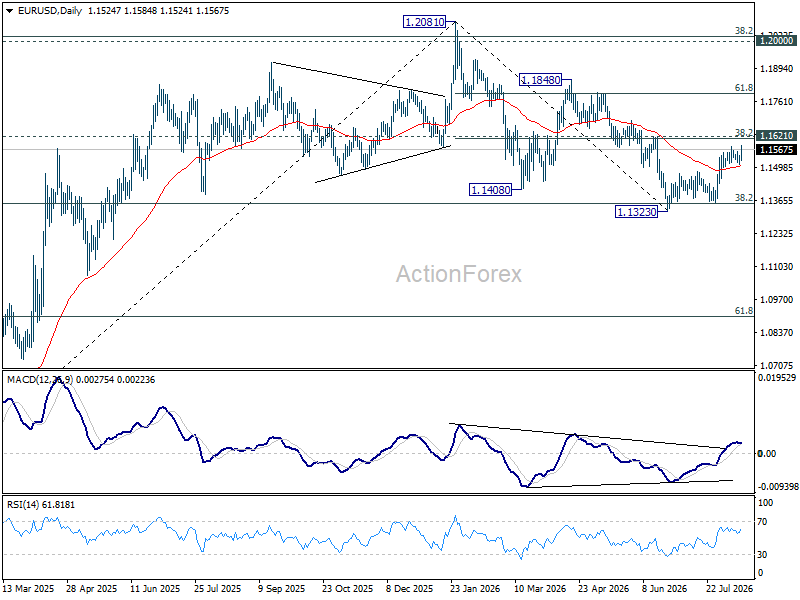
In the bigger picture, focus is staying on 38.2% retracement of 1.0176 to 1.2081 at 1.1353. Decisive break there will revive the case of medium term bearish trend reversal after rejection by 1.2 key cluster resistance level. Further fall should be seen to 61.8% retracement at 1.0904. Nevertheless, strong rebound from 1.1353, followed by break of 1.1621 resistance, will retain medium term bullishness.
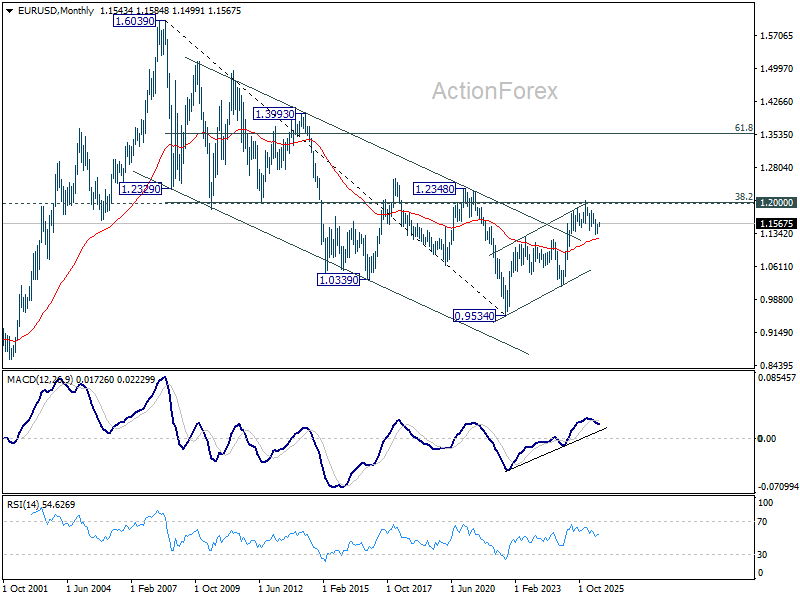
In the long term picture, 38.2% retracement of 1.6039 to 0.9534 at 1.2019, which is close to 1.2000 psychological level is the key for the outlook. Rejection by this level will keep the multi decade down trend from 1.6039 (2008 high) intact, and keep outlook neutral at best. However, decisive break of 1.2000/19, will suggest long term bullish trend reversal, and target 61.8% retracement at 1.3554.
USD/JPY Weekly Outlook
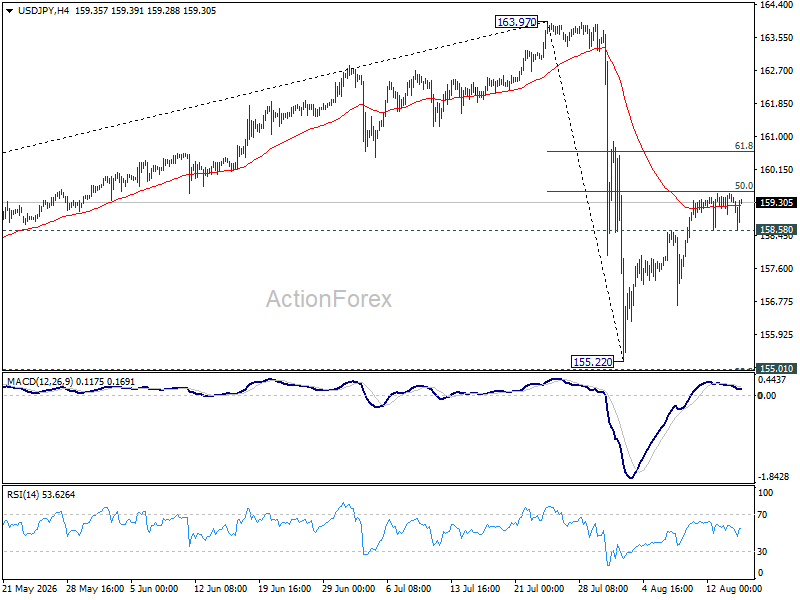
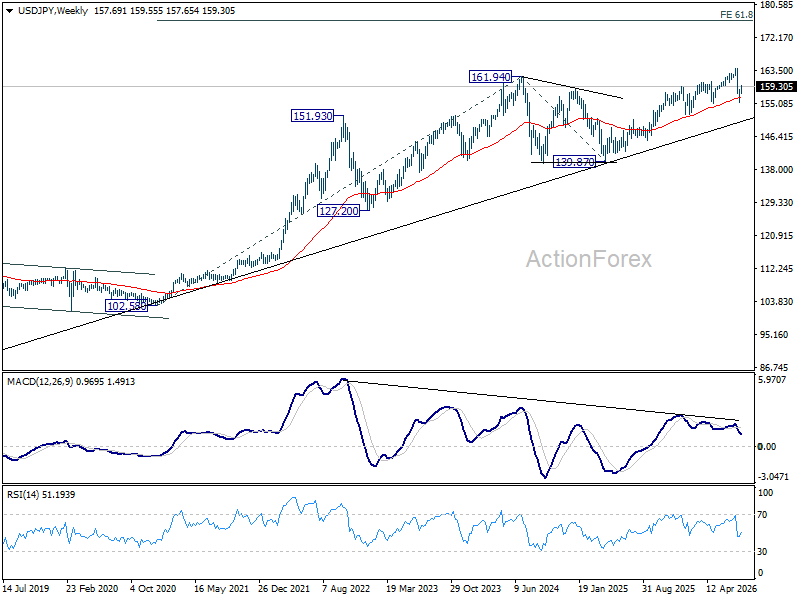
USD/JPY's rebound from 155.22 lost momentum after hitting 55 4H EMA (now at 159.22). While another rise might still be seen, strong resistance could emerge from 159.59 to 160.62 zone (50% and 61.8% retracement of 163.97 to 155.22) to limit upside. On the downside, firm break of 158.58 will turn bias back to the downside for deeper pullback.
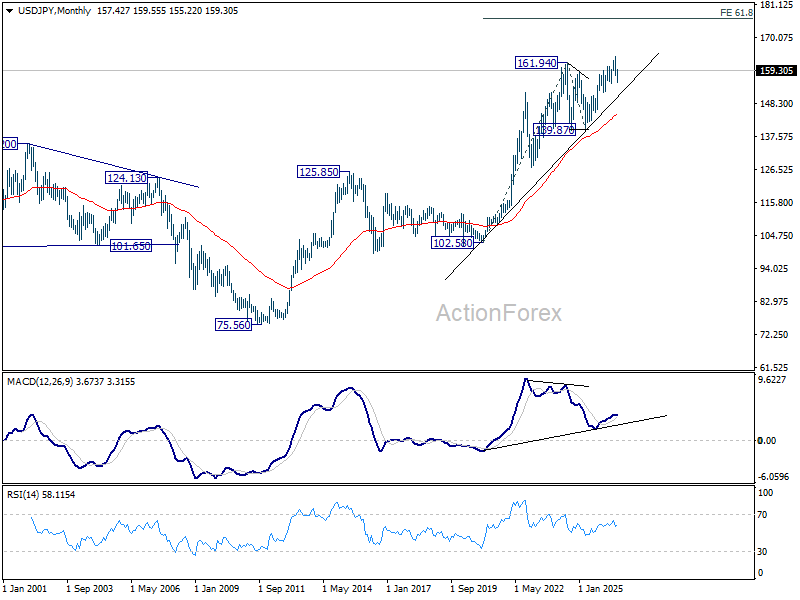
In the bigger picture, as long as 155.01 cluster support (38.2% retracement of 139.87 to 163.97 at 154.76) holds, the larger up trend is still expected to continue through 163.97 after current correction completes. However, firm break of 155.01 will raise the chance that USD/JPY is already in a larger scale correction, and open up deeper fall back to 139.87 (2025 low) in the medium term.
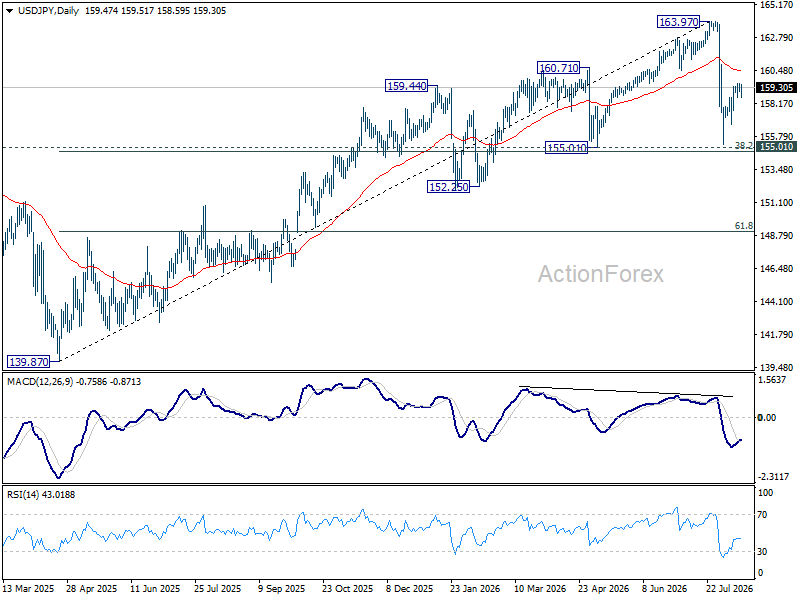
In the long term picture, up trend from 75.56 (2011 low) is still in progress. Next target is 61.8% projection of 102.58 (2020 low) to 161.94 (2024 high) from 139.87 at 176.55 in the medium term. Long term outlook will stay bullish as long as 139.87 support holds, even in case of deep pullback.
GBP/USD Weekly Outlook
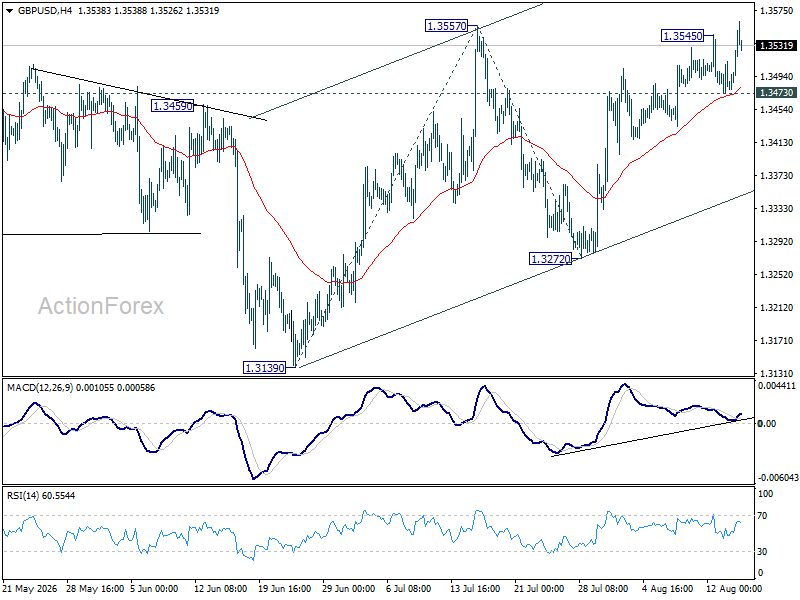
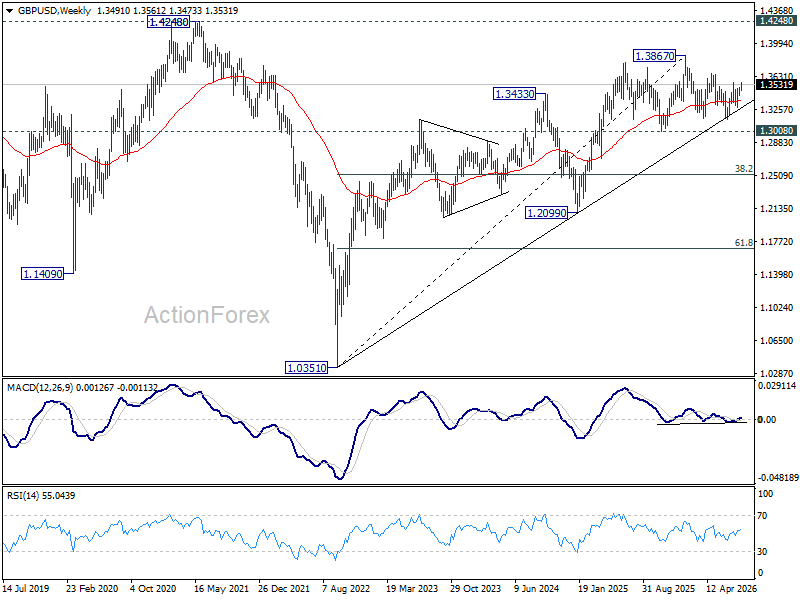
GBP/USD's rebound from 1.3272 extended higher last week after brief retreat. Initial bias is back on the upside this week. Firm break of 1.3557 will extend the rise from 1.3139 to 100% projection of 1.3139 to 1.3557 from 1.3272 at 1.3690. On the downside, below 1.3473 minor support will turn intraday bias neutral again first.
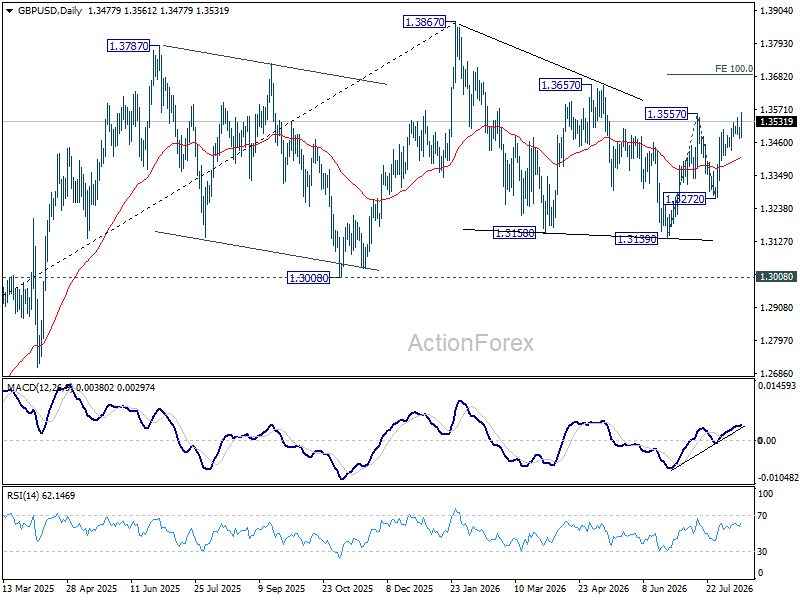
In the bigger picture, price actions from 1.3867 are a corrective pattern within the broader up trend from 1.0351 (2022 low). With 1.3008 support intact, medium term bullishness is maintained and break of 1.3867 is in favor for a later stage, towards 1.4248 key resistance (2021 high). However, firm break of 1.3008 will at least bring deeper fall to 38.2% retracement of 1.0351 to 1.3867 at 1.2524, with increased risk of bearish reversal.
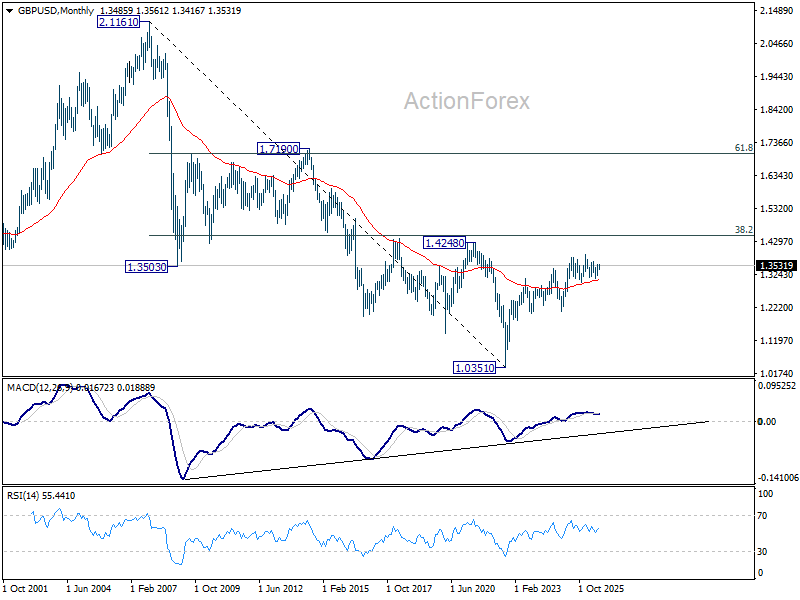
In the long term picture, as long as 1.4248/4480 resistance zone holds (38.2% retracement of 2.1161 to 1.0351 at 1.4480), the long term outlook will remain bearish. That is, price actions from 1.0351 are seen as a corrective pattern to down trend from 2.1161 (2007 high) only. Nevertheless, decisive break of 1.4248/4480 will be a strong sign of long term bullish reversal.
USD/CHF Weekly Outlook
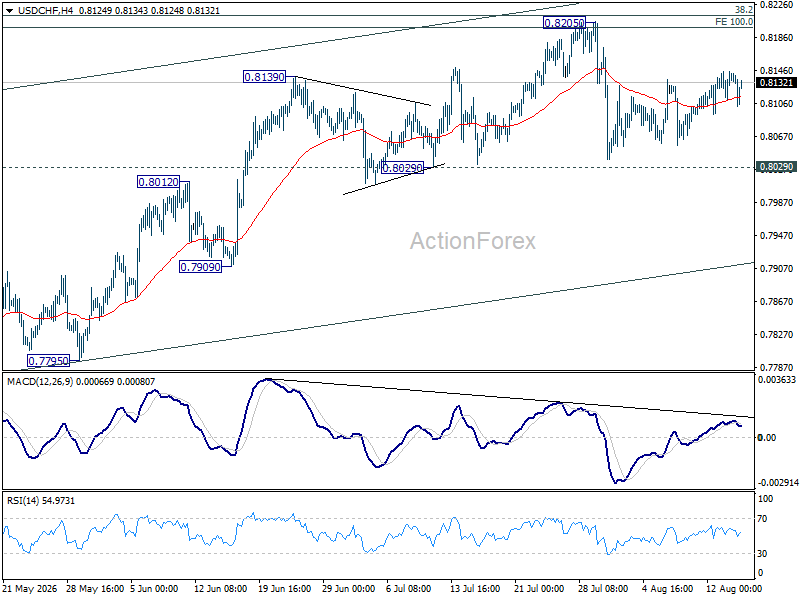
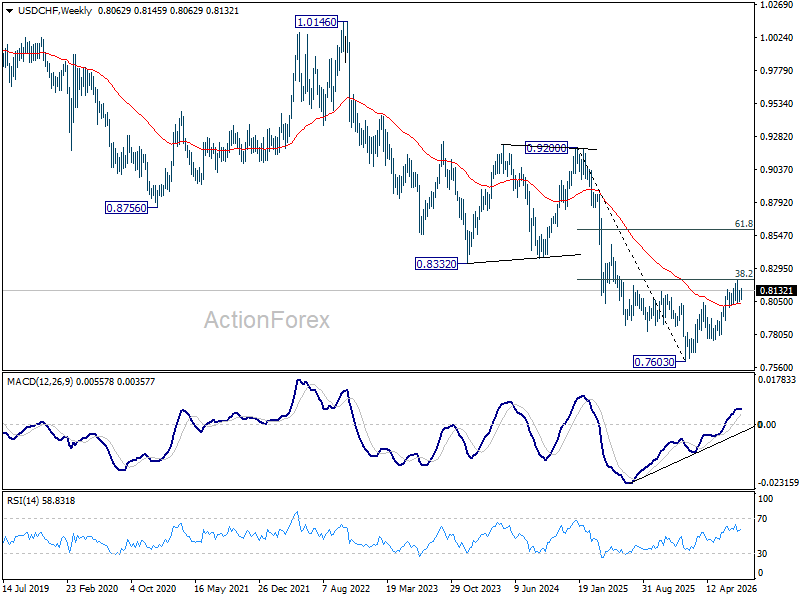
Range trading continued in USD/CHF last week and outlook is unchanged. Initial bias remains neutral this week first. With 0.8029 support intact, further rally is expected. On the upside, firm break of 0.8205 will extend the rise from 0.7603 to 161.8% projection 0.7603 to 0.8041 from 0.7600 at 0.8469. However, decisive break of 0.8029 will bring deeper fall to channel support (now at 0.7912).
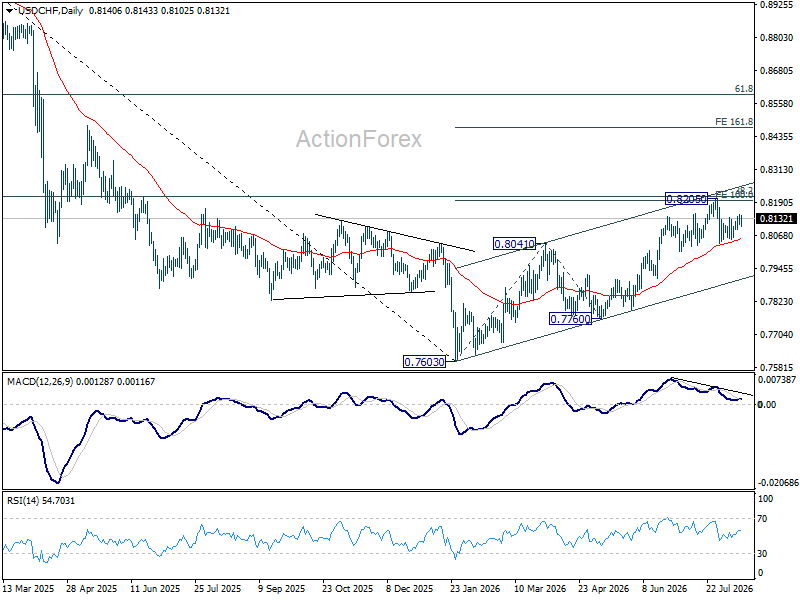
In the bigger picture, focus is now on 38.2% retracement of 0.9200 (2025 high) to 0.7603 at 0.8213. Decisive break will argue that USD/CHF is reversing the medium term trend, and turn focus to 0.8332 support turned resistance (2023 low) for confirmation. Nevertheless, rejection by 0.8213 will maintain medium term bearishness for another fall through 0.7603 at a later stage.
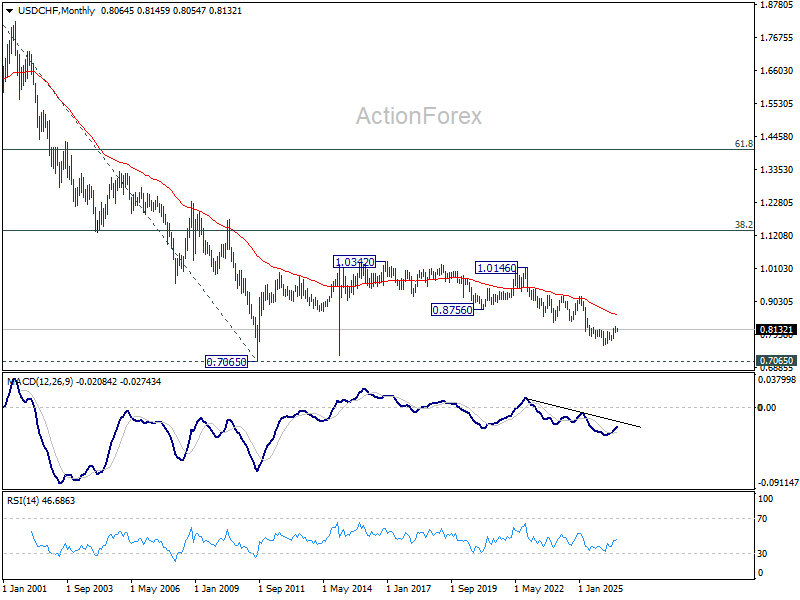
In the long term picture, price action from 0.7065 (2011 low) are seen as a corrective pattern to the multi-decade down trend from 1.8305 (2000 high). It's uncertain if the fall from 1.0342 is the second leg of the pattern, or resumption of the downtrend. But in either case, outlook will stay bearish as long as 0.8756 support turned resistance holds (2021 low). Retest of 0.7065 should be seen next.
AUD/USD Weekly Report
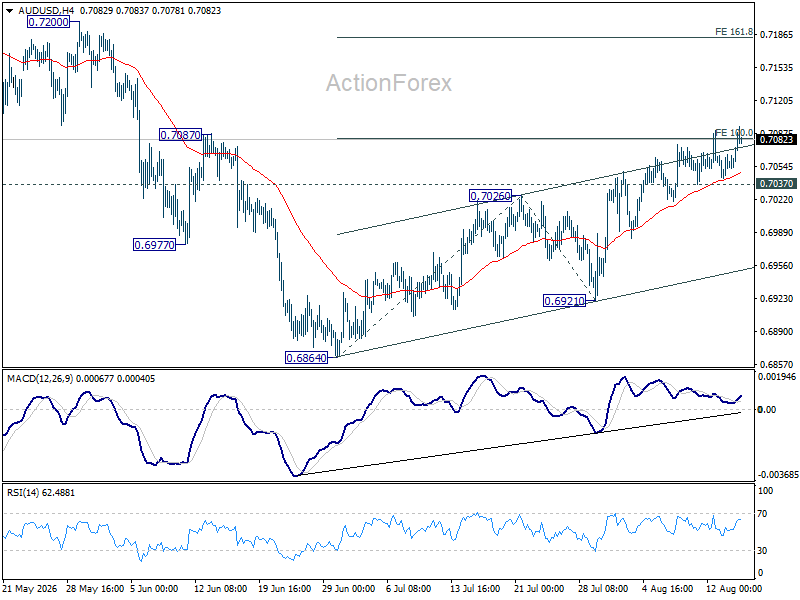
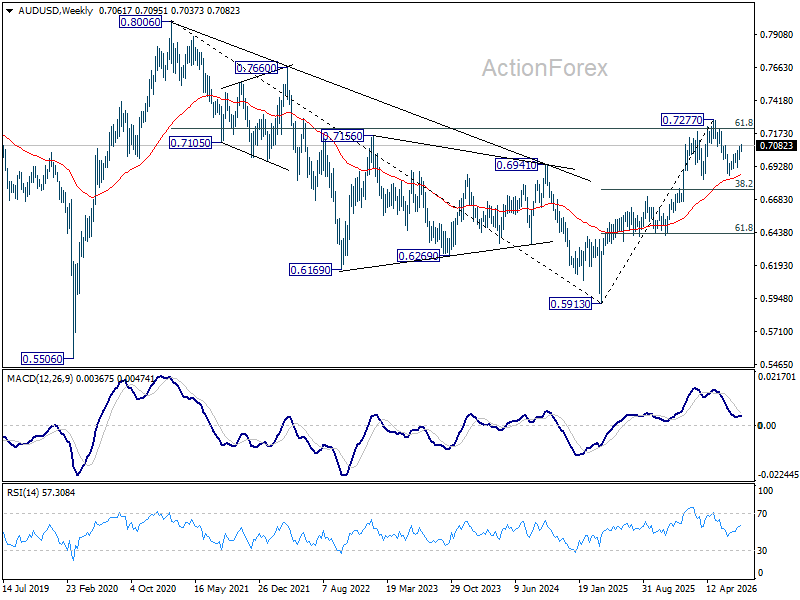
AUD/USD edged higher last week and outlook is unchanged. Further rally is expected as long as 0.7037 support holds. Decisive break of 100% projection of 0.6864 to 0.7026 from 0.6921 at 0.7083 could prompt upside acceleration to 161.8% projection at 0.7183. On the downside, below 0.7037 minor support will turn bias back to the downside for 0.6921 instead.
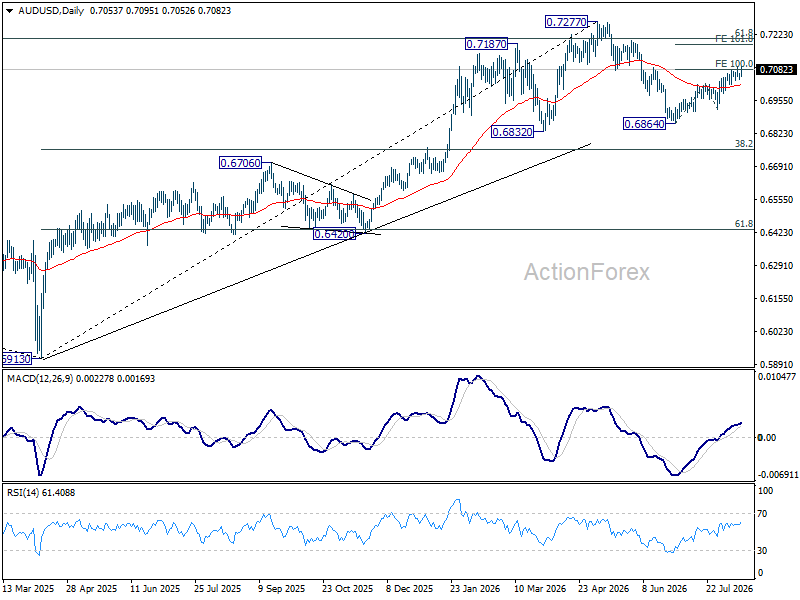
In the bigger picture, price action from 0.7277 medium term top is seen as developing into a correction to rise from 0.5913 only. While deeper decline cannot be ruled out, downside should be contained by 38.2% retracement of 0.5913 to 0.7277 at 0.6756 to bring rebound. Consolidations would continue below 0.7277 for a while, before an eventual upside breakout.
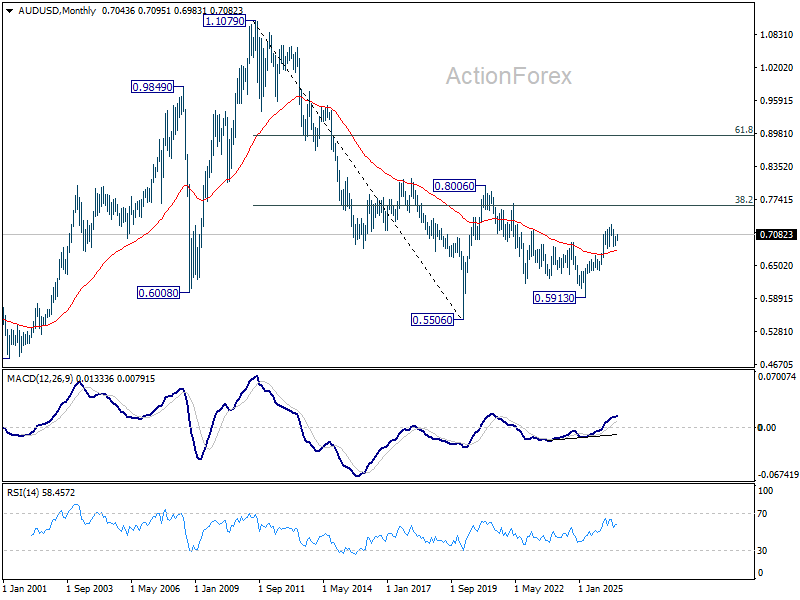
In the long term picture, rise from 0.5913 is seen as the third leg of the whole pattern from 0.5506 (2020 low). It's still early to judge if this is an impulsive or corrective pattern. But in either case, further rise should be seen back to 0.8006 and possibly above. This will remain the favored case as long as 55 W EMA (now at 0.6870) holds.
USD/CAD Weekly Outlook
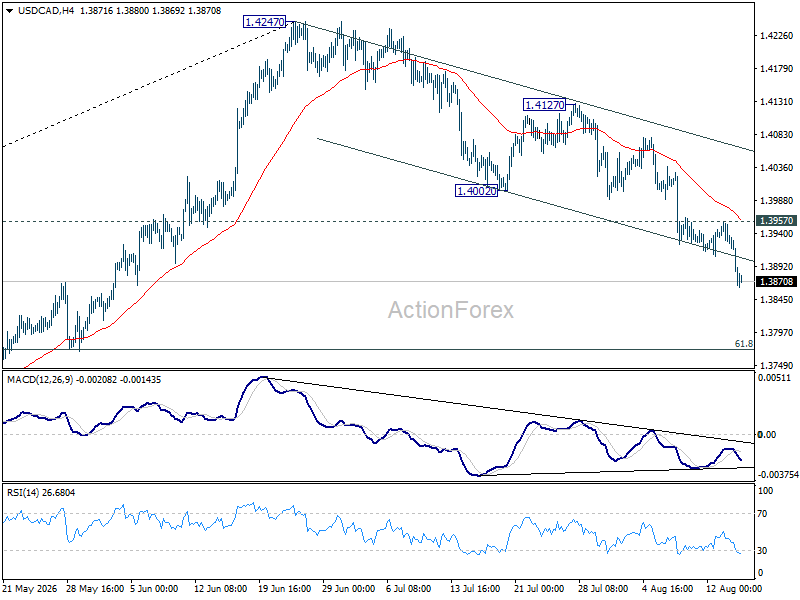
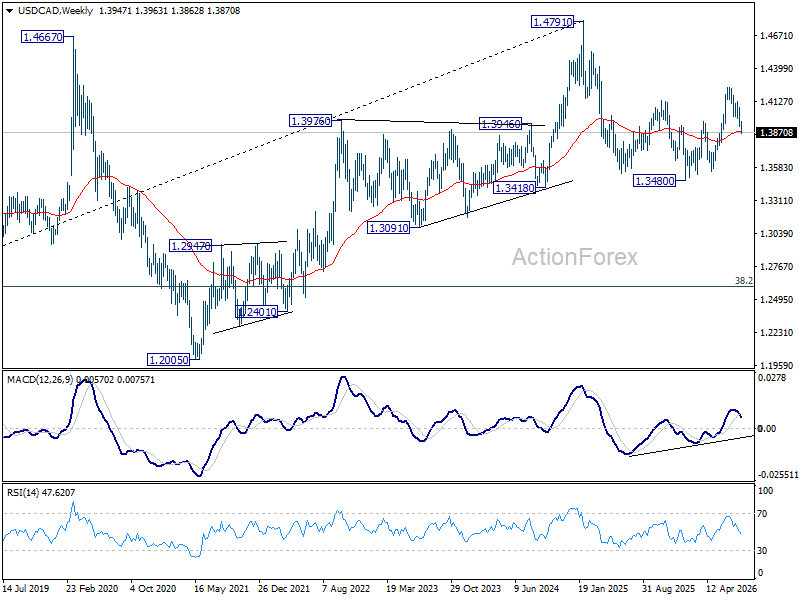
USD/CAD's fall from 1.4247 continued last week and accelerated through the near term falling channel. The development solidifies the case that rebound from 1.3480 might have completed with three waves up to 1.4247 already. Initial bias stays on the downside this week for 61.8% retracement of 1.3480 to 1.4247 at 1.3773. On the upside, above 1.3957 minor resistance will turn intraday bias neutral again first.
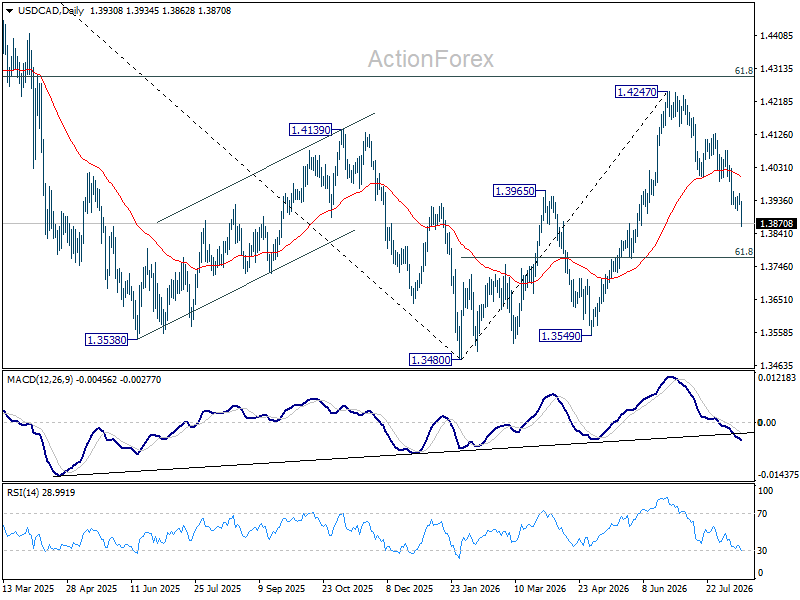
In the bigger picture, rejection below 61.8% retracement of 1.4791 to 1.3480 at 1.4290 suggests that the pattern from 1.4791 medium term is still extending. Firm break of 55 W EMA (now at 1.3883) will solidify this case, and bring deeper decline through 1.3480 low.
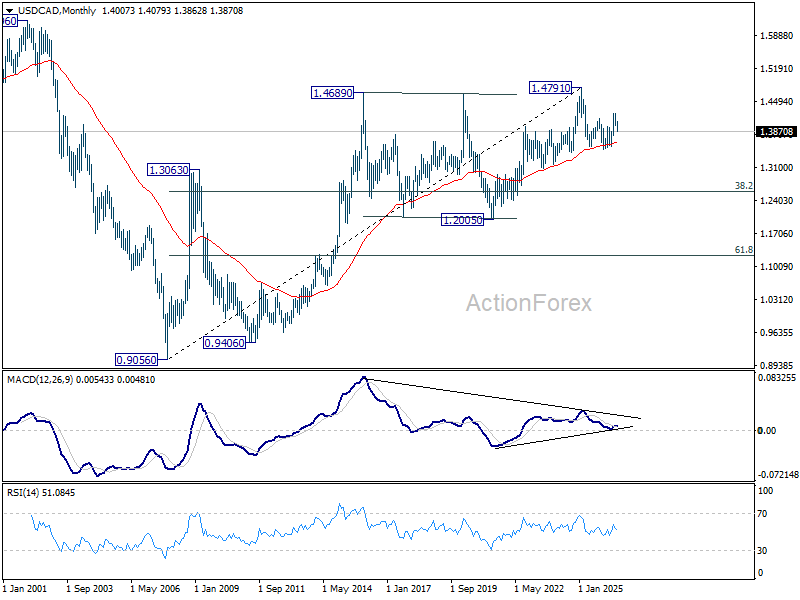
In the long term picture, rising 55 M EMA (now at 1.3636) remains intact. Thus, up trend from 0.9056 (2007 low) could still be in progress. However, considering bearish divergence condition M MACD, sustained trading below 55 M EMA will argue that the up trend has completed with five waves up to 1.4791, and turn medium term outlook bearish for correction to 38.2% retracement of 0.9056 to 1.4791 at 1.2600.
GBP/JPY Weekly Outlook
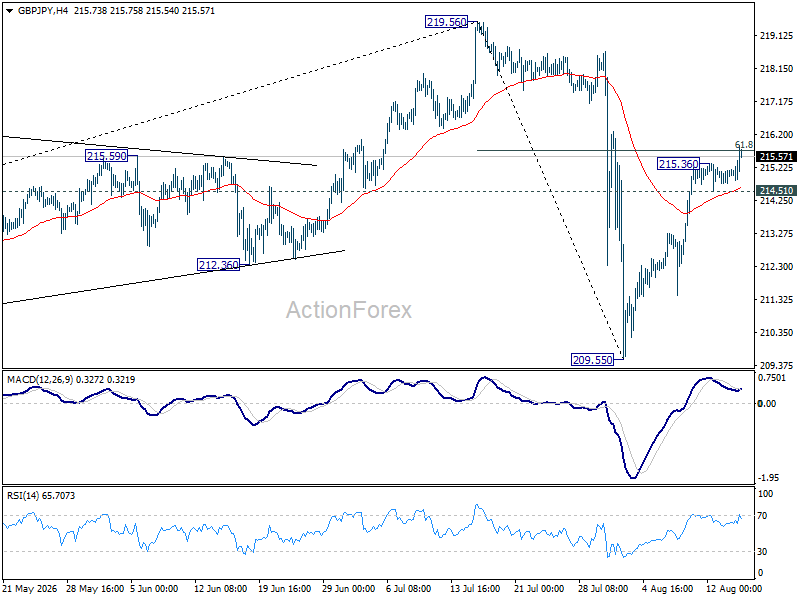
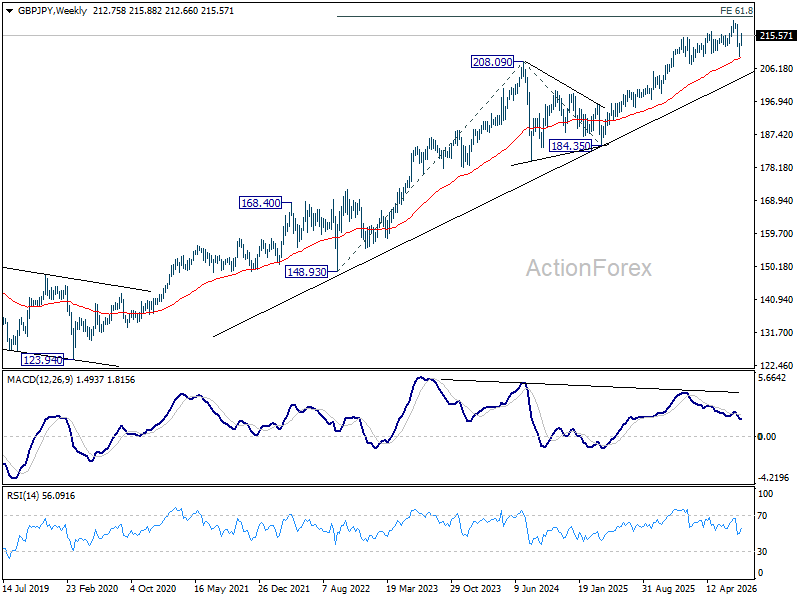
GBP/JPY's rebound from 209.55 extended higher last week after brief consolidations. Initial bias is on the upside this week. Current development suggests that corrective fall from 219.56 has already completed. Sustained break of 61.8% retracement of 219.56 to 209.55 at 215.73 will pave the way to retest 219.56 high. On the downside, below 214.51 minor support will turn bias neutral again first.
In the bigger picture, strong rebound above 55 W EMA (now at 208.91) keeps the up trend from 123.94 (2020 low) intact. Firm break of 209.55 should target 100% projection of 148.93 to 208.09 from 184.35 at 243.51. However, sustained break of 55 W EMA will argue that it's already in a medium term down trend to 184.35 support.
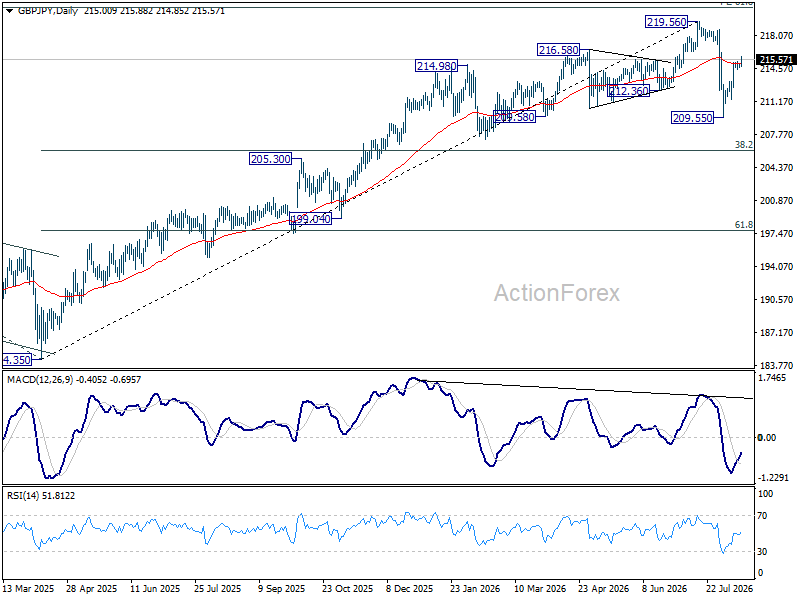
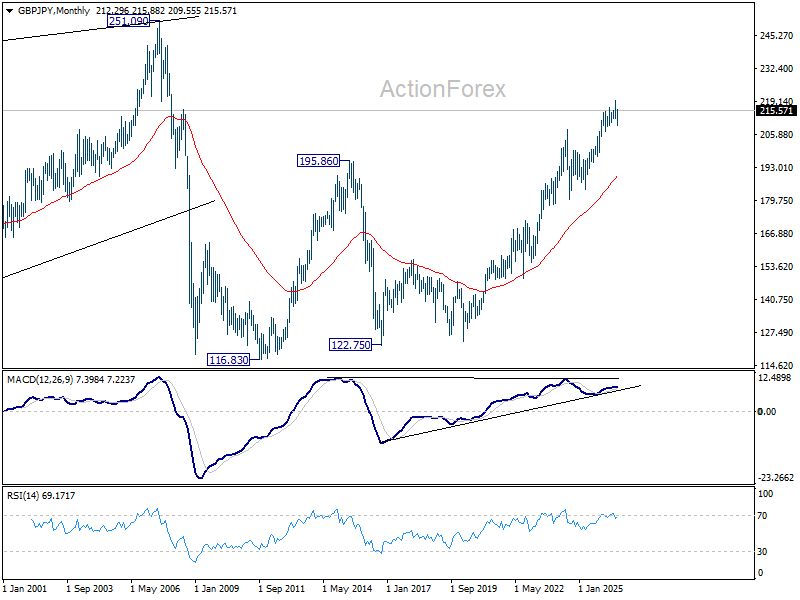
In the long term picture, up trend from 116.83 (2011 low) is in progress. Next target is 251.09 (2007 high). This will remain the favored case as long as 55 M EMA (now at 189.71) holds.
EUR/JPY Weekly Outlook
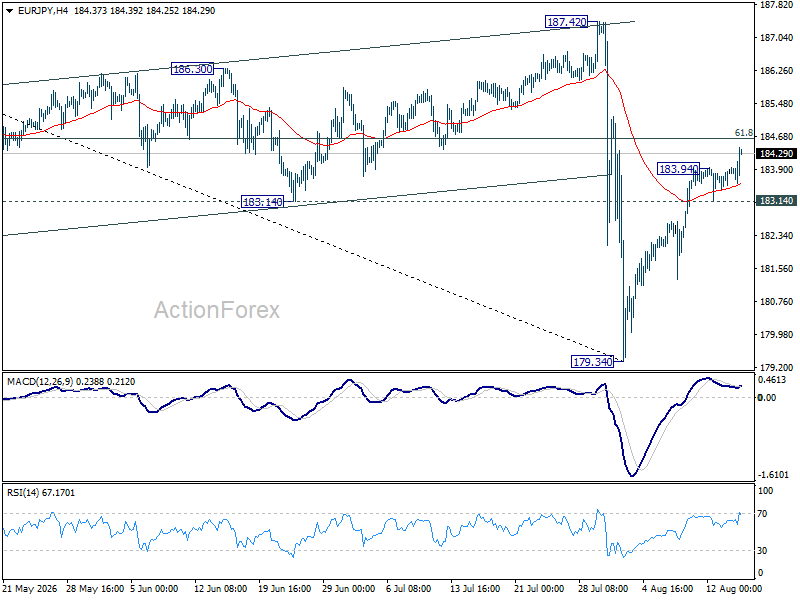
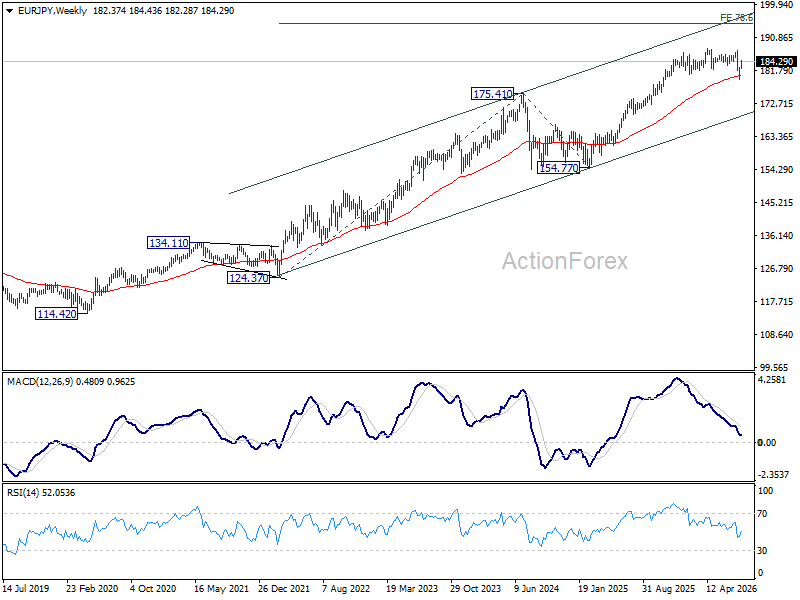
EUR/JPY's rebound from 179.34 continued last week after brief retreat. Current development suggests that whole fall from 187.93 has completed as a three wave correction. Initial bias stays is on the upside this week for 61.8% retracement of 187.93 to 179.34 at 184.64. Decisive break there will pave the way to retest 187.93 high. On the downside, below 183.14 minor support will turn bias neutral again.
In the bigger picture, strong rebound from rising 55 W EMA (now at 180.23) keeps the up trend from 114.42 (2020 low) intact. Break of 187.93 will target 78.6% projection of 124.37 (2022 low) to 175.41 (2025 high) from 154.77 at 194.88. However, sustained break of 55 W EMA will argue that it's already in a medium term down trend to 175.41 resistance turned support and below.
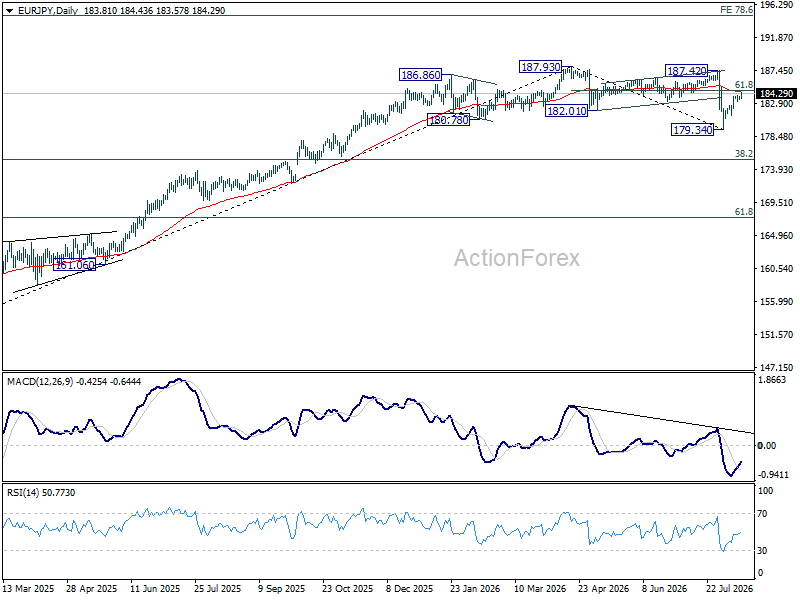
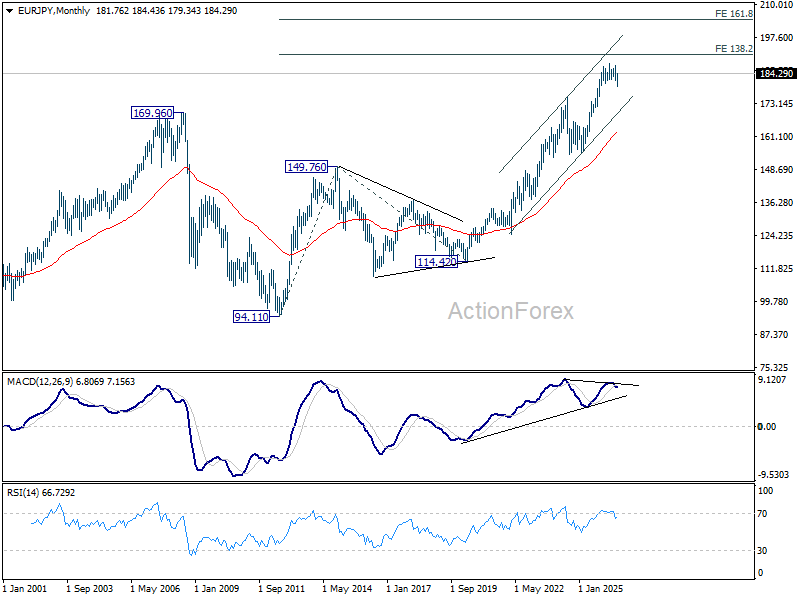
In the long term picture, up trend from 94.11 (2021 low) is in progress. Next target is 138.2% projection of 94.11 to 149.76 (2014 high) from 114.42 (2020 low) at 191.32. This will remain the favored case as long 175.41 resistance turned support holds.
EUR/GBP Weekly Outlook
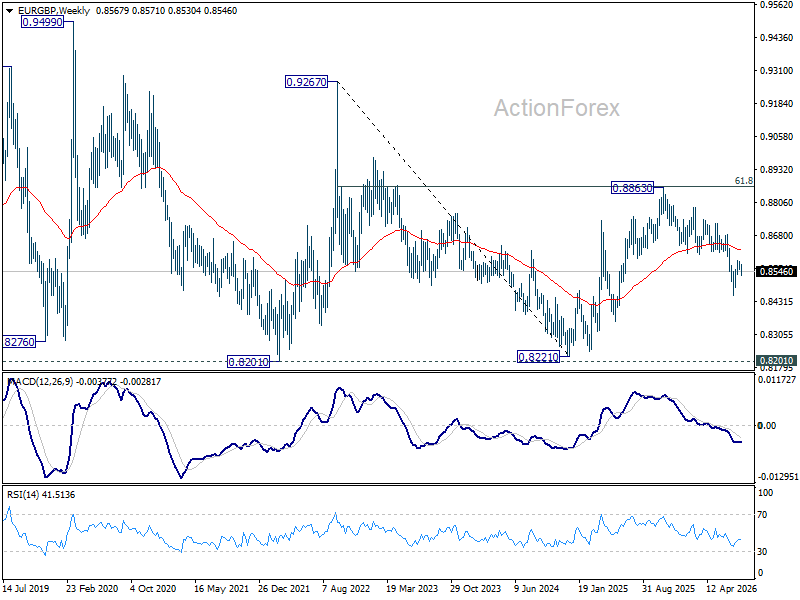
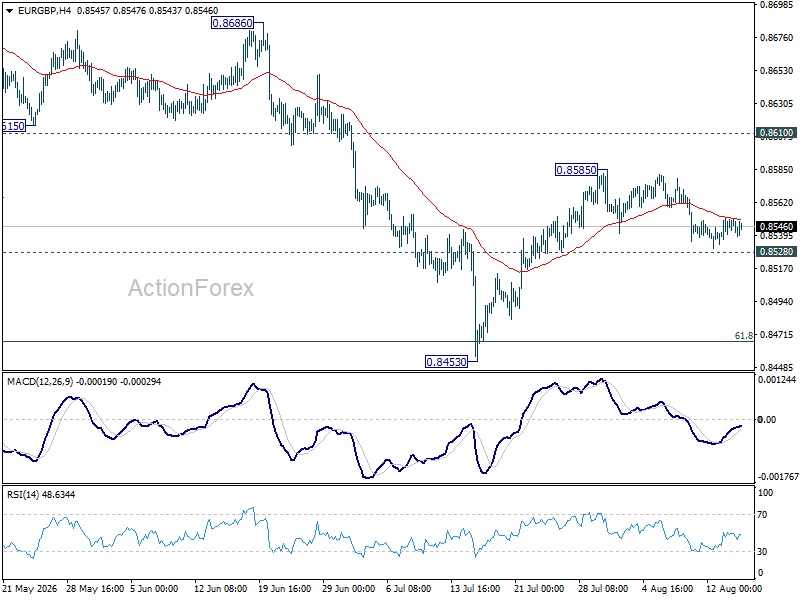
Outlook is unchanged in EUR/GBP as range trading continues. Initial bias remains neutral this week first. While rebound from 0.9453 might extend, strong resistance should be seen from 0.8610 support turned resistance to limit upside. On the downside, break of 0.8528 support will argue that the corrective rebound from 0.8453 has completed, and turn bias back to the downside for retesting this low. However, firm break of 0.8610 will bring stronger rally to falling channel resistance (now at 0.8658).
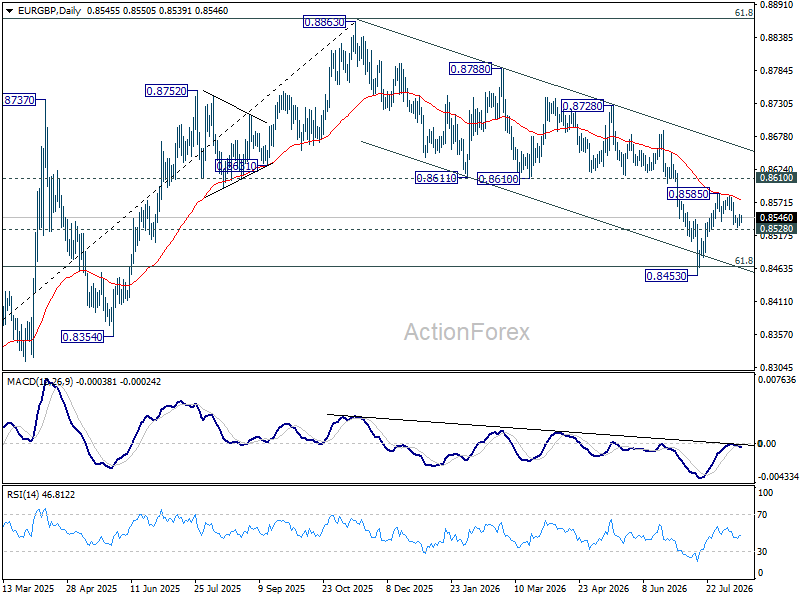
In the bigger picture, rise from 0.8221 (2024 low) should have completed at 0.8863, just ahead of 38.2% retracement of 0.9267 (2025 high) to 0.8221 at 0.8867. Deeper fall would be seen back to 0.8221. For now, outlook will be neutral at best as long as 0.8610 support turned resistance hold.
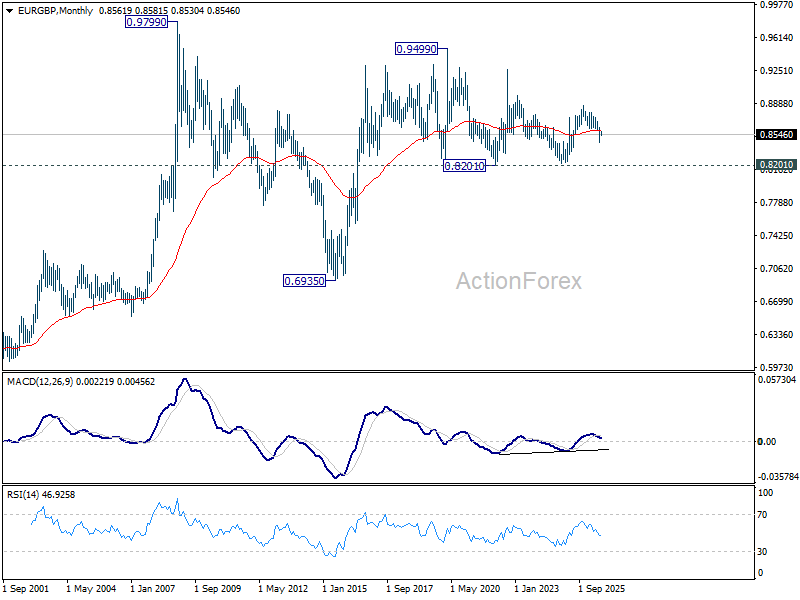
In the long term picture, price action from 0.9499 (2020 high) is seen as part of the long term range pattern from 0.9799 (2008 high). Range trading should continue between 0.8201 and 0.9499, until there is clear signal of imminent breakout.