Sample Category Title
The Loonie’s Rally Just Sped Up. Is That the Data, or Something More?
TL;DR: The Canadian dollar's rally has accelerated sharply this week without help from oil, built instead on blowout GDP and jobs data — but whether this reflects genuine repositioning for a Bank of Canada hike or just a weak US Dollar remains unconfirmed.
A Rally That Stopped Being Quiet
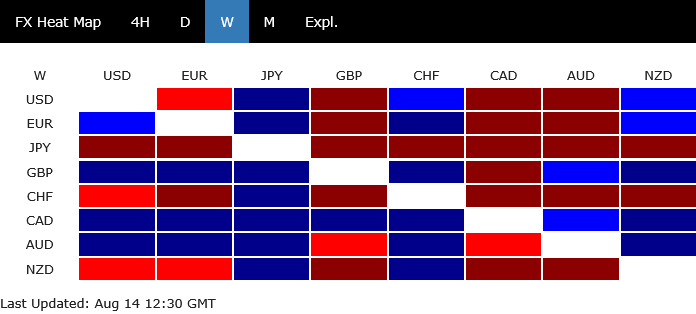
The Canadian dollar has been quietly outperforming for weeks. This week, it stopped being quiet. The US dollar's slide against the Canadian dollar, already underway for a while, has accelerated sharply — not the kind of slow grind you'd expect from ordinary economic data doing its usual work, but a faster, more decisive move.
What makes this worth a second look is what isn't driving it. Canada is a major oil producer, and its currency often rises and falls with crude prices. Not this time. Oil has actually stalled this week, with Brent crude capped below $90 a barrel even as the Canadian dollar keeps climbing. Whatever is pushing this rally, it isn't coming from the oil market.
That raises an honest question worth asking rather than assuming an answer to: is this simply the market digesting two strong pieces of Canadian data plus a weak US inflation reading? Or has something shifted — traders starting to actively bet on where Canadian interest rates are headed, rather than just reacting to what's already happened? The price action alone can't answer that. But it's worth laying out the case, and being honest about what's still missing.
The Data Behind the Move
Two numbers are doing most of the talking. Canada's economy grew at an annualized 3.4% in the second quarter — not just beating what economists expected, but beating what the Bank of Canada had itself been forecasting only weeks earlier. Then came the jobs report: Canada added roughly 75,000 jobs in July, more than four times what was expected, pulling the unemployment rate down.
Individually, either number would be a good headline. Together, arriving back to back, they tell a more compounding story: an economy that appears to be picking up speed, not just holding steady.
The Case That Something More Is Going On
Here's where it gets interesting. This isn't a case of the market being caught completely off guard. Even before the jobs report landed, traders in interest-rate markets were already leaning toward betting on a Bank of Canada rate hike by the end of the year — pricing in better-than-even odds. The jobs data didn't create that expectation; it reinforced one that was already quietly building.
There's also a mechanism worth spelling out, and it's less about today's inflation than about where inflation could be headed next. When an economy keeps beating growth forecasts the way Canada's has, it usually means there's less spare capacity left than assumed — fewer idle workers, less unused factory output. That matters to a central bank, because a shrinking cushion of slack is often exactly what allows inflation to build later, even while today's numbers still look tame.
Strip out gasoline prices, which have been elevated everywhere because of the ongoing Middle East conflict, and Canadian inflation is in fact sitting close to the central bank's target right now. So this wouldn't be a central bank scrambling to catch up with inflation that's already gotten away from it — it would be closer to a preemptive move, hiking ahead of a problem strong growth could eventually create, rather than reacting to one that already exists.
And the timing lines up with something happening on the other side of the border. A weaker-than-expected US inflation reading this week pushed down expectations for a September US rate rise. When Canada's economy looks stronger at the exact moment America's looks softer, the contrast between the two currencies gets sharper — and sharper contrasts tend to attract more aggressive bets, not just more cautious repricing.
Put together, a chart-based case exists too: the US dollar against the Canadian dollar hasn't just been drifting lower, it's broken through a well-established support zone with real momentum — the kind of move that often reflects traders piling into a position, not just following data passively.
What's Missing to Actually Confirm It
None of this proves speculative money is now driving the move. A few real gaps remain. There's no direct evidence — no data on futures or options positioning — showing traders have actually built new bets on a Canadian rate hike this week. The case so far is built by inference from the currency's price action, not from proof of what's happening underneath it.
The Bank of Canada itself hasn't said anything new since this data landed. The hawkish read exists entirely in what traders are pricing, not in anything officials have confirmed or pushed back against. No major bank has yet come out and explicitly called this a shift in how traders are positioning, rather than just a currency following strong data — a bank publicly changing its own rate forecast would be a much stronger signal than price action alone.
And it's still unclear whether Canadian interest-rate expectations themselves are actually moving this week, or whether this is really a story about the US dollar weakening broadly, with the Canadian dollar simply benefiting more than others by coincidence of timing.
What to Watch Next
A few things would go a long way toward settling this. Canada's next inflation report is the cleanest test available. A hot number would support the case that the market is right to expect a rate hike. A soft one would support the Bank of Canada's more patient instincts, and would argue against the idea that a hike is truly coming.
Worth watching too: whether Canadian rate expectations themselves — not just the currency — actually shift further in the coming days, or whether they stay where they already were before this week's rally. If the currency keeps moving while rate expectations stand still, that would suggest this is more about a weak US Dollar than a repriced Bank of Canada.
Any bank publicly revising its own rate forecast for Canada would be the strongest confirmation yet. So would any Bank of Canada official speaking publicly and addressing the recent data directly. And simply watching whether the currency's move keeps accelerating, or starts to settle down, will tell its own story — a move that keeps building suggests something real is developing, while one that stabilizes suggests this week was simply the market catching up to good news, not the start of something bigger.
ActionForex's Technical View on USD/CAD
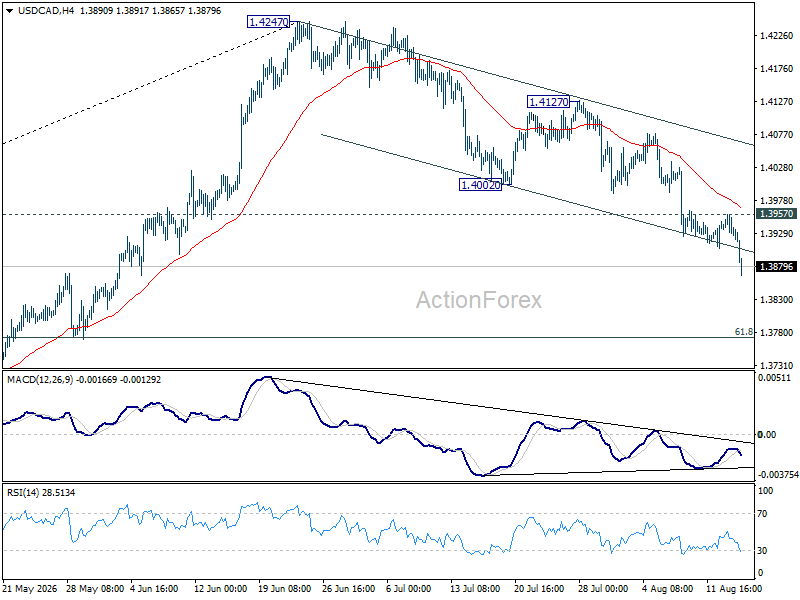
The price action backs up how unusual this move looks. USD/CAD's decline isn't a one-week event — it's the continuation of a pattern that's been building for weeks. After clearing the round 1.40 level, a former floor that had held for much of the summer, the pair has now accelerated through a well-defined descending channel.
Zoom out to the bigger picture, and the case for further weakness looks stronger still. USD/CAD's climb earlier this year, from a low near 1.3480 up to June's high of 1.4247, increasingly looks less like the start of a lasting uptrend and more like a temporary rebound inside a longer decline — a read reinforced by the pair decisively breaking the 55-day EMA. If that's the right way to read it, the next natural target is the 61.8% retracement of 1.3480 to 1.4247, at 1.3773, which might provide some support.
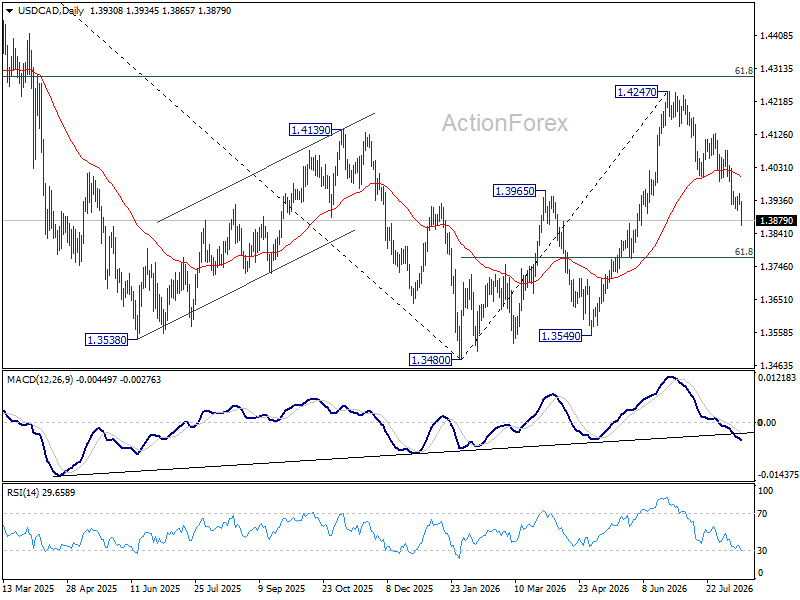
Should the case for a Bank of Canada rate hike keep building with incoming data, that level may not hold for long, opening the door to a deeper slide back toward the 1.3480 low set earlier this year.
The chart's next move mirrors the fundamental question above. A continued decline through these levels with little pause would fit with the idea that real, sustained buying interest in the Canadian dollar is building. A sharp bounce back above 1.40, on the other hand, would suggest this week's move ran ahead of itself — and that the currency's real test is still ahead, most likely arriving with Canada's next inflation report.
The Bottom Line
If this is the beginning of a genuine shift in how the market is positioning for the Bank of Canada, the Canadian dollar's strength could extend well beyond what this week's data alone would justify. If it's simply strong data meeting a weak US Dollar at the same moment, the move may already be largely priced in — and the next inflation report, not this week's price action, will be what actually decides which story is true.
Key Takeaways
- Canada's Q2 GDP grew 3.4% annualized, beating both consensus and the Bank of Canada's own forecast, followed by a jobs report that beat expectations by more than 4x.
- The rally is notably not oil-driven, since Brent has stalled below $90 even as the Canadian dollar keeps climbing.
- Ex-gasoline Canadian inflation sits close to target, suggesting a potential hike would be preemptive rather than reactive to an existing inflation problem.
- Direct confirmation is still missing: no positioning data, no BoC commentary, and no bank has yet revised its Canadian rate forecast in response to this week's data.
- USD/CAD has broken its 55-day EMA and a key support zone; a break of 1.3773 would open the door toward the 1.3480 low, while a bounce back above 1.40 would suggest the move got ahead of itself.
Related Coverage
Central Bank Commentary
- Read why Yen intervention only bought Japan about two weeks, and why the September 18 BoJ meeting is now the real test of whether the rescue holds: Yen Intervention Bought Two Weeks. Can a BoJ Rate Hike Make the Rescue Last?.
Global Data Deep Dives
- Read why July retail sales' -0.6% m/m slump, with weakness spreading beyond autos, adds another soft data point to the Fed's hold case: US Retail Sales Slump -0.6% M/M in July as Consumer Momentum Fades.
- See why June's 14.4% y/y export rebound is masking a first-half trade surplus that collapsed to EUR 9.8B from EUR 82.2B a year earlier: Europe's June 14.4% YoY Export Rebound Masks Sharp First-Half Trade Deterioration.
- Read why Swiss GDP accelerated to 1.5% q/q in Q2, with chemicals and pharmaceuticals leading an industry-driven surge: Swiss GDP Surges 1.5% in Q2 as Industry Drives Growth.
- See why New Zealand's manufacturing PMI cooling to 54.3 after June's surge still leaves every major sub-index in expansion: NZ PMI Manufacturing Cools to 54.3 After June Surge, Expansion Holds.
US Retail Sales Slump -0.6% M/M in July as Consumer Momentum Fades
US retail sales weakened sharply in July, adding to evidence that domestic demand lost momentum at start of Q3. Headline sales slowed from 0.2% to -0.6% m/m, well below expectations for 0.2% growth. Sales excluding autos deteriorated from -0.2% to -0.3%, also missing 0.2% forecast. Even excluding both autos and gasoline, sales fell -0.2%, suggesting weakness extended beyond volatile categories. Retail sales excluding food services were softer still at -0.8%.
Monthly weakness contrasts with still-solid annual growth. Total retail and food-services sales were 5.0% higher y/y, while sales over May-July were 6.3% above same period a year earlier. Ex-auto sales rose 5.8% y/y and ex-auto-and-gasoline sales increased 4.8%. That argues against describing July as a collapse in consumption, but it does point to a clear loss of near-term momentum after May’s strong gains and modest June growth.
For Fed, July retail sales reinforce case for keeping rates unchanged in September. Weak payrolls already raised concern over labor market, while this week’s CPI and PPI reduced urgency to tighten again. Softer consumer spending now adds evidence that higher rates are restraining demand. One month is not enough to establish a sustained downturn, but another weak August reading would strengthen argument that Fed should remain patient rather than revive tightening.
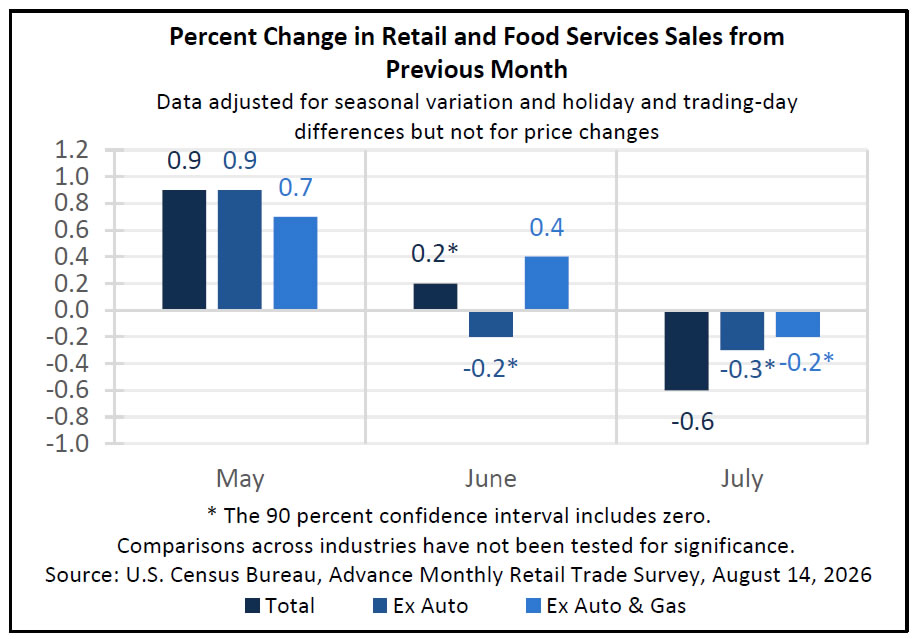
Data Summary
| Indicator | Actual | Expected | Previous |
|---|---|---|---|
| Retail Sales m/m | -0.6% | 0.2% | 0.2% |
| Retail Sales ex Autos m/m | -0.3% | 0.2% | -0.2% |
| Retail Sales ex Autos & Gas m/m | -0.2% | — | 0.4% |
| Retail Sales ex Gasoline m/m | -0.6% | — | 0.8% |
| Retail Sales ex Food Services m/m | -0.8% | — | 0.2% |
Key Takeaways
- US retail sales swung from 0.2% growth to -0.6% m/m in July, sharply missing expectations for another 0.2% increase.
- Weakness extended beyond autos. Sales excluding autos deteriorated from -0.2% to -0.3%, while sales excluding both autos and gasoline fell 0.2%.
- Retail sales excluding food services dropped 0.8% m/m, reinforcing evidence of broad monthly softness.
- Annual spending remains much firmer, with total retail and food-services sales 5.0% higher y/y and May–July sales up 6.3% from same period in 2025.
- Data therefore point to loss of near-term consumer momentum rather than outright collapse in spending.
- Retail sales are nominal and not adjusted for price changes, so strong annual growth does not necessarily imply equally strong real consumption.
- Combined with weak July payrolls and benign CPI/PPI, report further strengthens September Fed hold case.
The Dollar Is Losing Ground, but Will It Last?
- Weak inflation and labour market figures have led to a fall in the USD index.
- The strength of the UK economy and the pound is most likely only temporary.
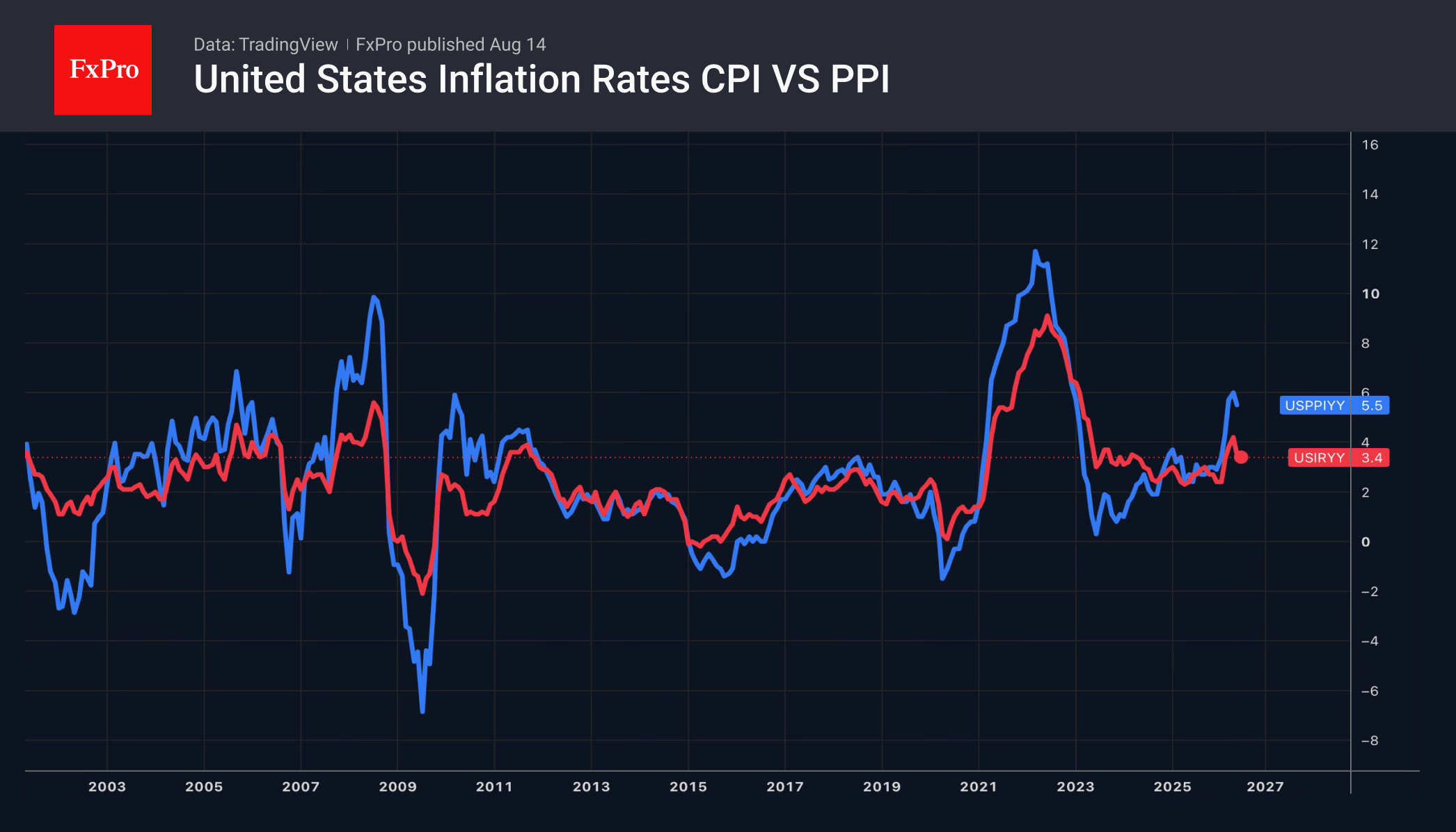
The US dollar has reacted differently to the inflation data. While the slowdown in consumer price inflation led to its strengthening, a slower pace of producer price inflation, from 5.5% to 4.7% y/y, weakened the greenback. At the same time, the probability of the Fed hike in September fell to 32%, and in October to 47%. The forward market expects rates to remain on hold until December, which is weighing on the USD index.
Data on Unemployment Claims also put pressure on the US dollar. Initial claims rose to 209K, fuelling concerns about the weakness of the US labour market.
Other currencies capitalised on the US dollar’s retreat. UK GDP grew by 0.4% q/q in April–June. On an annualised basis, this equates to 1.6%. This represents faster economic growth than in the US. According to BoE Chief Economist Hugh Pill, this should prompt the central bank to raise its repo rate.
In fact, the UK temporarily benefited from the World Cup, the abnormal heatwave that boosted the service sector, and the de-escalation of the conflict in the Middle East in June. Going forward, GDP is at risk of slowing, which will put pressure on GBPUSD.
USDJPY has pulled back from 160, a level that, if breached, could have triggered renewed currency interventions by the US and Japan. According to BlackRock, intervention in the forex market is the yen’s first line of defence. To consolidate these gains, the BoJ needs to accelerate its monetary-policy tightening cycle and adopt a more ‘hawkish’ stance.
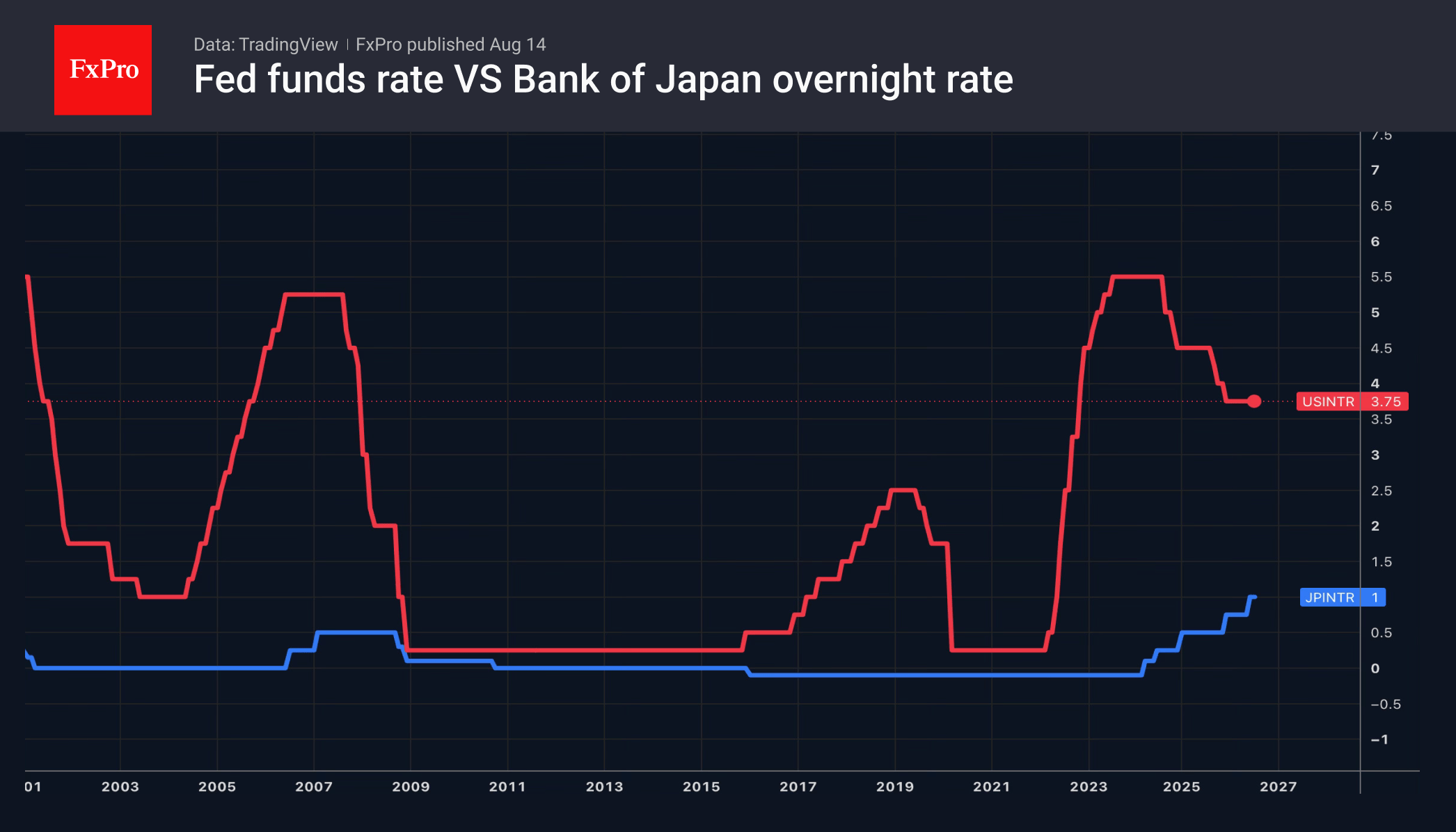
According to a Bloomberg insider, the Board of Governors intends to raise the overnight rate in September or October. The market showed virtually no reaction to this report, as investors are already anticipating a tightening of the Bank of Japan’s monetary policy this autumn. The probability of this happening by October is estimated at 60%.
That said, the interest rate differential between the Fed and the BoJ remains wide, creating a haven for carry trades. Carry traders took advantage of the coordinated currency intervention by the US and Japan and sold the yen at a higher price. This allowed the USDJPY bulls to recoup a significant portion of the losses incurred due to government intervention in the forex market.
The FxPro Analyst Team
The Crypto Market Has Again Stepped Back on Strong Stocks
Market Overview
The crypto market has pulled back to the lower end of the consolidation range in place since May. The upward trend seen in the first week of the month failed to gain momentum, repeating the pattern seen in June and July when bullish attempts also faded. It appears that the theory of an inverse correlation between cryptocurrencies and the stock market has once again been confirmed, with the S&P 500 and Russell 2000 reaching new record highs. The fact that buyers have focused on the broader market highlights a rotation away from tech stocks towards traditional sectors. Among the most actively traded cryptocurrencies, Cosmos (+10%) surged over the past 24 hours, while the majority declined, with the biggest losses recorded by Aptos (-4.7%), Bitcoin Cash (-4.5%) and NEAR Protocol (-4.4%).
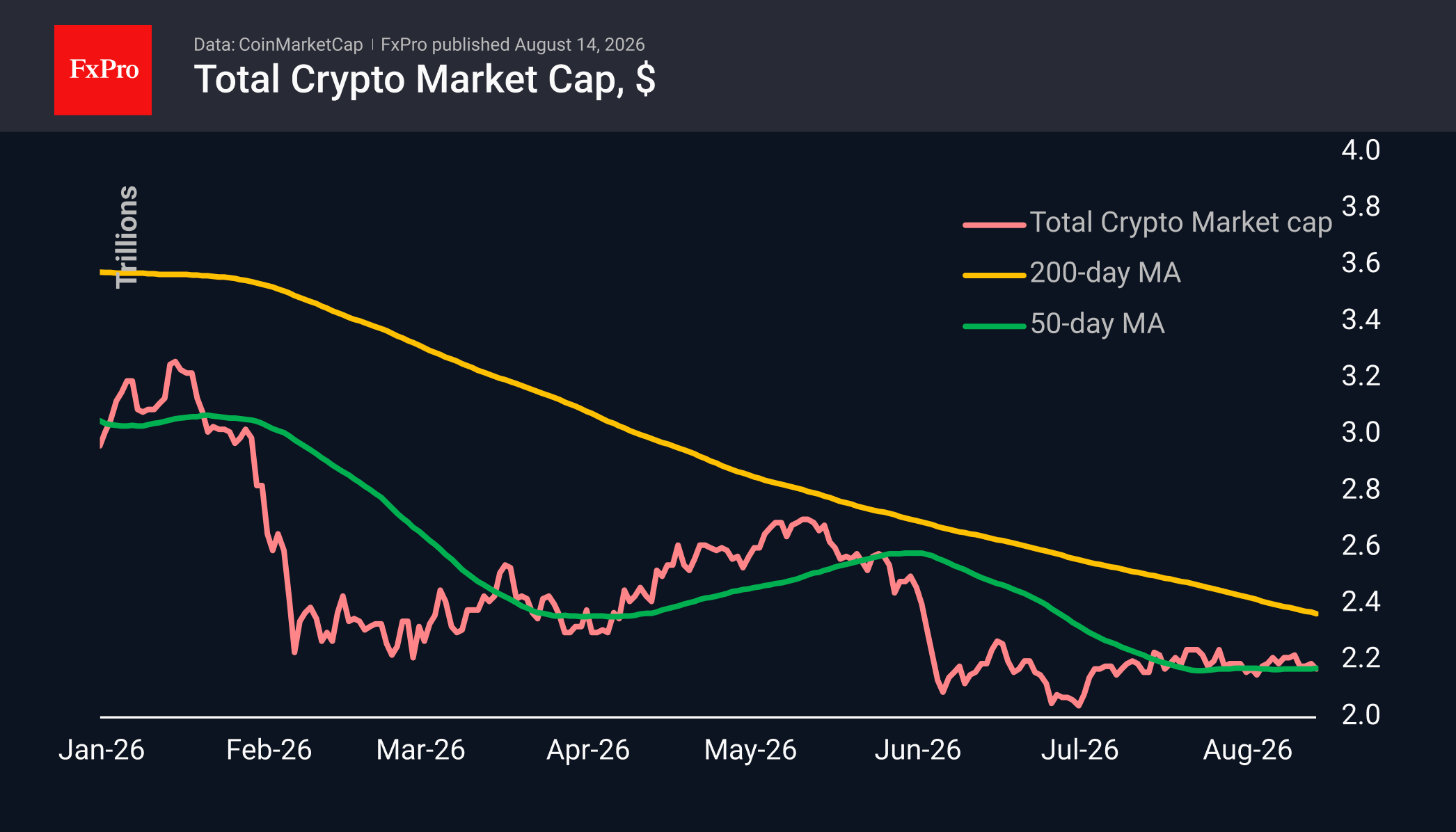
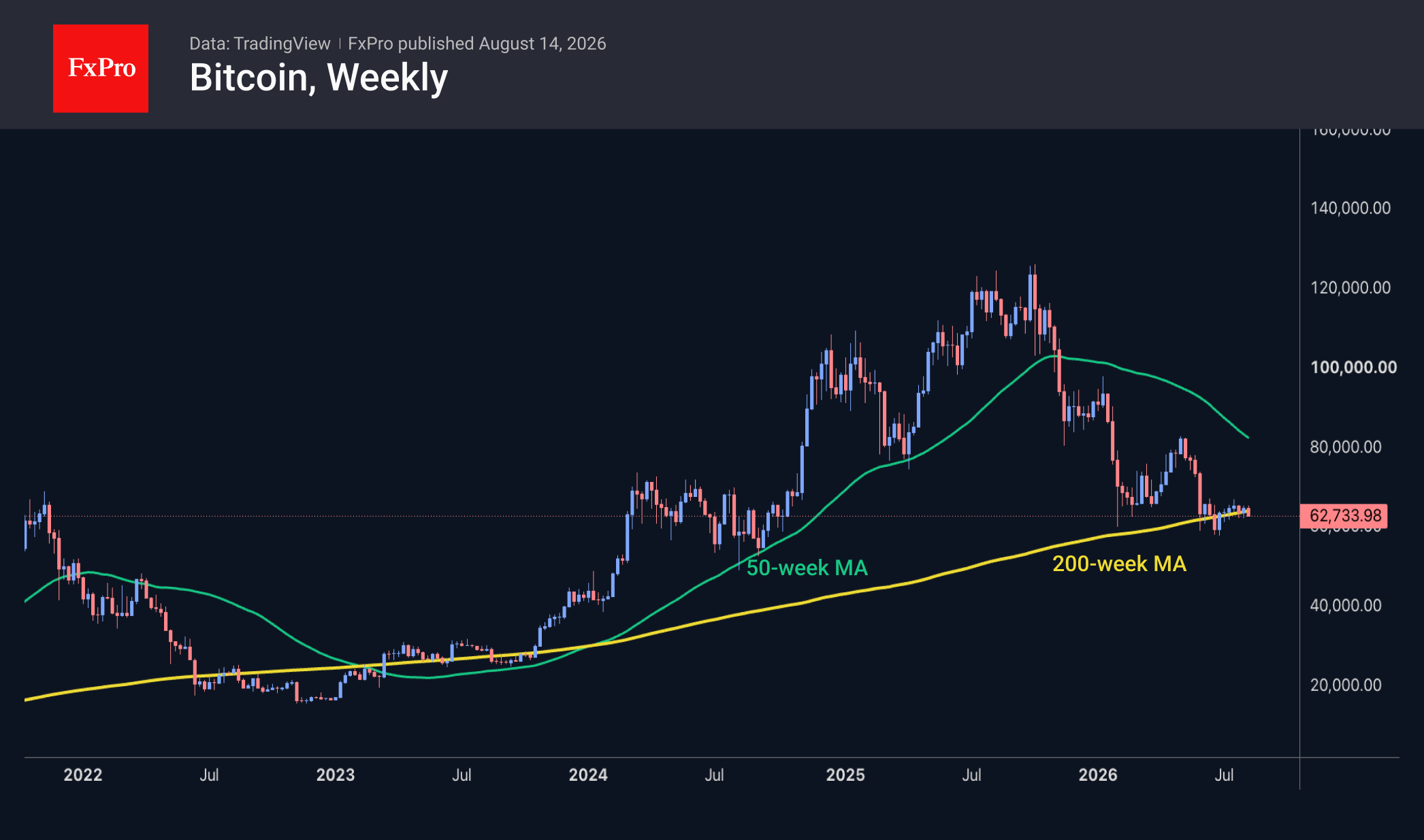
Bitcoin plummeted below $63K, retreating to the lows seen at the start of last week and below the 50-day moving average. We had previously viewed the price’s ability to hold above this level as a sign of market strength. Overall, this is the prolonged consolidation around the 200-week moving average that we have repeatedly warned about. Based on historical patterns, this period of low market activity could last between 18 and 70 weeks, and we are only nine weeks in.
News Background
The leading cryptocurrency has yet to show a confident recovery, despite the favourable macroeconomic backdrop. Sustained demand has not yet returned, but there are clear signs of seller fatigue. A break below the support zone around $63K could trigger a drop to the June low of around $58.5K, Glassnode warns.
Mining company Riot Platforms sold 4,300 BTC in the second quarter to cover operating costs and expand its data centres. Riot Platforms now holds 11,380 BTC, of which 5,821 BTC are pledged as collateral.
Metaplanet has denied selling 5,014 BTC. Contrary to rumours, the movement of bitcoins was not related to a sale, but was a reallocation of the cryptocurrency between internal wallets. The third-largest holder of Bitcoin has not sold a single coin this year. Metaplanet’s total Bitcoin reserves stand at 43,000 BTC, with an average purchase price of $102.5K per coin.
Goldman Sachs has agreed to acquire the crypto-ETF operator NEOS Investments. The deal will give the bank control over 19 exchange-traded funds linked to Bitcoin and Ethereum. The total value of ETF assets under Goldman’s management will exceed $130 billion.
The FxPro Analyst Team
Europe’s June 14.4% YoY Export Rebound Masks Sharp First-Half Trade Deterioration
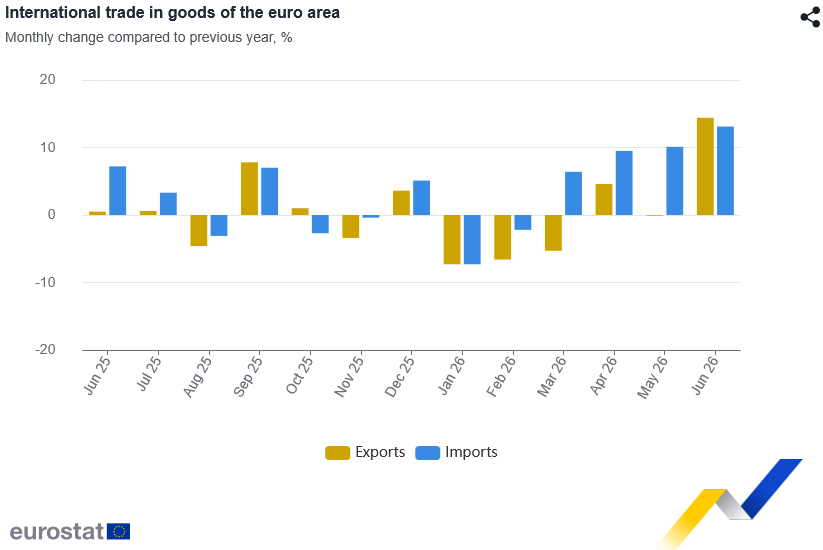
Eurozone goods trade surplus widened from EUR 4.8B last year to EUR 8.6B in June, as exports rose 14.4% y/y to EUR 272.5B and imports increased 13.1% y/y to EUR 264.0B. EU trade surplus, however, narrowed from EUR 5.2B to EUR 3.9B, with exports up 12.5% and imports rising a slightly faster 13.5%. June figures therefore point to a strong rebound in cross-border trade, but not a uniformly stronger external position across region.
First-half data paint a much weaker picture. Eurozone exports slipped -0.2% y/y in January-June while imports rose 4.9%, shrinking cumulative surplus from EUR 82.2B to EUR 9.8B. For EU, extra-regional exports fell -2.1% while imports increased 4.7%, swinging balance from a EUR 74.1B surplus to EUR 14.9B deficit. Intra-regional trade was firmer, rising 4.7% in Eurozone and 5.7% across EU.
Partner breakdown also remained mixed. EU kept sizeable surpluses with US, UK and Switzerland, while deficit with China widened from EUR 31.0B to EUR 35.1B in June. Overall, June rebound is encouraging, but it does not erase deterioration seen over first half. Stronger exports are beginning to help, yet Europe still needs a more sustained improvement before trade can be described as a durable growth tailwind.
Data Summary
| Indicator | Jun 2026 | Jun 2025 | Change |
|---|---|---|---|
| Eurozone Extra-EA Exports | €272.5B | €238.2B | +14.4% |
| Eurozone Extra-EA Imports | €264.0B | €233.4B | +13.1% |
| Eurozone Trade Balance | €8.6B | €4.8B | widened |
| EU Extra-EU Exports | €241.5B | €214.7B | +12.5% |
| EU Extra-EU Imports | €237.7B | €209.5B | +13.5% |
| EU Trade Balance | €3.9B | €5.2B | narrowed |
| Jan–Jun | 2026 | 2025 | Change |
|---|---|---|---|
| Eurozone Extra-EA Exports | €1,487.2B | €1,490.1B | -0.2% |
| Eurozone Extra-EA Imports | €1,477.4B | €1,407.9B | +4.9% |
| Eurozone Trade Balance | €9.8B | €82.2B | Narrowed sharply |
| EU Extra-EU Exports | €1,317.0B | €1,345.9B | -2.1% |
| EU Extra-EU Imports | €1,331.9B | €1,271.8B | +4.7% |
| EU Trade Balance | -€14.9B | €74.1B | Swung to deficit |
Key Takeaways
- Eurozone goods surplus widened from €4.8B to €8.6B y/y in June, as exports rose 14.4%, faster than 13.1% import growth.
- EU surplus moved in opposite direction, narrowing from €5.2B to €3.9B, as imports grew slightly faster than exports.
- June strength contrasts sharply with first-half trend: Eurozone surplus collapsed from €82.2B to €9.8B.
- EU external balance deteriorated further, swinging from €74.1B surplus to €14.9B deficit over January-June.
- EU continued to run sizable surpluses with US, UK and Switzerland, while deficit with China widened from €31.0B to €35.1B in June.
- Overall picture is improvement at margin rather than a completed trade recovery; June exports rebounded strongly, but first-half balances remain substantially weaker.
EUR/USD Reacts to Data: Fed Rate Hike Expectations Fall
EUR/USD stood at 1.1537 on Friday, with markets continuing to digest incoming economic data. Soft US inflation figures have reduced expectations of a Federal Reserve rate hike in September.
Data released on Thursday showed that producer prices were flat in July. Together with the benign CPI report, this suggests that inflationary pressures are not yet accelerating.
Markets are now pricing in a 35% probability of a 25-basis-point Fed rate hike in September, down from 55% a week earlier. Moderate inflation reduces the need for near-term policy tightening.
Recent data also suggest that the initial inflationary impact of the Middle East conflict and high energy prices may be easing. However, uncertainty surrounding a potential agreement and the reopening of the Strait of Hormuz continues to pose risks to the inflation outlook.
Technical Analysis
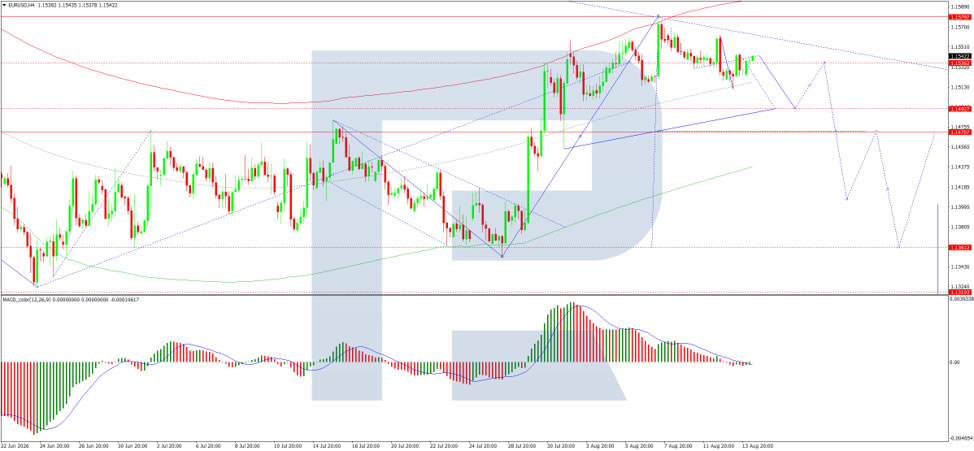
On the H4 chart of EUR/USD, the market continues to trade within a consolidation range, currently extending between 1.1511 and 1.1545, with the upper boundary being tested from below. The consolidation range around the 1.1546 level is nearing completion. An upside breakout would suggest a corrective move towards 1.1570, followed by a decline to 1.1492. A direct downside breakout would open the way for a move towards 1.1492, with scope for the trend to extend to 1.1400. The MACD indicator supports this scenario, with its signal line below zero and pointing downwards, reflecting continued bearish momentum.
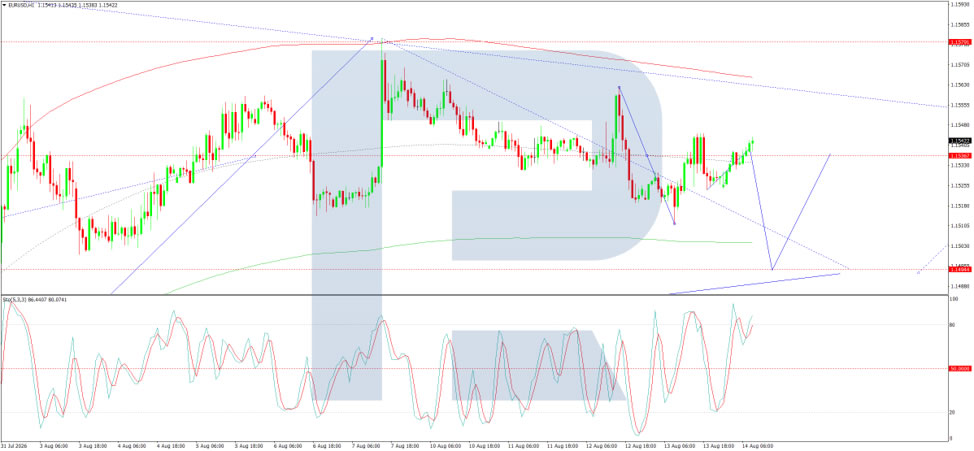
On the H1 chart, the market has completed an upward move to 1.1543. A consolidation range is currently forming below this level. A move lower towards 1.1492 is expected, followed by a move higher to 1.1536, and then a continuation of the downward trend to 1.1400, with scope for a further decline to 1.1330. The Stochastic oscillator confirms this scenario, with its signal line below 80 and trending downward towards 20, indicating increasing short-term downside pressure.
Conclusion
EUR/USD remains range-bound as markets assess the implications of softer US inflation data, which have reduced the likelihood of a September Fed rate hike from 55% to 35%. Producer prices were flat in July, adding to evidence that inflationary pressures are moderating. The initial impact of the Middle East conflict and high energy prices appears to be fading. However, uncertainty over a potential US–Iran agreement and the reopening of the Strait of Hormuz still poses risks. Technically, the pair may see a short-term corrective move towards 1.1570 before resuming its broader bearish trend towards 1.1492 and potentially 1.1400. The near-term direction will depend on further US economic data and geopolitical developments.
EUR/GBP Analysis: Triangle Breakout Attempt Following an Uptrend
On 13 August, the UK Office for National Statistics (ONS) reported that GDP growth slowed to 0.4% quarter-on-quarter in the second quarter, down from 0.6% in the first quarter. The figure was in line with expectations, and the market reaction was relatively muted.
The interest-rate backdrop has also remained broadly unchanged for several weeks. On 30 July, the Bank of England kept its policy rate at 3.75%, while the ECB left its rate at 2.25% on 23 July. With both decisions largely priced into the market, the absence of fresh guidance from either central bank means that short-term EUR/GBP price action may be driven more by technical factors than by the latest macroeconomic data.
Technical Analysis of EUR/GBP
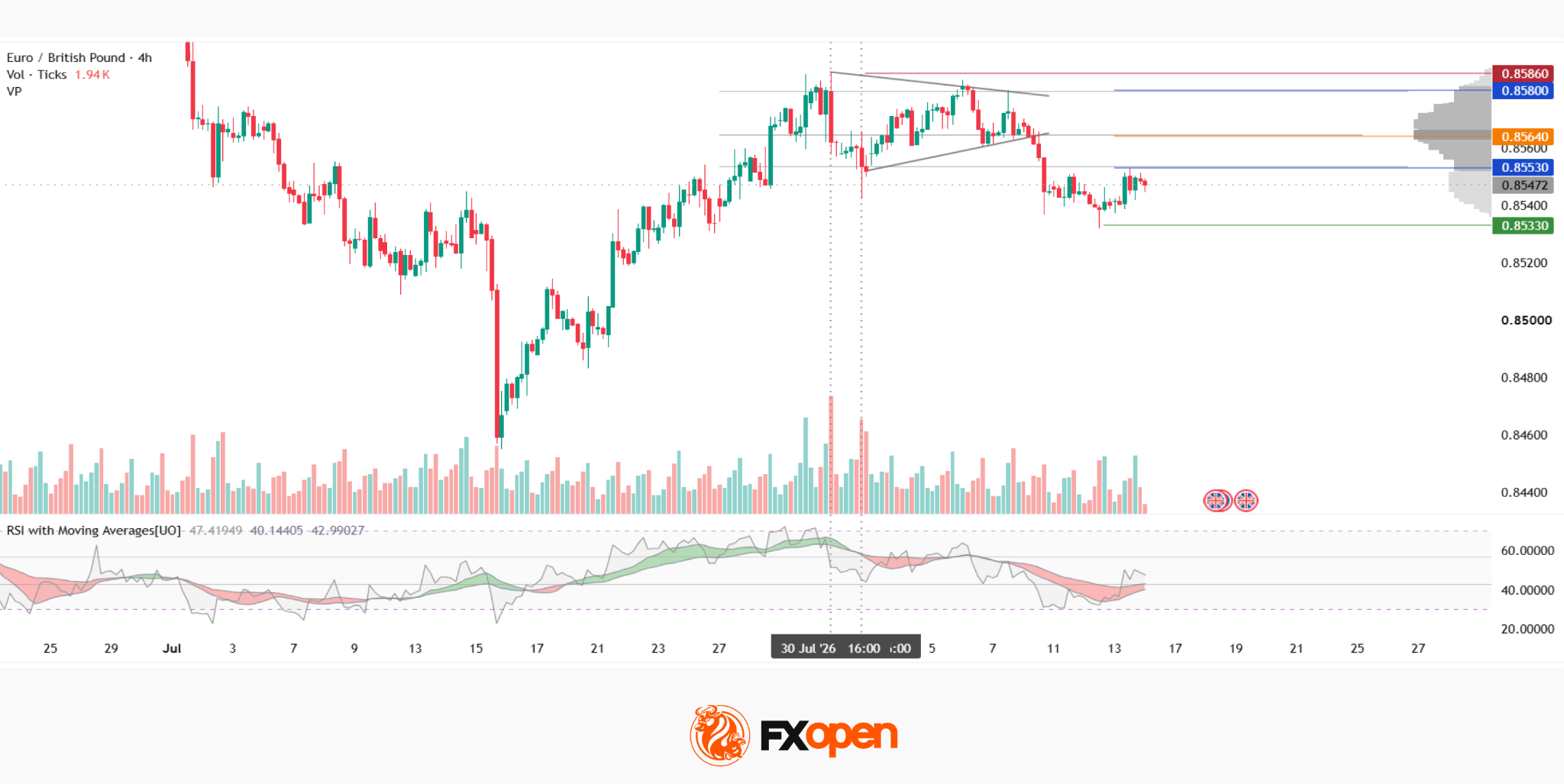
The second half of July saw a strong upward move in EUR/GBP, with the pair climbing from below 0.8460 to a peak near the current resistance level at 0.8586.
The rally was followed by a consolidation phase. Since the beginning of August, price action has gradually narrowed into a pattern resembling a symmetrical triangle, with the trading range becoming progressively tighter.
On Monday, 10 August, the pair broke below the lower boundary of the formation. EUR/GBP is currently trading beneath both the triangle’s lower trendline and the lower boundary of the current market profile at 0.8553, while testing the latter from below. If this retest is successful and the downside move gains momentum, the green support level around 0.8533 could become increasingly important.
A false breakout, however, would shift attention back towards the upside. In that scenario, the pair would face several technical barriers: the Point of Control (POC) at 0.8564, the upper boundary of the profile at 0.8580, and the key resistance level at 0.8586.
The RSI + MAs indicator currently shows readings of 48, 40 and 43. The bearish signal has failed to develop further, while the RSI has moved back into the neutral zone, suggesting that momentum remains inconclusive.
Key Takeaways
The attempted downside breakout has pushed EUR/GBP outside the profile in which the recent consolidation developed. The next directional move may depend on whether the pound receives additional support from the Bank of England as the central bank determines its subsequent policy course.
For now, the technical setup remains vulnerable to a false breakout, with the 0.8553 retest likely to be particularly important in determining whether sellers can maintain control or the pair returns to the consolidation range.
Trade over 50 forex markets 24 hours a day with FXOpen. Take advantage of low commissions, deep liquidity, and spreads from 0.0 pips (additional fees may apply). Open your FXOpen account now or learn more about trading forex with FXOpen.
This article represents the opinion of the Companies operating under the FXOpen brand only. It is not to be construed as an offer, solicitation, or recommendation with respect to products and services provided by the Companies operating under the FXOpen brand, nor is it to be considered financial advice.
EUR/USD Daily Outlook
Intraday bias in EUR/USD remains neutral and more consolidations could be seen. On the upside, above 1.1580 will extend the rebound from 1.1323 to 1.1621 cluster resistance (38.2% retracement of 1.2081 to 1.1323 at 1.1613). Decisive break there will solidify the case that fall from 1.2081 has completed as a three wave correction at 1.1323. Further rally would then be seen to 61.8% retracement at 1.1791. However, break of 1.1481 resistance turned support will dampen this case, and turn bias back to the downside for 1.1352 support instead.
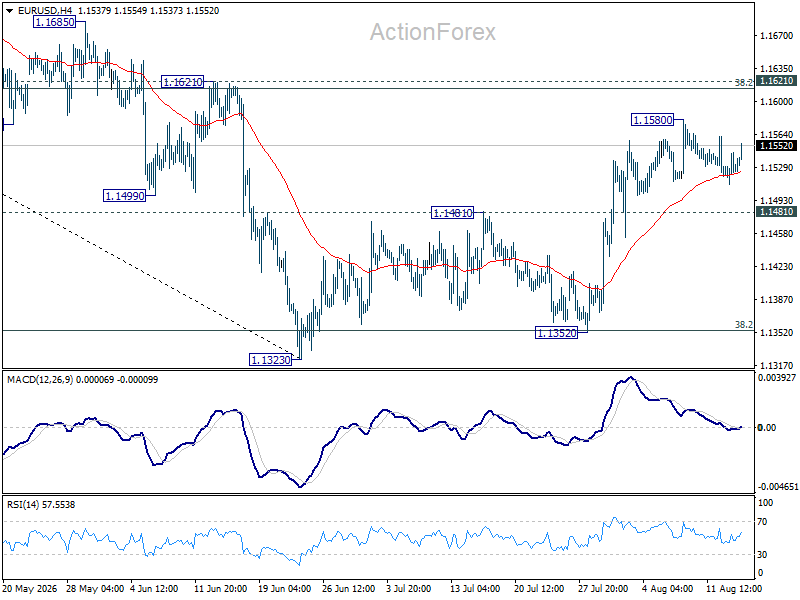
In the bigger picture, focus is staying on 38.2% retracement of 1.0176 to 1.2081 at 1.1353. Decisive break there will revive the case of medium term bearish trend reversal after rejection by 1.2 key cluster resistance level. Further fall should be seen to 61.8% retracement at 1.0904. Nevertheless, strong rebound from 1.1353, followed by break of 1.1621 resistance, will retain medium term bullishness.
USD/JPY Daily Outlook
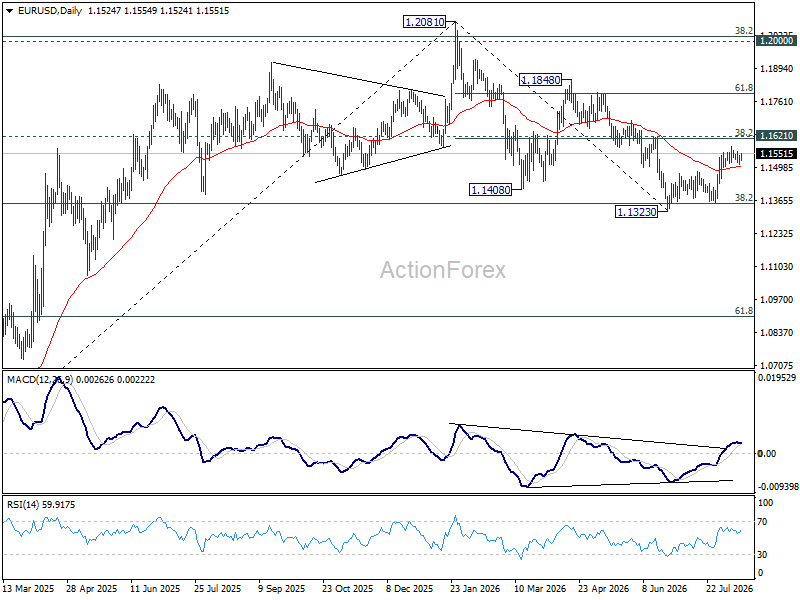
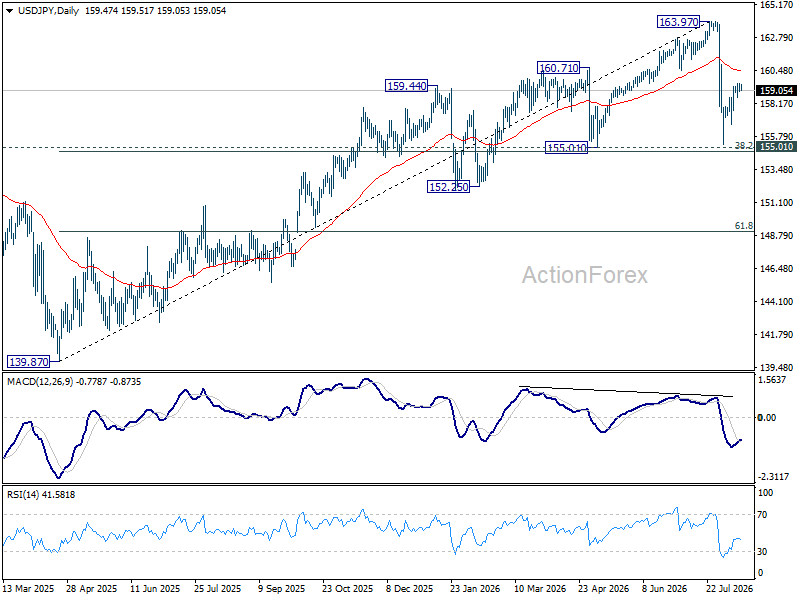
Intraday bias in USD/JPY is turned neutral first with current retreat. Considering loss of momentum as seen in 4H MACD, in case of another rise, strong resistance could be seen from 159.59 to 160.62 (50% and 61.8% retracement of 163.97 to 155.22). On the downside, firm break of 158.58 will turn bias back to the downside for deeper pullback.
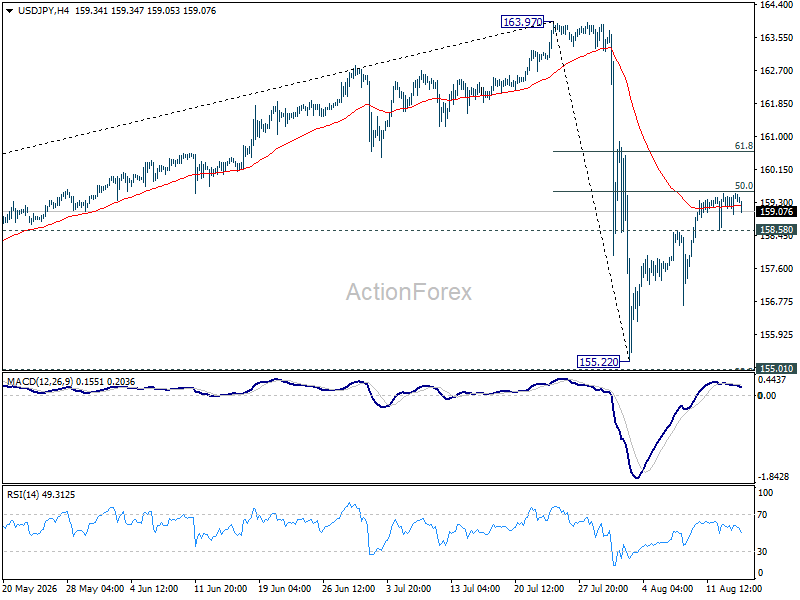
In the bigger picture, as long as 155.01 cluster support (38.2% retracement of 139.87 to 163.97 at 154.76) holds, the larger up trend is still expected to continue through 163.97 after current correction completes. However, firm break of 155.01 will raise the chance that USD/JPY is already in a larger scale correction, and open up deeper fall back to 139.87 (2025 low) in the medium term.
GBP/USD Daily Outlook
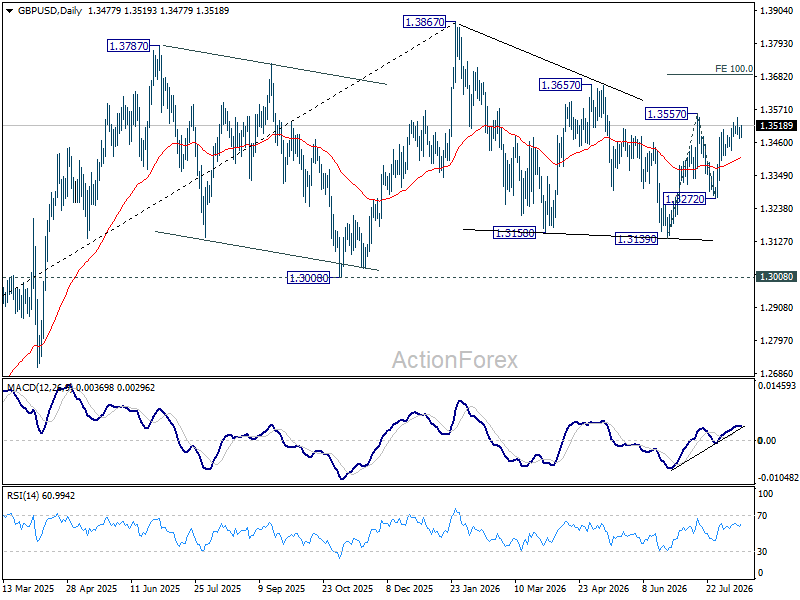
Intraday bias in GBP/USD remains neutral for the moment. Further rise is in favor as long as 1.3433 support holds. On the upside, above 1.3545 will target 1.3557 resistance. Firm break there will resume the rise from 1.3139 and target 100% projection of 1.3139 to 1.3557 from 1.3272 at 1.3690. On the downside, break of 1.3433 will turn bias back to the downside for 1.3272 support.
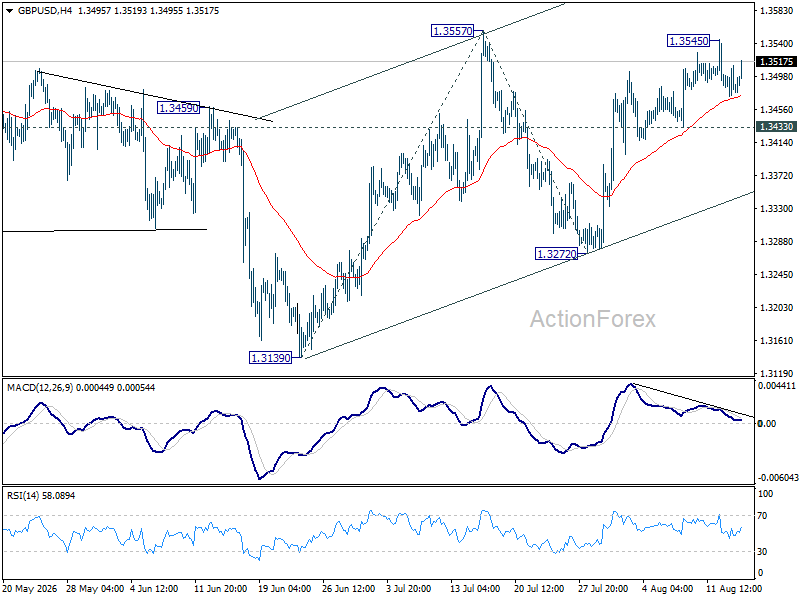
In the bigger picture, price actions from 1.3867 are a corrective pattern within the broader up trend from 1.0351 (2022 low). With 1.3008 support intact, medium term bullishness is maintained and break of 1.3867 is in favor for a later stage, towards 1.4248 key resistance (2021 high). However, firm break of 1.3008 will at least bring deeper fall to 38.2% retracement of 1.0351 to 1.3867 at 1.2524, with increased risk of bearish reversal.