

Sample Category Title
Japan’s PMI composite rises to 52.3, strengthening activity and intensifying price pressures
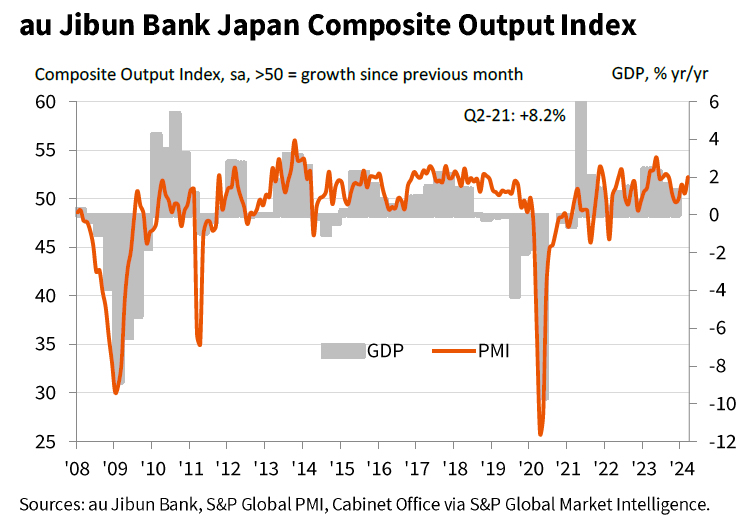
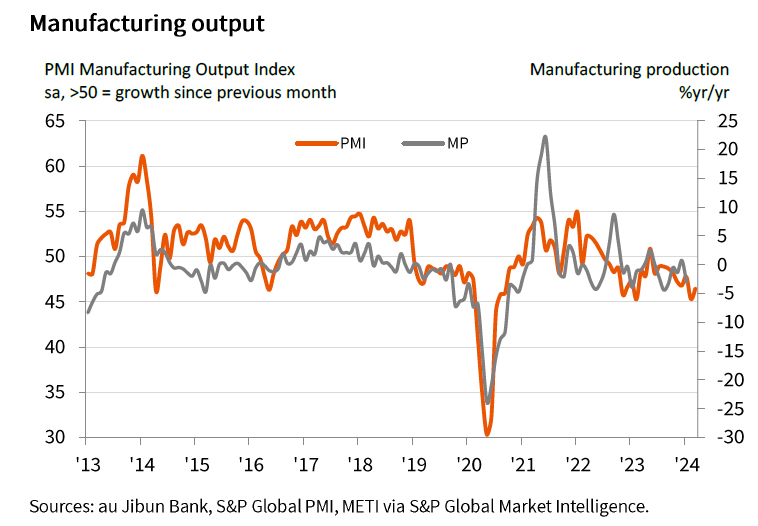
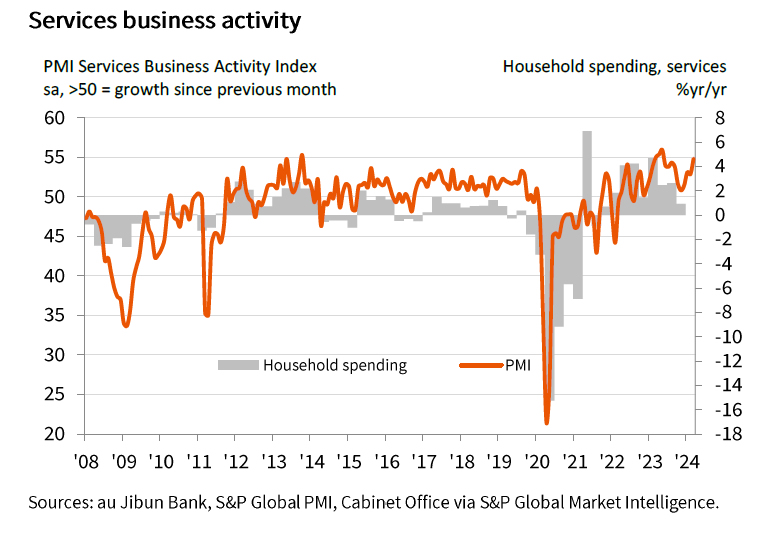
Japan's PMI Manufacturing saw a modest increase from 47.2 to 48.2 in March, while PMI Services surged to from 52.9 to 54.9, its highest level since last May. Composite PMI, which combines both sectors, also climbed from 50.6 to 52.3, reaching its peak since last August.
Usamah Bhatti, Economist at S&P Global Market Intelligence, underscored the private sector's regained momentum at the end of Q1. The expansion was predominantly driven by service providers, while manufacturers experienced a continued, though less severe, contraction.
Alongside this economic revival, Japan is facing a "renewed intensification of price pressures," with the rate of input price inflation hitting a five-month high. This uptick was particularly pronounced among service providers, although manufacturers also reported "stubbornly high input prices". Many firms opted to pass these increased costs onto customers, leading to the highest output charge inflation since last August.
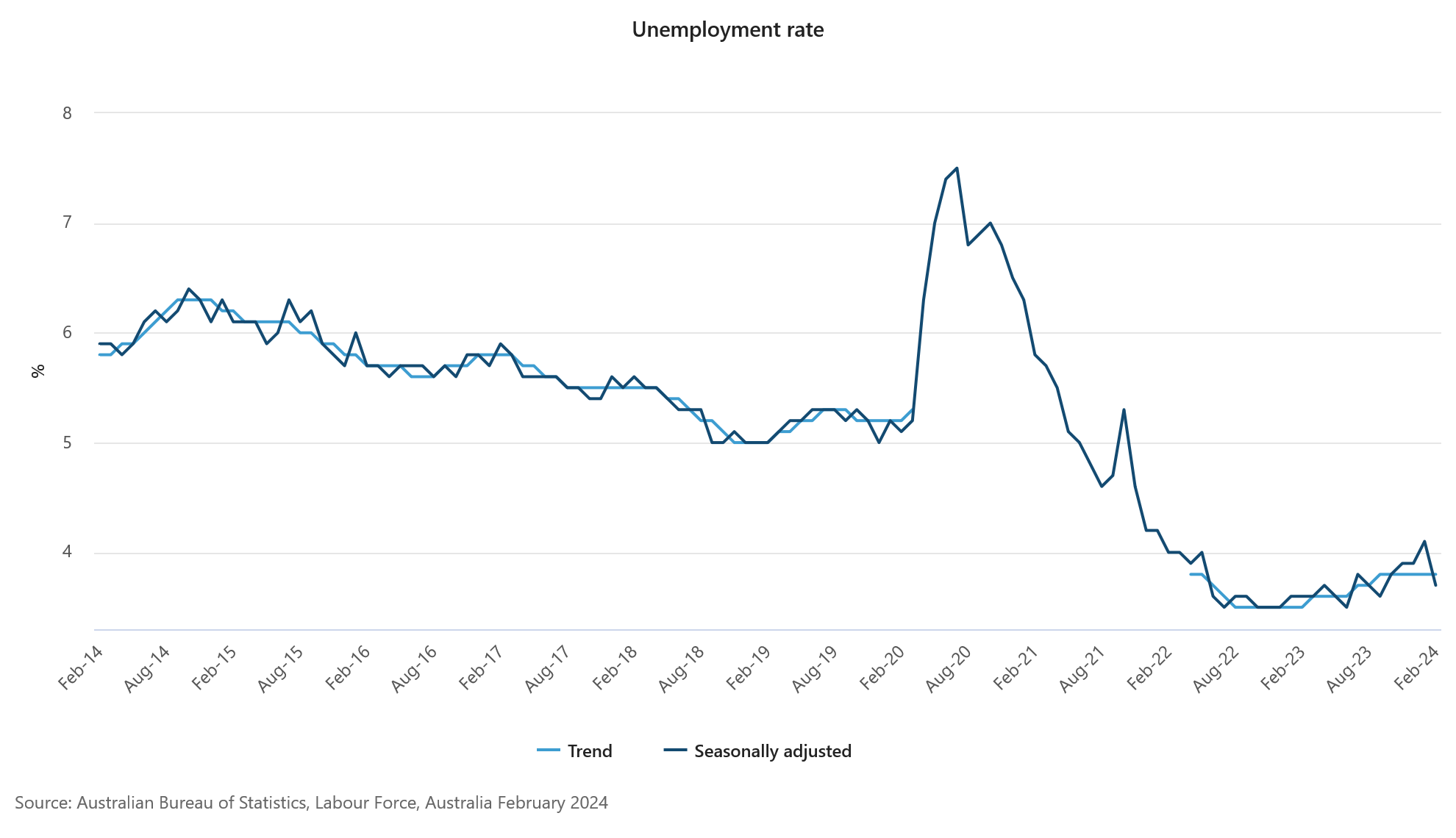
Australia employment surges 116.5k, unemployment rate dives to 3.7%
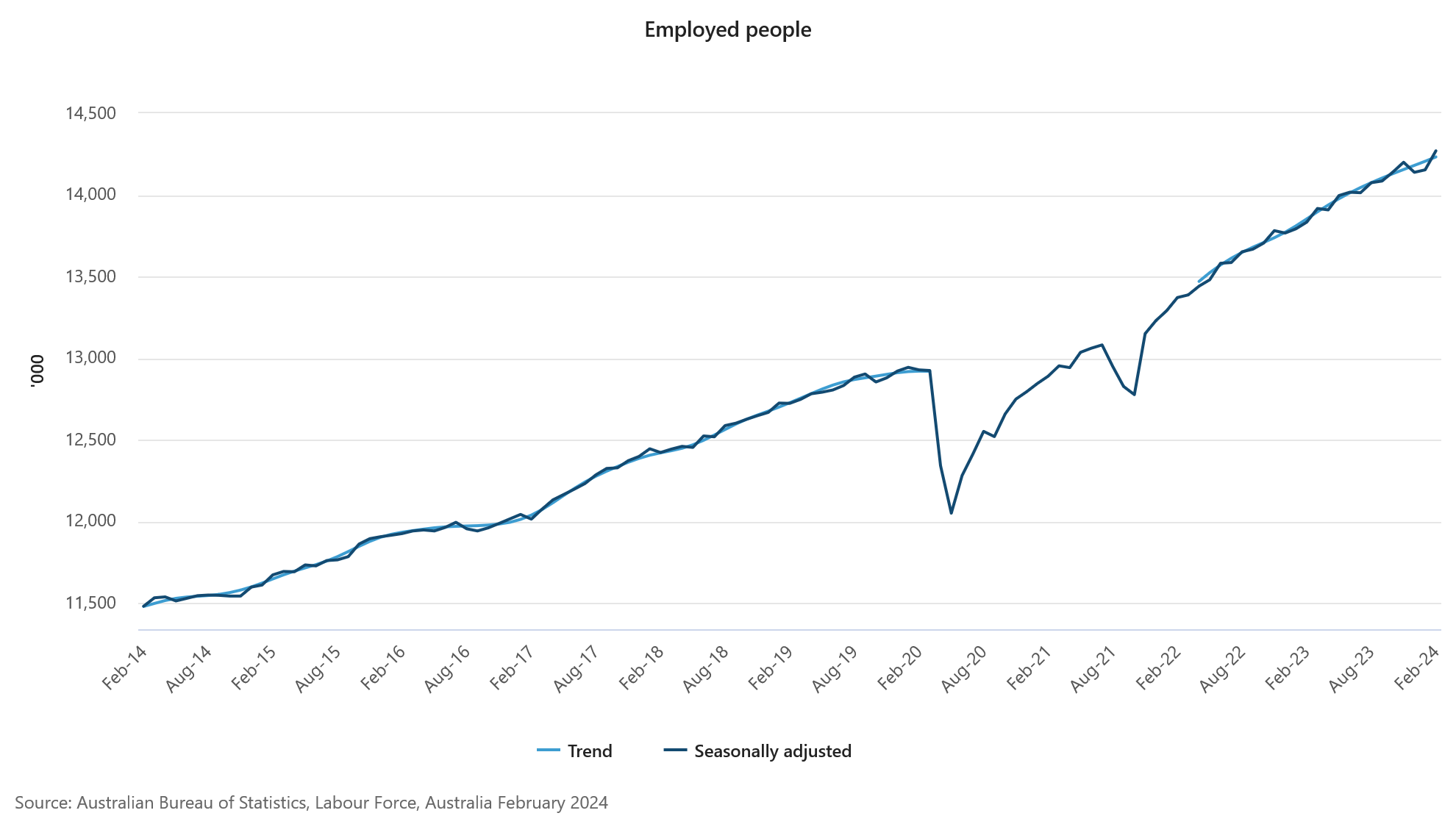
Australia employment grew strongly by 116.5k in February, well above expectation of 40.2k. Full-time jobs rose 78.2k while part-time jobs rose 38.3k.
Unemployment rate fell sharply from 4.1% to 3.7%, below expectation of 4.0%. Participation rate rose 0.1% to 66.7%. Monthly hours worked also rose 2.8% mom.
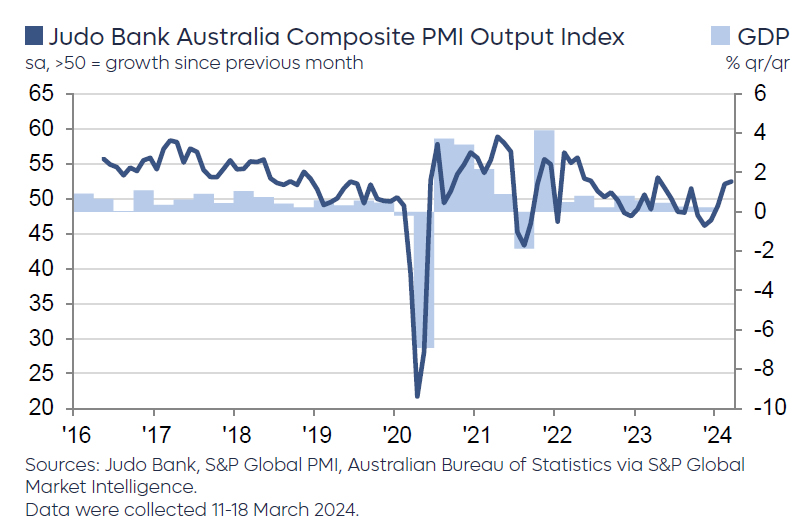
Australia PMI composite rises to 11-month, another blow to RBA rate cut expectations
Australia PMI Manufacturing PMI dropped to a 46-month low of 46.8. Conversely, PMI Services climbed to an 11-month peak of 53.5, with the Composite PMI also reaching an 11-month high at 52.4.
Warren Hogan, Chief Economic Advisor at Judo Bank, highlighted that Composite Output Index's increase for the fourth consecutive month signifies the economy's rebound from the cyclical slowdown experienced in 2023. Meanwhile However, inflation remains a concern, with service sector readings indicating persistently high producer and consumer prices.
Hogan noted that the results are "another blow to rate-cut expectations" for RBA. The rebound in economic activity, coupled with inflation exceeding targets, not only diminishes the likelihood of rate reductions, but also raises the possibility of further monetary tightening in 2024. This aligns with recent warnings from RBA.
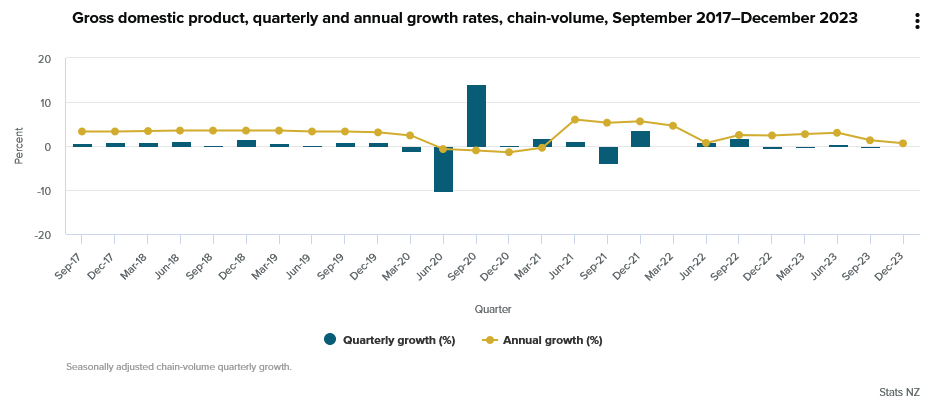
New Zealand in technical recession as Q4 GDP contracts -0.1% qoq
New Zealand's economy has officially entered technical recession, with GDP contracting by -0.1% qoq in Q4, below expectation of 0.0% qoq. This decline follows -0.3% contraction in Q4, marking two consecutive quarters of negative growth.
GDP per capita declined decline of -0.7% qoq, while real gross national disposable income saw a -1.4% qoq drop.
The contraction was not uniformly felt across all sectors. Of the sixteen industries analyzed, eight experienced growth, notably the rental, hiring, and real estate services sector, alongside public administration, safety, and defense.
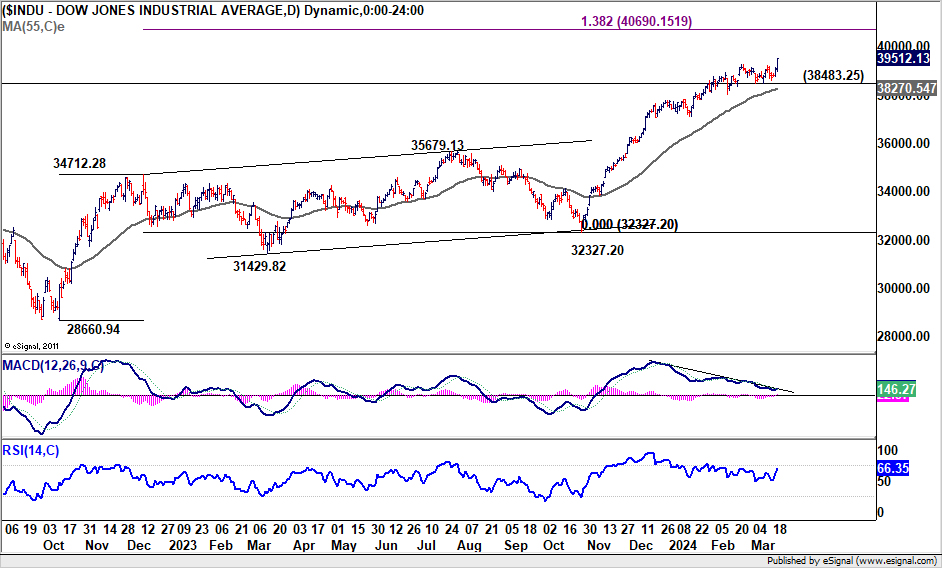
DOW hits new record as Fed holds course on three cuts, despite hawkish undertones
US stocks surged sharply higher overnight, with DOW and S&P 500 closing at new record highs. Market participants expressed relief and optimism as Fed's maintained forecast of three rate cuts for the year. Fed Chair Jerome Powell's remarks during the press conference further buoyed investor sentiment, emphasizing that the recent inflation data "haven't really changed the overall story". He affirmed that inflation is "moving down gradually", albeit via a "somewhat bumpy road."
Despite positive reactions from the stock markets, it's crucial to acknowledge that Fed's has shifted to a slightly more hawkish tone, in particular compared to December meeting. The updated dot plot revealed a narrower margin, with nine out of nineteen members now anticipating just two rate cuts for the year. Moreover, future easing path is envisioned to be more gradual than previously projected. Interest rate is expected to settle at 3.75-4.00% by the end of 2025—a slight increase from December's forecast of 3.50-3.75%. For the end of 2026, the projection was raised to 3.00-3.25%, up from the previous 2.75-3.00%.
Technically, DOW's up trend is now extending to 40k psychological level, and then 138.2% projection of 28660.94 to 34712.28 from 32327.20 at 40690.15. Outlook will stay bullish as long as 38483.25 support holds, in case of pullback.
Is Swiss National Bank About to Slash Rates?
- SNB will announce its rate decision on Thursday at 08:30 GMT
- Inflation has cooled, so market is pricing 35% chance of rate cut
- For the Swiss franc, the outlook has started to turn negative
Inflation cools down
The Swiss economy is losing momentum. Economic growth slowed sharply last year, clocking in at just 0.6% in annual terms during the fourth quarter, as domestic consumption moderated while weaker growth trends in the Eurozone and China dampened exports.
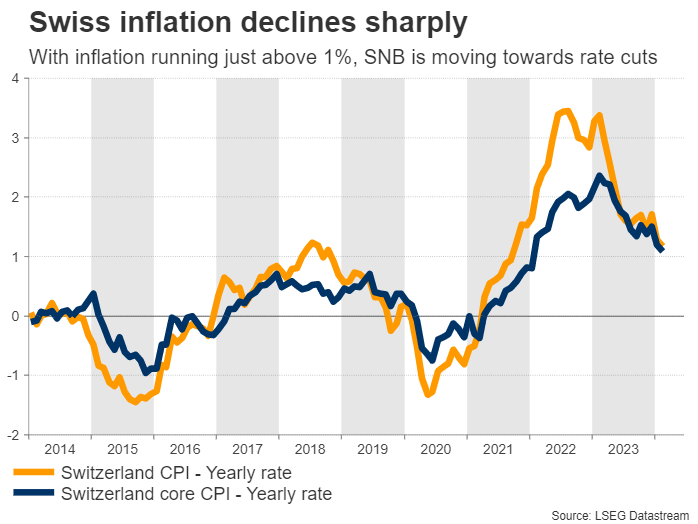
Reflecting this slowdown, inflation has declined dramatically, falling to 1.2% in February. Core inflation was even lower at just 1.1% and the government expects even more softness ahead as it recently revised down its inflation forecasts for this year.
In other words, the war against inflation is over. Instead, the new threat on the radar might be a recession if growth remains so fragile. This suggests lower interest rates are coming.
SNB to set the stage for rate cuts
With growth nearly stagnant and inflation running well below its target, the Swiss National Bank certainly has the conditions necessary to begin cutting interest rates. Markets assign a 35% probability that this could happen as early as this week.
More importantly, a rate cut is fully priced in for the June meeting, so investors are saying it is only a matter of time until the SNB takes action to support the economy.
It's a close call, but admittedly, the argument for waiting until June seems stronger. Although the economy has lost steam, it has not fallen off a cliff either, and historically speaking the SNB usually prefers to wait until larger central banks like the ECB make their own moves first.
Hence, this might be the meeting where the SNB simply opens the door for a summer rate cut. Looking at the dollar/franc chart, the levels that could come into play on this decision are 0.8950 on the upside and 0.8870 on the downside.
Franc outlook is increasingly grim
Either way, the outlook for the Swiss franc has started to shift to negative. While the franc was the best-performing currency of 2023, the landscape has changed drastically this year, with several of the factors that bolstered the franc going into reverse.
Chief among those is the SNB's strategy on FX interventions. Last year, the SNB was consistently buying francs on the open market, to help the currency appreciate and dampen imported inflation in the process. But with inflation cooling off, there's no incentive to do that anymore.
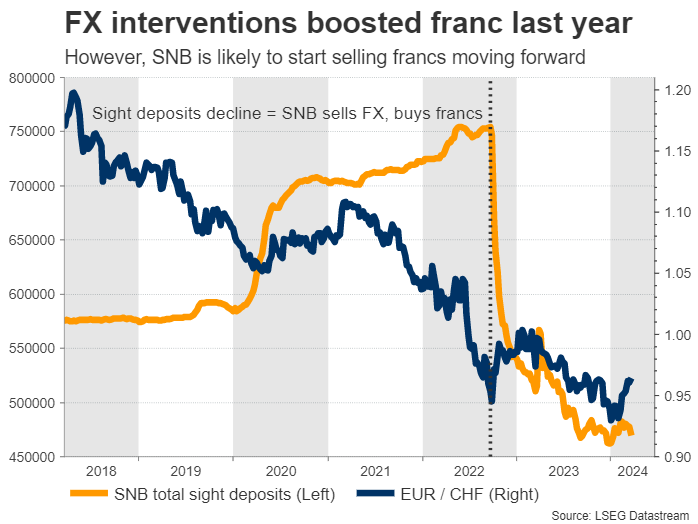
Incoming data confirms the SNB has stopped buying the franc, and with inflation running so low, it could shift back to selling francs soon in an attempt to boost imported inflation.
With the central bank also moving towards rate cuts, there isn't much that can help revive the franc, which has already fallen more than 5% against the US dollar this year.
The franc's best chance at a comeback would be an episode of panic in global markets that fuels demand for safe haven assets. Even in this case though, it's doubtful whether any boost would last long in an environment where FX interventions are working against the currency.
First Impressions: NZ GDP, December quarter 2023
GDP contracted by 0.1% in the December quarter, slightly softer than Westpac and RBNZ estimates.
Key results
- Quarterly change: -0.1% (last: -0.3%, Westpac f/c: 0.0%, market f/c: 0.1%, RBNZ 0.0%)
- Annual change: -0.3% (Last -0.6%, Westpac f/c 0.0%, RBNZ 0.0%)
- Annual average change: +0.6% (Last: +1.3%)
The New Zealand economy was broadly flat over the December quarter. The production measure of GDP fell by 0.1%, slightly weaker than the zero growth that we and the Reserve Bank were expecting. Both the expenditure and income measures (the latter being a new addition to today’s release) were flat in inflation-adjusted terms.
Along with some modest revisions to growth in previous quarters – mostly due to recalculating the seasonal factors – output has shrunk by 0.3% over the last year. Again, this was softer than the flat outturn that we and the Reserve Bank had forecast.
The mix of activity was similar to what we expected. Goods-based sectors are tending to do it tougher, with declines in retail, wholesaling, manufacturing and residential construction. This was partly offset by gains in the services sectors, though even here the growth was patchy. Finance, rental services and professional services saw solid gains, but transport and arts and recreational services were down as the recovery in international tourism faltered over the quarter. The biggest lift was in public administration (up 2.8%), though it’s likely that at least some of this related to the October election.
In the context of the very strong population growth that New Zealand is currently seeing, a flat outturn for GDP is quite a soft result. Output was down 0.7% in per capita terms for the December quarter, and has fallen by 3.1% compared to a year ago. That’s a sharp decline compared to history – something that would normally be associated with recession – but in this case it highlights the degree to which the economy had become overheated in the first place.
On balance, today’s report suggests slightly less need to keep monetary policy tight for an extended period. That said, the scale of the surprise for the RBNZ is less than we saw in the September 2023 release, which the RBNZ has tended to downplay. There is also a lot of water still to go under the bridge before the May Monetary Policy Statement, including the next QSBO business survey (early April), the March quarter CPI (mid-April) and the March quarter labour market surveys (early May). There’s also the crucial first Budget for the new coalition Government – while that will be unveiled after the MPS, the RBNZ will no doubt be briefed on the key details.
March FOMC Meeting: Still Building Confidence
Summary
- As was widely expected, the FOMC left the fed funds target range unchanged at 5.25-5.50% at the conclusion of its March meeting.
- The Summary of Economic Projections showed that the vast majority of the Committee continues to believe some easing of policy will be appropriate this year. The median projection for the federal funds rate at year-end was unchanged from December's projection at 4.625%. However, the distribution of expectations shifted higher for 2024 and the median dot for 2025 and 2026 moved up 25 bps, implying an incrementally more hawkish outlook.
- Notably, the median "longer-run" dot also moved higher. While the increase was small (6 bps), we suspect the longer-run dot will drift higher very slowly to reflect a neutral rate that may have moved somewhat higher relative to the pre-pandemic period.
- The slightly higher fed funds rate outlook comes amid more upbeat projections for economic growth and stickier inflation this year. That said, the Committee's estimates for unemployment and inflation were barely changed for 2025-2026.
- The statement was virtually unchanged, with only a minor tweak to the paragraph on recent economic conditions. The Committee continues to seek "greater confidence that inflation is moving sustainably toward 2%" before reducing the fed funds rate.
- Overall, the updated Summary of Economic Projections suggests that the FOMC believes that inflation is on a path back to its 2% target, but it is likely to be achieved slightly later than previously expected. We continue to look for the FOMC to start reducing the fed funds rate at its June 12 meeting. However, the risks to our outlook are skewed toward the FOMC beginning to ease a little later in the summer or potentially proceeding at a slower pace that leads to less than the 100 bps of easing we project through the end of this year.
- While risks to the FOMC beginning to cut the fed funds rate skew toward later in the year, balance sheet normalization looks likely to occur somewhat earlier. In light of Powell's comments at today's press conference, we think an announcement to slow the pace of quantitative tightening is coming at the May 1 meeting, although we would not be surprised if it slipped to the following meeting on June 12.
FOMC Signals Cuts Coming, Just Not Yet
As widely expected, the FOMC left the target range for the federal funds rate unchanged at 5.25-5.50% at the conclusion of its March meeting. The last rate hike occurred in July 2023, and the Committee has left its policy rate unchanged in the eight months since.
The Summary of Economic Projections (SEP) signaled that all but two of the Committee members expect to start cutting rates this year, with the median participant projecting 75 bps of easing by year-end 2024 (chart). The 2024 median dot was unchanged from the December SEP, although the distribution drifted higher in a sign that policymakers remain on guard against sticky inflation. In that vein, the median dots for 2025 and 2026 rose by 25 bps in each year, consistent with 75 bps of easing in 2025 and another 75 bps of cuts in 2026.
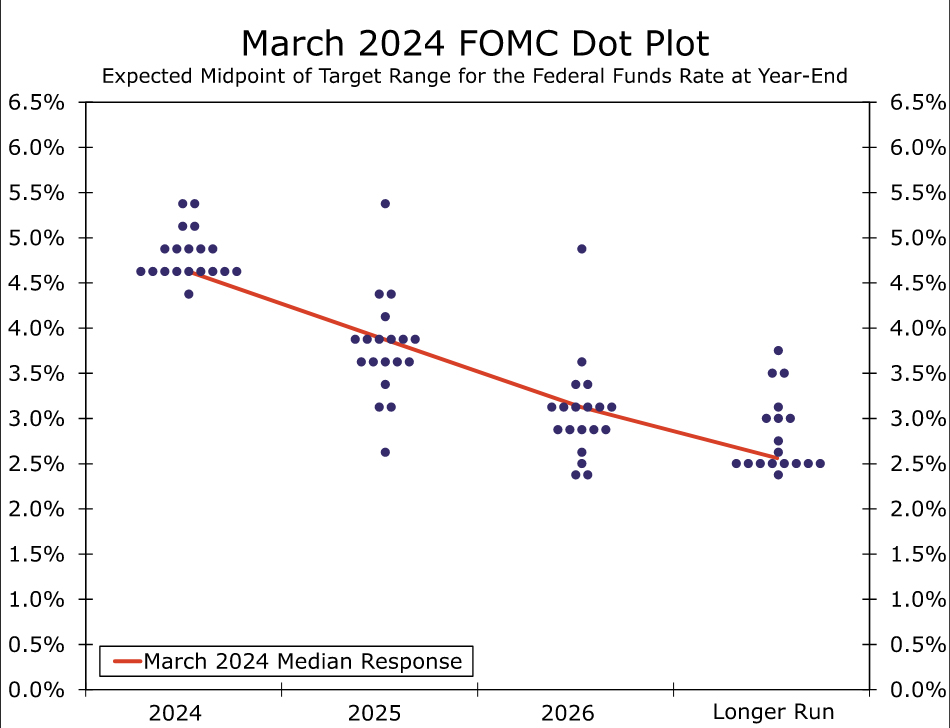
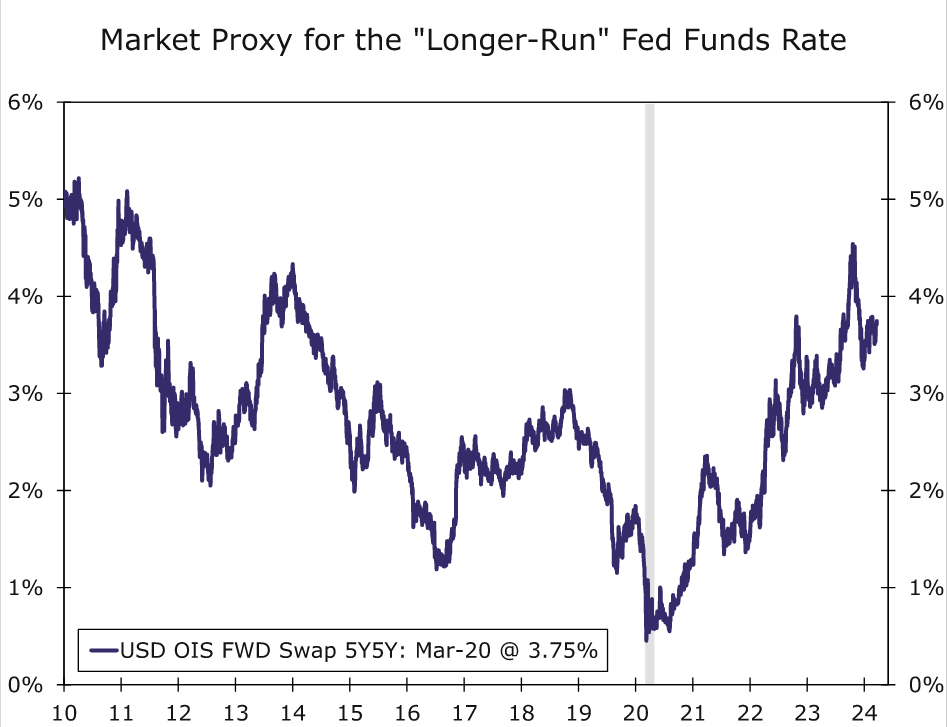
The median "longer-run" dot also moved higher. The longer-run dot represents each participant's view of the level of the federal funds rate that would be most consistent with achieving the Federal Reserve's dual mandate of maximum employment and price stability over the long-run. The increase in the longer-run dot was small, just 6 bps, but it marks the first time the median has been above 2.5% since March 2019. We suspect the longer-run dot will drift higher very slowly to reflect a neutral rate that may have moved somewhat higher relative to the pre-pandemic period. Markets appear to be ahead of the Committee and are priced for short-term interest rates to be between three and four percent over the longer-run (chart).
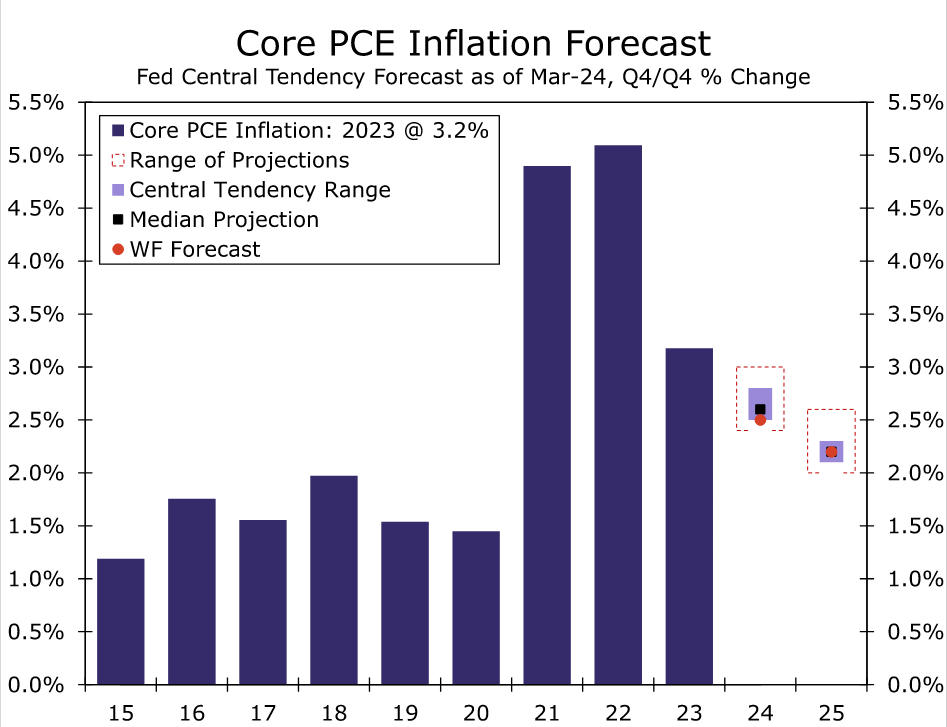
Elsewhere, the Committee's projections for the economy reflected continued resilience in both output and price growth. The median projection for real GDP growth in 2024 is 2.1%—up from 1.4% in the December SEP. Growth projections in 2025 and 2026 were also revised up by two tenths and one tenth of a percentage point, respectively. The Committee's inflation projections also rose modestly, most notably an increase in the median projection for 2024 core PCE inflation from 2.4% to 2.6% (chart). That said, the median forecasts for core inflation in 2025 and 2026 were left unchanged in a sign that the Committee remains confident that inflation progress will continue, just at a slightly slower pace than previously believed.
The post-meeting statement contained virtually no changes to what was released following the January 31 meeting. Job gains were still characterized as "strong," although the phrase that hiring has "moderated since early last year" was stricken with payrolls averaging 265K the past three months. The remainder of the statement contained no changes. Economic activity continues to expand at a "solid" pace, and inflation "remains elevated." Notably, the FOMC continues to seek "greater confidence that inflation is moving sustainably toward 2%" before reducing the fed funds rate.
Source: U.S. Department of Commerce, Federal Reserve Board and Wells Fargo Economics
Source: Federal Reserve Board and Wells Fargo Economics
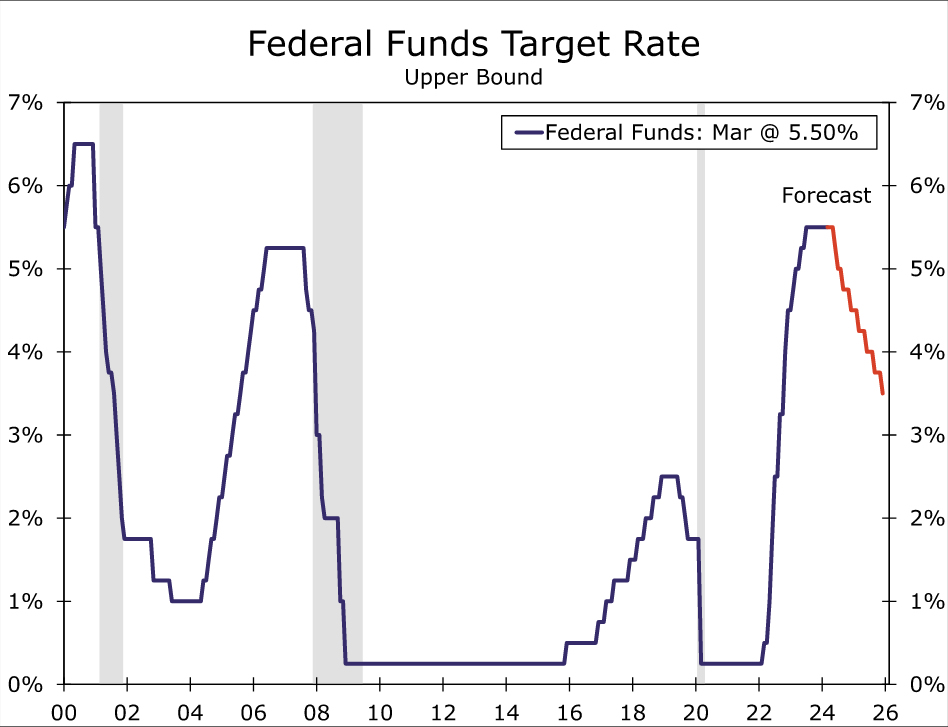
Overall, the updated Summary of Economic Projections suggests that the FOMC believes that inflation is on a path back to its 2% target, but it is likely to be achieved slightly later than previously expected. We currently expect the Committee to first ease policy at its June 12 meeting, at which time officials will have seen three more months of inflation and employment data, and ultimately reduce the fed funds rate by a total of 100 bps this year (chart). However, with the Committee more upbeat on prospects for economic activity and a bit more worried about inflation, the risks to our outlook are skewed toward the FOMC beginning to ease a little later in the summer (at its July 31 meeting), or potentially proceeding at a slower pace (e.g., every other meeting).
The Committee also reaffirmed its ongoing pace of balance sheet runoff, commonly referred to as quantitative tightening (QT), but Chair Powell's comments in the post-meeting press conference suggested that changes are coming. Powell stated that it is the Committee's view that it would be appropriate to slow the pace of asset runoff "fairly soon." Note that a slower pace of QT would still involve shrinking the Fed's balance sheet, just at a slower pace than what has occurred since QT ramped up in mid-2022. Coming into the meeting, our forecast assumed that the FOMC would announce a plan to slow the pace of QT at its June meeting. In light of Powell's comments today, an announcement at the May meeting seems slightly more likely than a June announcement, although we would not be surprised if it slipped to the June meeting. Either way, we expect the runoff caps for Treasury securities to be reduced to $30 billion while mortgage-backed securities caps are dropped to $20 billion, with this slower pace of runoff continuing until roughly year-end 2024.
Fed Review: Not as High, But for Even Longer?
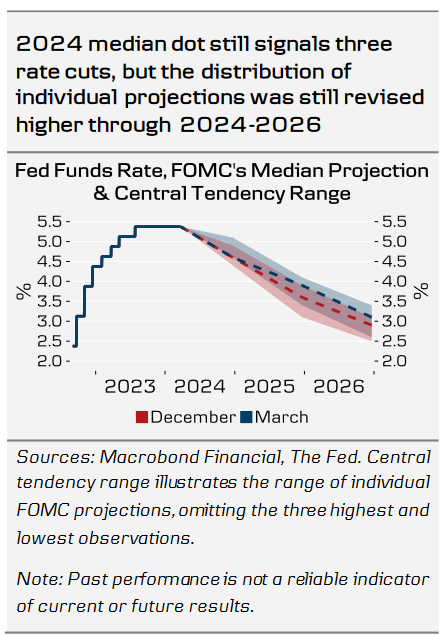
- The Fed made no changes to its monetary policy in the March meeting, as widely expected. Updated rate projections still signal three rate cuts this year, but 2025, 2026 and longer-term 'dots' we revised slightly higher.
- While Powell did not specify the timing, he suggested that the Fed is soon looking to slow down the pace of QT. That said, we do not believe that completely ending the balance sheet run-off will be on the cards in the near-term.
- Markets reacted dovishly, with end-2024 Fed Funds Rate pricing declining by around 7-8bp and EUR/USD rising above 1.09. 2s10s UST yield curve steepened in line with the signals from the dot plot.
The Fed remains on track towards price stability (and consequently, rate cuts), despite 'bumps' seen in the inflation data in early 2024. Powell chose his wording carefully to avoid sounding too optimistic on inflation, but also made it clear, that as monetary policy remains restrictive and labour supply recovers, further disinflation is still on the radar.
The updated 2024 dots continue to signal three rate cuts, in line with our forecast. There was a slight hawkish adjustment, however, as now only one participant saw the Fed cutting rates more than three times in 2024 (down from 4 in December). In addition, 2025 & 2026 dots were adjusted higher by 25bp, reflecting a more positive outlook for growth. GDP is now seen growing by 2.1% in 2024 (from 1.4%) and 2.0% in 2025-2026 (from 1.8% & 1.9%). Relative to the December projections, participants judged that growth risks had become more balanced (previously tilted to the downside) while risk of higher-than-expected unemployment rate was seen declining. Slightly higher share of participants reported core inflation risks as tilted to the upside.
Interestingly, the longer-term rate projection was revised up to 2.6% (from 2.5%). In the past, we have discussed quick recovery in foreign labour force, faster productivity growth and persistently expansionary fiscal policy as possible drivers of faster potential growth, which could imply that the neutral rate of interest is also higher. We discussed the recent data on labour force in this week's edition of Reading the Markets USD, 19 March.
Powell provided only few details on the near-term plans for QT. He aimed to prepare the market for a slowdown in the pace of run-off in Treasury bond holdings 'fairly soon', but also suggested that completely ending QT will not be in the cards in the near-term. We believe the Fed will continue shrinking its balance sheet at least until the end of this year.
Powell's wording on the near-term rate outlook was mostly unchanged from before. Sudden weakening in labour market conditions could be a potential trigger for an early cut even if for now, Powell saw 'no cracks' in the current conditions. Market pricing for year-end 2024 Fed Funds Rate declined by around 7-8bp and broad USD weakened. We still believe that if incoming hard data begins to show similar signs of weakness as already seen in some of the leading indicators (hiring, ISM), then the Fed could potentially move as early as in the next May meeting. For now, though, we note that it is not a high conviction call, as markets price in only 3-4bp of cuts by May.
FOMC Remain Data Dependent, But on Track for June
The FOMC are sanguine on the growth and inflation outlook, and view the risks as coming into balance.
March’s FOMC meeting communications and forecasts were largely as expected, highlighting policymakers’ confidence in the fight against inflation and achieving a soft landing. The FOMC is on track to begin cutting in June, assuming progress continues to be made with inflation. The bigger risk is the degree of persistence in price pressures into the medium-term, and consequently the end point for this cutting cycle.
The revisions to Committee members’ forecasts were marginal in scale but of significance, signalling greater belief in the durability of activity growth and labour market strength but, at the same time, confidence in returning inflation to target. The Committee now expects growth to remain above potential (1.8%) through the entire forecast period, at 2.1% in 2024 and 2.0% in 2025 and 2026 (previously 1.4%, 1.8% and 1.9%). Little-to-no further deterioration is anticipated for the labour market, with the unemployment rate expected to plateau around 4.0% in 2024-26 from 3.9% currently.
These forecasts recognise the strength of GDP and nonfarm payrolls to end-2023, but give little weight to the downside risks recently evident in the business surveys, measures of labour utilisation (such as hours worked and the number of jobs per worker) and retail sales – spending was marginally lower over January and February combined after a strong 2023. In our view, these risks are nascent but material.
Even with their benign view on activity, the FOMC are confident inflation is on track to swiftly and sustainably return to target. Core PCE is forecast to be higher in 2024 (2.6% versus 2.4% in December) but the projections are unchanged for 2025, 2026 and the longer run – respectively 2.2%, 2.0% and 2.0% (note the longer run figure is for headline). In the press conference, Chair Powell made clear that the upward revision was a response to recent data (a higher starting point) not a change in the perceived current or future composition of inflation pressures. There was also no change regarding the risks to inflation. Housing rent was the only component discussed at length during the press conference. While slow to come through, a material deceleration in shelter is still anticipated over the year ahead. This is critical to the outlook because, in recent months, shelter has made up more than half of total inflation month-on-month.
Where the Committee has grown a little more cautious is with respect to the medium-term risks for inflation. This is evident in the minor revisions to the fed funds rate projection. Three cuts are still anticipated for 2024, but the median number of cuts for 2025 is now only three (previously four). Another three cuts are projected for 2026, as was the case in December, and two more are seen into the long run to 2.6%. While only 10bps above the prior longer run rate estimate of 2.5%, this revision signals some risk of persistent or recurring inflation risks.
While we continue to anticipate an additional cut in both 2024 and 2025 compared to the FOMC’s view (a cumulative 200bps of cuts versus the FOMC’s 150bps), we believe it is more probable that the FOMC will halt the cutting cycle at 3.375% in late-2025, when our forecast horizon currently ends, than continue down to 3.1% in 2026 and 2.6% in the longer run. This is not based on a materially different view of neutral through the cycle, but rather because we anticipate recurring supply-side inflation pressures stemming from tight capacity across housing and infrastructure and due to the US’ decision to reshore production away from Asia, building in a higher cost of production for some goods. We expect US inflation to average closer to 2.5% than 2.0% in 2025, requiring a modestly contractionary stance of policy be maintained to manage both the risks and expectations.
In our view, the implications of such an outturn would be a period of below-trend GDP growth and consequently a degree of persistent slack in the labour market, the unemployment rate holding around 4.5% through at least 2025. These are not terrible outcomes by any means, but do justify a continued downtrend in the US dollar and growing uncertainty over the US fiscal position.