

Sample Category Title
USD/JPY Mid-Day Outlook
Daily Pivots: (S1) 148.14; (P) 148.63; (R1) 149.01; More...
USD/JPY is staying in range below 150.15 despite the bounce in early US session. Intraday bias stays neutral at this point. On the downside, below 147.28 will turn bias to the downside for deeper pull back. But there is no confirmation of bearish trend reversal before firm break of 144.43 support. Another rally remains mildly in favor through 150.15 to retest 151.93 high.
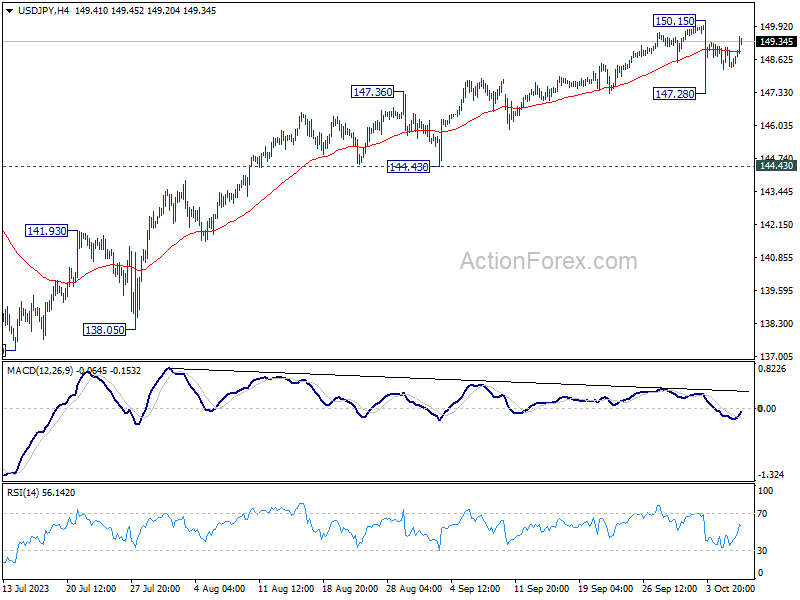
In the bigger picture, while rise from 127.20 is strong, it could still be seen as the second leg of the corrective pattern from 151.93 (2022 high). Rejection by 151.93, followed by sustained break of 145.06 resistance turned support will be the first sign that the third leg of the pattern has started. However, sustained break of 151.93 will confirm resumption of long term up trend.
USD/CHF Mid-Day Outlook
Daily Pivots: (S1) 0.9103; (P) 0.9142; (R1) 0.9164; More....
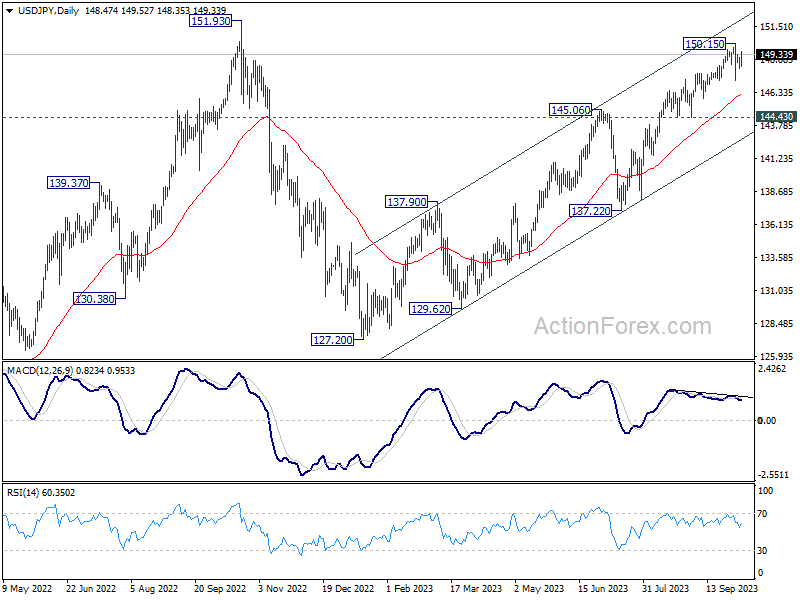
USD/CHF is staying in range below 0.9243 despite the bounce in early US session. Intraday bias remains neutral first. Near term outlook will stay bullish as long as 0.9089 support holds. On the upside, break of 0.9243 will resume the rally from 0.8551 and target 0.9439 resistance next. However, firm break of 0.9089 will confirm short term topping, and turn bias back to the downside for deeper pull back.
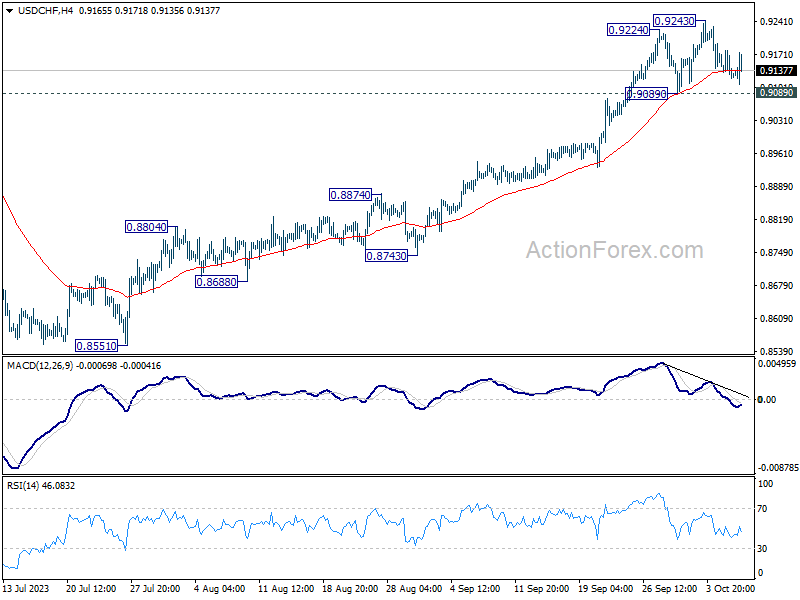
In the bigger picture, current development indicates that rise from 0.8551 is reversing whole down trend from 1.0146. Further rally would then be seen to 61.8% retracement at 0.9537 and above. For now, this will be the favored case as long as 55 D EMA (now at 0.8963) holds, even in case of deep pullback.
GBP/USD Mid-Day Outlook
Daily Pivots: (S1) 1.2135; (P) 1.2166; (R1) 1.2223; More...
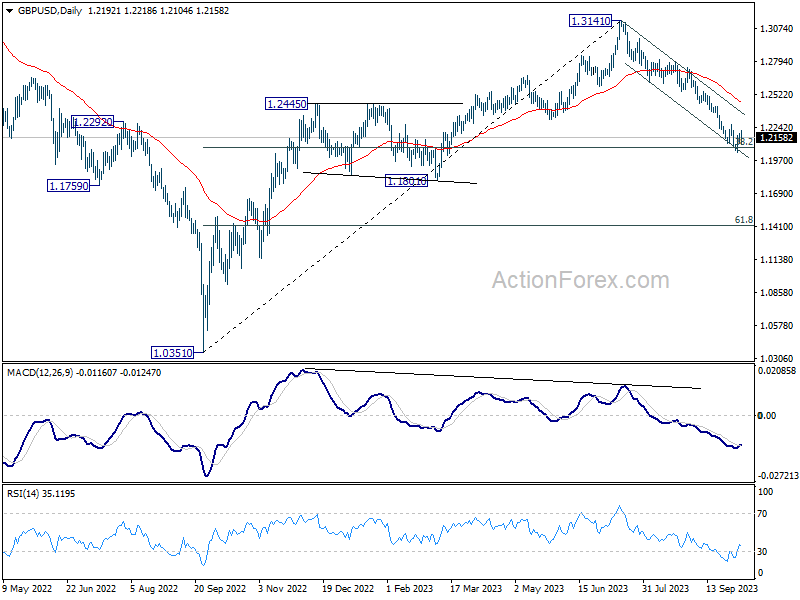
GBP/USD drops notably in early US session but stays above 1.2036 support. Intraday bias remains neutral at this point. Outlook will stay bearish as long as 1.2270 resistance holds. Break of 1.2026 will resume the fall from 1.3141. Sustained trading below 1.2075 fibonacci level would carry larger bearish implication, and target 1.1801 support next. On the upside, firm break of 1.2270 resistance will indicate short term bottoming, and turn bias back to the upside.
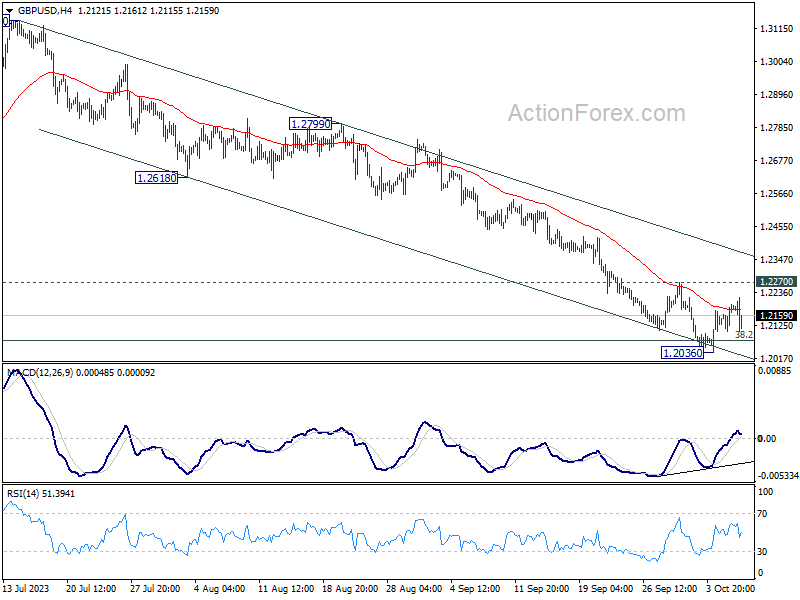
In the bigger picture, fall from 1.3141 medium term top could still be a correction to up trend from 1.0351 (2022 low) only. But risk of complete trend reversal is rising. Sustained break of 38.2% retracement of 1.0351 to 1.3141 at 1.2075 will pave the way to 61.8% retracement at 1.1417. For now, risk will stay on the downside as long as 55 D EMA (now at 1.2486) holds, in case of rebound.
EUR/USD Mid-Day Outlook
Daily Pivots: (S1) 1.0517; (P) 1.0534; (R1) 1.0569; More...
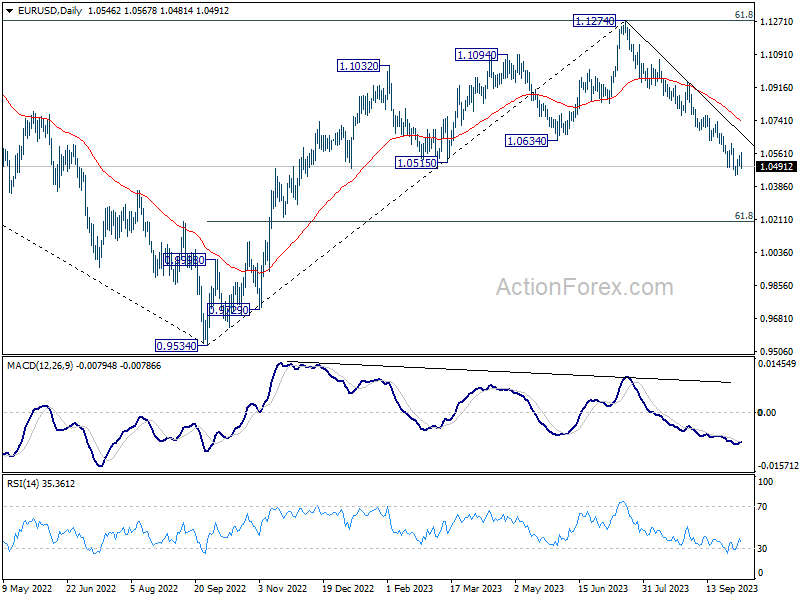
EUR/USD falls notably after rejection by 55 4H EMA but stays above 1.0447 support. Intraday bias remains neutral first. Outlook will stay bearish as long as 1.0616 resistance holds. Break of 1.0477 will resume the fall from 1.1274 to 1.0199 fibonacci level next. Nevertheless, firm break of 1.0616 will confirm short term bottoming, and turn bias back to the upside for stronger rebound.
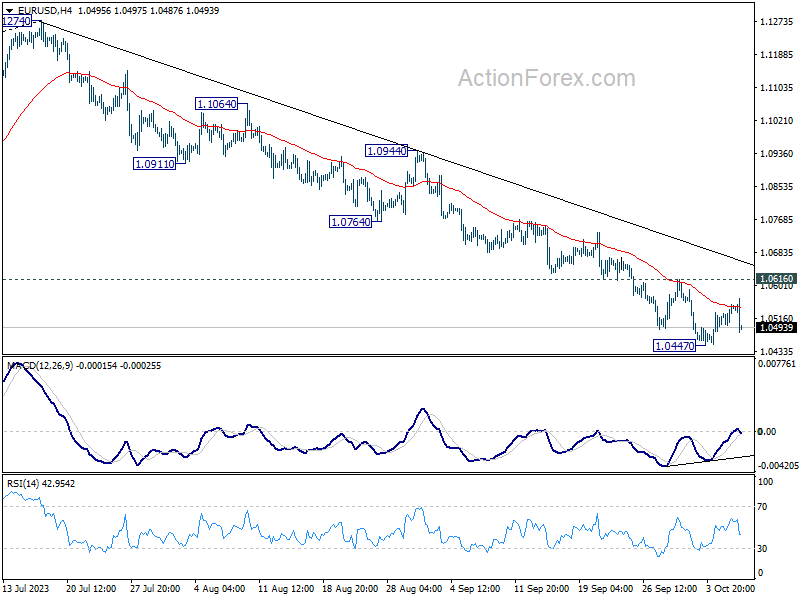
In the bigger picture, fall from 1.1274 medium term top could still be a correction to rise from 0.9534 (2022 low). But chance of a complete trend reversal is rising. In either case, current fall should target 61.8% retracement of 0.9534 to 1.1274 at 1.0199 next. For now, risk will stay on the downside as long as 55 D EMA (now at 1.0759) holds, in case of rebound.
Greenback’s Resurgence: Stellar Job Growth Propels USD Towards Weekly Dominance
Dollar is showing impressive strength in the early US session, boosted by job growth figures that nearly doubled market predictions. While wage growth figures mildly underwhelmed, it didn't deter traders' enthusiasm, propelling the Dollar to potentially conclude the week as the dominant currency.
Notably, Dollar has made up for its earlier losses against Yen, stemming from Japan's intervention. Market watchers are now keenly observing if USD/JPY pair has the vigor to assault 150 psychological mark again and if this could precipitate another round of intervention from Japan.
Elsewhere, the Canadian Dollar is also witnessing an uplift, buoyed by its own positive employment figures. However, Loonie still lags as one of this week's underperformers, together with Australian and New Zealand Dollars. This is largely attributable to the preceding plunge in oil prices. The impending question is whether prevailing risk aversion in the market could exacerbate the decline in these commodity currencies. European majors are ceding ground to the resurgent dollar but are managing to hold their own against the commodity currencies and yen.
The pivotal question is whether Dollar can capitalize on the current surge of buying interest to surpass recent highs against other major currencies. Alternatively, it might require an additional boost, potentially from the U.S. CPI data slated for release next week.
From a technical standpoint, key levels to watch include 1.0447 support in EUR/USD, 1.2036 support in GBP/USD, 0.6284 support in AUD/USD, 0.9243 resistance in USD/CHF, 150.15 resistance in USD/JPY, and 1.3784 resistance in USD/CAD.
In Europe, at the time of writing, FTSE is up 0.16%. DAX is up 0.26%. CAC is up 0.21%. Germany 10-year yield is up 0.081 at 2.961. Earlier in Asia, Nikkei dropped -0.26%. Hong Kong HSI rose 1.58%. Singapore Strait Times rose 0.61%. Japan 10-year JGB yield dropped -0.0025 to 0.803.
US NFP soars 336k in Sep, double of expectations
US non-farm payroll employment rose 336k in September, well above expectation of 168k. That's also well above the average monthly growth of 267k over the prior 12 months. Prior month's figure was also revised up from 187k to 227k.
Unemployment rate was unchanged at 3.8%, versus expectation of a drop to 3.7%. Labor force participation rate was unchanged at 62.8%.
Average hourly earnings rose 0.2% mom to USD 33.88, below expectation of 0.3% mom. Over the past 12 months, average hourly earnings have increased by 4.2% yoy.
Canada employment grew 64k in Sep, unemployment rate unchanged at 5.5%
Canada employment grew 64k in September, well above expectation of 28.0k. On average, employment has grown by 30,000 per month since the beginning of the year.
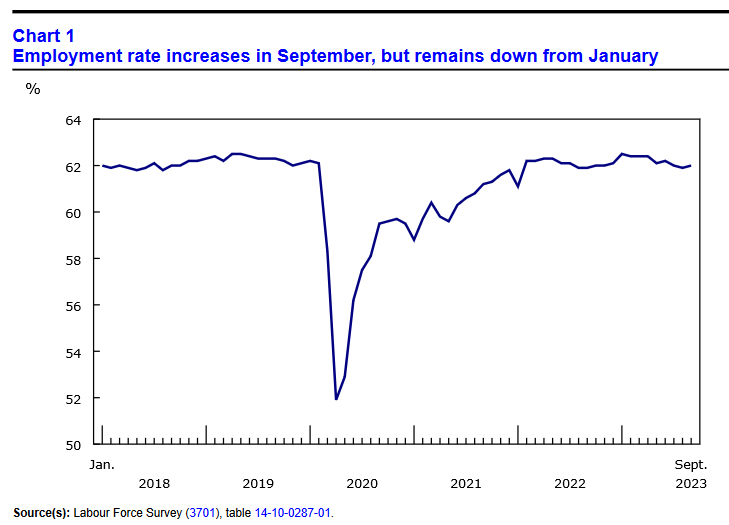
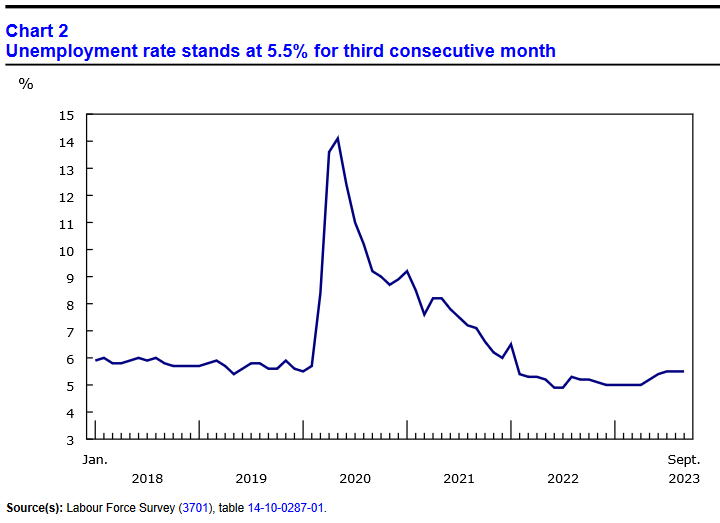
Unemployment rate was unchanged at 5.5% for the third consecutive month. Employment rate rose 0.1% to 62.0%, offsetting the decline recorded in August.
On a year-over-year basis, average hourly wages rose 5.0% yoy, up from 4.9% yoy in August, same as July's figure.
ECB's Schnabel warns against complacency, "last kilometre" the most difficult
In an interview with Jutarnji List, ECB Executive Board Isabel Schnabel underlined the unpredictability surrounding the current inflation trajectory, cautioning against premature optimism despite recent encouraging data.
Schnabel stated, "We cannot say that we are at the peak (interest rates) or for how long rates will need to be kept at restrictive levels."
She emphasized the importance of closely monitoring three key metrics to make future monetary policy decisions: inflation outlook, dynamics of underlying inflation, the efficacy of monetary policy transmission. Encouragingly, she noted that "all of them are moving in the right direction."
However, the Board member didn't shy away from highlighting possible headwinds. She pointed out, "I still see upside risks to inflation," flagging potential supply-side shocks and stronger-than-anticipated wage growth, which could be offset by lower productivity growth. Firms might also face difficulty in absorbing these increased costs, which, if realized, could necessitate further hikes in interest rates.
While Schnabel acknowledged the downward trend in inflation as "encouraging," she emphasized that it still remains considerably above the ECB's 2% target. The aim, she said, should be to hit this target by 2025 to ensure inflation expectations "firmly anchored". However, she cautioned about the challenges in reaching this goal, noting that the "last kilometre" may be the most challenging.
The recent surge in oil prices was another point of concern for Schnabel, suggesting that inflation could face upward pressures from unforeseen supply shocks, especially in sectors like energy and food. She added a call for vigilance, urging that "we must not be complacent, and we should not declare victory over inflation prematurely."
Japanese wages growth underwhelm as real income sinks for 17th mth
Subdued wage growth data in Japan is raising eyebrows, particularly at BoJ. An essential element for the central bank's policy normalization is the establishment of a harmonious cycle between wage growth and prices. The recent figures, however, indicate that this equilibrium remains elusive.
In August, labor cash earnings in Japan rose by a meager 1.1% yoy. This increase, while consistent with the prior month, fell short of the anticipated 1.5% growth. Furthermore, base salary growth, although increasing to 1.6% yoy from the preceding month's 1.4%, has yet to manifest signals of a robust and sustainable upward momentum.
The bright spot, perhaps, is the increase in overtime pay, which is often used as an indicator of business vibrancy, as 1.0% yoy ascent was observed, rebounding from July's flat growth.
However, inflation-adjusted real wages continued their downward spiral for the 17th consecutive month. August's real wages declined by -2.5% yoy, surpassing the projected -2.1% yoy dip. This trend starkly reveals that despite any increments, wages are struggling to keep up with the consistent price surges, placing added strain on the average consumer's pocket.
Also released, household spending, a critical driver of economic activity, contracted by -2.5% yoy, a figure that, while better than the anticipated -4.3% yoy decline and an improvement from July's -5.0% yoy reduction, still underscores constrained consumer expenditure.
EUR/USD Mid-Day Outlook
Daily Pivots: (S1) 1.0517; (P) 1.0534; (R1) 1.0569; More...
EUR/USD falls notably after rejection by 55 4H EMA but stays above 1.0447 support. Intraday bias remains neutral first. Outlook will stay bearish as long as 1.0616 resistance holds. Break of 1.0477 will resume the fall from 1.1274 to 1.0199 fibonacci level next. Nevertheless, firm break of 1.0616 will confirm short term bottoming, and turn bias back to the upside for stronger rebound.
In the bigger picture, fall from 1.1274 medium term top could still be a correction to rise from 0.9534 (2022 low). But chance of a complete trend reversal is rising. In either case, current fall should target 61.8% retracement of 0.9534 to 1.1274 at 1.0199 next. For now, risk will stay on the downside as long as 55 D EMA (now at 1.0759) holds, in case of rebound.
Economic Indicators Update
| GMT | Ccy | Events | Actual | Forecast | Previous | Revised |
|---|---|---|---|---|---|---|
| 23:30 | JPY | Labor Cash Earnings Y/Y Aug | 1.10% | 1.50% | 1.30% | 1.10% |
| 23:30 | JPY | Overall Household Spending Y/Y Aug | -2.50% | -4.30% | -5.00% | |
| 05:00 | JPY | Leading Economic Index Aug P | 109.5 | 109 | 108.2 | |
| 05:45 | CHF | Unemployment Rate Sep | 2.10% | 2.10% | 2.10% | |
| 06:00 | EUR | Germany Factory Orders M/M Aug | 3.90% | 1.50% | -11.70% | -11.30% |
| 06:45 | EUR | France Trade Balance (EUR) Aug | -8.2B | -8.9B | -8.1B | |
| 07:00 | CHF | Foreign Currency Reserves (CHF) Sep | 678B | 694B | ||
| 08:00 | EUR | Italy Retail Sales M/M Aug | -0.40% | 0.00% | 0.40% | |
| 12:30 | USD | Nonfarm Payrolls Sep | 336K | 168K | 187K | 227K |
| 12:30 | USD | Unemployment Rate Sep | 3.80% | 3.70% | 3.80% | |
| 12:30 | USD | Average Hourly Earnings M/M Sep | 0.20% | 0.30% | 0.20% | |
| 12:30 | CAD | Net Change in Employment Sep | 63.8K | 28.0K | 39.9K | |
| 12:30 | CAD | Unemployment Rate Sep | 5.50% | 5.60% | 5.50% |
Canada employment grew 64k in Sep, unemployment rate unchanged at 5.5%
Canada employment grew 64k in September, well above expectation of 28.0k. On average, employment has grown by 30,000 per month since the beginning of the year.
Unemployment rate was unchanged at 5.5% for the third consecutive month. Employment rate rose 0.1% to 62.0%, offsetting the decline recorded in August.
On a year-over-year basis, average hourly wages rose 5.0% yoy, up from 4.9% yoy in August, same as July's figure.
US NFP soars 336k in Sep, double of expectations
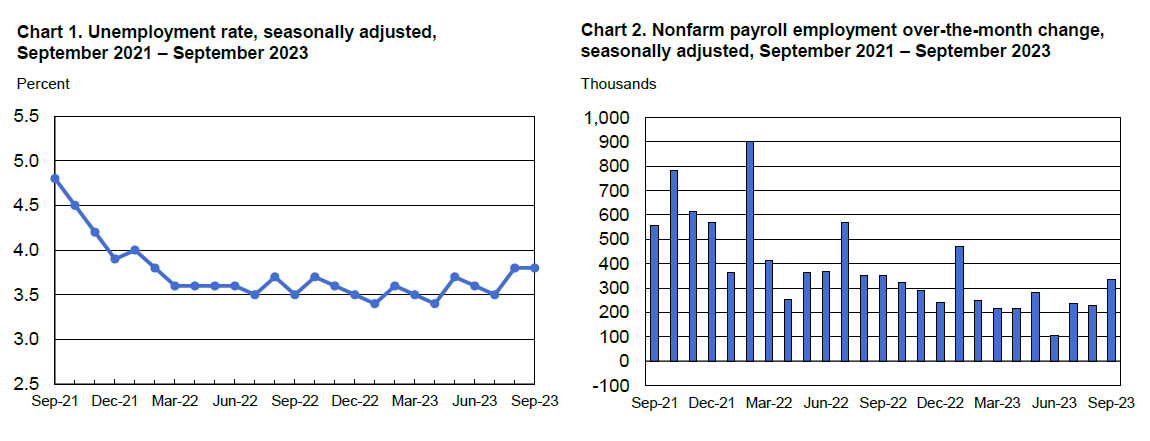
US non-farm payroll employment rose 336k in September, well above expectation of 168k. That's also well above the average monthly growth of 267k over the prior 12 months. Prior month's figure was also revised up from 187k to 227k.
Unemployment rate was unchanged at 3.8%, versus expectation of a drop to 3.7%. Labor force participation rate was unchanged at 62.8%.
Average hourly earnings rose 0.2% mom to USD 33.88, below expectation of 0.3% mom. Over the past 12 months, average hourly earnings have increased by 4.2% yoy.
EURUSD Swings Higher as US Jobs Data Loom
- EURUSD stages another bull run within bearish channel
- Bulls need to push above 200-EMA to gain control
EURUSD has been moving in an upward path since pausing its downtrend at a ten-month low of 1.0447 and at the lower boundary of the two-month-old bearish channel.
In the four-hour chart, the pair is looking for a clear close above its 50-period exponential moving average (EMA), which the bulls have been struggling to successfully surpass over the past months.
The RSI keeps making new higher highs above its 50 neutral mark, flagging further progress ahead. Encouragingly, the MACD is finally ascending within the positive region, embracing the positive mood in the market. Yet, with the stochastic oscillator already fluctuating above its 80 overbought level, positive dynamics could be short-lived.
Resistance could initially develop around October’s high of 1.0590. A decisive step higher could clear the way up to the channel’s upper bound at 1.0650. Note that the 23.6% Fibonacci retracement of the 1.1274-1.0447 downtrend is in the neighborhood, while the 200-day EMA is also marginally higher at 1.0676. Hence, another victory there could be the key for an advance towards the 1.0735 barrier or higher to the 38.2% Fibonacci of 1.0763.
On the downside, selling forces are expected to intensify below the nearby 1.0540-1.0525 region. In this case, the price could plummet towards the 1.0447 low if the 1.0480 area proves fragile. Should the outlook worsen below the channel at 1.0420, the pair could aggressively plunge to 1.0316, last seen in November 2023.
In brief, EURUSD could recoup some lost ground in the short-term, though only a rally above the bearish channel and the 200-period EMA at 1.0676 would signal an upside trend reversal.

How Will NFP Affect the Markets?
Goldman Sachs expects a strong jobs report for the US labor market in September, with an estimated 200,000 increase in non-farm payrolls. They expect the unemployment rate to fall from 3.8% to 3.7%, showing continued improvement. Average hourly earnings are expected to increase by 0.3%, with a modest impact on the year-over-year rate, which is projected to decline slightly to 4.28%. These insights reflect a positive trajectory in the post-pandemic economic recovery and highlight the continued resilience of the labor market.
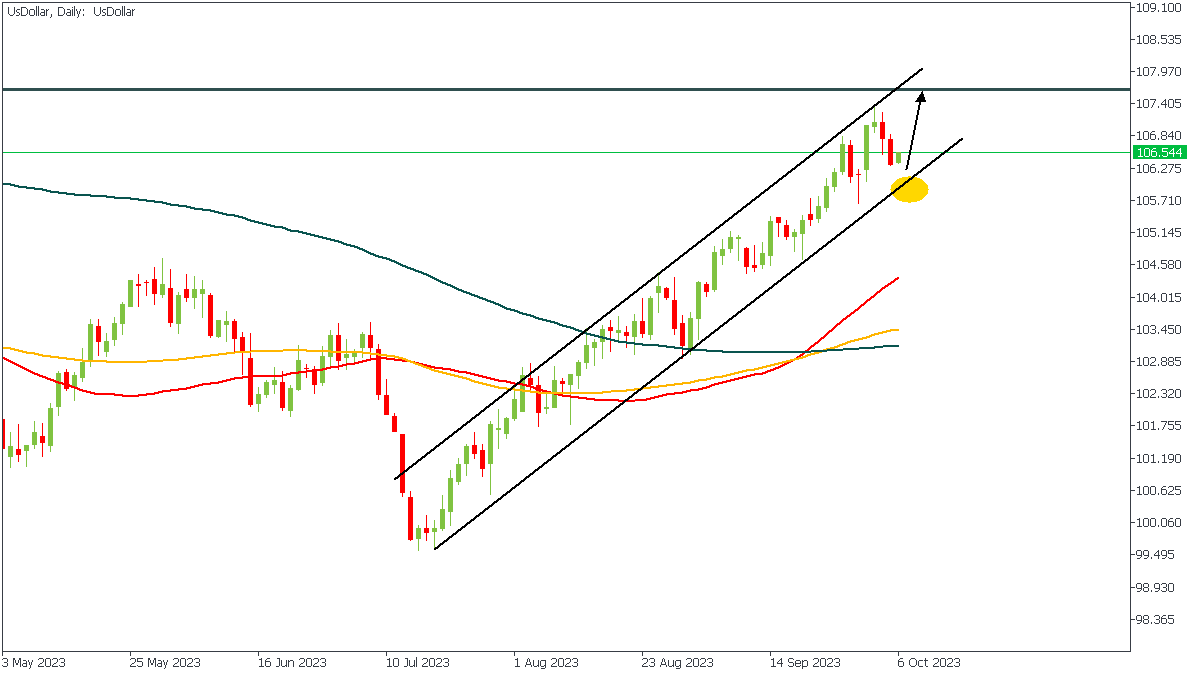
US DOLLAR - D1 Timeframe
The US Dollar on the Daily timeframe seems to have maintained a steady upward climb, albeit within a channel. Considering that the forecasts seem to be in favour of the US Dollar, I expect to see price bounce off the support trendline and reach towards the supply zone as marked.
Analyst’s Expectations:
- Direction: Bullish
- Target: 106.969
- Invalidation: 105.595
EURUSD - D1 Timeframe
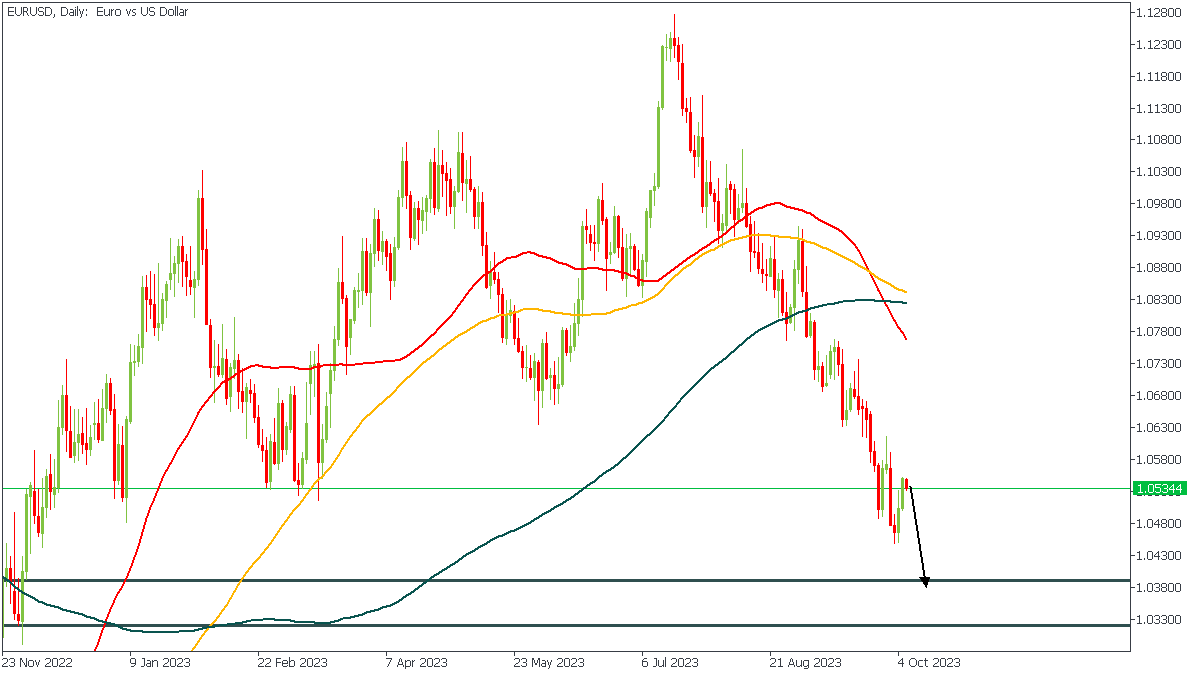
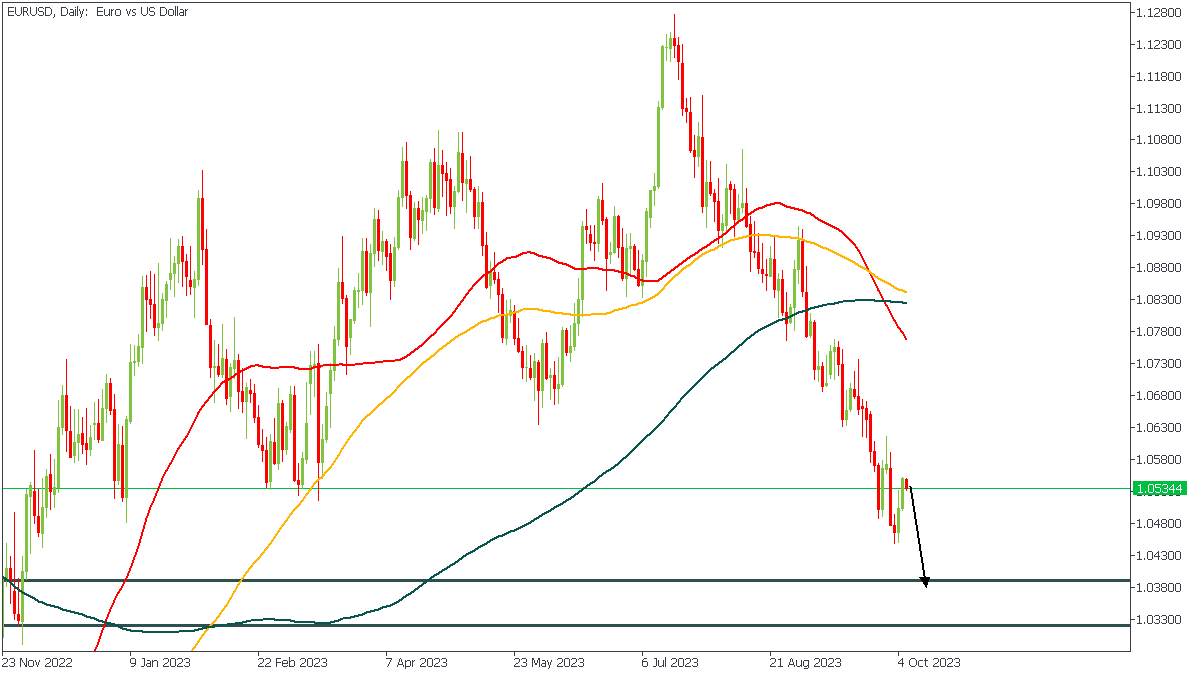
Since we expect the Dollar to get stronger, it is only logical that we anticipate a bearish move on EURUSD which will likely bring price back into the demand zone. If the NFP goes otherwise, then we will expect to see immediate bullish pressure from the current price region.
Analyst’s Expectations:
- Direction: Bearish
- Target: 1.04136
- Invalidation: 1.06265
GBPUSD - D1 Timeframe
The downward trend on GBPUSD seems poised to continue even further after the NFP release because a stronger Dollar would naturally yield a bearish turn on GBPUSD and vice versa. In the event that the release follows the forecast, I wouldn’t hesitate to go bearish on GBPUSD.
Analyst’s Expectations:
- Direction: Bearish
- Target: 1.19276
- Invalidation: 1.22996
CONCLUSION
The trading of CFDs comes at a risk. To succeed, you have to manage risks properly. To avoid costly mistakes while you look to trade these opportunities, be sure to do your due diligence and manage your risk appropriately.
US Jobs Report Eyed as Fed Seeks Evidence of Cooling Labour Market
Equity markets are edging higher ahead of the US jobs report on Friday, a release that could set the tone in the markets ahead of next month's Fed meeting.
While price pressures are ultimately what the Fed is primarily interested in, there is clearly a view on the FOMC that sustainable 2% inflation is not possible without cooling the labour market. Time will tell how accurate an assumption that is but in the interim, there will be enormous focus on jobs data for signs of cracks appearing that can offer the central bank the comfort it craves.
The ADP report on Wednesday indicated we could be looking at a weaker NFP today but let's face it, it's been a long time since anyone looked to ADP for a reliable insight into the jobs report. If we do see a repeat, it may help to ease some of the anxiety we've seen in the markets in recent weeks.
We've been flooded with higher for longer central bankers, determined to get every last drop out of their rate hikes. While I'm still of the view that the plan at the Fed has always been and remains to pivot very late and maintain this hawkish rhetoric until then, investors are seemingly now less sure and are relying on the data to pull them back in.
Oil steadies after plunging as OPEC+ maintained output targets
Oil prices appear to be steadying a little after plunging in the middle of this week. The market was already looking a little overbought and the most recent peak lacked momentum which suggested the cracks were appearing. The sell-off though coincided with the OPEC+ meeting despite no changes being announced.
But it seems it was the lack of an update that may have contributed to the move, with Saudi Arabia and Russia in particular opting not to commit to extending their voluntary cuts beyond the end of the year. They may still do so but clearly with oil at these levels and demand at risk of softening, markets are now positioning for those restrictions in particular expiring in a couple of months.
Gold steady ahead of US jobs report
Gold appears to have stabilised in the run-up to the US jobs report after plunging on the back of rising bond yields. The question now is whether today's report will put investors' fears at ease, enabling a strong rebound in the yellow metal, or compound the slew of hawkish central bank commentary and hit it harder.
If we do see the latter, then $1,780-$1,800 stands out as a major test of potential support having been a major region in the past, most recently in February and March. The levels that stand out above, if we do see a rebound, are $1,860, $1,880, and $1,900.
Is bitcoin moving higher in anticipation of some good news?
Bitcoin has been quietly drifting higher in recent weeks despite broader market sentiment weakening and there being little progress on the spot bitcoin ETF. Perhaps there's some optimism building ahead of its expected acceptance which could be a significant milestone in its journey. It continues to see resistance around $28,000 though, a break of which could be a very bullish signal after almost two months of trading below here and multiple failures to break higher.