Sample Category Title
Canadian Dollar Rises Versus Euro and Dollar
Canadian Dollar is taking a pole position in quiet markets today. Overall picture is mixed, as other commodity currencies of Aussie and Kiwi are both losing some momentum. Dollar is turning slightly stronger, except versus Loonie. Sterling faced some selloff in early part of European session, but Euro is following later. The more persistent move is in the decline of Yen.
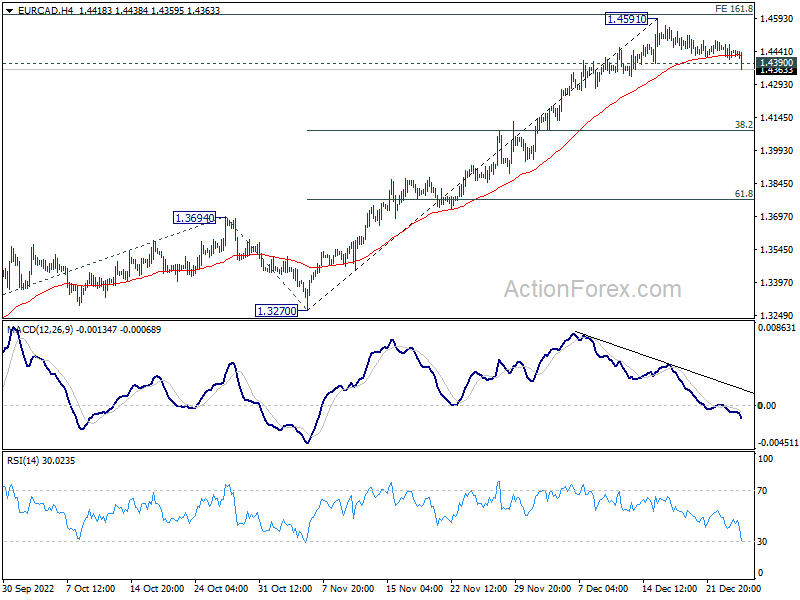
Technically, EUR/CAD's break of 1.4390 minor support confirms short term topping at 1.4591, on bearish divergence condition in 4 hour MACD. Deeper decline should be seen to 38.2% retracement of 1.3270 to 1.4591 at 1.4086. USD/CAD's break of 1.3516 support also opens up deeper decline back towards 1.3224 support. Let's see how far the Loonie goes.
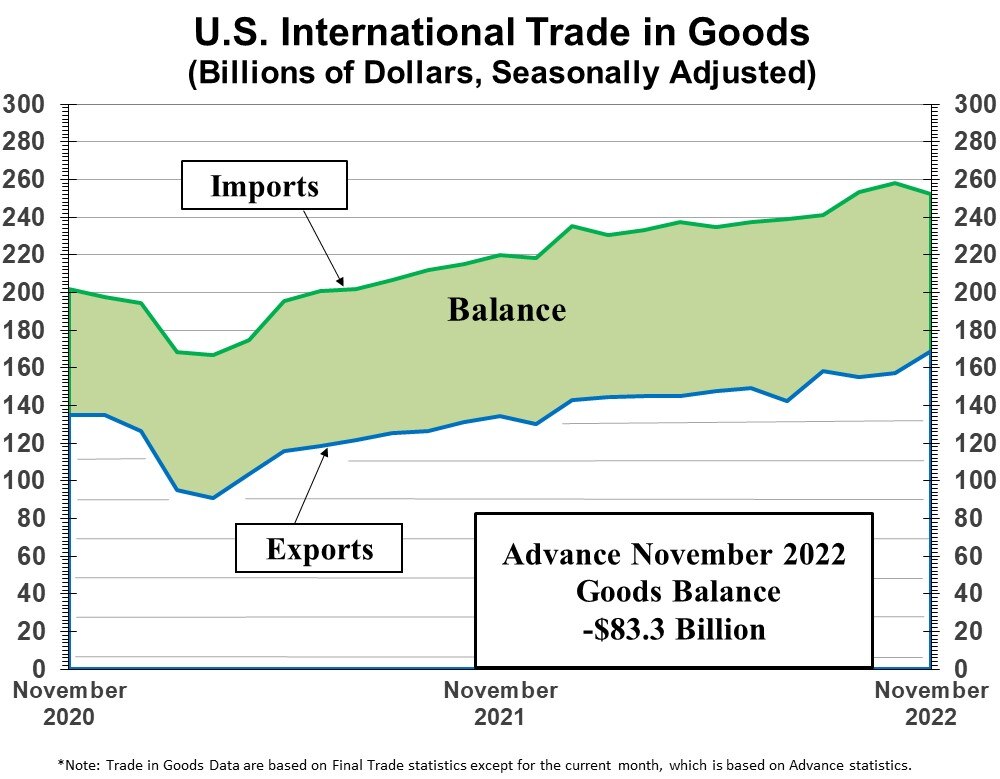
US goods trade deficit narrowed to USD -83.8B
US goods exports dropped -3.1% mom to USD 168.9B in November. Goods imports dropped -7.6% mom to USD 252.2B. Trade deficit narrowed from USD -98.8B to USD -83.3B, much smaller than expectation of USD -96.9B.
Whole sale inventories rose 1.0% mom to USD 933.6B. Retail inventories rose 0.1% mom to USD 738.7B.
ECB de Guindos: There will be further rate hikes until inflation on a path back to target
ECB Vice-President Luis de Guindos said in an interview, regarding how high are interest rates going to go, "that is something we will decide meeting by meeting and on the basis of incoming data, given the current high uncertainty.
"As we announced this month, there will be further, necessary, rate hikes until inflation is on a path back to close to our 2% target," he added.
Regarding the economy, de Guindos said Europe is currently in a "very difficult economic situation", with "high inflation rates... coinciding with an economic slowdown and low growth. With a recession on the horizon, the current high uncertainty makes it all the more difficult for businesses and entrepreneurs to distribute their capital. So, against this backdrop, it is very important to be prudent."
Japan retail sales rose 2.6% yoy in Nov, unemployment rate down to 2.5%
Japan retail sales rose 2.6% yoy in November, below expectation of 3.8% yoy. The growth rate slowed from 4.4% in October and 4.8% in September. Nonetheless, that's still the ninth straight month of expansion.
Released separately, unemployment rate fell from 2.6% to 2.5% in November, better than expectation of 2.6%. The jobs-to-applicants ratio was unchanged from October's 1.35. This gauge of job availability stayed at the highest level since march 2020.
USD/CAD Mid-Day Outlook
Daily Pivots: (S1) 1.3560; (P) 1.3599; (R1) 1.3622; More....
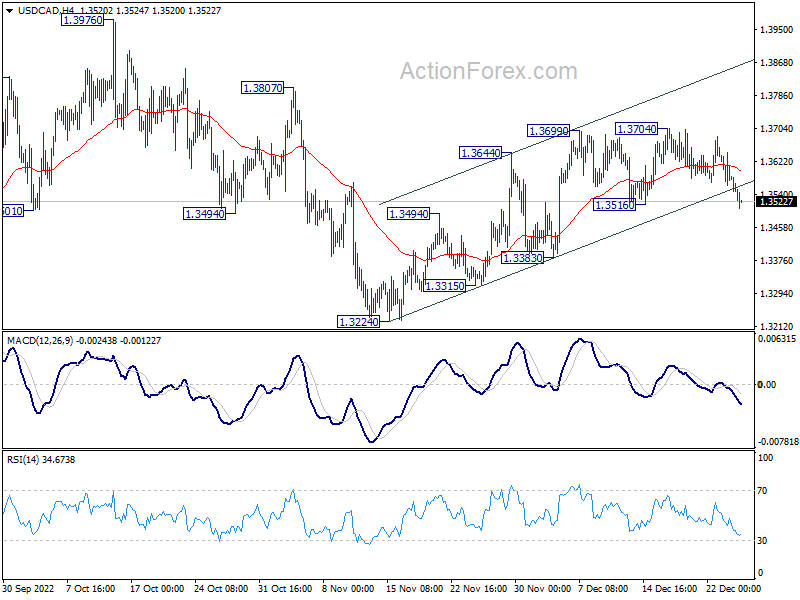
USD/CAD's break of 1.3516 support argues that corrective recovery from 1.3224 might have finished at 1.3704 already. Intraday bias is now back on the downside for 1.3383 support first. Break there will target 1.3222/3 key support zone again. On the upside, break of 1.3704 will resume the rebound towards 1.3976 high instead.
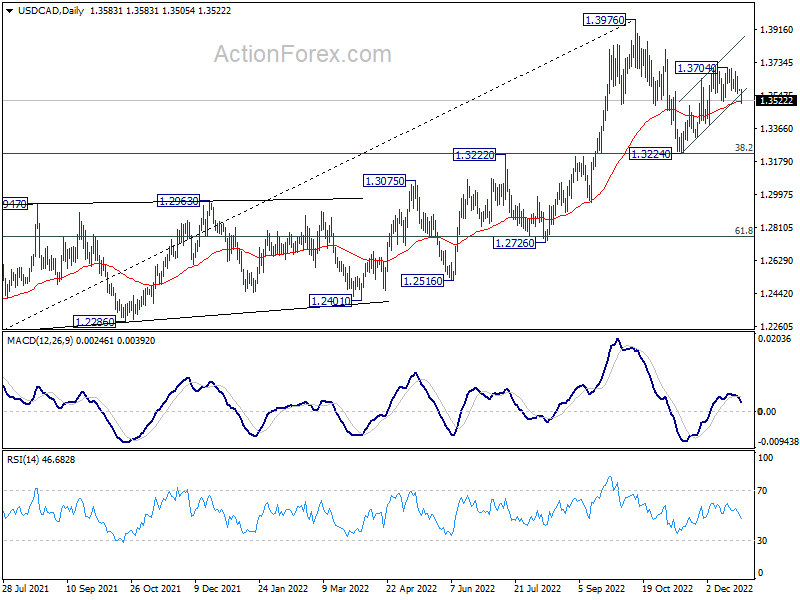
In the bigger picture, as long as 1.3222 cluster support (38.2% retracement of 1.2005 to 1.3976 at 1.3223) holds, larger up trend from 1.2005 (2021 low) is still expected to resume through 1.3976 high at a later stage. However, firm break of 1.3222/3 will indicate that the trend might have reversed. Deeper fall would be seen to next cluster support at 1.2726 (61.8% retracement at 1.2758).
Economic Indicators Update
| GMT | Ccy | Events | Actual | Forecast | Previous | Revised |
|---|---|---|---|---|---|---|
| 23:30 | JPY | Unemployment Rate Nov | 2.50% | 2.60% | 2.60% | |
| 23:50 | JPY | Retail Trade Y/Y Nov | 2.60% | 3.80% | 4.40% | |
| 05:00 | JPY | Housing Starts Y/Y Nov | -1.40% | 1.30% | -1.80% | |
| 13:30 | USD | Goods Trade Balance (USD) Nov P | -83.3B | -96.9B | -99.0B | -98.8B |
| 13:30 | USD | Wholesale Inventories Nov P | 1.00% | 0.40% | 0.50% | |
| 14:00 | USD | S&P/CS Composite-20 HPI Y/Y Oct | 8.60% | 8.00% | 10.40% | |
| 14:00 | USD | Housing Price Index M/M Oct | 0.00% | -0.60% | 0.10% |
ECB de Guindos: There will be further rate hikes until inflation on a path back to target
ECB Vice-President Luis de Guindos said in an interview, regarding how high are interest rates going to go, "that is something we will decide meeting by meeting and on the basis of incoming data, given the current high uncertainty.
"As we announced this month, there will be further, necessary, rate hikes until inflation is on a path back to close to our 2% target," he added.
Regarding the economy, de Guindos said Europe is currently in a "very difficult economic situation", with "high inflation rates... coinciding with an economic slowdown and low growth. With a recession on the horizon, the current high uncertainty makes it all the more difficult for businesses and entrepreneurs to distribute their capital. So, against this backdrop, it is very important to be prudent."
US goods trade deficit narrowed to USD -83.8B
US goods exports dropped -3.1% mom to USD 168.9B in November. Goods imports dropped -7.6% mom to USD 252.2B. Trade deficit narrowed from USD -98.8B to USD -83.3B, much smaller than expectation of USD -96.9B.
Wholesale inventories rose 1.0% mom to USD 933.6B. Retail inventories rose 0.1% mom to USD 738.7B.
WTI Oil Hits Three-Week High on Improved Sentiment
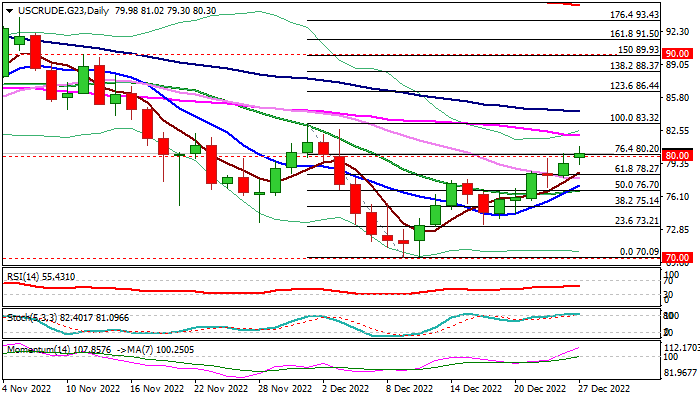
The WTI oil price rose above $80 per barrel and hit the highest level in three weeks on Tuesday, as the latest easing of Covid restriction on China improved the outlook for demand, while cuts to US energy production caused by winter storms added to supply concerns.
Daily studies show strong bullish momentum and MA’s (10/20/30) in bullish setup that underpins the action.
Close above pivotal barriers at $80.00/$80.20 (psychological / Fibo 76.4% of $83.32/$70.09 bear-leg) is needed to confirm bullish stance for extension towards $82.05 (falling 55DMA) and $83.32 (Dec peak and the lower top of larger $93.72/$70.09 downtrend).
Broken Fibo 61.8% barrier at $78.27 (reinforced by rising 5DMA) should contain dips to keep larger bulls off $70.09 low (Dec 9 low) in play.
Res: 81.02; 82.05; 82.70; 83.32
Sup: 80.00; 79.30; 78.27; 77.86
AUD/USD: Aussie Benefits from Renewed Risk Sentiment
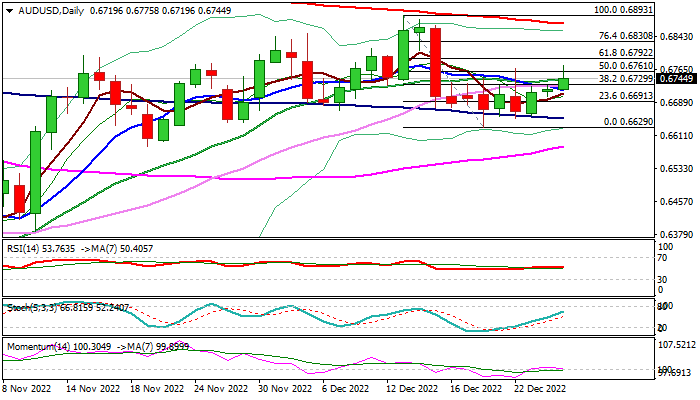
The Australian dollar rose further on Tuesday, driven by fresh risk appetite on optimistic news from China, which ended restrictive Covid rules and brightened the outlook with revised outlook for 2023 growth.
Fresh strength cracked important barrier at 0.6761 (50% of 0.6893/0.6629 pullback), with sustained break here needed to confirm renewed bullish stance and open way for further recovery.
Bullishly aligned daily studies support the action, but caution if bulls fail to clear 0.6761 pivot that would keep the downside vulnerable.
Broken Fibo 38.2% barrier (0.6729) and rising 5DMA (0.6710) reverted to solid supports, loss of which would sideline bulls and shift near-term focus to the downside.
Res: 0.6761; 0.6792; 0.6830; 0.6872
Sup: 0.6729; 0.6710; 0.6691; 0.6651
USDJPY Tiptoes Higher Within Caution Area
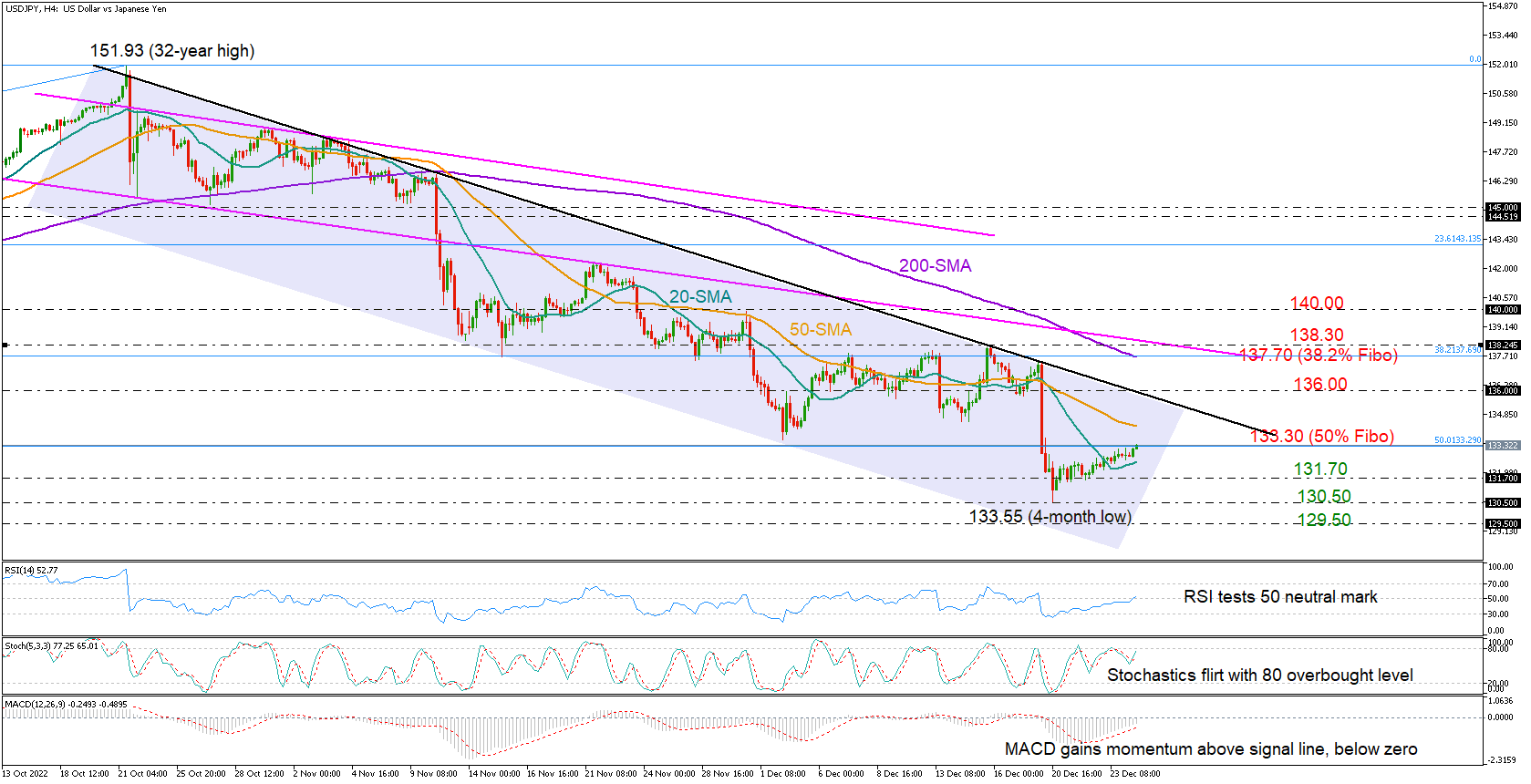
USDJPY has tiptoed higher following the collapse to a four-month low of 130.55 last Tuesday, with traders currently waiting for a break above the key 133.30 level to increase exposure in the market. The area represents the 50% Fibonacci retracement of the March-October uptrend.
While the latest recovery in momentum indicators endorses the positive action in the market, some caution is required as the RSI is still testing its 50 neutral mark. Moreover, the MACD has yet to enter the positive area, whilst the stochastics are flirting with their 80 overbought level, making a downside reversal likely in the coming sessions.
A rejection at 133.30 could reinforce selling pressure towards the 131.70 bar. Another move lower may immediately stall near the 130.55 low before stretching towards the 129.50 constraining zone, last seen in the second half of 2022.
On the upside, the pair will need a strong bounce above the tough descending trendline and the 136.00 number to regain buying confidence. If the bulls climb that wall, the price may speed up to meet the 200-period simple moving average (SMA) and the 38.2% Fibonacci of 137.70. The extension of the broken bearish channel could also limit bullish actions slightly higher at 138.30.
In summary, USDJPY continues to trade within a caution area despite its latest soft upturn. A step above 133.30 may add fresh bullish impetus to the price, though only a rally above 136.00 would attract fresh buying interest.
The Euro: An Uncertain Path
Back in October, the Euro fell below parity with the US dollar. Since then, it has rebounded, but hasn't returned to the levels at the start of the year. Naturally, the question is whether the pair will continue the trend higher, or turn around for another run at parity. And what does this mean for the Euro crosses?
One of the main drivers of the fluctuation in the shared currency last year is likely to be the theme for next year as well. At least through the first half. And that is the ECB's unique approach to a unique challenge facing the Euro. Other currencies operate within a single economic jurisdiction, but the ECB has to balance the fiscal policy of 19 different countries. (20, next year, with the inclusion of Croatia.)
An uncertain path
The Euro's underperformance this year was primarily driven by the ECB being slow to rate hike party. Even when it finally got around to raising rates, it was so far behind everyone else that the currency continued to be weaker until it became relatively clear that the Fed was getting ready to slow down its hiking. The Euro then appreciated, understanding that the ECB still has more room to keep tightening. The expectation is that the ECB will keep hiking through the first quarter, and then start selling bonds in March.
Meanwhile, the Euro's main trading partners, the US and UK, are seen to be slowing down if not stopping rate hikes. The US is expected to slip into recession during the first half, with inflation coming down quicker than expected over the last couple of months. The UK's inflation remains high, but it already is in a recession. Meanwhile, the EU is expected to manage modest economic growth in the first quarter, assuming there is no major disruption with energy supplies over the winter.
Beyond the uncertainty
March could be an inflection point for the Euro. By then, the worst of the winter is over, and the risk from a major energy disruption will be significantly reduced. The war in Ukraine is expected to reach an inflection point as well, since the geostrategic situation would be expected to normalize after the winter. Additionally, the ECB is set to take stock of the situation and decide on whether to double down on quantitative tightening, which is expected to start with the March meeting.
The pending issue is inflation. Through most of 2022, there was a wide gap between headline and core inflation, as Europe was particularly affected by the high cost of energy. However, crude prices came down at the end of the year. That implies less Euros were being sold to buy energy. If that trend continues, the downward pressure on the shared currency could be somewhat alleviated.
However, the higher costs have been filtering through to core inflation. While not as high as the headline number, it is still well over twice the ECB's target. The issue is that this measure might be more 'sticky' than the headline figure. Which could keep pressure on the ECB to keep tightening, even if the economy starts to suffer. That could put Europe in line to follow the US and the UK into a recession, just later in the year.
Gold Consolidates Around 1,800 as Recovery Fades
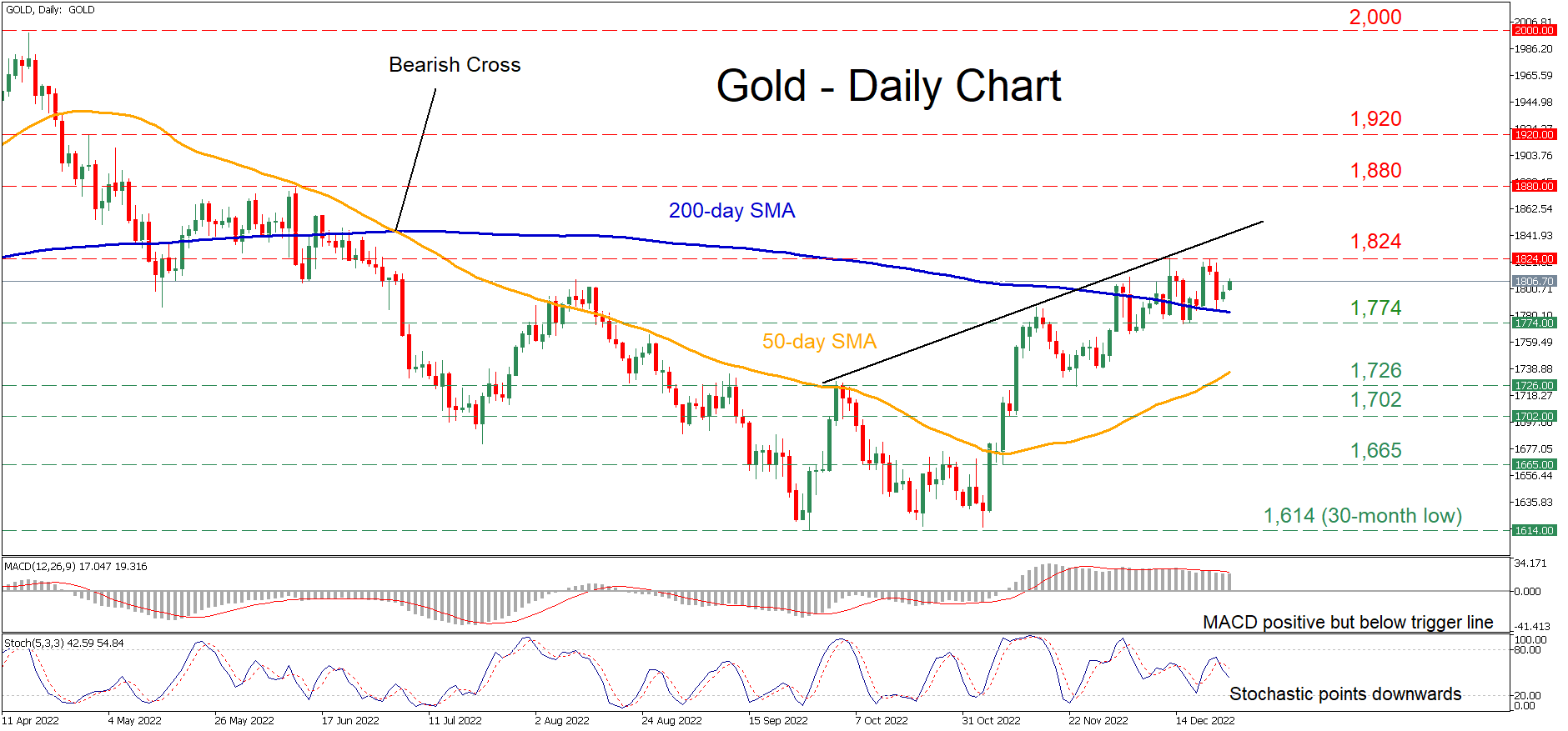
Gold had been trading within a descending channel for the most part of 2022 but has managed to stage a moderate rebound since early November. Even though the precious metal has crossed above both its 50- and 200-day simple moving averages (SMAs), its advance seems to be running out of juice.
The momentum indicators are reflecting a loss of positive momentum. Specifically, the MACD histogram is retreating below its red signal line in the positive region, while the stochastic oscillator is pointing downwards after posting a bearish cross.
If selling forces intensify and the price slips below its 200-day SMA, the recent low of 1,774 could curb initial declines. Should that floor collapse, bullion could descend to test the November support of 1,726. Failing to halt there, the 1,702 barrier may prove to be a tough one for the price to violate.
To the upside, bullion could ascend towards the six-month high of 1,824, which has rejected its advance twice. Breaching this region, the bulls might aim for the June peak of 1,880 before the spotlight turns to the 1.920 hurdle. A break above the latter could send the price to challenge the 2,000 psychological mark.
Overall, gold appears to be losing upside momentum but remains comfortably above its 200-day SMA. Hence, a dip below that crucial level could ignite further downside pressures.
EURUSD Range Bound During Post-Christmas Session
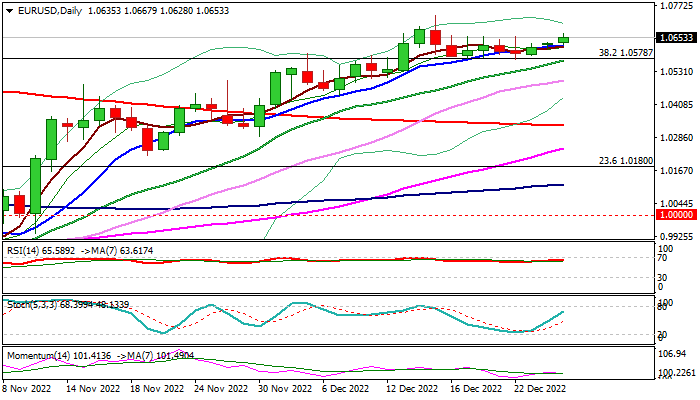
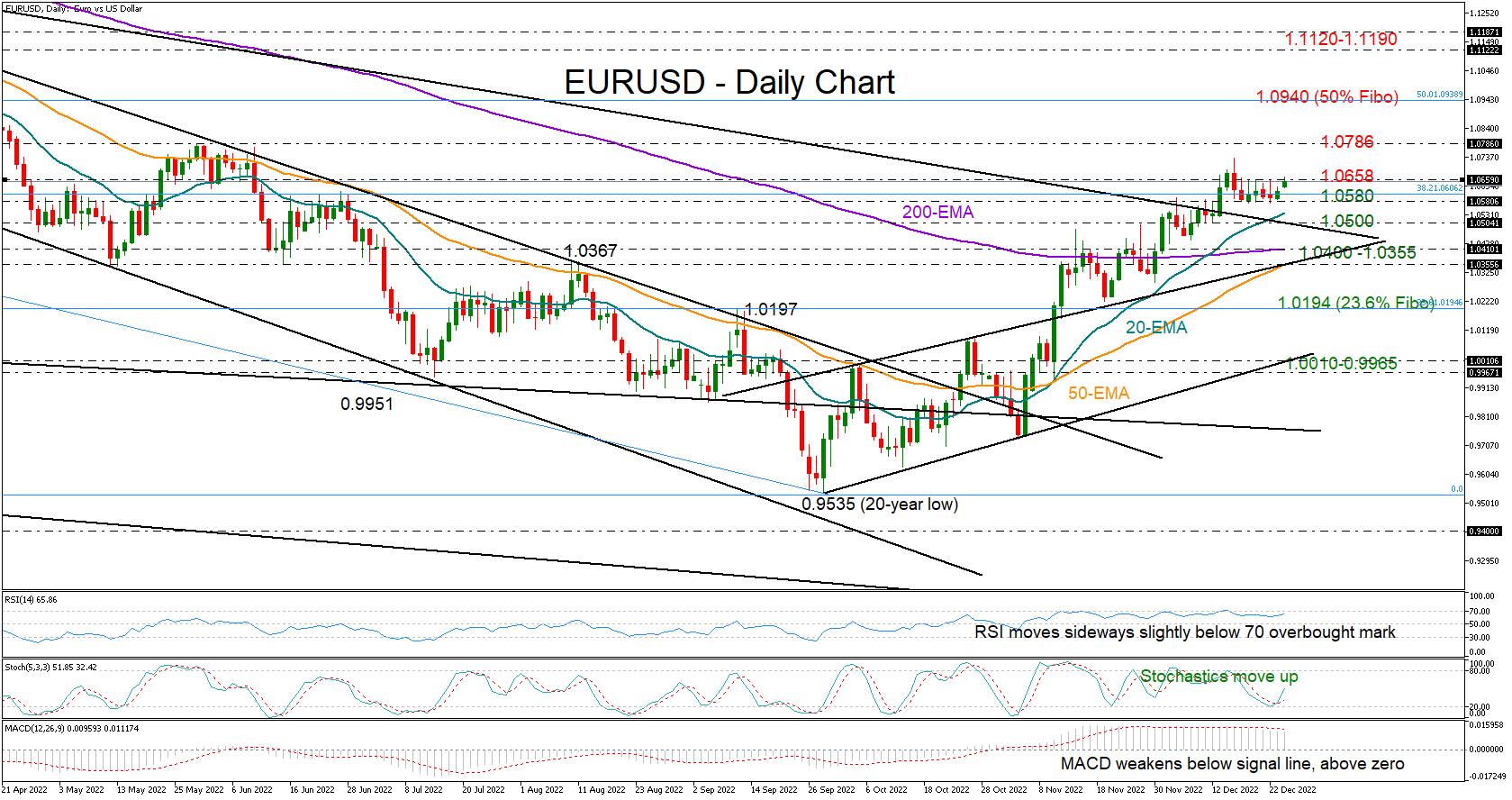
EURUSD kept fighting the tough 1.0658 nearby resistance during the post-Christmas trading session, which has been capping bullish actions for more than a week.
The floor around 1.0580, if sustained, may preserve engagement in the market in the short term. Technically, the bullish cross between the faster 20-day exponential moving average (EMA) and the slower 200-day EMA is feeding hopes that the uptrend from 20-year lows may gain extra legs. Yet, with the RSI maintaining a sideways trajectory near its 70 overbought level and the MACD losing pace slightly beneath its red signal line, the pair might prove sensitive to downside risks.
If the bulls dominate above 1.0658, the next target will be May’s bar of 1.0786. Even higher, the 50% Fibonacci retracement of the 2021-2022 downtrend at 1.0940 could attract special attention ahead of the 1.1120–1.1190 constraining zone. A successful step higher could then clear the way towards the 61.8% Fibonacci of 1.1450.
On the downside, a step below 1.0580 could find immediate support somewhere between the 20-day EMA and the broken descending trendline at 1.0500. Failure to rotate here could shift the bias to the bearish side, producing a quick downfall towards the 200- and 50-day EMAs currently seen within the 1.0400–1.0355 region. The upper trendline of the broken short-term bullish channel may cement this base, potentially preventing another sharp decline to the 23.6% Fibonacci of 1.0194.
All in all, EURUSD seems to have power for more upside in the short term. A close above 1.0658 may renew bullish momentum, whereas a reversal below 1.0500 may trigger the next bearish cycle.
EUR/USD: Recovery to Face Strong Headwinds at Strong1.0740 Resistance Zone
The Euro remains at the front foot in and continues a gradual extension higher after the pullback from December’s high at 1.0736 (posted on Dec 15, the highest in seven months), found solid ground at 1.0580 zone (broken Fibo 38.2% of 1.2266/0.9535 fall / rising 20DMA).
Initial signs of a higher base need confirmation on sustained bounce, with improved risk sentiment on China’s upward revision of its GDP estimations in 2023, adding to positive near-term tone, along with bullish daily studies.
On the other hand, bulls are expected to face strong headwinds on approach to key barriers at 1.0736/45 (Dec 15 high / base of falling thick weekly cloud) which may stall the rally on failure to break higher.
Bearish scenario sees loss of 1.0780 support zone as initial negative signal, with extension through pivots at 1.0487/60 (daily Kijun-sen / Fibo 61.8% of 1.0290/1.0736) to further weaken near-term structure and risk deeper pullback.
Near-term bias is expected to remain with bulls while the action stays above 1.0580, though firm break of 1.0736/45 barriers is required to signal bullish continuation of the upleg from 0..9535 (Sep 29 low).
Res: 1.0707; 1.0736; 1.0745; 1.0786
Sup: 1.0580; 1.0487; 1.0460; 1.0329