Sample Category Title
GBP/USD: Cable Hits Record Low and Eyes Parity, as Conditions Continue to Worsen
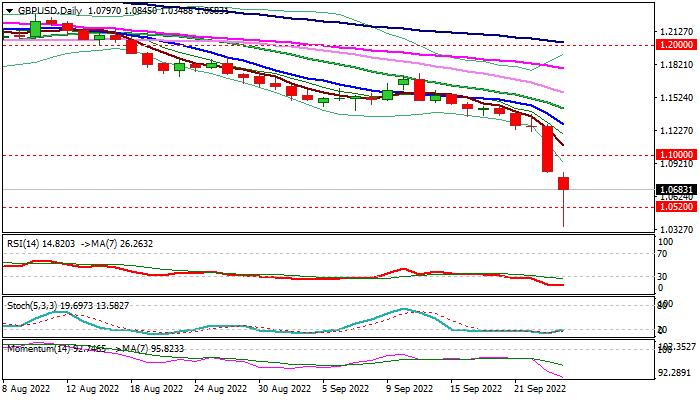
British pound fell to a record low vs dollar in Asian session on Monday, in extension of last Friday’s sharp fall, when the pair was down 3.6% for the day in the biggest daily drop since 10 Nov 2021.
Cable spiked through 1985 low at 1.0520 to hit new all-time low at 1.0348, deflated by strong risk aversion on growing uncertainty and signals that the Fed will remain in strong hawkish mode, while confidence in Britain’s plan to stabilize the economy by lowering taxes and increasing borrowing, started to fade, adding to prevailing negative sentiment.
Although the cable bounced back to 1.07 zone in early European trading, as traders collected some profits on signals from deeply oversold daily studies, overall structure remains bearish, as the pair is pressured by deteriorating fundamentals and negative technical studies.
Cable fell 5% last week and is on track for another strong monthly fall (the biggest monthly loss since June 2016 – the post-Brexit fall).
We look for sustained break below 1985 low to signal bearish continuation, as p parity level already came in focus.
Broken psychological 1.10 support reverted to solid resistance, reinforced by falling daily Tenkan-sen, which should ideally cap extended upticks.
Res: 1.0845; 1.0914; 1.1000; 1.1211.
Sup: 1.0600; 1.0520; 1.0348; 1.0200.
EUR/USD: Euro May Fall Further after Consolidation
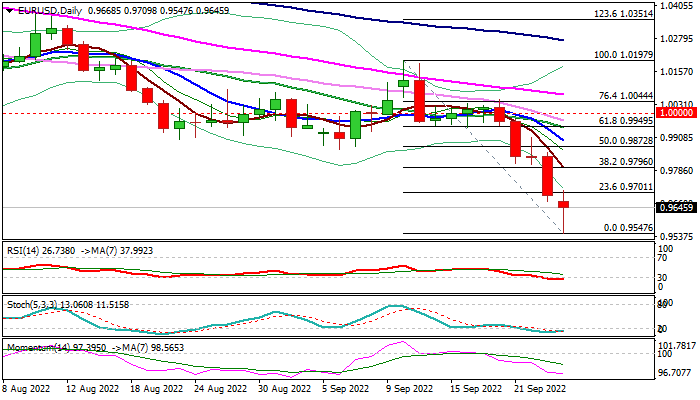
The Euro bounces from new 20-year low (0.9548) hit overnight, in extension of Friday’s almost 1.5% drop. Bears faced a headwinds after break of initial target at 0.9601 (Sep 2002 low), with profit-taking on oversold conditions, seen rather as a positioning for fresh push lower, as technical picture is bearish and worsening fundamentals add to negative outlook.
Traders got stuck after reversing from short to long positions on ECB’s 0.75% rate, as Fed hiked for the third consecutive time by 75 basis points and signaled it will remain on aggressive track that continued to inflate dollar.
In addition, downbeat German Ifo data confirm that the Eurozone economy remains fragile, while single currency could be also. dragged by weakening pound on UK fiscal drama.
Recovery was so far capped by Fibo 23.6% of 1.0197/0.9548 bear-leg (0.9701), with firm break here needed to ease downside pressure and allow for extension towards key barrier at 0.9796 (Fibo 38.2% / falling daily Tenkan-sen).
Otherwise, bears will remain fully in play while the action stays below 0.9701 and risk retest of 0.9547 low, loss of which would open way for test of psychological 0.90 support.
Res: 0.9701; 0.9740; 0.9796; .9812.
Sup: 0.9620; 0.9601; 0.9548; 0.9500.
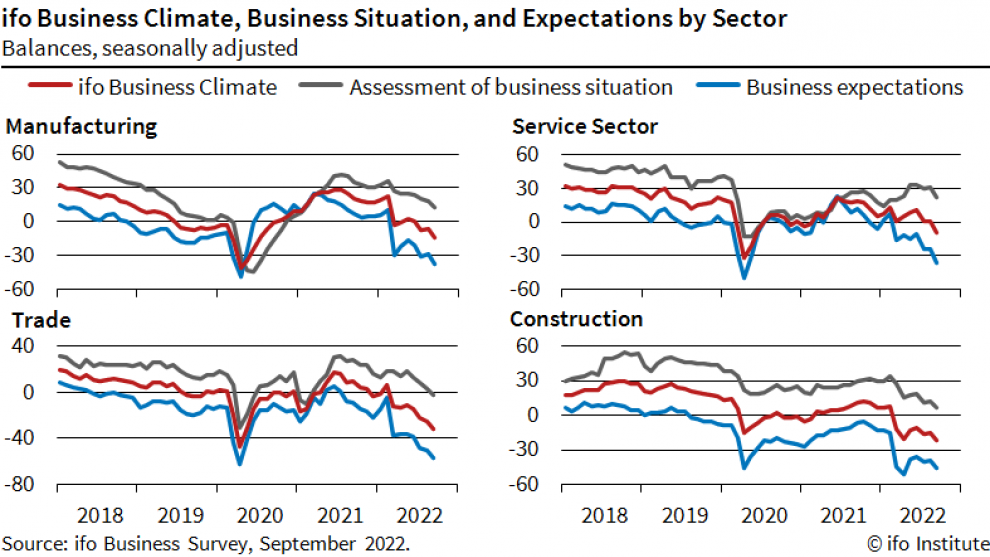
Germany Ifo dropped to 84.3, slipping into recession
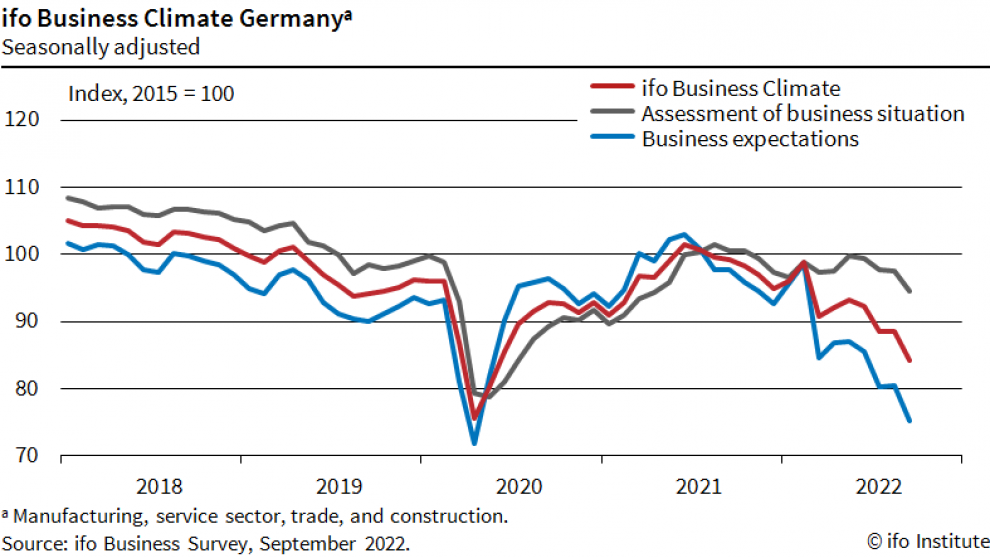
Germany Ifo Business Climate dropped from 88.6 to 84.3 in September, below expectation of 87.1. That's the lowest level since May 2020. Current Assessment index dropped form 97.5 to 94.5, below expectation of 96.0. Expectations index dropped from 80.3 to 75.2, below expectation of 78.6.
Ifo said: "Companies assessed their current business as clearly worse. Pessimism regarding the coming months has grown decidedly; in retail, expectations have fallen to a record low. The German economy is slipping into recession."
By sector, manufacturing dropped from -6.8 to -14.2. Services dropped from 1.4 to -8.9. Trade dropped from -25.8 to -32.3. Construction dropped from -14.8 to -21.6.
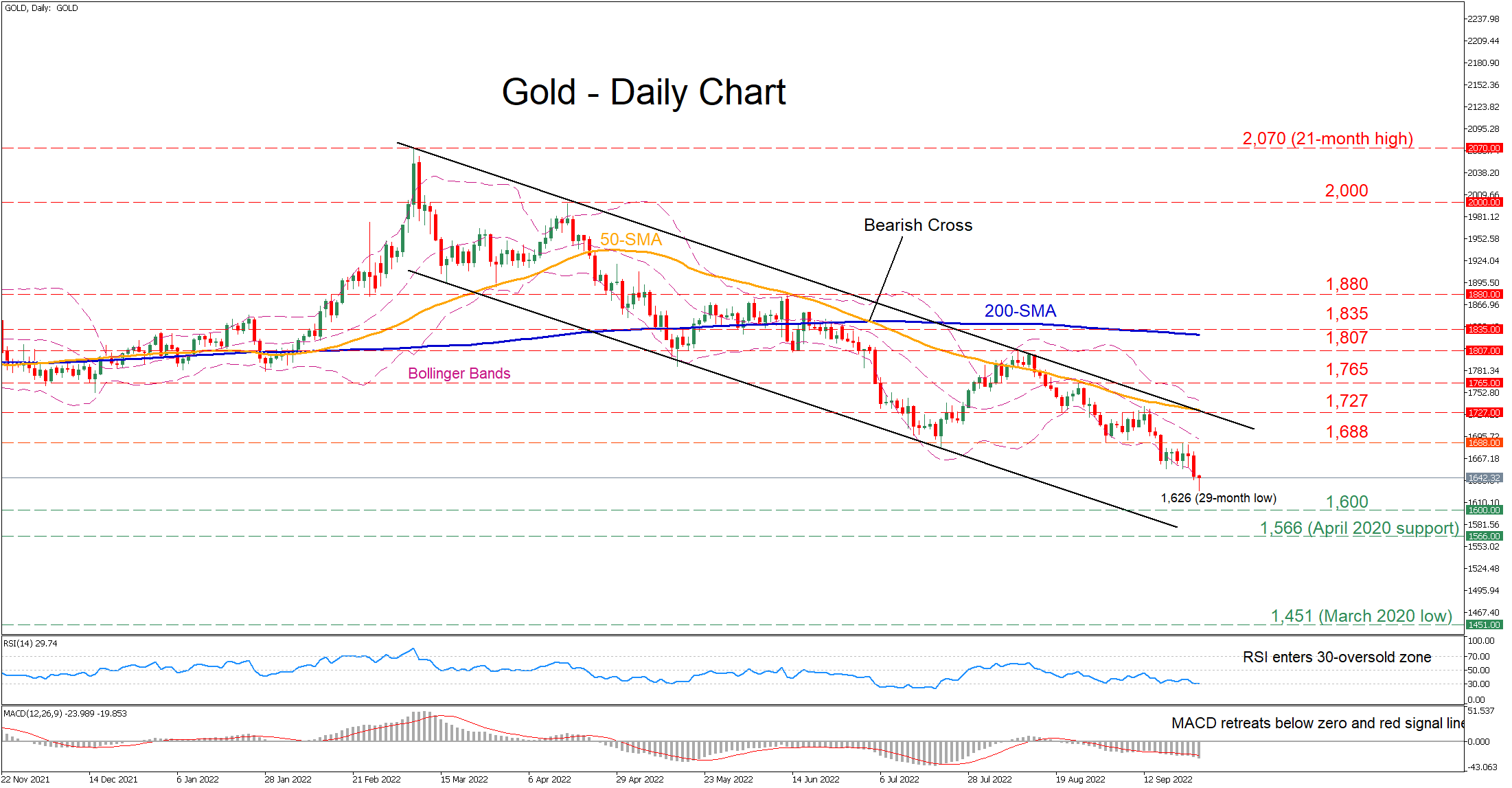
Gold Extends its Decline to Fresh 29-Month Lows
Gold has been losing ground since early March, generating a profound structure of lower highs and lower lows within a descending channel. Furthermore, in the last few daily sessions, the technical picture has deteriorated, with the pair forming consecutive fresh 29-month lows and trading beneath its lower Bollinger band.
The short-term oscillators currently suggest that bearish forces are strengthening. Specifically, the RSI has entered the 30-oversold zone, while the MACD histogram is retreating below both zero and its red signal line.
Should selling pressures persist, the 1,600 psychological mark could act as the first line of defence. Sliding beneath that floor, the April 2020 support of 1,566 might curb any further downside moves. Failing to halt there, the attention could shift to the March 2020 low of 1,451.
On the flipside, bullish actions could propel bullion towards its recent high of 1,688. Conquering this barricade, the bulls could aim for the crucial 1,734 level, which overlaps with the 50-day simple moving average (SMA) and the restrictive trendline taken from the commodity’s peaks. Jumping above that zone, the price could ascend towards 1,765 or higher to test the August high of 1,807.
All in all, gold has been developing within a descending move since March 8, and only a decisive advance above the upper boundary of its declining channel may change its outlook to bullish.
ECB de Guindos sees significant slowdown in Q3 and Q4
ECB Vice President Luis de Guindos said in a conference today, "we are seeing that in the third and fourth quarters there is a significant slowdown and we may find ourselves with growth rates close to zero." He also noted that inflation in becoming increasingly broad and further rate hike will depend on incoming data.
Separately, Governing Council member Boris Vujcic said this months' 75bps hike was "the right way to go". "Inflation, if it's persistently strong, has to be the clearly dominant goal," he added. "Paying much attention to lower growth now, at the expense of fighting inflation, is often luring. But letting inflation become entrenched always has a higher cost than a temporary decline in GDP."
BoJ Kuroda: It’s highly likely for economic recovery to continue
BoJ Governor Haruhiko Kuroda said today that rapid currency moves were undesirable as they would have a negative impact on the economy. He added that intervention to address exchange volatility was the appropriate move.
Also, he pledged in a speech that BoJ will "continue with monetary easing so as to firmly support Japan's economy from wage increases."
Kuroda also noted, it's "highly likely" for the economy to continue recovering following three factors. The first is improvement in exports, production, and business fixed investment. The second factor is solid private consumption. he third factor is that, with the government relaxing entry restrictions, inbound tourism demand is expected to recover. But he also pointed out risks from COVID-19, and developments in overseas economic activity and prices.
Crypto as a Safe Haven. Finally?
Market picture
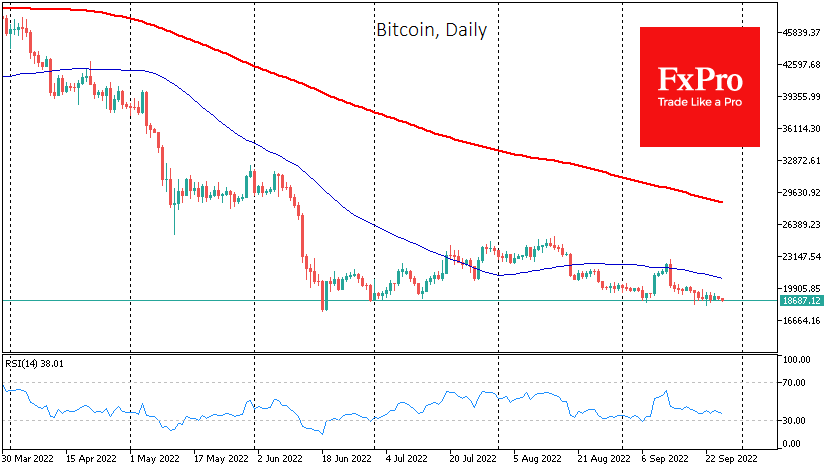
Bitcoin is down 4.1% over the past week, ending near $18,900. Ethereum lost 5.8% to $1290. Other leading altcoins in the top 10 showed mixed dynamics, ranging from a 3.7% decline (Cardano) to a 27% increase (XRP).
Total crypto market capitalisation, according to CoinMarketCap, declined by 2.4% over the week to $928bn. Cryptocurrency Fear & Greed Index fell by 3 points over the week to 24 (“extreme fear”).
Meanwhile, the cryptocurrency market became a safe haven compared to the collapse of major currencies and stock indices.
News background
Former MicroStrategy CEO Michael Saylor said that bitcoin would surpass the $69K reached in November 2021 in the next four years. BTC could trade as high as $500K in the next decade if its market capitalisation equals that of gold. Judging by bitcoin’s simple four-year moving average, its bottom is at $20K, Sailor suggested.
Bitcoin’s bear market has yet to reach its final stage, and investors should prepare for further declines. Some participants expressed this opinion in a Cointelegraph poll on Twitter.
Ethereum co-founder Vitalik Buterin said all cryptocurrencies should switch to the Proof-of-Stake (PoS) algorithm. He believes that over the next 18 months, ETH will become much more scalable, which will significantly reduce transaction fees.
Ripple CEO Brad Garlinghouse disagreed with the SEC that Ethereum could be considered unregistered security after the move to PoS.
EURUSD on Course to Reach Channel’s Bottom
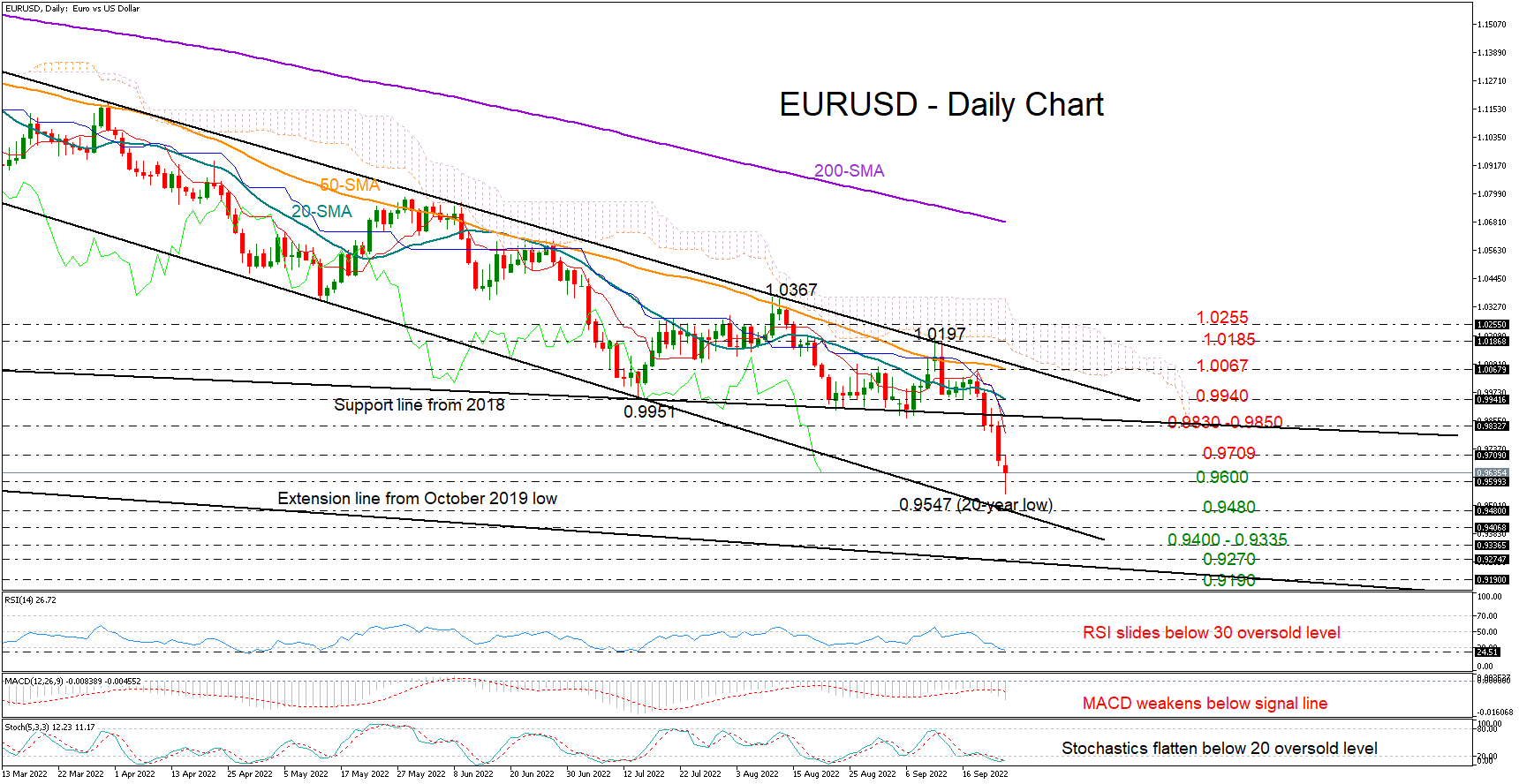
EURUSD plummeted to a new twenty-year low of 0.9547 early on Monday after its most devastating week since the pandemic, with the focus now shifting to the bottom of the 2022 bearish channel at 0.9480.
The price managed to recoup some losses and return above the 0.9600 level over the past couple of hours, as the RSI and the stochastics hinted at oversold conditions. Although some recovery would not be surprising after an ugly sell-off, the technical indicators haven’t exited the bearish area yet, making additional losses possible in the short term.
If the bears worsen the outlook below the channel, the price may initially get congested somewhere between 0.9400 and 0.9335, taken from June 2002. Slightly lower, the 0.9270 area was a tough barrier to upside movements in September 2001, and it overlaps with the extension of the tentative descending line from October 2019. Therefore, it may attract special attention ahead of the 0.9190 handle.
On the upside, the 0.9709 level came to limit bullish pressures today, but above that, there is a more challenging territory at 0.9830 – 0.9850, which the bulls need to claim first before they revisit the 20-day SMA at 0.9940. Reaching parity will be the next target, while higher, buyers will be eagerly looking for a decisive break above the 50-day SMA and the channel at 1.0067 to stage an exciting rally towards September’s high of 1.0197.
All in all, the negative trend in EURUSD remains constant and irreversible for now, bringing the channel’s lower boundary at 0.9480 next on the radar.
Daily Technical Analysis
EUR/USD
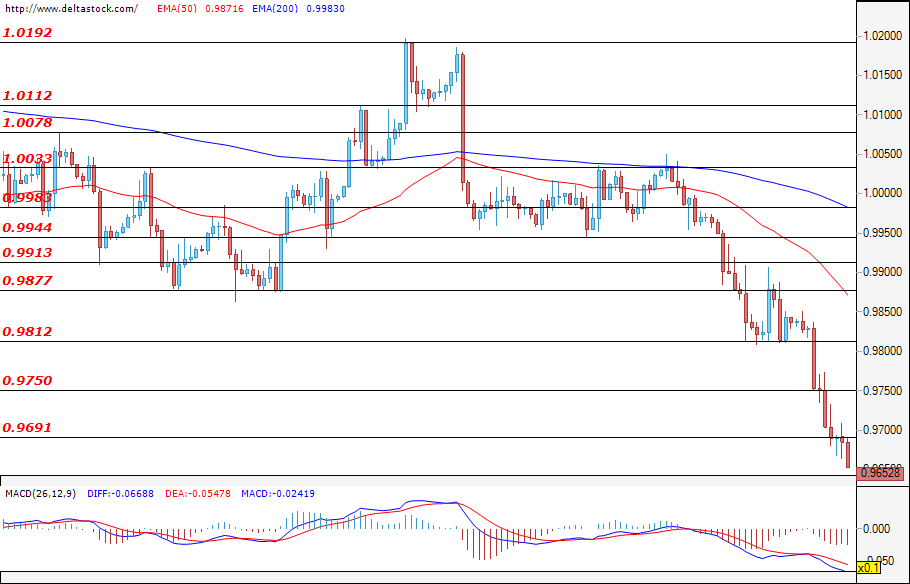
The European common currency suffered significant losses against the dollar and the pair slumped and tested the support at 0.9690. If the EUR/USD remains limited below the mentioned zone, then the expectations are for a continuation of the sell-off and a move towards the levels from 2001 at around 0.9410. The first target for the bulls can be found at the level of 0.9750. A successful violation of the resistance at 0.9812 could lead to a higher correction and a test of the major zone at 0.9877. This week, traders would focus on ECB president Christine Lagarde`s speech on Monday at 12:00 GMT, the speech of FED Chair Jerome Powell (Tuesday; 11:30 GMT), as well as on the U.S. unemployment claims data (Thursday; 12:30 GMT).
USD/JPY
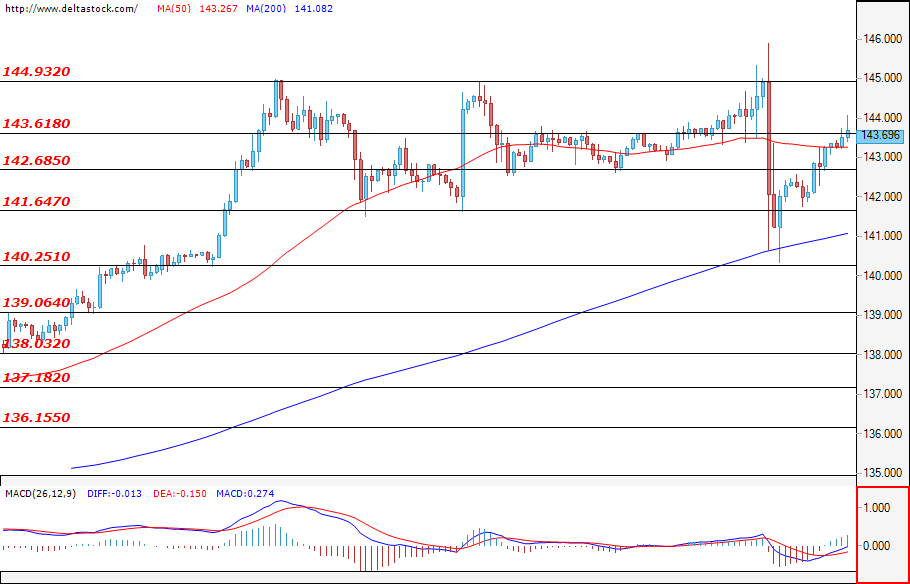
The recovery for the dollar against the yen continues, and during the early hours of today`s trading, the Ninja tested the resistance zone at 143.61. A confirmed breach for the bulls could easily lead to a new attack on the high at 144.93. А violation of the mentioned zone would strengthen the positive expectations for the future path of the currency pair and could lead to a move towards the levels at around 152.00. If the bears re-enter the market, then a successful test of the support at 142.61, followed by a breach of the lower target at 141.64, would both form the current move as corrective and could easily prime the pair for an attack on the important zone at 140.25.
GBP/USD
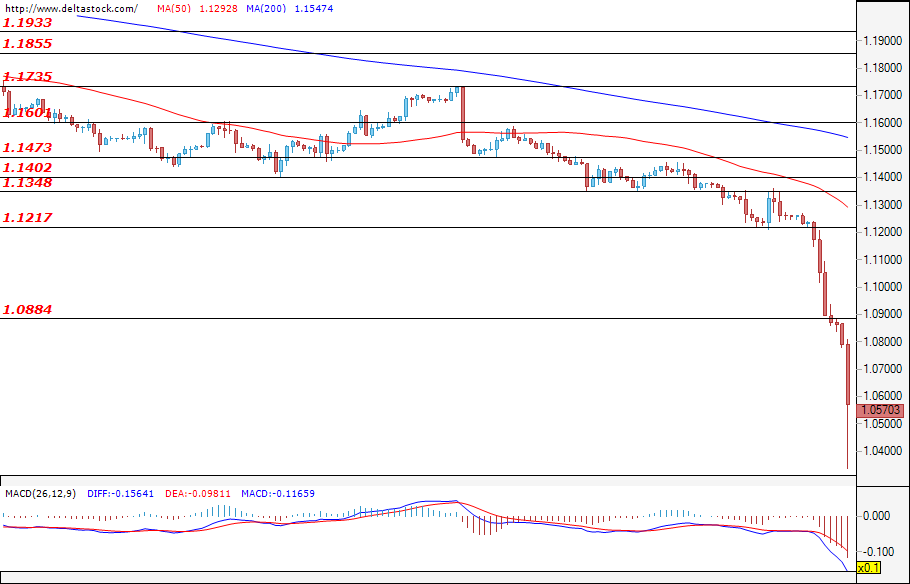
The Cable slipped below 1.0400 and reached a new 37-year low. At the time of writing the analysis, the rate against the greenback is hovering around the current level at 1.0588, but if the bearish attack continues, then the expectations are for the sell-off to be prolonged and for us to see a new attack on the low at around 1.0338. If the bulls prevail, then they could lead the pair for a test of the resistance at 1.0884. Only a successful breach of the next target at 1.1217, followed by a violation of the upper zone at 1.1348, could potentially result in a recovery and could draw a more bullish picture for the GBP/USD.
EUGERMANY40
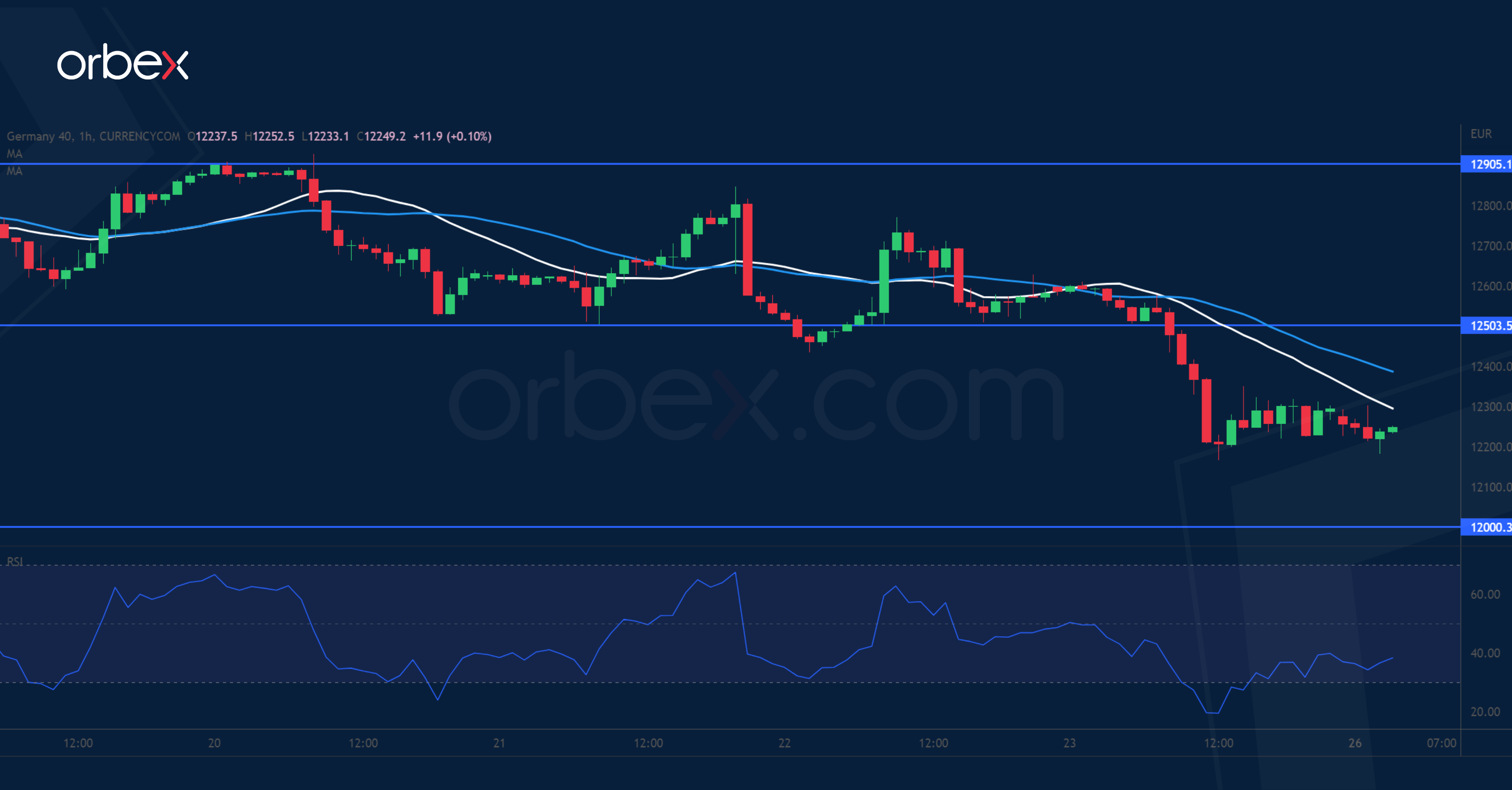
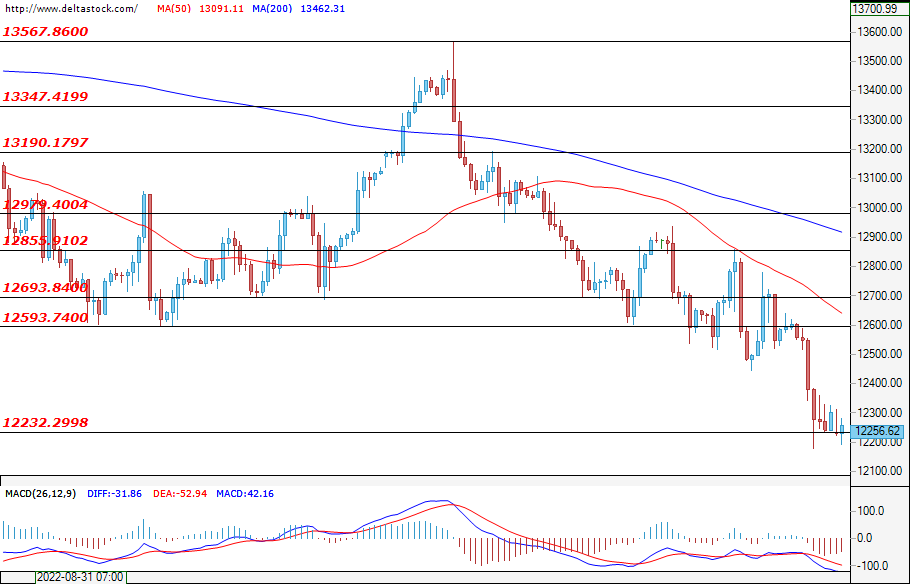
Similar to the other leading markets around the world, the German index also lost ground and reached its lowest levels this year at around 12230. A new attack for the bears is still a highly probable scenario, but only a successful breach of the mentioned zone could easily continue the decline towards 12100. Better-than-expected data in Germany for its IFO business climate index (today; 08:00 GMT) could help the bulls prevail and they could lead the index for a test of the resistance at 12593. A violation of the upper zone at 12693 could lead to a recovery and could pave the way for an attack on the major zone at 12855.
US30
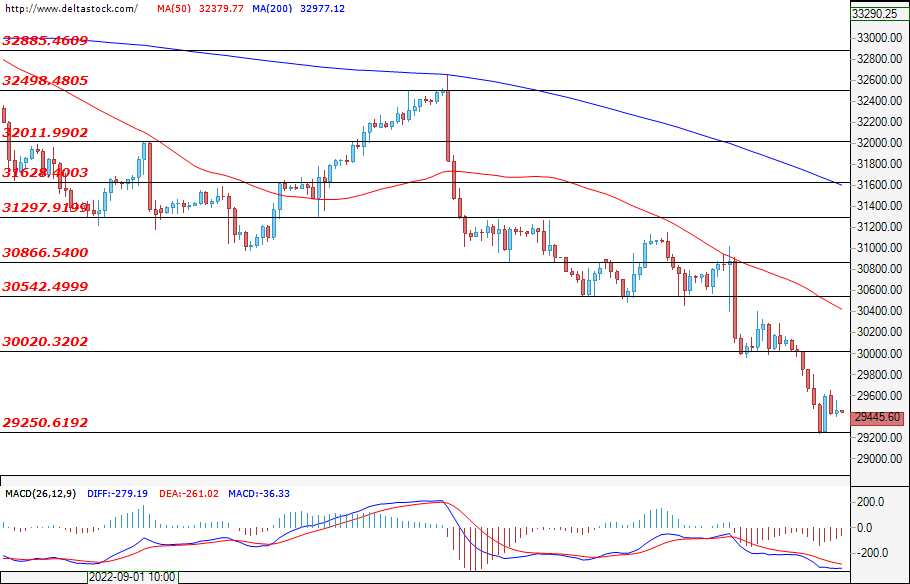
The support zone at 29250 withheld the bearish attack and the index consolidated around the current level at 29445. If the bulls prevail, their first target could be found at the zone of 30020. A breach of the upper zone at 30542 could lead to a higher correction and a test of the resistance at 30866. If the bears re-enter the market, then a potential violation of the support at 29520 could deepen the decline and could easily lead to new losses for the American index. Among the most anticipated news this week will be the release of the initial jobless claims data (Thursday; 12:30 GMT).
DAX 40 Falls Through Critical Floor
The Dax 40 plunged over wide-spread unease about the direction of inflation and rate hikes. A fall below the double bottom at 12420 invalidated the bounce over the past few months and signalled a return to the bear market. Strong momentum is a sign of liquidation as the last bulls rush to the exit. As the RSI sank into the oversold area, the psychological level of 12000 may see some buying. However, bounces may be capped below 12500 where the bears could double down and push towards October 2020’s low around 11400.