Sample Category Title
Yen Recovers as Nikkei Pulls Back, Dollar Pressured by US Shutdown Risk
Yen jumped broadly in Asian trading today, marking a strong performance on the penultimate session of Q3. The move coincided with a drop in Nikkei, where ex-dividend effects weighed on equities, prompting flows into Yen. The quarter-end context likely amplified positioning shifts.
Beyond equities, anticipation of the BoJ’s upcoming Summary of Opinions also bolstered Yen. With two policymakers dissenting in favor of a hike at the last meeting, markets expect the document to reveal a more hawkish tone. The key question is how much support is building within the Board for an imminent move toward higher rates. Even a modest signal of broadening support for rate increases could sharpen expectations for a hike later this year.
On the other side of the ledger, Dollar came under pressure as US political risk resurfaced. Washington faces the prospect of a partial government shutdown if Congress fails to pass a funding bill before Tuesday. While shutdowns are nothing new in the US, the uncertainty has weighed slightly on the greenback in early trading.
Investors are more focused on how a shutdown could disrupt economic data releases, particularly the highly anticipated September non-farm payrolls due Friday. Any delay in the report would leave markets flying blind on the most important labor market gauge, complicating Fed expectations heading into October.
For now, Yen leads the day’s performance, followed by Aussie and Kiwi. Dollar sits at the bottom alongside the Loonie and Euro. Sterling and Swiss Franc are trading mid-pack.
In Asia, at the time of writing, Nikkei is down -0.89%. Hong Kong HSI is up 1.57%. China Shanghai SSE is up 0.41%. Singapore Strait Times is up 0.20%. Japan 10-year JGB yield is down -0.018 at 1.642.
WTI oil bulls need 66.55 break as OPEC+ hike decides next move
Oil prices slipped slightly in Asian session after reports that OPEC+ is set to approve another production hike in November. The group is said to consider lifting quotas by at least 137k barrels per day when ministers meet next Sunday, adding to the series of increases since April.
The cartel has already boosted output quotas by more than 2.5 million barrels per day, equivalent to around 2.4% of global demand. The shift marks a decisive reversal from earlier supply restraint, with members now focused on regaining market share as prices hover at supportive levels.
Eight key producers will meet online on October 5 to finalize the November decision. Markets will be watching not just the headline figure but also whether the hike overshoots expectations, which could put fresh pressure on prices. On the other hand, smaller-than-anticipated increase could give oil prices a lift through a key near term resistance level.
Technically, WTI’s drop from 78.87 appears to have completed as a three wave correction at 61.90. The immediate focus is resistance at 66.55. Firm break above this barrier would reinforce this bullish and target 71.34.
However, rejection by the resistance would keep the short-term outlook bearish, leaving the door open for another fall through 61.90 as a later stage.
Gold and Silver rally near exhaustion points, caution warranted
Gold surged to another record in Asian trading today, edging toward 3800 level, while Silver held firm around 46.5 after last week’s sharp 7% rise. Both metals remain supported by low interest rates and geopolitical risks, but the relentless rally is entering territory where traders should start to grow more cautious.
For Gold, the technical outlook still points higher as long as 3717.24 support holds. Immediate upside target is 61.8% projection of 2584.24 to 3499.79 from 3267.90 at 3833.79. Yet as prices stretch further, momentum could start fading even as new highs are made, on overbought conditions.
The 4000 psychological barrier looms as a potential turning point. That zone also aligns with the 261.8% projection of 1160.17 to 2074.84 from 1614.60 at 4009.20, making it an ideal level for a major top. Traders should view this area as one to scale out, not chasing higher.
As Gold could also complete its five-wave rally from 1046.27 (2015 low), reversal at or near 4000 could be steep. The next meaningful correction might drag Gold quickly back toward 55 W EMA (now at 3113.80).
Silver carries similar warning signs. With support intact at 43.75, further rise should be seen to 100% projection of 28.28 to 39.49 from 36.93 at 48.14. But momentum is already running into a zone where upside looks limited relative to risk.
Between 161.8% projection of 21.92 to 34.84 from 28.28 at 49.18 and 50 psychological level, Silver faces a heavy resistance band that could complete its five-wave rally from 17.54 (2022 low). If rejected by 50, the metal could retrace rapidly, mirroring the kind of correction gold risks at 4000.
The message is clear: while fundamentals still favor precious metals, the technical picture is flashing caution. Traders should be tightening stops and locking in gains above 3800 in Gold and 48 in Silver, and be prepared for the possibility of sharp reversals.
Non-farm payrolls to decide fate of December Fed cut
Markets step into the final quarter of 2025 facing a dense calendar of high-stakes events. The spotlight is firmly on the US, with September’s non-farm payrolls and the ISM surveys set to guide the next leg of Fed expectations. After a run of resilient US data, investors are questioning how much scope remains for additional easing this year.
The October cut is still priced as near-certain, but the conviction for a follow-up move in December has started to erode. Markets increasingly see the Fed delivering just one more insurance cut to cushion the labor market rather than embarking on a deeper easing cycle. Unless data takes a sudden turn lower, the prospect of a year-end move will diminish further.
Non-farm payrolls will be the main test. A solid report would likely drive December cut odds even lower, especially if job creation show sign of rebound. By contrast, a weaker-than-expected number could revive market conviction that the Fed will act twice more this year, but such an outcome looks less probable after the recent run of firm data.
In the run-up to NFP, sentiment may shift on a series of important releases. Consumer confidence and ISM Manufacturing will all feed into the growth narrative, as well as ISM Services after NFP. These interim prints may create volatility across Dollar pairs, but none are expected to fundamentally challenge the October cut baseline.
In the Asia-Pacific, the RBA holds its policy meeting, where rates are widely expected to remain at 3.60%. The subtle hawkish lean from Governor Michele Bullock, combined with an upside surprise in August CPI, has already prompted traders to scale back bets on a November cut. Bullock’s tone this week will be crucial in gauging how seriously the Board views resurgent price pressures from strong domestic demand.
Should Bullock’s comments reinforce hawkish expectations, Australian Dollar could find support, particularly in the crosses. Even without an outright shift in forward guidance, a firmer stance on inflation risks could differentiate AUD from its weaker commodity peers.
Japan also enters the spotlight with the BoJ’s Summary of Opinions from the September meeting due. The release could shed more light on the growing internal divide, after two members dissented in favor of a hike. Any evidence that additional board members are edging toward that camp would sharpen expectations for an earlier move.
Alongside the Summary, the Tankan survey will provide a critical gauge of corporate sentiment and investment intentions, both essential inputs for BoJ’s policy deliberations.
In Europe, CPI releases from the Eurozone and Switzerland round out the week, likely confirming steady stances from both the ECB and SNB.
Here are some highlights for the week:
- Monday: UK M4 money supply, mortgage approvals; US pending home sales.
- Tuesday: BoJ summary of opinions, industrial production, retail sales; New Zealand ANB business confidence; RBA rate decision; China PMIs; Germany import prices, retail sales, unemployment; UK Q2 GDP final; Swiss KOF economic barometer; US house price index, Chicago PMI, consumer confidence.
- Wednesday: Japan Tankan survey, PMI manufacturing final; Swiss retail sales, PMI manufacturing; Eurozone PMI manufacturing final, CPI flash; US ADP employment, ISM manufacturing; BoC summary of deliberations.
- Thursday: Japan monetary base, consumer confidence; Australia trade balance, household spending; Swiss CPI; Eurozone unemployment rate; US jobless claims, factory orders.
- Friday: Japan unemployment rate; Eurozone PMI services final, PPI; UK PMI services final; US non-farm payrolls, ISM services.
USD/JPY Daily Outlook
Daily Pivots: (S1) 149.28; (P) 149.62; (R1) 149.83; More...
Intraday bas in USD/JPY is turned neutral first as retreat from 149.95 deepens. Some consolidations would be seen first but further rally is expected as long as 147.45 support holds. Corrective pattern from 150.90 should have completed at 145.47. Above 149.95 will bring retest of 150.90 first. Firm break there will target 151.22 fibonacci level. However, sustained break of 147.45 will dampen this bullish view and bring deeper fall to 145.47 support instead.
In the bigger picture, price actions from 161.94 (2024 high) are seen as a corrective pattern to rise from 102.58 (2021 low). Decisive break of 61.8% retracement of 158.86 to 139.87 at 151.22 will argue that it has already completed with three waves at 139.87. Larger up trend might then be ready to resume through 161.94 high. In case the corrective pattern extends with another fall, strong support is expected from 38.2% retracement of 102.58 to 161.94 at 139.26 to bring rebound.
EUR/USD Trims Gains – Why Traders Fear Recovery Will Stall Quickly
Key Highlights
- EUR/USD started a fresh decline from the 1.1920 resistance.
- A major bearish trend line is forming with resistance near 1.1750 on the 4-hour chart.
- GBP/USD also declined over 400 pips from the 1.3725 zone.
- USD/JPY rallied and traded closely to the 150.00 handle.
EUR/USD Technical Analysis
The Euro failed to stay above 1.1880 and started a fresh decline versus the US Dollar. EUR/USD declined below 1.1820 and 1.1750 to enter a bearish zone.
Looking at the 4-hour chart, the pair settled below the 1.1750 level, the 100 simple moving average (red, 4-hour), and the 200 simple moving average (green, 4-hour). A low was formed at 1.1645 and the pair is now attempting to recover.
There was a minor increase above the 1.1680 level. On the upside, the pair could face resistance near the 1.1735 level. The first major hurdle for the bulls could be 1.1750 since it coincides with the 38.2% Fib retracement level of the downward move from the 1.1918 swing high to the 1.1645 low.
There is also a major bearish trend line forming with resistance near 1.1750 on the same chart. A close above 1.1750 could set the pace for another rally. In the stated case, the pair could rise toward 1.1815, above which the bulls could aim for a move toward 1.1850. Any more upsides could send the pair toward 1.1920.
On the downside, there is a key support at 1.1650. The next area of interest might be 1.1600. The main support could be 1.1550. Any more losses might increase selling pressure and send EUR/USD toward 1.1440.
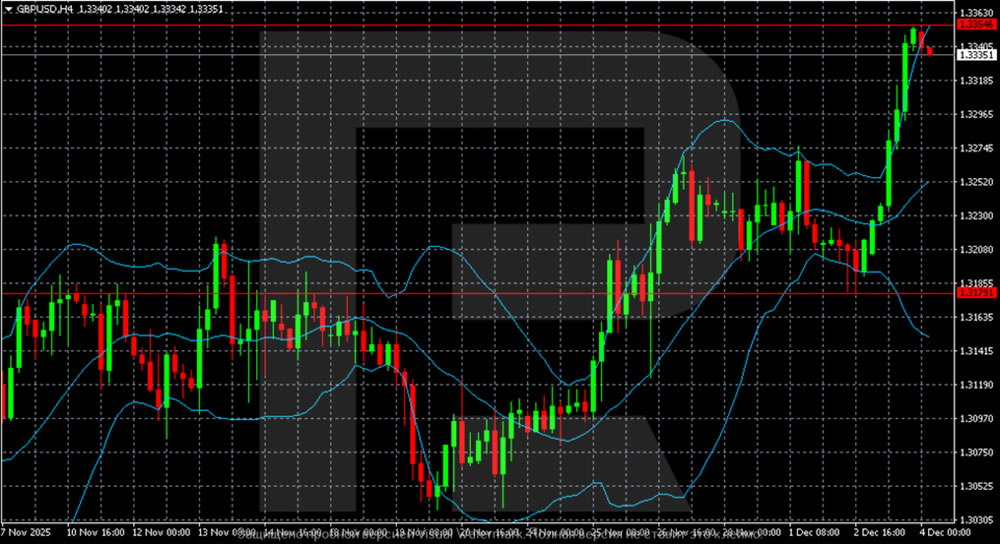
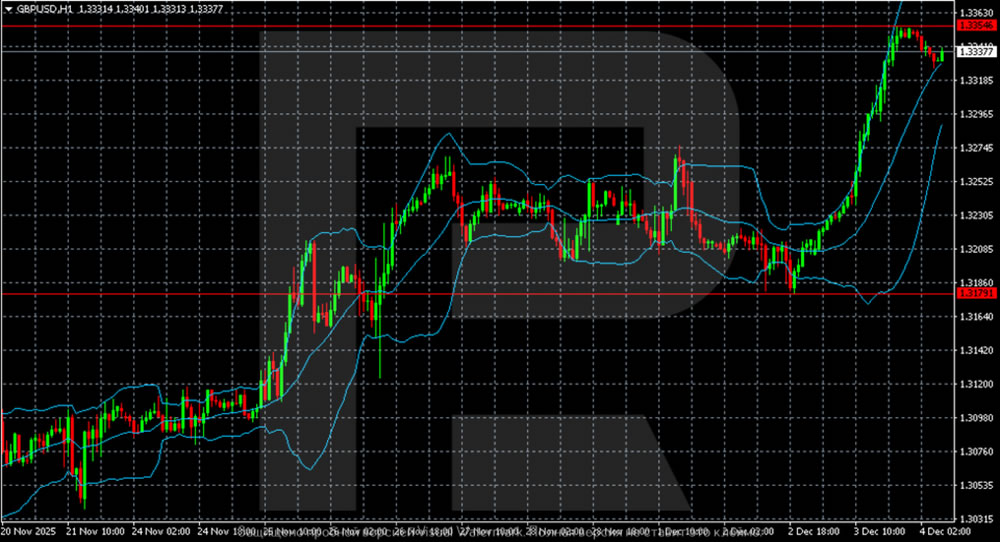
Looking at GBP/USD, the pair gained bearish momentum below 1.3500 and even tested the 1.3320 support zone.
Upcoming Key Economic Events:
- Euro Zone Economic Sentiment Index for Sep 2025 – Forecast 95.2, versus 95.2 previous.
- ECB's Nagel speech.
- ECB's Schnabel speech.
From Gold’s Seven-Week Run to Bitcoin’s Slide: Key Moves Before U.S. Payrolls
Markets continued to absorb the impact of this month’s U.S. interest rate cut as the U.S. dollar, which weakened early in the week, rebounded sharply toward the end on stronger-than-expected Durable Goods Orders and GDP data. U.S. equities hit fresh record highs before drifting lower on profit-taking, as investors locked in gains after the recent rally.
In Japan, the Nikkei failed to advance as concerns over the Bank of Japan’s planned ETF sales kept sentiment cautious. BoJ meeting minutes signaled a careful approach to further tightening, which, combined with strong U.S. economic data, added to yen weakness and underscored expectations of only gradual policy adjustments.
Elsewhere, gold extended its bull run on safe-haven demand and expectations of easier global monetary policy. Bitcoin came under pressure, retreating as profit-taking selling weighed on the cryptocurrency market, highlighting a more selective risk appetite across commodities and digital assets.
Markets This Week
U.S. Stocks
After setting fresh record highs early last week, the Dow faced natural profit-taking following its recent strong gains. Stronger U.S. data later in the week lowered the chances of another quick rate cut, a development seen as slightly negative for equities. Prices briefly dipped below the 10-day moving average but rebounded back above it by week’s end, supported by continued strength in technology shares. With the 10-day moving average still trending upward, buying on dips remains the preferred strategy, while short-term range traders should also find attractive opportunities in the current market. Key resistance is now at 46,500, 47,000, and 48,000, with support at 45,700, 45,000, 44,000, and 43,000.
Japanese Stocks
The Nikkei 225 tested record highs several times last week, but sentiment stayed cautious as traders focused on the Bank of Japan’s planned ETF sales, a development viewed as negative even though the sales are expected to proceed slowly. Tokyo inflation came in slightly below expectations at 2.5%, yet remains elevated, raising the likelihood of an official interest rate hike. After a significant rise through September, a close below the 10-day moving average could signal weakness and create a selling opportunity this week. Key resistance is at 46,000円 and 47,000円, while support is at 45,150円, 45,000円, and 44,000円.
USD/JPY
The USD/JPY broke out of its recent range last week as stronger U.S. economic data prompted aggressive buying. Political uncertainty in Japan ahead of the October 4 leadership election also added to yen weakness. Resistance held at 150, with Japanese officials likely to voice concern over the rapid depreciation, which raises the risk of intervention even if action remains unlikely. With the 146–149 range now broken, buying on pullbacks toward 149 is the preferred strategy this week. Key resistance is at 150, 151, and 152, while support is at 149, 148, 146, and 145.
Gold
Gold recorded its seventh consecutive week of gains as the uptrend continued, supported by lower interest rate expectations and steady central bank buying. The market remains overbought, but traders should stay bullish as long as prices hold above the 10-day moving average. Short-term traders may find early-week selling opportunities, as prices remain well above the moving average and stalled multiple times below the $3,800 level last week. Key resistance is now at $3,800 and $3,900, while support stands at $3,700, $3,600, $3,500, and $3,450.
Crude Oil
WTI crude held support at $60 and tested the upper end of its recent range last week, supported by tightening U.S. crude inventories and renewed export disruptions in Kurdistan, Venezuela, and Russia. Stronger-than-expected U.S. economic data also boosted expectations for oil demand. With resistance still near the highs from earlier in September, range trading remains the preferred short-term strategy, while the medium-term outlook has turned more positive as $60 support has held multiple times. Key resistance is now at $66.5, $70, and $75, with support at $60 and $55.
Bitcoin
Bitcoin came under heavy pressure last week as speculators took profits, triggering a wave of selling after technical indicators turned negative and prices broke below key support at $112,000. In the short term, the market is oversold and remains bearish, making it best to sell into strength near the 10-day moving average, with the potential for a test of $100,000 in the coming weeks. Key resistance is at $112,000, $120,000, and $125,000, while support stands at $105,000 and $100,000.
This Week’s Focus
Monday: U.S. Pending Home Sales
- Tuesday: Japan Industrial Production, Australia Building Approvals and RBA Interest Rate Decision, China Manufacturing PMI, U.K. GDP, E.U. ECB President Lagarde Speaks, U.S. Chicago PMI and CB Consumer Confidence
- Wednesday: Japan Tankan, E.U. CPI, U.S. S&P Global Manufacturing PMI and ISM Manufacturing PMI
- Thursday: E.U. Unemployment Rate, U.S.Initial Jobless Claims and Factory Orders
- Friday: Japan au Jibun Bank Services, E.U. HCOB Eurozone Composite PMI, U.K. S&P Global Composite PMI, U.S. Nonfarm Payrolls, S&P Global Services PMI and ISM Non-Manufacturing PMI
This week the focus will be Friday’s U.S. employment report, as markets look for signs of whether weakness in the U.S. job market is continuing. Ahead of the release, chart signals are likely to drive trading, with the potential for further profit-taking in equities and Bitcoin after recent strong moves. The employment data will be critical for the Federal Reserve, providing a key guide for the timing of the next U.S. interest rate cut and setting the tone for market volatility across currencies, stocks, and commodities.
Gold and Silver rally near exhaustion points, caution warranted
Gold surged to another record in Asian trading today, edging toward 3800 level, while Silver held firm around 46.5 after last week’s sharp 7% rise. Both metals remain supported by low interest rates and geopolitical risks, but the relentless rally is entering territory where traders should start to grow more cautious.
For Gold, the technical outlook still points higher as long as 3717.24 support holds. Immediate upside target is 61.8% projection of 2584.24 to 3499.79 from 3267.90 at 3833.79. Yet as prices stretch further, momentum could start fading even as new highs are made, on overbought conditions.
The 4000 psychological barrier looms as a potential turning point. That zone also aligns with the 261.8% projection of 1160.17 to 2074.84 from 1614.60 at 4009.20, making it an ideal level for a major top. Traders should view this area as one to scale out, not chasing higher.
As Gold could also complete its five-wave rally from 1046.27 (2015 low), reversal at or near 4000 could be steep. The next meaningful correction might drag Gold quickly back toward 55 W EMA (now at 3113.80).
Silver carries similar warning signs. With support intact at 43.75, further rise should be seen to 100% projection of 28.28 to 39.49 from 36.93 at 48.14. But momentum is already running into a zone where upside looks limited relative to risk.
Between 161.8% projection of 21.92 to 34.84 from 28.28 at 49.18 and 50 psychological level, Silver faces a heavy resistance band that could complete its five-wave rally from 17.54 (2022 low). If rejected by 50, the metal could retrace rapidly, mirroring the kind of correction gold risks at 4000.
The message is clear: while fundamentals still favor precious metals, the technical picture is flashing caution. Traders should be tightening stops and locking in gains above 3800 in Gold and 48 in Silver, and be prepared for the possibility of sharp reversals.
WTI oil bulls need 66.55 break as OPEC+ hike decides next move
Oil prices slipped slightly in Asian session after reports that OPEC+ is set to approve another production hike in November. The group is said to consider lifting quotas by at least 137k barrels per day when ministers meet next Sunday, adding to the series of increases since April.
The cartel has already boosted output quotas by more than 2.5 million barrels per day, equivalent to around 2.4% of global demand. The shift marks a decisive reversal from earlier supply restraint, with members now focused on regaining market share as prices hover at supportive levels.
Eight key producers will meet online on October 5 to finalize the November decision. Markets will be watching not just the headline figure but also whether the hike overshoots expectations, which could put fresh pressure on prices. On the other hand, smaller-than-anticipated increase could give oil prices a lift through a key near term resistance level.
Technically, WTI’s drop from 78.87 appears to have completed as a three wave correction at 61.90. The immediate focus is resistance at 66.55. Firm break above this barrier would reinforce this bullish and target 71.34.
However, rejection by the resistance would keep the short-term outlook bearish, leaving the door open for another fall through 61.90 as a later stage.
EURGBP Wave Analysis
EURGBP: ⬇️ Sell
- EURGBP reversed from long-term resistance level 0.8735
- Likely to fall to support level 0.8700
EURGBP currency pair recently reversed from the resistance area between the major long-term resistance level 0.8735 (former multi-month high from April) and the upper daily Bollinger Band.
This resistance area was further strengthened by the resistance trendline of the daily up channel from August.
Given the strength of the resistance level 0.8735, overbought daily Stochastic and the bullish sterling sentiment seen today, EURGBP currency pair can be expected to fall further to the next support level 0.8700.
GBPCHF Wave Analysis
GBPCHF: ⬆️ Buy
- GBPCHF reversed from support area
- Likely to rise to resistance level 1.0800
GBPCHF currency pair recently reversed up from the support area between the strong support level 1.0665 (which has been reversing the price from April) and the lower daily Bollinger Band.
The upward reversal from this support area stopped the previous short-term impulse wave c of the ABC correction 2 from August.
Given the strength of the support level 1.0665 and the oversold daily Stochastic, GBPCHF currency pair can be expected to rise further to the next resistance level 1.0800.
S&P 500 Wave Analysis
S&P 500: ⬆️ Buy
- S&P 500 index reversed from support level 6600.00
- Likely to rise to resistance level 6700.00
S&P 500 index recently reversed up from the key support level 6600.00 (which also reversed the index in the middle of September) coinciding with the 20-day moving average and the 38.2% Fibonacci correction of the upward impulse from last month.
The upward reversal from the support level 6600.00 continues the active short-term impulse wave 3 of the intermediate impulse wave (5) from the start of August.
Given the strong daily uptrend, S&P 500 index can be expected to rise further to the next resistance level 6700.00 (which reversed the price earlier this month).
Dollar Dominates as Strong Data Cuts Odds of Aggressive Fed Easing
Currency markets closed last week with a shift in tone, as traders suddenly found themselves recalibrating on Fed's easing path once again. The resilience of the US economy surprised many. Growth, hiring, and investment all showed more strength than anticipated, fueling doubts about whether policymakers truly need to accelerate the pace of cuts. The question now is not whether the Fed will ease in October, but how much conviction remains for December and beyond.
That uncertainty helped knock the wind out of equity markets. After a record-breaking run, stocks lost momentum as investors considered the possibility of a shallower easing path. Treasury yields, in turn, extended their rebound, while Dollar surged, benefiting from both yield support and some safe-haven demand.
Not all currencies fared equally in this recalibration. Swiss Franc and Euro managed to post gains, albeit much more modestly than Dollar. Both benefited from steady central bank stances. Their strength, however, was as much about avoiding weakness as it was about genuine optimism.
At the other end of the spectrum, commodity currencies struggled. Kiwi tumbled further on continuous expectations of a jumbo RBNZ cut and leadership transition at the central bank. Loonie slid despite GDP rebound, as underlying economic weakness left markets convinced more BoC easing is on the horizon. Yen also weakened, pressured by yield differentials.
Aussie managed to sit in the middle, alongside Sterling. Support came from upside inflation surprise in Australia that pared back RBA cut bets, though conviction will ultimately hinge on quarterly CPI later in October. Sterling, meanwhile, drifted, caught between softer growth data and speculation over how hawkish the BoE will turn.
The performance scoreboard tells the story clearly: Dollar, Franc, and Euro at the top; Kiwi, Loonie, and Yen anchored at the bottom; and Aussie and Sterling caught in the middle.
US Data Resilience Tempers Fed Cut Bets Beyond October
Expectations for Fed easing shifted notably last week as a string of stronger-than-expected US data challenged the case for aggressive rate cuts. The upgraded Q2 GDP print, resilient September PMIs, firmer jobless claims, and robust durable goods orders underscored economic resilience despite tariff headwinds.
This recalibration left futures still pricing a near-certain October cut, but with far less conviction for December. The adjustment has rippled across markets: US stocks lost momentum from record highs, Treasury yields extended their rebound, and Dollar surged to finish the week as the strongest major currency.
The US economy continues to defy expectations. The final estimate for Q2 GDP was revised up sharply to 3.8% annualized, from 3.3% previously, showing that activity held firm despite tariff headwinds. Rather than slowing sharply, growth carried strong momentum into Q3.
PMI surveys for September reinforced that resilience. At 52.0 for manufacturing and 53.9 for services, both sectors remain comfortably in growth territory. The composite data suggest output is expanding at a 2.2% annualized pace this quarter, consistent with a gradual rather than abrupt cooling.
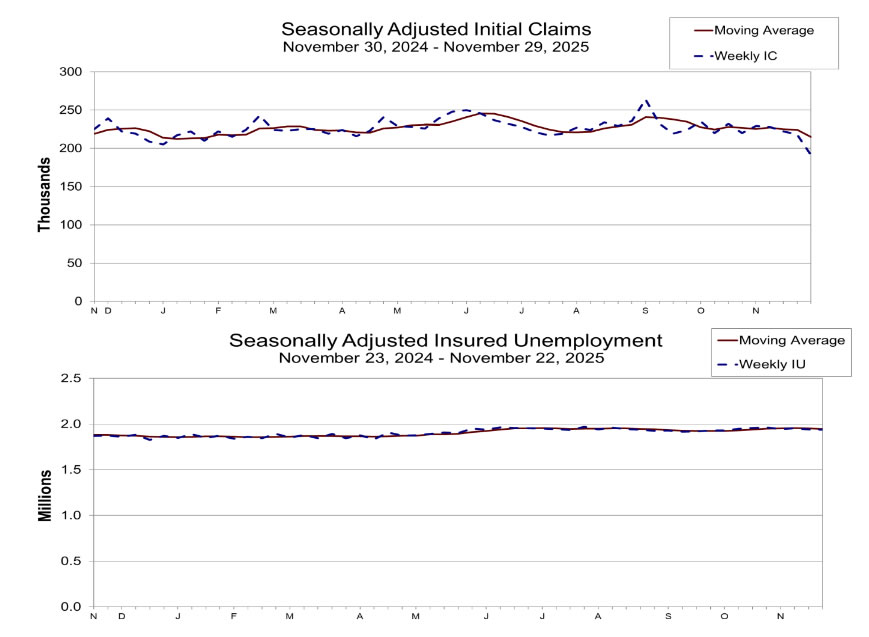
Employment signals have also steadied. Weekly jobless claims fell back below 220k, a level that implies hiring is not collapsing. The settlement of reciprocal tariffs in August may be encouraging firms to resume normal recruitment, easing fears of sudden weakness in the labor market.
Meanwhile, durable goods orders surged unexpectedly. Headline orders rose 2.9% in August, led by a near-8% jump in transportation equipment, while core measures also surprised to the upside. The numbers suggested that businesses still have confidence to invest in capital goods, even amid global uncertainty.
These strong data have shifted market views on the Fed. Futures continue to price a high probability — 87.7% — of another cut in October, but bets on a December move have dropped to 65.4%, well below nearly 80% seen a week ago. The market message: another “insurance” cut is likely, but an extended easing cycle is less certain.
Fed officials have largely echoed that cautious stance. With the notable exception of Governor Stephen Miran, who continues to argue for deeper cuts, most policymakers emphasize that policy decisions must remain tied to the flow of data. That position has been reinforced by evidence of economic resilience.
Still, risks remain. Fed Chair Powell acknowledged that job creation is slipping below the "breakeven" pace needed to keep unemployment steady. If hiring deteriorates further, the Fed may still be forced to accelerate easing despite the strong GDP backdrop.
The September non-farm payrolls report will be pivotal. A strong outcome could validate the case for a slower easing pace, but a weak print would push the Fed toward more "risk management" reductions. Until then, expectations remain fluid, with markets balancing solid growth against fragile employment signals.
Equities Lose Momentum as Fed Bets Reprice, But Uptrend intact
US equities lost some steam last week as the stronger economic backdrop forced investors to reassess the extent of Fed easing ahead. S&P 500 retreated from record highs, and the immediate focus now falls on whether the index can hold above key short-term support at 6551.15.
Decisive break below this level would confirm near term topping and open the way for a deeper correction toward the 55 Day EMA (now at 6433.32). Even so, the broader uptrend remains intact, and strong buying interest should be expected on dips, with the EMA zone offering a cushion.
Conversely, strong rebound from current levels would quickly shift sentiment back to the upside. S&P 500 could then resume its rally toward 78.6% projection of 3491.58 to 6147.43 from 4835.04 at 6922.53, extending the impressive run that has defined much of 2025.
The trajectory will hinge heavily on the next round of labor and inflation data, which could either validate or challenge the market’s current positioning.
10-Year Yield Extends Rebound But 4.3 Should Cap
US Treasuries sold off further last week, with 10-year yield extending its corrective rebound from the 3.992 low to close at 4.187. The move reflects shifting Fed expectations after the stronger run of economic data.
Technically, the yield is currently eyeing further rise to 55 D EMA (now at 4.215) and possibly above. But falling channel ceiling near 4.300 should provide strong resistance to limit upside, reinforcing the broader decline from 4.629 that remains intact.
On the downside, break back below 4.110 would suggest that the rebound has already run its course, and put the spotlight back on the 3.992 low.
Dollar Index Rebound to Continue as Short Term Bottom Formed
Dollar Index's extended rebound and break of 55 D EMA (now at 98.05) should confirm short term bottoming at 96.21. Considering bullish convergence condition in D MACD, it's possible that whole fall from 110.17 has completed too. Further rise is in now favor to as long as 97.22 support holds, to 100.25 resistance.
However, the zone between 38.2% retracement of 110.17 to 96.21 at 101.54 and 55 EMA (now at 101.10) would be a huge hurdle. It would requires either extended rise in yield through the falling channel, or extended correction in stocks, or both, to give Dollar Index the fuel to overcome this resistance zone.
Meanwhile, break of 97.22 support will dampen near term bullishness and bring retest of 96.21.
Kiwi and Loonie Struggle, Aussie Flaring Slightly Better
Commodity currencies struggled last week, with New Zealand Dollar leading losses as markets braced for a more aggressive easing path. Weak domestic data have already built the case for a 50bps RBNZ cut on October 8, and sentiment was further clouded by uncertainty around a leadership change at the central bank.
In a surprise announcement, Swedish economist Anna Breman was named the next Governor of the RBNZ, set to take office on December 1. Currently the First Deputy Governor at the Riksbank, Breman’s appointment was welcomed as bringing global experience, though it carries little weight for the imminent policy meetings. She may attend November’s gathering as an observer, but she will not hold voting power.
The more immediate implication lies in the departure of Governor Christian Hawkesby, who steps down at the end of November. Markets suspect that, given his exit, Hawkesby may be less inclined to forcefully shape consensus in the MPC. That could tilt the balance toward a bolder move in October, especially with the economy under strain. As a result, traders see rising odds that the RBNZ will opt for a half-point cut at the next meeting.
Canadian Dollar also underperformed, despite July GDP showing a 0.2% monthly rebound. It was the first growth in four months and offered some relief after a string of soft prints. But the optimism quickly faded as advance estimates suggested August GDP was flat, underscoring that any recovery is still fragile.
The composition of growth revealed familiar challenges. Goods-producing industries delivered the bulk of the gains, while retail trade pulled down the services side. Real estate and wholesale activity showed some resilience, but overall momentum remains tepid, and only just over half of all sectors reported expansion.
Against this backdrop, the BoC’s rate cut to 2.50% earlier this month looks more like a first step than a solution. Market chatter has turned to the likelihood of two more cuts before year-end, with October seen as a strong candidate for the next move. Weak business investment and ongoing trade frictions with the US amplify the need for policy support.
Unlike its Kiwi and Loonie peers, Australian Dollar found some support last week after inflation surprised on the upside. August’s monthly CPI accelerated to 3.0%, above consensus expectations and pushing headline inflation back to the top of the RBA’s 2–3% target band.
The stronger data prompted a sharp reaction in bonds, with three-year government yields jumping to the highest level since May. Money markets quickly pared back expectations for a November RBA cut, pricing the probability of easing below 40% compared with over 60% earlier in the week.
The RBA, however, is unlikely to alter its steady approach. Governor Michele Bullock has emphasized that the Bank needs to balance encouraging household spending with ensuring inflation stays anchored. That means the October 29 quarterly CPI will be decisive, with November’s policy decision still finely balanced.
Technically, AUD/NZD remains in upside acceleration as seen in D MACD. Further rally is expected as long as 1.1229 support holds. Current rise from 1.0649 is in progress for 261.8% projection of 1.0694 to 1.0920 from 1.0744 at 1.1453. However, 1.1489 (2022 high) should cap upside, at least on first attempt.
AUD/CAD's rally was, however, was disappointing as the intra-week rally attempt failed well below 0.9225 resistance. Nevertheless, near term outlook will stay bullish as long as 0.9041 resistance turned support holds. Rise from 0.8440 is expected to resume at a later stage to 61.8% projection of 0.8440 to 0.9041 from 0.8902 at 0.9273. Firm break there will pave the way to 0.9375 key structure resistance (2024 high) next.
EUR/USD Weekly Outlook
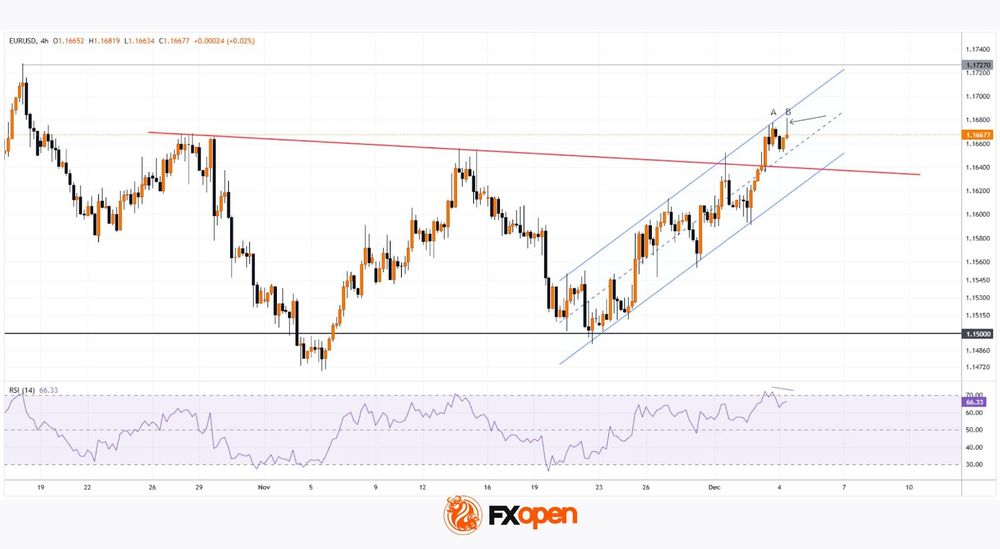
EUR/USD's fall from 1.1917 short term top extended to 1.1644 last week, but recovered since again. Initial bias is turned neutral this week first. Further fall is expected as long as 1.1819 resistance holds. Considering bearish divergence condition in D MACD, sustained trading below 55 D EMA (now at 1.1668) will argue that 1.1917 was already a medium term top. Deeper fall should then be seen to 1.1390 support next.
In the bigger picture, rise from 1.0176 (2025 low) is seen as the third leg of the pattern from 0.9534 (2022 low). 100% projection of 0.9534 to 1.1274 from 1.0176 at 1.1916 was already met. For now, further rally will remain in favor as long as 1.1390 support holds, and firm break of 1.2000 psychological level will carry larger bullish implications. However, firm break of 1.1390 will suggest that rise from 1.0176 has already completed and bring deeper fall to 55 W EMA (now at 1.1231).
In the long term picture, 38.2% retracement of 1.6039 to 0.9534 at 1.2019, which is close to 1.2000 psychological level is the key for the outlook. Rejection by this level will keep the multi decade down trend from 1.6039 (2008 high) intact, and keep outlook neutral at best. However, decisive break of 1.2000/19, will suggest long term bullish trend reversal, and target 61.8% retracement at 1.3554.