Sample Category Title
Bitcoin Is Taking Another Breather After a Slight Rise
Market Overview
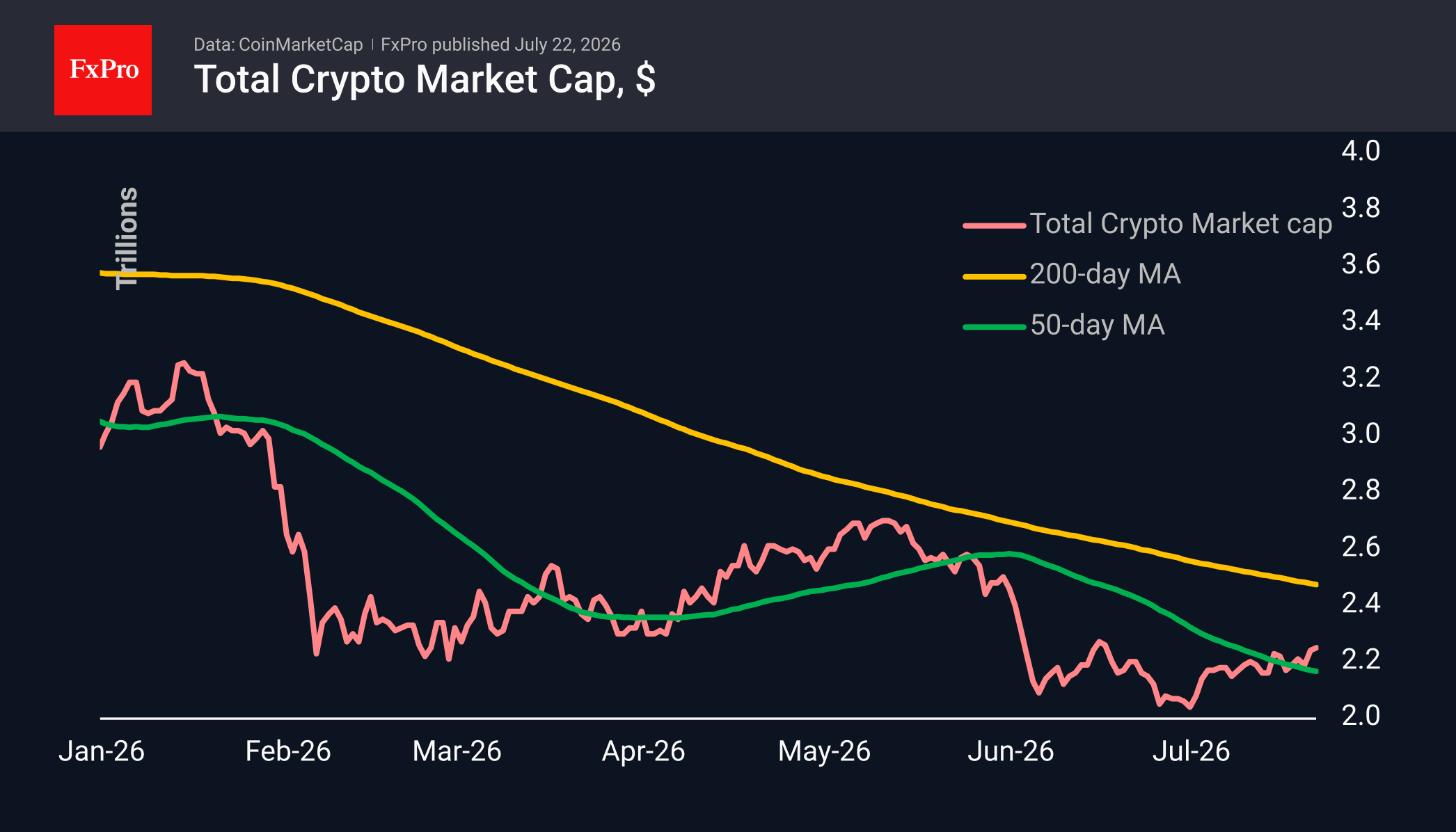
The crypto market capitalisation has risen by a further 0.8% over the past 24 hours to $2.25T. Once again, cryptocurrencies are taking a breather after a slight upward surge, but this time they are moving higher in tandem with commodity assets despite a stronger dollar. This is an unstable combination, and we should closely monitor which trend proves more resilient: a rising dollar or a flight from fiat assets.
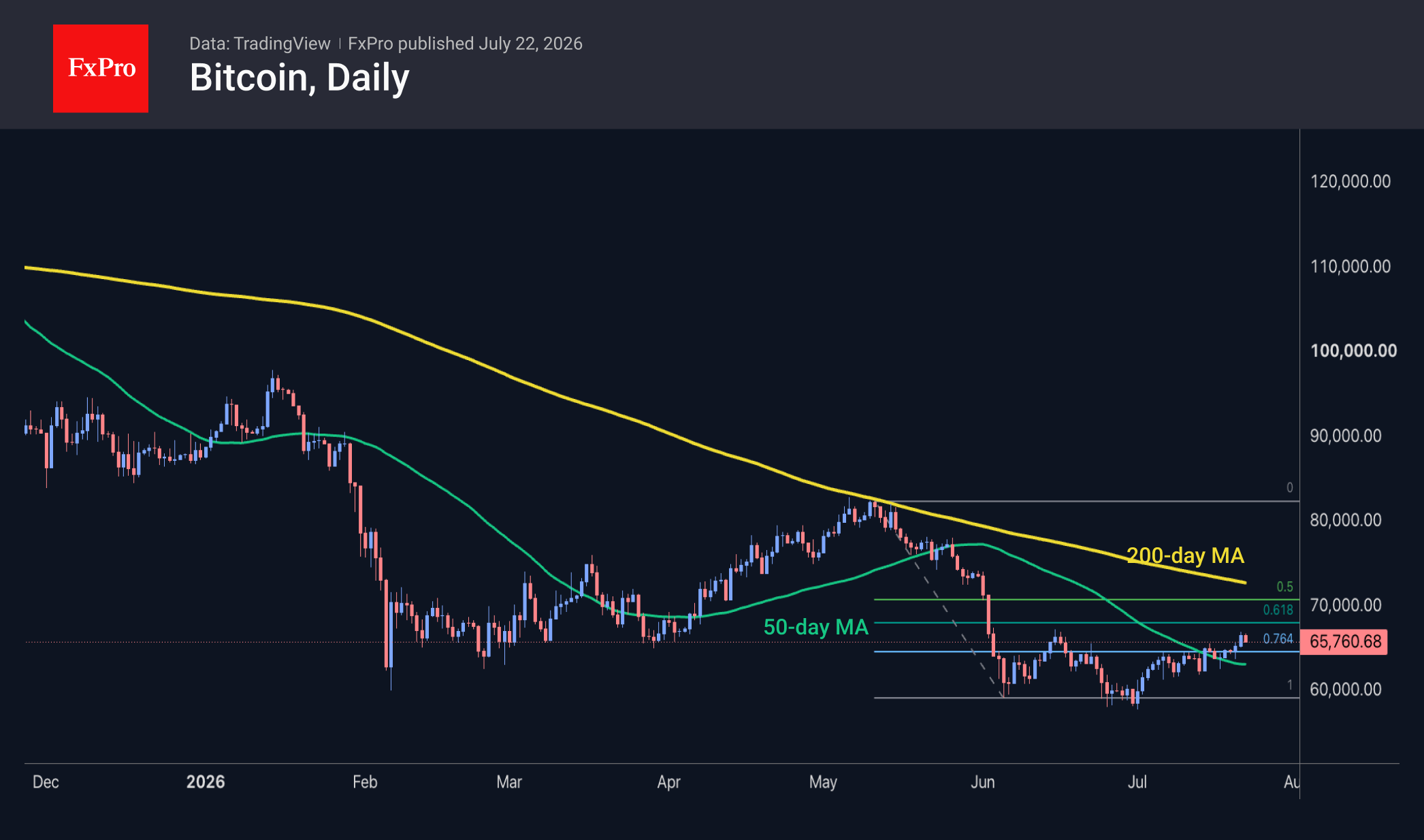
Bitcoin touched the region of its June highs near $67K before pulling back. Strictly speaking, the uptrend that began in early July remains intact, with a steady series of new confirmations of an upside reversal, though this process is accompanied by minor pullbacks, which is a healthy development. In our view, the rally will gain momentum if the price firmly consolidates above $68K, where several of this year’s key levels cluster. In the event of a downward reversal, a pullback to $64K could be fairly mild, but beyond that, sellers may encounter strong support.
News Background
Bitcoin could still fall below $50K, according to Factor’s head, Peter Brandt. In his view, persistent optimism among market participants does not align with the conditions for a definitive capitulation.
Bitcoin’s quantum discount factor has reached 30% for the first time, reflecting the asset’s undervaluation amid the risk of cryptographic breaches. The metric quantifies the extent to which BTC’s value is discounted relative to its fair price because of quantum-computing risks. Capriole Investments believes that without a clear plan to protect the network, Bitcoin will struggle to reach new all-time highs.
Over 80% of all bitcoins are held in the wallets of long-term investors. A record nearly 16.8 million coins have not been moved for at least six months, against the backdrop of a fall in the bitcoin price of almost 30 per cent since the start of the year.
According to The Block, US President Donald Trump has agreed to include ethical restrictions in the CLARITY Act. These could prohibit the President, members of Congress, senior officials and their families from profiting from the crypto business.
Telegram founder Pavel Durov has stated that this summer will see the launch of ‘the largest in human history’ non-custodial crypto wallet. He has promised instant, commission-free transfers of the Gram cryptocurrency (formerly Toncoin, TON) for ‘more than 1 billion users’.
The median loss for most new cryptocurrencies launched since 2024 has reached 95.7%, according to CryptoRank’s calculations. Only 7.1% of tokens are still trading above their initial offering price.
The FxPro Analyst Team
Sunrise Market Commentary
Markets
Energy prices continue to push higher in response to the ongoing military escalation in Iran. The US completed its 11th consecutive night of airstrikes as of this morning, smothering any hopes for a near-term diplomatic solution. Meanwhile, the Iran-allied Houthis in Yemen announced an immediate maritime blockade on Saudi Arabia, targeting the Bab-el-Mandeb Strait connecting the Red Sea to the Gulf of Aden. Saudi Arabia vastly increased its oil exports through that chokepoint, reportedly to 4mln b/d. Brent rallies towards $92+ levels, the highest since mid-June. European gas prices meanwhile have shot up towards the €60/MWh barrier. They've closed at levels higher than €60 just once at the height of the Iran war in March. Core bonds were pressured. US yields have added between 6-9 bps across the curve since last Friday with markets assuming Fed action either in September and no later than October. Front-end European swap yields are heavily testing the March highs. ECB hiking odds have surged with money markets now seeing room for at least one additional hike. Frankfurt has all but ruled out July (meeting tomorrow) but September will be a live meeting. Markets are seriously pondering a third move by December (20 bps tightening priced) and have fully priced in one in early 2027. The likes of the European 30-yr meanwhile yesterday touched a new 15-year high intraday. UK gilt yields underperformed vs European peers with yields adding nearly 9 bps compared to Friday's close. Burnham became the new prime minister on Monday and said he'll use all "flexibility within them [the existing fiscal rules]". UK markets were immediately on edge. The honeymoon period for sterling appears over. EUR/GBP rebounded towards 0.853 coming from as low as 0.845 earlier this month. The jury remains out but the pound may face difficulties in strengthening back to these one-year highs. Slightly higher-than-forecast UK core and services inflation printed this morning does little to the currency. The US dollar enjoyed some benefit of the doubt but with risk sentiment not really undermined by the US-Iran latest, gains for the greenback were limited. EUR/USD grinded lower towards the 1.14 area.
Geopolitics and energy prices nevertheless remain a wildcard for trading and further escalation at some point may dent risk sentiment after all. Meanwhile, US tariffs returned to the fore as a potential market-relevant factor. The temporary 10% levy introduced by Trump lapses this Friday. We expect to see some replacements to be announced over the coming days. It is unclear, however, how countries that have struck a deal are affected. Add Q2 earnings from major companies such as GE Vernova (before market), Tesla and Alphabet (both after-market), and we're in for a potentially volatile session today.
News & Views
The National Bank of Hungary (MNB) yesterday as expected cut its policy rate by 25 bps to 5.75%. Despite rising prices of oil and gas in recent weeks, MNB took notice of favourable domestic developments. Domestic industrial production and retail sales continued to increase in May. Private sector wage dynamics were slower than in previous years, but there was a strong rise in real wages. The unemployment rate remains low. CPI declined to 1.7% y/y in June. Core inflation was unchanged at 2%. Food prices were a factor behind the softer than expected inflation. MNB also expects the rate of price increases to stay below the 3% target for the rest of the year and throughout next year. Households' inflation expectations have declined since the start of the year. Companies' expectations for retail price changes decreased compared to the previous month but those for services rose slightly. Better than forecast inflation and lower risk premium on domestic assets preserved the MPC room to maneuver. The MPC sees room for further decreases throughout the summer. The HUF 2-y swap yield yesterday eased 5 bps to 5.37%. EUR/HUF closed the session little changed at 462.3 as the forint reversed a modest gain after the policy decision.
In an interview with the Financial Times yesterday, Czech Central Bank governor Ales Michl pushed back against calls from Czech Prime Minister Andrej Babis for the central bank to cut interest rates and was critical of President Pavel's drive to adopt the euro. Michl indicated that the recent calls to cut rates were at odds with efforts to tame inflation. CNB last month raised its policy rate by 25 bps to 3.75% over concerns about sticky core inflation (just below 3%). On President Pavel's push to join the euro, Michl warned that the Czech economy had still to converge sufficiently with other Eurozone countries to make adopting the single currency advisable. According to Michl, a premature move to join the euro could fuel inflation by pushing up wages and other costs.
UK CPI Slows to 2.6%, But Sticky Core Inflation Keeps BoE Cautious
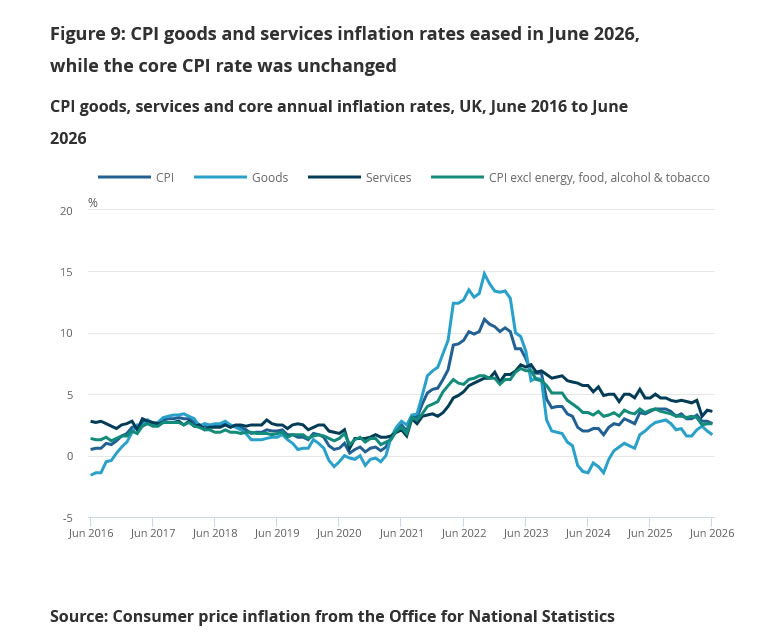
UK inflation eased further in June, with headline CPI slowing from 2.8% yoy to 2.6% yoy, below expectations of 2.7%. Monthly CPI rose 0.1% mom, matching forecasts but slowing from May's 0.2% increase. The data extends the UK's gradual disinflation trend, suggesting overall price pressures continue to moderate even as heightened geopolitical tensions keep energy markets volatile.
Beneath the headline, however, the picture was more nuanced. Core CPI, which excludes energy, food, alcohol and tobacco, held steady at 2.6% yoy, exceeding expectations for a slight easing to 2.5%. Goods inflation continued to soften, slowing from 2.0% to 1.7%, while services inflation—a key gauge of domestic price pressures monitored by the Bank of England—edged down from 3.7% to 3.6%. The easing in services inflation is encouraging, but the resilience of core inflation suggests underlying price pressures have yet to fully dissipate.
Overall, the report is unlikely to materially alter the Bank of England's policy outlook. Softer headline inflation supports the broader disinflation narrative, but the upside surprise in core CPI should temper expectations that policymakers are gaining a decisive victory over inflation. With Governor Andrew Bailey having ruled out near-term monetary easing, the latest figures reinforce the case for keeping interest rates unchanged while awaiting further evidence that underlying inflation is easing more convincingly.
Economic Data
| Indicator | Actual | Expected | Previous |
|---|---|---|---|
| CPI (yoy) | 2.6% | 2.7% | 2.8% |
| CPI (mom) | 0.1% | 0.1% | 0.2% |
| Core CPI (yoy) | 2.6% | 2.5% | 2.6% |
Inflation Components
| Component | Current | Previous | Trend |
|---|---|---|---|
| CPI Goods (yoy) | 1.7% | 2.0% | ↓ Slowed |
| CPI Services (yoy) | 3.6% | 3.7% | ↓ Eased |
Key Takeaways
- Headline CPI slowed from 2.8% to 2.6% yoy, undershooting the 2.7% consensus.
- Monthly CPI rose 0.1%, matching expectations and slowing from 0.2% previously.
- Core CPI held steady at 2.6% yoy, above expectations for 2.5%, indicating underlying inflation remained sticky.
- Goods inflation eased from 2.0% to 1.7%, pointing to continued normalization in consumer goods prices.
- Services inflation slowed from 3.7% to 3.6%, suggesting domestic price pressures continued to moderate gradually.
- The report was mixed overall, with softer headline inflation offset by firmer-than-expected core inflation, leaving the Bank of England's policy outlook largely unchanged.
Gold Defies Higher Oil and Yields. Is the Market Entering a New Regime?
Gold's rally this week may prove to be one of the more important developments across financial markets—not simply because prices have reclaimed the $4,100 level, but because the move appears to contradict the macro forces that have governed precious metals for much of the second quarter. Silver has joined the advance, climbing back toward $60, even as Brent crude trades above $92, US Treasury yields continue rising and markets price in an more hawkish Federal Reserve.
Those are precisely the conditions that had repeatedly weighed on precious metals since the US-Iran conflict erupted earlier this year. Under that framework, higher oil prices fed inflation expectations, pushing Treasury yields and Fed tightening expectations higher. As non-yielding assets, gold and silver consistently lost ground as investors favored interest-bearing alternatives. That relationship drove silver below $55 and kept gold under sustained pressure despite periodic bursts of geopolitical demand.
The latest price action therefore raises an important question: Is the market beginning to price geopolitical risks differently?
Why is Gold no longer behaving as expected?
The current market backdrop would ordinarily be hostile for precious metals. Brent crude has extended its rally above $92, increasing concerns that higher energy prices could feed another round of inflation. Reflecting those concerns, markets now price around a 71% probability of a Fed rate hike in September, up from roughly 58% just a week ago, while the US 10-year Treasury yield has climbed to 4.63%.
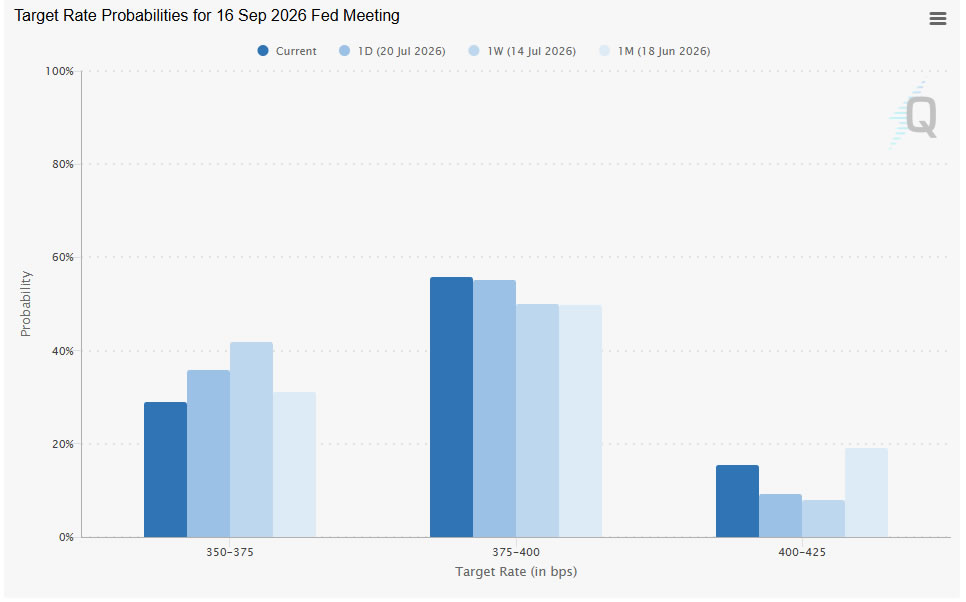
Viewed through the lens that dominated the second quarter, each of those developments should have been bearish for gold. Higher oil implies stickier inflation. Stickier inflation points to tighter monetary policy. Higher policy expectations lift Treasury yields and typically strengthen Dollar, increasing the opportunity cost of holding non-yielding assets.
Yet instead of weakening, both gold and silver have accelerated higher. The fact that all of these bearish inputs are moving in the same direction while precious metals continue rallying suggests investors may be assigning less weight to interest-rate dynamics than they did only a few weeks ago.
Is the market shifting from an inflation story to a stagflation story?
One possible explanation is that investors are beginning to reinterpret the oil shock.
Earlier in the conflict, higher crude prices were primarily viewed as an inflation problem. The market's focus was on how rising energy costs would delay Fed easing or even require further tightening, making higher yields the dominant driver of asset prices.
Now, the emphasis may be broadening. Persistently elevated oil prices also increase the risk of slower global growth, weaker corporate profitability and policy mistakes if central banks tighten into an economy already facing supply-side shocks. Under that interpretation, gold regains its appeal not only as an inflation hedge but also as protection against geopolitical escalation and stagflation risks.
If that shift in thinking is indeed underway, it would represent a meaningful change in how markets transmit geopolitical shocks into asset prices.
Why is it still too early to call a regime change?
Despite the striking divergence, caution remains warranted.
The relationship between higher oil, higher yields and weaker precious metals persisted for several months. Declaring that framework broken after only a handful of trading sessions would be premature. Markets often experience temporary dislocations before reverting to established trends.
Positioning may also be contributing to the rebound. Both gold and silver endured heavy selling over recent months, leaving room for short covering once fresh geopolitical headlines emerged. Some of the current rally may therefore reflect positioning adjustments rather than a fundamental reassessment of macro risks.
The coming weeks will reveal whether investors continue to favor precious metals even if Treasury yields and Fed tightening expectations remain elevated.
Technical outlook: Is Gold approaching confirmation?
Technically, momentum is clearly improving.
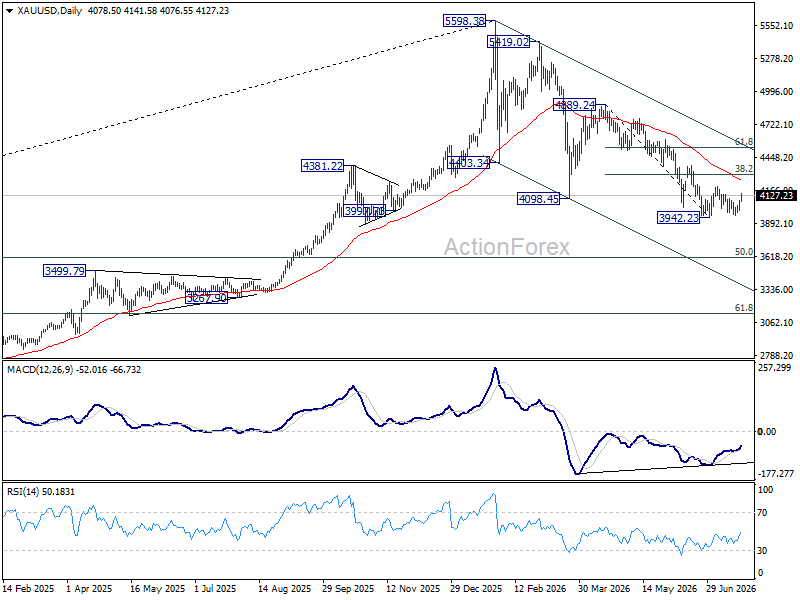
Gold's break above 4,102.95 minor resistance suggests the decline from 4,202.87 likely completed at 3959.42, just ahead of the 3,942.23 low. Further gains are now favored toward 4,202.87, with scope for an extension to the falling 55 D EMA, currently around 4,262.15.
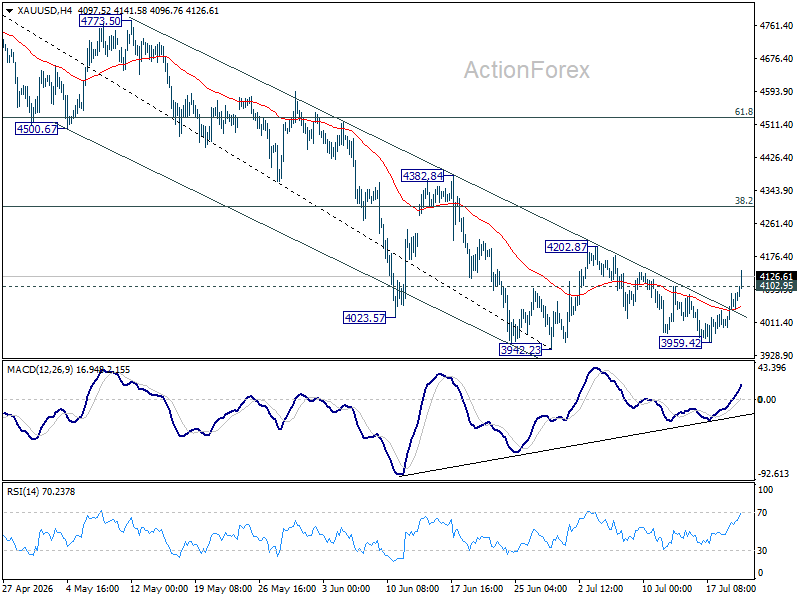
Even so, it is still too early to conclude that a lasting bullish reversal has begun. The current advance could yet prove to be merely the third leg of a corrective pattern from 3,942.23. Initial resistance is expected around 38.2% retracement of 4,889.24 to 3,942.23 at 4,303.98.
That said, the broader technical picture is becoming increasingly constructive. Daily MACD continues to display bullish convergence against price, indicating downside momentum has been fading for some time. A decisive break above 4,303.98, accompanied by sustained trading above the 55 DEMA, would provide much stronger evidence that gold is reversing the broader downtrend from the 5598.38 peak rather than simply staging another counter-trend rally.
Japan Exports Surge Most Since 2022 on Weak Yen, but Oil-Driven Imports Push Trade Back Into Deficit
Japan's exports accelerated sharply in June, rising 19.3% yoy, the fastest pace since November 2022 and above market expectations of an 18.6% increase. The gain also marked a pickup from May's 16.8% growth, supported by robust demand for semiconductor manufacturing equipment and the continued weakness of Yen, which boosted the value of overseas shipments. Exports to Asia climbed 22.7%, led by a 46.4% surge in shipments to Taiwan, while exports to China rose 17.6% and those to the US increased 13.0%.
The strong headline, however, was driven largely by prices rather than volumes. Export volumes edged up just 0.2% from a year earlier, suggesting underlying external demand remained relatively steady despite the impressive increase in export values. The contrast highlights how Yen depreciation continues to inflate the value of Japan's exports even as shipment volumes show only modest growth.
Imports, meanwhile, rose even faster, jumping 25.4% yoy, also the strongest increase since November 2022 and well above expectations for a 21.0% rise. A sharp 59.3% increase in petroleum imports reflected the impact of higher oil prices following the Iran conflict, underscoring Japan's vulnerability as a country that relies on imports for more than 87% of its energy needs. As a result, the trade balance swung to a deficit of JPY 406.9B in June, illustrating how rising energy costs are offsetting much of the benefit from stronger export earnings.
Economic Data
| Indicator | Actual | Expected | Previous |
|---|---|---|---|
| Exports (yoy) | 19.3% | 18.6% | 16.8% |
| Imports (yoy) | 25.4% | 21.0% | 12.5% |
| Trade Balance (JPY) | -406.9B | -120B | -391.8B |
Key Takeaways
- Export growth accelerated from 16.8% to 19.3%, the fastest pace since November 2022 and above expectations of 18.6%.
- Gains were led by semiconductor equipment and a weak Yen, with exports to Asia rising 22.7%, including a 46.4% surge to Taiwan.
- Export volumes increased only 0.2%, indicating much of the headline gain came from prices and currency effects rather than stronger shipment volumes.
- Imports rose 25.4%, also the fastest since November 2022, as petroleum imports surged 59.3% amid higher oil prices.
U.S. Imposes 50% Tariff on Select Canadian Products
- The U.S. Administration invoked Section 338 of the Tariff Act of 1930 to announce a 50% duty on a wide swath of products representing roughly 5% of Canadian exports to the U.S.
- The items affected include alcoholic beverages, cement, dairy products, wood and paper products, hockey sticks and other items.
- The new tariffs are in response to "Canadian discrimination against the commerce of the United States" with respect to autos, dairy and alcoholic products.
- Specifically, the tariffs are in response to provincial bans on the sale of U.S. alcohol, Canadian tariffs on U.S. made automobiles, and the ongoing disputes over U.S. market access to the Canadian dairy market under the supply management system.
- The tariffs are due to come into effect in 30 days, on August 19th.
Key Implications
- After a period of calm, tariffs are back in the headlines. The USMCA negotiations linger in the background, but U.S. administration officials have previously voiced their irritation on Canada's trade actions outlined above. The other shoe appears to have dropped.
- Importantly, unlike the Liberation Day tariffs that were gradually walked back, the new tariffs are highly targeted. The new batch looks to affect the Canadian economy with minimal impact on U.S. industry and consumers.
- The 30-day implementation period does, in theory, leave time and room for negotiation. Given the backdrop of the USMCA negotiations, it's reasonable to wonder just how long these tariffs will be in effect.
- Trade Representative Jamieson Greer is due to testify before the Senate Finance Committee on Wednesday before heading to Mexico to continue trade negotiations. There is scope for some additional clarity on the timing and potential conditions for the removal of the tariffs.
- Given the targeted nature of these tariffs, it suggests that products were selected where demand is going to be highly responsive to the new duties. For Canada's economic outlook, it's also important to note that businesses have been operating under a cloud of uncertainty for over a year, and although the new announcements are likely to dent confidence further, a repeat of the scale of the confidence shock from 2025 remains a tail risk. Given the circumstances, should the tariffs be maintained it would likely take between 0.3 to 0.6 percentage points off GDP growth over the next year, absent any major changes to business behaviour or government response. We believe that the ultimate impact would likely track closer to the lower range of these estimates.
- This analysis is based on the experience of the steel sector. Exports of iron and steel, and their products, are down roughly 50% relative to pre-tariff levels as U.S. demand has shrunk. Given the targeted nature of these tariffs, it suggests that products were selected where demand is going to be highly responsive to the new duties.
- Businesses are likely to front-run the tariffs ahead of the August 19th deadline. This will increase the volatility in the trade data. The data are unlikely to reflect the full effect of the tariffs (if they come into force) until September, so the full macroeconomic impacts will start to show through in late-26.
- Markets responses have remained muted thus far. The loonie is down 0.2% since yesterday, while rate expectations for the Bank of Canada (BoC) are relatively unchanged. What is important is that the downside economic risks from trade the BoC has continually cited remain ever-present.
- For the U.S., the Section 122 tariffs that were levied to replace the IEPPA tariffs (see commentary) are due to expire on Friday. With the conclusion of the Section 301 tariff investigations into forced labour, we can likely expect new tariff announcements in the coming days as the administration rebuilds its tariff wall (for more details see our recent report).
Gold Shows Signs of Recovery as Momentum Faces a Key Test
Key Highlights
- Gold started a recovery wave from the $3,960 region.
- It surpassed a key bearish trend line with resistance at $4,035 on the 4-hour chart.
- WTI Crude Oil extended gains and traded above the $83.50 resistance.
- Bitcoin recovered some losses and climbed above $66,500.
Gold Price Technical Analysis
Gold found bids near $3,960 and $3,965 against the US Dollar. The price started a correction wave and climbed above the $4,000 resistance.
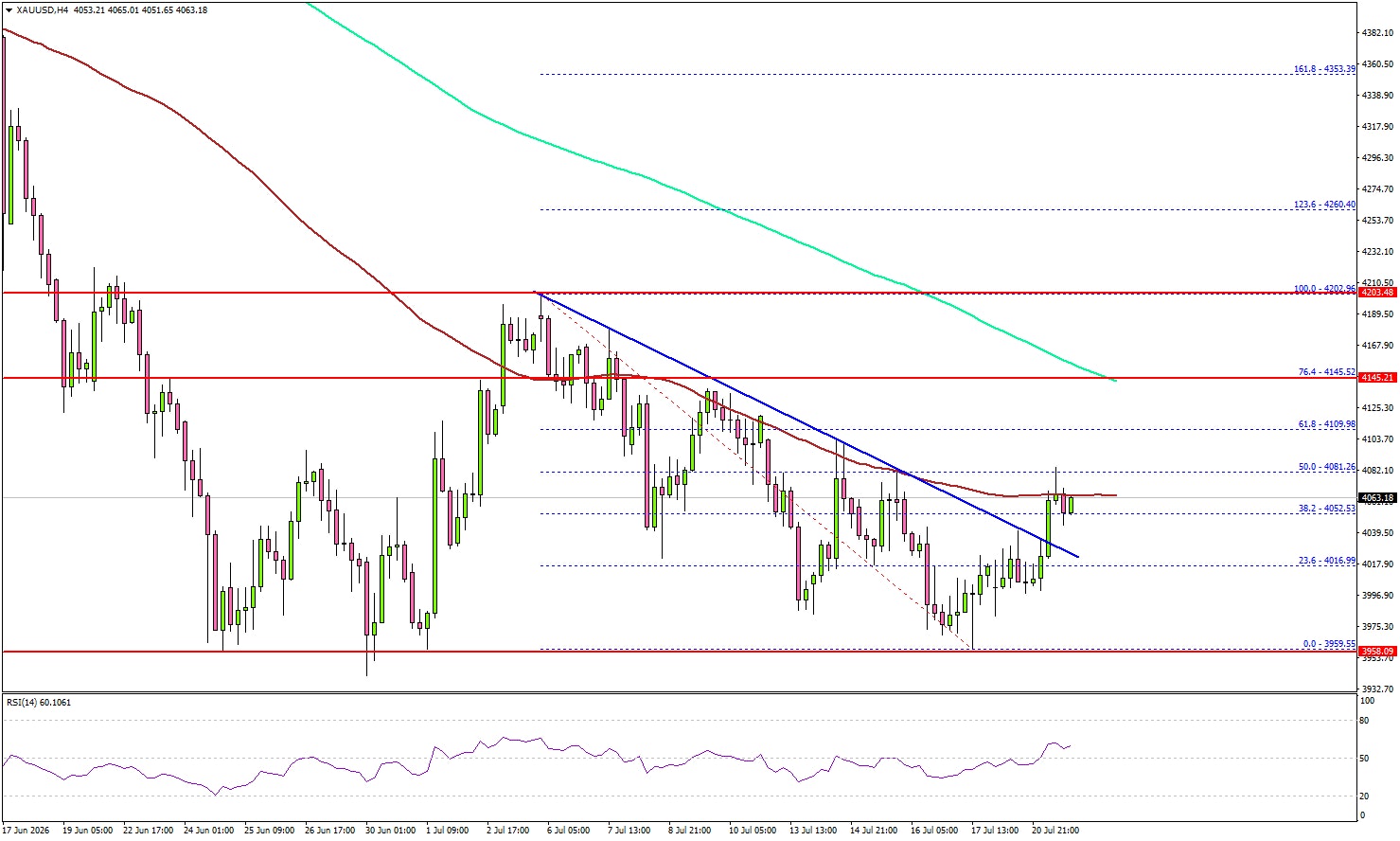
The 4-hour chart of XAU/USD indicates that the price cleared a key bearish trend line with resistance at $4,035. It climbed above the 38.2% Fibonacci retracement level of the downward move from the $4,202 swing high to the $3,959 swing low.
It even tested the 100 Simple Moving Average (red, 4 hours) but stayed well below the 200 Simple Moving Average (green, 4 hours). On the upside, immediate resistance could be $4,085. The next major resistance might be near the 76.4% Fibonacci retracement level at $4,145.
A clear move above $4,145 could open the doors for more upside. In the stated case, the bulls could aim for a move toward $4,200 or even $4,220. Any more gains might send the price toward the $4,300 level.
If there is a fresh decline, the price could revisit the $4,015 support. The first major support sits at $4,000. The next support could be $3,960, below which the price might slide to $3,940. The main support sits at $3,915. Any more losses might call for a test of $3,880 or even $3,865 in the coming days.
Looking at WTI Crude Oil, the price started a steady increase, and the bulls could even aim for a move toward the $88.00 level.
Economic Releases to Watch Today
- UK Consumer Price Index for June 2026 (YoY) – Forecast +2.7%, versus +2.8% previous.
- UK Core Consumer Price Index for June 2026 (YoY) – Forecast +2.5%, versus +2.6% previous.
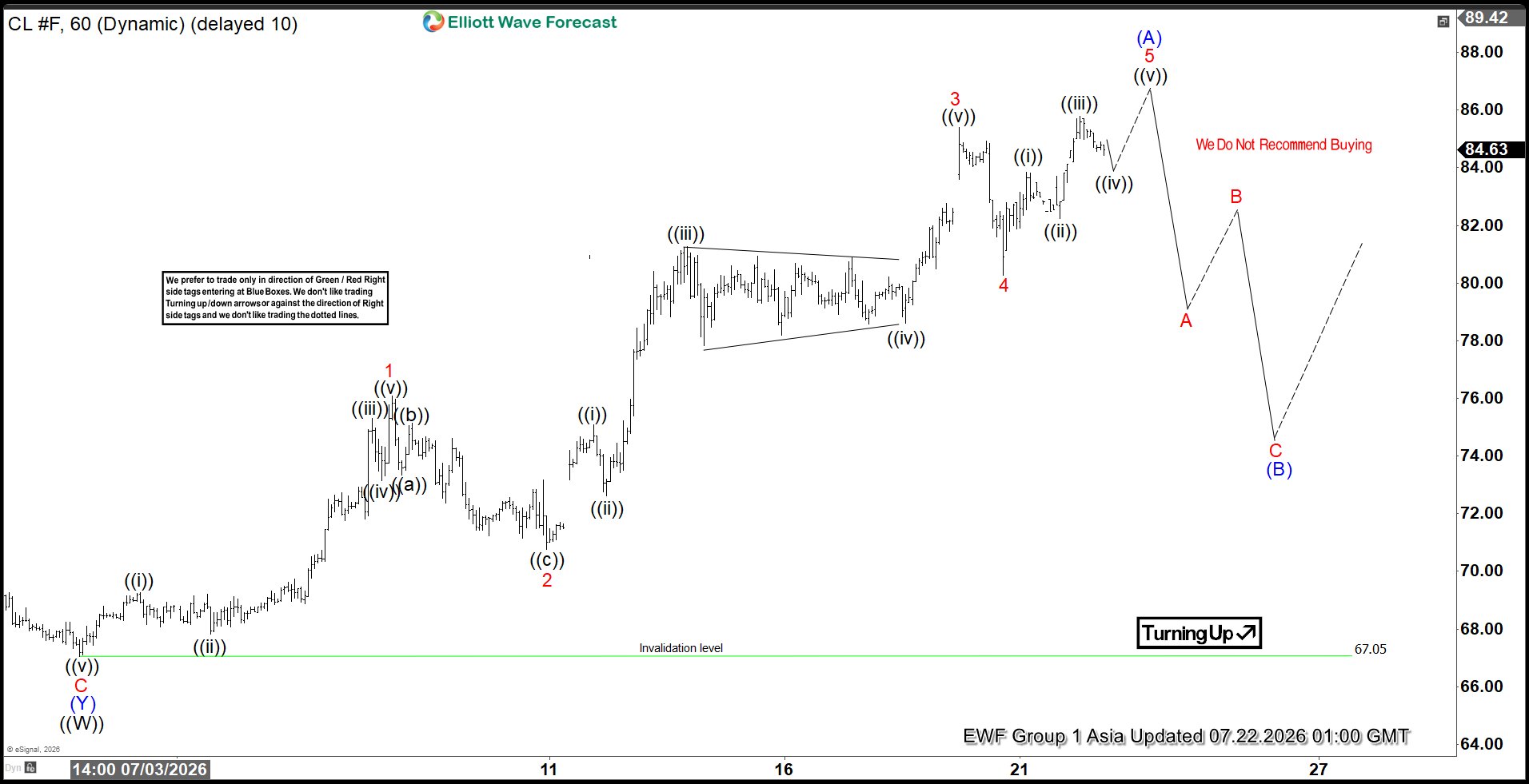
Elliott Wave Analysis: WTI Crude Oil (Cl) 5‑Swing Rally from July Low Favors Extension
The short-term Elliott Wave outlook in WTI Crude Oil (CL) presents a well-defined impulsive rally from the July 2, 2026 low, with prospects for continued strength. From that low, wave 1 advanced to $76.08, followed by a corrective decline in wave 2 that ended at $70.77. The market then surged in wave 3, reaching $85.39, before retracing in wave 4, which concluded at $80.27. The final leg, wave 5, is now unfolding and is expected to complete shortly. This completion will mark the end of wave (A) in higher degree.
Once the five-wave rally is complete, a larger corrective phase in wave (B) should emerge. This correction will retrace the cycle that began from the July 2 low, allowing the market to consolidate gains before resuming its broader upward trajectory. As long as the pivot at $67.05, established on July 2, remains intact, pullbacks are likely to attract buyers. These retracements should occur in either three or seven swings, reinforcing the bullish outlook for further upside.
The completed five-wave structure from the July 2 low strongly favors at least one more leg higher. This extension is expected to unfold within wave (C) or wave (3), both of which imply continuation of the impulsive sequence. With the technical framework pointing toward additional gains, the near-term outlook remains constructive, and the market appears poised for further upward momentum.
WTI Crude Oil (CL) 60-Minute Elliott Wave Chart
CL Elliott Wave Video:
https://www.youtube.com/watch?v=jUm8FC55rUI
Eco Data 7/22/26
| GMT | Ccy | Events | Act | Cons | Prev | Rev |
|---|---|---|---|---|---|---|
| 23:50 | JPY | Trade Balance (JPY) Jun | -0.88T | -0.54T | -0.09T | -0.22T |
| 01:00 | AUD | Westpac Leading Index M/M Jun | 0.00% | 0.00% | -0.10% | |
| 06:00 | GBP | CPI M/M Jun | 0.10% | 0.10% | 0.20% | |
| 06:00 | GBP | CPI Y/Y Jun | 2.60% | 2.70% | 2.80% | |
| 06:00 | GBP | Core CPI Y/Y Jun | 2.60% | 2.50% | 2.60% | |
| 06:00 | GBP | RPI M/M Jun | 0.30% | 0.20% | ||
| 06:00 | GBP | RPI Y/Y Jun | 3.00% | 3.00% | 3.10% | |
| 06:00 | GBP | PPI Input M/M Jun | -2.00% | -0.70% | 0.20% | 0.60% |
| 06:00 | GBP | PPI Input Y/Y Jun | 7.30% | 8.70% | 9.30% | |
| 06:00 | GBP | PPI Output M/M Jun | 0.00% | 0.40% | 0.50% | 0.30% |
| 06:00 | GBP | PPI Output Y/Y Jun | 3.50% | 4.00% | 3.70% | |
| 06:00 | GBP | PPI Core Output M/M Jun | 0.50% | 0.80% | 0.70% | |
| 06:00 | GBP | PPI Core Output Y/Y Jun | 2.60% | 2.30% | ||
| 14:30 | USD | Crude Oil Inventories (Jul 17) | 2.0M | -2.0M | -1.7M |
| 23:50 | JPY |
| Trade Balance (JPY) Jun | |
| Actual | -0.88T |
| Consensus | -0.54T |
| Previous | -0.09T |
| Revised | -0.22T |
| 01:00 | AUD |
| Westpac Leading Index M/M Jun | |
| Actual | 0.00% |
| Consensus | |
| Previous | 0.00% |
| Revised | -0.10% |
| 06:00 | GBP |
| CPI M/M Jun | |
| Actual | 0.10% |
| Consensus | 0.10% |
| Previous | 0.20% |
| 06:00 | GBP |
| CPI Y/Y Jun | |
| Actual | 2.60% |
| Consensus | 2.70% |
| Previous | 2.80% |
| 06:00 | GBP |
| Core CPI Y/Y Jun | |
| Actual | 2.60% |
| Consensus | 2.50% |
| Previous | 2.60% |
| 06:00 | GBP |
| RPI M/M Jun | |
| Actual | 0.30% |
| Consensus | |
| Previous | 0.20% |
| 06:00 | GBP |
| RPI Y/Y Jun | |
| Actual | 3.00% |
| Consensus | 3.00% |
| Previous | 3.10% |
| 06:00 | GBP |
| PPI Input M/M Jun | |
| Actual | -2.00% |
| Consensus | -0.70% |
| Previous | 0.20% |
| Revised | 0.60% |
| 06:00 | GBP |
| PPI Input Y/Y Jun | |
| Actual | 7.30% |
| Consensus | |
| Previous | 8.70% |
| Revised | 9.30% |
| 06:00 | GBP |
| PPI Output M/M Jun | |
| Actual | 0.00% |
| Consensus | 0.40% |
| Previous | 0.50% |
| Revised | 0.30% |
| 06:00 | GBP |
| PPI Output Y/Y Jun | |
| Actual | 3.50% |
| Consensus | |
| Previous | 4.00% |
| Revised | 3.70% |
| 06:00 | GBP |
| PPI Core Output M/M Jun | |
| Actual | 0.50% |
| Consensus | |
| Previous | 0.80% |
| Revised | 0.70% |
| 06:00 | GBP |
| PPI Core Output Y/Y Jun | |
| Actual | 2.60% |
| Consensus | |
| Previous | 2.30% |
| 14:30 | USD |
| Crude Oil Inventories (Jul 17) | |
| Actual | 2.0M |
| Consensus | -2.0M |
| Previous | -1.7M |
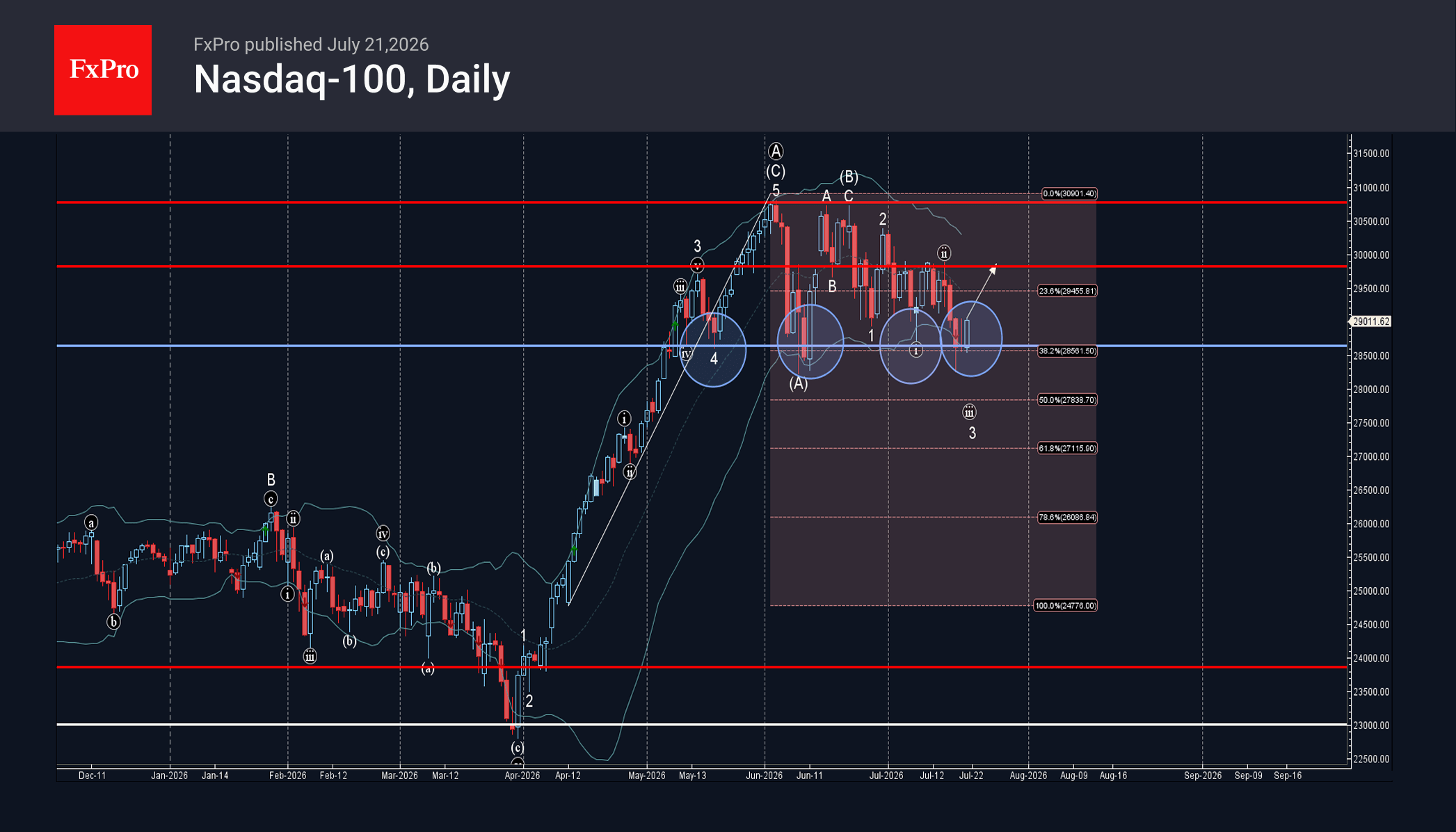
NASDAQ-100 Wave Analysis
Nasdaq-100: ⬆️ Buy
– Nasdaq-100 reversed from support zone
– Likely to rise to resistance level 29815.00
Nasdaq-100 index recently reversed from the support zone between the support level 28630.00 (which has been reversing the index from May), lower daily Bollinger Band and the 38.2% Fibonacci correction of the upward impulse from April.
The upward reversal from the support level 28630.00 stopped the earlier minor impulse wave 3.
Given the strong daily uptrend, Nasdaq-100 index can be expected to rise to the next resistance level 29815.00 (top of the previous wave ii).