Sample Category Title
EUR/CHF Daily Outlook
Daily Pivots: (S1) 0.9457; (P) 0.9481; (R1) 0.9515; More....
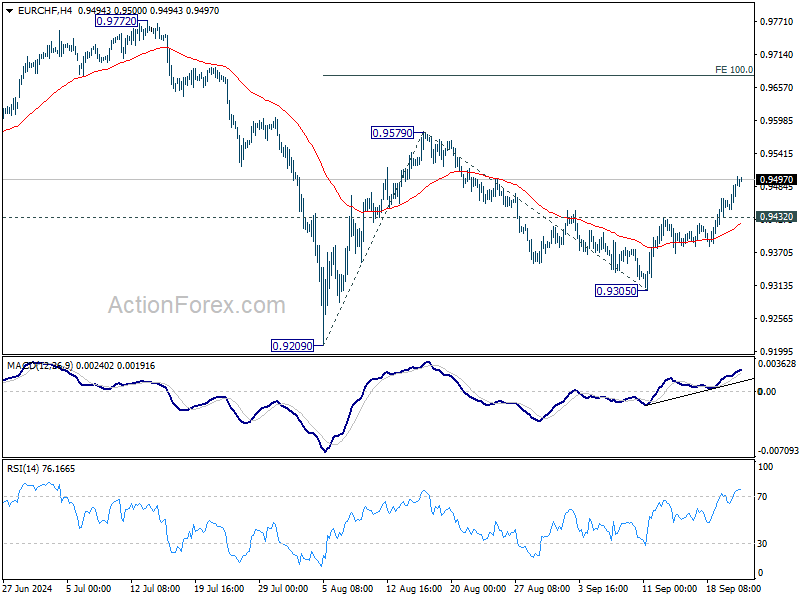
Intraday bias in EUR/CHF remains on the upside at this point. Rise from 0.9305, as the third leg of the pattern from 0.9209 ,is in progress for 0.9579 resistance. Firm break there will target 100% projection of 0.9209 to 0.9579 from 0.9305 at 0.9675. On the downside, below 0.9432 minor support will turn intraday bias neutral first.
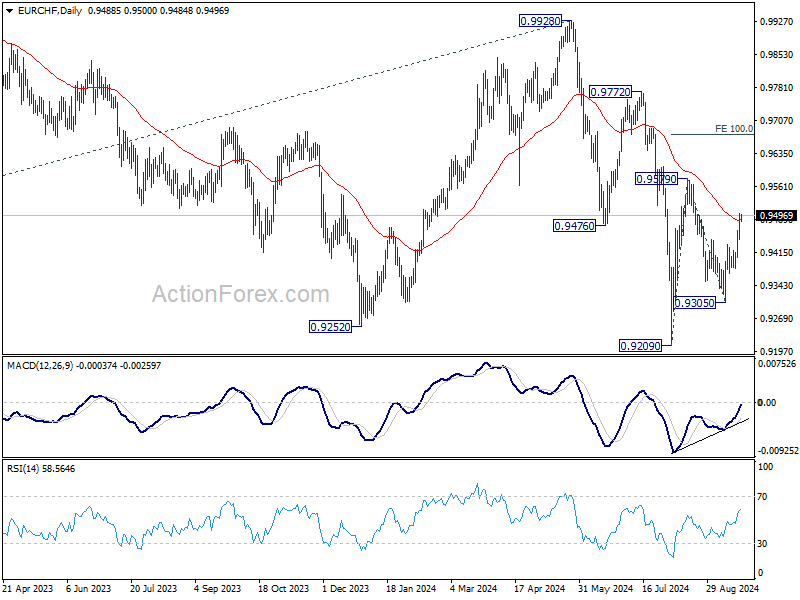
In the bigger picture, medium term corrective pattern from 0.9407 (2022 low) might have completed with three waves to 0.9928. Decisive break of 0.9252 (2023 low) will confirm long term down trend resumption. Next target will be 61.8% projection of 1.1149 to 0.9407 from 0.9928 at 0.8851. For now, outlook will stay bearish as long as 0.9928 resistance holds, even in case of strong rebound.
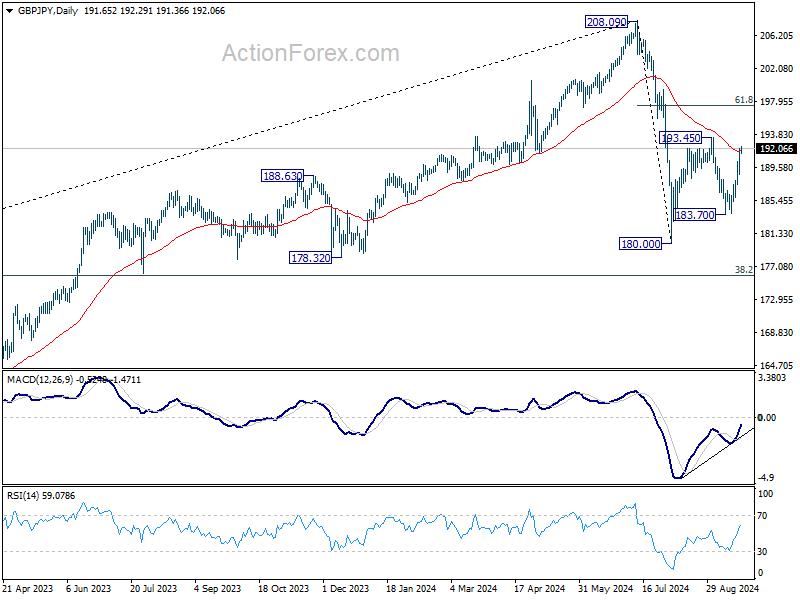
GBP/JPY Daily Outlook
Daily Pivots: (S1) 189.70; (P) 190.85; (R1) 192.91; More...
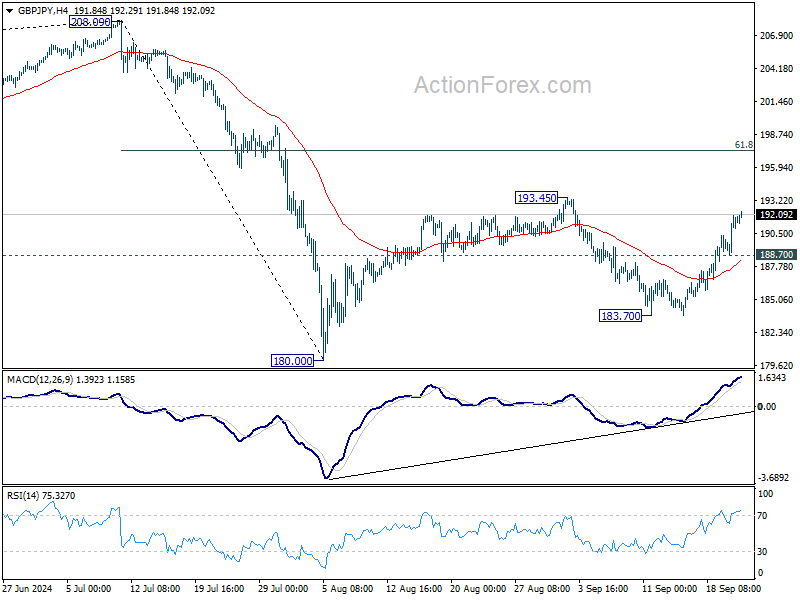
Intraday bias in GBP/JPY remains on the upside at this point. Rise from 183.70, as the third leg of the corrective pattern from 180.00, is in progress for 193.45 resistance. Firm break there will target 61.8% retracement of 208.09 to 180.00 at 197.35. On the downside, though, below 188.70 minor support will turn intraday bias neutral first.
In the bigger picture, price actions from 208.09 are seen as a correction to whole rally from 123.94 (2020 low). The range of consolidation should be set between 38.2% retracement of 123.94 to 208.09 at 175.94 and 208.09. However, decisive break of 175.94 will argue that deeper correction is underway.
EUR/JPY Daily Outlook
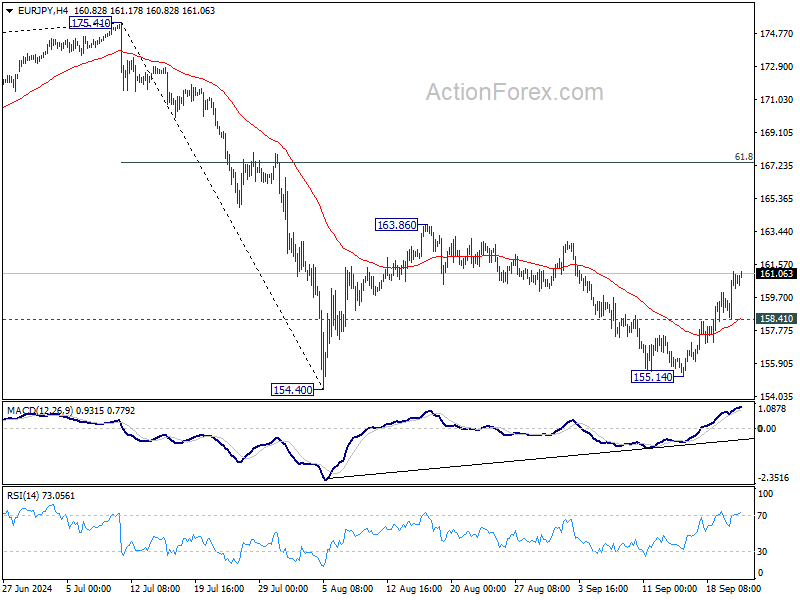
Daily Pivots: (S1) 159.00; (P) 160.08; (R1) 161.73; More....
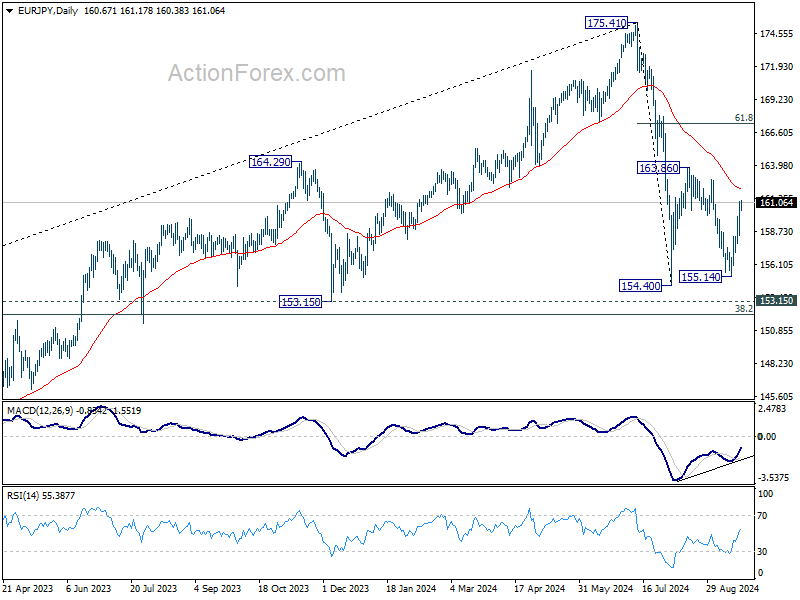
Intraday bias in EUR/JPY stays on the upside at this point. Rise from 155.14, ,as the third leg of the corrective pattern from 154.40, is in progress for 163.86 resistance. Break there will target 61.8% retracement of 175.41 to 154.40 at 167.38. On the downside, though, below 158.41 minor support will turn intraday bias neutral first.
In the bigger picture, price actions from 175.41 are seen as correction to rally from 114.42 (2020 low). The range of consolidation should have been set between 38.2% retracement of 114.42 to 175.41 at 152.11 and 175.41 high. However, decisive break of 152.11 would argue that deeper correction is underway.
EUR/GBP Daily Outlook
Daily Pivots: (S1) 0.8367; (P) 0.8390; (R1) 0.8403; More...
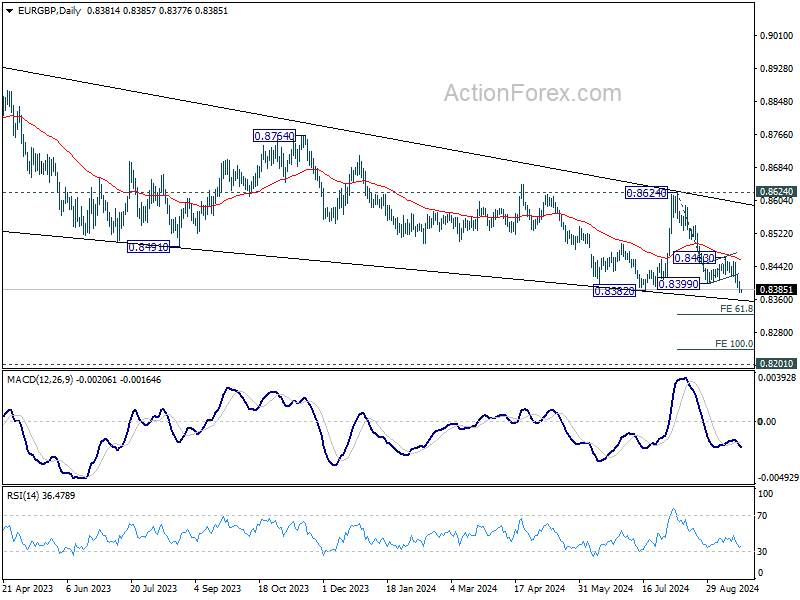
Intraday bias in EUR/GBP remains on the downside for the moment. Current down trend should target 61.8% projection of 0.8624 to 0.8399 from 0.8463 at 0.8324. On the upside, above 0.8409 minor resistance will turn intraday bias neutral and bring consolidations. But outlook will stay bearish as long as 0.8463 resistance holds, in case of recovery.
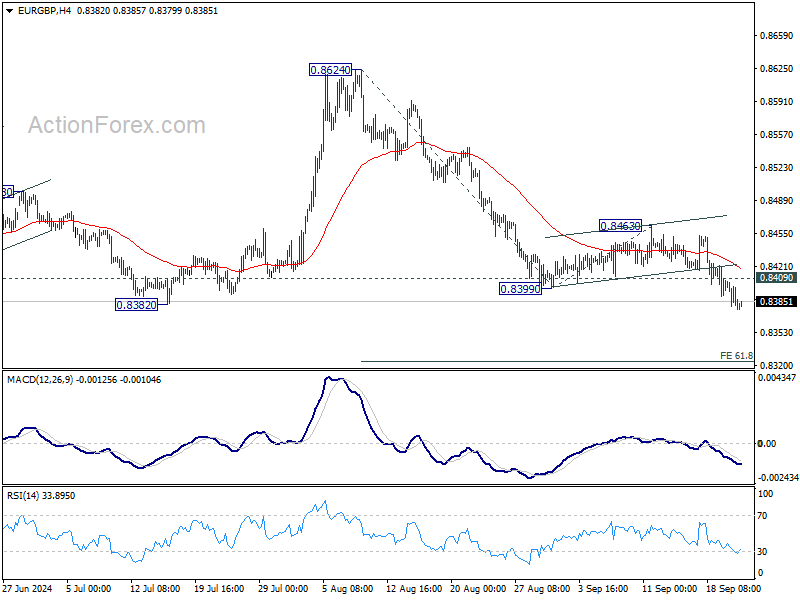
In the bigger picture, down trend from 0.9267 (2022 high) is resuming. Next target is 0.8201 (2022 low), but strong support should be seen there to bring rebound. Outlook will remain bearish as long as 0.8624 resistance holds even in case of strong rebound.
EUR/AUD Daily Outlook
Daily Pivots: (S1) 1.6363; (P) 1.6396; (R1) 1.6435; More...
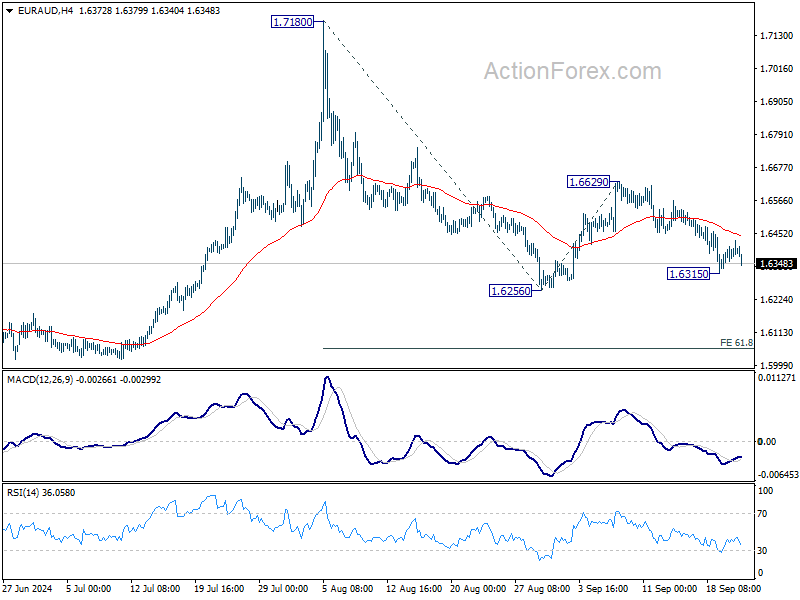
EUR/AUD dips notably after recovery was capped below 55 4H EMA, but stays above 1.6315 temporary low. Intraday bias stays neutral first. While consolidation from 1.6315 might extend, risk will continue to stay on the downside as long as 1.6629 resistance holds. Below 1.6315 will bring retest of 1.6256. Firm break there will resume whole decline from 1.7180 and target 61.8% projection of 1.7180 to 1.6256 from 1.6629 at 1.6058.
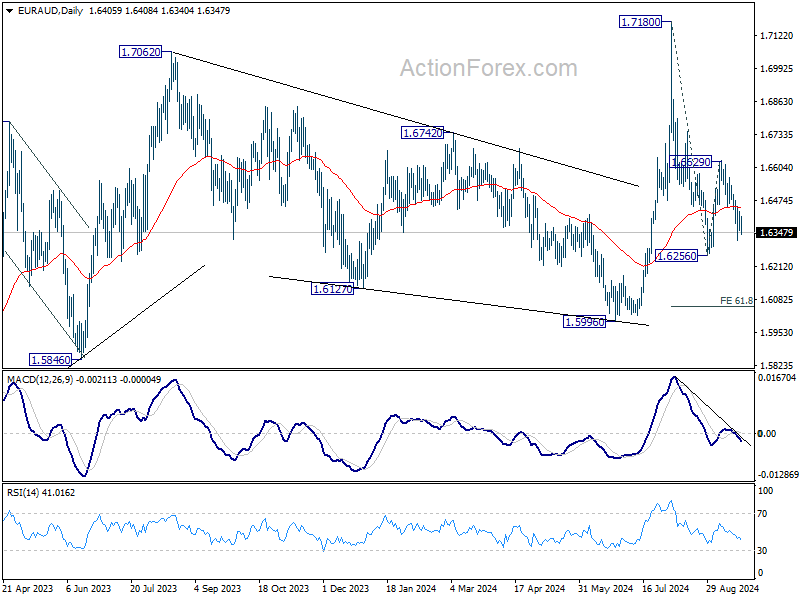
In the bigger picture, outlook is mixed up by the deeper than expected fall from 1.7180. Yet as long as 1.5996 support holds, up trend from 1.4281 (2022 low) is still in favor to resume at a later stage. Firm break of 1.7180 will pave the way to 61.8% projection of 1.4281 to 1.7062 from 1.5996 at 1.7715.
Aussie Gains Ground, Overcoming PMI Weakness on China’s Rate Cut Boost
Australian Dollar managed to climb modestly in a quiet Asian trading session today, despite underwhelming PMI data from Australia. With Japan on holiday, the session saw limited movement, but risk-on sentiment helped offset some of the negative impact from the weak data. In contrast, Yen and Swiss Franc extended their recent declines. Overall, the markets are still riding on the tailwind of last week's Fed rate cut.
China's central bank also played a role in boosting sentiment. In a surprising move, the People's Bank of China cut its 14-day repo rate by 10bps, catching many off guard after it had opted not to cut longer-term rates just last Friday. The real focus, however, is on tomorrow's scheduled press conference by China's top three financial regulators, raising hopes that more comprehensive and substantial stimulus measures may be on the horizon.
Looking ahead to the rest of the day, attention will shift to PMI releases from the Eurozone, the UK, and the US. These figures will provide more clarity on the health of major economies and could set the tone for broader market moves. In addition, focus is also turning to the upcoming RBA and SNB rate decisions later in the week.
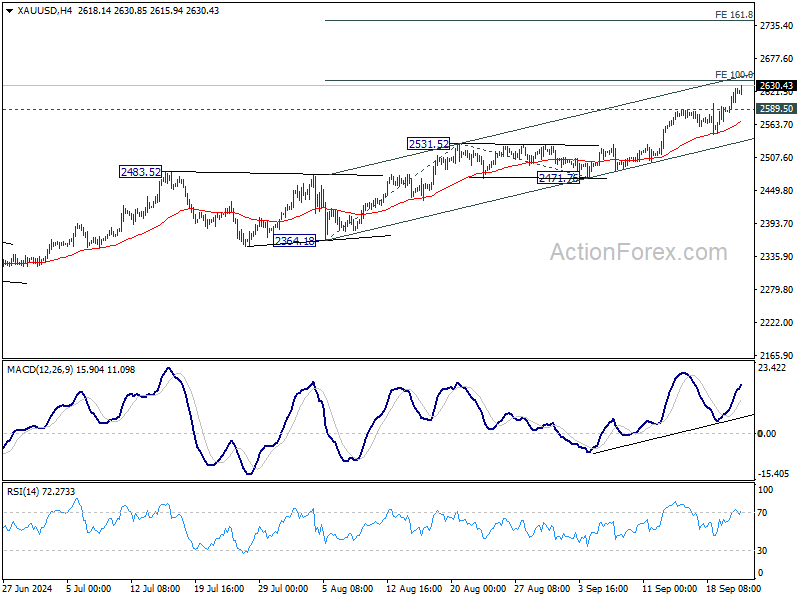
Technically, Gold's record run continues today and further rally is expected for 100% projection of 2364.18 to 2531.52 from 2471.76 at 2639.10. Some resistance might be see there to limit upside on first attempt. Break of 2589.50 resistance turn support will bring consolidations first. However, decisive break of 2639.10 could trigger upside acceleration to 161.8% projection at 2742.51 next.
In Asia, Japan is on holiday. Hong Kong HSI is up 0.82%. China Shanghai SSE is up 0.74%. Singapore Strait Times is up 0.58%.
Australian PMI manufacturing hits 52-month low, composite in contraction
Australia's economic activity continued to slow in September, with the Judo Bank Manufacturing PMI dropping to 46.7, its lowest in 52 months, down from 48.5 in August. The Services PMI also declined, slipping to 50.6 from 52.5, while the Composite PMI fell back into contraction, down from 51.7 to 49.8, marking an 8-month low.
Matthew De Pasquale, Economist at Judo Bank, noted that the recent PMI weakness suggests households are saving more of the government stimulus than anticipated. He added that "the economy is gradually bringing supply and demand into balance," supporting the case for maintaining the current cash rate rather than hiking it later this year.
Employment growth also showed signs of slowing, with the employment index barely in expansion at 50.8. Additionally, output price index, which tracks businesses raising consumer prices, hit its lowest level since January 2021. Although input prices dropped, they remain above pre-pandemic averages, signaling lingering inflationary pressures.
New Zealand's exports fell -0.1% yoy in Aug, imports down -1.0% yoy
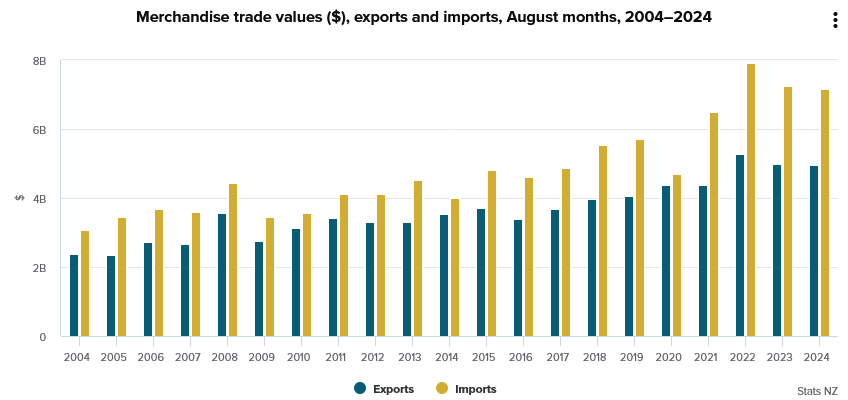
New Zealand's goods trade balance posted deficit of NZD -2.2B, substantially larger than the expected deficit of NZD -155m. This widening gap is attributed to a slight decrease in both goods exports and imports. Goods exports fell by NZD -6.1m, or 0.1% yoy, to NZD 5.0B, while goods imports decreased by NZD -70m, or -1.0% yoy, to NZD 7.2B.
The decline in exports was primarily due to weaker trade with China, New Zealand's largest trading partner. Exports to China fell by NZD -195m, or 16% yoy. In contrast, exports to other key markets saw gains. Shipments to Japan jumped by 39% yoy, while exports to the US and the EU rose by 3.1% yoy and 5.9% yoy, respectively.
On the import side, China, the EU, and Australia all saw notable declines in the value of goods imported by New Zealand, with China down -6.4% yoy, the EU down -8.2% yoy, and Australia down -12% yoy. However, imports from the US and South Korea surged. Goods from the US increased by NZD 154m (24% yoy), and imports from South Korea were up by a substantial NZD 185m (39% yoy).
RBA to hold steady, SNB faces a critical decision
Two major central banks prepare to make the monetary policy decisions this week. RBA is stay pat while SNB is anticipated to continue its policy easing cycle. But as the latter is facing pressure to weaken the Franc, there is potential of a more aggressive reduction. Meanwhile, markets are also gearing up for some global PMIs, along with key economic data from the US, Canada, and Japan.
RBA is widely expected to keep its interest rate unchanged at 4.35% this week. While the central bank has not ruled out further rate hikes, the general consensus among economists is that the next move will be a reduction. However, there is no clear agreement on the timing of this anticipated rate cut.
The country's major banks offer differing views on when the first rate cut will take place. The Commonwealth Bank, which was earlier predicting a November cut, has now revised its forecast to December due to recent strength in employment growth. Westpac and ANZ both anticipate a cut in February 2025. NAB is the most cautious, projecting a cut in May next year. This split among the big four banks highlights the uncertainty regarding the RBA's next steps.
This week's monthly CPI report from Australia may provide some short-term relief to RBA, with inflation expected to drop notably from 3.5% to 2.8% in August. However, the more critical figure will be the quarterly CPI data, due on October 30.
RBA's November meeting, with both the quarterly CPI and fresh economic projections available, is seen as a much more pivotal moment. By then, the central bank will have a clearer view of whether inflation is moderating enough to justify a rate cut in early 2025.
On the other hand, SNB is anticipated to cut interest rates this week, but the magnitude of the reduction is getting uncertain.
While Swiss Franc's appreciation has eased since August, it remains at historically high levels, weighing heavily on Switzerland's export-dependent economy. Outgoing SNB Chair Thomas Jordan has also been vocal about the negative impact of Franc's strength. Swiss exporters have increasingly called on the central bank to intervene more aggressively, adding urgency to the SNB's decision-making.
The base case scenario is still that SNB will opt for a 25bps rate cut, bringing the policy rate down to 1.00% this week, with another 25bps reduction expected in December. However, given the economic pressure and the need to weaken the Franc, some economists believe there is a substantial chance SNB could front-load its monetary easing with a larger, 50bps cut at this meeting.
On the data front, the spotlight will be on PMI data from major economies at the start of the week. Particular attention is on Eurozone and Germany, as the German economy is grappling with a significant recession risk, and any further weakening in its PMI figures could solidify these concerns. In the US, several key economic reports are set to capture market attention, including consumer confidence, durable goods orders, and the closely-watched PCE inflation data. Additionally, Canada's GDP data and Tokyo CPI from Japan are on the radar too.
Here are some highlights for the week:
- Monday: New Zealand trade balance; Australia PMIs; Eurozone PMIs; UK PMIs; Canada new housing price index; US PMIs.
- Tuesday: Japan PMIs; RBA rate decision; Germany Ifo business climate; US house price index, consumer confidence.
- Wednesday: Japan corporate service price index; Australia monthly CPI; Swiss KOF economic barometer; US new home sales.
- Thursday: BoJ minutes; Germany Gfk consumer sentiment; Swiss SNB rate decision; Eurozone M3, ECB monthly bulletin; US GDP final, jobless claims, durable goods orders, pending home sales.
- Friday: Japan Tokyo CPI; France consumer spending; Germany unemployment; Canada GDP; US goods trade balance, personal income and spending and PCE inflation.
EUR/AUD Daily Outlook
Daily Pivots: (S1) 1.6363; (P) 1.6396; (R1) 1.6435; More...
EUR/AUD dips notably after recovery was capped below 55 4H EMA, but stays above 1.6315 temporary low. Intraday bias stays neutral first. While consolidation from 1.6315 might extend, risk will continue to stay on the downside as long as 1.6629 resistance holds. Below 1.6315 will bring retest of 1.6256. Firm break there will resume whole decline from 1.7180 and target 61.8% projection of 1.7180 to 1.6256 from 1.6629 at 1.6058.
In the bigger picture, outlook is mixed up by the deeper than expected fall from 1.7180. Yet as long as 1.5996 support holds, up trend from 1.4281 (2022 low) is still in favor to resume at a later stage. Firm break of 1.7180 will pave the way to 61.8% projection of 1.4281 to 1.7062 from 1.5996 at 1.7715.
Economic Indicators Update
| GMT | CCY | EVENTS | ACT | F/C | PP | REV |
|---|---|---|---|---|---|---|
| 22:45 | NZD | Trade Balance (NZD) Aug | -2203M | -155M | -963M | -1016M |
| 23:00 | AUD | Manufacturing PMI Sep P | 46.7 | 48.5 | ||
| 23:00 | AUD | Services PMI Sep P | 50.6 | 52.5 | ||
| 07:15 | EUR | France Manufacturing PMI Sep P | 44.3 | 43.9 | ||
| 07:15 | EUR | France Services PMI Sep P | 53 | 55 | ||
| 07:30 | EUR | Germany Manufacturing PMI Sep P | 42.4 | 42.4 | ||
| 07:30 | EUR | Germany Services PMI Sep P | 51.1 | 51.2 | ||
| 08:00 | EUR | Eurozone Manufacturing PMI Sep P | 45.7 | 45.8 | ||
| 08:00 | EUR | Eurozone Services PMI Sep P | 52.3 | 52.9 | ||
| 08:30 | GBP | Manufacturing PMI Sep P | 52.3 | 52.5 | ||
| 08:30 | GBP | Services PMI Sep P | 53.5 | 53.7 | ||
| 12:30 | CAD | New Housing Price Index M/M Aug | 0.10% | 0.20% | ||
| 13:45 | USD | Manufacturing PMI Sep P | 48.6 | 47.9 | ||
| 13:45 | USD | Services PMI Sep P | 55.3 | 55.7 |
EUR/USD Momentum Builds: Can It Go Higher?
Key Highlights
- EUR/USD started a fresh increase above the 1.1120 resistance.
- It cleared a major bearish trend line with resistance at 1.1135 on the 4-hour chart.
- GBP/USD extended gains and traded above 1.3300.
- Bitcoin climbed higher above the $62,500 and $63,200 resistance levels.
EUR/USD Technical Analysis
The Euro remained supported above the 1.1065 level against the US Dollar. EUR/USD formed a base and started a fresh increase above 1.1100.
Looking at the 4-hour chart, the pair climbed the 1.1120 and 1.1135 resistance levels. It also cleared a major bearish trend line with resistance at 1.1135. However, the pair seems to be facing resistance near the 1.1180 level.
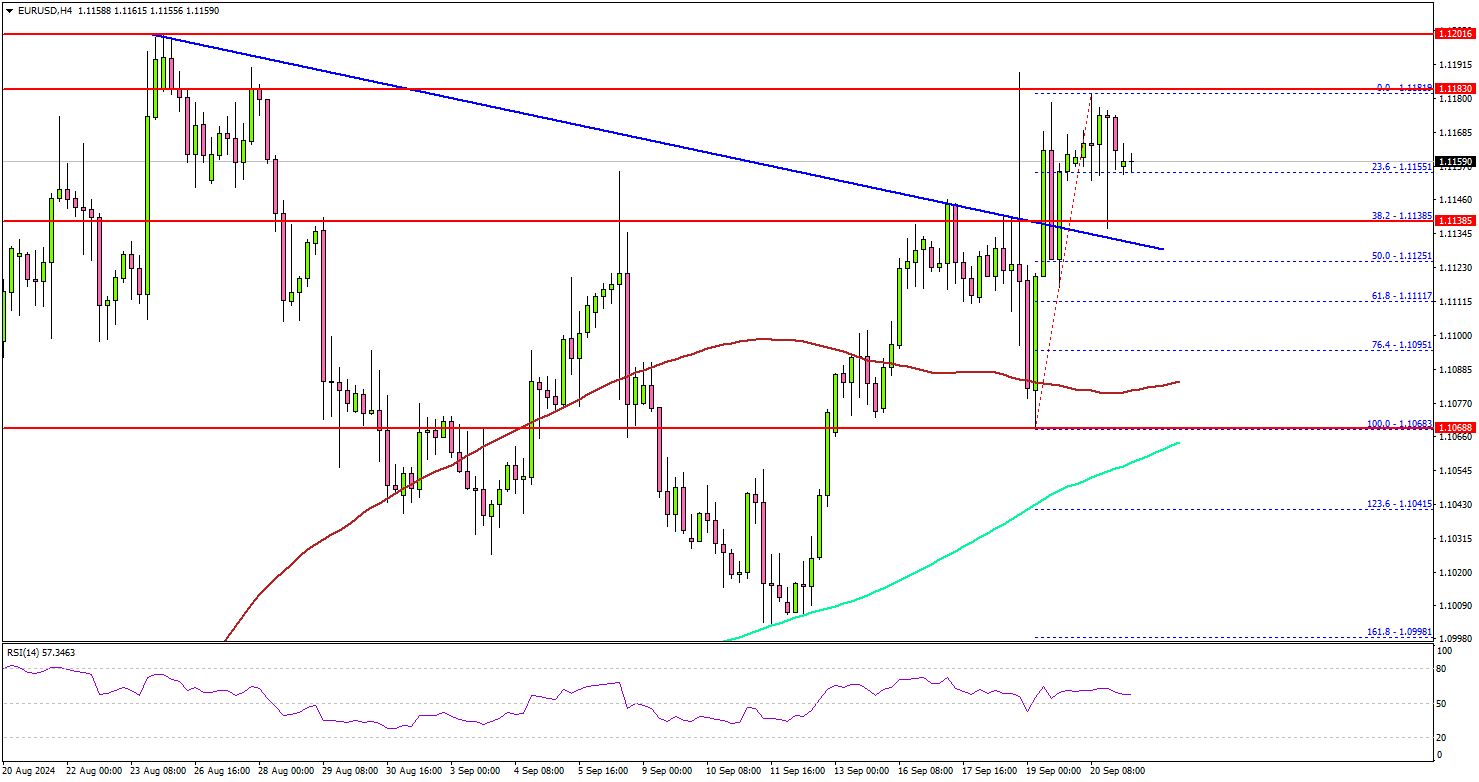
It is now consolidating near the 23.6% Fib retracement level of the upward move from the 1.1068 swing low to the 1.1181 high. The pair is also above the 100 simple moving average (red, 4-hour) and the 200 simple moving average (green, 4-hour).
On the upside, the pair could face hurdles near the 1.1180 zone. A clear move above the 1.1180 zone might set the pace for a move toward 1.1200. Any more gains might call for a test of the 1.1250 zone.
On the downside, immediate support sits near the 1.1140 level, below which the pair might test 1.1120. The next key support sits near the 1.1060 level. Any more losses could send the pair toward the 1.1020 support zone.
Looking at Bitcoin, the bulls remained in control, and they were able to push the price above the $63,200 resistance zone.
Upcoming Economic Events:
- Euro Zone Manufacturing PMI for Sep 2024 (Preliminary) – Forecast 45.8, versus 45.8 previous.
- Euro Zone Services PMI for Sep 2024 (Preliminary) – Forecast 52.8, versus 52.9 previous.
- US Manufacturing PMI for Sep 2024 (Preliminary) – Forecast 47.9, versus 48.5 previous.
- US Services PMI for Sep 2024 (Preliminary) – Forecast 55.5, versus 55.7 previous.
Australian PMI manufacturing hits 52-month low, composite in contraction
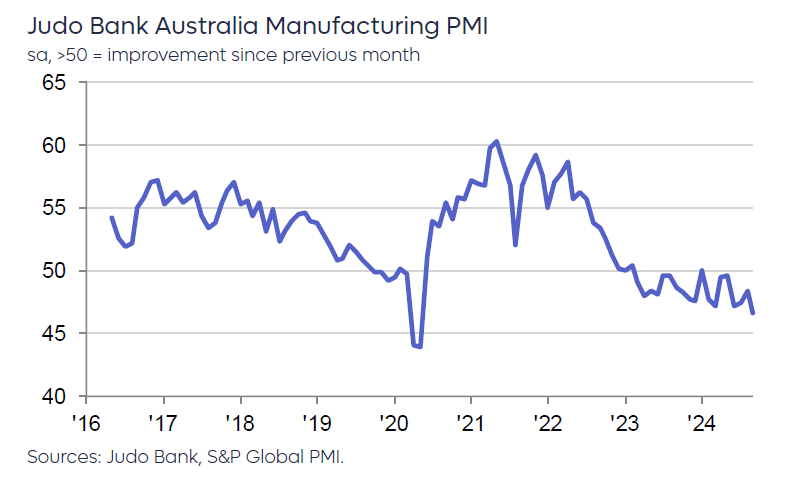
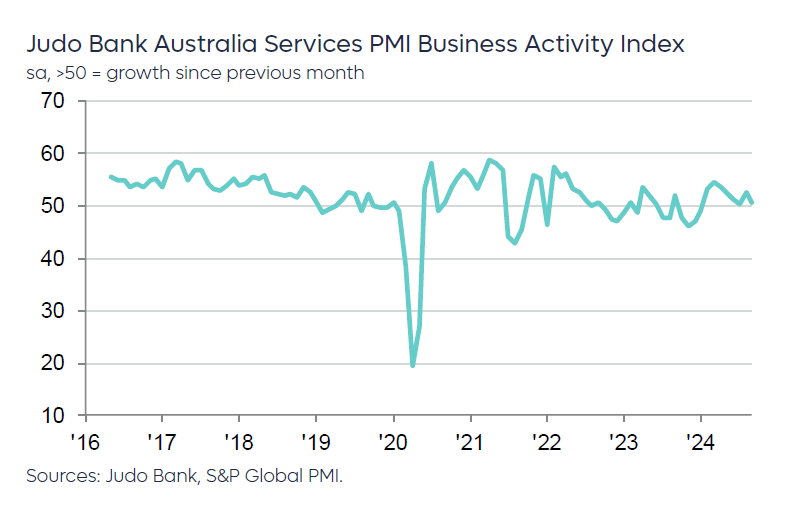
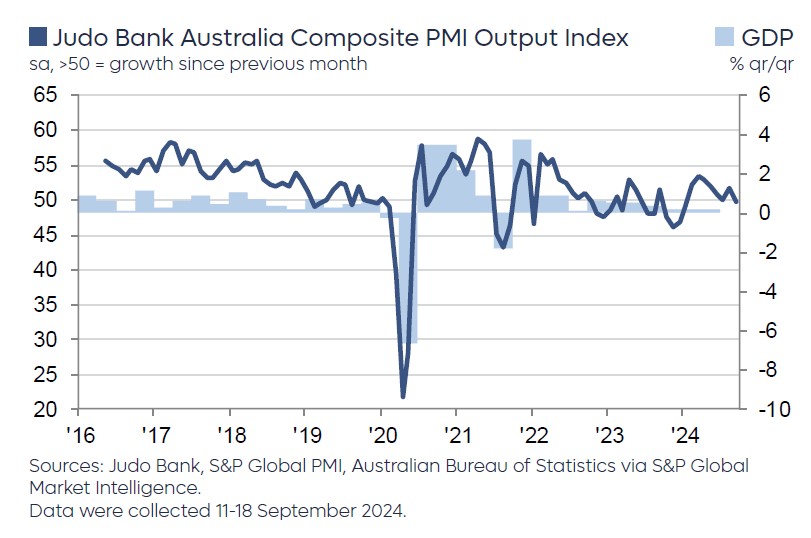
Australia's economic activity continued to slow in September, with the Judo Bank Manufacturing PMI dropping to 46.7, its lowest in 52 months, down from 48.5 in August. The Services PMI also declined, slipping to 50.6 from 52.5, while the Composite PMI fell back into contraction, down from 51.7 to 49.8, marking an 8-month low.
Matthew De Pasquale, Economist at Judo Bank, noted that the recent PMI weakness suggests households are saving more of the government stimulus than anticipated. He added that "the economy is gradually bringing supply and demand into balance," supporting the case for maintaining the current cash rate rather than hiking it later this year.
Employment growth also showed signs of slowing, with the employment index barely in expansion at 50.8. Additionally, output price index, which tracks businesses raising consumer prices, hit its lowest level since January 2021. Although input prices dropped, they remain above pre-pandemic averages, signaling lingering inflationary pressures.
New Zealand’s exports fell -0.1% yoy in Aug, imports down -1.0% yoy
New Zealand's goods trade balance posted deficit of NZD -2.2B, substantially larger than the expected deficit of NZD -155m. This widening gap is attributed to a slight decrease in both goods exports and imports. Goods exports fell by NZD -6.1m, or 0.1% yoy, to NZD 5.0B, while goods imports decreased by NZD -70m, or -1.0% yoy, to NZD 7.2B.
The decline in exports was primarily due to weaker trade with China, New Zealand’s largest trading partner. Exports to China fell by NZD -195m, or 16% yoy. In contrast, exports to other key markets saw gains. Shipments to Japan jumped by 39% yoy, while exports to the US and the EU rose by 3.1% yoy and 5.9% yoy, respectively.
On the import side, China, the EU, and Australia all saw notable declines in the value of goods imported by New Zealand, with China down -6.4% yoy, the EU down -8.2% yoy, and Australia down -12% yoy. However, imports from the US and South Korea surged. Goods from the US increased by NZD 154m (24% yoy), and imports from South Korea were up by a substantial NZD 185m (39% yoy).
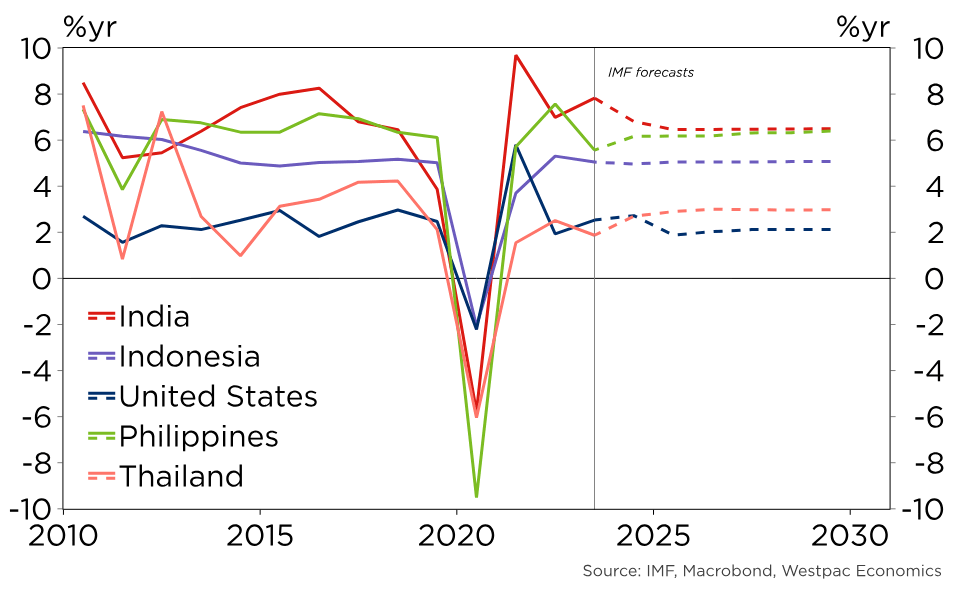
Carry Trade to Give Way to Longer-Term Investment in Asian Growth
Attractive growth opportunities in Asia will support currencies and yields despite a narrowing rate differential with the FOMC.
With the US FOMC having started its rate easing cycle, central bankers across emerging markets (EMs) are also getting ready to adjust policy. At the end of this cycle, policy rates across the region are likely to be much closer to the fed funds rate than is typical through history. While partly a consequence of the higher starting point for the fed funds rate in this cycle, the smaller spreads also reflect fewer capacity constraints given the efficiency and connectivity of Asia and consequently less inflation pressure. This will have implications for growth and economic development, and could see currencies sustainably appreciate against the US dollar.
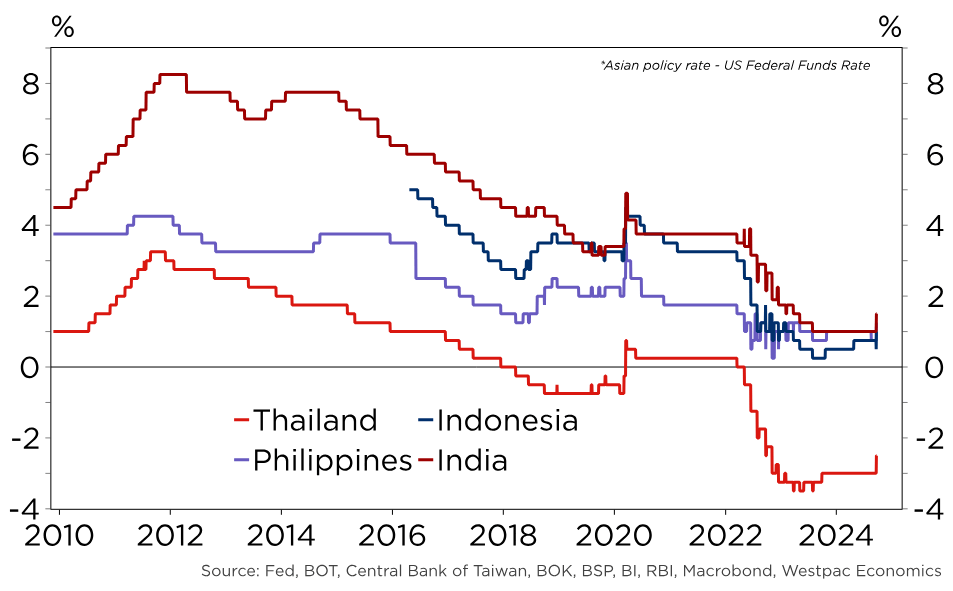
Since the beginning of the pandemic, monetary policy has been comparatively looser in Asia than in the US. Initially, central banks in India, the Philippines and Indonesia all cut rates by more than the US FOMC. These central banks, as well as the Bank of Thailand then raised rates by far less during the post-pandemic tightening: the FOMC’s 525bps of rate rises compares to the Philippine Bangko ng Pilipinas’ 450bps, the Bank Indonesia’s 275bps, the Reserve Bank of India’s 250bps and the Bank of Thailand’s 200bps. This has left spreads to the federal funds rate at their lowest levels since before the 2008-09 Global Financial Crisis.
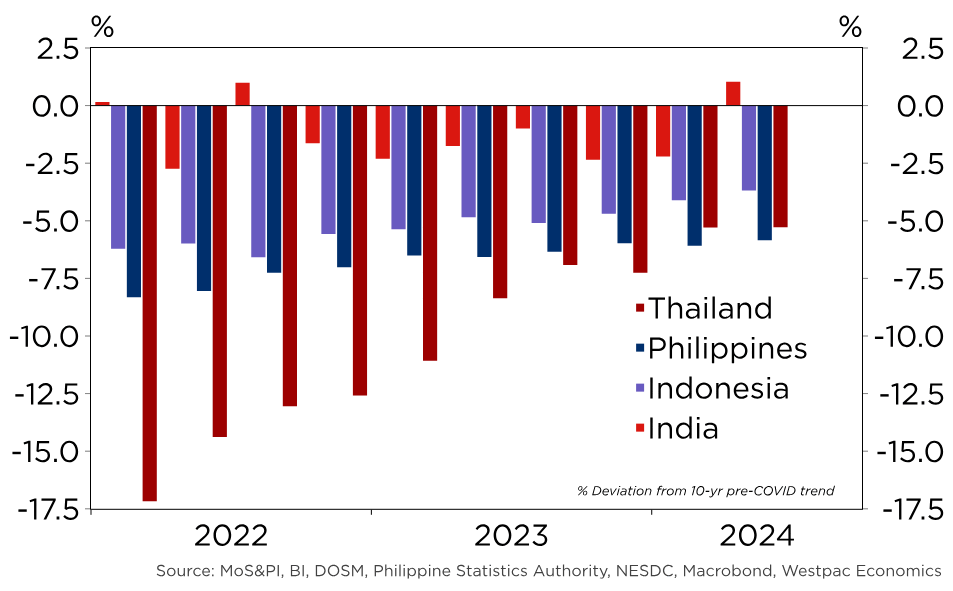
Moreover, current policy rates are arguably too high for current domestic conditions. While growth is strong in aggregate, domestic consumption growth is tracking below the trend pace over the 10 years prior to COVID in all of these economies except India. Consumption in Indonesia is 4ppts below where this trend would have led to had COVID not occurred, Thailand around 5ppts below and the Philippines circa 6ppts lower. Investment is also weak in all of these countries except for India. This enduring underperformance has limited the pass through of global price pressures and led to the build up of a degree of slack amongst households and related businesses, with aggregate growth instead being held up by government expenditure and export growth.
Given this slack and the fed funds rate’s higher starting point, we expect EM Asia’s central banks to follow the US FOMC lower through the coming easing cycle, keeping spreads between EM policy rates and the FOMC comparatively low versus history. This means capital flows into these economies will need to be driven by growth prospects not yield differentials. These opportunities are found in both the region’s domestic markets and its export sectors.
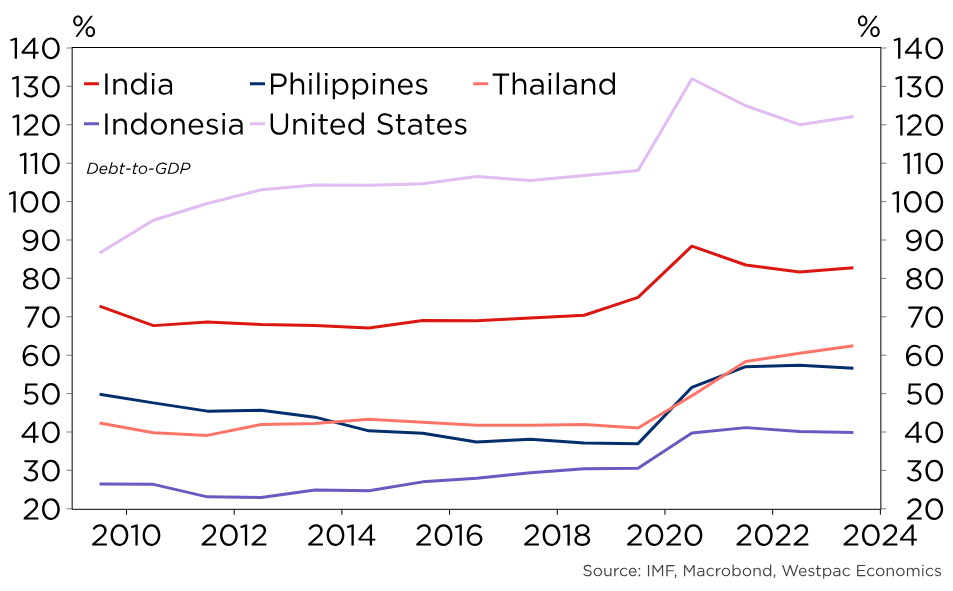
Growth in EM Asia can be catalysed by public expenditure. Governments have ample fiscal space thanks to manageable debt liabilities and the potential to expand the tax base as the economy grows. There is justification for EM Asia’s nations to embark on strong investment agendas given young and growing populations as well as their increasing importance in global production chains. Households should also benefit from this strength in government expenditure and exports, fuelling consumption. Consumption below pre-COVID trends implies there is already some pent-up demand still to flow through.
Importantly, real effective exchange rates – the value of a currency against the weighted average of currencies of major trade partners adjusted for inflation – have held steady through the pandemic and recovery. This has provided some certainty for inflation and trade despite some weakening in US dollar bilaterals more recently. This is likely to remain the case going forward, albeit with some variation. That should allow the region to focus more on the development of comparative advantages, efficiency and diversifying export markets instead of simply being a mass-volume, low-cost exporter to the US.
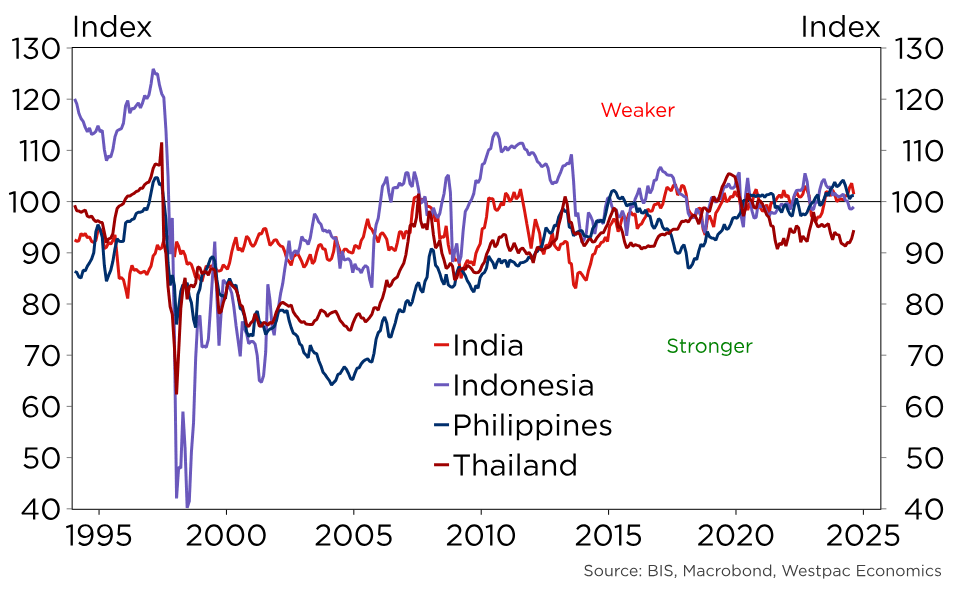
That said, the region’s currencies remain sub-par against the US dollar and other developed-world currencies, providing an opportunity arguably to grow share in these markets as well. Note that this is not only applicable to manufacturing and mining but to tourism as well, broadening the benefits from trade to a wider population. Further foreign investment will also be incentivised by this trend and the deeper cross-border relationships it fosters.
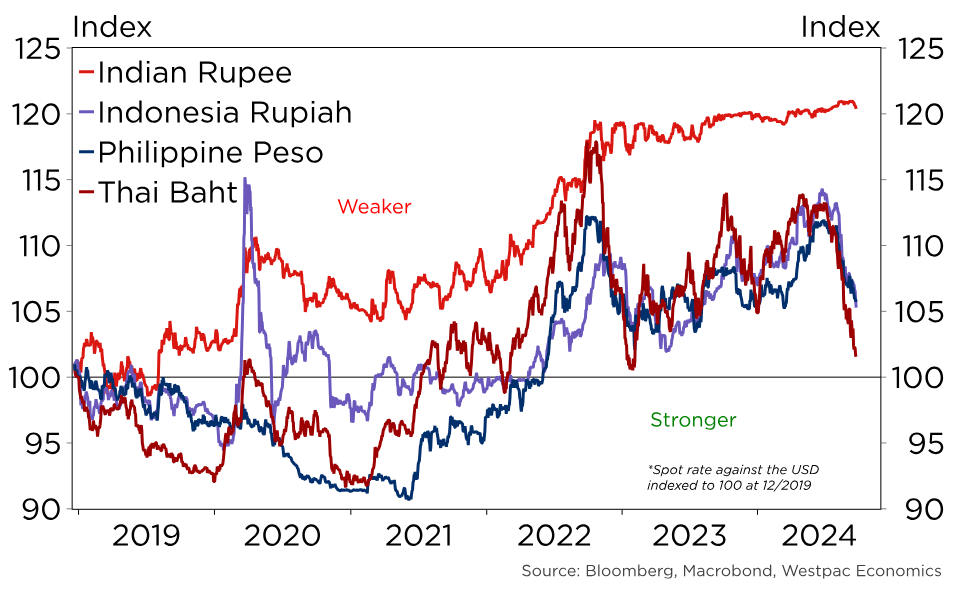
The lasting uncertainty created by the pandemic and its inflationary consequences may therefore, in time, create structural strength in Asia’s developing economies. This should in turn incentivise long-term investment in the region over short-term carry trades built on risk premia.
The building out of industry and greater two-way trade also stands to reduce concern over cyclical volatility and the immaturity of regional capital markets. While the uptrend in the region’s currencies against the US dollar is likely to prove shallow, recurring improvement in capacity and productivity should stand the region in good stead and drive a longer term uptrend – a shift that will mitigate tradeable inflation risks and reflect slowly improving global purchasing power and financial stability across these countries. The outlook for Asia’s economies and currencies is therefore bright.