Sample Category Title
The US Stock Market Is Hitting New Record Highs
- Bad news from the labour market turned out to be good news for the S&P 500.
- Euphoria is making the stock market vulnerable to unpleasant surprises.
The S&P 500 recorded its best week since April and reached a record close, driven by strong corporate earnings and a reduced likelihood of further Fed rate hikes. A weak US employment report triggered this. Bad news from the labour market turned out to be good news for US stock indices.
According to FactSet, of the 440 S&P 500 companies that have already reported, 86% beat forecasts. Corporate profit growth exceeds 50%, which is the best result since the second quarter of 2021. Wall Street analysts’ estimates were exceeded by 29%. Such impressive results have not been seen since 2008.
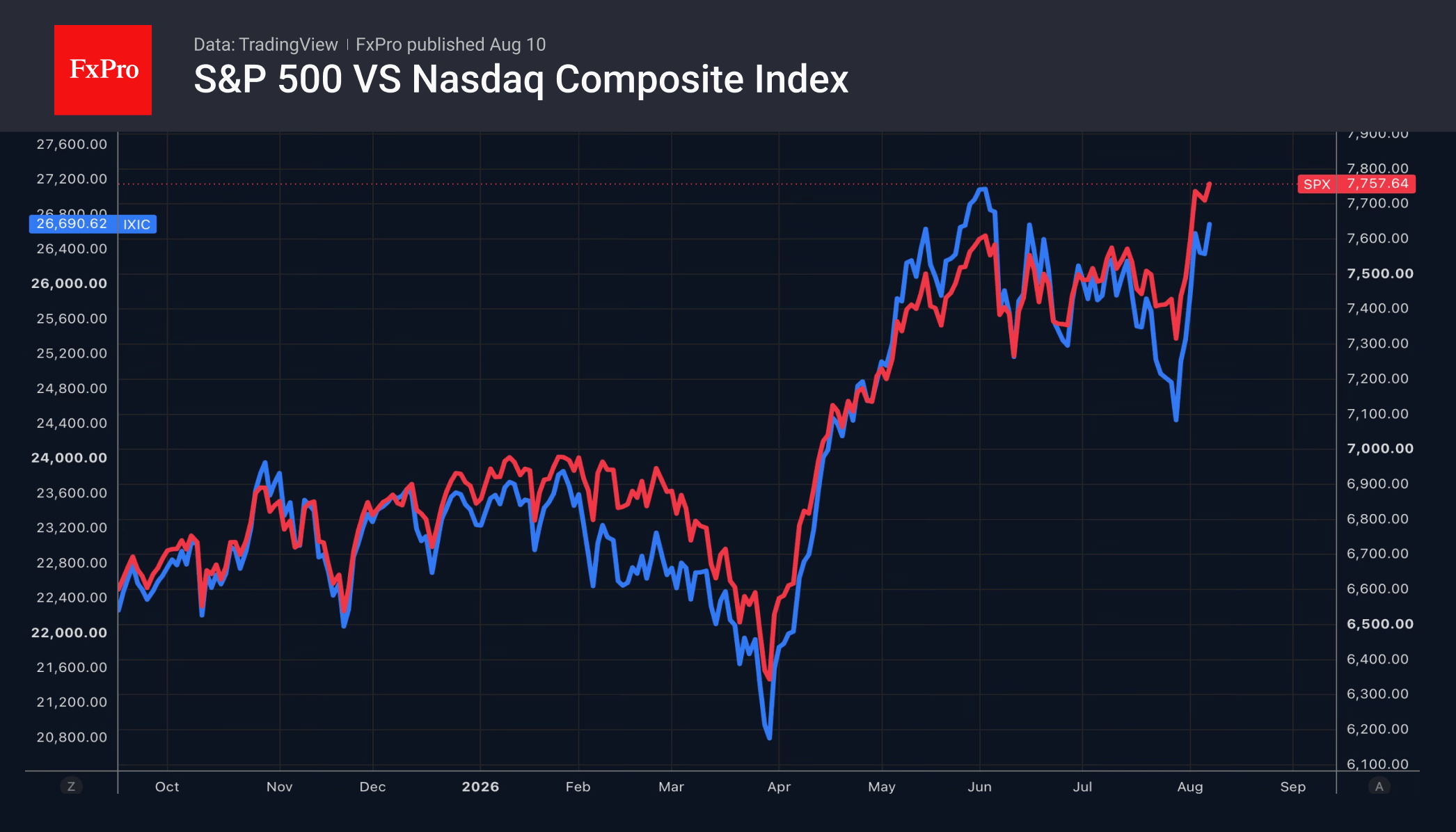
The positive earnings reports are reigniting investor interest in Big Tech. While the S&P 500 and the Dow Jones Index gained more than 3% over the week, the Nasdaq Composite rose by more than 5%. The rotation towards shares of companies sensitive to the state of the economy is reversing, which is further fuelling FOMO.
There is a sense of euphoria in the stock market, with the Bank of America noting that the bull-to-bear ratio has reached its highest since 2021. This is a worrying sign, as any unpleasant surprises could derail the stock market. The conflict in the Middle East and the release of US inflation data for July are causes for concern.
Formally, the agreement between Iran and Oman will lead to the reopening of the Strait of Hormuz. However, Tehran is insisting that its demands regarding reparations, the withdrawal of US troops from the region and the lifting of Western sanctions be met before this can happen. These demands are excessive, which heightens the risks of the conflict escalating. The rise in geopolitical risks could negatively impact the S&P 500.
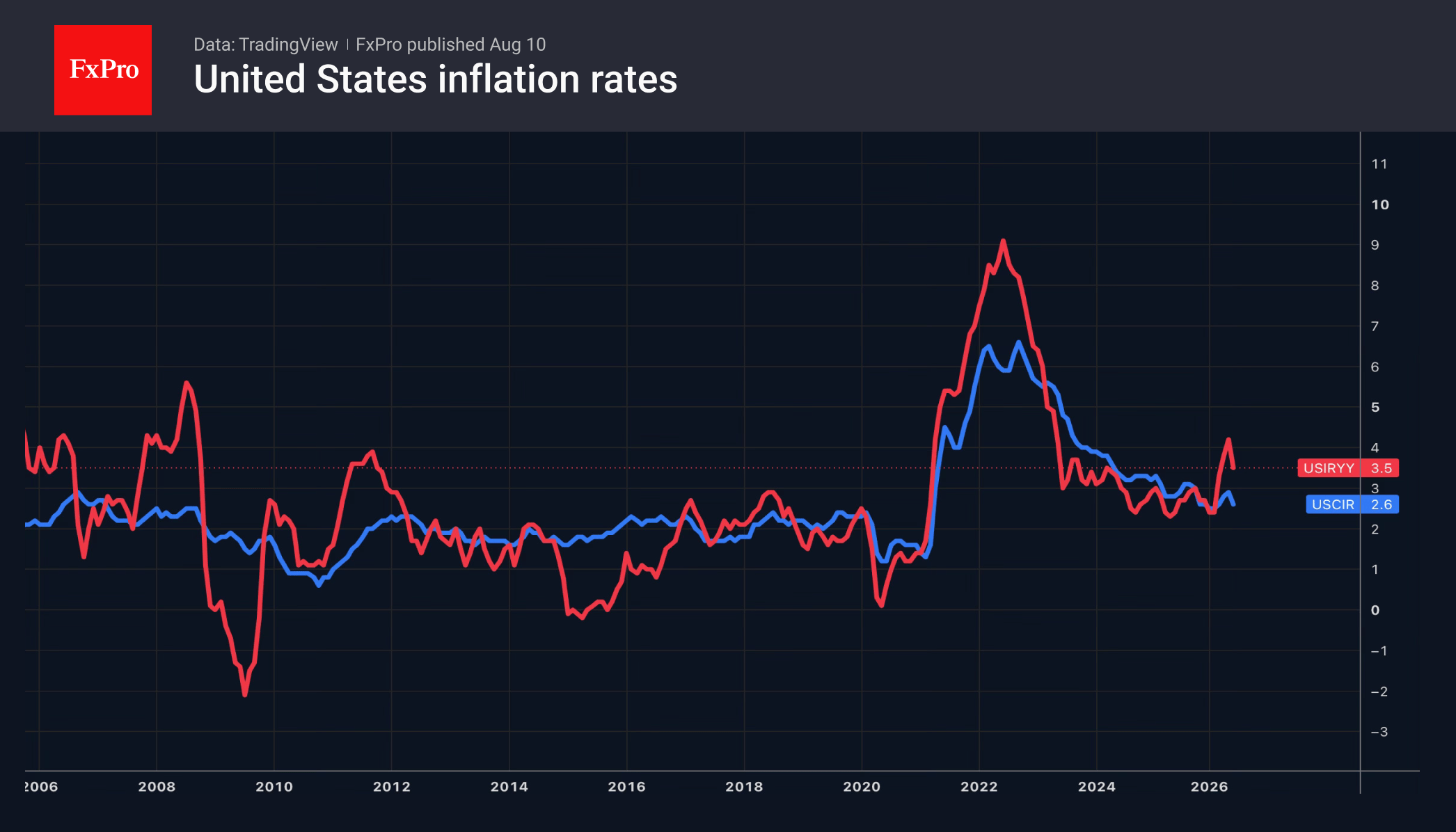
Could the acceleration of inflation in the US as well? A modest rise in consumer prices and the core inflation indicator on a month-on-month basis is expected in July. This would effectively rule out any tightening by the Fed in September. However, with accelerating CPI, the likelihood of a federal funds rate hike will rise again, creating a headwind for the S&P 500.
Overall, strong corporate earnings and the reduced likelihood of further Fed rate hikes are providing support for the US equity market. However, the euphoria that has swept through the market leaves the S&P 500 vulnerable to unpleasant surprises.
The FxPro Analyst Team
Yen Slides Again as Intervention Effect Fades, Critical 48 Hours Ahead
How intervention bought time without fixing Yen's yield gap, and why the next 48 hours could decide what happens next
Why it matters: Intervention has imposed a speed limit on Yen depreciation without reversing its direction, and Golden Week's precedent shows even record-sized intervention (¥11.73 trillion) fully round-tripped within eight to nine weeks once fundamentals stayed unfavorable. The next 48 hours, Tuesday's thin-liquidity Japan holiday and Wednesday's US CPI, will test whether intervention deterrence still holds and whether Yen finally gets a genuine fundamental tailwind.
Yen Weakness Is Back, But Traders Still Respect Intervention Risk
Yen is under broad-based pressure again, barely 10 days after joint US-Japan intervention forced traders to retreat. That does not mean intervention has failed. It means intervention solved only one part of the problem. It changed short-term positioning, raised the cost of aggressively shorting Yen and reminded traders that authorities are willing to act. What it did not change was the underlying reason Yen was weak in the first place.
Yield disadvantage against the US and other major economies is still substantial, while expansionary fiscal policy under Prime Minister Sanae Takaichi continues to work against Yen. That leaves markets in an awkward middle ground. Traders are unlikely to push Yen sharply lower without considering intervention risk, but neither are they being given enough fundamental reason to build medium-term long-Yen positions. Intervention has therefore imposed a speed limit on depreciation without yet reversing direction.
Golden Week Is the Warning: Even Record Intervention Can Round-Trip
Earlier this year provided a clear precedent. During Golden Week, the Ministry of Finance deployed a then-record ¥11.73 trillion, around $73 billion, between April 26 and May 29, after USD/JPY breached 160 and reached a fresh 34-year high. Intervention arrived during a thin-liquidity holiday window and initially worked exactly as intended, driving the pair sharply back through the mid-150s.
But the effect did not last. Within roughly eight to nine weeks, Yen had surrendered the entire intervention-driven recovery. By late July, USD/JPY was trading near 164, above the original 160 level that had triggered action in the first place.
Golden Week Intervention at a Glance
- Size: ¥11.73 trillion (around $73 billion), a record at the time
- Timing: April 26 to May 29
- Trigger: USD/JPY breached 160, a fresh 34-year high
- Initial effect: drove the pair sharply back through the mid-150s
- Round-trip: fully reversed within roughly 8-9 weeks; USD/JPY near 164 by late July
That episode offers a useful lesson for the current market. Intervention can be extremely effective tactically, especially when liquidity is thin and positioning is one-sided. But if yield differentials, fiscal settings and external pressures remain unfavorable, gains can eventually be fully reversed. The latest operation may carry more credibility because the US participated alongside Japan, but it still faces the same fundamental constraint: official buying cannot permanently overpower a carry structure that still favors selling Yen.
BoJ Is Sounding More Hawkish, But Not Fast Enough Yet
BoJ's Summary of Opinions from the July 30-31 meeting suggests policy debate is shifting in a more hawkish direction. Policymakers discussed stronger upside inflation risks, the possibility that rate hikes could come faster than markets expect, and a need to become more flexible not only about timing but potentially about the size of future moves. The Summary also reveals a more significant shift underneath: the BoJ's focus is moving from lifting inflation toward 2% to preventing it from overshooting.
That matters for the medium-term Yen outlook, but it does not solve the near-term problem. BoJ still chose to hold rates while assessing the lagged effects of previous tightening, and there was no clear signal of imminent action aggressive enough to close the yield gap quickly. As long as the US and other major economies maintain much higher yields, carry continues to favor Yen-funded positions.
This is why traders can respect the BoJ normalization story and still sell Yen. The policy direction may be changing, but the speed of convergence remains too slow to neutralize the current rate differential.
Tuesday's Japan Holiday Raises Intervention Risk Again
The first critical test comes on Tuesday, when Japan observes a holiday. Thin liquidity is important because it can magnify both speculative moves and official intervention.
Golden Week intervention showed how effective authorities can be when market depth is reduced. That should discourage traders from chasing Yen weakness too aggressively even if Monday's selling continues. A sudden acceleration could invite another response, and in thin markets the resulting reversal could be violent.
So Tuesday is less about whether Yen has fundamental support and more about whether intervention deterrence is still strong enough to control the pace of decline. If traders remain cautious, that would suggest authorities still command credibility even as spot support from intervention fades.
Wednesday's US CPI Is the More Important Fundamental Test
The bigger test arrives one day later with US July CPI.
Last week's weak non-farm payroll report materially raised the hurdle for another Fed hike. Labor market deterioration makes further tightening harder to justify, but payrolls answered only one side of the Fed's dilemma. Inflation risk has not disappeared, and without meaningful moderation in core CPI, the Fed still cannot comfortably declare tightening unnecessary.
For Yen, the transmission is straightforward. A softer-than-expected core CPI print would strengthen the case for a September hold, pull US Treasury yields lower and narrow the US-Japan differential. That would give Yen something intervention alone cannot provide: a genuine fundamental tailwind.
A hotter CPI print would do the opposite. Renewed inflation concerns would revive Fed tightening risk, support US yields and reinforce the structural case for Yen weakness. In that scenario, traders could become more willing to rebuild short-Yen positions once holiday liquidity passes.
So Wednesday may determine whether the latest intervention develops into a more durable turning point or simply another temporary interruption.
Oil Is Working Against Yen From Both Directions
Middle East developments are also making Yen's job harder. Oil prices extended their rebound on Monday, and that matters for Japan in more than one way.
As a major energy importer, Japan is directly exposed to higher crude prices through import costs and its external balance. At the same time, firmer oil can keep inflation pressure elevated globally and make the Fed and other major central banks more reluctant to abandon their tightening bias.
That creates a particularly unfavorable combination for Yen:
- Higher oil worsens Japan's energy burden while potentially preserving the foreign yield advantage.
- BoJ may itself become more concerned about inflation as energy costs rise, but unless that concern translates into faster normalization, higher oil can still leave Yen under pressure rather than support it.
Lower War Risk Does Not Mean Hormuz Is Solved
The Middle East picture itself is mixed. President Donald Trump said Sunday he was prepared to let economic pressure on Iran build rather than immediately order another major military offensive, saying the US was only "semi-negotiating" with Tehran and emphasizing Iran's severe economic problems.
That reduces the immediate risk of a large US strike, which is positive for broader risk sentiment. But it does not resolve the Strait of Hormuz.
Iran may be nearing an agreement with Oman over new shipping lanes, yet reopening the wider waterway remains tied to broader conditions including compensation, sanctions relief and an end to military threats. Those demands still look difficult to reconcile quickly with Washington's pressure campaign.
So markets may be pricing lower near-term military escalation without pricing a durable solution to shipping disruption. That distinction helps explain why oil can remain supported even as fears of an immediate US attack recede.
Intervention Bought Time. US CPI May Decide Whether Yen Gets Anything More
Yen's renewed weakness should therefore be interpreted carefully. Joint US-Japan intervention has not become irrelevant, because it still restrains how aggressively traders are willing to sell the currency. But its direct support is fading because underlying pressures have not changed enough.
Golden Week showed what happens when intervention is left to fight fundamentals alone: even record-sized action can eventually be fully reversed. This time, Yen needs help from somewhere else.
The next 48 hours could provide it. Tuesday's thin holiday liquidity will test intervention deterrence. Wednesday's CPI will test whether US yields can finally move in Yen's favor.
A soft CPI print would give intervention the fundamental reinforcement it has been missing. A hot print would instead strengthen the same forces that caused Golden Week gains to round-trip, and leave traders asking how long authorities can keep slowing a trend they have not yet reversed.
Related Coverage
Precious Metals & Commodities
- Read why Silver could outperform Gold specifically on a benign US CPI surprise, not just a hot or cold one: Why Silver May Be the Better US CPI Trade Than Gold.
Central Bank Deep Dives
- See why AUD/CAD's next move hinges on whether the RBA's tightening bias survives Tuesday's decision: AUD/CAD Risks Deeper Correction if RBA Tightening Bias Doesn't Survive.
- Read the full BoJ Summary of Opinions showing the shift from lifting inflation to preventing an overshoot: BoJ Opinions: Inflation Mission Changed to Preventing Inflation Overshoot.
Global Data
- See why Eurozone Sentix confidence turned positive for the first time in months, even as inflation concerns return: Eurozone Sentix Confidence Turns Positive, but Inflation Concerns Return.
- Read why China's CPI miss is a mixed reflation signal, not a straightforward deflation warning: China Inflation Misses at 0.5% in July as Goods Prices Weaken, Services Hold Up.
Frequently Asked Questions
Q: Did the US-Japan intervention fail if Yen is falling again?
A: No. Intervention changed short-term positioning, raised the cost of aggressively shorting Yen, and reminded traders authorities are willing to act again. What it didn't change is the underlying reason Yen was weak in the first place: a substantial yield disadvantage against the US and expansionary fiscal policy under PM Takaichi. Golden Week's precedent shows intervention can be tactically effective but cannot permanently overpower an unfavorable carry structure on its own.
Q: Why does Wednesday's US CPI matter more for Yen than Tuesday's Japan holiday?
A: Tuesday's thin-liquidity holiday mainly tests whether intervention deterrence is still strong enough to control the pace of Yen selling, it doesn't address the fundamental gap. Wednesday's CPI is different: a softer-than-expected core print would strengthen the case for a September Fed hold, pull Treasury yields lower and narrow the US-Japan yield differential, giving Yen a genuine fundamental tailwind that intervention alone cannot provide.
Q: Why is oil making things harder for the Yen right now?
A: Higher oil prices hurt Yen from two directions at once. As a major energy importer, Japan faces higher import costs and a weaker external balance directly. At the same time, firmer oil keeps global inflation pressure elevated, which makes the Fed and other major central banks more reluctant to abandon their tightening bias, preserving the yield advantage working against Yen.
Key Takeaways
- Intervention imposed a speed limit, not a reversal: It changed short-term positioning and raised the cost of shorting Yen, but the underlying yield disadvantage and expansionary fiscal policy that caused the weakness haven't changed.
- Golden Week is the cautionary precedent: A then-record ¥11.73 trillion intervention initially drove USD/JPY back through the mid-150s, but the entire move fully round-tripped within 8-9 weeks, with USD/JPY near 164 by late July.
- BoJ's hawkish shift is real but too slow: Its Summary of Opinions shows the focus moving from lifting inflation to preventing an overshoot, but the Bank still held rates and gave no signal of action fast enough to close the yield gap quickly.
- Tuesday and Wednesday are two different tests: Tuesday's thin-liquidity Japan holiday tests intervention deterrence; Wednesday's US CPI tests whether fundamentals can finally move in Yen's favor.
- Oil is working against Yen from two directions: Higher energy import costs directly, and reduced Fed urgency to abandon its tightening bias indirectly.
- Lower Middle East war risk doesn't mean Hormuz is resolved: Trump's openness to economic pressure over immediate strikes reduces escalation risk, but Iran's compensation, sanctions relief and military-threat conditions remain far from Washington's position, keeping oil supported.
What to Watch Next
Tuesday's thin-liquidity Japan holiday will show whether traders still respect intervention risk enough to hold back. Wednesday's US CPI is the bigger test: a soft print would finally give intervention the fundamental reinforcement it has lacked, while a hot print would revive the same forces that caused Golden Week's gains to fully round-trip.
EUR/USD Daily Outlook
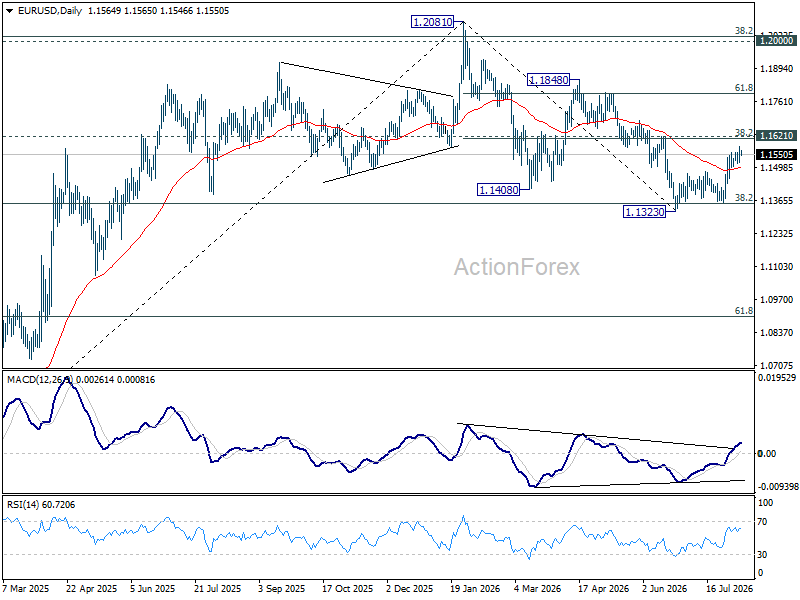
Intraday bias in EUR/USD remains on the upside for 1.1621 cluster resistance (38.2% retracement of 1.2081 to 1.1323 at 1.1613). Decisive break there will solidify the case that fall from 1.2081 has completed as a three wave correction at 1.1323. Further rally would then be seen to 61.8% retracement at 1.1791. On the downside, below 1.1513 minor support will turn intraday bias neutral again first.
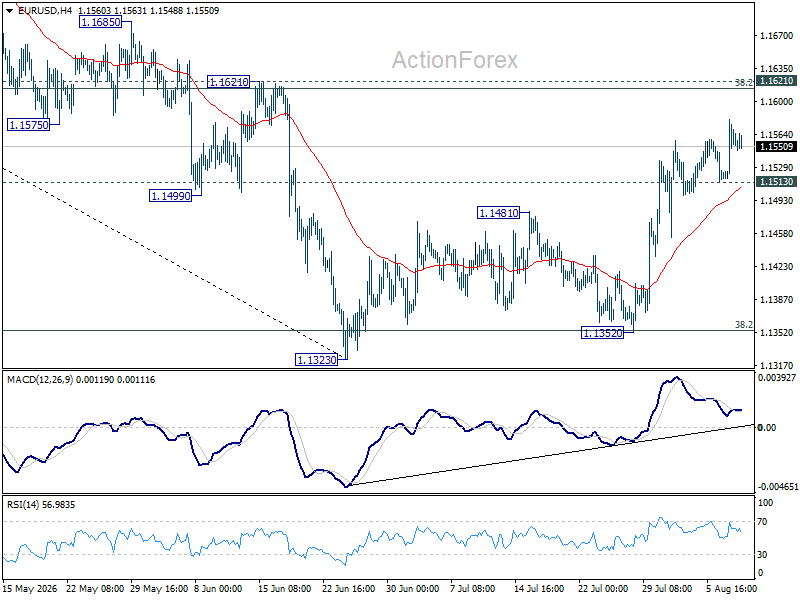
In the bigger picture, focus is staying on 38.2% retracement of 1.0176 to 1.2081 at 1.1353. Decisive break there will revive the case of medium term bearish trend reversal after rejection by 1.2 key cluster resistance level. Further fall should be seen to 61.8% retracement at 1.0904. Nevertheless, strong rebound from 1.1353, followed by break of 1.1621 resistance, will retain medium term bullishness.
USD/JPY Daily Outlook
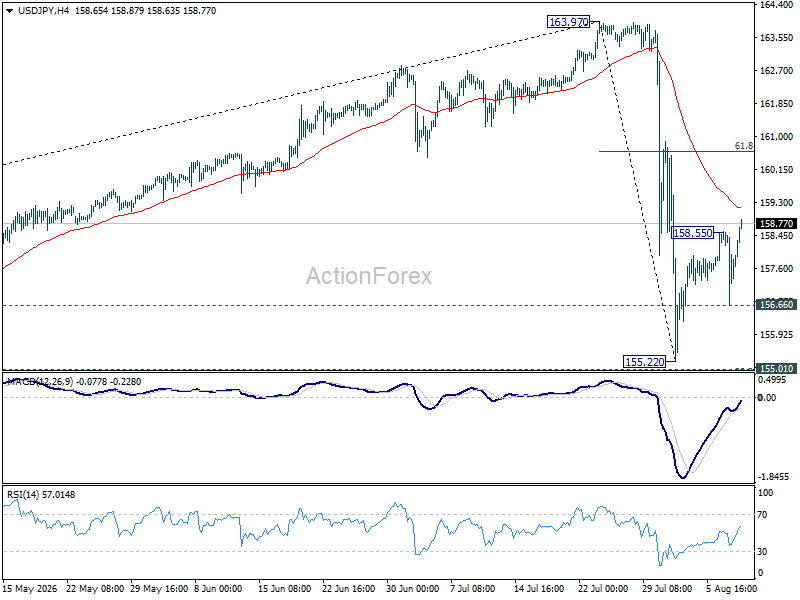
USD/JPY's rebound from 155.22 resumed by breaking through 158.55. Intraday bias is mildly on the upside for 55 4H EMA (now at 159.16). Sustained break there will argue that fall from 163.97 has completed, and target 61.8% retracement of 163.97 to 155.22 at 160.62. On the downside, though, break of 156.66 will bring deeper fall back to 155.22 low.
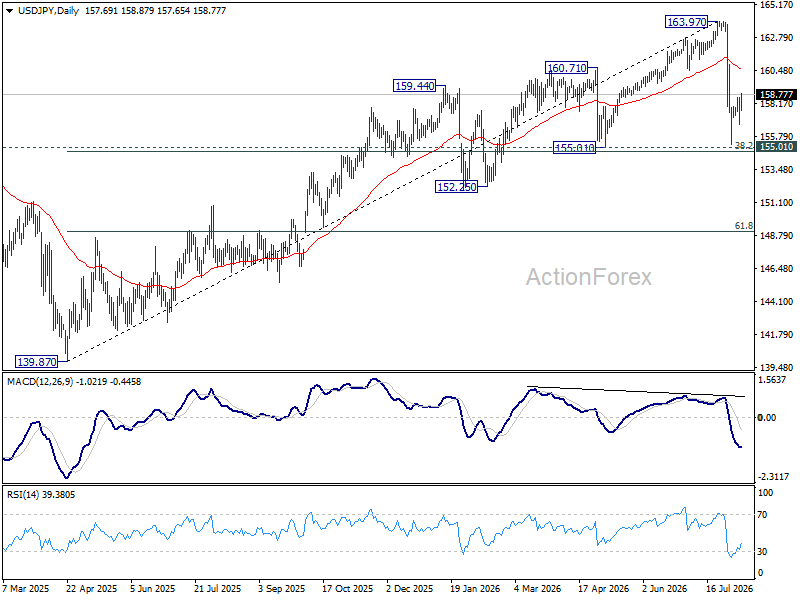
In the bigger picture, as long as 155.01 cluster support (38.2% retracement of 139.87 to 163.97 at 154.76) holds, the larger up trend is still expected to continue through 163.97 after current correction completes. However, firm break of 155.01 will raise the chance that USD/JPY is already in a larger scale correction, and open up deeper fall back to 139.87 (2025 low) in the medium term.
GBP/USD Daily Outlook
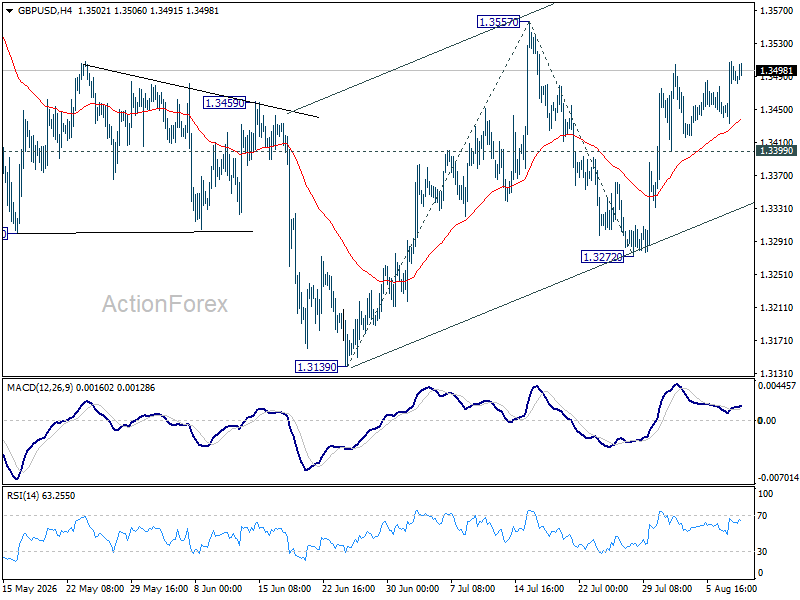
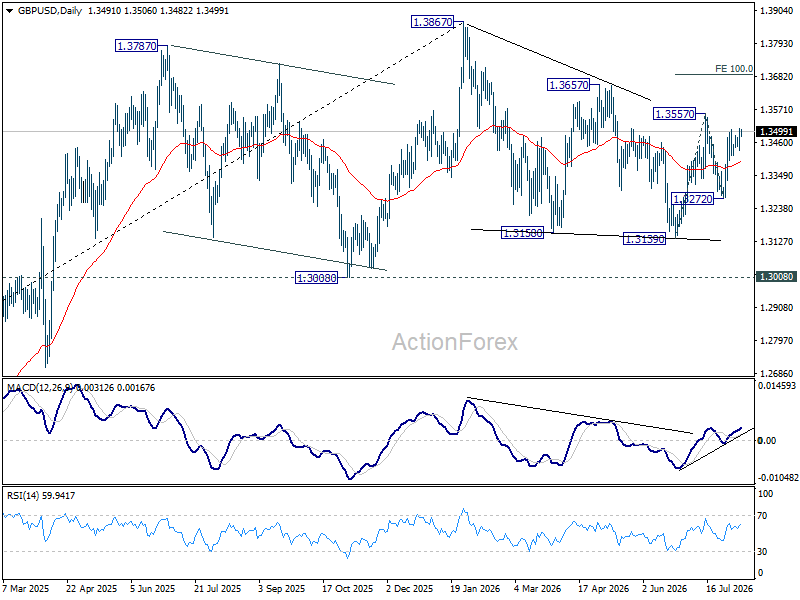
Intraday bias in GBP/USD remains on the upside for 1.3557 resistance. Firm break there will resume the rally from 1.3139 and target 100% projection of 1.3139 to 1.3557 from 1.3272 at 1.3690. On the downside, though, below 1.3399 will bring deeper fall back to 1.3272 support instead.
In the bigger picture, price actions from 1.3867 are a corrective pattern within the broader up trend from 1.0351 (2022 low). With 1.3008 support intact, medium term bullishness is maintained and break of 1.3867 is in favor for a later stage, towards 1.4248 key resistance (2021 high). However, firm break of 1.3008 will at least bring deeper fall to 38.2% retracement of 1.0351 to 1.3867 at 1.2524, with increased risk of bearish reversal.
USD/CHF Daily Outlook
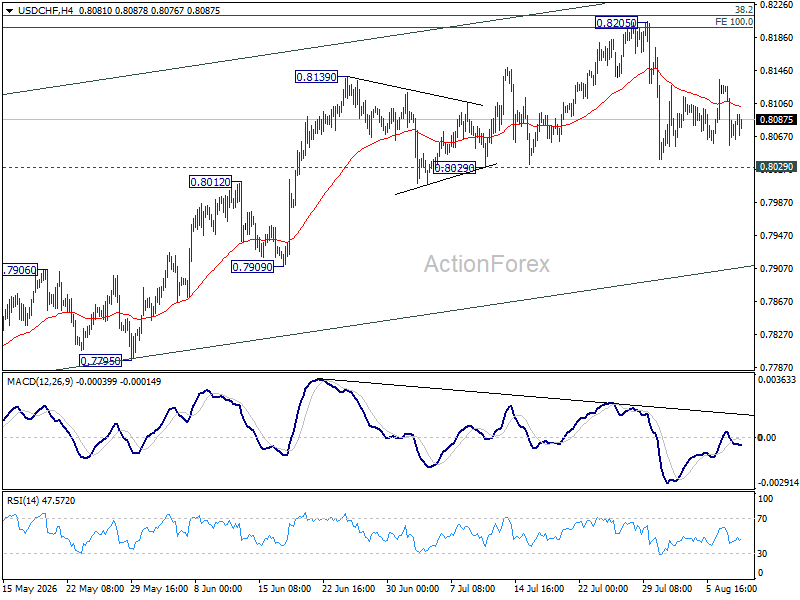
Range trading continues in USD/CHF and intraday bias stays neutral. Further rally is expected as long as 0.8029 support holds. Firm break of 0.8205 will extend the rally from 0.7603 to 161.8% projection 0.7603 to 0.8041 from 0.7600 at 0.8469. However, decisive break of 0.8029 will bring deeper fall to channel support (now at 0.7911).
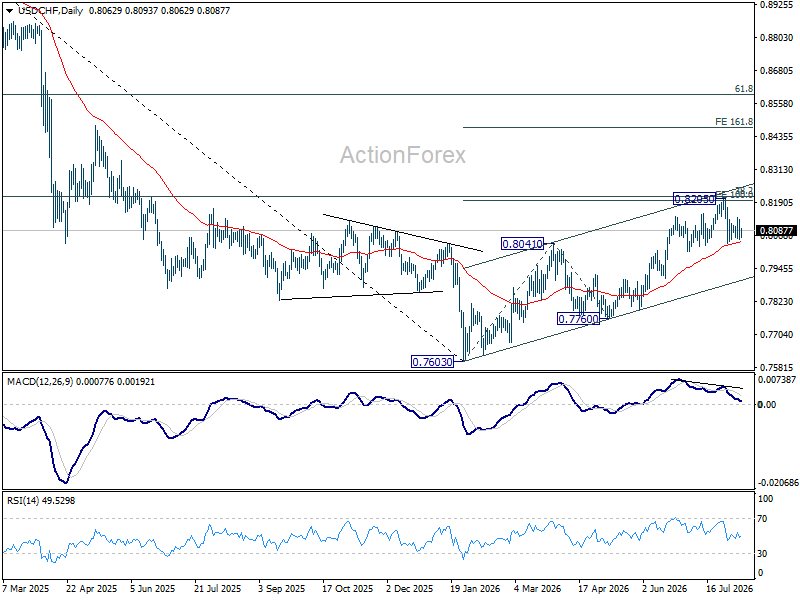
In the bigger picture, focus is now on 38.2% retracement of 0.9200 (2025 high) to 0.7603 at 0.8213. Decisive break will argue that USD/CHF is reversing the medium term trend, and turn focus to 0.8332 support turned resistance (2023 low) for confirmation. Nevertheless, rejection by 0.8213 will maintain medium term bearishness for another fall through 0.7603 at a later stage.
AUD/USD Daily Report
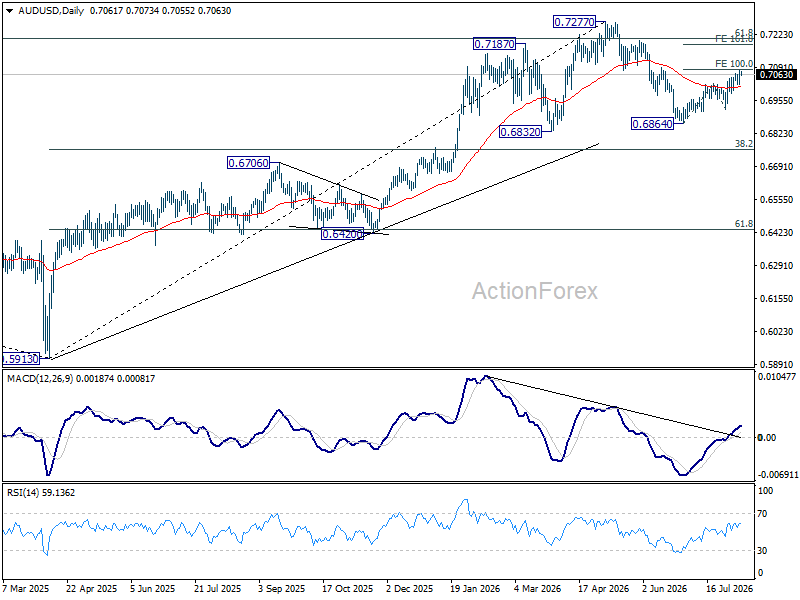
Intraday bias in AUD/USD remains on the upside for 100% projection of 0.6864 to 0.7026 from 0.6921 at 0.7083. Firm break there could prompt upside acceleration to 161.8% projection at 0.7183. On the downside, below 0.7020 minor support will turn intraday bias neutral again first.
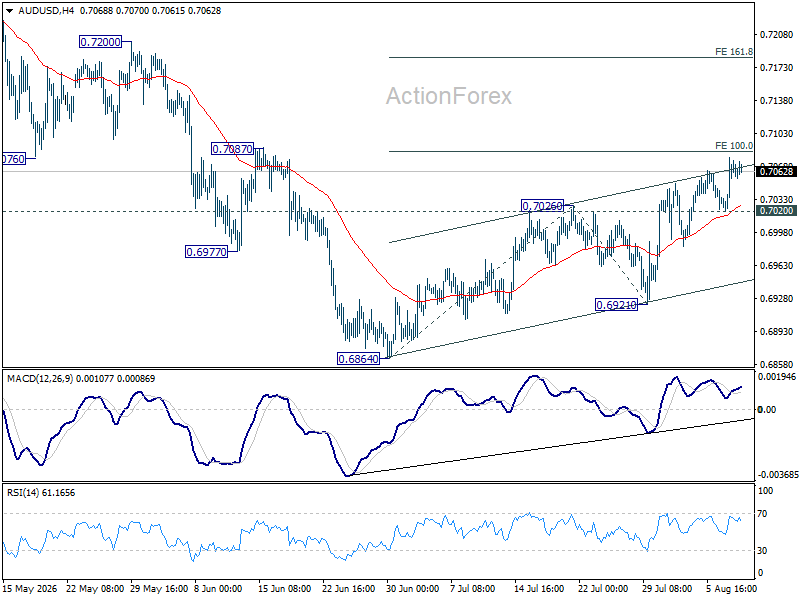
In the bigger picture, price action from 0.7277 medium term top is seen as developing into a correction to rise from 0.5913 only. While deeper decline cannot be ruled out, downside should be contained by 38.2% retracement of 0.5913 to 0.7277 at 0.6756 to bring rebound. Consolidations would continue below 0.7277 for a while, before an eventual upside breakout.
USD/CAD Daily Outlook
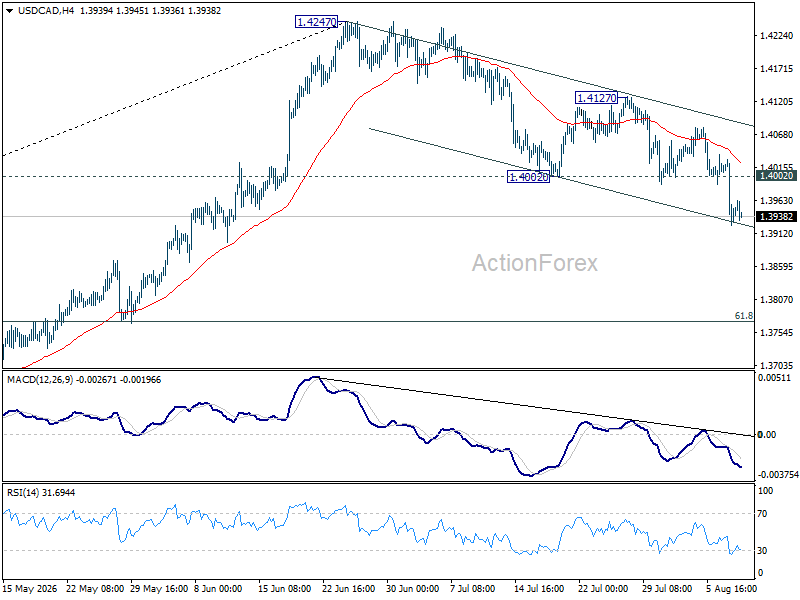
Intraday bias in USD/CHF remains on the downside at this point. Rebound from 1.3480 might have completed with three waves up to 1.4247 already. Deeper fall should be seen to 61.8% retracement at 1.3773. On the upside, above 1.4002 support turned resistance will turn intraday bias neutral first. But risk will stay on the downside as long as 1.4127 resistance holds, in case of recovery.
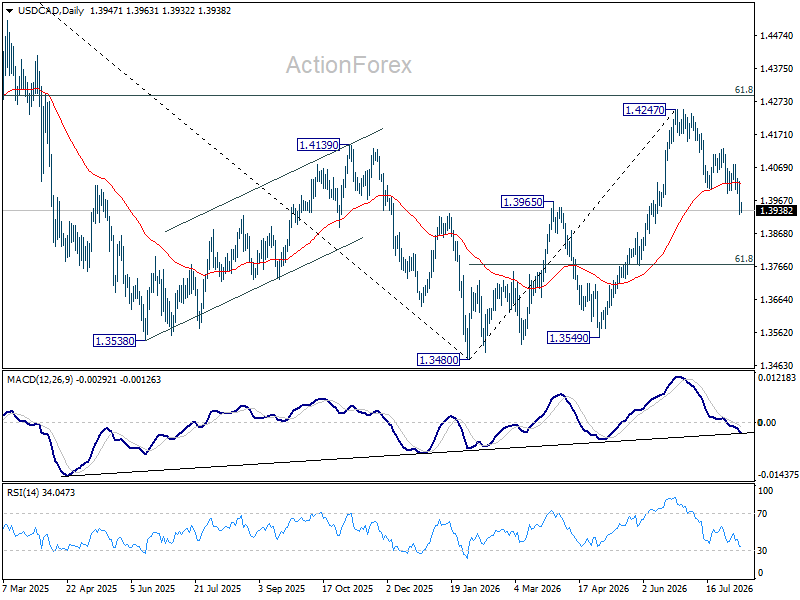
In the bigger picture, rejection below 61.8% retracement of 1.4791 to 1.3480 at 1.4290 suggests that the pattern from 1.4791 medium term is still extending. Firm break of 55 W EMA (now at 1.3883) will solidify this case, and bring deeper decline through 1.3480 low.
GBP/JPY Daily Outlook
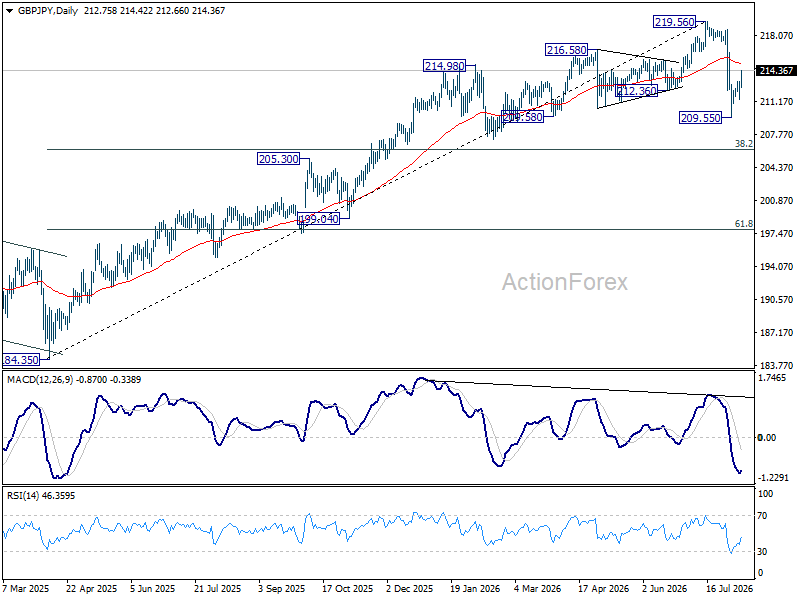
GBP/JPY's break of 55 4H EMA (now at 213.89) suggest that fall from 219.56 has completed at 209.55. Intraday bias is back on the upside for 61.8% retracement of 219.56 to 209.55 at 215.73. Firm break there will pave the way to retest 219.56 high. On the downside, though, break of 211.44 will bring retest of 209.55 low instead.
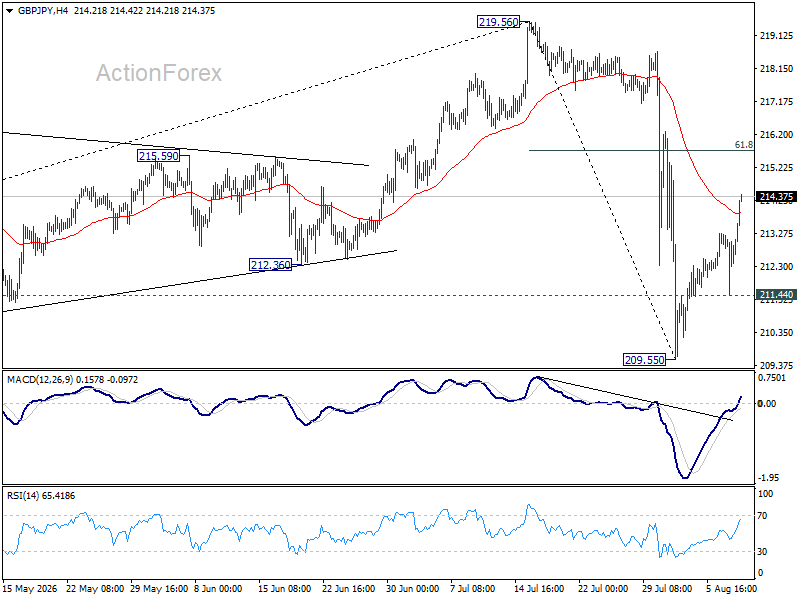
In the bigger picture, focus is on 55 W EMA (now at 209.10). Strong rebound from there will keep the up trend from 123.94 (2020 low) intact. Another rally is expected through 219.56 at a later stage. However, sustained break of 55 W EMA will argue that it's already in a medium term down trend to 184.35 support.
EUR/JPY Daily Outlook
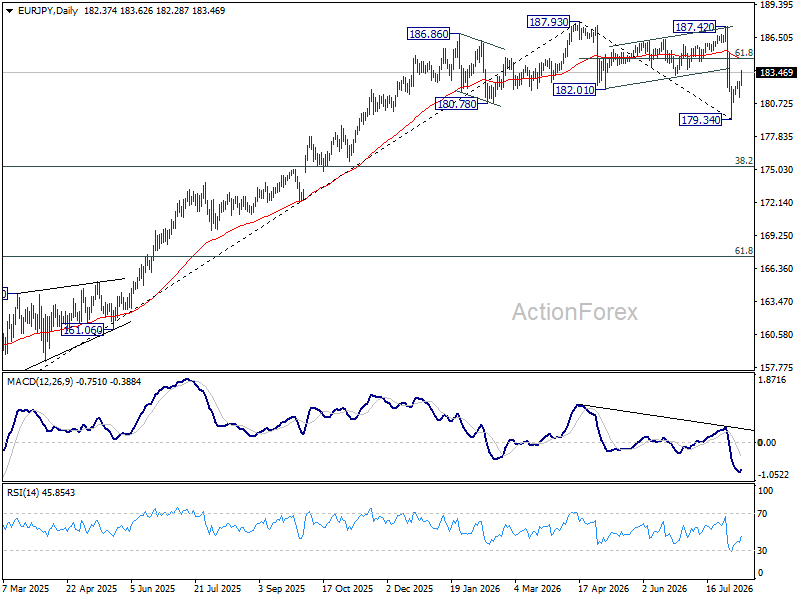
EUR/JPY's break of 55 4H EMA (now at 183.14) suggests that fall from 187.42 has completed at 179.34. Intraday bias is back on the upside. Further rally should be seen to 61.8% retracement of 187.93 to 179.34 at 184.64. Decisive break there will pave the way to retest 187.93 high. On the downside, however, break of 181.29 will bring deeper fall back to retest 179.34 low.
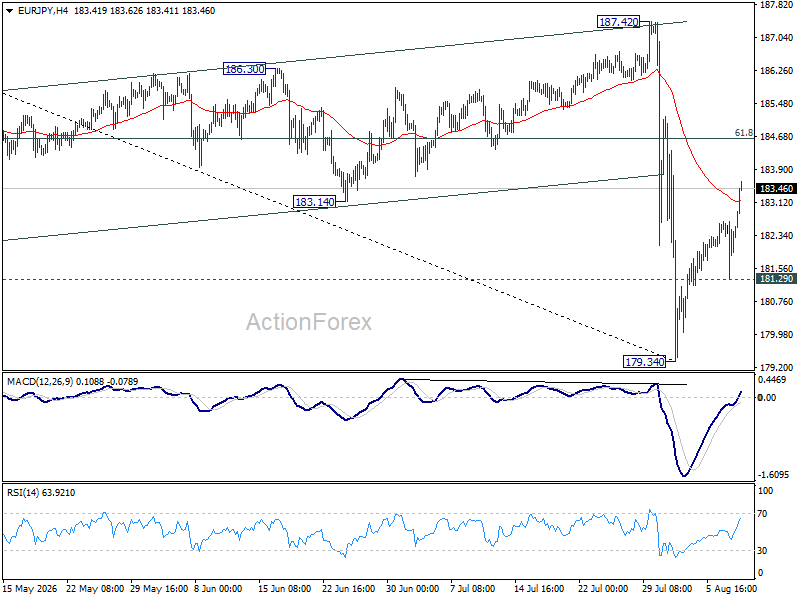
In the bigger picture, focus is now on 55 W EMA (now at 180.42). Strong rebound from there will indicate that the up trend from 114.42 (2020 low) remains intact. That would set up another rally through 187.93 to 78.6% projection of 124.37 (2022 low) to 175.41 (2025 high) from 154.77 at 194.88. However, sustained break of 55 W EMA will argue that it's already in a medium term down trend to 175.41 resistance turned support and below.