Sample Category Title
AUD/USD Daily Report
Daily Pivots: (S1) 0.6981; (P) 0.7010; (R1) 0.7059; More...
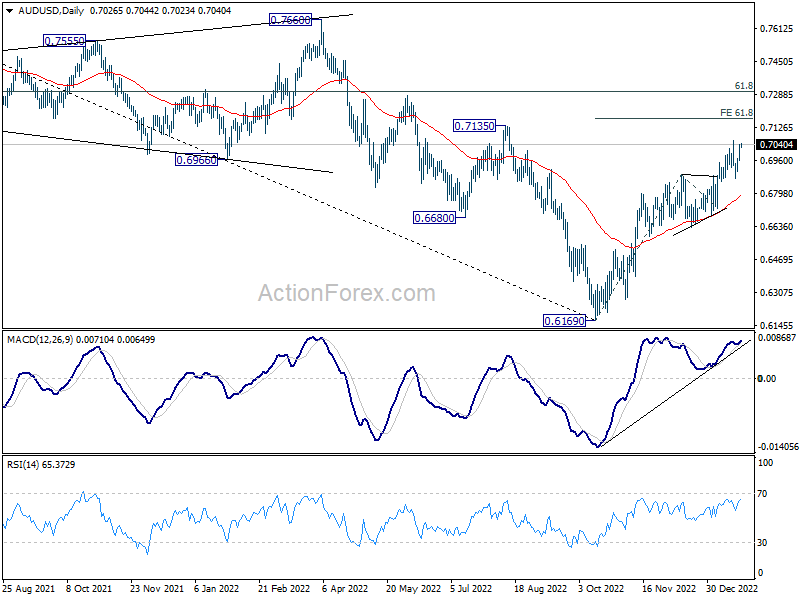
AUD/USD's recovery from 0.6871 extends higher today, but stays below 0.7062 resistance. Intraday bias remains neutral first and further rally is expected. On the upside, break of 0.7062 will resume rise from 0.6169 to 61.8% projection of 0.6169 to 0.6892 from 0.6721 at 0.7168 next. However, on the downside, break of 0.6871 support should confirm short term topping, and turn bias back to the downside for 0.6721 support and possibly below. 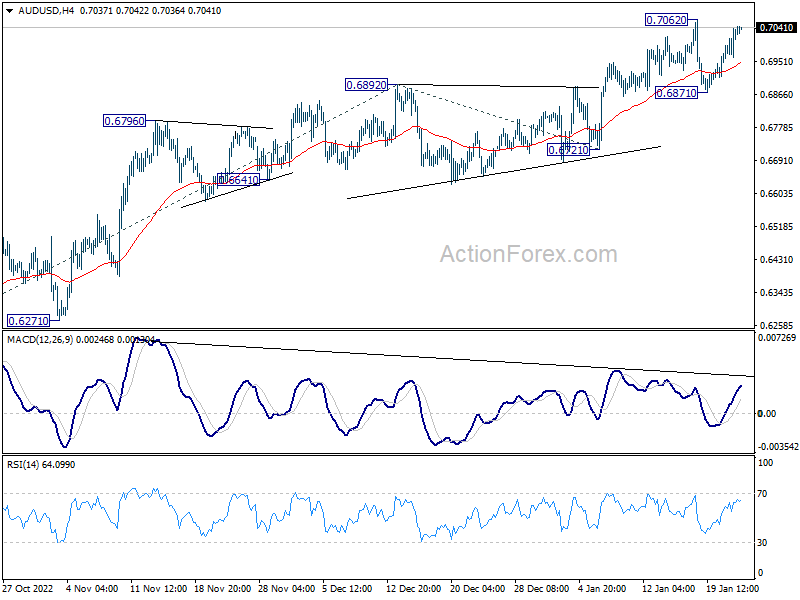
In the bigger picture, corrective decline from 0.8006 (2021 high) should have completed with three waves down to 0.6169 (2022 low). Further rally should be seen to 61.8% retracement of 0.8006 to 0.6169 at 0.7304. Sustained break there will pave the way to retest 0.8006. This will now remain the favored case as long as 0.6721 support holds.
Dollar Softens Mildly in Subdued Trading, Focus Turns to PMIs
Dollar softens mildly again in rather subdued trading in Asia. Many markets are still on Lunar New Year holiday. For now, Australia Dollar is the relatively stronger one for the week, followed by New Zealander. Euro is maintaining some of this week's gains, but there is no follow through buying. Yen is the weakest one despite today's mild recovery, follow by Sterling and Swiss Franc. Dollar and Canadian are mixed. Overall, nearly all major pairs and crosses are trading inside last week's range. Focuses will turn to PMIs from Eurozone, the UK and US.
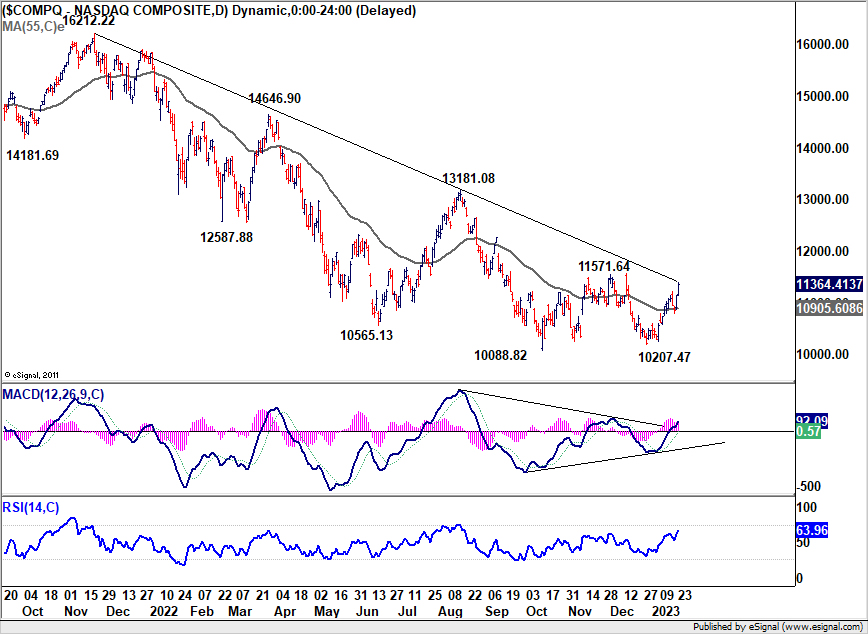
Technically, some attention will be on the development in NASDAQ this week. After yesterday's rally, 11571.64 resistance is within reach. Decisive break there will complete a double bottom pattern (10088.82, 10207.47) which should at least signal medium term bottoming, on bullish convergence condition in daily MACD too. In this case, further rise should then be seen towards 13181.08 resistance. Risk-on sentiment would continue to cap Dollar's rally.
In Asia, at the time of writing, Nikkei is up 1.49%. 10-year JGB yield is up 0.0274 at 0.405. Overnight, DOW rose 0.76%. S&P 500 rose 1.19%. NASDAQ rose 2.01%. 10-year yield rose 0.041 to 3.525.
ECB Lagarde: Rates still have to rise significantly at a steady pace
ECB President Christine Lagarde said in a speech that the "high inflation environment" is a big challenge facing Europe. And, that's "the challenge that concerns me the most".
"We must bring inflation down. And we will deliver on this goal," she emphasized. "We have made it clear that ECB interest rates will still have to rise significantly at a steady pace to reach levels that are sufficiently restrictive, and stay at those levels for as long as necessary."
"In other words, we will stay the course to ensure the timely return of inflation to our target."
Another challenge Lagarde named is to "best protect Europe's critical interests... as the next chapter in the globalisation story is being written". Europe must be "prepared for a future in which the global economy could fragment", and "develop more our own sources of growth."
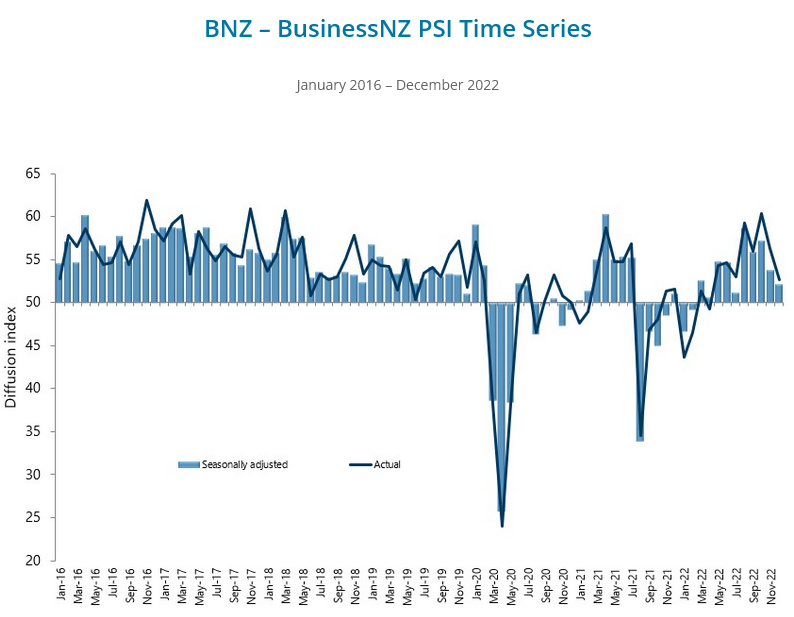
NZ BusinessNZ services dropped to 52.1, marked a significant slowdown
New Zealand BusinessNZ Performance of Services Index dropped from 53.8 to 52.1 in December. Looking at some details, activity/sales dropped notably from 58.2 to 52.1. Employment fell from 51.8 to 47.1. New orders/business rose from 57.4 to 58.4. Stocks/inventories declined from 54.6 to 51.7. Supplier deliveries increased from 46.8 to 53.4.
BNZ Senior Economist Craig Ebert said that "December marked a significant slowdown in a short space of time for the PSI, although the maintained loftiness in New Orders/Business suggested there was still a lot of demand-side pressure at play".
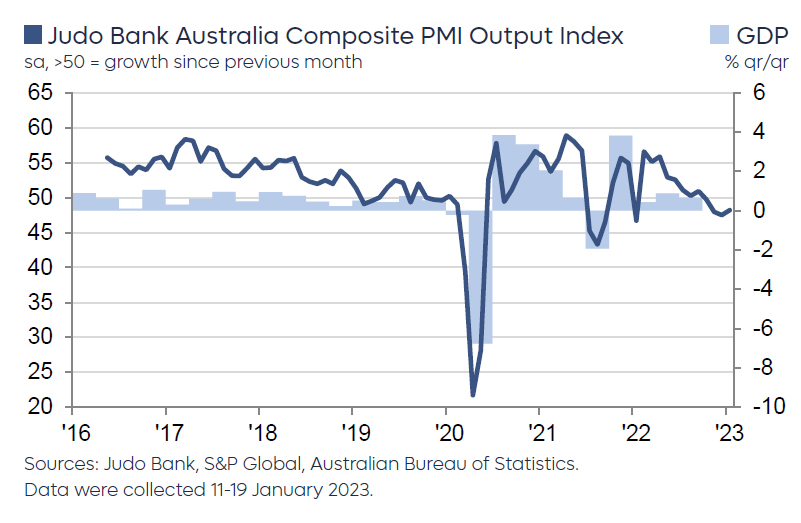
Australia PMI composite rose to 48.2, economy is not slowing sufficiently for RBA
Australia PMI Manufacturing fell from 50.2 to 49.8 in January, a 32-month low. PMI Services rose from 47.3 to 48.3. PMI Composite rose from 47.5 to 48.2.
Warren Hogan, Chief Economic Advisor at Judo Bank said:
"Following eight consecutive rate hikes in 2022, the RBA Board will be meeting for the first time on 7 February. The latest PMI readings may raise the concern that the economy is not slowing sufficiently to bring inflation back to target in a timely manner...
"Inflation pressures may abate somewhat but the risk for the RBA is that inflation remains stubbornly high well into 2023. This could maintain upward pressure on inflation expectations and wages growth. On this basis it seems premature for the RBA to pause the current tightening cycle....
"We expect the RBA to hike the cash rate by 25bp in each of February and March before an extended pause. Further rate hikes may be required later in 2023 if the economy and inflation prove more resilient than current consensus forecasts suggest."
Australia NAB business conditions fell to 12, confidence improved to -1
Australia NAB Business Conditions fell from 20 to 12 in December. Trading conditions fell from 27 to 18. Profitability conditions fell from 19 to 12. Employment conditions also declined from 13 to 8. Business Confidence improved from -4 to -1.
NAB Chief Economist Alan Oster said: "The main message from the December monthly survey is that the growth momentum has slowed significantly in late 2022 while price and purchase cost pressures have probably peaked".
"The gap between current business conditions and business confidence remains wider than usual though has narrowed. Ultimately while on average business reports still healthy activity at present, they don't necessarily expect that to last."
Japan PMI manufacturing unchanged at 48.9, services rose to 52.4
Japan PMI Manufacturing was unchanged at 48.9 in January, below expectation of 49.4. PMI Services rose from 51.5 to 52.4. PMI Composite rose form 49.7 to 50.8.
Laura Denman, Economist at S&P Global Market Intelligence, said: "Japan's private sector kicked off 2023 on a more positive note, as signalled by activity returning to growth territory in January. However, similar to trends recorded over much of the past six months, a divergence between the manufacturing and services sectors has remained.
Looking ahead
Germany Gfk, Swiss trade balance; Eurozone PMIs and UK PMIs will be the focuses in European session. Later in the day, US will also release PMIs too.
AUD/USD Daily Report
Daily Pivots: (S1) 0.6981; (P) 0.7010; (R1) 0.7059; More...
AUD/USD's recovery from 0.6871 extends higher today, but stays below 0.7062 resistance. Intraday bias remains neutral first and further rally is expected. On the upside, break of 0.7062 will resume rise from 0.6169 to 61.8% projection of 0.6169 to 0.6892 from 0.6721 at 0.7168 next. However, on the downside, break of 0.6871 support should confirm short term topping, and turn bias back to the downside for 0.6721 support and possibly below.
In the bigger picture, corrective decline from 0.8006 (2021 high) should have completed with three waves down to 0.6169 (2022 low). Further rally should be seen to 61.8% retracement of 0.8006 to 0.6169 at 0.7304. Sustained break there will pave the way to retest 0.8006. This will now remain the favored case as long as 0.6721 support holds.
Economic Indicators Update
| GMT | Ccy | Events | Actual | Forecast | Previous | Revised |
|---|---|---|---|---|---|---|
| 22:00 | AUD | Manufacturing PMI Jan P | 49.8 | 50.2 | ||
| 22:00 | AUD | Services PMI Jan P | 48.3 | 47.3 | ||
| 00:30 | AUD | NAB Business Conditions Dec | 12 | 20 | ||
| 00:30 | AUD | NAB Business Confidence Dec | -1 | -4 | ||
| 00:30 | JPY | Manufacturing PMI Jan P | 48.9 | 49.4 | 48.9 | |
| 07:00 | EUR | Germany Gfk Consumer Confidence Feb | -33 | -37.8 | ||
| 07:00 | CHF | Trade Balance (CHF) Dec | 3.23B | 2.31B | ||
| 07:00 | GBP | Public Sector Net Borrowing (GBP) Dec | 20.3B | 21.2B | ||
| 08:15 | EUR | France Manufacturing PMI Jan P | 49.6 | 49.2 | ||
| 08:15 | EUR | France Services PMI Jan P | 49.7 | 49.5 | ||
| 08:30 | EUR | Germany Manufacturing PMI Jan P | 47.5 | 47.1 | ||
| 08:30 | EUR | Germany Services PMI Jan P | 49.6 | 49.2 | ||
| 09:00 | EUR | Eurozone Manufacturing PMI Jan P | 48.1 | 47.8 | ||
| 09:00 | EUR | Eurozone Services PMI Jan P | 49.4 | 49.8 | ||
| 09:30 | GBP | Manufacturing PMI Jan P | 45.4 | 45.3 | ||
| 09:30 | GBP | Services PMI Jan P | 46.7 | 49.9 | ||
| 14:45 | USD | Manufacturing PMI Jan P | 46.1 | 46.2 | ||
| 14:45 | USD | Services PMI Jan P | 44.5 | 44.7 |
GBP/USD Hesitates But More Gains Seem Possible
Key Highlights
- GBP/USD started a fresh increase above the 1.2350 resistance.
- A connecting bullish trend line is forming with support near 1.2340 on the 4-hours chart.
- EUR/USD extended its increase above the 1.0880 resistance.
- The US Manufacturing PMI could decline from 46.2 to 46.1 in Jan 2022 (Preliminary).
GBP/USD Technical Analysis
The British started a major increase above the 1.2200 resistance against the US Dollar. GBP/USD even broke the 1.2320 level to move into a positive zone.
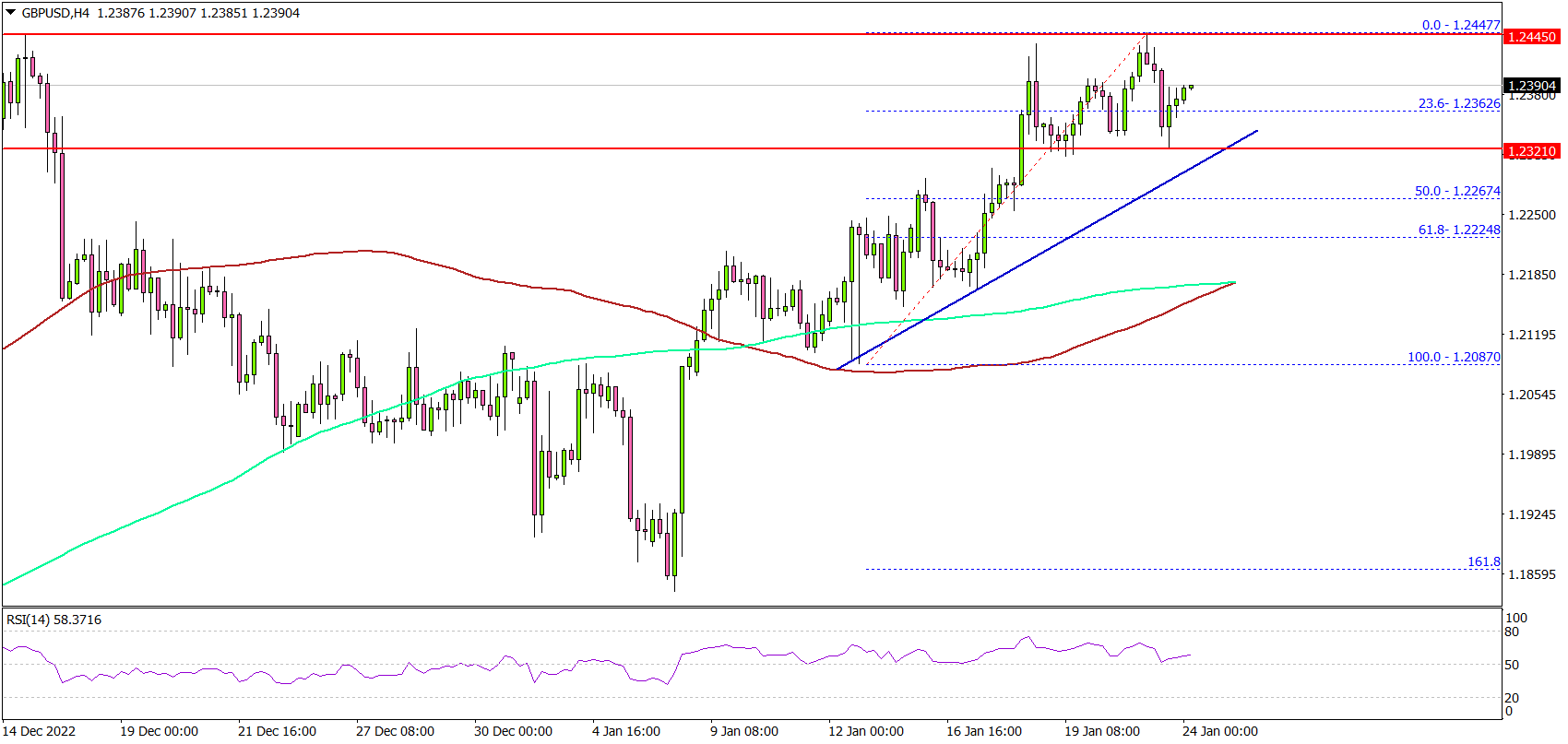
Looking at the 4-hours chart, the pair settled nicely above the 1.2350 level, the 100 simple moving average (red, 4-hours) and the 200 simple moving average (green, 4-hours).
The pair even cleared the 1.2400 resistance and tested the 1.2450 zone. On the upside, an initial resistance is near the 1.2400 level. The next major resistance may perhaps be near 1.2450. A clear move above the 1.2450 resistance might start a steady increase towards the 1.2550 resistance zone.
Any more gains could open the doors for a move towards the 1.2700 level. The next key hurdle is near 1.2800, above which the pair could climb towards the 1.3000 resistance zone.
On the downside, there is a major support at 1.2320. There is also a connecting bullish trend line forming with support near 1.2340 on the same chart. The next major support is near the 1.2240 level. A downside break below the 1.2240 zone might push the pair lower.
The next major support sits near the 1.2150 level. Any more losses might open the doors for a move towards the 1.2000 support zone.
Looking at EUR/USD, the pair extended its increase, but the bears seem to be active above the 1.0900 resistance zone.
Economic Releases
- Germany’s Manufacturing PMI for Jan 2022 (Preliminary) - Forecast 47.9, versus 47.1 previous.
- Germany’s Services PMI for Jan 2022 (Preliminary) - Forecast 49.7, versus 49.2 previous.
- Euro Zone Manufacturing PMI for Jan 2022 (Preliminary) – Forecast 48.5, versus 47.8 previous.
- Euro Zone Services PMI for Jan 2022 (Preliminary) – Forecast 50.2, versus 49.8 previous.
- UK Manufacturing PMI for Jan 2022 (Preliminary) – Forecast 45.0, versus 45.3 previous.
- UK Services PMI for Jan 2022 (Preliminary) – Forecast 49.9, versus 49.9 previous.
- US Manufacturing PMI for Jan 2022 (Preliminary) – Forecast 46.1, versus 46.2 previous.
- US Services PMI for Jan 2022 (Preliminary) – Forecast 44.5, versus 44.7 previous.
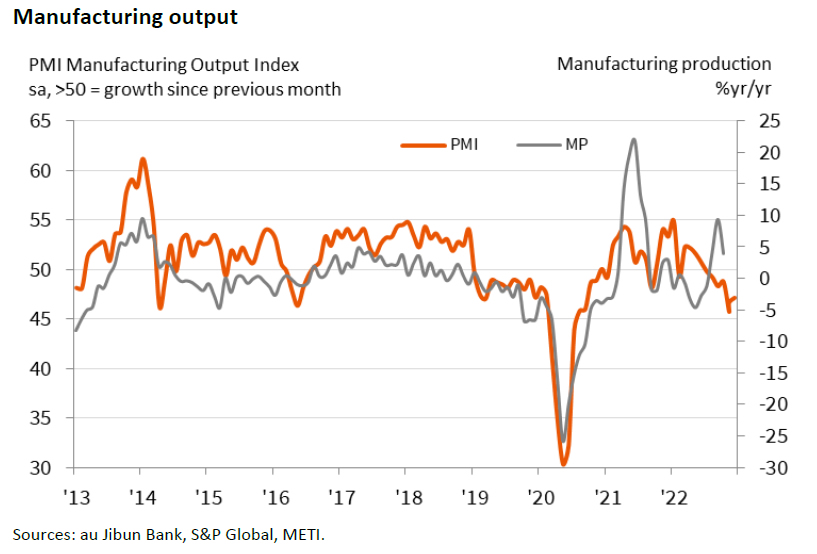
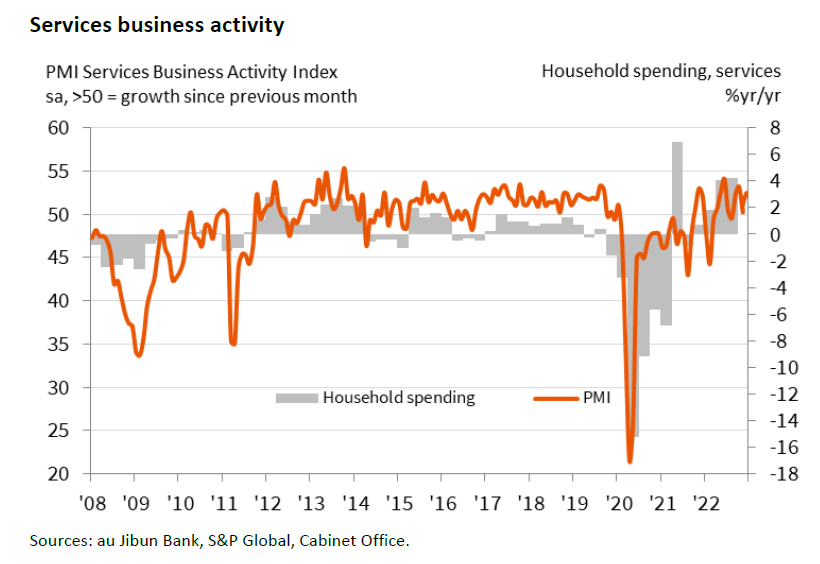
Japan PMI manufacturing unchanged at 48.9, services rose to 52.4
Japan PMI Manufacturing was unchanged at 48.9 in January, below expectation of 49.4. PMI Services rose from 51.5 to 52.4. PMI Composite rose form 49.7 to 50.8.
Laura Denman, Economist at S&P Global Market Intelligence, said: "Japan's private sector kicked off 2023 on a more positive note, as signalled by activity returning to growth territory in January. However, similar to trends recorded over much of the past six months, a divergence between the manufacturing and services sectors has remained.
Australia NAB business conditions fell to 12, confidence improved to -1
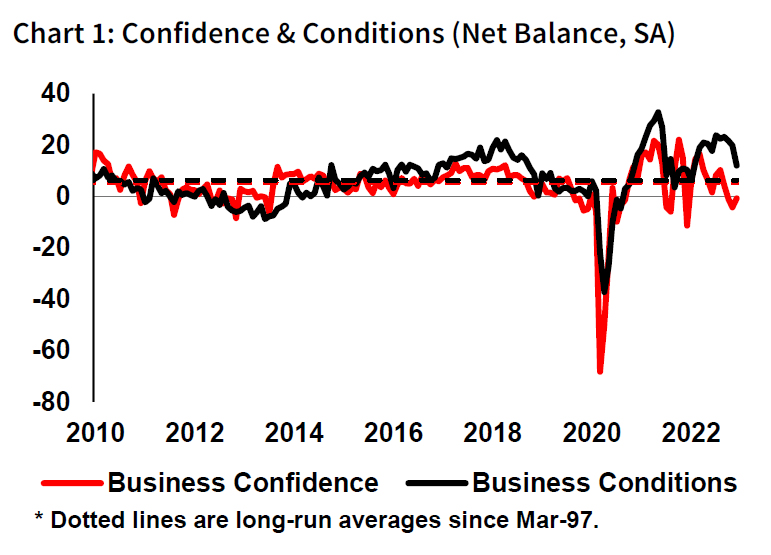
Australia NAB Business Conditions fell from 20 to 12 in December. Trading conditions fell from 27 to 18. Profitability conditions fell from 19 to 12. Employment conditions also declined from 13 to 8. Business Confidence improved from -4 to -1.
NAB Chief Economist Alan Oster said: "The main message from the December monthly survey is that the growth momentum has slowed significantly in late 2022 while price and purchase cost pressures have probably peaked".
"The gap between current business conditions and business confidence remains wider than usual though has narrowed. Ultimately while on average business reports still healthy activity at present, they don't necessarily expect that to last."
Australia PMI composite rose to 48.2, economy is not slowing sufficiently for RBA
Australia PMI Manufacturing fell from 50.2 to 49.8 in January, a 32-month low. PMI Services rose from 47.3 to 48.3. PMI Composite rose from 47.5 to 48.2.
Warren Hogan, Chief Economic Advisor at Judo Bank said:
"Following eight consecutive rate hikes in 2022, the RBA Board will be meeting for the first time on 7 February. The latest PMI readings may raise the concern that the economy is not slowing sufficiently to bring inflation back to target in a timely manner...
"Inflation pressures may abate somewhat but the risk for the RBA is that inflation remains stubbornly high well into 2023. This could maintain upward pressure on inflation expectations and wages growth. On this basis it seems premature for the RBA to pause the current tightening cycle....
"We expect the RBA to hike the cash rate by 25bp in each of February and March before an extended pause. Further rate hikes may be required later in 2023 if the economy and inflation prove more resilient than current consensus forecasts suggest."
NZ BusinessNZ services dropped to 52.1, marked a significant slowdown
New Zealand BusinessNZ Performance of Services Index dropped from 53.8 to 52.1 in December. Looking at some details, activity/sales dropped notably from 58.2 to 52.1. Employment fell from 51.8 to 47.1. New orders/business rose from 57.4 to 58.4. Stocks/inventories declined from 54.6 to 51.7. Supplier deliveries increased from 46.8 to 53.4.
BNZ Senior Economist Craig Ebert said that "December marked a significant slowdown in a short space of time for the PSI, although the maintained loftiness in New Orders/Business suggested there was still a lot of demand-side pressure at play".
ECB Lagarde: Rates still have to rise significantly at a steady pace
ECB President Christine Lagarde said in a speech that the "high inflation environment" is a big challenge facing Europe. And, that's "the challenge that concerns me the most".
"We must bring inflation down. And we will deliver on this goal," she emphasized. "We have made it clear that ECB interest rates will still have to rise significantly at a steady pace to reach levels that are sufficiently restrictive, and stay at those levels for as long as necessary."
"In other words, we will stay the course to ensure the timely return of inflation to our target."
Another challenge Lagarde named is to "best protect Europe's critical interests... as the next chapter in the globalisation story is being written". Europe must be "prepared for a future in which the global economy could fragment", and "develop more our own sources of growth."
Will BoC Press the Hike Button One More Time?
After signaling that it will be considering whether interest rates need to rise further on a meeting-by-meeting basis, the Bank of Canada was seen as the first major central bank to end its tightening crusade. However, the stellar employment numbers for December sparked speculation that another quarter-point hike may be delivered at this week’s gathering, on Wednesday, before the curtain falls on rate hikes. Will the BoC meet those expectations? And if so, how will the Canadian dollar react?
Inflation and employment allow another hike
At its December meeting, the Bank of Canada raised interest rates by 50bps, confounding expectations of a quarter-point hike. However, what attracted more attention was the change in the Bank’s guidance, with officials noting that they will be considering whether the policy interest rate needs to rise any further, hinting that this could have been their final move in this tightening crusade.
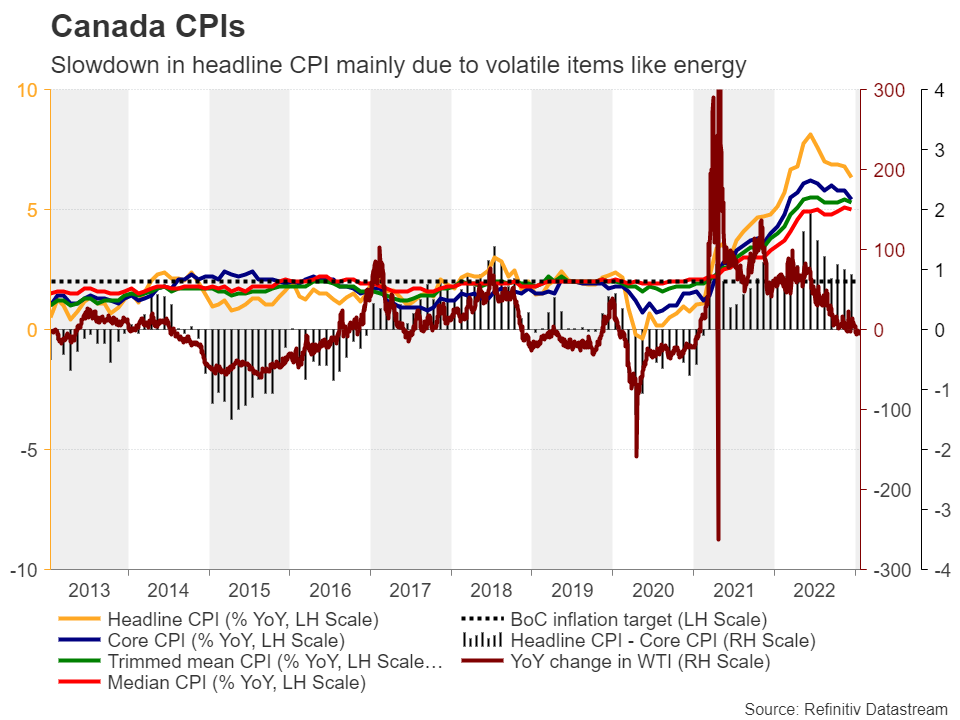
The market took that statement seriously and immediately priced in no more increments. However, data releases thereafter convinced investors that December may not have been the last time officials pressed the rate-hike button. Yes, headline inflation slowed further in December, to 6.3% y/y from 6.8%, but underlying metrics have not shown signs of a significant slowdown yet. This suggests that headline inflation may be easing due to the decline in prices of volatile items, like energy. With all underlying metrics at 5% or higher, another rate hike cannot be ruled out.
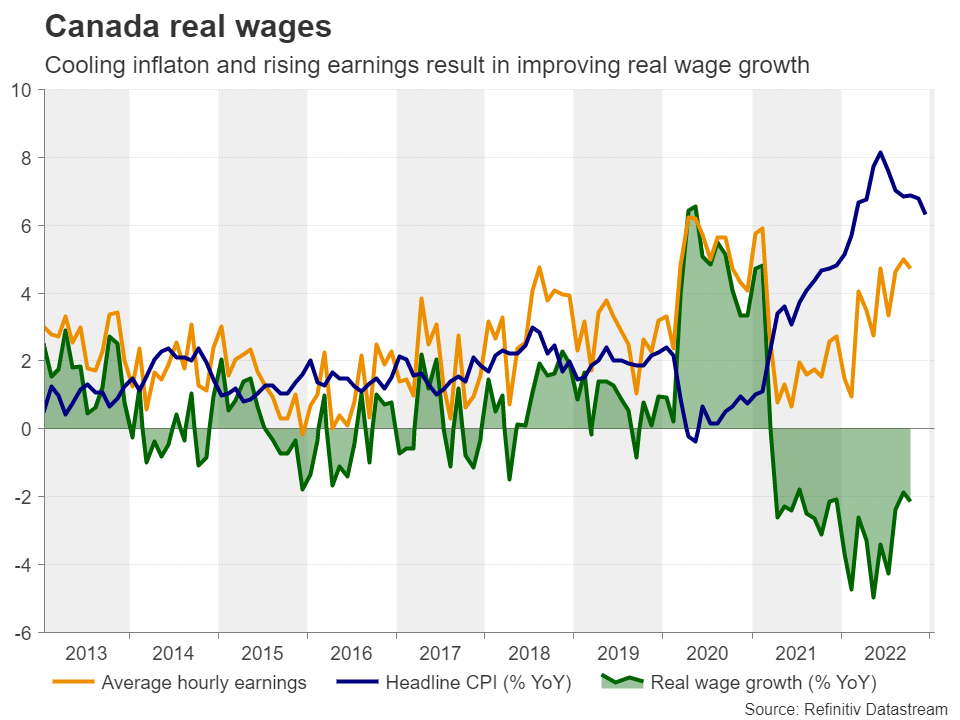
What adds more credence to the argument of another hike is the nation’s latest employment report, which revealed that the economy added 104k jobs during December, pushing the jobless rate down to 5.0%, just a tick above the record low seen over the summer. What’s more, the cooling of inflation since the summer months, combined with the upward trend in salaries, resulted in improvement in real wage growth. Although wages continued to contract, it was at a much slower pace than in May, when they fell at their steepest rate in more than 20 years.
Investors anticipate rate cuts later this year?
Having said all that though, the BoC business outlook survey for the last quarter of 2022 showed that most businesses expect a mild recession over the next year due to high interest rates curtailing investment plans and consumer spending. Such concerns corroborate investors’ view that this week’s hike may be the last one and that Canadian policymakers may need to start considering rate reductions at some point later this year.
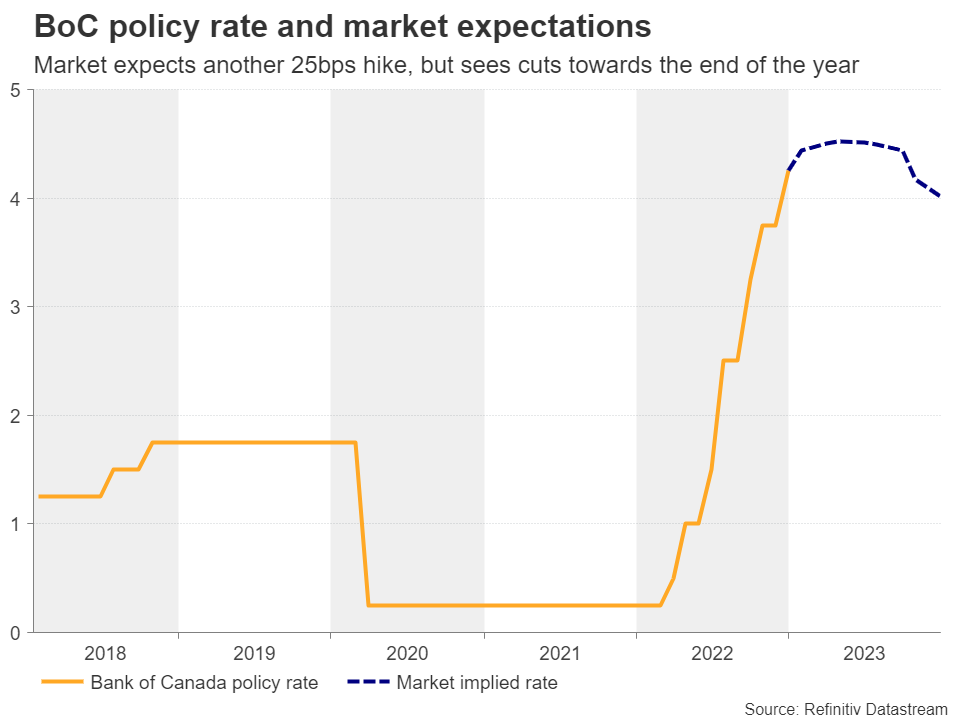
Specifically, investors are currently assigning a nearly 73% probability for a 25bps hike with the remaining 27% pointing to no action. More interestingly, they are expecting 50bps worth of rate cuts by the end of the year.
Risks surrounding the Loonie likely tilted to the upside
Ergo, considering that a quarter-point increment is not fully priced in, the Canadian dollar could strengthen if indeed policymakers decide to press the hike button, and it could gain even more if they reiterate the guidance that they will be considering whether more hikes are needed. That was the wording that hurt the Loonie at the last meeting, but with the market now almost certain that there will be no other rate rise, the same phrase could be interpreted as leaving the door open to additional hikes. Also, any communication underscoring that interest rates will stay untouched for a prolonged period after they hit their peak could add extra fuel given the market’s pricing for cuts later this year. For the Loonie to come under selling pressure, BoC officials would need to refrain from hiking this week or deliver the 25bps and officially announce the end of this tightening cycle.
Putting everything together, the risks surrounding the Canadian dollar arising from Wednesday’s gathering may be tilted to the upside, while in the slightly bigger picture, China’s reopening may be an extra variable with a positive sign. China is the world’s top crude importer while Canada holds the fourth place in terms of production. Thus, any increase in crude demand due to China’s reopening may well benefit the Canadian economy and thereby the Loonie.
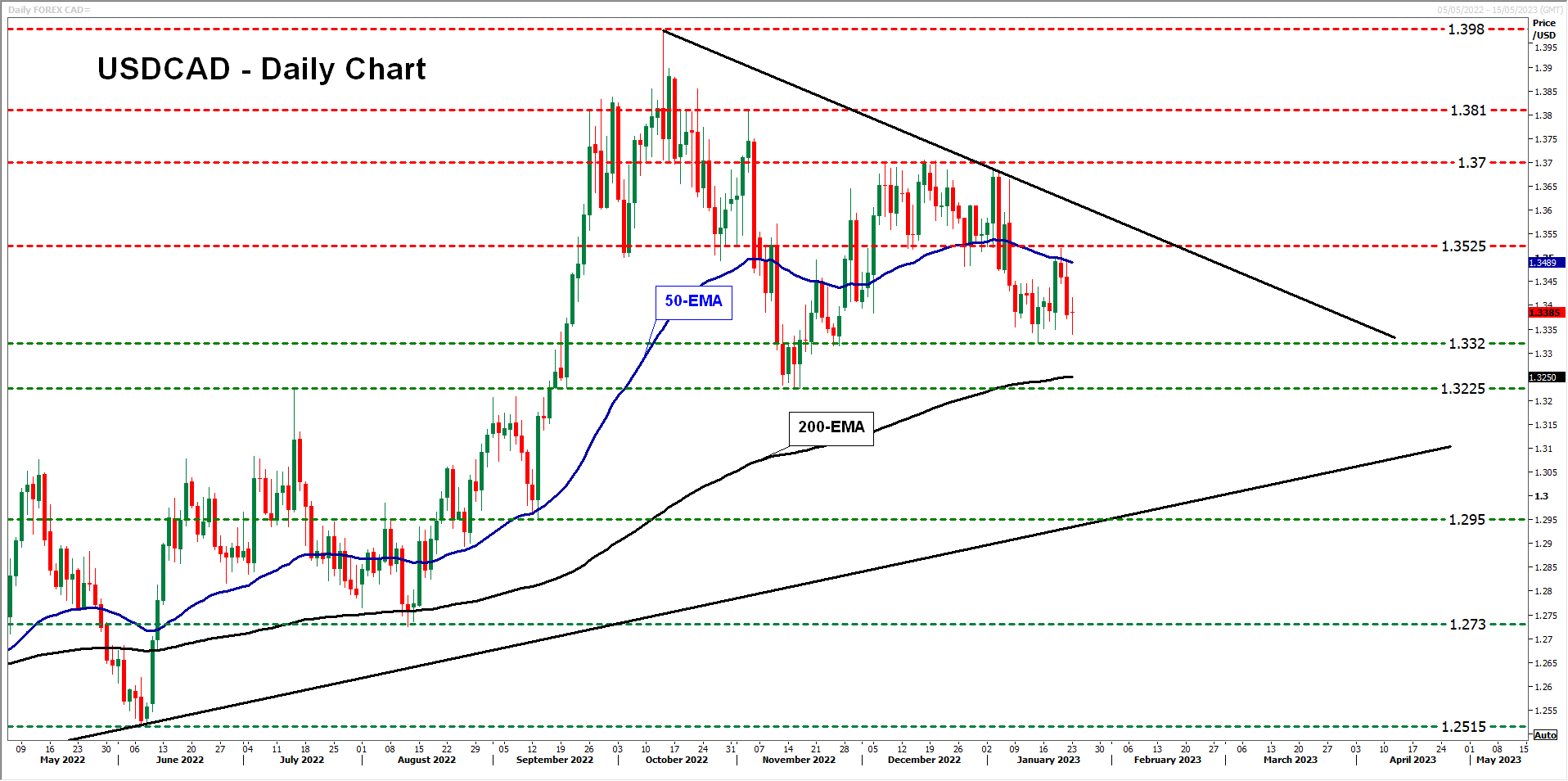
From a technical standpoint, the outlook of dollar/loonie could darken upon a break below the 1.3225 zone, which provided support back in November and acted as resistance in July. This may encourage the bears to dive all the way down to the low of September 13, at 1.2950.
For the picture to brighten again, the bulls may need to overcome the 1.3700 obstacle, which provided strong resistance in December. Such a rebound could initially pave the way towards the peak of November at 1.3810, the break of which set the stage for extensions towards the two-and-a-half-year high of 1.3980, hit on October 9.
CADJPY Wave Analysis
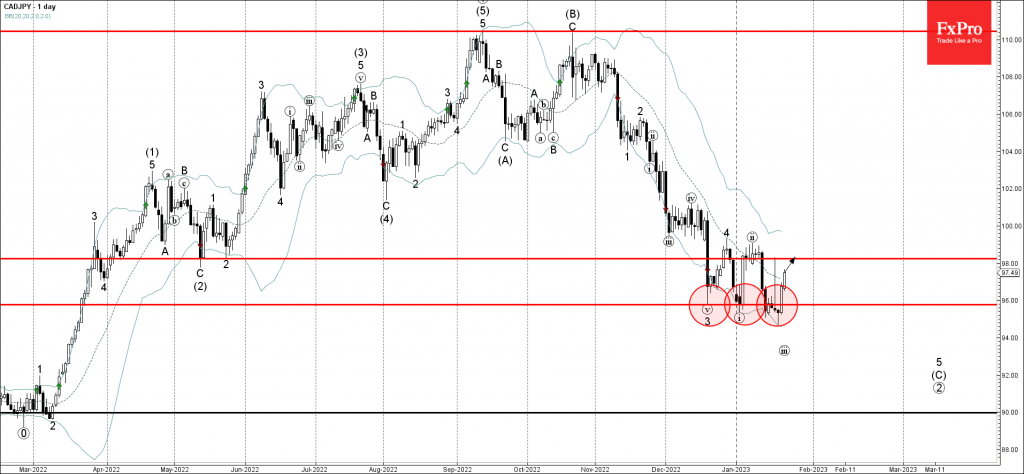
- CADJPY reversed from support level 96.00
- Likely to rise to resistance level 98.00
CADJPY currency pair recently reversed up from the pivotal support level 96.00 (which has been reversing the price from the middle of December) intersecting with the daily Bollinger Band.
The upward reversal from the support level 96.00 created the daily Hammer – which stopped the earlier impulse waves 5 and (C).
CADJPY currency pair can be expected to rise further toward the next resistance level 98.00 (top of the earlier sharp reversal pivot from last week).