Sample Category Title
Dollar Index – Bears Take a Breather but Expected to Hold Grip While 100 Barrier Caps
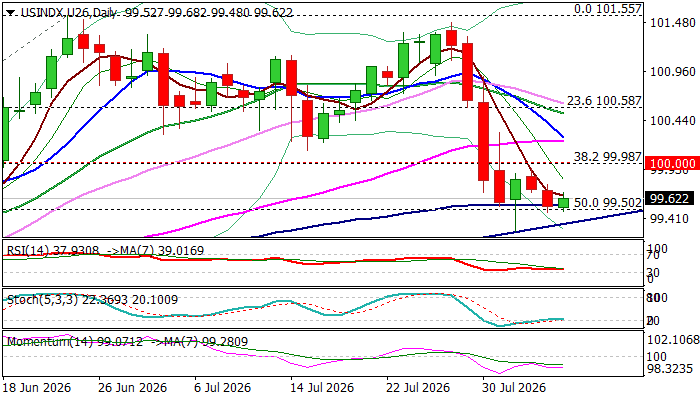
The dollar index moves within a narrow consolidation above seven-week low and remains biased lower, following last week’s sharp fall (down 1.5% for the week).
Near-term action was so far contained by daily cloud base / 50% retracement of 97.44/101.55 / 100DMA at 99.50 zone, which provides solid support.
Daily studies are predominantly bearish (strong negative momentum / multiple MA bear-crosses) with prolonged consolidation reflecting the uncertainty over the situation in the Middle East, as media reports talk about peace talks, but traders remain very cautious.
The dollar would come under fresh pressure if peace talks succeeded (de-escalation would ease inflation risk, lower pressure on Fed for policy tightening), but stall of the most recent agreement between the US and Iran, warns that history can repeat.
Near term outlook is expected to remain bearishly aligned while the price stays below psychological 100 level (reverted to resistance and reinforced by broken Fibo 38.2% of 97.44/101.55).
Firm break of 99.50 zone supports (including trendline support at 99.43) would generate initial signal of bearish continuation, as well as reversal pattern on formation of a double-top (101.55/48) on daily chart and expose targets at 99.00 (200DMA / Fibo 61.8%) and 98.41 (Fibo 76.4%) in extension.
Caution on break of 100 barrier, though fresh positive signal would require confirmation on extension above 55DMA (101.23).
Res: 99.90; 100.00; 100.23; 100.52
Sup: 99.50; 99.26; 99.00; 98.41
Markets Pause as Hormuz Optimism Awaits Proof
Why gains across equities, yields, Gold, FX and oil all stalled at once as the promised Hormuz breakthrough failed to arrive
Why it matters: Treasury Secretary Bessent's Tuesday-or-Wednesday deadline for a Hormuz deal has passed without a breakthrough. Progress is real: Iran and Oman have reportedly moved closer to a temporary shipping arrangement. But the unresolved question of whether Iran retains tolling rights after any temporary deal expires is what's keeping markets from fully committing to the reopening scenario.
A Week of Gains Meets a Day of Hesitation
The market's dominant theme this week has not disappeared, it has simply reached a point where optimism alone is no longer enough. After several sessions of strong gains in equities, falling Treasury yields, a weaker Dollar and surging precious metals, investors are becoming noticeably more cautious as they wait for concrete developments before extending positions.
US equity futures pointed to a flat open after the Dow's record-setting advance, the 10-year Treasury yield edged higher after testing 4.61%, and Gold's rally stalled after reaching the 4,300 area. Currency markets told a similar story, with most major pairs and crosses slipping back into last week's trading ranges. Brent crude also rebounded from an intraday low of 78.11 to hover around 80, suggesting traders are not willing to sell first and ask questions later.
Thursday's Stall Across Assets
- US equity futures: flat open after the Dow's record-setting advance
- 10-year Treasury yield: edged higher after testing 4.61%
- Gold: rally stalled after reaching the 4,300 area
- Currency markets: most pairs and crosses back inside last week's trading ranges
- Brent crude: rebounded from an intraday low of 78.11 to hover around 80
Why the Rally Stalled: Bessent's Deadline Passed Without a Deal
The reason is clear. Markets spent the early part of the week pricing in the expectation that the Strait of Hormuz would soon reopen, helping remove a key upside risk to energy prices and, by extension, to global inflation. Treasury Secretary Scott Bessent's suggestion that an agreement could come on Tuesday or Wednesday accelerated that repricing. But Thursday has arrived without the promised breakthrough.
Progress Is Real, But Key Details Remain Unresolved
Progress is still evident. Iranian officials say Tehran and Oman have moved closer to agreement on a temporary shipping arrangement, while several media reports indicate that vessels would pass through the Strait without tolls during a proposed 60-day period. Yet important uncertainties remain. Other reports suggest Iran and Oman could instead charge and split a "service fee," while the longer-term framework beyond the temporary arrangement has yet to be defined.
Perhaps the biggest unanswered question is whether Iran would ultimately retain the right to levy tolls once the temporary agreement expires. Those details matter because they determine whether markets are witnessing a lasting reduction in geopolitical risk or merely another short-lived pause.
What's Agreed vs. What's Still Unresolved
| Status | Detail |
|---|---|
| Reported progress | Iran and Oman have moved closer to a temporary shipping arrangement |
| One version | Vessels pass through the Strait without tolls during a proposed 60-day period |
| Competing version | Iran and Oman could instead charge and split a "service fee" |
| Still undefined | The longer-term framework beyond the temporary arrangement |
| Biggest open question | Whether Iran retains the right to levy tolls once the temporary agreement expires |
Why Every Asset Is Stalling at the Same Technical Level
That uncertainty explains why recent moves across asset classes have begun to stall simultaneously. Brent has yet to break decisively below the $78 area that would signal markets are fully embracing a reopening scenario. Gold, despite improving technical momentum and rapidly fading expectations of a September Fed rate hike, has so far failed to establish itself above 4,300, with its next leg higher likely to depend on confirmation from the same two markets driving the broader pause: Brent crude and Treasury yields. Treasury yields have bounced before confirming a broader decline, while the Dollar has found some stability after several sessions of selling.
Friday's Payrolls Add Another Layer of Caution
Investors are also reluctant to take large positions ahead of Friday's US nonfarm payrolls report. This week's economic data have offered no clear message: manufacturing activity strengthened, the services sector remained resilient, jobless claims stayed historically low, but ADP private employment disappointed sharply. That leaves considerable scope for payrolls to surprise either way and reshape expectations for September Fed policy.
Markets Are Demanding Confirmation, Not Trading Expectations
For now, markets appear content to wait. Whether the next decisive move comes from a credible Hormuz agreement or the US labor market, investors are demanding confirmation rather than simply trading expectations.
Related Coverage
Gold & Commodities Deep Dive
- Read the deeper dive into what Gold needs from Brent and Treasury yields to reach 4,500: Gold's Rally Looks Real. Three Markets Will Decide Whether It Reaches 4,500.
Fed Commentary
- See why Fed Governor Cook says the central bank can't afford to wait forever on inflation, even after supporting last week's hold: Cook Says Fed Can't Afford to Wait Forever on Inflation.
- Read why San Francisco Fed's Daly says businesses are losing pricing power, and what that means for the case against another hike: Fed's Daly: Businesses Have Limited Ability to Raise Prices.
Eurozone & UK Data
- See why Eurozone retail sales fell even as business surveys point to improving activity: Eurozone Retail Sales Fall -0.3% MoM in June as Food and Non-Food Demand Weakens.
- Read why UK construction's slowest contraction in four months still leaves the sector below the growth threshold: UK Construction PMI Improves to 44.7, but Sector Remains in Prolonged Contraction.
Frequently Asked Questions
Q: Why did markets stall across every asset class at once on Thursday?
A: The week's gains were built on optimism that the Strait of Hormuz would reopen soon, accelerated by Treasury Secretary Bessent's suggestion that a deal could arrive Tuesday or Wednesday. Thursday arrived without that promised breakthrough, so equities, yields, Gold, currencies and oil all paused at similar levels as investors waited for concrete developments rather than extending positions on optimism alone.
Q: What's still unresolved about the Hormuz shipping arrangement?
A: Iran and Oman have reportedly moved closer to a temporary shipping arrangement, with some reports suggesting vessels would pass without tolls for a proposed 60-day period, while other reports suggest Iran and Oman could instead charge and split a service fee. The longer-term framework beyond that temporary period hasn't been defined, and the biggest open question is whether Iran would retain the right to levy tolls once any temporary agreement expires.
Q: Why are Gold, Brent and Treasury yields all failing to confirm their recent moves?
A: Brent hasn't broken decisively below the $78 area that would signal markets are fully embracing a reopening scenario. Gold has improving technical momentum and fading September Fed hike expectations working in its favor but has failed to establish itself above 4,300. Treasury yields have bounced before confirming a broader decline. All three are effectively waiting on the same catalyst: clear evidence the Hormuz situation is genuinely resolved.
Key Takeaways
- This week's rally has stalled simultaneously across assets: Equity futures, Treasury yields, Gold, currencies and Brent all paused near recent levels as optimism about a Hormuz reopening ran ahead of actual confirmation.
- Bessent's Tuesday-or-Wednesday deal deadline passed without a breakthrough: Markets had priced in an agreement based on his comments, and Thursday's absence of a deal is what triggered the pause.
- The unresolved question is tolls, not the shipping arrangement itself: Reports differ on whether passage would be toll-free or subject to a service fee during a proposed 60-day period, and whether Iran keeps tolling rights afterward remains the biggest open question.
- Gold, Brent and yields are all waiting on the same confirmation: None has broken decisively in the direction markets were pricing, since all three are tied to the same unresolved Hormuz outcome.
- Friday's payrolls report adds another reason for caution: This week's data has sent mixed signals, manufacturing and services strengthened and jobless claims stayed low, but ADP missed sharply, leaving room for payrolls to swing September Fed expectations either way.
What to Watch Next
The next decisive move depends on which arrives first: a credible, detailed Hormuz agreement that resolves the tolls question, or Friday's non-farm payrolls report reshaping September Fed expectations. Until one of those delivers real confirmation, markets look content to hold within recent ranges.
US Initial Jobless Claims Edge Up to 119k, but Layoffs Remain Limited
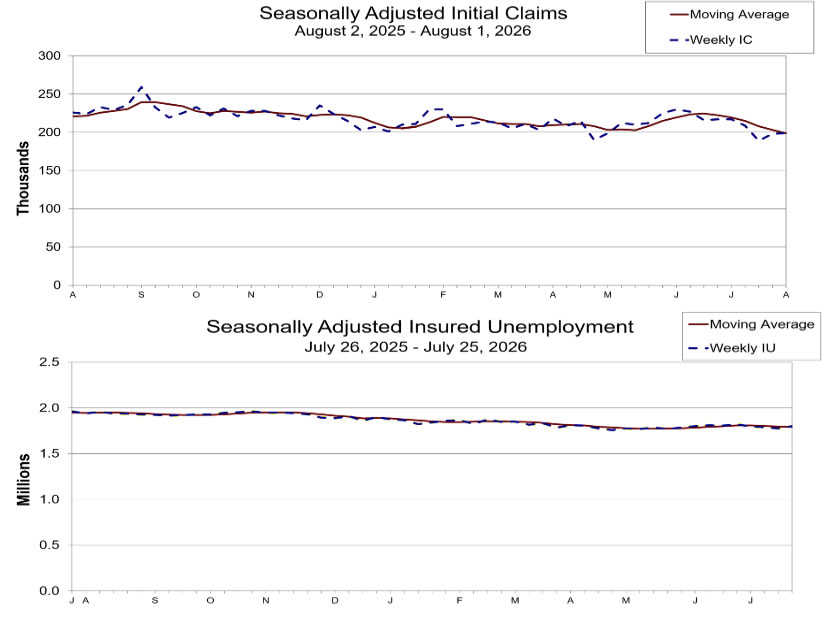
US initial jobless claims remained near historically low levels in the latest week, reinforcing the view that layoffs continue to be limited despite signs of slower hiring elsewhere in the labor market. Initial claims rose by just 1,000 to 199,000 in the week ended August 1, slightly below market expectations of 203,000. The previous week's figure was revised up modestly to 198,000, while the four-week moving average declined to 198,750, suggesting underlying labor market conditions remain broadly stable.
Continuing claims painted a slightly softer picture, rising 24,000 to 1.801 million in the week ended July 25, although the insured unemployment rate held steady at 1.2%. The increase suggests unemployed workers may be taking slightly longer to find new jobs, but the overall level remains consistent with a labor market that is cooling gradually rather than weakening abruptly.
The latest figures fit with other recent labor market indicators showing a "low-hire, low-fire" environment. While ADP employment and the ISM Services Employment Index pointed to softer hiring momentum, weekly claims continue to show employers are reluctant to shed workers.
Data Summary
| Indicator | Latest | Previous |
|---|---|---|
| Initial Jobless Claims | 199K | 198K |
| Market Expectation | 203K | — |
| 4-Week Average | 198.8K | 203.3K |
| Continuing Claims | 1.801M | 1.777M |
| 4-Week Avg. Continuing Claims | 1.791M | 1.796M |
| Insured Unemployment Rate | 1.2% | 1.2% |
Key Takeaways
- Initial jobless claims edged up to 199K, remaining below the 200K mark and beating expectations of 203K, indicating layoffs remain historically low.
- The four-week moving average fell to 198.8K, suggesting there has been no meaningful deterioration in underlying labor market conditions.
- Continuing claims rose by 24K to 1.801 million, hinting that unemployed workers may be taking slightly longer to secure new jobs.
- The insured unemployment rate held steady at 1.2%, reinforcing the picture of a labor market that remains fundamentally resilient.
- The report supports the recent "low-hire, low-fire" narrative emerging from JOLTS, ADP and Fed officials—hiring has slowed, but employers are generally reluctant to lay off workers.
Brent Oil – Near-Term Action in Sideways Mode, Technical Picture Remains Bearish
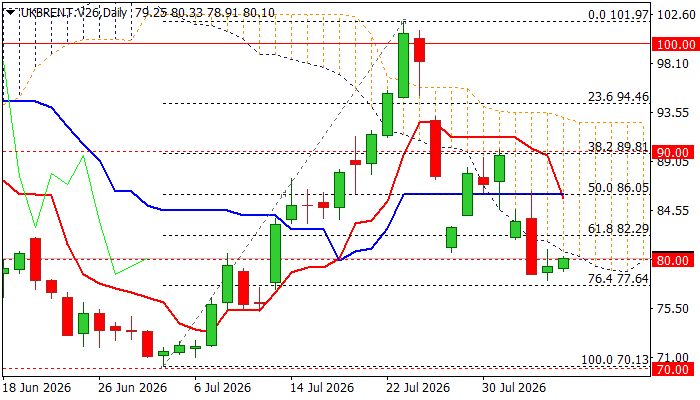
Brent price holds within a narrow consolidation for the second straight day, following Tuesday’s massive losses (down over 6% for the day), but the action stays under psychological $80 barrier with upticks capped by 200DMA ($80.73) and the base of daily Ichimoku cloud.
Fresh bears pause despite optimistic news about the latest US-Iran peace talks, as traders remain cautious following failures of previous agreements, as well as on persisting tensions after attacks on Saudi tankers in the Red Sea.
Technical picture on daily chart remains increasingly bearish (thick daily cloud weighs / formation of daily Tenkan/Kijun-sen bear cross / strengthening negative momentum), though markets still depend more on geopolitical developments, as currently dominant factor in creating market direction.
Near-term action is expected to remain bearishly aligned while holding below 200DMA / cloud base and pressuring immediate support at $77.64 (Fibo 76.4% of $70.13/$101.97).
Sustained break lower to expose $75.28 (July 10 trough) and $74.25 (lower 20-d Bollinger band) guarding key $70 support zone.
Alternatively, penetration of daily cloud would ease immediate downside risk and expose barriers at $83.73 (Fibo 23.6% of 101.97/$78.10 descend); $86.05/32 (daily Kijun-sen / Tuesday’s spike high) and upper pivot at $87.22 (Fibo 38.2%).
Res: 80.77; 83.73; 86.05; 87.22
Sup: 78.10; 77.64; 75.28; 74.25
EUR/USD Daily Outlook
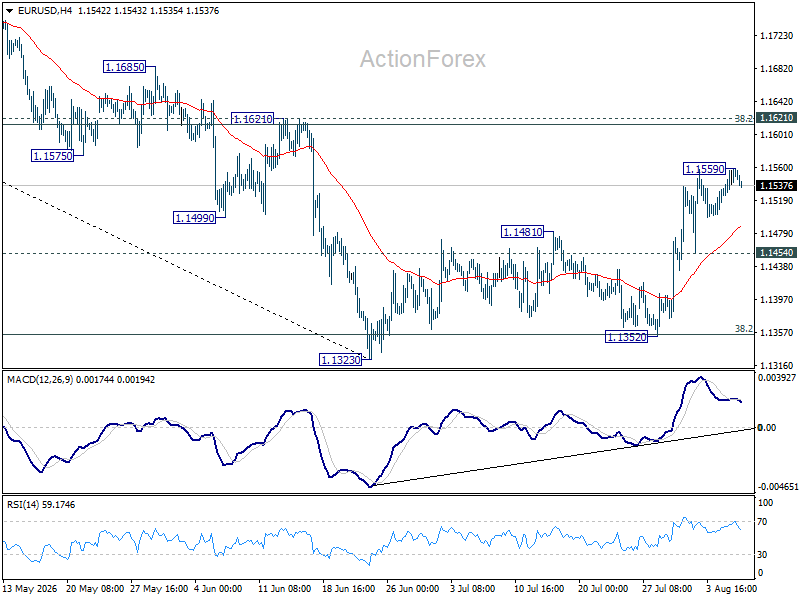
EUR/USD edged higher to 1.1559 but lacks follow through momentum. Intraday bias remains neutral first. On the upside, above 1.1559 will extend the rebound from 1.1323 to cluster resistance (38.2% retracement of 1.2081 to 1.1323 at 1.1613). Decisive break there will target 61.8% retracement at 1.1791. Nevertheless, break of 1.1454 minor support will turn bias back to the downside for 1.1323/1352 support zone instead.
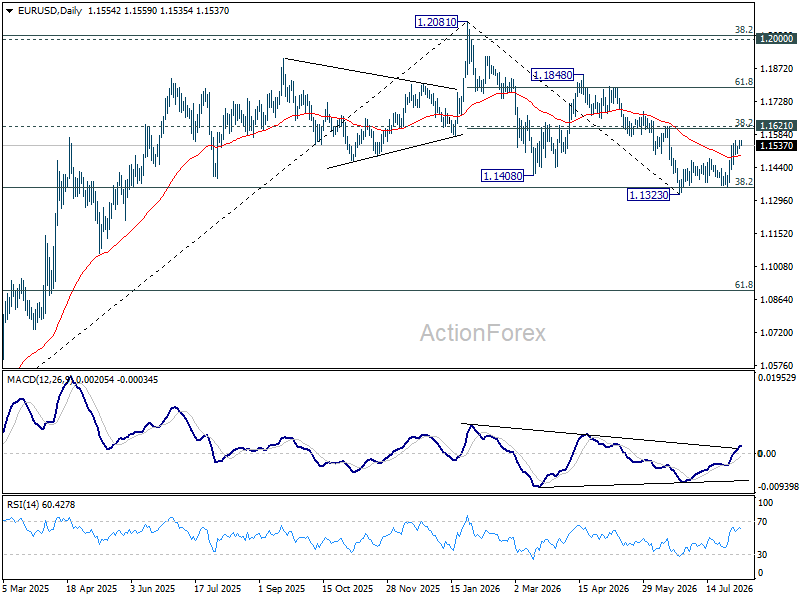
In the bigger picture, focus is staying on 38.2% retracement of 1.0176 to 1.2081 at 1.1353. Decisive break there will revive the case of medium term bearish trend reversal after rejection by 1.2 key cluster resistance level. Further fall should be seen to 61.8% retracement at 1.0904. Nevertheless, strong rebound from 1.1353, followed by break of 1.1621 resistance, will retain medium term bullishness.
USD/JPY Daily Outlook
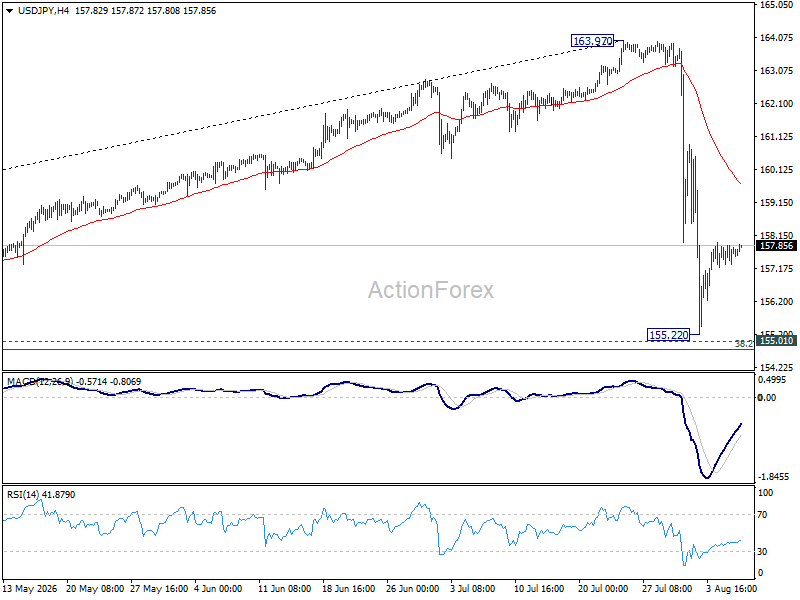
Intraday bias in USD/JPY stays neutral for the moment. While another fall cannot be ruled out, strong support is still expected from 155.01 cluster (38.2% retracement of 139.87 to 163.97 at 154.76) to bring rebound. Still, sustained break of 55 4H EMA (now at 159.67) is needed to indicate that fall from 163.97 has completed. Otherwise, risk will remain on the downside. Meanwhile, sustained break of 154.76/155.01 will pave the way to 61.8% retracement at 149.07.
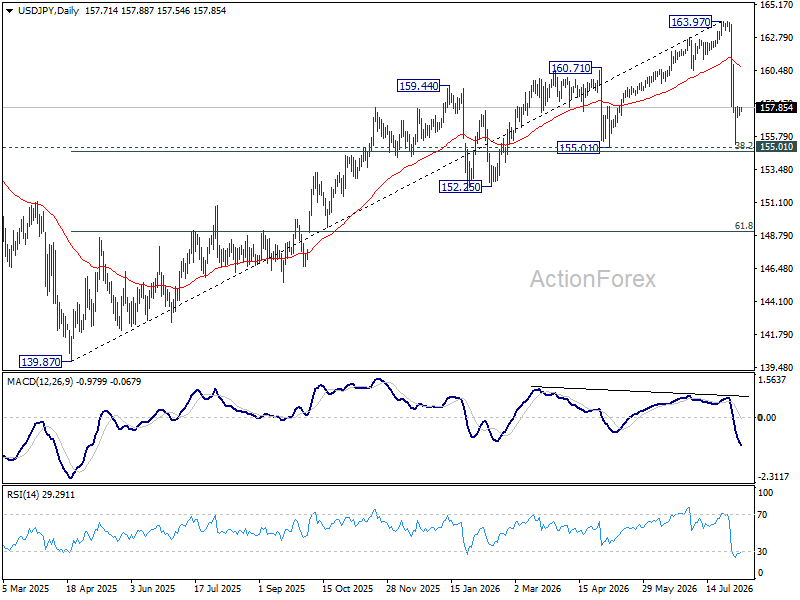
In the bigger picture, as long as 155.01 structural support holds, the larger up trend is still expected to continue through 163.97 after current correction completes. However, firm break of 155.01 will raise the chance that USD/JPY is already in a larger scale correction, and open up deeper fall back to 139.87 (2025 low) in the medium term.
GBP/USD Daily Outlook
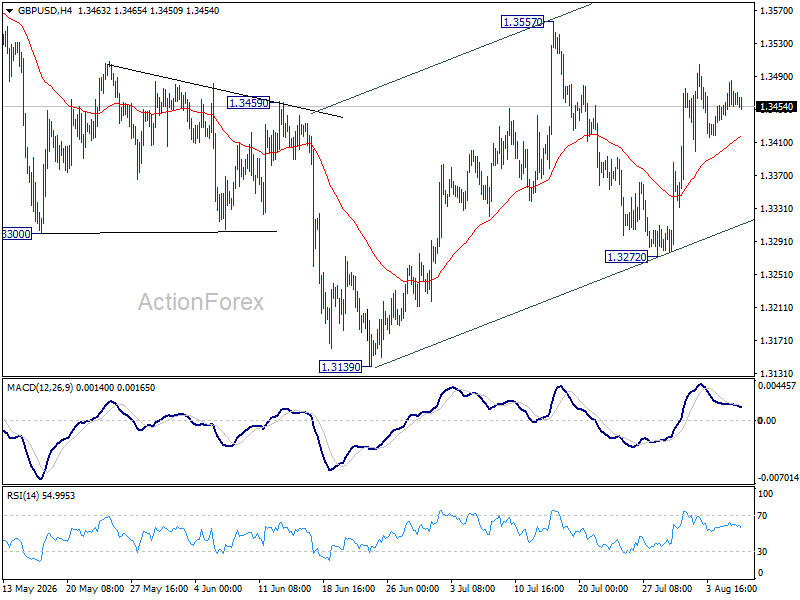
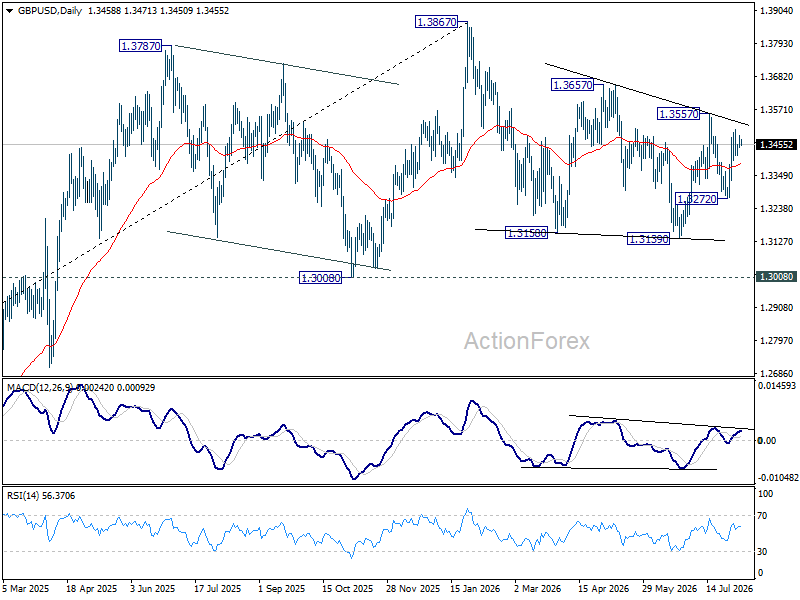
Range trading continues in GBP/USD and intraday bias stays neutral. Overall, corrective pattern from 1.3867 is still extending. On the upside, break of 1.3557 will extend the rise from 1.3139 to 1.3657 resistance first. On the downside, below 1.3272 will target 1.3139 support.
In the bigger picture, price actions from 1.3867 are a corrective pattern within the broader up trend from 1.0351 (2022 low). With 1.3008 support intact, medium term bullishness is maintained and break of 1.3867 is in favor for a later stage, towards 1.4248 key resistance (2021 high). However, firm break of 1.3008 will at least bring deeper fall to 38.2% retracement of 1.0351 to 1.3867 at 1.2524, with increased risk of bearish reversal.
USD/CHF Daily Outlook
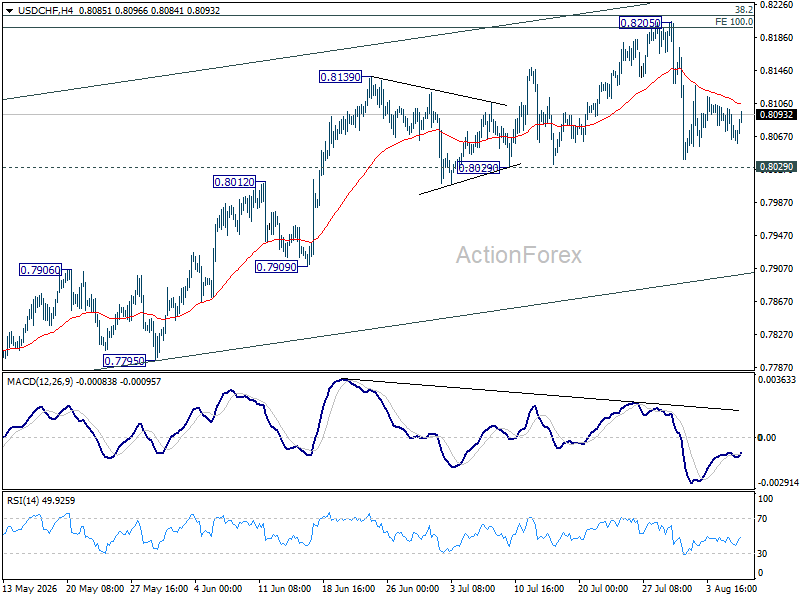
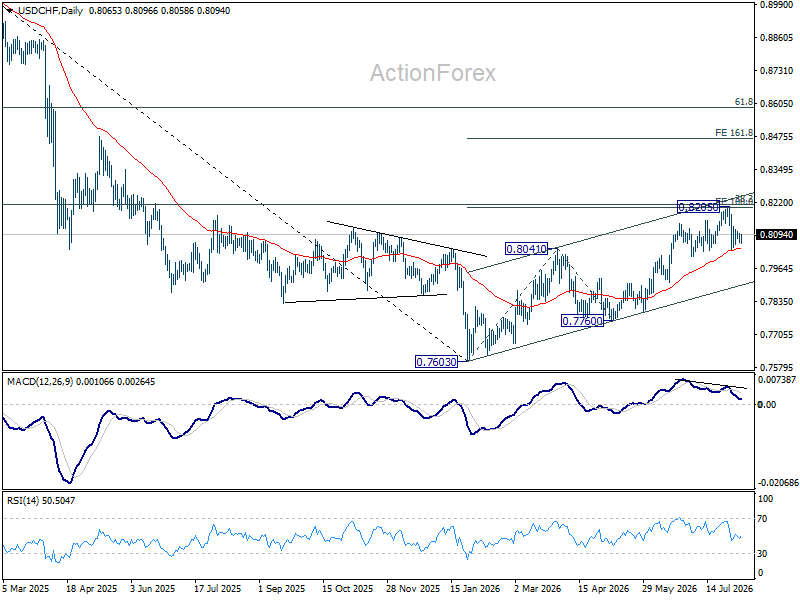
Outlook in USD/CHF is unchanged and intraday bias remains neutral. More consolidations could be seen below 0.8205. Further rally is in favor with 0.8029 support intact. Firm break of 0.8205 will extend the rally from 0.7603 to 161.8% projection 0.7603 to 0.8041 from 0.7600 at 0.8469. However, decisive break of 0.8029 will bring deeper fall to channel support (now at 0.7911).
In the bigger picture, focus is now on 38.2% retracement of 0.9200 (2025 high) to 0.7603 at 0.8213. Decisive break will argue that USD/CHF is reversing the medium term trend, and turn focus to 0.8332 support turned resistance (2023 low) for confirmation. Nevertheless, rejection by 0.8213 will maintain medium term bearishness for another fall through 0.7603 at a later stage.
AUD/USD Daily Report
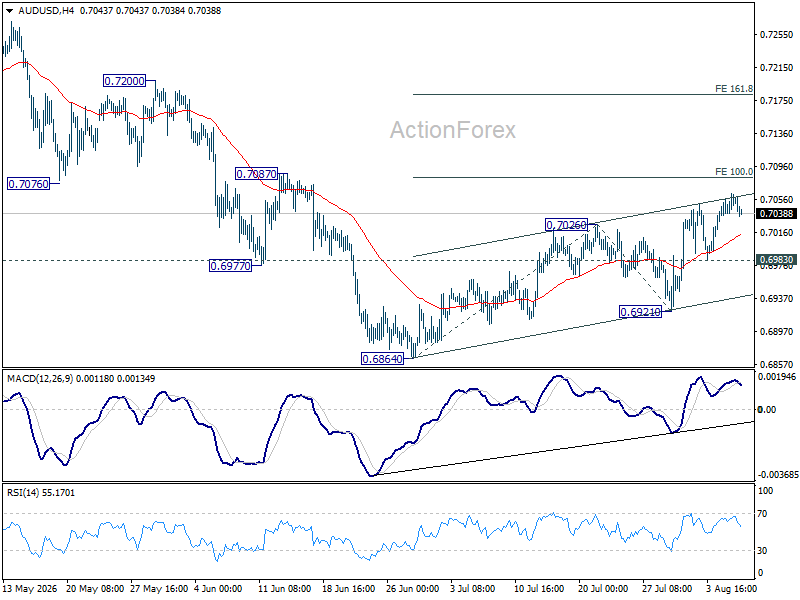
AUD/USD's rebound from 0.6864 is still in progress for 100% projection of 0.6864 to 0.7026 from 0.6921 at 0.7083. Firm break there could prompt upside acceleration to 161.8% projection at 0.7183. On the downside, however, break of 0.6894 will turn bias back to the downside back to 0.6921 support instead.
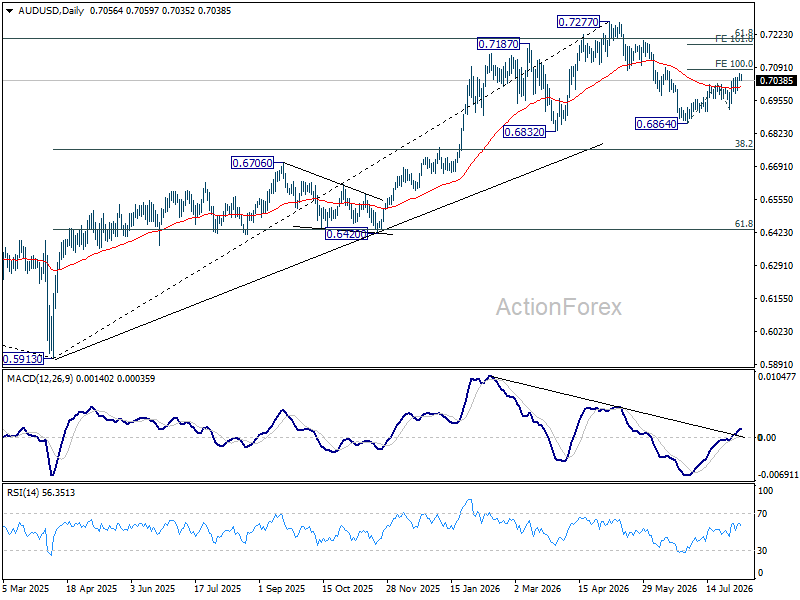
In the bigger picture, price action from 0.7277 medium term top is seen as developing into a correction to rise from 0.5913 only. While deeper decline cannot be ruled out, downside should be contained by 38.2% retracement of 0.5913 to 0.7277 at 0.6756 to bring rebound. Consolidations would continue below 0.7277 for a while, before an eventual upside breakout.
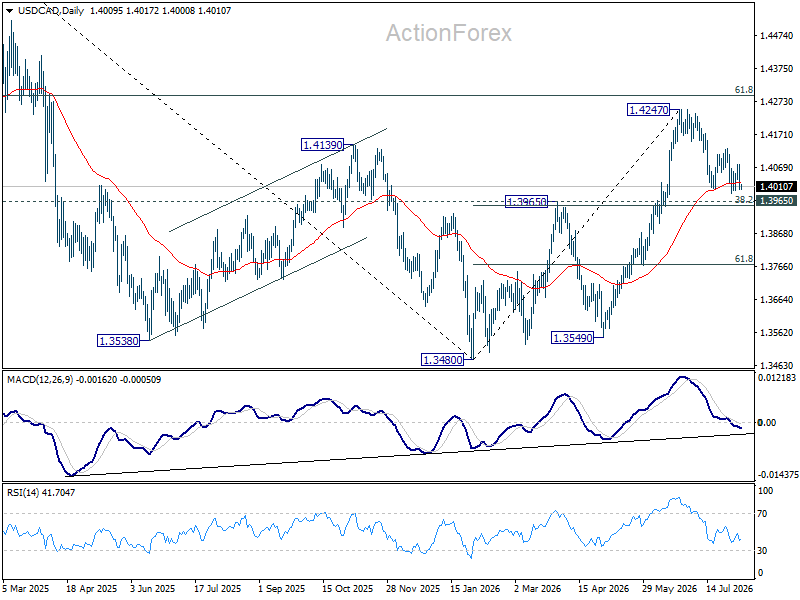
USD/CAD Daily Outlook
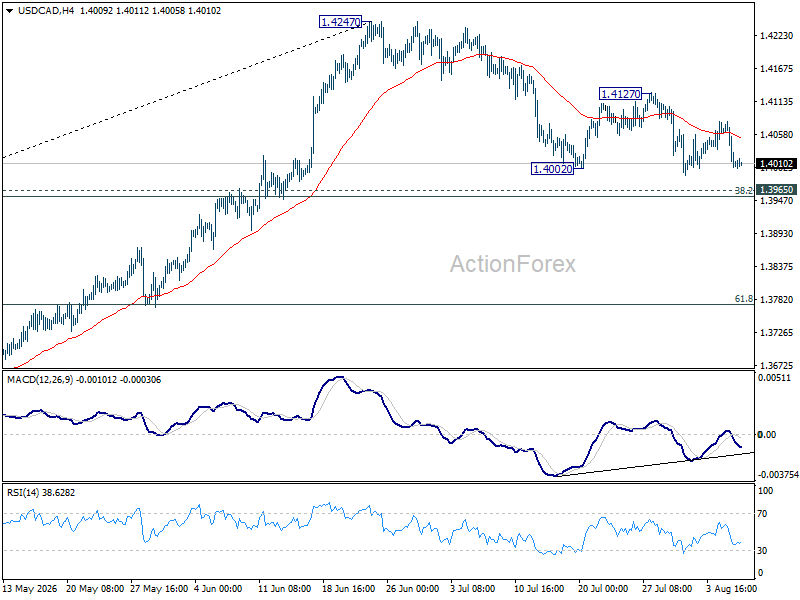
No change in USD/CAD's outlook. While, corrective fall from 1.4247 might extend lower, downside should be contained by 1.3965 cluster support (38.2% retracement of 1.3480 to 1.4247 at 1.3954 to bring rebound. Firm break of 1.4127 will bring stronger rally to retest 1.4247 high. However, sustained break of 1.3954/65 will bring deeper fall to 61.8% retracement at 1.3773, and argue that rebound from 1.3480 might have completed.
In the bigger picture, fall from 1.4791 medium term top has completed as a three wave correction to 1.3480. It's still early to judge if rise from there a corrective bounce, or resumption of the larger up trend from 1.2005 (2021 low). But in either case, sustained break of 61.8% retracement of 1.4791 to 1.3480 at 1.4290 will pave the way to retest 1.4791 high. However, rejection by 1.4290 will argue that fall from 1.4791 is going to extend with another leg through 1.3480 instead.