Sample Category Title

AUD/USD Daily Report

Daily Pivots: (S1) 0.6626; (P) 0.6667; (R1) 0.6692; More...

Intraday bias in AUD/USD is turned neutral first with break of 0.6630 minor support. Some consolidations would be seen, but further rally is expected as long as 55 D EMA (now at 0.6539) holds. Decisive break of 0.6713 fibonacci level will carry larger bullish implications. However, sustained break of 55 D EMA will confirm short term topping and rejection by 0.6713. Deeper fall should then be seen back to 0.6413 support.

In the bigger picture, there is no clear sign that down trend from 0.8006 (2021 high) has completed. Rebound from 0.5913 is seen as a corrective move. While stronger rally cannot be ruled out, outlook will remain bearish as long as 38.2% retracement of 0.8006 to 0.5913 at 0.6713 holds. Nevertheless, considering bullish convergence condition in W MACD, sustained break of 0.6713 will be a strong sign of bullish trend reversal, and path the way to 0.6941 structural resistance for confirmation.

Dollar Finds Relief from Fed, Kiwi Crashes on GDP, BoE Next

Volatility surged overnight as markets digested the Fed’s 25bps cut and updated projections. The Dollar initially sank on confirmation of two more cuts this year, only to rebound sharply as traders judged the overall stance less dovish than expected. The reversal pulled Wall Street and Gold lower from record levels, while 10-year yields firmed after briefly dipping under 4%.

The rebound in the greenback suggests the worst of the selling pressure may have passed for now, though it remains too early to call a trend reversal. Much will depend on whether incoming U.S. data validate the Fed’s relatively upbeat growth and employment forecasts. Any downside surprises could quickly reignite selling pressure.

In the Asia-Pacific, the spotlight was on New Zealand, where GDP contracted much deeper than expected in Q2. The breadth and depth of weakness spurred calls for deeper RBNZ easing. The central bank’s projection of an OCR at 2.50% by year-end looks increasingly conservative, with Westpac and others arguing that faster and deeper cuts are warranted.

Australia added to the gloom with softer labour market figures, with sharp decline in full-time positions. While the RBA is still expected to hold rates at 3.60% later this month, the probability of a November cut has clearly increased as labour market cracks widen.

As a result, Dollar currently leads the performance board for the day so far, followed by the Loonie and Sterling. At the bottom, Kiwi remains the weakest, trailed by Aussie and Swiss Franc, with Euro and Yen holding middle ground.

Attention now turns to the BoE, where a hold at 4.00% is widely expected. The latest UK CPI showed headline inflation steady at 3.8% in August—almost double the BoE’s 2% target—while wage growth remains firm despite signs of a softening jobs market. The persistence of price pressures has left policymakers cautious about cutting too quickly.

The outlook beyond September is less clear. Markets remain divided over whether the BoE will cut again in November. Governor Andrew Bailey has already warned of “considerably more doubt about exactly when and how quickly” further easing might occur, noting that investors have started to internalize this slower trajectory. Today’s decision and guidance will be pivotal in shaping expectations heading into year-end.

In Asia, at the time of writing, Nikkei is up 1.27%. Hong Kong HSI is down -0.88%. China Shanghai SSE is down -0.18%. Singapore Strait Times is down -0.07%. Japan 10-year JGB yield is up 0.006 at 1.598. Overnight, DOW rose 0.57%. S&P 500 fell -0.10%. NASDAQ fell -0.33%. 10-year yield rose 0.050 to 4.076.

Fed less dovish than expected, Gold risks deeper pullback

The FOMC’s rate cut overnight initially pressured Dollar and Treasury yields lower, while Gold surged to new records. But sentiment quickly reversed as markets interpreted the decision and projections as less dovish than hoped. The Dollar rebounded, 10-year yields recovered after slipping below 4%, and Gold retreated from its peak.

The turning point came from Chair Jerome Powell’s tone at the press conference. He described the cut as a matter of “risk management,” not a reflection of significant economic weakness. By calling policy “more neutral,” Powell signaled the Fed’s intent to stay flexible rather than embark on aggressive easing.

There are other less dovish than expected elements too:

  • The vote reinforced that cautious stance. Only newly confirmed Governor Stephen Miran dissented in favor of a larger 50bps move. Even typically dovish members Christopher Waller and Michelle Bowman sided with the majority, suggesting that the Committee remains cautious about delivering outsized easing.
  • The Fed’s dot plot met market expectations by signaling two more cuts this year, in October and December. However, only one additional cut is projected in 2026 and another in 2027, showing a shallow glide path rather than a deep easing cycle.
  • The projections for growth and employment painted a more confident picture. GDP forecasts were revised higher across the board, to 1.6% in 2025, 1.8% in 2026, and 1.9% in 2027. The unemployment outlook was left unchanged at 4.5% in 2025, but nudged lower to 4.4% in 2026 and 4.3% in 2027, reflecting a view of continued labor market resilience.
  • On inflation, the Fed raised its 2026 core PCE forecast from 2.4% to 2.6%, signaling concern that price pressures could linger longer than previously expected.

The combination of slightly firmer growth, resilient labor markets, and sticky inflation explains the Fed’s reluctance to commit to a faster easing cycle.

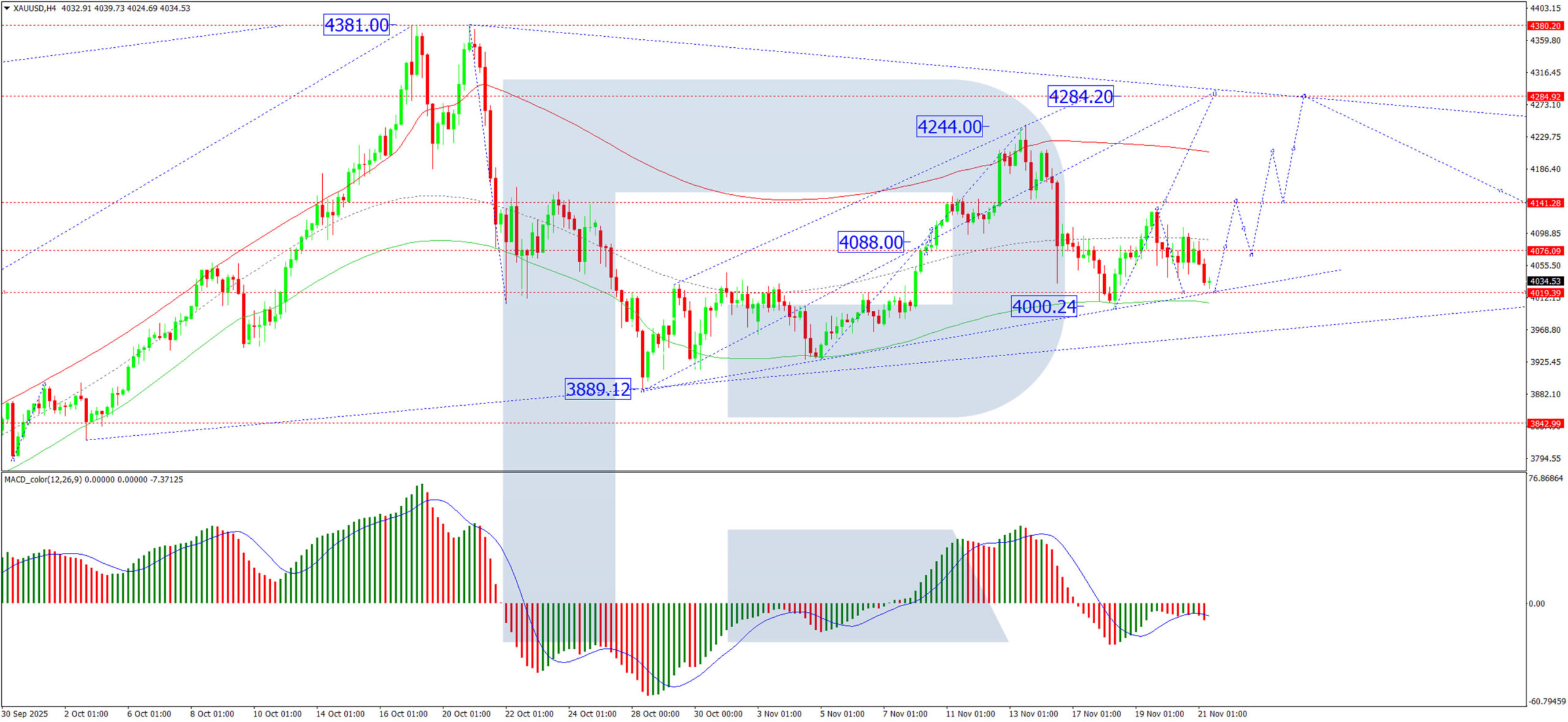
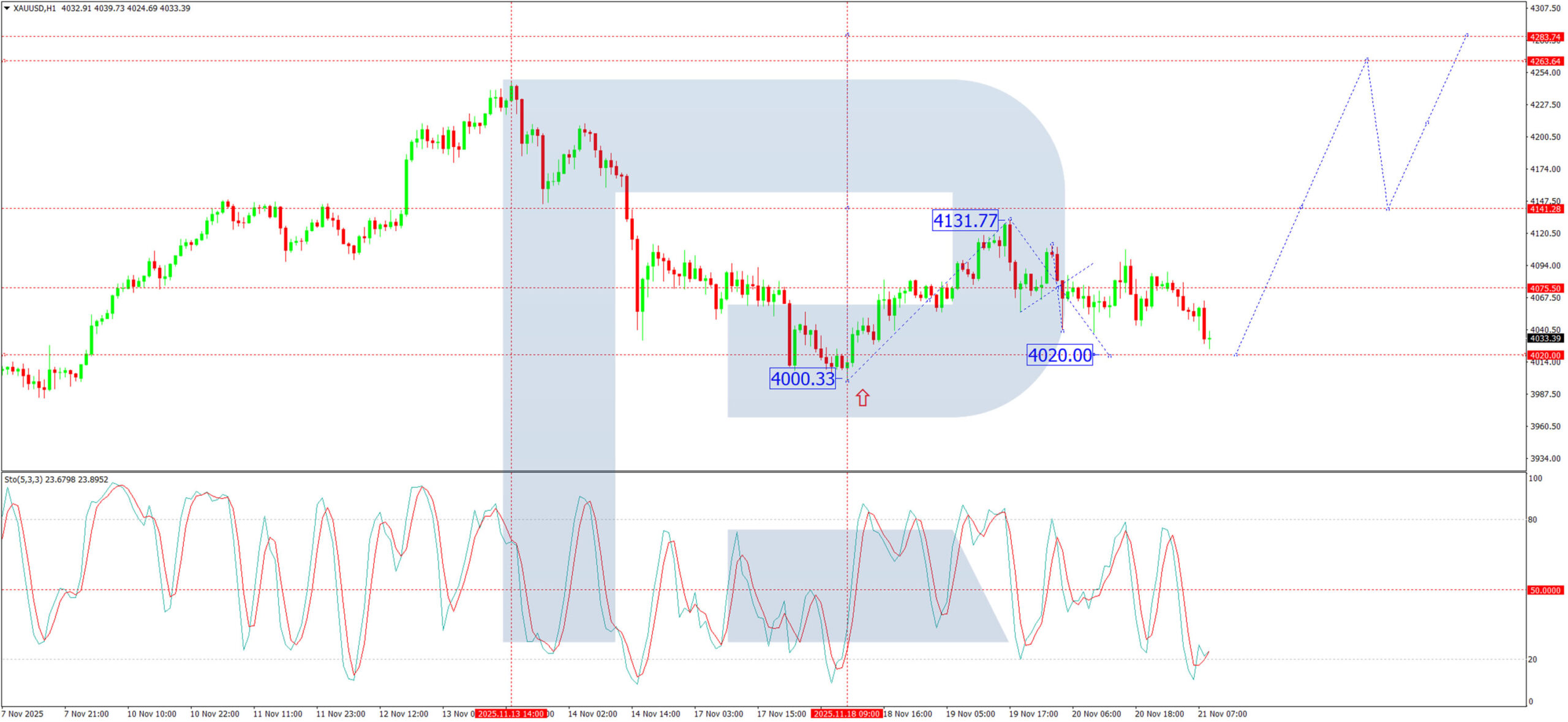
Technically, for Gold, further rise would remain in favor as long as 3612.75 support holds. But considering bearish divergence condition, strong resistance should emerge from 323.6% projection of 3267.90 to 3408.21 from 3311.30 at 3763.34 to cap upside. Meanwhile firm break of 3612.75 support will confirm short term topping, and bring deeper correction back towards 3499.79 resistance turned support.

NZ economy shrinks -0.9%, Kiwi dives on bets of 50bps RBNZ cut next

New Zealand’s economy contracted far more than expected in Q2, with GDP falling -0.9% qoq against consensus forecasts of -0.3% qoq. The release confirmed a deeper downturn, with economic activity now having declined in three of the last five quarters. The breadth of weakness points to rising headwinds that could force the RBNZ into a more aggressive easing cycle.

Goods-producing industries led the contraction with a -2.3% drop, while primary industries fell -0.7% and services output was flat. “The 0.9 percent fall in economic activity in the June 2025 quarter was broad-based with falls in 10 out of 16 industries,” said economic growth spokesperson Jason Attewell. Manufacturing was the single largest drag, contracting -3.5% in the quarter, while construction fell -1.8% following a modest rebound in Q1.

The scale of contraction triggered a wave of forecasts for deeper RBNZ easing. Westpac now expects a 50bp cut in October followed by a further 25bp reduction in November, compared with earlier projections of 25bp moves at both meetings. That would lower the OCR from the current 3.00% to 2.25% by year-end.

New Zealand Dollar responded by being sold off deeply after the release. Technically, immediate focus is now on 0.5913 support in NZD/USD with today's sharp fall. Firm break there will indicate that rebound from 0.5799 has completed as a corrective move to 0.6006. More importantly, that would argue that the decline from 0.6119 is not over yet, and would extend to 61.8% retracement of 0.5484 to 0.6119 at 0.57527 on resumption.

Australia jobs disappoint in August as employment falls -5.4k

Australia’s labor market weakened in August as total employment fell by -5.4k, against expectations for a 21.2k gain. The headline masked stark contrasts, with full-time jobs dropping by -40.9k while part-time roles increased by 35.5k. Hours worked fell -0.4% mom, underscoring signs of cooling demand for labor.

The unemployment rate held steady at 4.2% in line with forecasts, though the participation rate edged down to 66.8% from 67.0%. The data suggest that while unemployment remains low, underlying labor market conditions are softening.

AUD/USD Daily Report

Daily Pivots: (S1) 0.6626; (P) 0.6667; (R1) 0.6692; More...

Intraday bias in AUD/USD is turned neutral first with break of 0.6630 minor support. Some consolidations would be seen, but further rally is expected as long as 55 D EMA (now at 0.6539) holds. Decisive break of 0.6713 fibonacci level will carry larger bullish implications. However, sustained break of 55 D EMA will confirm short term topping and rejection by 0.6713. Deeper fall should then be seen back to 0.6413 support.

In the bigger picture, there is no clear sign that down trend from 0.8006 (2021 high) has completed. Rebound from 0.5913 is seen as a corrective move. While stronger rally cannot be ruled out, outlook will remain bearish as long as 38.2% retracement of 0.8006 to 0.5913 at 0.6713 holds. Nevertheless, considering bullish convergence condition in W MACD, sustained break of 0.6713 will be a strong sign of bullish trend reversal, and path the way to 0.6941 structural resistance for confirmation.


Economic Indicators Update

GMT CCY EVENTS ACT F/C PP REV
22:45 NZD GDP Q/Q Q2 -0.90% -0.30% 0.80%
23:50 JPY Machinery Orders M/M Jul -4.60% -1.40% 3.00%
01:30 AUD Employment Change Aug -5.4K 21.2K 24.5K 26.5K
01:30 AUD Unemployment Rate Aug 4.20% 4.20% 4.20%
06:00 CHF Trade Balance (CHF) Aug 5.22B 4.59B
08:00 EUR Eurozone Current Account (EUR)v Jul 34.6B 35.8B
11:00 GBP BoE Interest Rate Decision 4.00% 4.00%
11:00 GBP MPC Official Bank Rate Votes 0--1--8 0--5--4
12:30 USD Initial Jobless Claims (Sep 12) 240K 263K
12:30 USD Philadelphia Fed Manufacturing Survey Sep 3 -0.3
14:30 USD Natural Gas Storage (Sep 12) 80B 71B


Australia jobs disappoint in August as employment falls -5.4k

Australia’s labor market weakened in August as total employment fell by -5.4k, against expectations for a 21.2k gain. The headline masked stark contrasts, with full-time jobs dropping by -40.9k while part-time roles increased by 35.5k. Hours worked fell -0.4% mom, underscoring signs of cooling demand for labor.

The unemployment rate held steady at 4.2% in line with forecasts, though the participation rate edged down to 66.8% from 67.0%. The data suggest that while unemployment remains low, underlying labor market conditions are softening.

Full Australia employment release here.

NZ economy shrinks -0.9%, Kiwi dives on bets of 50bps RBNZ cut next

New Zealand’s economy contracted far more than expected in Q2, with GDP falling -0.9% qoq against consensus forecasts of -0.3% qoq. The release confirmed a deeper downturn, with economic activity now having declined in three of the last five quarters. The breadth of weakness points to rising headwinds that could force the RBNZ into a more aggressive easing cycle.

Goods-producing industries led the contraction with a -2.3% drop, while primary industries fell -0.7% and services output was flat. “The 0.9 percent fall in economic activity in the June 2025 quarter was broad-based with falls in 10 out of 16 industries,” said economic growth spokesperson Jason Attewell. Manufacturing was the single largest drag, contracting -3.5% in the quarter, while construction fell -1.8% following a modest rebound in Q1.

The scale of contraction triggered a wave of forecasts for deeper RBNZ easing. Westpac now expects a 50bp cut in October followed by a further 25bp reduction in November, compared with earlier projections of 25bp moves at both meetings. That would lower the OCR from the current 3.00% to 2.25% by year-end.

New Zealand Dollar responded by being sold off deeply after the release. Technically, immediate focus is now on 0.5913 support in NZD/USD with today's sharp fall. Firm break there will indicate that rebound from 0.5799 has completed as a corrective move to 0.6006. More importantly, that would argue that the decline from 0.6119 is not over yet, and would extend to 61.8% retracement of 0.5484 to 0.6119 at 0.57527 on resumption.

Full NZ GDP release here.

Fed less dovish than expected, Gold risks deeper pullback

The FOMC’s rate cut overnight initially pressured Dollar and Treasury yields lower, while Gold surged to new records. But sentiment quickly reversed as markets interpreted the decision and projections as less dovish than hoped. The Dollar rebounded, 10-year yields recovered after slipping below 4%, and Gold retreated from its peak.

The turning point came from Chair Jerome Powell’s tone at the press conference. He described the cut as a matter of “risk management,” not a reflection of significant economic weakness. By calling policy “more neutral,” Powell signaled the Fed’s intent to stay flexible rather than embark on aggressive easing.

There are other less dovish than expected elements too:

  • The vote reinforced that cautious stance. Only newly confirmed Governor Stephen Miran dissented in favor of a larger 50bps move. Even typically dovish members Christopher Waller and Michelle Bowman sided with the majority, suggesting that the Committee remains cautious about delivering outsized easing.
  • The Fed’s dot plot met market expectations by signaling two more cuts this year, in October and December. However, only one additional cut is projected in 2026 and another in 2027, showing a shallow glide path rather than a deep easing cycle.
  • The projections for growth and employment painted a more confident picture. GDP forecasts were revised higher across the board, to 1.6% in 2025, 1.8% in 2026, and 1.9% in 2027. The unemployment outlook was left unchanged at 4.5% in 2025, but nudged lower to 4.4% in 2026 and 4.3% in 2027, reflecting a view of continued labor market resilience.
  • On inflation, the Fed raised its 2026 core PCE forecast from 2.4% to 2.6%, signaling concern that price pressures could linger longer than previously expected.

The combination of slightly firmer growth, resilient labor markets, and sticky inflation explains the Fed’s reluctance to commit to a faster easing cycle.

Technically, for Gold, further rise would remain in favor aslong as 3612.75 support holds. But considering bearish divergence condition, strong resistance should emerge from 323.6% projection of 3267.90 to 3408.21 from 3311.30 at 3763.34 to cap upside. Meanwhile firm break of 3612.75 support will confirm short term topping, and bring deeper correction back towards 3499.79 resistance turned support.

NZ: Change of OCR call – RBNZ to cut 50bp in October

We now think the RBNZ will cut 50bp in October and 25bp in November (previously we expected 25bp cuts at both of those meetings). This change follows weaker than expected GDP growth in Q2.

  • Very weak GDP implies greater than expected economic slack in Q2.
  • We now think the RBNZ will cut 50bp in October and 25bp in November (previously we expected 25bp cuts at both of those meetings).
  • The cut in October seems a high probability, November is likely but more uncertain.
  • The QSBO on 7 October could shift the balance of probabilities back to a 25bp cut in October, but it would need to be very strong.
  • Conditions will become very stimulatory, implying a very different 2026 outlook.

A 50bp cut to very stimulatory levels looks likely

Just last week, speaking at the Financial Services Council annual conference, RBNZ Governor Christian Hawkesby stated: “While our central projection for the OCR is to fall to around 2.50% by the end of the year, that could occur faster or slower depending on how the economic recovery evolves.”

Today’s GDP data (-0.9% q/q, -0.6% y/y) surprised significantly to the downside (WBC -0.4% q/q, -0.1% y/y, RBNZ -0.3% q/q, 0% y/y). While it wasn’t a total washout in terms of the forecast, the main message is that the RBNZ MPC will likely judge there is too much excess capacity in the economy. Hence the case for an accelerated easing profile will look strong – especially to those who were already arguing for a circuit-breaking 50bps cut at the August meeting.

The RBNZ had previously indicated that they were interested in delivering more stimulus to provide guardrails against a deeper or more prolonged period of economic stagnation. That argument only grew stronger today.

There might be prospects for some rebound in GDP in Q3 based on today’s data. But that’s uncertain and what is most clear is that our current forecast of 0.6% growth in Q3 still looks solid enough and is higher than the RBNZ’s 0.3% q/q projection.

We don’t see much data between now and the 8 October meeting that will change the situation much for the October decision. The QSBO survey on 7 October is the main highlight. If that showed significant strength, then the case for a 50bps easing might reduce a little but the RBNZ would need to very confident that this indicator was giving an accurate steer. Recent indicators would need to improve a lot more strongly than we saw in August to be able to draw those sorts of conclusions.

For now, we are also pencilling in a further 25bps cut in the OCR at the 26 November MPS meeting, taking the OCR to a low of 2.25%. Not least as it’s not especially likely the RBNZ will pause after having cut the OCR by 50bp the meeting earlier. And there are aspects of the data (recent trends in consumption, assessments of the degree of reversal in GDP, the trend in the exchange rate) that might impinge on the decision to keep easing conditions. However, there is a lot of water to flow under the bridge before that meeting. The Q3 CPI and labour market surveys will both have a bearing on the RBNZ’s decision, together with more forward-looking high frequency indicators (retail sales, housing market, business surveys etc). And developments in the global economic outlook, financial markets (including the exchange rate) and commodity prices will also be important.

Interest rates look set to be moving into very stimulatory territory in the next few months. This will have implications for the 2026 outlook even though recent trends are not suggesting the economy is recovering particularly rapidly from that Q2 nadir. We are acutely aware that those indicators could change quickly and so will not be making any fast judgements on the implications for 2026 growth and the timing of when the OCR might start to rise again. Right now, the forecast is for the OCR to begin increasing after the 2026 election in August-November 2026. This could come sooner but let’s see.

First Impressions: NZ GDP, June Quarter 2025 – Even Weaker than Expected

New Zealand’s GDP fell by 0.9% in the June quarter, substantially worse than expected. The surprises were narrowly concentrated in areas that are unlikely to respond to further interest rate cuts.

Key results

  • Quarterly change: -0.9% (last: +0.9%, Westpac f/c: -0.4%, market f/c: -0.3%, RBNZ -0.3%)
  • Annual change: -0.6% (last: -0.6%)

New Zealand’s economic output fared even worse than expected in the June quarter. GDP fell by 0.9%, well below our pick of -0.4% and the median market forecast of -0.3%. There were some minor revisions to previous quarters that largely balanced each other out.

The main points of weakness were as we flagged in our preview. The construction sector continued its prolonged decline, down 1.8% for the quarter, as the pipeline of work consented in previous years continues to run down. Manufacturing output was down 3.5%, in part an unwinding of a sharp reported rise in the March quarter (which we suspected was more survey noise than genuine). Professional services were down 0.4%, again partly reversing a strong rise last quarter.

On the positive side, there were gains in wholesale trade and retailing, though the latter was weaker than what was signalled by the quarterly Retail Trade Survey. The information and telecommunications sector rose by 1.8%, after falls in the previous two quarters.

As we’ve discussed in recent quarters, the GDP figures have a large seasonal component that is not being fully captured at the moment. This contributed 0.6ppts of the June quarter decline, even larger than the 0.5ppts that we had allowed for. That still suggests an underlying decline in activity for the quarter, against our estimate of a small rise.

The surprises relative to our forecast were concentrated in two areas. First, output in the financial services sector fell by 0.5%, a second straight decline. We had expected a rise given that lending growth has been picking up on the back of lower interest rates, but it appears that this factor may be driving a fall in value-added for this sector.

Second, healthcare fell by 0.7%, against our forecast of a rise. It’s not clear where the shortfall arose, although Stats NZ notes that it had to use an alternative data source this time due to some unexpected seasonality.

The weaker than expected GDP outcome will no doubt encourage the RBNZ in its intentions to cut the OCR further this year. However, we also need to consider the implications for the quarters ahead. Our view is that September quarter GDP growth was already tracking better than the RBNZ’s (very soft) forecast, and there are aspects of today’s figures that could see an offsetting bounce next quarter, further boosting the reported growth rate. We’ll take a finer look at the details before making any judgements.

Bank of Japan (BoJ) Meeting Preview: Maintaining the Status Quo. Implications for USD/JPY

The Bank of Japan is broadly expected to keep its policy rate at 0.5% during its meeting on September 19, 2025. The future economic outlook remains cautious because of political uncertainty within Japan and challenges from international trade.

The value of the US dollar against the Japanese yen will mainly be affected by the Federal Reserve's interest rate cut. The Bank of Japan's meeting will also have an impact, but it will likely be less significant. However, if Governor Ueda says something unexpected, it could cause a major rise in the value of the yen, breaking its current trading range of 147 to 149.

The Anticipated Bank of Japan Policy Decision: Maintaining the Status Quo

The Bank of Japan (BOJ) is expected to keep its interest rate at 0.5% this week, a rate it has held since January. This cautious, "wait-and-see" approach is due to a few key reasons.

First, there is political uncertainty in Japan, and the central bank wants to avoid making any sudden policy changes that could cause more economic instability. Second, the BOJ is still evaluating the full impact of a new U.S.-Japan trade deal and U.S. tariffs, which are hurting Japanese exports.

Interestingly, the BOJ is prioritizing economic stability over controlling inflation, even though inflation is running high and outpacing wage growth. This difference between the central bank's policy and the domestic inflation reality could potentially lead to market problems in the future.

Forward-Looking Monetary Policy: The Outlook Beyond September

The market expects the Bank of Japan to keep its interest rate unchanged in September but believes they will start raising rates soon. Many traders think there's a strong chance of a rate hike before the end of 2025 and more hikes by the middle of next year.

Source LSEG

Looking at the implied rates based on LSEG data, we can see markets are pricing in around 50 bps of cuts through December 2026. Now this may not seem like a lot, but it is the BoJ we are talking about.

Since no new forecasts will be released at the meeting, the market's reaction will depend entirely on what Governor Kazuo Ueda says at his press conference.

The Bank of Japan is known for its vague communication. If Governor Ueda continues to be vague, the market will likely have a small reaction. However, if he sounds surprisingly direct about future rate hikes, it would confirm the market's aggressive expectations. Because of this, his words could cause a large and sudden shift in the market.

The Dual-Central Bank Catalyst: Impact on USD/JPY

The value of the U.S. dollar against the Japanese yen is primarily driven by the U.S. Federal Reserve's policies. When investors expect the Fed to cut interest rates, the dollar typically falls against the yen. This is especially relevant this week, as a Fed rate cut has been delivered as expected.

The market generally expects the US to cut rates while Japan eventually raises them, a situation that would likely cause the dollar to weaken against the yen. While the Bank of Japan's decision is also important, its effect will be largely shaped by the Fed's actions. The Fed's influence on the currency pair is much stronger.

Given that market expectations are for 50 bps of rate cuts from the Fed before the year-end on top of the 25 bps delivered this week, the Yen could be poised for gains moving forward over the medium term.

Source: Google Gemini

Technical Analysis USD/JPY

USD/JPY from a technical standpoint has been giving signs of a bullish rally, but the potential effects of rate differentials could come into play.

On a weekly timeframe, the long-term descending trendline had been broken a while ago and since then USD/JPY has been trapped in a range between 145.00 and 150.00 handle with a brief foray higher being met by swift selling pressure.

There is also an ascending trendline from the April lows just below the 140.00 handle.

The daily candle has closed as a hammer candlestick bouncing of the trendline and the 100-day MA at 146.21.

Immediate resistance is provided by the 50-day MA which rests at 147.67 before the 200-day MA at 148.62 comes into focus.

A break of the ascending trendline could lead to a push toward the 145.00 handle before the swing low at 143.33 comes into focus.

USD/JPY Daily Chart, September 17, 2025

Source: TradingView

Trade Safe.

USD/CHF Breakdown – Why Recovery Might Struggle This Week

Key Highlights

  • USD/CHF gained bearish momentum after it settled below 0.7950.
  • A major bearish trend line is forming with resistance at 0.7925 on the 4-hour chart.
  • EUR/USD rallied further above 1.1800 and 1.1850 before correcting some gains.
  • Gold started a consolidation phase from the $3,700 zone.

USD/CHF Technical Analysis

The US Dollar started a major decline from well above 0.8000 against the Swiss Franc. USD/JPY declined heavily below 0.7950 and 0.7920.

Looking at the 4-hour chart, the pair settled below the 0.7920 pivot level, the 100 simple moving average (red, 4-hour), and the 200 simple moving average (green, 4-hour). The pair even spiked below 0.7850.

On the downside, immediate support is 0.7850. The next key area of interest might be near the 0.7820 zone. The main support could be 0.7780. Any more losses might increase selling pressure and send USD/CHF toward 0.7650.

On the upside, the pair could face resistance near the 0.7895 level. The first major hurdle for the bulls could be 0.7925. There is also a major bearish trend line forming with resistance at 0.7925 on the same chart.

A close above 0.7925 could set the pace for a steady recovery wave. In the stated case, the pair could rise toward 0.7950, above which the bulls could aim for a move toward 0.8000. Any more upsides could send the pair toward 0.8040.

Looking at EUR/USD, the bulls remained in action, and they were able to push the price above the 1.1850 resistance zone.

Upcoming Key Economic Events:

  • BoE Interest Rate Decision - Forecast 4%, versus 4% previous.
  • US Initial Jobless Claims - Forecast 240K, versus 263K previous.

September FOMC: A “Risk Management” Cut

Summary

  • As expected, the FOMC reduced the fed funds target range by 25 bps to 4.00%-4.25% at the conclusion of its meeting today, the first adjustment in nine months. Newly confirmed Governor Stephan Miran was the lone dissenter at the meeting, preferring to cut by 50 bps instead of 25 bps.
  • The decision to ease reflected a "shift in the balance of risks" with the Committee believing that the "downside risks to employment have risen." While inflation has ticked up since the spring, a development acknowledged in the post-meeting statement, job growth has downshifted sharply and the unemployment rate has risen to the top end of the Committee's central tendency range consistent with full employment.
  • Amid increased concerns about the jobs market, the median projection for the fed funds rate at the end of the year edged down by 25 bps to 3.625% relative to the previous projection from June, indicating an additional 50 bps of easing over the course of the FOMC's October and December meetings. The median projection for 2026 dipped to 3.375%, implying just 25 bps of cuts next year remains the base case after a bit more easing this year. The median estimate for the longer-run, "neutral" fed funds rate was unchanged at 3.0%.
  • Yet, Chair Powell in the post-meeting press conference struck a mildly hawkish tone in our view and continued to signal that the Committee remains in no rush to return to neutral. Rather, with policy still somewhat restrictive, Chair Powell characterized today's adjustment as a "risk management cut" and the near-term monetary policy outlook as a "meeting-by-meeting situation."
  • Overall, the outcome of today's meeting strikes us as a balanced response to the labor market's loss of momentum and still elevated pace of inflation. With the Fed's dual mandate in tension, what will the central bank do? We think the FOMC will put more weight on employment and cut the federal funds rate by 25 bps at each of its next two meetings, pushing the target range down to 3.50%-3.75% by year-end. We project two more 25 bps rate cuts at the March and June meetings next year followed by a long hold, resulting in a terminal fed funds rate of 3.00%-3.25%.

Chair Powell Corrals Most of the Cats

The September FOMC meeting did not disappoint. As was widely expected, the FOMC lowered the fed funds rate by 25 bps to 4.00%-4.25%. The move marked the first adjustment to the Committee's policy rate since December and reflected a shifting balance of risk between the FOMC's mandates of full employment and inflation. With the core PCE deflator running about a percentage point above target (Figure 1), the post-meeting statement maintained that inflation "remains somewhat elevated" and acknowledged that it has "moved up." However, the recent deterioration in the jobs market overshadowed concerns about stubborn inflation. The Committee no longer views labor market conditions as "solid" and noted the recent slowdown in job growth and uptick in unemployment in its discussion of recent economic conditions (Figure 2). More tellingly, the statement added that "downside risks to employment have risen," and that "in light of the shift in the balance of risks," the FOMC decided to cut its policy rate. The post-meeting statement reaffirmed the ongoing pace of balance sheet runoff.

The decision was not unanimous but showed policymakers are generally more aligned than what many expected ahead of the meeting. Governor Stephan Miran, who was sworn in Tuesday morning ahead of the start of the meeting, was the lone dissenter and preferred a 50 bps rate cut. Governors Waller and Bowman, who both dissented in July, voted in line with the bulk of the Committee, while no partcipants dissented in a more hawkish direction.

The Committee's ongoing bias to ease was more apparent in the Summary of Economic Projections. The median projection for the fed funds rate at year end slipped to 3.625% from 3.875% in the June SEP, implying most officials see an additional 50 bps of easing over the Committee's two remaining meetings of the year (Figure 3). The median dot for 2026 signaled just one cut next year, but this masks a decent amount of dispersion across the participants. Just two of the 19 participants were at the median (3.375%), and the median was just one dot away from slipping another 25 bps to 3.125%. Notably, the median estimate for the longer-run, "neutral" fed funds rate was unchanged at 3.0%. This underscores how most Committee members still view the policy setting as at least somewhat restrictive, giving some scope to lower the fed funds rate in an effort to cushion jobs market without outright accommodative monetary policy stoking higher inflation.

The Committee's economic outlook brightened a bit relative to June, with 0.2 ppt increases in the median projections for real GDP growth in 2025 and 2026 and a 0.1 ppt increase to growth in 2027. The median forecast for the unemployment rate at year-end 2025 was unchanged at 4.5%, but it dropped by 0.1 ppt for 2026 and 2027. That said, the median headline and core inflation projections for 2026 rose by 0.2 ppt to 2.6% amid tariffs that are still slowly seeping into selling prices, expectations for stronger economic growth, anticipated fiscal policy stimulus and more accommodative monetary policy. The median participant's projection does not have inflation returning to the FOMC's 2.0% target until 2028.

In the press conference, Chair Powell struck a mildly more hawkish tone in our view, saying that he was not quite ready to say that a neutral policy stance was warranted and characterizing today's rate cut as a "risk management" move. He also characterized the near-term monetary policy outlook as a "meeting-by-meeting situation" in a sign that although another two 25 bps rate cuts this year might be the base case, they are not a slam dunk pending new economic data in the coming months.

With the Fed's dual mandate in tension, what will the central bank do? We think the FOMC will put more weight on employment and cut the federal funds rate by 25 bps at each of its next two meetings, pushing the target range down to 3.50%-3.75% by year-end. We project two more 25 bps rate cuts at the March and June meetings next year followed by a long hold, resulting in a terminal fed funds rate of 3.00%-3.25% (Figure 4).