




New Zealand GDP contracted -3.7% qoq in Q3, better than expectation

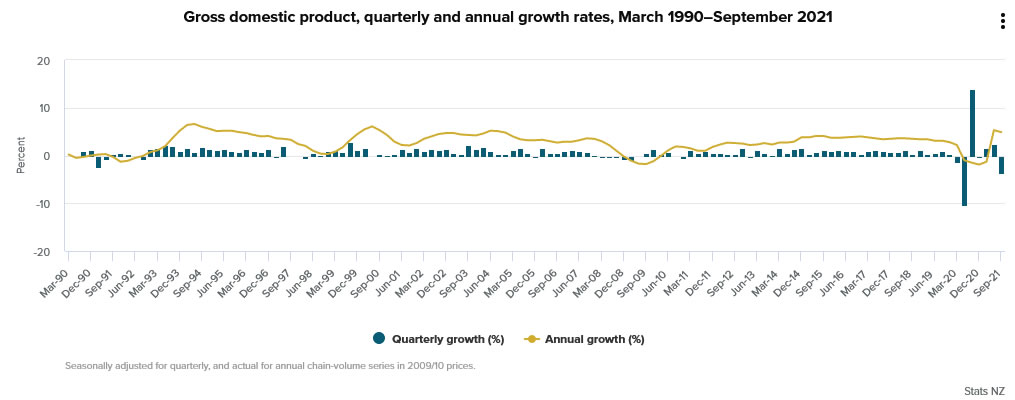
    New Zealand GDP dropped -3.7% qoq in Q3, better than expectation of -4.3% qoq. For the year, GDP contracted -0.3% yoy, versus expectation of -1.6% yoy. Services industries dropped -2.7% qoq. Goods-producing industries dropped -7.3% qoq. Primary industries dropped -3.1% qoq.

    The contraction reflects a widespread drop in economic activity due to the COVID-19 alert level restrictions and nationwide-lockdown implemented in the second half of the quarter. But the contraction in Q3 was “less pronounced” when compared with Q2 2020.

    “The September 2021 quarter had fewer days in higher alert levels, and border restrictions were already in place. Also, some businesses may have adapted to and been better prepared for higher alert levels, compared with the first lockdown,” national accounts industry and production senior manager Ruvani Ratnayake said.

    Full release here.

    Fed press conference live stream

      YouTube

      By loading the video, you agree to YouTube’s privacy policy.
      Learn more

      Load video

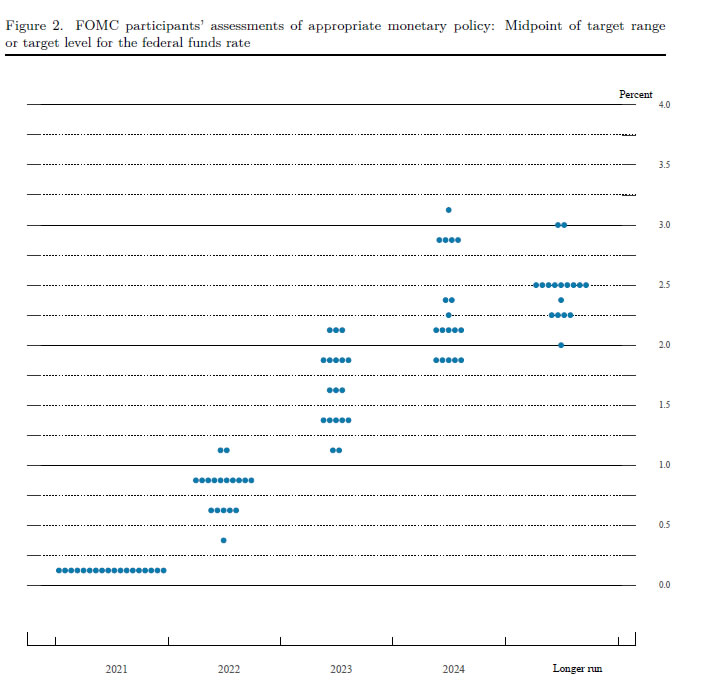
      Fed doubles tapering speech, 12 members project 3 hikes or more in 2022

        Fed kept federal funds rate target unchanged at 0-0.25%. And, “in light of inflation developments and the further improvement in the labor market”, Fed will now reduce monthly purchases of of treasury securities and MBS at a faster rate of USD 20B and USD 10B respectively. That is, the tapering speed is doubled.

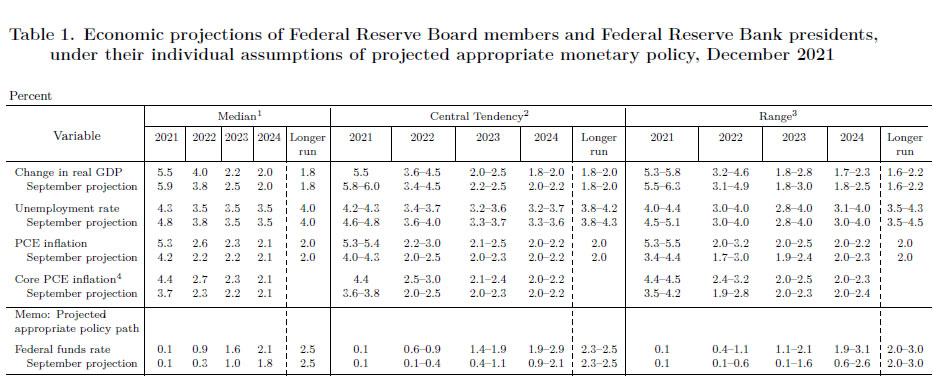
        In the new median economic projections for 2022:

        • GDP growth forecast was raised from 3.8% to 4.0%.
        • Unemployment forecast was lowered from 3.8% to 3.5%.
        • PCE inflation forecast was raised from 2.2% to 2.6%.
        • Core PCE inflation forecast was raised from 2.3% to 2.7%
        • Federal funds rate forecast was raised from 0.3% to 0.9%.

        In the new dot plot:

        • All members project one rate hike or more in 2022.
        • 5 members project two rate hikes in 2022.
        • 12 members project three hikes or more in 2022.

        Full statement here.

        Full projections here.

        US retail sales rose 0.3% mom in Nov ex-auto sales up 0.3% mom

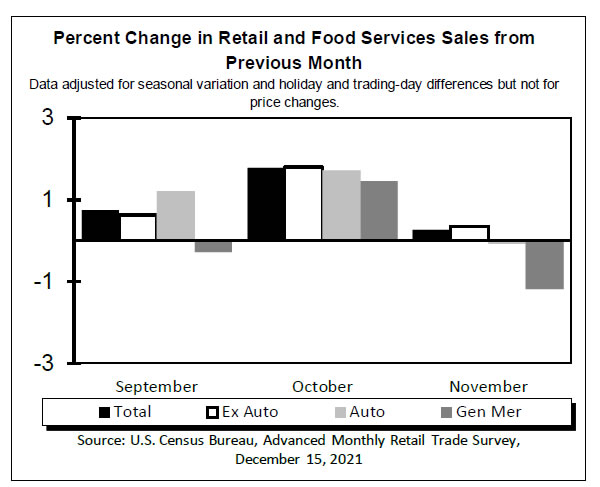
          US retail sales rose 0.3% mom to USD 639.8B in November, below expectation of 0.8% mom. Ex-auto sales rose 0.3% mom, below expectation of 1.0% mom. Ex-gasoline sales rose 0.1% mom. Ex-auto, ex-gasoline sales rose 0.2% mom.

          Total sales for September through November period were up 16.2% yoy from the same period a year ago.

          Full release here.

          UK CPI rose to 5.1% yoy in Nov, highest since 2011

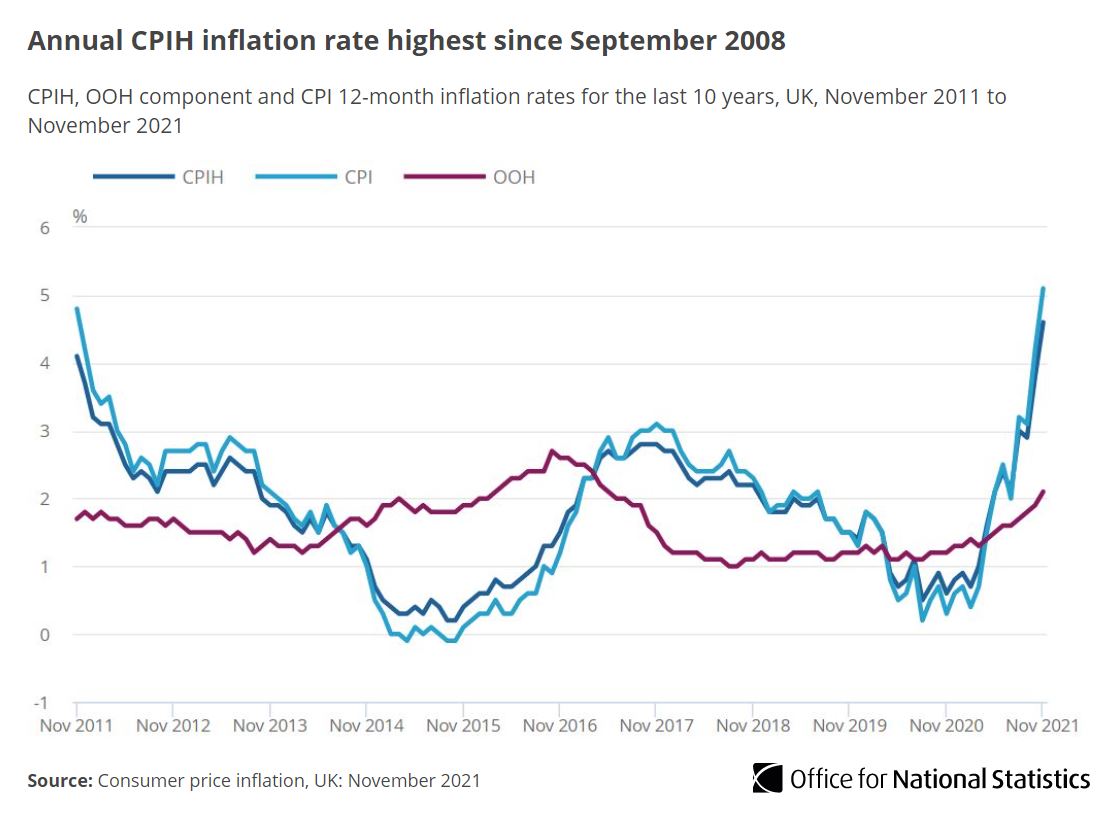
            UK CPI accelerated further to 5.1% yoy in November, up from 4.2% yoy, above expectation of 4.7% yoy. That’s also the highest level since September 2011, when it stood at 5.2%. CPI core rose to 4.0% yoy, up from 3.4% yoy, above expectation of 3.8% yoy.

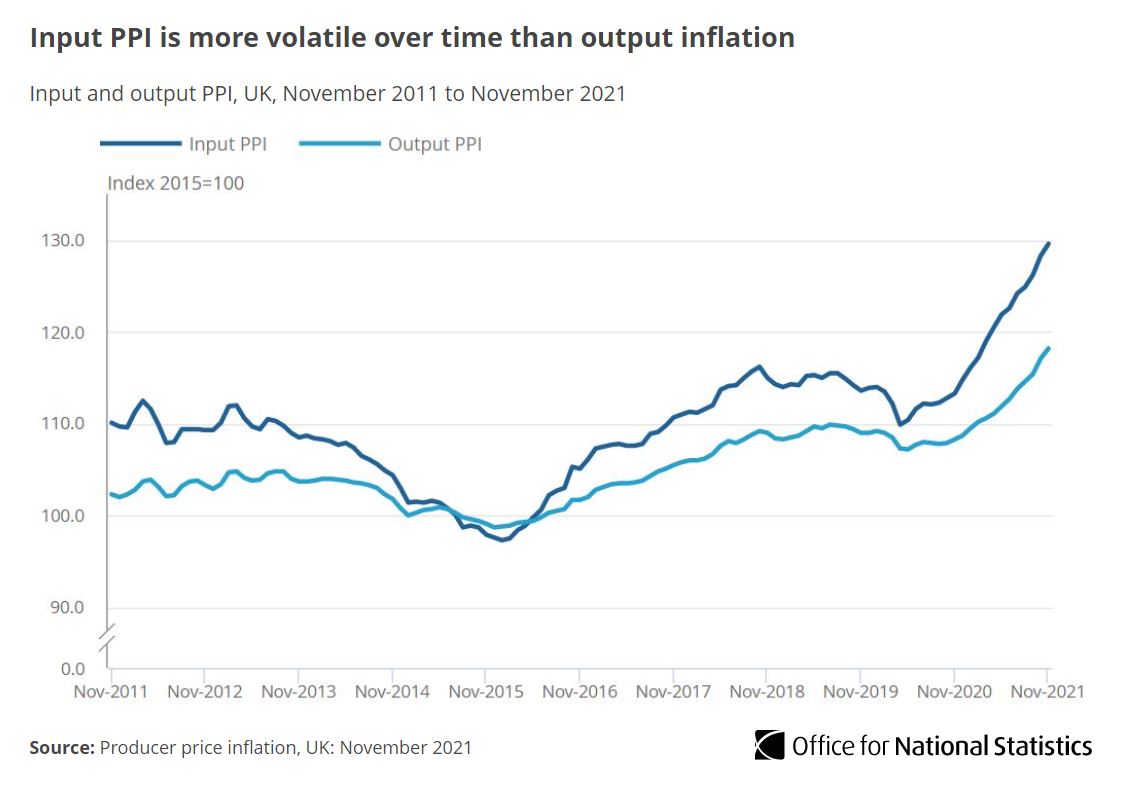
            PPI input rose from 13.7% yoy to 14.3% yoy, above expectation of 11.0% yoy. PPI output rose from 8.6% yoy to 9.1% yoy, above expectation of 7.3% yoy. PPI core output also rose from 7.1% to 7.9%, above expectation of 7.1% yoy.

            ONS Chief Economist Grant Fitzner said: “A wide range of price rises contributed to another steep rise in inflation, which now stands at its highest rate for over a decade. The price of fuel increased notably, pushing average petrol prices higher than we have seen before. Clothing costs – which increased after falling this time last year – along with prices for good, second-hand cars and increased tobacco duty all helped drive up inflation this month.”

            “The costs of goods produced by factories and the price of raw materials have continued to increased significantly to their highest rate for at least twelve years.”

            Full CPI and PPI release here.

            Fed to speed up tapering, publish new dot plot

              Fed Chair Jerome Powell has clearly indicated that there will be a discussion about accelerating the tapering pace, and ending the asset purchases a a few months early. We’d expect Fed to announce a decision today, probably a double in the size of tapering to USD 30B per month.

              The main focus will be more on the new economic projections, in particular the dot plot. Back in October, nine policy makers penciled in one rate hike or more in 2022 (six expected one hike and three expected two hikes), while nine expected no change. We’d probably see the interest rate projections shift even more towards the hawkish side.

              Here are some suggested previews:

              China industrial production rose 3.8% yoy in Nov, retail sales rose 3.9% yoy

                China industrial production rose 3.8% yoy in November, matched expectations. That’s a slightly faster growth rate than October’s 3.5% yoy. Retail sales rose 3.9% yoy, below expectation of 4.9% yoy, and slowed from prior month’s 4.9% yoy. Fixed asset investment rose 5.2% ytd yoy, slightly below expectation of 5.3%.

                “Generally speaking, the national economy maintained the recovery momentum in November, and the major macro indicators stayed within a reasonable range,” the NBS said in its statement. “However, we must note that the international environment is increasingly complex and severe, and there are still many constraints on the domestic economic recovery.”

                Australia Westpac consumer sentiment dropped to 104.3, different responses between states

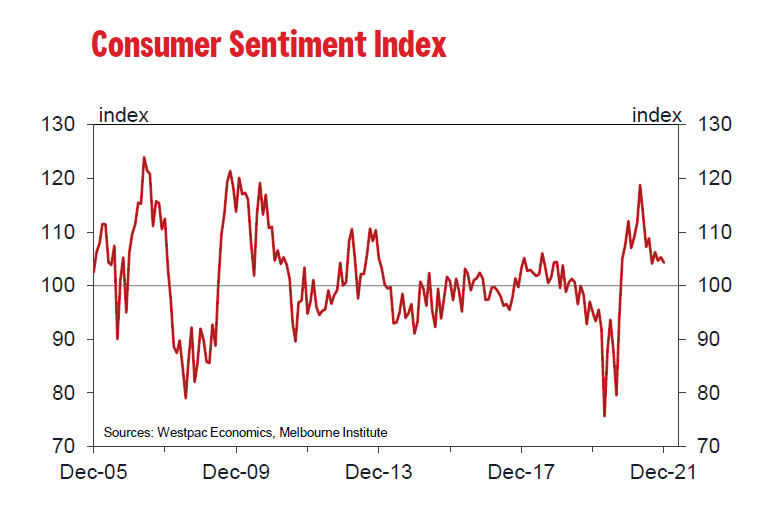
                  Australia Westpac-Melbourne Institute consumer sentiment dropped -1.0% to 104.3 in December, staying in positive territory where optimists outnumber pessimists. Nevertheless, responses from states are rather different, with both NSW and Victoria posted significant falls (down 3.6% and 3.5% respectively) while sentiment was up in Queensland (3.4%), WA (3.2%) and SA (7.1%).

                  Westpac added that RBA’s meeting on February 1 will be a very important one with new economic forecasts. No action or commitment on interest rate is expected at the meeting yet. But RBA would lower the bond purchase pace from AUD 4B per week to AUD 2B per week.

                  Full release here.


                  BoJ Kuroda: Consumer inflation will approach target through various channels

                    BoJ Governor Haruhiko Kuroda told parliament today, “it’s true there’s a chance consumer inflation will approach 2% through various channels.”

                    “But what’s desirable is for the economy to recover steadily and push up corporate profits, thereby leading to higher wages and inflation,” he added. “We’ll patiently maintain ultra-easy policy to achieve this at the earliest date possible.”

                    Kuroda also said Japan is not in a state of “stagflation”.

                    US PPI rose 0.8% mom, 9.6% yoy in Nov, highest annual rise on record

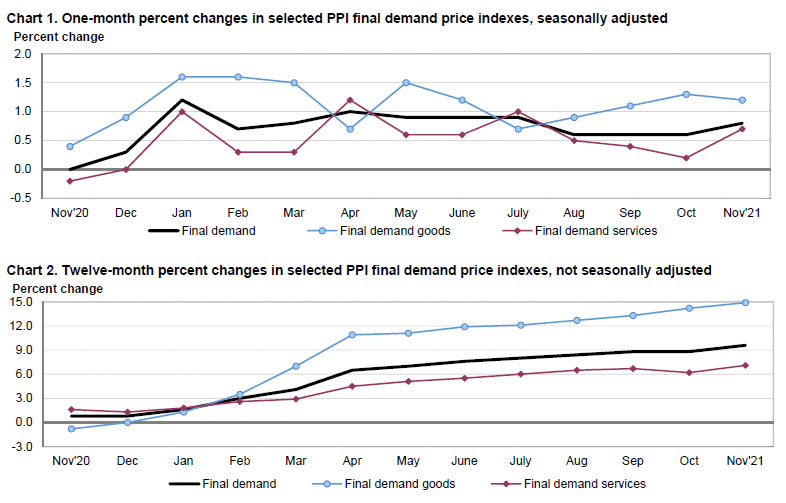
                      US PPI for final demand rose 0.8% mom in November, above expectation of 0.6% mom. For the 12-month period, PPI rose 9.6% yoy, accelerated from 8.6% yoy, above expectation of 9.1% yoy. That’s also the largest annual advance on record since November 2010.

                      PPI less foods, energy, and trade services rose 0.7% mom, 6.9% yoy. The annual rise was the highest on record too, since August 2014.

                      Full release here.

                      IMF urges BoE to avoid inaction bias, should prepare markets for more frequent policy moves

                        IMF urged BoE to “avoid inaction bias” in a statement today, despite facing “difficult trade-offs”.

                        “It would not be a simple matter to see through extended shifts in relative wages and prices while keeping expectations anchored,” IMF said. “It would be important to avoid inaction bias, in view of costs associated with containing second-round impacts. Careful communication would be needed to lay the groundwork with markets for potentially more frequent policy moves.”

                        IMF said UK economic growth will “remain strong in the near term, but so too will price pressures”. It forecasts 6.8% growth in 2021, and 5% growth in 2022. Inflation would peak at about 5.5% in the spring of 2022, then gradually return to target by early 2024.

                        Full statement here.

                        Eurozone industrial production rose 1.1% mom in Oct, EU up 1.2% mom

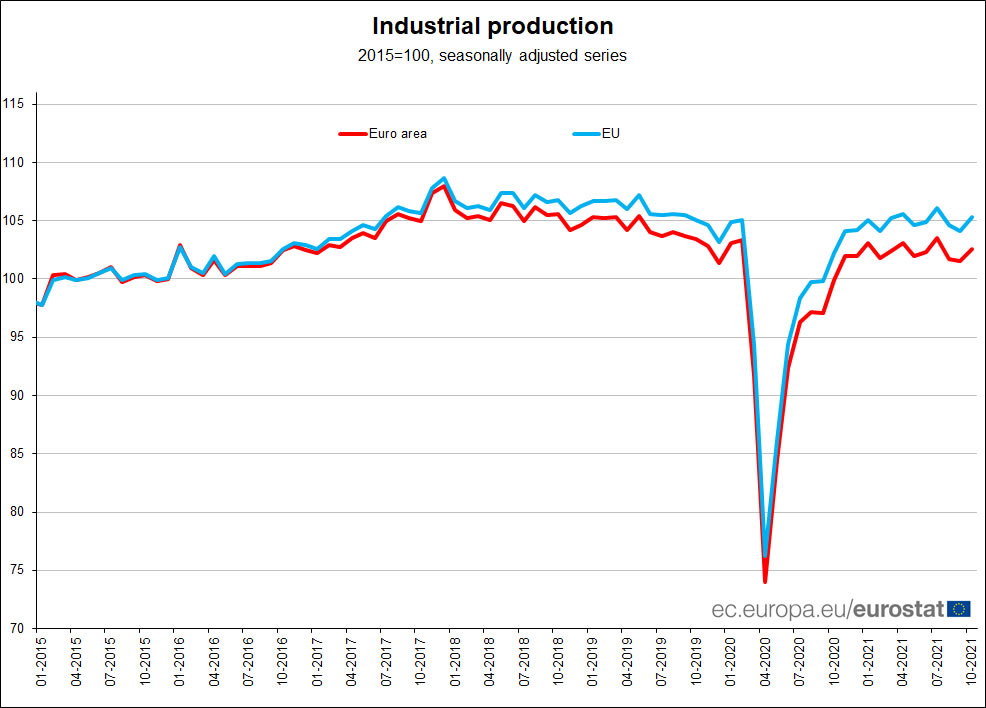
                          Eurozone industrial production rose 1.1% mom in October, below expectation of 1.5% mom. Production of capital goods rose by 3.0%, durable consumer goods by 1.7%, non-durable consumer goods by 0.4% and energy by 0.1%, while production of intermediate goods fell by -0.6%.

                          EU industrial production rose 1.2% mom. Among Member States for which data are available, the highest monthly increases were registered in Germany and Slovakia (both +3.0%), Greece (+2.5%) and Denmark (+2.1%). The highest decreases were observed in Estonia (-2.4%), Latvia (-1.5%), the Netherlands and Romania (both -0.9%).

                          Full release here.

                          UK unemployment rate dropped to 4.2% in Oct, employment rose 257k in Nov

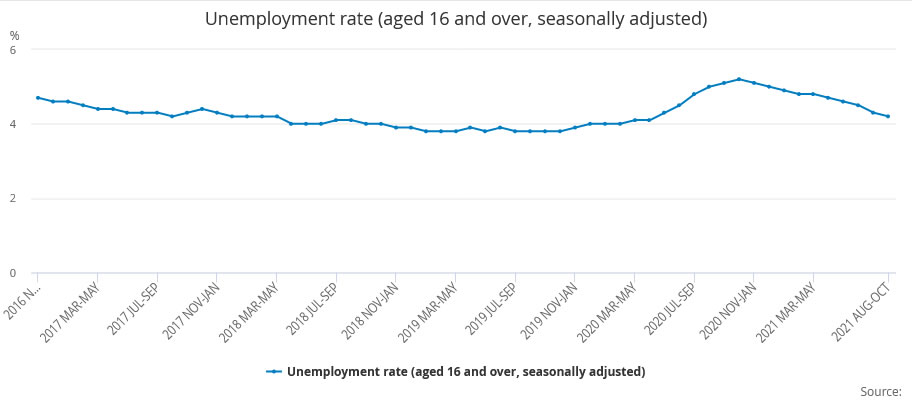
                            UK unemployment rate dropped from 4.3% to 4.2% in the three months to October, matched expectations. Employment rate rose 0.2% to 75.5%. Average earnings including bonus rose 4.9% 3moy, above expectation of 4.5%. Average earnings excluding bonus rose 4.3% 3moy, above expectation of 4.0%.

                            Total employment rose 257k to 29.4m in November. It’s also 424k above pre-coronavirus level in February 2020.

                            Full release here.

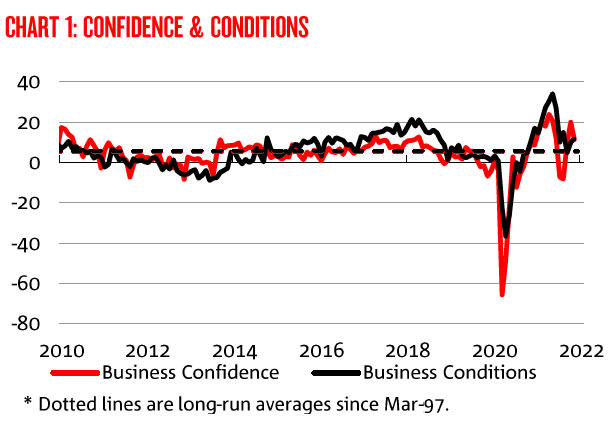
                            Australia NAB business confidence dropped to 12, come back to earth

                              Australia NAB business confidence dropped from 20 to 12 in November. Business conditions improved from 10 to 12. Looking at some details, trading conditions rose from 15 to 16. Profitability conditions rose were unchanged at 8. Employment conditions rose from 6 to 11.

                              “Confidence remains high across states and industries, albeit it has come back to earth a little after the optimism associated with the end of lockdowns,” said NAB Chief Economist Alan Oster.

                              “Forward indicators are also very strong with a rise in capital expenditure a welcome sign that businesses are beginning to look towards a period of expansion. These results align with the strong rebound in activity that we believe is now underway, as well as a positive outlook for the coming months with vaccination rates now very high.”

                              Full release here.

                              BoC Macklem: Medium and longer-run inflation expectations well anchored on target

                                The Bank of Canada agreed with the federal government to keep the flexible inflation targeting framework the next five years. Also, monetary should continue to support maximum sustainable employment.

                                Governor Tiff Macklem said, “even as the complications of reopening the global economy have caused inflation in Canada and many other countries to rise, medium and longer-run inflation expectations in Canada have remained well anchored on the 2 percent target.”

                                “Keeping inflation expectations well anchored is key to completing the recovery and getting inflation back to target,” he noted.

                                OPEC: Impact of Omicron to be mild and short-lived

                                  In the December Monthly Oil Market Report, OPEC said the impact of Omicron is projected to be “mild and short-lived, as the world becomes better equipped to manage COVID-19 and its related challenges.”

                                  “Some of the recovery previously expected in the fourth quarter of 2021 has been shifted to the first quarter of 2022, followed by a more steady recovery throughout the second half of 2022,” OPEC said.

                                  OPEC expects oil demand to average 99.13m bpd in Q2 of 2022, up 1.11m bpd from its forecast last month.

                                  Germany wholesale price rose at record 16.6% yoy in Nov

                                    Germany wholesale price index rose 1.3% mom, 16.6% yoy in November. The annual rate was the highest since record began back in 1962.

                                    Destatis said: “The high rates of change for wholesale prices in annual comparison derive from increased prices for raw materials and intermediate products. The largest impact on the year-on-year price rate in wholesale trade had the increased prices for mineral oil products (+62.4%).”

                                    Full release here.

                                    NZIER: NZ inflation to stay above RBNZ target mid-point through to 2025

                                      NZIER lowered near-term economic outlook of New Zealand, reflecting the impact of pandemic restrictions, “which turned out to persist for longer than initially expected”. For the year to March 2022, GDP growth was revised down from 4.5% to 4.3%. But growth for 2023 was revised up from 4.5% to 4.6%.

                                      Growing capacity pressures are contributing to a sharp rise in inflation. CPI is expected to 5.1% in 2022 (up from prior estimate of 3.0%), and remain elevated above RBNZ’s inflation target mid-point of 2% “through to 2025”.

                                      NZD trade-weighted index forecast was revised lower “partly reflecting market disappointment at smaller than expected interest rate increased from the Reserve Bank in its November meeting.” NZD TWI is expected to peak at 74.5 for the year to March 2023 (revised down from 74.8), then ease to 72.7 in 2025.

                                      Full release here.

                                      Japan Tankan large manufacturing index unchanged a 18, outlook ticked down

                                        According to the BoJ’s Tankan survey in Q4, large manufacturing index was unchanged at 18, below expectation of 19. Large manufacturing outlook dropped from 14 to 13, below expectation of 19.

                                        Non-manufacturing index rose sharply from 2 to 9, well above expectation of 6. That’s the highest reading since December 2019. Non-manufacturing outlook also rose from 3 to 8, but missed expectation of 10.

                                        Output price index for large enterprises jumped from 10 to 16, highest since the 1980s. Input prices index also rose from .37 to 49, highest since 2008.

                                        Large firms are expecting to increased capital spending by 9.3% in the year ending in March 2022, lower than expectation of 9.8%.

                                        Also released, machine orders rose 3.8% mom in October, above expectation of 2.1% mom. That’s the first rise in three months.

                                        NIESR forecast UK GDP to grow 0.6% mom in Nov, 1.0% qoq in Q4

                                          NIESR forecast UK GDP growth to reach 0.6% mom in November, before significant concerns about transmission of Covid-19 began to return, falling to 0.3% in December. Overall for Q3, GDP growth is projected to be 1.0% qoq, following the 1.3% qoq in Q3.

                                          NIESR added that “Omicron is expected to restrain growth in the coming months but not to cause economic disruption anywhere near the scale of 2020, with households and businesses having adapted economic behavior more with each wave.”

                                          Full release here.